
In this article, I will cover High-Yield Savings Accounts to enhance your emergency fund and how they perform with competitive APYs, account features, potential fees, accessibility, insurance considerations, and other things to note for emergency savings funds.
Competitive APYs will vary and depend on where your bank is located. For example, some banks in Minnesota will likely have different rates than banks in Texas. Another example would be banks located in American central or mountain regions, like Kansas, compared to banks that exist farther east, like Illinois.
Key Points
| Bank / Credit Union | APY | Explanation |
|---|---|---|
| Vibrant Credit Union | 4.40% | Offers a highly competitive APY, potentially maximizing returns on qualifying savings balances. |
| Abound Credit Union | 4.25% | Provides an attractive APY, helping members earn more from eligible savings deposits. |
| Axos Bank | 4.21% | Delivers a strong APY, offering competitive earnings for qualifying account balances. |
| Bask Bank | 4.10% | Provides competitive savings returns, making deposits potentially more rewarding for customers. |
| Pibank | 4.10% | Offers a solid APY, helping customers increase earnings on eligible deposited funds. |
| CIT Bank | 4.10% | Provides competitive interest, potentially improving returns for customers maintaining qualifying savings balances. |
| Fitness Bank | 4.05% | Offers an attractive APY, rewarding customers who maintain qualifying savings account balances. |
| Climate First Bank | 4.01% | Provides competitive interest earnings while supporting customers seeking environmentally focused banking options. |
| Peak Bank | 4.01% | Offers a competitive APY, helping depositors earn additional interest on qualifying balances. |
| TotalBank | 4.01% | Provides a solid APY, potentially increasing savings growth through competitive interest earnings. |
12 High-Yield Savings Accounts to Maximize Your Emergency Fund
1. Vibrant Credit Union — 4.40% APY
Vibrant Credit Union is a member-owned credit union founded in 1935. The Digital Advantage Savings Account by Vibrant Credit Union offers 4.40% APY on new member balances up to $5,000 with no monthly maintenance fee and online accessibility across the nation.
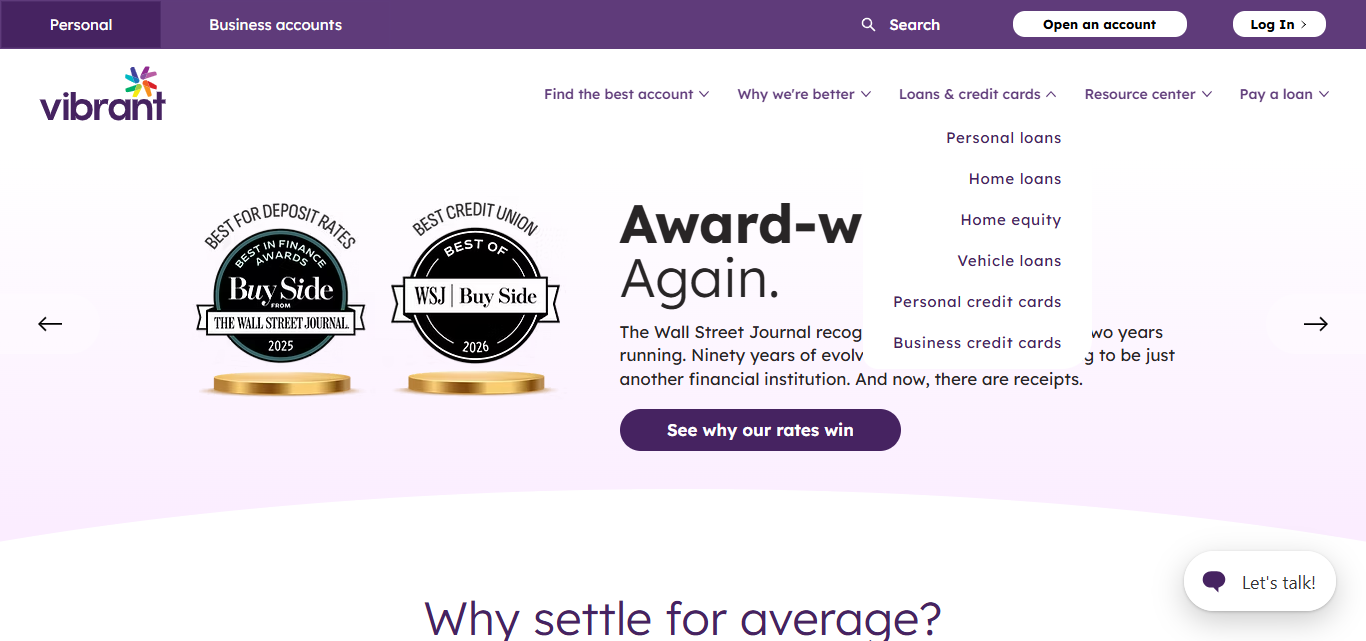
Members of the credit union should know that Vibrant Credit Union is not insured by the FDIC. Credit Unions are member-owned cooperatives that have a financial model that puts earnings back into dividends and services rather than a money-making structure built around increasing profits of shareholders.
Vibrant Credit Union had more than $1.17 billion in assets during 2026, and the organization was considered well-capitalized.
Features & Pros & Cons
- Accounts earn 4.40% APY on balances of up to $5,000.
- Digital Advantage Savings is an online savings account.
- There is no reported monthly fee on the account.
- Access to cooperative financial services through the credit union.
- Deposits are insured by the NCUA.
Pros
- Has the most attractive APY of the accounts provided.
- Attractive rate increases potential earnings of emergency fund.
- No monthly fee helps build savings.
- Serving credit unions since the 1940s.
- Deposits are insured by the NCUA.
Cons
- APY is only applicable to specified balances and conditions.
- $5,000 balance cap controls potential earnings.
- Credit union membership may be an additional requirement.
- Changes occur to savings APYs and rates may fluctuate.
- Savings account focused on online banking.
2. Abound Credit Union — 4.25% APY
Abound Credit Union was originally started as Fort Knox Civilian Employees Federal Credit Union on November 22, 1950 by 10 members with an initial investment of $1,000. The credit union later changed its name to Fort Knox Federal Credit Union and officially adopted the name Abound Credit Union in February, 2020.
Abound Credit Union offers a High-Yield Savings Account that has a 4.25% APY on balances up to $25,000. There is no requirement for a minimum initial deposit and dividends are distributed and compounded on a monthly basis.

Its strong background of cooperation and member focus has helped the institution grow to report more than $2.5 billion in assets and have 130,000 members in 2024, from its very small, 1950s beginnings. Its original focus was helping families with the rising costs of college. The institution has grown beyond serving just families and single members. It includes business groups, non-profits, and unions.
Features & Pros & Cons
- Approximately 4.25% APY is offered for balances that meet the qualifying criteria.
- High-Yield Savings can be used for balances capped at $25,000.
- According to the account contract, dividends are compounded monthly.
- A minimum opening deposit is not required.
- Insured by NCUA as credit union.
Pros
- Competitive 4.25% APY is beneficial in growing the emergency fund.
- A higher qualifying balance when compared to most accounts is offered.
- There is no opening deposit minimum required.
- A long history of operating demonstrates a substantial commitment to the institution.
- It can provide competitive financial services focused on members.
Cons
- Potential restrictions on customer eligibility and membership.
- APYs may be advertised at a specific rate only if account holders meet certain conditions.
- Balances that are above certain qualifying limits may be subject to lower rates.
- Subject to market conditions and an uncertain duration, APYs may be subject to change.
- Credit unions differ from banks due to how both ownership and structure are organized.
3. Axos Bank – 4.21% APY
On the Fourth of July, 2000, Axos Bank began operating under the name Bank of Internet USA. It initially operated under a digital banking model. In the years that followed, the bank grew to offer more services and changed its name to Axos Bank.
Axos Bank’s savings account, Axos ONE Savings, offers a yield of 4.21% APY on the first $249,999.99 with the customer meeting the conditions of the Axos ONE checking account.
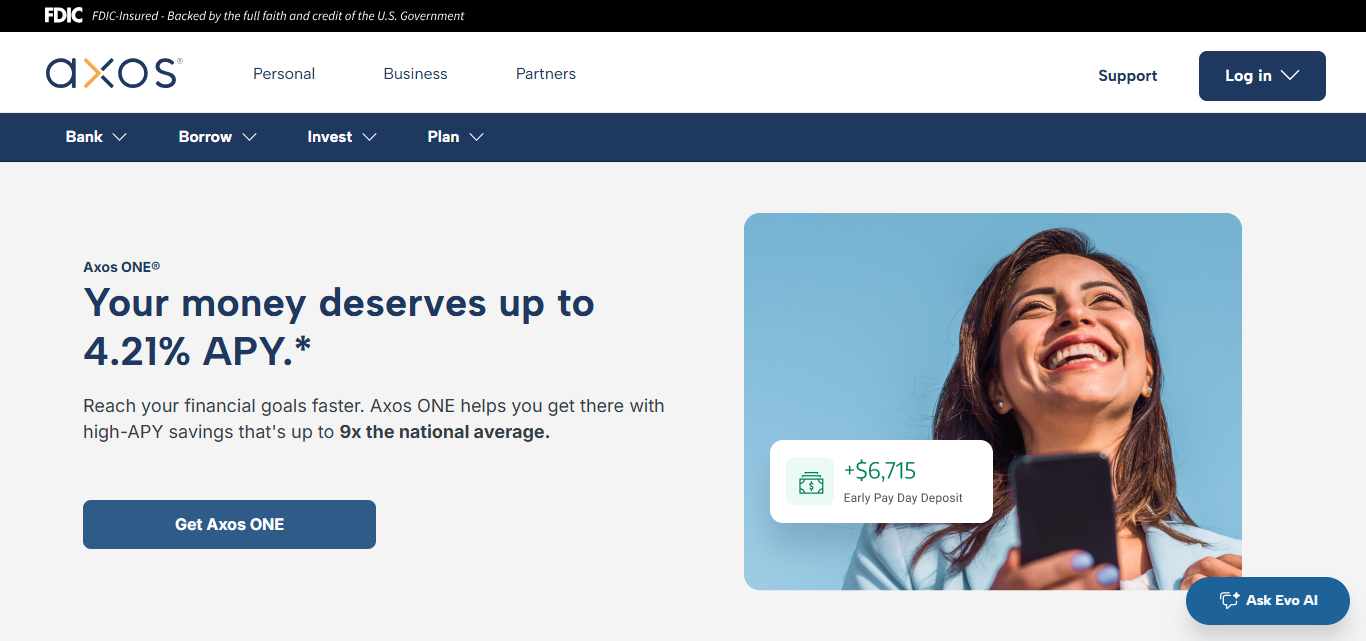
Further balances have a different, lower APY. Axos Bank operates under federal regulations of banking and is insured by the FDIC. It offers breakeven deposit insurance. High yield on savings is a result of strong history in digital banking, having public company banking operations, a focus on online banking, and a broad range of digital banking services.
Features & Pros & Cons
- Axos ONE Savings earns up to 4.21% APY.
- The highest rate is only for a specified qualifying balance.
- Digital banking offers effective tools for online account management.
- Federally insured deposits are protected up to legal limits.
- The bank offers services of saving, checking, lending, and having a business.
Pros
- The strong potential for emergencies was further supported by a high APY.
- Having a high balance further supported customers with substantial savings.
- Digital banking account management is further supported by online banking.
- FDIC insurance protects qualifying deposits.
- An online banking service further strengthens its digital banking.
Cons
- The highest APY is only offered if you have an Axos ONE checking account.
- Additional balances will receive lower APYs.
- Fewer branch locations, due to an online focused banking model, result in less traditional banking.
- Variable APYs after opening the account can decrease.
- You will have to monitor the conditions to ensure you have the touted rate.
4. Bask Bank – 4.10% APY
In 1999, the founders of Bask Bank developed the model for an online savings-only banking experience at Texas Capital Bank. Bask Bank later developed the Mileage Savings Account and, in 2020, revamped its savings platform and added interest-bearing savings accounts and certificates of deposit to its offerings.
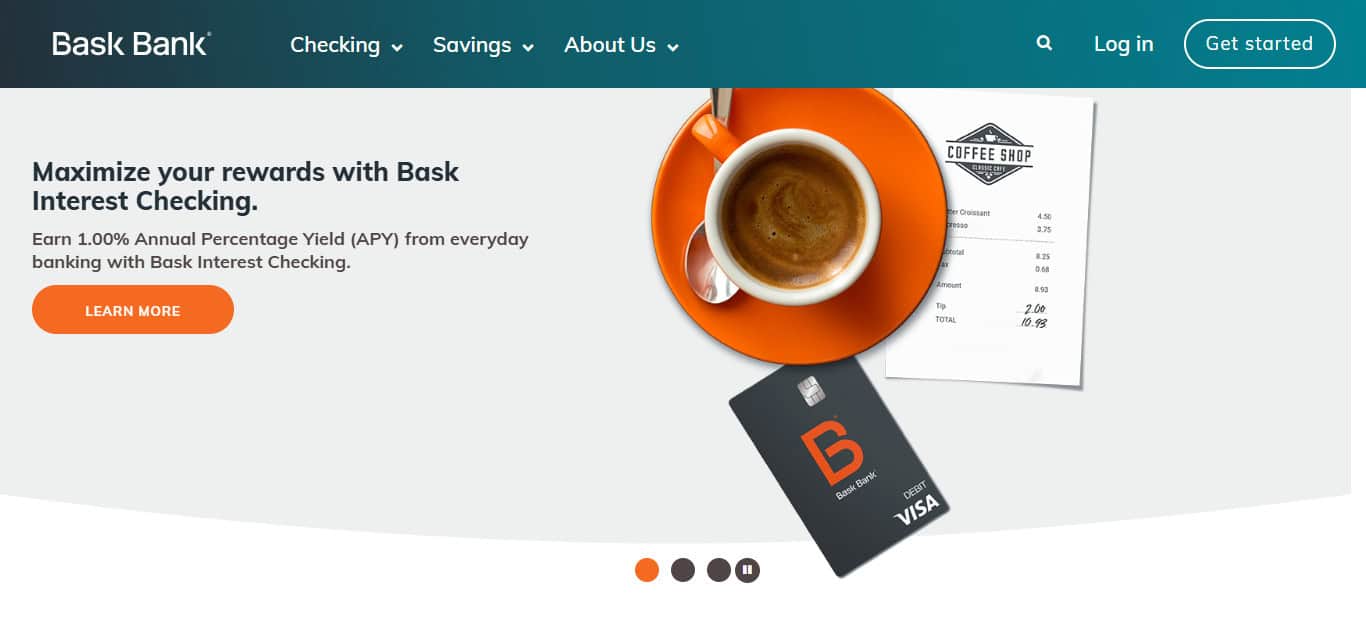
The Interest Savings Account has a base rate of 3.75% APY, while promotional offers and rate increases can boost the APY to 4.10%. Bask Bank is an FDIC-insured provider. Because its banking model is almost exclusively digital, Bask Bank can offer savings accounts with high rates along with customer rewards and promotional savings accounts.
Features & Pros & Cons
- Interest Savings Account offers high-yield savings at a competitive rate.
- Earnings promotions or boosts may reach 4.10% APY.
- Use of online banking for account management is available.
- FDIC protection is available for eligible deposits.
- Bank has a heavy emphasis on savings and digital banking.
Pros
- Competitive APY can improve your emergency fund.
- Digital banking makes account management simple.
- FDIC insurance protects eligible deposits.
- Online banking can support competitive deposit rates.
- Digital banking has a strong history.
Con
- Base APYs may be less than the advertised promotional rates.
- Promotional rates may have specific eligibility requirements.
- Savings rates may be subject to change post account opening.
- Limited physical branches will affect some customers.
- Customers must be take into account the promotional terms and the expiration dates.
5. Pibank — 4.10% APY
Pibank opened for business on April 18, 2018, in Spain, and then expanded to Colombia in 2022 and to the United States in 2024. In the US, Pibank is owned by Intercredit Bank, N.A., which was founded in 1992 and is based in Miami. Currently, Pibank Savings is offering an APY of 4.10%. They charge no fees nor maintain a minimum balance.
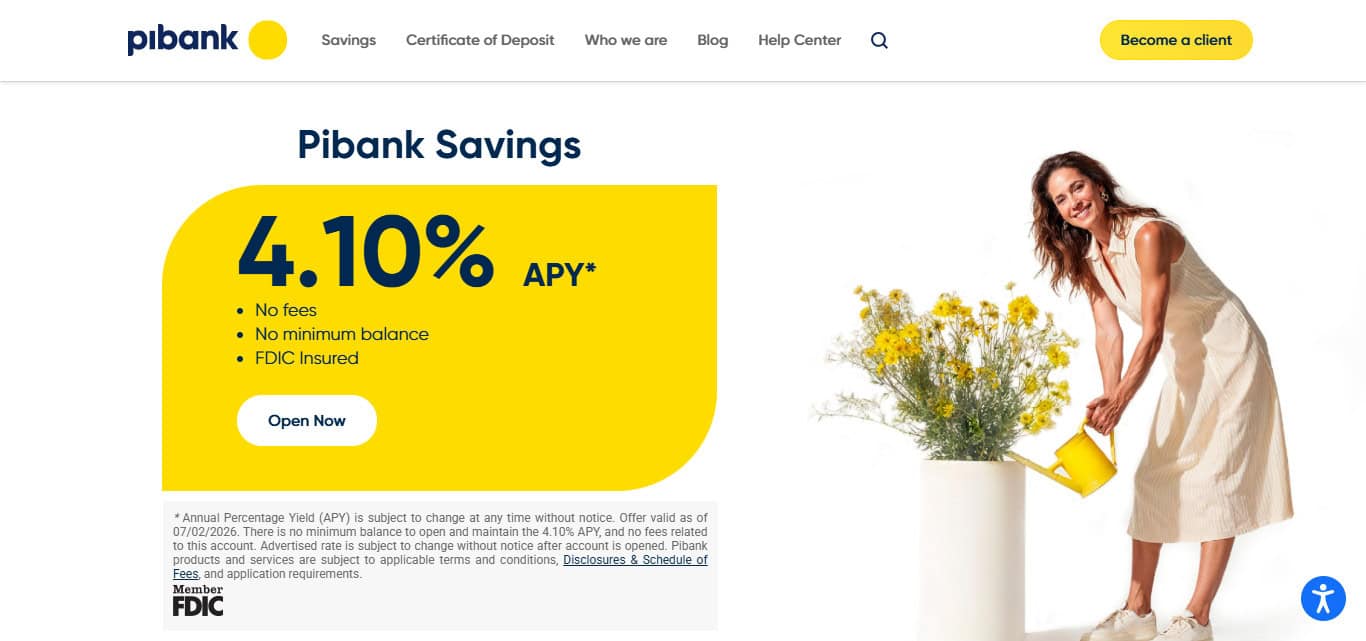
Pibank Savings calculates interest daily. Pibank Savings pays interest once a month. It is a digital and straightforward savings banking option.Pibank Savings currently maintains a limited physical banking presence. As a result, Pibank is a convenient digital banking option to build and maintain an emergency savings account.
Features & Pros & Cons
- Pibank Savings offers a competitive 4.10% APY.
- The account doesn’t have a minimum balance requirement.
- There is no monthly account fee based on the stated terms.
- Interest is calculated each business day and paid at the end of each month.
- Eligible deposits receive FDIC insurance through Intercredit Bank.
Pros
- An attractive 4.10% APY makes the account a good choice as an emergency fund account.
- There is no minimum balance required.
- Having no fees helps to avoid diminishing returns on interest.
- Daily interest calculation aids in continuously increasing savings.
- Digital-only banking provides simple account management.
Cons
- Pibank has only recently started banking operations in the U.S.
- Limited physical branches will decrease in-person services.
- The savings rates are variable and as such, the APY is also variable.
- Potential customers should be familiar with the transfer and withdrawal procedures.
- Customers may not be familiar with the underlying banking relationships.
6. CIT Bank — 4.10% APY
CIT Bank’s history involves its registration as a federally chartered banking institution in 2009, for example, but banking was in operation much earlier. CIT Bank then merged with First Citizens BancShares when First Citizens ‘and CIT’s merger was finalized in 2022. The resulting company was one of the largest banks in the U.S.
The CIT name remains attached to savings even post merger, but strings of the savings products fall under the First Citizens banking organization. CIT Banking operates under federal banking charters, and FDIC deposit insurance protection is applicable to CIT banking operations.
CIT Banking rebuilt the capital and business operations in the years following the 2009 bankruptcy of its corporate parent. The merger with First Citizens added considerable strength to CIT Bank’s institutional banking operations.
Features & Pros & Cons
- Current banking operations are with First Citizens Bank.
- Eligible deposits receive FDIC coverage.
- Online savings products focus on high rates of savings.
- CIT is a well-known organization in the financial services industry.
- CIT has offered high-yield savings products and competitive rates in the past.
Pros
- An attractive APY can aid in the growth of emergency savings.
- FDIC coverage protects deposits.
- A large, well-established banking organization provides substantial resources.
- The convenience of online savings is preserved.
- There is a larger banking affiliation since CIT is now a subsidiary of First Citizens.
Cons
- Changes in corporate strategies may cause confusion in product branding.
- Available rates may differ depending on market conditions.
- Customers are advised to call the CIT before placing their orders.
- Sales may be limited due to the focus on online based products and branch convenience.
- Account specific requirements and rate tier cuts should be examined.
7. FitnessBank — 4.05% APY
FitnessBank is an online blue checking account bank that serves active lifestyles. It partners with Affinity Bank, founded in 2002, for its banking backend.
FitnessBank offers an advantage savings structure that can potentially earn up to 4.05% APY, pending activity requirements; the greatest savings APY is targeted towards customers based on their daily step count.
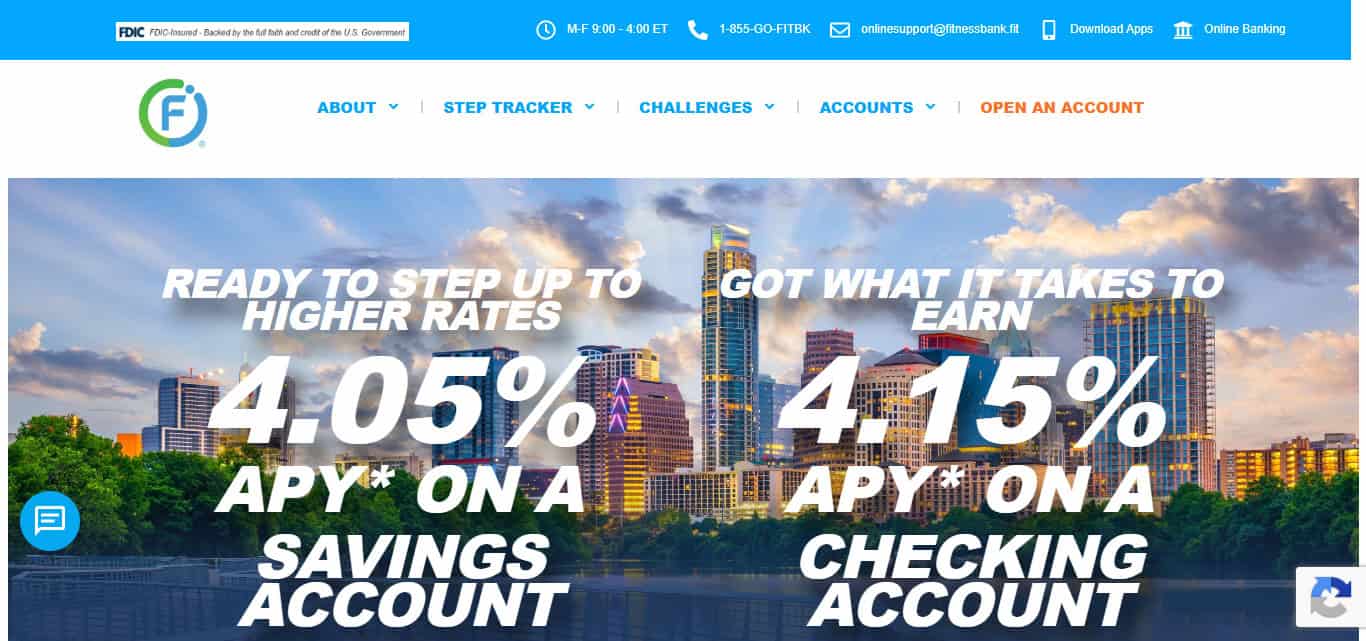
FitnessBank is a branch of an FDIC-insured bank. The underlying bank structures and manages FitnessBank, and its financial deposits are safeguarded by the FDIC.
The bank uses a unique, low-cost financial approach that focuses on the digital and lifestyle banking products without the usual high overhead costs of traditional advertising and advertising. FitnessBank can focus on deposit competition without the tradition of large branch networks.
Features & Pros & Cons
- FitnessBank includes savings rewards and is designed around fitness.
- If certain conditions are met, the APY can be as high as 4.05%.
- Interest rewards can be based on daily step activity.
- Banking services are offered through Affinity Bank.
- The banking services offer online convenience.
Pros
- Faster Emergency fund growth encouraged by an attractive APY.
- Fitness based rewards keep customers active.
- FDIC Insurance protects customer accounts.
- The online banking service makes savings management convenient.
- The overall savings account structure is different from conventional options.
Cons
- New customers may have to meet daily activity goals in order to receive the highest APY.
- Those who do not like to track steps may find it inconvenient as APY may even decrease.
- Online banking services may result in more limited in-person branch access.
- Potential customers should review the rate and transfer their emergency funds.
8. Climate First Bank — 4.01% APY
Climate First Bank officially opened on June 1, 2021, becoming a mission-driven community bank focused on environmental sustainability, people, and financial performance.
Its Super Duper Savings account currently advertises 4.01% APY, with a $50 minimum opening deposit, no minimum balance requirement, and unlimited withdrawals, subject to account terms.

The bank is FDIC-insured and operates as a Florida state-chartered bank supervised by the FDIC rather than as an NCUA credit union. Its distinctive history centers on combining conventional banking with environmental goals, including renewable-energy and sustainability-oriented lending.
Financially, the bank has experienced rapid growth since launch, reaching more than $1 billion in assets, while its stated mission explicitly recognizes planet, people, and profit as complementary objectives.
Features & Pros & Cons
- Super Duper Savings offers an estimated 4.01% APY.
- The account revolves around competitive savings rates.
- The stated terms require a minimum deposit of about $50 to open the account.
- The bank supports environmental advocacy with their banking actions.
- Eligible deposits receive FDIC insurance.
Pros
- The account fosters quicker Emergency Fund saving with an attractive APY.
- The low opening balance makes the savings account more accessible.
- Environmental banking is aligned with banking to support sustainability goals.
- FDIC Insurance covers eligible customer accounts.
- The overall approach to banking is unique.
Cons
- Rate changes may occur based on economic conditions.
- $50 initial deposit is required per stated account terms.
- Limited physical banking locations may be a concern for some.
- Mission-focused banking is not for everyone.
- Customers are encouraged to research current withdrawal and account policies.
9. Peak Bank — 4.01% APY
Peak Bank is an online-only banking division of Idaho First Bank, whose origins date to 2004, with the bank officially founded in 2005. Peak Bank was created to provide customers with a modern digital banking experience while leveraging the financial infrastructure and history of its parent institution.
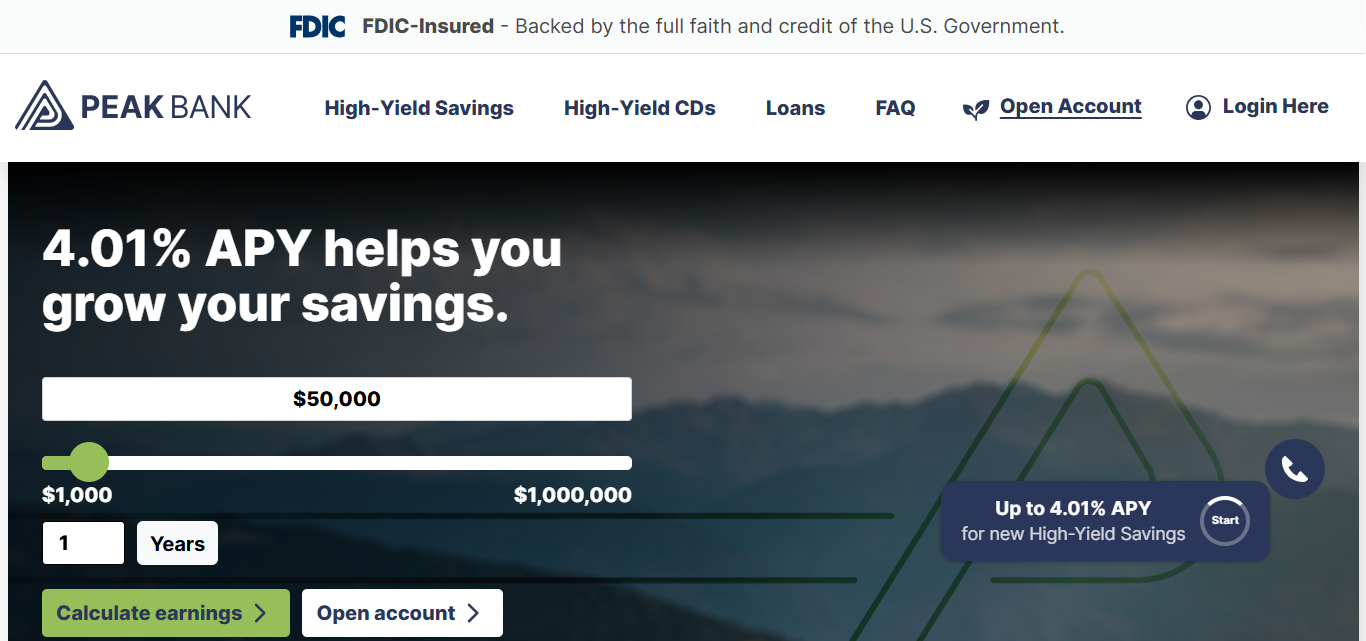
Its Envision High Yield Savings account currently advertises up to 4.01% APY for new accounts, with no monthly maintenance fee and a $100 minimum opening deposit. Peak Bank deposits are FDIC-insured, while the bank is backed by Idaho First Bank’s established banking platform.
Its parent institution has nearly two decades of community-banking experience, giving Peak Bank a combination of traditional banking strength and online-only convenience for customers seeking competitive emergency-fund yields
Features & Pros & Cons
- Envision High Yield Savings offers up to 4.01% APY.
- The account uses Idaho First Bank’s platform.
- There is no reported monthly maintenance fee.
- A minimum of approximately $100 is required to open the account.
- Deposits are insured by the FDIC.
Pros
- Competitive APY for an emergency fund.
- No monthly maintenance fee is an additional cost-saving feature.
- FDIC insurance is an additional safety feature.
- An online-only bank offers ease of use and safety.
- Having an online-only bank gives added safety.
Cons
- A $100 minimum opening deposit is a limiting factor.
- The highest APY offer may be for a limited promotional time.
- An online-only bank limits physical banking.
- APY is subject to change based on market fluctuations.
- Terms may not be the same for existing and new customers.
10. TotalBank — 4.01% APY
As of now TotalBank is a division of City National Bank of Florida. TotalBank’s grandparents first appeared as the City National Bank of Florida in 1946.
TotalBank was bought by City National Bank in 2018. TotalBank is now a part of City National Bank’s online savings strategy. TotalBank boasts offering the most comfortable way to save money online.
TotalBank involves lower costs to run the branch and offers competitive interest rates with an APY of 4.01%. The bank is regulated by the OCC and offers FDIC insurance.
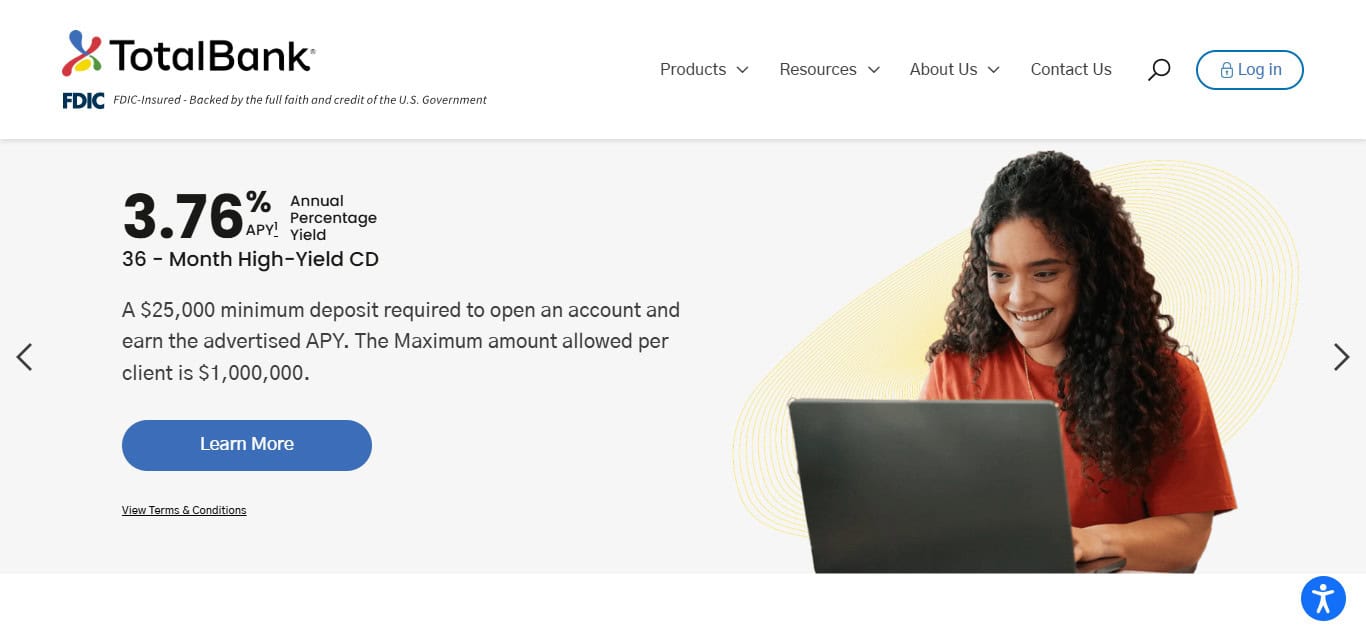
TotalBank was founded and is operated by a reputable company, City National Bank. City National Bank’s banking history involves growth and acquisition of other banks and good financial report, including net positive income.
Features & Pros & Cons
- TotalBank operates under City National Bank of Florida.
- Approximately 4.01% is the published savings rate.
- Online savings has a goal of convenience and competitive APR.
- Eligible deposits are insured by the FDIC.
- The banking institution has over a century of history in Florida.
Pros
- Competitive APY for an emergency savings account.
- FDIC insurance for an additional safety feature.
- An established bank has a solid business structure.
- Convenience for online banking.
- An online-only bank has a competitive savings rate.
Cons
- TotalBank is no longer an independent institution.
- Brand and ownership history are potentially confusing.
- APY can change with fluctuations in the economy.
- Banking online can be more convenient for most customers, but does not offer the same level of fast service as an in-person visit to a branch.
- Potential customers are advised to familiarize themselves with the terms and conditions of a given product before an account opening.
How High-Yield Savings Accounts Can Help Build An Emergency Fund
Variable APYs: High yield savings rates are typically variable, which means the likelihood of earning the advertised APY is good in the short term but not the long term.
Promotional Rates: Many institutions offer savings accounts with promotional rates on new accounts that may have qualifying activities or requirements like a new direct deposit, minimum balance, etc.
Balance Restrictions: Some high APYs apply only to specific portions of your balance. For example, a highly competitive rate may only apply to the first $5,000 or $25,000. Higher amounts may earn a lower rate.
Low or No Fees: An emergency fund account with minimal monthly maintenance fees is a must. Charging fees chisels away at your hard-earned savings. You probably don’t want that.
Ease of Access: Your emergency savings should be readily available. Think about transfer time, withdrawal guidelines, the availability of ATMs, online access, and restrictions before choosing an account.
Emergency Savings Priority: A high APY is not the most important factor. Emergency savings should be protected by high insurance coverage, have little to no fees, flexible withdrawal policies, a low minimum balance, fee stability, etc.
Best Overall Approach: Your emergency funds should be held in a separate high-yield savings account. It can maintain principal while providing interest on your emergency savings.
How We Pick Best High Yield Savings Accounts for Building Your Emergency Fund
Competitive APY: We seek accounts offering the fastest annual percentage yield growth to help save money for emergencies.
Deposit Insurance: We prefer accounts at institutions covered by the FDIC or NCUA to keep deposits safe.
Low Fees: We look at monthly fees, minimum balances, etc., to evaluate the savings accounts.
Easy Access: We evaluate funding transfers and withdraws as well as account accessibility to keep funds available for emergencies.
Minimum Requirements: We review opening deposits, maintenance minimums, required direct deposit, and any other conditions or requirements.
Rate Restrictions: We seek accounts that advertise high annual percentage yield and determine any restrictions that apply to the affected balance, time periods, or how the account is used.
Account Reliability: We look at the history and stability of the banking service and infrastructure as well as the customer service and control over the account.
Emergency-Fund Suitability: We rank accounts that offer the best combination of strong returns, safety, liquidity, and convenience with high predictability of access.
Conclusion
In summary, High-Yield Savings Accounts to Maximize Your Emergency Fund allows you to earn interest on your savings while keeping it readily accessible in case of an emergency. When you are looking to open an account, be sure to compare the Annual Percentage Yields (APYs)
fees, minimum opening balance requirements, withdrawal frequency restrictions, convenience, and FDIC or NCUA insurance. The best accounts provide a combination of high returns, low risk and high level of convenience. These allow you to develop your emergency savings more effectively.
FAQ
Why use one for emergencies?
It helps your emergency money earn interest while remaining relatively accessible.
How much should my emergency fund contain?
Aim for three to six months of essential living expenses in savings.
Are high-yield savings accounts safe?
FDIC or NCUA insurance protects eligible deposits within applicable coverage limits.
Can high-yield savings APYs change?
Yes, variable APYs can increase or decrease according to market conditions.