
I am talking about the Legal Workflow Tools Built For Remote Law Firms, which is going to change the landscape of modern legal practice.
To streamline case management, automate formerly tedious tasks, improve communications with clients, and work from anywhere, these tools are useful for lawyers.
Whether it is billing or document management, they enable remote collaboration and improve productivity, which makes law firms organized, digital, and super productive in 2023.
Key Poinst & Legal Workflow Tools Built For Remote Law Firms
Clio manages remote law firm cases, billing, documents efficiently from the cloud platform
MyCase streamlines client communication, case management, and invoicing for remote legal teams seamlessly
PracticePanther automates legal workflow, billing, tasks, improving remote firm productivity significantly overall
Smokeball tracks time, documents, and client work for remote lawyers efficiently and accurately
Rocket Matter enhances billing, scheduling, and case tracking for firms remotely and efficiently
NetDocuments securely stores legal files, enabling remote access and collaboration everywhere instantly and globally
LawPay simplifies online payments, ensuring secure billing for law firms compliance-ready
Filevine organizes cases, documents, and workflows for remote legal teams efficiently
LEAP Legal Software supports document automation and remote practice management globally efficiently
Relativity powers e-discovery, helping remote legal teams analyze data at scale securely
10 Legal Workflow Tools Built For Remote Law Firms
1. Clio
Clio–considered one of the best remote-based law firm management and workflow solutions, as well as hybrid cloud-based lawyer practice software.
Get AI-powered case management, billing automation, document storage, and 250+ integrations for tools like accounting and e-signatures.
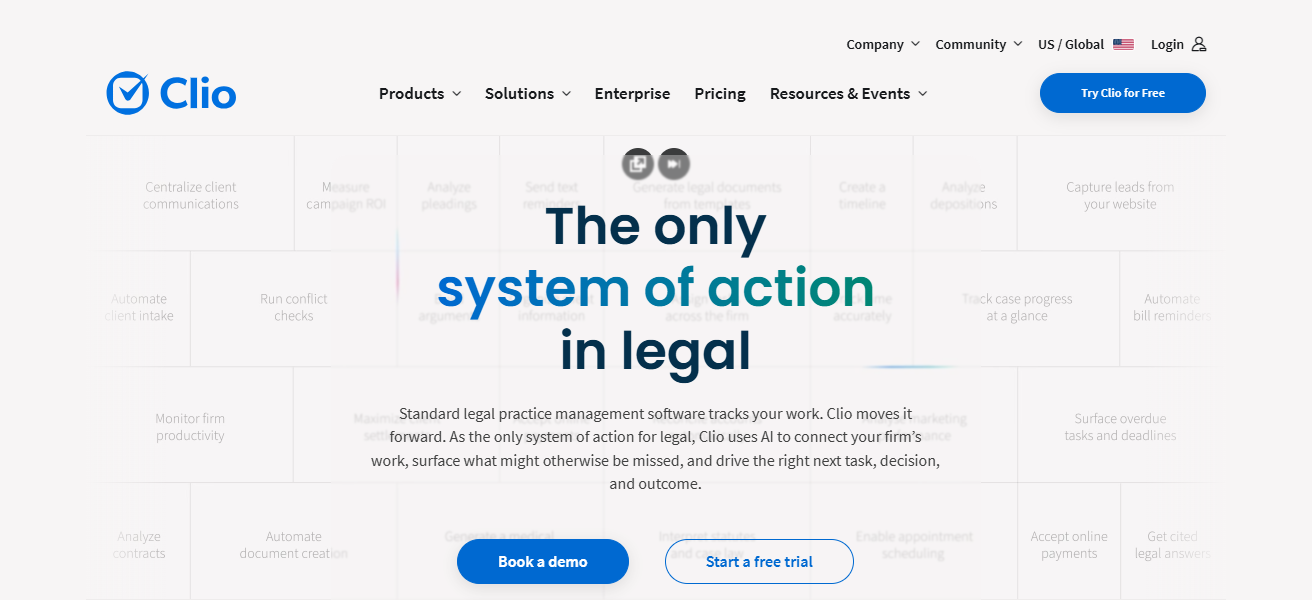
Added Mobile Access & AI-Assisted Legal Drafting In Clio updates for 2025–2026, the mobile access is improved, and it also includes the capability of using AI to assist with legal drafting, which helps with smooth distance collaboration.
Strong security compliance, paired with scalable infrastructure over numerous big law firms, allows lawyers to handle cases from wherever.
| Pros | Cons |
|---|---|
| Cloud-based access from anywhere | Can become expensive for large teams |
| Strong AI automation for legal drafting | Learning curve for advanced features |
| 250+ integrations with legal tools | Some features locked in higher plans |
| Excellent security and compliance | Internet dependency for full usage |
2. MyCase
More about MyCase is a simplistic law practice management software for smaller to mid-size remote firm style, where having clients in mind, the focus goes.
It features embedded messaging, billing, document sending, and a well-rated mobile app that mirrors your desktop.

Newer features include AI-driven intake tools and payment processing built into the software; no third-party apps needed.
Its legit client portal increases transparency with real-time case updates, making it ideal for remote teams who serve clients and streamline workflows.
| Pros | Cons |
|---|---|
| Simple and user-friendly interface | Limited advanced customization |
| Built-in client communication tools | Fewer integrations than competitors |
| Strong mobile app performance | Not ideal for large enterprises |
| Integrated billing and payments | Reporting tools are basic |
3. PracticePanther
PracticePanther is a fully remote-ready legal automation tool providing task workflows, billing, CRM, and secure messaging.
It allows companies to build automated workflows using templates and triggers, guiding how a case progresses.

It has improved efficiency in recent versions by introducing AI-powered accounting automation and e-signature integration tools.
The simple interface is designed for distributed legal teams to handle a range of cases with ease, though more advanced customization options are less mature than high-end enterprise platforms. It is commonly used by remote small and medium-sized firms.
| Pros | Cons |
|---|---|
| Easy workflow automation setup | Limited deep customization options |
| Strong CRM and billing features | Can lag with heavy data loads |
| E-signature integration available | Advanced analytics are limited |
| Clean and simple interface | Not suited for complex firms |
4. Smokeball
Smokeball is cloud-based legal software combined with a desktop that includes automatic time tracking and document automation.
The advantage is even higher for remote firms processing a lot of cases since it records every action without any manual input.

The new AI assistant features can help create documents faster and may also reduce manual entry. While desktop-based in part, it now offers better sync to the cloud and a Microsoft 365 integration
This enables smaller firms with structured workflows and accurate billing capture to collaborate remotely.
| Pros | Cons |
|---|---|
| Automatic time tracking feature | Mostly desktop-based system |
| Strong document automation tools | Limited full cloud flexibility |
| AI-assisted drafting support | Higher learning curve for beginners |
| Good for high-volume firms | Mostly a desktop-based system |
5. Rocket Matter
Rocket Matter is a cloud-based legal practice management software with a unique focus on time tracking, bill pay technology, and project-style case management.
It has workflow automation integrated and internal communications for remote teams as well. The newest updates are also ones that incorporate AI-based reporting and more robust financial analytics for law firms.
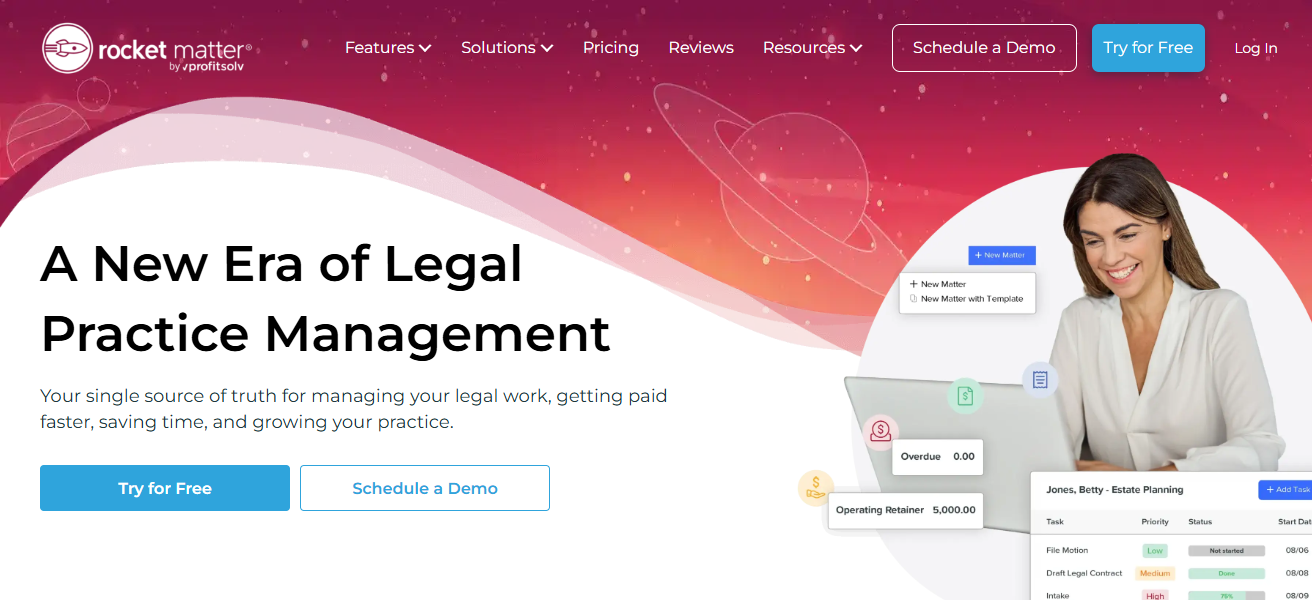
It aims to enhance productivity through a consolidated system for tasks, calendars, and billing, making it ideal for distributed legal teams that require structured case progress tracking with visibility into workflow.
| Pros | Cons |
|---|---|
| Strong billing and time tracking | UI feels less modern than competitors |
| Built-in workflow automation | Limited advanced AI features |
| Good financial reporting tools | Slightly expensive for small firms |
| Suitable for remote teams | Setup can be time-consuming |
6. NetDocuments
NetDocuments is a secure, enterprise-grade cloud-based Document Management System (DMS), built for remote legal teams.
Includes support for encrypted cloud storage, version control, and compliance specialist tools for legal data.
New features like AI-powered document search and Microsoft 365 integration for seamless collaboration have been added.
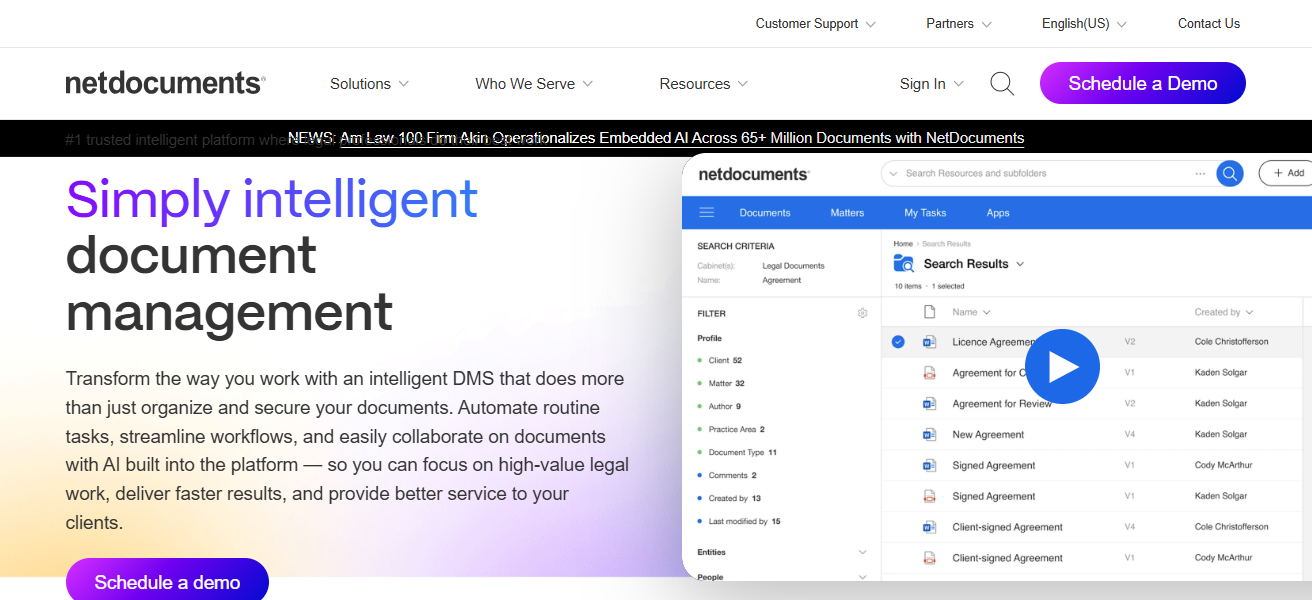
It is often implemented by large, enterprise-level law firms that require high security and easily scalable storage.
Unlike traditional billing or case management tools that are generalized, its focus is on document governance — it is a specialized legal repository tool.
| Pros | Cons |
|---|---|
| Highly secure document storage | No built-in billing tools |
| AI-powered document search | Enterprise-focused pricing model |
| Strong compliance features | Requires training for usage |
| Integrates with Microsoft 365 | Not a full case management system |
7. LawPay
LawPay is a payment processor designed for law firms to bill in compliance with applicable laws. It accepts credit cards and ACH payments while remaining compliant with trust accounting rules.
This latest update expands deeper integration with practice management systems such as Clio and MyCase to automate invoicing and help collect payments faster.
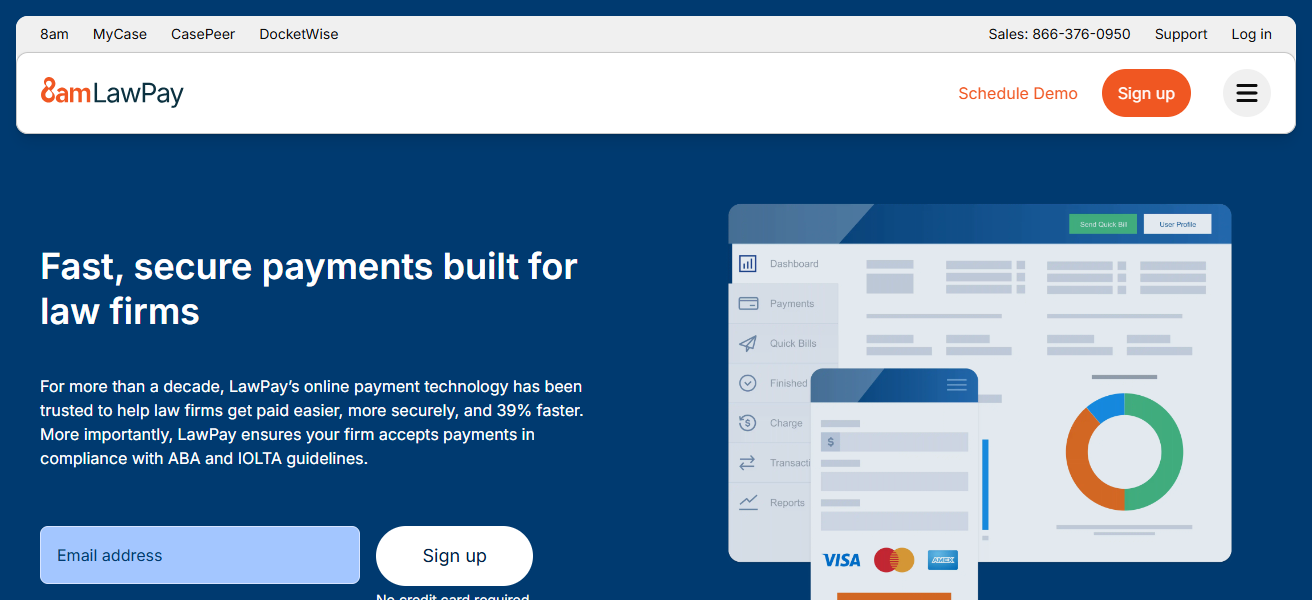
This is necessary for any remote company that needs to accept secure, PCI-compliant payments without manually assuming financial risk and creating a quick client payment journey.
| Pros | Cons |
|---|---|
| Fully compliant legal payments | Limited to payment processing only |
| Supports trust accounting rules | No case management features |
| Easy integration with legal software | Transaction fees apply |
| Secure PCI-compliant system | Not useful as a standalone platform |
8. Filevine
Filevine — A highly customizable case management system that is tailored to litigation-heavy and remote teams.
Gong is for advanced-level workflow automation, task dependencies, and a structured case pipeline. Recent updates powered by AI have improved data capture and document linkages across cases.

It is an asset that people know for flexibility, where firms can mold workflows according to the numerous demands of complex legal processes.
It has a centralized dashboard that is great for remote teams, allowing real-time collaboration | tracking case status | document organization in one place.
| Pros | Cons |
|---|---|
| Highly customizable workflows | Complex setup process |
| Strong case tracking system | Can be overwhelming for small firms |
| Advanced automation features | Higher cost for full features |
| Great for litigation teams | Requires training for optimization |
9. LEAP Legal
LEAP Legal Software is your all-in-one legal practice software that integrates document automation, billing, and case management.
Small and mid-size firms that are moving to working remotely use it extensively. Recent updates consist of cloud accessibility from mobile phones and the option to draft using AI-powered tools.
LEAP focuses on jurisdiction-based templates and legal forms, reducing the time spent on manual drafting work.
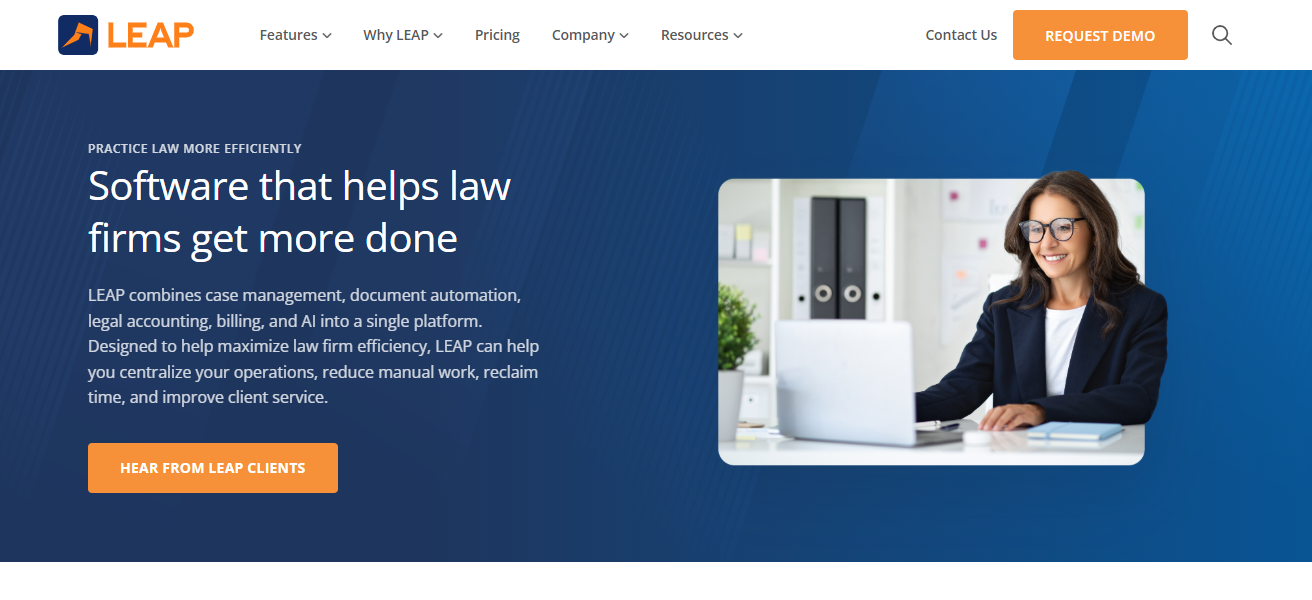
Being the 1st-200th solution, you have an integrated ecosystem, which means lawyers can manage cases from new case development and management to billing, document drafting, and noting, etc.
Without moving from one app to another or having your employees pick up multiple solutions, thus making the remote legal workflow more efficient.
| Pros | Cons |
|---|---|
| All-in-one legal solution | Limited flexibility outside templates |
| Strong document automation | Subscription cost can be high |
| Mobile and cloud access available | Best suited for specific jurisdictions |
| Reduces manual drafting work | Interface feels traditional |
10. Relativity
Relativity is a highly scalable e-discovery and legal data analytics platform for remote litigation and compliance teams.
This is used to handle a vast amount of digital evidence with AI-backed review, search, and categorization solutions.

These include generative AI for document summarization and advances in predictive coding. Complex litigation, investigations, and regulatory cases make it essential.
Remote teams employ it for secure collaboration over large datasets, audit-ready compliance with the necessary regulations, and high-velocity legal review workflows.
| Pros | Cons |
|---|---|
| Powerful e-discovery platform | Very expensive enterprise tool |
| AI-driven document analysis | Requires technical expertise |
| Handles large datasets efficiently | Not suitable for small firms |
| Strong compliance and audit tools | Setup and training time high |
Cocnlsuion
Conclusion: Contract automation barely used the colour, which was rarely explained in the book, and I curse writing another post.
Solutions such as Ironclad, DocuSign CLM, or Luminance work to make organisations more efficient and assist with repetitive manual legal tasks to ensure stronger compliance management.
With AI adoption continuing to expand in 2026, this new legal tech revolution by companies listed will be impacting global contract management, legal drafting and enterprise legal operations forever.
FAQ
What are legal workflow tools?
Legal workflow tools help law firms automate tasks, manage cases, and improve remote collaboration.
Why do remote law firms need workflow software?
Remote firms use workflow software to improve productivity, communication, compliance, and document management efficiently.
Which features are important in legal workflow platforms
Important features include cloud storage, task automation, billing, case tracking, and secure communication.
Can legal workflow tools support remote collaboration?
Yes, most platforms provide real-time collaboration, file sharing, and remote team communication features.