In this article, I explore Real World Asset (RWA) Oracles: How Chainlink supports institutional T-bill tokenization, as decentralized oracle technology merges traditional finance with blockchain.
With data feed security, Proof of Reserve, and cross-chain interconnectivity, Chainlink is changing how institutions access tokenized U.S. Treasury bills and impacting the future digital asset markets.
Overiew
Chainlink’s oracle technology will power institutional-grade tokenization, allowing on-chain representation of U.S. Treasury bills (T-bills) and other real world assets (RWAs) with trust, transparency, and interoperability.
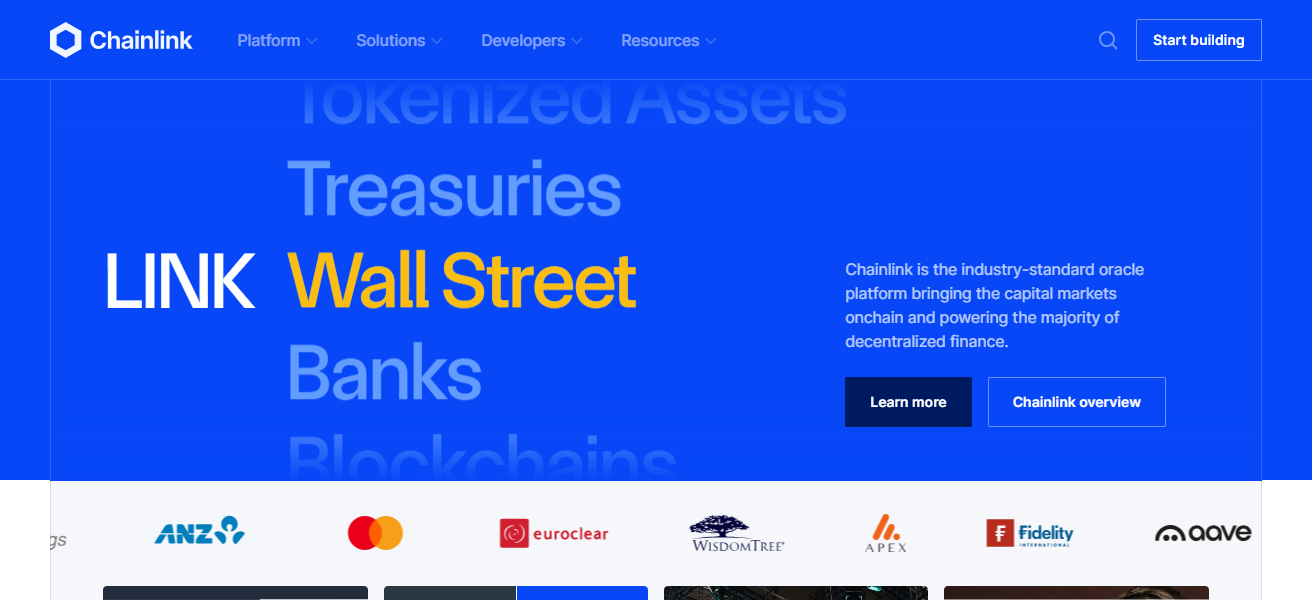
With an innovative mix of decentralized data feeds, Proof of Reserve, and cross-chain technology, Chainlink will integrate traditional finance and blockchain.
Real-World Asset (RWA) Tokenization: Why It Matters
RWAs are real-world financial instruments such as T-bills, real estate, and commodities, which are digitally represented on the blockchain.
Because of the following factors, institutional interest is growing in tokenized RWA:
- Liquidity: With partial ownership and the ability to trade any time.
- Transparency: Confirmation of reserves on the blockchain.
- Efficiency: Settlements are faster than traditional systems.
In 2025, the RWA market went beyond $50 billion, with T-bills becoming the most favorable first investment because of their stability and clear regulations.
Chainlink’s Role in T-Bill Tokenization

Decentralized Data Feeds
With the help of Chainlink oracles, off-chain interest rates, market data, and other relevant information will be delivered in real time to smart contracts.
This allows tokenized T-bills to provide accurate yields and valuations, reducing counterparty risk.
Proof of Reserve (PoR)
With PoR, institutions can demonstrate that off-chain T-bills are fully backed by on-chain tokens.
This audit prevents the risk of ‘fractional reserves’ and provides reassurance to regulators and investors.
Cross-Chain Interoperability Protocol (CCIP)
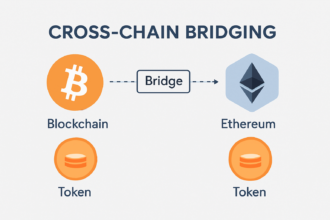
With Chainlink’s CCIP, tokenized T-bills can be transferred in a borderless manner across different blockchains.
This provides access to a global liquidity funnel that can be leveraged by DeFi, banking, and asset management services.
Institutional Adoption and Case Studies
Backed Finance (Switzerland): Leverages all of Chainlink’s services to tokenize a range of real-world assets (RWAs), including liquid and compliant short-term government bonds.
Collaborations with JPMorgan, Swift, UBS, and Ondo Finance: Illustrate how major Wall Street players rely on Chainlink for secure and compliant infrastructure for tokenization.
The partnerships indicate that the tokenization of T-Bills is no longer research-focused, but is becoming part of the fabric of traditional finance.
Advantages for Organizations
Risk Mitigation: Because of the on-chain visibility, the chances of fraud or manipulation are minimal.
Regulatory Compliance: Data feeds from Chainlink can help stay within the bounds of the law when dealing with regulators.
Cost Saving: Triggering the automation of the settlement process, along with the management of the collateral, will help drive costs down.
Business Growth: Tokenized T-bills provide new opportunities for yield by being incorporated into DeFi protocols.
Business Growth: The tokenized T-bills provide new opportunities for yield by being incorporated into DeFi protocols.
Obstacles and Risks
Regulatory Risk: Even though T-bills are fairly safe, the tokenization of wider RWAs takes place within a moving legal framework.
Blockchain Adaptation: The legacy systems need to be adjusted to accommodate the new blockchain flow.
The Adaptation of Oracle Networks: The more widely adopted they are, the more needs to be done to protect and optimize the networks from abuse.
Future Look
The Convergence of Finance and DeFi: Tokenized T-bills will serve as a conduit, allowing institutions to experiment with adopting blockchain while retaining exposure to safe assets.
Beyond T-Bills: The next to be tokenized assets are anticipated to be real estate, carbon credits, and intellectual property rights.
Chainlink Being the Benchmark: Chainlink, much like SWIFT did for interbank messaging, will establish itself as the benchmark for Oracle infrastructure for RWAs, as a result of its reliability.
Conclusion
Chainlink is turning U.S. Treasury bills into RWA oracles that can be programmed, made liquid, and made accessible worldwide.
With the use of decentralized data, the Proof of Reserve system, and the solution to the interoperability and trust issue, Chainlink is not tokenizing, but rather changing the way institutions engage with the financial markets.
With accelerated adoption, tokenized T-bills may be the foundation of Chainlink, positioned to lead it.
FAQ
RWAs are tangible financial instruments—like U.S. Treasury bills, real estate, or commodities—that are represented digitally on blockchain networks for easier trading, settlement, and transparency.
T-bills are considered low-risk, highly liquid, and backed by the U.S. government. Their stability makes them an ideal entry point for institutions exploring blockchain-based finance.
Chainlink provides decentralized oracle infrastructure that connects off-chain data (like T-bill reserves and interest rates) to on-chain smart contracts, ensuring accuracy, transparency, and trust.
PoR verifies that tokenized T-bills are fully backed by real-world assets. This prevents fractional reserve risks and reassures regulators and investors that on-chain tokens correspond to actual securities.