In this article i will discuss the AI Tools That Replace Expensive Enterprise Software Subscriptions and how modern AI solutions are transforming the way businesses operate.
These tools help companies reduce software costs, automate workflows, and improve productivity by replacing multiple traditional
Enterprise applications with single intelligent platforms that deliver faster, smarter, and more efficient business operations across different departments.
Key Points & AI Tools That Replace Expensive Enterprise Software Subscriptions
ChatGPT replaces enterprise customer support, content creation, and documentation tools, reducing multiple expensive software subscriptions.
Notion AI replaces project management, wiki, and collaboration platforms with intelligent automation and summarization features.
Zapier AI replaces workflow automation software by connecting apps and eliminating costly integration enterprise tools.
Microsoft Copilot replaces multiple Office suite add-ons, analytics tools, and reporting software with AI assistance.
Grammarly Business AI replaces proofreading services, writing assistants, and corporate communication editing software tools platforms.
Salesforce Einstein replaces CRM analytics, sales forecasting tools, and customer insights platforms using AI automation.
HubSpot AI replaces marketing automation software, email campaign tools, and lead generation platforms efficiently systems.
Tableau AI replaces expensive business intelligence dashboards, data visualization tools, and reporting enterprise systems solutions.
Jasper AI replaces content marketing platforms, copywriting agencies, and SEO writing tools for businesses globally.
UiPath AI replaces robotic process automation software, reducing enterprise workload and operational costs significantly today.
10 AI Tools That Replace Expensive Enterprise Software Subscriptions
1. ChatGPT
ChatGPT is being employed as an inexpensive alternative to several enterprise software licenses, particularly in areas involving communication, content generation and knowledge management.
Businesses can use ChatGPT in one go instead of paying separately for writing aid, documentation, customer support chat systems and research platforms.
What it does is aids in the creation of emails, reports, marketing copy and even code. There is also efficient use of support team by getting immediate answer to customer queries.

This substantially reduces dependency on large support software systems and content agencies thus significantly insulating the operational cost
whilst increasing productivity, speed, efficiency for multiple departments in an organization without incurring more costs by purchasing additional SaaS tools.
| ChatGPT – Pros & Cons |
|---|
| Pros: Reduces need for multiple writing, support, and research tools in one platform |
| Pros: Speeds up content creation, coding, and customer support responses |
| Cons: May produce inaccurate information without human verification |
| Cons: Lacks deep domain-specific enterprise customization in some cases |
2. Notion
Notion AI also acts as an alternative to several enterprise tools used for project management,documentation and team collaboration.
Software packages such as wiki, task manager, and notes systems are individually paid for by companies. Notion encompasses all this into one AI powered platform.
It gives you automatic summarisation of meeting notes, generating project plans, creating documentation and organising workflows.

In most cases, this eliminates the need for multiple subscriptions, such as Confluence or Trello or Asana.
With its centralized knowledge storage and automation features, Teams allows teams to work together more quickly and efficiently whilst saving a lot of money for startups as well as enterprises seeking to cut down their software costs.
| Pros: Combines notes, tasks, and project management into one system |
| Pros: Improves collaboration with AI summaries and automation features |
| Cons: Can become slow or complex with very large enterprise databases |
| Cons: Limited advanced project management compared to specialized tools |
3. Zapier
Zapier AI integrates seamlessly into whoever it belongs eliminating the need of costly integration and automation platforms by connecting different apps without any coding needed.
A rudimentary enterprise generally coughs up for variety of tools simply to fit workflows between CRM systems, e-mail platforms, spreadsheets and databases.
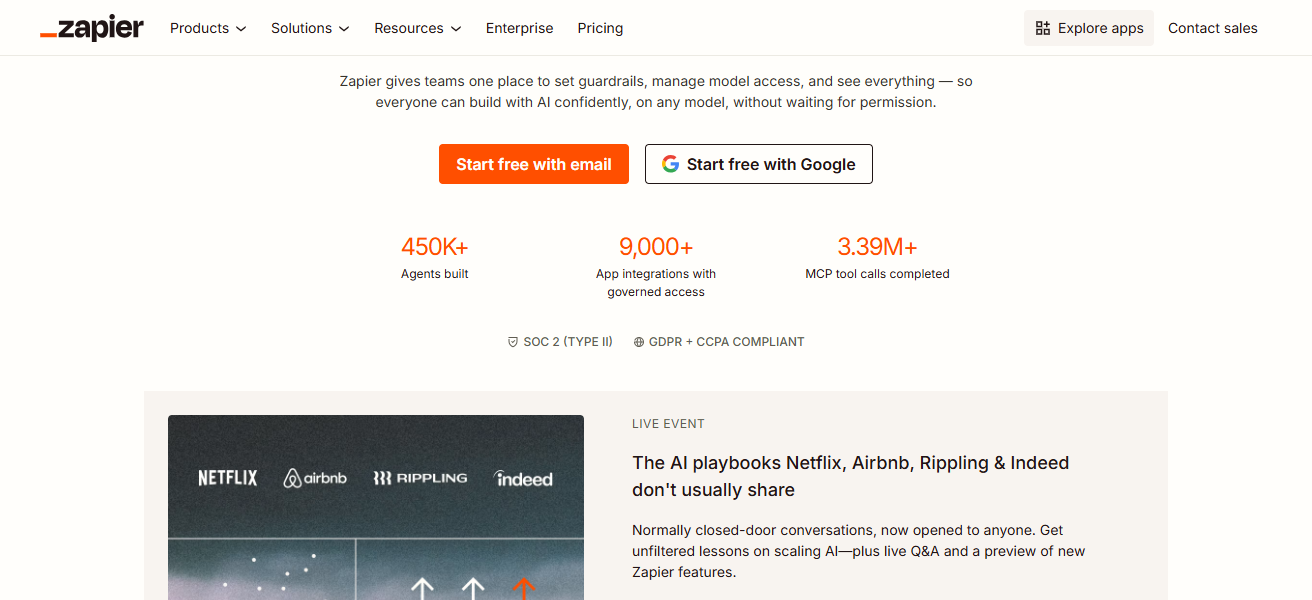
These processes can be automated by Zapier with the use of triggers and actions powered with AI. For instance, it can auto-mail, update in CRM, or sync between applications.
No need for expensive middleware software neither IT heavy integration systems are required. This means they get to save costs on labor, and not have to sign up for multiple
SaaS subscriptions, while also improving operational efficiency by automating hundreds of business applications.
| Pros: Combines notes, tasks, and project management into one system |
| Pros: Improves collaboration with AI summaries and automation features |
| Cons: Can become slow or complex with very large enterprise databases |
| Cons: Limited advanced project management compared to specialized tools |
4. Microsoft
With Copilot, Microsoft replaces the need for multiple enterprise productivity and analytics add-ons by leveraging AI to be built into individual Microsoft 365 applications.
Rather than buying separate tools for writing help, data analysis, reporting, and presentation design, businesses can – in effect – turn to Copilot inside Word, Excel PowerPoint and Outlook.

It automatically creates reports, summarizes emails, create spreadsheets and analyze data. This decreases reliance on third-party productivity software and business intelligence tools.
Organizations remain in a known environment which means improved efficiencies over using multiple vendors, lower training costs, and quicker, data-driven decisions without more costly enterprise software licensing.
| Pros: Integrated directly into Microsoft 365 tools for seamless use |
| Pros: Enhances productivity in writing, reporting, and data analysis |
| Cons: Requires Microsoft ecosystem subscription for full functionality |
| Cons: Limited flexibility outside Microsoft applications environment |
5. Grammarly
Grammarly AI is a substitute for expensive proofreading services, writing assistants, and corporate communication tools.
Often enterprises budget for full teams of editors or pay extra to use communication platforms that ensure professional writing.
Grammarly real-time grammar correction and punctuation repair tone adjustment brightness improvement spell checker, plagiary intelligibility It identifies email, reports, marketing content, and documentation on a large scale.

It reduces the requirement of spelling proofreaders as well as multiple writing tools by automating editing activities. This not only saves time and effort but also increases efficiency in business communication.
And with its support for teams wanting to develop consistency across the board on writing style, Grammarly Business is leading the way in replacing traditional editorial and communication software systems.
| Pros: Improves grammar, tone, and clarity in professional communication |
| Pros: Ensures consistent writing quality across teams and departments |
| Cons: May not fully understand complex technical or creative context |
| Cons: Premium features required for advanced enterprise use cases |
6. Salesforce
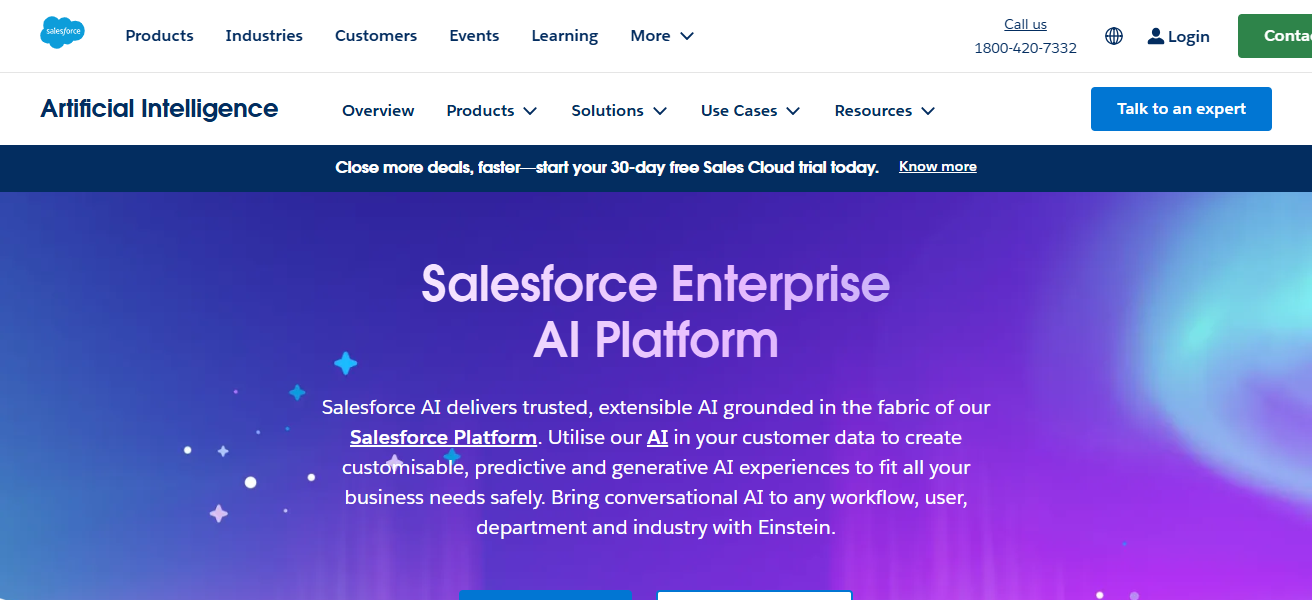
Salesforce Einstein provides a full collection of CRM analytics, forecasting and customer insight tools by bringing Artificial Intelligence right into Salesforce CRM.
So now you don have to pay for different business intelligence platforms, you can use them on Einstein and predict sales trends, analyze customer behavior, automate leads scoring. helps sales teams prioritize their opportunities and convert better.
Personalized campaign recommendations also help marketing teams. That reduces the need for standalone analytics software and third-party AI tools.
With smarter decision-making capabilities enabled within their CRM system, business achieves a new low-cost model of execution with increased efficiency, accuracy and performance.
| Pros: Provides powerful AI-driven CRM analytics and sales forecasting |
| Pros: Helps improve lead scoring and customer targeting accuracy |
| Cons: Works best only within Salesforce ecosystem |
| Cons: Can be expensive for small or mid-sized businesses |
7. HubSpot
There are a ton of marketing automation software, email campaign tools, and other lead generation platforms that you could use — with HubSpot AI, it replaces them all by being one intelligent platform.
Traditionally, businesses have separate tools for email marketing, landing pages, CRM and analytics. HubSpot AI utilizes technology to automate content creation, customer segmentation and campaign optimization. It allows companies to somewhat capture, engage and convert leads.

Drive marketing success without incurring further SaaS subscription fees AI-driven analytics can enhance the performance of transactions that you already do at scale.
Organizations have centralized marketing operations, simpler software stack and better ROI. This means HubSpot is a stronger substitute for multiple enterprise marketing systems that work half-heartedly and in isolation.
| Pros: Provides powerful AI-driven CRM analytics and sales forecasting |
| Pros: Helps improve lead scoring and customer targeting accuracy |
| Cons: Works best only within Salesforce ecosystem |
| Cons: Can be expensive for small or mid-sized businesses |
8. Tableau
Tableau AI uses none of things that enterprises pay a ton for business intelligence and data visualization tools to do reporting and analytics.
To get an overview of business performance, businesses frequently invest in different dashboards and data processing platforms.

The task is made easy using Tableau AI, which analyzes raw data and automatically generates visual insights. It finds trends, patterns and anomalies without in-depth technical knowledge.
Quickly Allows businesses to create dashboards and reports that are interactive. Decreased dependency on separate analytics software and data science tools.
By making the decision to move Tableau AI as their B.I., organizations cut costs while enabling quicker decision-making!
| Pros: Creates powerful data visualizations from complex datasets easily |
| Pros: Enables faster decision-making through automated insights |
| Cons: Learning curve can be steep for beginners |
| Cons: Large enterprise setups may still require additional BI tools |
9. Jasper
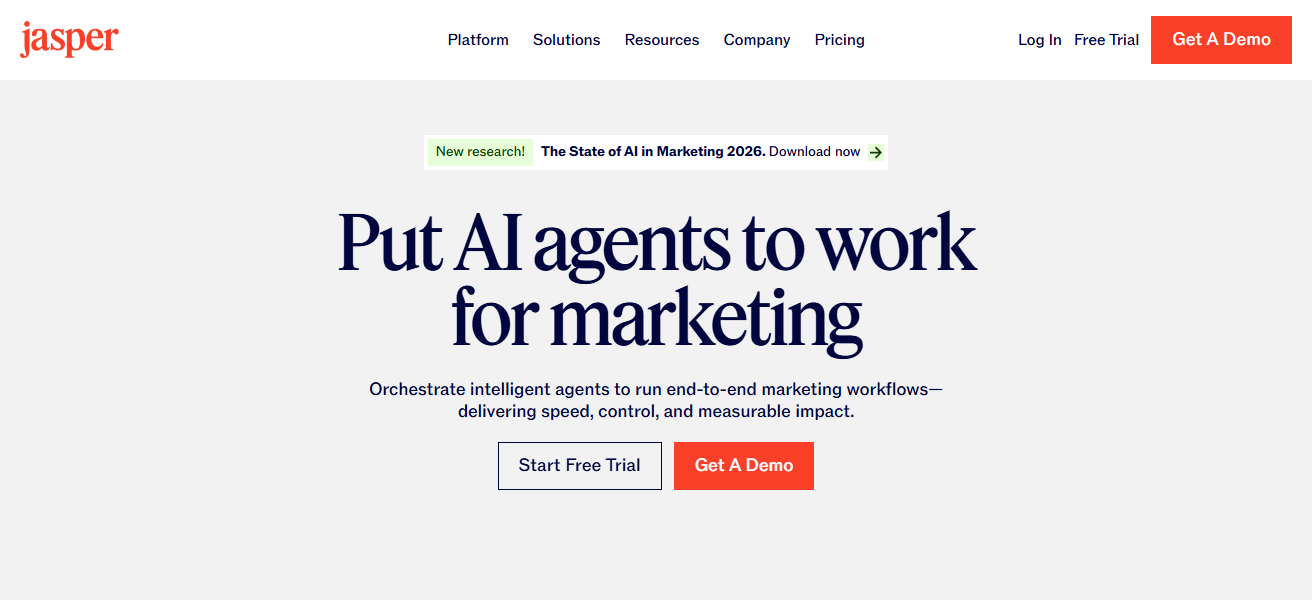
You can find Jasper AI taking the place of content agencies, copywriting services, and SEO writing tools that enterprises hire.
Content creation such as blog posts, ads for social media and emails are generally a content-intensive area, whereby businesses typically invest heavily in outsourcing.
Get marketing copy typewritten in just a couple of seconds simply by asking or giving a quick prompt with Jasper AI It assists with maintaining consistency in brand tone, SEO, and writing content in various languages.
It reduces the dependency on several writing tools and 3rd party agencies. Here are a few of the ways that marketing teams can leverage
AI technology to create more high quality content, faster, and less expensively. Subscription Costs Reduced Substantially with Jasper AI to Scale Content Production Efforts.
| Pros: Generates high-quality marketing and SEO content quickly |
| Pros: Maintains brand tone consistency across multiple content types |
| Cons: Output may require human editing for accuracy and originality |
| Cons: Subscription cost can be high for heavy content usage |
10. UiPath
Ai replaces robotic process automation (RPA) software that UiPath uses to perform Goto tasks logistically, building enterprise workflow systems for its customers who are working on repetitive business tasks.
More often than not, organizations spend a significant sum on automation platforms for data entry automation, invoice processing, and reporting tasks.
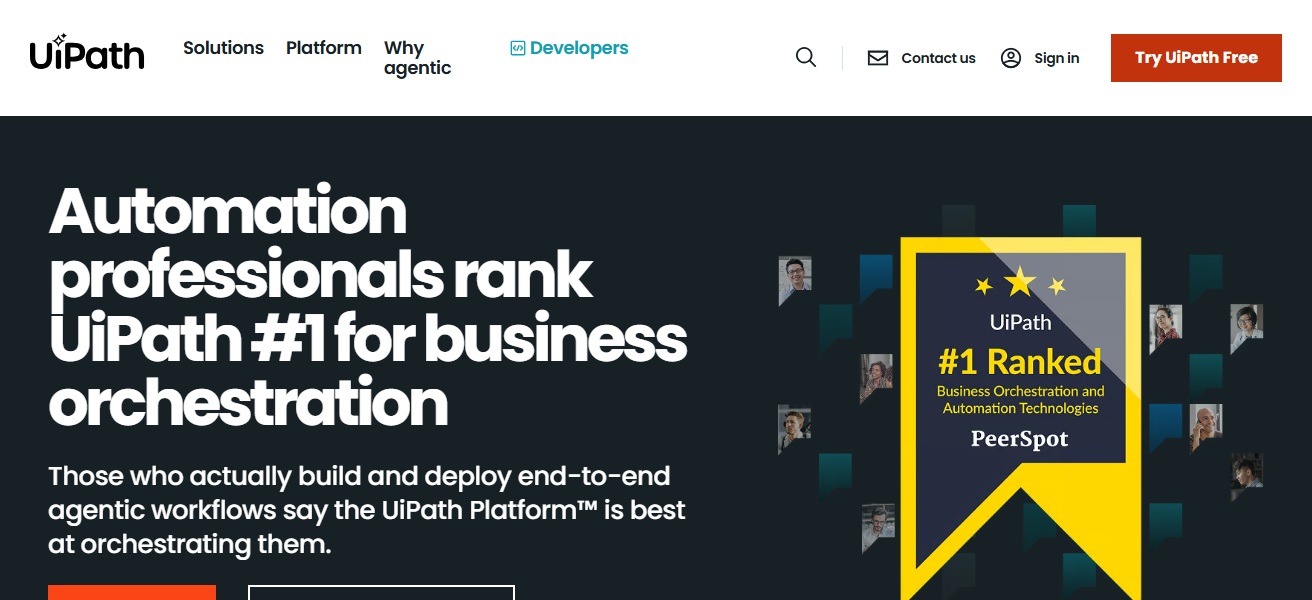
Intelligent bots that learn and adapt making these from UiPath AI automated Less manual effort, fewer mistakes and greater speed of operations.
Due to automation tools, repetitive processes are no longer requiring businesses to have multiple automation tools or large IT teams.
This results in cost savings and increased efficiency. UiPath AI has been used in finance, hr and operations to automates enterprise workflows at the back-end.
| UiPath AI – Pros & Cons |
|---|
| Pros: Automates repetitive enterprise tasks like data entry and invoicing |
| Pros: Reduces human errors and improves operational efficiency |
| Cons: Setup and implementation can be complex for beginners |
| Cons: Requires ongoing maintenance for large-scale automation systems |
1AI Tools That Can Replace Expensive Subscription Paid Enterprise Software Our Method For Choosing This
- Concentrating on AI apparatuses that bring down complete business programming costs altogether
- Selected tools used at large what startups, SMEs and large enterprises
- Wished for tools with great automation and workflow efficiency functionalities
- AI platforms spanning core business functions including CRM, marketing and analytics
- Assessed tools based on their potential to replace conventional manual processes.
- Ease of Integration with Existing Business Systems
- Tool selection with scalable solutions for growing organizations.
- Emphasis on productivity-related AI tools: products that boost efforts in different business departments
- Constantly making sure that each tool provides a measurable time savings and operational efficiencies
Conclusion
To sum up, AI Tools That Replace Expensive Enterprise Software Subscriptions are changing the way modern businesses operates by spending lesser money & achieving higher efficiency.
These tools integrate automation, analytics, communication and productivity features into single platforms.
For companies, they serve to make operations easier – replacing multiple subscriptions to more traditional software can earn significant savings
While also saving time and improving performance. In general, AI solutions are helping make enterprise operations smarter, quicker and larger in ways never experienced before.
FAQ
What are AI tools that replace enterprise software?
AI tools that replace enterprise software are platforms that combine multiple business functions like automation, analytics, writing, and CRM into one system, reducing the need for multiple paid subscriptions.
Which AI tool is best for content creation?
ChatGPT and Jasper AI are widely used for content creation, including blogs, marketing copy, emails, and technical writing.
Can AI tools replace project management software?
Yes, tools like Notion AI can replace project management platforms by combining tasks, documentation, and collaboration in one place.
Is Microsoft Copilot enough for office work?
Microsoft Copilot enhances Word, Excel, and Outlook, often reducing the need for extra productivity and reporting tools.