This is a more general article about the Best Tokenized Community Platforms for Creator Economies, where I talk about blockchain-based tools that are reshaping how creators earn, engage, and grow their communities.
Discover top-rated platforms that you can use to monetize directly, own communities, and leverage decentralized engagement models.
This guide will give you an understanding of what the future holds for the creator economy by tokenized ecosystems.
Key Points & Best Tokenized Community Platforms for Creator Economies
Audius (AUDIO) is a decentralized music streaming platform empowering artists through a tokenized community engagement and rewards system globally
Steemit (STEEM) Steemit blockchain blogging platform rewarding users with STEEM tokens for publishing and curating content online
Lens Protocol Lens Protocol decentralized social graph enabling creators to own content and monetize communities directly and efficiently
Mirror Platform: A mirror publishing platform for writers using blockchain to tokenize articles and monetize readership effectively globally
Rareible Rarible NFT marketplace allowing creators to mint, sell, and earn royalties on digital assets easily
AlterFUN is a tokenized creator platform enabling community-driven content monetization and engagement for the digital creators ecosystem
CrowdPad is a crowdfunding platform helping creators raise funds through tokenized community support and engagement efficiently globally
Hive (HIVE) Hive decentralized blockchain ecosystem for social blogging, rewarding creators with native crypto tokens instantly globally
Brave Browser (BAT) is a privacy browser that rewards users with Basic Attention Token for viewing ads in a secure ad ecosystem
Seed Club Seed Club web3 community accelerator helping creators build and scale tokenized communities globally at scale
10 Best Tokenized Community Platforms for Creator Economies
1. Audius (AUDIO)
Audius is a community-owned music streaming platform designed to eliminate the middlemen between artists & listeners.
AUDIO Token enables artists to upload, distribute and monetise music directly. All artists retain the ownership of their content, and they will be rewarded based on a combination of streams and engagement.
Since the platform is community-governed, decisions regarding protocol upgrades and the ecosystem are made by token holders.
Audius connects to Web3 wallets, allowing for publicly visible revenue sharing. It is popular for independent musicians who are looking for alternatives to Spotify
offering higher potential royalties, content censorship resistance and a global fan-driven monetization model.
| Pros | Cons |
|---|---|
| Artists earn directly from listeners without intermediaries | Limited mainstream user adoption compared to Spotify |
| Full ownership of music content | Some features are still under development |
| A network can face scalability limitations | Some features still under development |
| Transparent royalty distribution | Revenue still depends on the platform token economy |
| Global access for independent musicians | Competition from established streaming giants |
2. Steemit (STEEM)
Steemit is a decentralized social blogging platform that awards users STEEM tokens for publishing, commenting, and curating content.
It functions as a reward system where cryptocurrency is awarded based on upvotes in the community to encourage quality content writing.
Steemit makes a break with the dependence on central advertising by directly rewarding those who often contribute.

Content valued by both writers and readers creates a decentralized publishing economy. The platform also covers a spectrum of topics, including Technology, Finance, and Lifestyle.
It has been among the first Web3 social networks to show how using blockchain can better align incentives between content creators and audiences via transparent reward mechanisms.
| Pros | Cons |
|---|---|
| Users earn crypto for posting and engagement | Rewards system can be manipulated by whales |
| Early pioneer of blockchain blogging | Interface feels outdated compared to modern platforms |
| Decentralized reward distribution | Declining user activity over time |
| Covers wide range of topics | Limited mainstream appeal |
| No dependence on ads for income | Complex onboarding for new users |
3. Lens Protocol
Lens Protocol is a decentralized social graph protocol aimed at powering Web3 social media applications. This not only gives users the ability to have ownership of their profiles, followers, and content as NFTs on the blockchain.
So those users can always stay with the platform, never losing their data portability and giving creators an easy way to switch platforms whilst keeping their audience.
It grants monetization through token-gated content, subscriptions, and incentives in a community. It embraces modular app development, allowing the same social graph to be used by several different front-end platforms.
This structure enables interoperability, decreases platform dependency, and builds a creator-first economy where ownership of the content and monetization is fully controlled by the users.
| Pros | Cons |
|---|---|
| Users fully own social graph and content | Requires technical knowledge to build apps |
| Portable followers across platforms | Still early-stage ecosystem |
| Strong Web3 developer ecosystem | Limited mass adoption currently |
| Enables token-gated monetization | Dependent on Ethereum ecosystem costs |
| Highly interoperable design | User experience varies across apps |
4. Mirror Platform
Mirror is a decentralised publishing platform that enables writers and creators to mint their content by issuing content NFTs.
This supports crowdfunding, subscriptions, and community-backed publishing projects on the blockchain.
Instead of going through the gatekeepers of traditional publishing, authors can crowdfund their creative work directly from supporters.
Tokenized entries are also supported by Mirror, allowing readers to buy or own the digital writing itself. It features integrated crypto wallets for seamless payments and proof of ownership.
Indieweb is especially popular with independent journalists, storytellers and Web3 creators seeking transparent monetization and face-to-face engagement: an environment for decentralized publishing infrastructure.
| Pros | Cons |
|---|---|
| Writers can tokenize articles as NFTs | Not suitable for casual short-form content |
| Direct crowdfunding from readers | Audience base still relatively small |
| No publishing gatekeepers | Requires crypto wallet knowledge |
| Transparent ownership of content | Competition from traditional blogging tools |
| Strong creator monetization tools | Market volatility affects earnings |
5. Rarible
Rarible is a decentralized NFT marketplace that allows creators to mint, buy, and sell digital assets (art, music, collectibles).
The protocol uses governance tokens to enable users to vote on decisions regarding the platform. Royalty Mechanism Rarible allows creators to get paid a percentage of secondary sales of the NFTs they create. This offers long-term income streams as opposed to one-time payments.
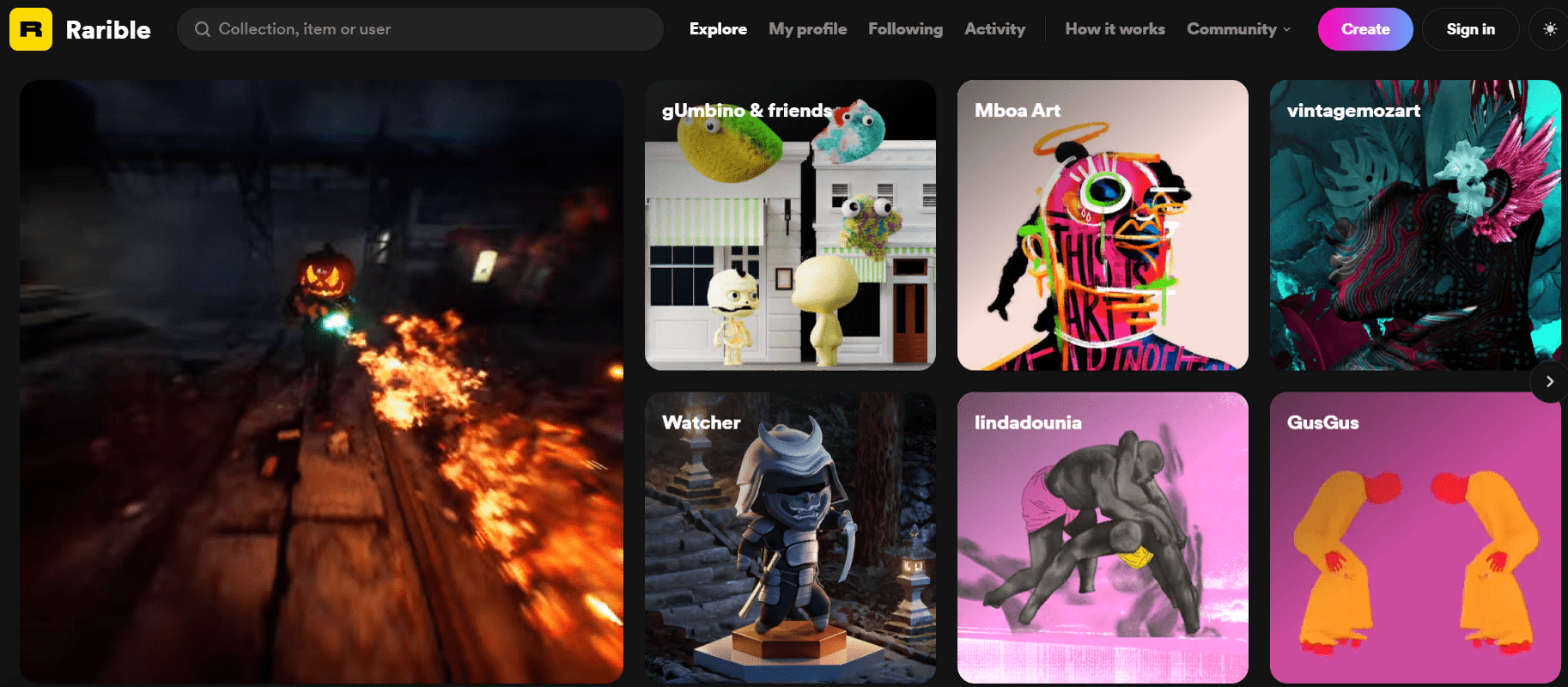
The platform is built on several blockchains, which increases ease of use and liquidity for tokens. Its importance in the creator economy is basically adding worldwide visibility
Ownership rights and decentralized monetization without relying on a traditional Broadway or gallery for artists.
| Pros | Cons |
|---|---|
| Easy NFT minting for creators | High competition among NFT creators |
| Royalty earnings from secondary sales | NFT market is highly volatile |
| Multi-chain support increases reach | Gas fees can be expensive |
| Community governance via token | Quality control is limited |
| Global exposure for digital artists | Market speculation dominates usage |
6. AlterFUN
We are a tokenized creator platform specializing in community-driven content monetization. It enables creators to cultivate engaged communities while being compensated via digital goodies, bounties, and participation incentives.
Users directly support creators with tokens between them on the platform, which strengthens their relationship towards one another.
It allows for decentralized ownership structures where creators retain control over their IP. For up-and-coming Web3 creators looking for a more creative way to generate social media profits,
The platform has tools that enable engagement, token distribution, and scalable community growth in a blockchain-powered environment.
| Pros | Cons |
|---|---|
| Strong community-driven monetization | Limited public adoption and visibility |
| Direct fan-to-creator support | The platform ecosystem is still evolving |
| Token-based engagement rewards | Unclear long-term sustainability |
| Creator ownership of content | Smaller creator base |
| Interactive audience participation | Lack of mainstream integration |
7. CrowdPad
CrowdPad is a crowdfunding platform on blockchain that lets you raise capital so creators can raise funds. It lets fans become early investors in projects with her digital tokens, working to elicit shared incentives with creators.
CrowdPad provides transparent and decentralized funding mechanisms, removing traditional fundraising barriers. Creators are able to simultaneously run campaigns, distribute rewards, and grow loyal communities.
This is also an especially useful platform for startups, artists, and developers who want community validation and backers.
With blockchain technology, CrowdPad can keep everyone involved truly accountable, and fund flows traceable with global participation, making it a cornerstone of decentralized creator economies and the development of early-stage projects.
| Pros | Cons |
|---|---|
| Tokenized crowdfunding for creators | Depends heavily on project success rates |
| Global decentralized funding access | High risk for investors |
| Transparent fund tracking | Limited regulatory clarity |
| Builds early community support | Adoption still niche |
| Supports multiple creator types | Competition from established crowdfunding platforms |
8. Hive (HIVE)
Hive is a decentralized blockchain ecosystem based on social blogging and monetizing content. The platform offers users HIVE tokens in exchange for publishing, curating, and commenting on content shared across its numerous applications.
Hive began life as a community fork that was more focused on decentralization and censorship resistance. It is an interference with many dApps, blogging platforms and gaming ecosystems, and social networks.
Users almost completely own their data, while the reward process is done transparently through community voting mechanisms.
Hive is highly popular among content creators looking for alternatives to the more traditional social media monetization. Suitable for scalable creator-driven ecosystems due to its fast transactions and feeless structure.
| Pros | Cons |
|---|---|
| Fast and feeless transactions | Smaller ecosystem compared to major blockchains |
| Strong censorship resistance | Limited mainstream recognition |
| Multiple dApps available | User interface varies across apps |
| Earn rewards for engagement | Token value volatility |
| Full ownership of data | The developer ecosystem is still growing |
9. Brave Browser (BAT)
The Brave Browser is a privacy-centered web browser that is built with Basic Attention Token (BAT) for user and creator rewards.
The browsing experience is speedier, with the benefit of incorporating ad and tracker blockers by default. Users can opt into privacy-respecting ads, which earn them BAT tokens in return.
Users donate BAT to content creators, also a form of direct monetization. This creates a balanced ecosystem where each part – advertisers, users, and creators is benefiting fairly.

Brave is revolutionizing digital advertising by removing invasive tracking and allowing for visible value exchange.
It is popular for secure browsing, with the widest global use case of decentralized creator monetization models.
| Pros | Cons |
|---|---|
| Users earn tokens for viewing ads | Limited ad availability in some regions |
| Strong privacy protection | BAT value fluctuates significantly |
| Built-in ad blocker improves speed | Rewards may be low for casual users |
| Direct creator tipping system | Requires user opt-in for ads |
| Easy onboarding for non-crypto users | Browser ecosystem competition is strong |
10. Seed Club
Seed Club is a community accelerator for Web3 and helps the creator economy by supporting creators to build, launch, and grow tokenized communities.
It explores social tokens, decentralized governance, and creator-led economies. Seed Club — where mentors help creators build projects,
funding and tools up for grabs to any community-driven project, helping turn audiences into active stakeholders It enables incentivizing

e-aligned experimental token models between founders and members of the community.
Notable Web3 social projects in its ecosystem have been developed over the course of it. Seed Club is pivotal for building the future of decentralized creator economies by developing new ways
To invite community ownership, engagement, and token-based growth pattern evolution that will help creators on a sustainable basis.
| Pros | Cons |
|---|---|
| Strong Web3 community accelerator | Not a direct consumer platform |
| Helps launch successful tokenized projects | Highly selective participation |
| Provides funding and mentorship | Early-stage experimental models |
| Builds strong creator communities | Limited accessibility for beginners |
| Drives innovation in social tokens | Outcomes depend on project success |
How To Choose the Best Tokenized Community Platforms for Creator Economies
Monetization Model: Make sure their monetization model allows you to earn directly on the platform, using tokens, NFTs, subscriptions, or rewards.
Full User Ownership: Choose platforms that give creators 100% ownership over their content, data, and audience.
Community Participation: Select platforms with high-voting, tipping, or reward — based systems
Blockchain Security: Ensure the platform operates on a trusted and stable blockchain architecture.
User-Friendliness: Go for platforms that come with easy onboarding, particularly if you have non-technical users.
Audience Size: For larger active communities, there are more opportunities to earn and be visible.
Growing versus Stagnating: Keep on platforms that are very active in terms of development and long-term roadmap.
Interoperability: Where the ability to transfer between platforms and carry audiences from one platform is a necessary good thing.
Reputation & Adoption — Verify actual history, usage by creator owners, and ecosystem maturity
Why are tokenized community platforms important for the future of the creator economy?
Direct Earnings: Fans can earn directly from Creators without intermediaries or middlemen.
Own Your Stuff: Creators own all content, data, and audience.
Equitable Distribution of Revenues: Blockchain enables automatic and transparent reward distribution.
Community Engagement—Fans get to physically participate via tokens and gain some governance rights.
Worldwide Reach: Unlike other platforms, creators share with the whole world
Diverse Income Sources: Tokens, NFTs, subscriptions, and tipping systems
Conclsuion
Final thoughts: The Best Tokenized Community Platforms for Creator Economies are reshaping the way creators earn online, engage with their community, and grow.
These already existing kinds of platforms on blockchain are associated with direct monetization, true ownership of content, and an integrated community.
They cut out intermediaries and empower creators everywhere, from music to writing to social media. In the end, they are significant steps for moving to a more decentralized and market-driven digital creator economy.
FAQ
What are tokenized community platforms?
They are blockchain-based platforms where creators earn through tokens, NFTs, and community engagement.
Which are the best tokenized community platforms?
Audius, Steemit, Lens Protocol, Mirror, Rarible, Hive, and Brave are popular options.
How do creators make money on these platforms?
Through token rewards, subscriptions, NFT sales, and fan donations.
Do creators own their content on these platforms?
Yes, most tokenized platforms give full ownership of content and audience.