In this article I am going to talk about New Copy Trading Systems Brokers Are Testing, regarding modern brokers are upgrading copy trading with AI, automation and smarter risk tools.
They are designed to enhance accuracy, speed and choice of trader while reducing emotional influence. In words, you will see how these innovations are changing the face of forex, crypto and multi-asset trading all over the world.
Key Points & New Copy Trading Systems Brokers Are Testing
| Copy Trading System | Explanation |
|---|---|
| AI Signal Mirror Trading | AI automatically mirrors top traders trades with dynamic risk adjustment instantly executed |
| Social Copy Ranking System | Ranks traders by social performance metrics enabling real time copy selection system |
| Risk Weighted Copy Allocation | Allocates trade sizes based on follower risk profiles and volatility exposure levels |
| Multi Broker Copy Routing | Routes copied trades across multiple brokers for better execution pricing optimization engine |
| Latency Sync Copy System | Reduces delay between signal provider and follower trade execution matching engine fast |
| AI Sentiment Copy Filter | Filters copied trades using market sentiment and news analysis data scoring model |
| Dynamic Stop Loss Copier | Adjusts stop losses automatically across copied trading positions based volatility tracking system |
| Hybrid Manual AI Copy Mode | Combines human trader selection with AI optimization for copying execution tuning layer |
| Copy Trade Fraction Scaling | Scales copied trades fractionally based on account equity size risk management logic |
| Smart Leaderboard Copy Engine | Selects top traders using real time performance leaderboard analytics scoring ranking system |
10 New Copy Trading Systems Brokers Are Testing
1. AI Signal Mirror Trading
AI Signal Mirror Trading is a more sophisticated version of copy trading, with AI ensuring optimal trades by scanning the top traders and instantly mirroring their positions.
This data method does not operate on traditional copy trading, but instead continuously analyzes trade patterns, volatility and success rates to modify copying in real-time.

This helps to bring down emotional bias, along with enhancing the speed of execution. Brokers are rigorously testing it – improving accuracy, reducing losses and providing smarter automated copies of professional traders in forex, crypto and commodity markets.
| Pros | Cons |
|---|---|
| Extremely fast real-time trade replication | High dependency on AI accuracy |
| Reduces emotional trading mistakes | Can misinterpret volatile market spikes |
| Improves execution consistency | Requires strong infrastructure |
| Works across multiple asset classes | Limited human judgment in edge cases |
| Adapts quickly to market changes | Possible over-automation risks |
2. Social Copy Ranking System
The Social Copy Ranking System rates traders from major public data feeds based on performance, engagement and activity metrics that are live.
Instead of simply utilizing profit history, it also takes into account community feedback, risk stability, and follower retention rates.

Traders are continuously scored and ranked on leaderboards to assist users in selecting trustworthy signal providers.
Testing This for Transparency and Trust–This is something Brokers are testing. It promotes and induces healthy competition between traders while also enabling followers to make more informed and data-backed copy trading decisions quickly.
| Pros | Cons |
|---|---|
| Transparent trader evaluation system | Can be manipulated by engagement tactics |
| Includes community feedback signals | Not always equal to real trading skill |
| Encourages trader accountability | Popular traders may be overfollowed |
| Helps beginners choose wisely | Rankings may fluctuate frequently |
| Promotes healthy competition | Short-term bias may affect scores |
3. Risk-Weighted Copy Allocation
Risk Weighted Copy Allocation dynamically scales trade sizes in accordance with the risk appetite and account profile of each follower.
The alternative does not uniformly copy trades; rather, it assesses volatility exposure + drawdown history + leverage levels and deploys capital accordingly.

It ensures a limited exposure and also helps to reduce the probability of sudden losses. Tested by brokers, it’s a measure to balance out copy trading with safety and individual tailoring.
It allows conservative users to take smaller positions, while aggressive users can scale exposure based on their desired trading risk appetite.
| Pros | Cons |
|---|---|
| Customizes risk per user profile | Complex risk modeling required |
| Reduces large unexpected losses | Conservative users may get lower returns |
| Improves capital protection | Misconfigured profiles can distort results |
| Supports all risk levels | Slower growth for low-risk accounts |
| Enhances portfolio stability | Requires continuous recalibration |
4. Multi Broker Copy Routing
Copy Routing Multi Broker allows copy routing to multiple brokers simultaneously. Prior to routing each trade, the system seeks the best pricing, liquidity, and execution speed.
It not only minimizes slippage but also enhances the efficiency of scraping all trades together. Brokers are testing it out to allow users increased flexibility for worldwide access.

In addition, it avoids the risk of dependency on a single broker, and you will get better order execution quality and a more robust service in cases of elements such as higher volatility in the market or high load on servers in trading environments.
| Pros | Cons |
|---|---|
| Better execution prices | Integration complexity across brokers |
| Reduces slippage significantly | Possible synchronization delays |
| Increases global accessibility | Higher operational costs |
| Improves liquidity access | Regulatory differences across brokers |
| Reduces single-broker dependency | Technical failures can cascade |
5. Latency Sync Copy System
Latency Sync Copy System reduces the time delay between how fast a signal provider delivers to the followers.
The platform employs rapid servers, optimized APIs, and real-time data synchronization to ensure that trade replication is almost instantaneous.

In markets like forex and crypto, even milliseconds matter. Brokers are experimenting with this model to enhance the precision of execution and close the price-dislocation gap.
It allows followers to get nearly the same entry and exit points, making copy trading more efficient, as if everyone were a professional trader!
| Pros | Cons |
|---|---|
| Near-instant trade replication | Requires high-speed infrastructure |
| Reduces price mismatch risk | Expensive server maintenance |
| Improves execution accuracy | Still vulnerable to extreme volatility |
| Closer to professional trading speed | Network issues affect performance |
| Enhances user trust | Difficult global scaling |
6. AI Sentiment Copy Filter
AI Sentiment Copy Filter — an intelligent indicator that deals with news and social media, analyzes them, scans market sensitivity to different types of events in order to determine the right second for copying trades.

This helps to remove risky or emotional trades, that will not be in line with general market conditions. The system analyzes bullish or bearish signals of various signals. Brokers use it to minimize mindless mimicking.
They can only rely on sentiment-validated strategies, which allows for a more stable long-term orientation and hermetically protects the user from sudden reversals in market sentiment or decision based on misleading news.
| Pros | Cons |
|---|---|
| Filters emotionally driven trades | Sentiment data can be inaccurate |
| Uses real-time news analysis | May delay execution decisions |
| Improves trade quality selection | Over-filtering can miss opportunities |
| Reduces misinformation impact | Requires large data processing power |
| Enhances long-term stability | Bias in data sources possible |
7. Dynamic Stop Loss Copier
Dynamic Stop Loss Copier reviews Dynamic Stop Loss Copier is a software that automatically sets stop-loss levels to the level of copied trades in real time according to live market information.
It does not have fixed risk limits, instead tracking volatility, support-resistance levels and trader behavior to best exit.

This helps preserve capital in the event of sudden movements in the market. That’s why brokers are testing it to enhance risk control in the copy-trading environment.
Thus, it prevents clients from being exposed to obsolete stop-loss configurations as risk management continues developing with changing market conditions and price action structures.
| Pros | Cons |
|---|---|
| Adapts to live market conditions | Frequent adjustments may confuse traders |
| Reduces sudden losses | Complex algorithm tuning required |
| Improves capital protection | Can exit trades too early |
| Responds to volatility instantly | Over-reliance on automated exits |
| Enhances risk management | May not match trader intent |
8. Hybrid Manual AI Copy Mode
Hybrid Manual AI Copy Mode combines both the selection of the human trader and maintains an artificial intelligence optimization aspect.
Traders manually select strategies with the assistance of AI to achieve better execution timing, risk control and position sizing. This balances human judgment and machine accuracy.

This is the model brokers are testing out for attracting both seasoned and novice traders. The results suggest that this not only allows for greater flexibility, optimizing controls
Through effective automation at work to better manage the trade performance within volatile markets but also improves overall consistency and efficiency.
| Pros | Cons |
|---|---|
| Combines human + AI intelligence | System complexity increases |
| Improves decision flexibility | Conflicts between AI and manual choices |
| Better execution optimization | Requires user understanding |
| Suitable for all experience levels | Learning curve for beginners |
| Balances control and automation | Slower decision cycles sometimes |
9. Copy Trade Fraction Scaling
As the name suggests, this feature enables users to copy trades in fractions rather than full positions. This means that an individual can copy 10%, 50% or 100% of a trader’s trading position size for example.

This is useful as it enables the user to control their capital more accurately so that he/she does not get overexposed.
Brokers are testing it for copy trading, which is to increase the customization in it. It allows copy trading to be more accessible and flexible according to account size, risk appetite, as well as diversification goals.
| Pros | Cons |
|---|---|
| Flexible position sizing options | Misuse can lead to underperformance |
| Matches user account size | Requires user understanding of scaling |
| Reduces overexposure risk | Incorrect scaling reduces profits |
| Supports diversification strategies | Complexity for beginners |
| Improves capital control | Inconsistent strategy replication |
10. Smart Leaderboard Copy Engine
Smart Leaderboard Copy Engine ranks traders based on multi-parametric performance i.e., risk-adjusted return and consistency
It factors in drawdown control, frequency of trading, and long-term stability metrics, which are missing in naive profit rankings.
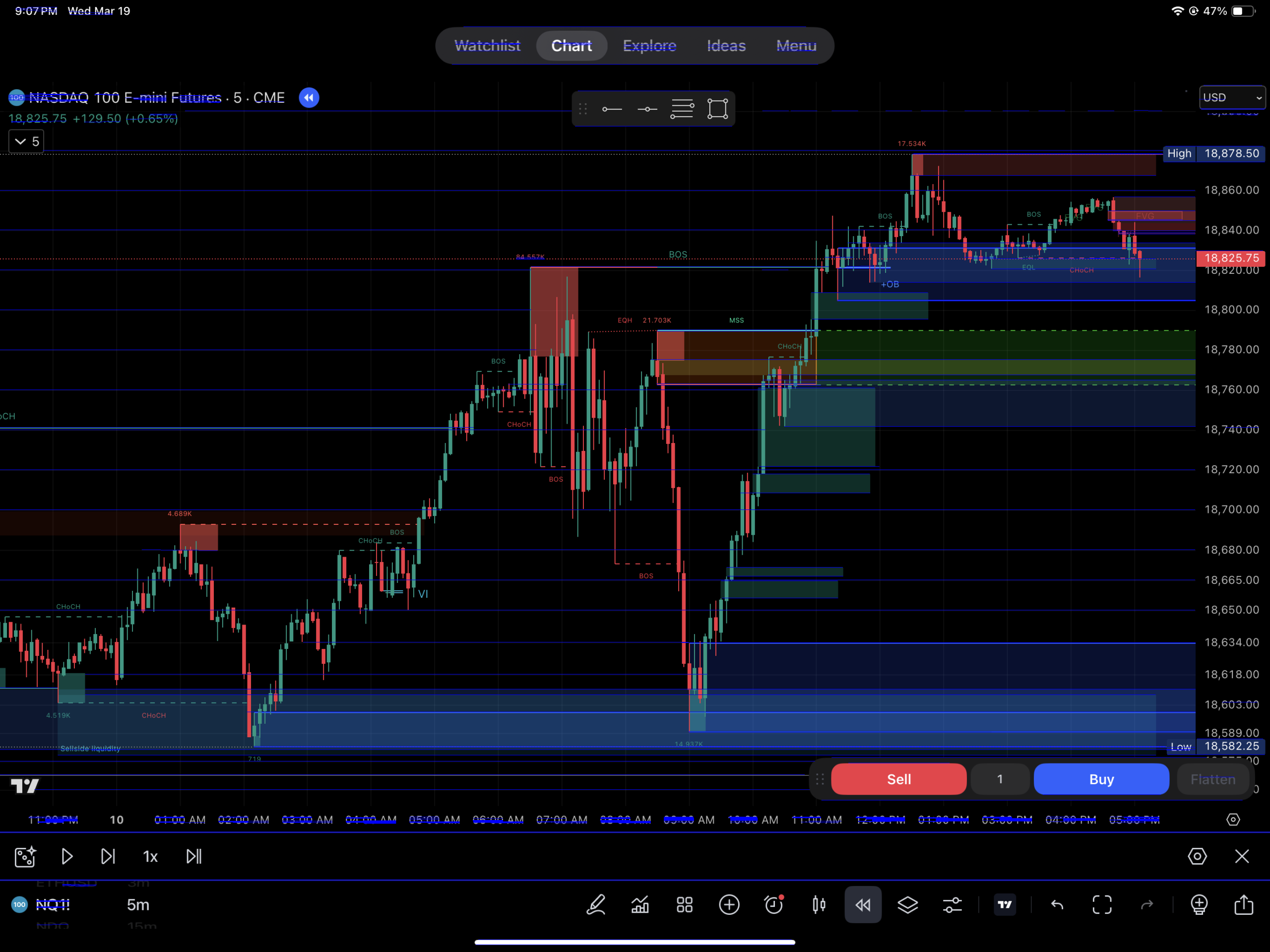
The engine provides real-time updates so that the details of top traders can be visible correctly. It is being tested by brokers to enhance user trust and the quality of selections.
It differentiates between accurately skilled traders and short-term lucky performers, lending more reliability and higher rates of success to copy trading systems.
| Pros | Cons |
|---|---|
| Uses advanced performance analytics | Can favor short-term performers |
| Identifies consistent traders | Complex ranking algorithms |
| Improves trader selection quality | May lag real-time performance |
| Encourages long-term stability | Risk of ranking manipulation |
| Builds user trust in system | Builds user trust in the system |
Cocnsluion
Conclusion: New copy trading systems are changing the way brokers run and traders would trade on markets To overcome these needs, AI solutions are being introduced to determine mirroring prospects, allocation based on risk and many other innovations — speed, accuracy and safety measures.
Undergoing testing, they offer great potential in the reduction of human errors, increased transparency and the ability to provide more custom trading experiences for forex and crypto investors seeking global financial markets.
FAQ
What is AI Signal Mirror Trading in copy trading systems?
AI Signal Mirror Trading uses artificial intelligence to automatically detect high-performing traders and replicate their trades in real time. It continuously analyzes market patterns, volatility, and success rates to improve accuracy and execution speed while reducing emotional decision-making in trading.
How does the Social Copy Ranking System work?
The Social Copy Ranking System ranks traders based on performance, consistency, engagement, and community feedback. Instead of only profit history, it includes risk stability and follower trust metrics, helping users choose more reliable traders for copying in a transparent environment.
What is Risk Weighted Copy Allocation?
Risk Weighted Copy Allocation automatically adjusts trade sizes based on a user’s risk profile. It considers volatility, leverage, and drawdown history to ensure safer capital distribution, preventing overexposure while allowing personalized trading strategies for different risk levels.
How does Multi Broker Copy Routing benefit traders?
Multi Broker Copy Routing executes copied trades across multiple brokers to find better pricing, liquidity, and execution speed. It reduces slippage, improves trade quality, and removes dependency on a single broker, increasing reliability and global accessibility for users.