In this post , I will explain What Is Account Abstraction and Why It Matters for Web3. Account abstraction is changing the way customers engage with the blockchain by improving
The usability, security, and functionality of wallets. Account abstraction’s fusion of technical ease and user-oriented interface could redefine Web3.
Overview
Even though Web3 offers a promising future, the interactions we have with blockchain are quite cumbersome.
Users are deterred by the difficulty of managing private keys, paying gas fees, and recovering lost wallets.
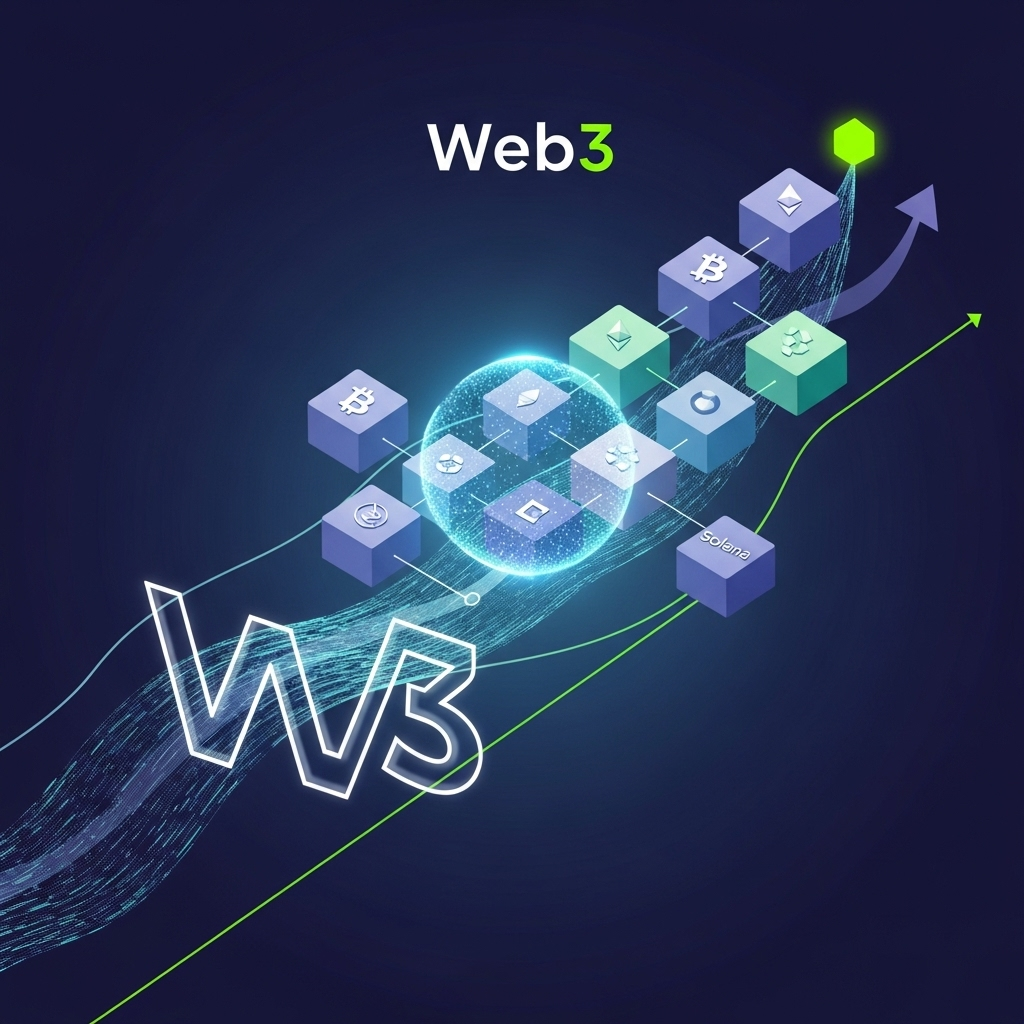
However, just as other technologies have evolved to be simple, so too can blockchain with account abstraction.
This design concept will eliminate the cumbersome interactions of blockchain technologies and provide a frictionless experience.
Understanding Account Abstraction
Ethereum and similar blockchains usually uses the same way of categorizing accounts, and they do it by having two accounts:
Externally Owned Accounts (EOAs): Accounts where the owner has direct control via a private key. Examples include MetaMask and Ledger wallets.
Contract Accounts: Accounts that are smart contracts, and as such cannot do anything by themselves, not even send transactions.
Having such a distinction creates problems for both sides of the account type. EOAs are limited and lack features, while Contract Accounts are powerful, but are limited to the functions which a smart contract defines.
By allowing user accounts to have smart contract functionalities, account abstraction (AA) allows for a more seamless blending of the two account types. In practical usage, wallets become programmable and smart contract reliant logic become unnecessary.
How It Works
The ERC-4337 standard was the first to implement Account Abstraction on the Ethereum blockchain. Rather than needing to change the underlying protocol, ERC-4337 uses a smart contract system called the EntryPoint. Here is what ERC-4337 makes possible:
- Smart Accounts: Wallets with customizable transaction rules.
- Bundlers: Services that combine user operations into a single transaction.
- Paymasters: Sponsors of gas fees that enable users to transact without holding ETH.
Overall, this architecture offers enhanced flexibility, ease of use, security, and decentralization for blockchain interactions.
Why It Matters for Web3

Better User Accessibility Login with email, social media, or use any third-party dApp to pay gas fees.
Better Security Multi-signature accounts can enforce smart contract-based multi-factor authentications.
Wallets that Can be Programmed Users can create rules, automate processes, change delegated control.
The Next Billion Users Account abstraction helps bring complex blockchain technology to Web3. Decentralized social apps with dApp technology will promote user engagement.
Potential Use Cases
Gaming: Players can interact with the game’s economy (buy and sell, etc.) without the burden of gas fees or private keys.
DeFi: Automated yield farming (or other sophisticated strategies) can be done directly through the wallets.
Social Apps: Users can authenticate using their usual log-in methods, while still retaining ownership of their personal information.
Enterprise Solutions: Companies can create and manage employee wallets under given stipulations, such as rules and compliance requirements.
Challenges Ahead

While promising, account abstraction faces hurdles:
- Standardization: Competing proposals (ERC-4337, EIP-7702, ERC-7579) need alignment for ecosystem-wide adoption.
- Infrastructure: Bundlers and paymasters must be reliable and decentralized to avoid central points of failure.
- Security Risks: More complex wallets mean larger attack surfaces, requiring rigorous auditing.
- Adoption Curve: Developers and users must adapt to new paradigms, which takes time.
Conclsuion
To summarize, account abstraction simplifies Web3 for everyday users while adding usability, security, and scalability.
Transforming wallets into programmable smart accounts reduces friction and increases safety and potential use cases.
With increased account abstraction, the adoption of blockchain technology as the digital foundation for everyday users will no longer be limited.
FAQ
Through ERC-4337, which introduces smart accounts, bundlers, and paymasters without requiring protocol-level changes.
Smart accounts are wallets with programmable features such as spending limits, recovery options, and multi-factor authentication.
Yes, paymasters can sponsor transactions, allowing users to interact with dApps without holding ETH.
It enables features like session keys, multi-signature approvals, and built-in recovery mechanisms.