In this article, I will discuss AI Recruitment Software Tools That Find Better Candidates Faster and how they are transforming modern hiring processes.
These advanced tools help recruiters automate sourcing, improve candidate matching, and reduce hiring time.
We will explore how AI-driven platforms enhance efficiency, accuracy, and decision-making while helping companies find the right talent more quickly and effectively.
How We Choose AI Recruitment Software Tools That Find Better Candidates Faster
- AI Capabilities – Evaluated how effectively each tool uses AI for sourcing, screening, and matching candidates.
- Ease of Use – Selected platforms with intuitive dashboards and a minimal learning curve for recruiters.
- Automation Features – Prioritized tools that automate repetitive tasks like resume screening and interview scheduling.
- Candidate Matching Accuracy – Choose software with strong algorithms for precise skill and job-fit matching.
- Integration Support – Considered tools that easily integrate with ATS, CRM, and HR systems.
- Scalability – Included platforms suitable for startups, mid-sized companies, and large enterprises.
- User Reviews & Reputation – Analyzed feedback from real users to ensure reliability and performance.
- Pricing & Value – Compared cost versus features to ensure good return on investment.
- Diversity & Bias Reduction – Selected tools that promote inclusive hiring and minimize unconscious bias.
- Customer Support – Ensured availability of strong support, onboarding, and training resources.
Key Points & AI Recruitment Software Tools That Find Better Candidates Faster
Juicebox uses AI to screen resumes, match skills, and accelerate hiring with data-driven candidate insights.
hireEZ automates sourcing by aggregating talent data, enriching profiles, and recruiters discover qualified candidates faster.
Eightfold AI leverages learning to predict candidate potential, improve diversity, and optimize talent acquisition strategies.
Paradox delivers conversational AI assistants that engage applicants, schedule interviews, and streamline recruiting workflows efficiently.
SeekOut helps recruiters find niche talent using filters, diversity insights, and comprehensive candidate search capabilities.
HeyMilo simplifies hiring with AI chatbots that pre-screen applicants, answer queries, and improve candidate experience.
Gem enhances pipelines by automating outreach, tracking engagement, and providing analytics to improve hiring decisions.
Manatal combines AI recommendations with applicant tracking features, helping source, manage, and hire talent efficiently.
Findem uses data intelligence to uncover talent, map skills, and create diverse candidate pipelines quickly.
Metaview analyzes interview conversations using AI, generating notes, insights, and feedback to improve hiring decisions.
10 AI Recruitment Software Tools That Find Better Candidates Faster
1. Juicebox
Juicebox puts AI at the forefront of its data analysis. It takes into account resumes, job descriptions, and hiring patterns to produce highly specific matches while minimizing manual labor undertaken by recruiters.
The platform includes predictive insights to help you make decisions and smart filtering tools for quickly surfacing the most impactful insights.
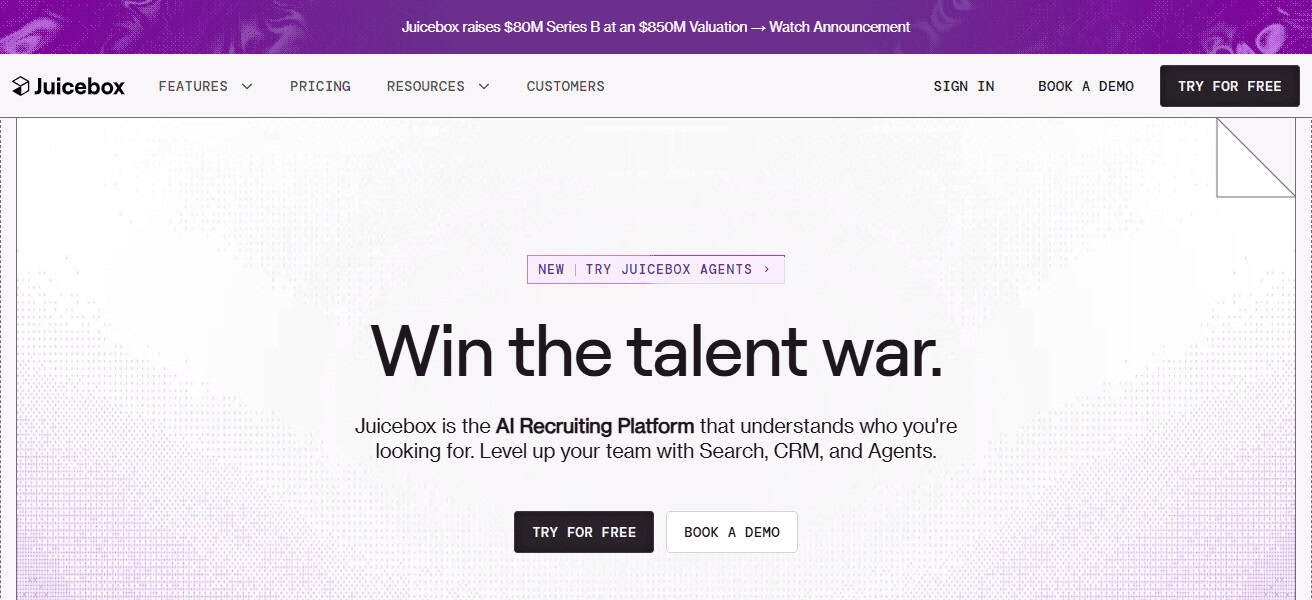
Juicebox automates repetitive screening processes, allowing hiring teams to spend more time talking with top candidates.
With an intuitive interface and a data-driven methodology, it performs particularly well for companies that need to scale recruitment quickly yet maintain quality and consistency in candidate selection processes.
| Pros | Cons |
|---|---|
| AI-powered matching improves candidate quality and reduces manual screening effort significantly. | May require initial setup time to train AI models effectively for specific hiring needs. |
| Predictive insights help recruiters make smarter, data-driven hiring decisions quickly. | Smaller companies may find advanced features unnecessary or complex to utilize fully. |
| Automates repetitive tasks, saving time and improving recruiter productivity overall. | Limited customization options compared to more enterprise-focused recruitment platforms available. |
2. hireEZ
hireEZ is an AI-Powered Sourcing Platform that enables recruiters to identify and engage talent on a variety of channels.
It collects candidate data from social platforms, job boards, and internal databases to create rich and detailed profiles.
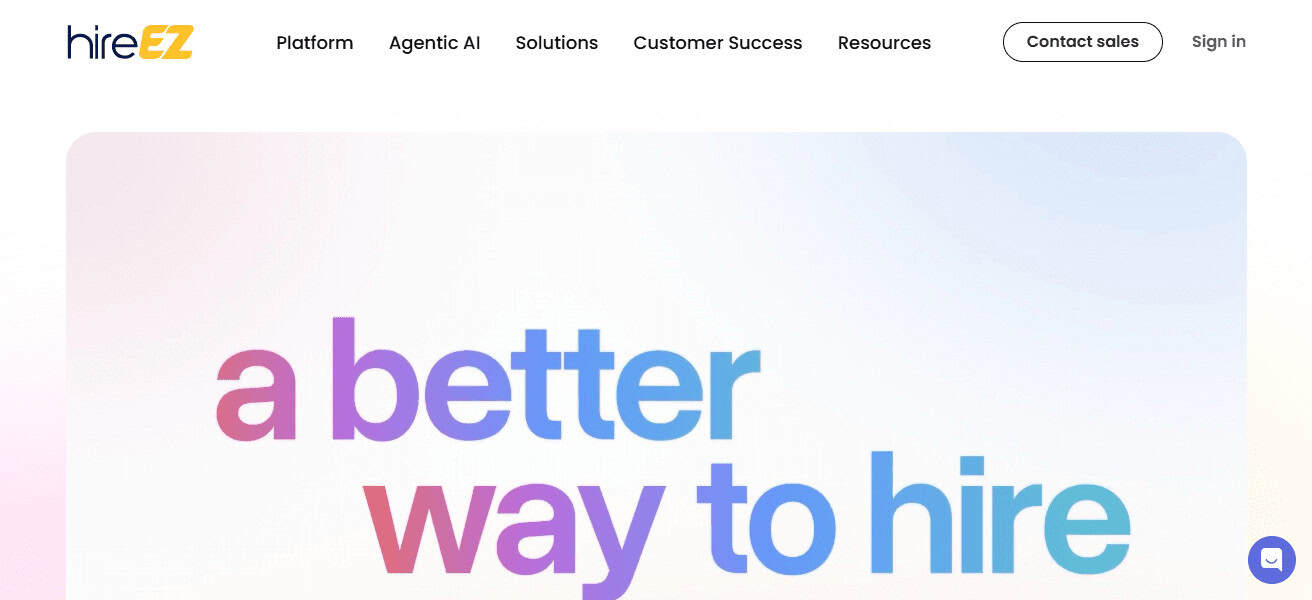
The advanced search filters enable recruiters to easily and quickly find qualified candidates that exactly match job requirements.
HireEZ has outreach campaign support, making it more efficient to reach prospects at scale. It also cuts down time-to-hire, allowing organizations to build a better pipeline and eat into the competition in fast-moving job markets by smoothing out sourcing and improving candidate visibility.
| Pros | Cons |
|---|---|
| Aggregates talent data from multiple platforms, creating rich candidate profiles easily. | Data accuracy depends heavily on external sources, which may sometimes be outdated. |
| Advanced filters help recruiters find highly relevant candidates quickly and efficiently. | Can be expensive for small businesses with limited recruitment budgets. |
| Outreach automation enables scalable engagement with potential candidates across channels. | A learning curve may exist for beginners unfamiliar with AI sourcing tools. |
3. Eightfold AI
Eightfold AI employs deep learning and an augmented intelligence engine to redefine how organizations hire and manage talent.
It goes beyond usual resume matching by analyzing billions of data points to look at candidates based on skills, potential and career trajectories.
It enables recruiters to find an untapped talent pool, greater diversity in hiring and the prediction of candidates performing within roles.
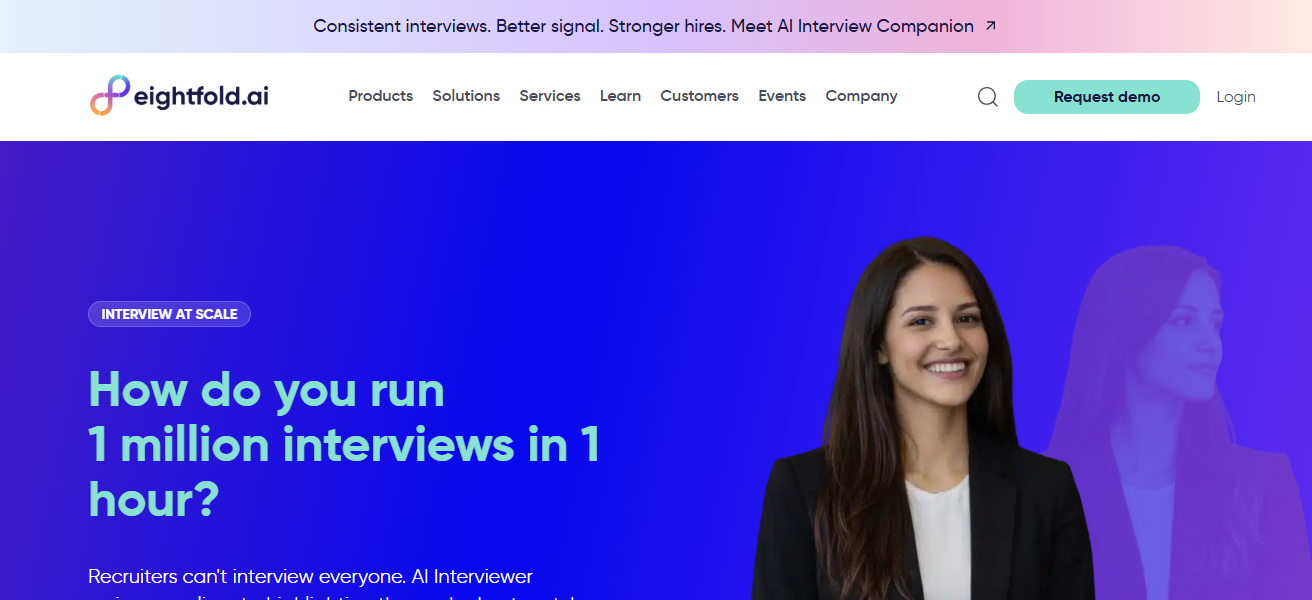
As for internal mobility, Eightfold AI recommends employees already on the payroll. The AI-driven insights it provides allow for hiring decisions to be smarter and free of bias while shortening hiring time.
It becomes more strategic for companies because it combines long-term workforce planning with a shorter-term talent acquisition plan.
| Pros | Cons |
|---|---|
| Deep learning identifies hidden talent beyond traditional resume-based hiring methods. | Implementation can be complex and time-consuming for organizations without technical support. |
| Improves diversity hiring with unbiased AI-driven talent recommendations effectively. | Higher pricing may not suit startups or smaller recruitment teams. |
| Supports internal mobility by recommending roles for existing employees intelligently. | Requires large data input to function at full potential effectively. |
4. Paradox
Paradox uses conversational AI for automating and personalising candidate engagement across the download process.
Its AI assistant interacts with applicants in real-time, addressing queries, gathering information, and scheduling interviews spontaneously without human involvement.
This has considerably decreased the lag and provides a better candidate experience. Paradox plugs right into existing HR systems so recruiters can efficiently manage all their workflows.

It manages repetitive communication tasks so that hiring teams can concentrate on relationship-building and decision-making.
This, in turn, leads to speedier hiring cycles, greater candidate satisfaction, and an overall more efficient recruitment process.
| Pros | Cons |
|---|---|
| Conversational AI enhances candidate engagement with real-time responses and support. | Chatbot interactions may feel impersonal for candidates preferring human communication. |
| Automates interview scheduling, reducing delays and manual coordination efforts significantly. | Limited flexibility in handling complex or unusual candidate queries. |
| Integrates easily with HR systems for streamlined recruitment workflows overall. | Dependence on automation may reduce personal recruiter-candidate interaction quality. |
5. SeekOut
SeekOut, on a mission to be the hiring platform for diverse talent, is specifically focused on hard-to-reach and hardest to identify candidates for recruiters.
It relies on AI-driven search capabilities and high-resolution filters to find talent in multiple industries and backgrounds.

SeekOut also offers diversity insights, guiding organizations to more inclusive hiring pipelines. It combines external data sources to build complete profiles on candidates, allowing recruiters more insight into skills and experience.
SeekOut saves time searching and increases the likelihood of finding quality candidates who fit organizational goals and job requirements by enabling precise targeting and efficient sourcing.
| Pros | Cons |
|---|---|
| Advanced search filters help find niche and hard-to-reach talent effectively. | The interface may feel complex for new users without proper onboarding support. |
| Provides diversity insights to support inclusive hiring strategies and goals. | Premium features may increase overall recruitment tool costs significantly. |
| Comprehensive profiles offer deeper insights into candidate skills and experience. | Requires time to master full search capabilities for best results. |
6. HeyMilo
HeyMilo, for instance, uses AI chatbots to find common ground between a potential employee and the company at the startup stage.
The platform engages with applicants via automated chats, performing initial screenings and answering common questions.
This significantly lightens recruiters’ loads while also allowing candidates to receive quick replies.
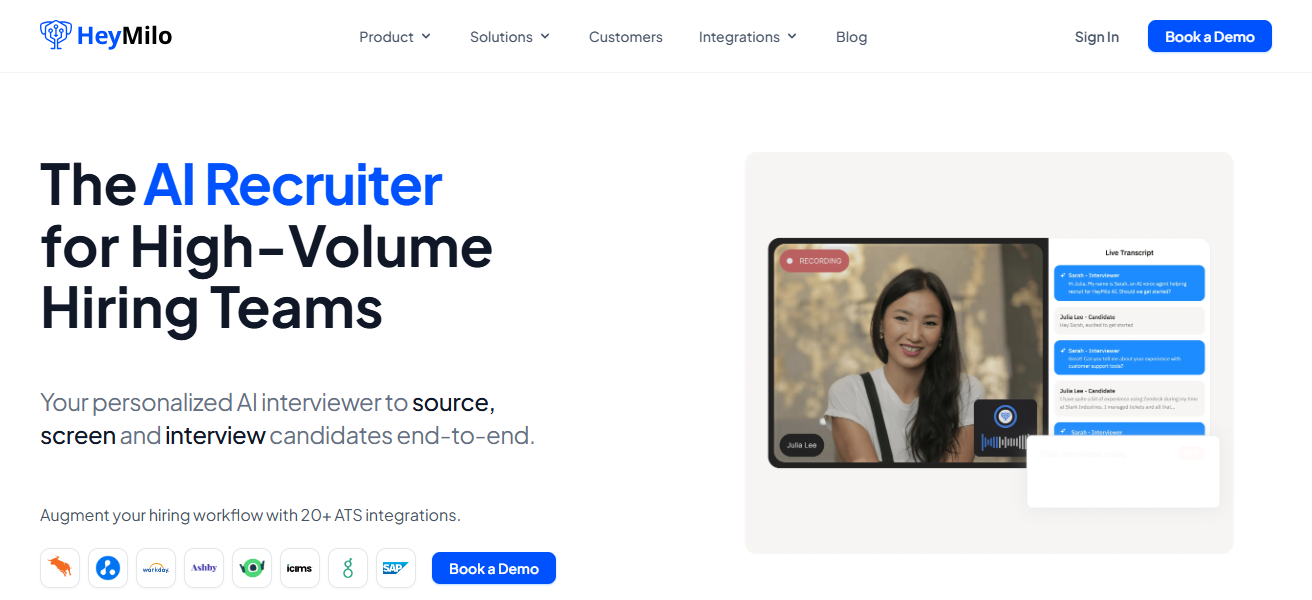
HeyMilo further ensures consistency in the screening by evaluating the applicants based on predefined architectures.
Because of its intuitive design, companies can implement it without requiring extensive technical skills. HeyMilo streamlines the hiring process, improves candidate experience, and allows recruiters to devote time to vetting top prospects by automating repetitive interactions.
| Pros | Cons |
|---|---|
| AI chatbots automate initial screening, saving recruiters time and effort significantly. | Limited capability to assess complex candidate qualifications or soft skills. |
| Improves candidate experience with instant responses and consistent communication flow. | Over-reliance on automation may overlook nuanced candidate potential. |
| Easy implementation without requiring advanced technical knowledge or setup complexity. | Customization options for chatbot interactions may be somewhat limited. |
7. Gem
Gem is a recruiting CRM that helps improve how talent gets selected by improving outreach and relationships.
With this, recruiters can trace candidate interactions, follow up automatically on candidates, and track engagement data to fine-tune the hiring strategy.
Gem connects to your favorite sourcing tools and applicant tracking systems for a seamless workflow.

The analytics dashboard reveals your pipeline and campaign performance. Because Gem helps recruiters build long-term relationships with candidates, it is a continuous source of qualified talent.
Such a proactive approach minimizes hiring time, adding to recruitment efficiency overall while securing top applicants in challenging markets.
| Pros | Cons |
|---|---|
| Strong CRM features help build and nurture long-term candidate relationships effectively. | Requires integration with other tools for full recruitment functionality. |
| Automation improves outreach efficiency and candidate engagement rates significantly. | May not be ideal as a standalone solution for complete hiring processes. |
| Analytics provide insights to optimize hiring strategies and pipeline performance. | Pricing may be high for smaller teams or individual recruiters. |
8. Manatal
Manatal is an applicant tracking software using AI to recommend candidates and facilitate the whole hiring process.
The resume screening also ranks candidates and recommends the best matches according to the company’s job requirements on its own.
Also, it connects with job boards along with social media to achieve more mobilization for sourcing.
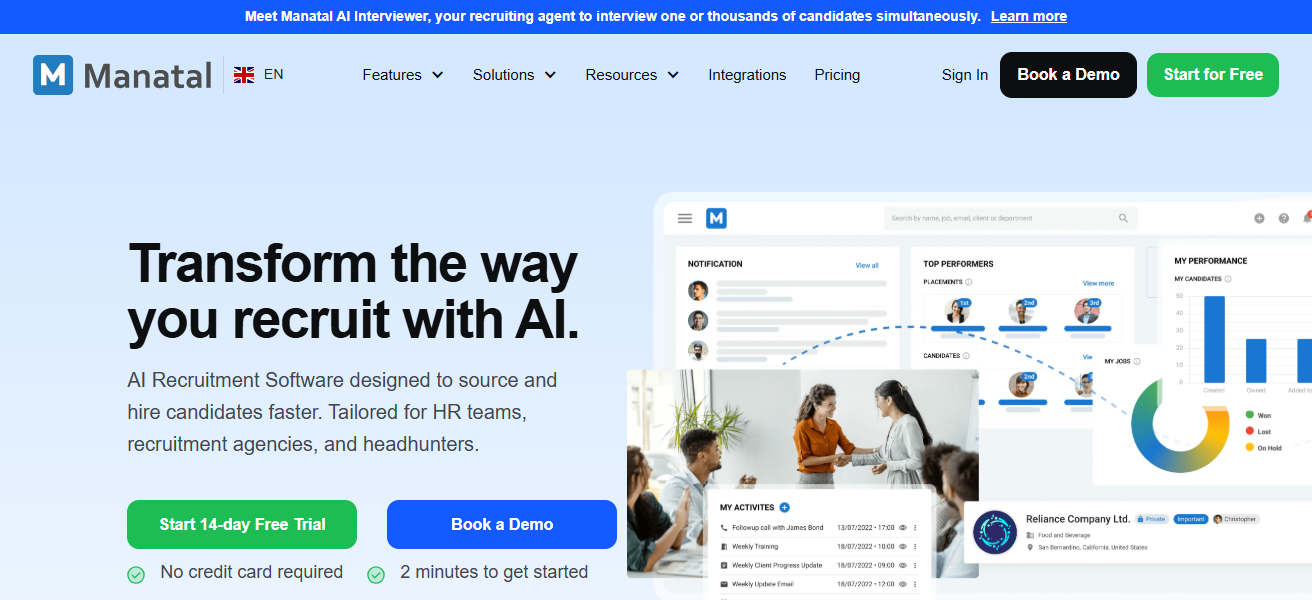
Your data is pulled in all the time, right back to the 1st of October 2023, from Manatal’s user-friendly dashboard that empowers recruiters to manage pipelines, track progress, and work with hiring teams.
It uses AI features to reduce bias and decision making on skills and qualifications. In general, Manatal saves organizations a lot of time and improves accuracy in the processes while simplifying recruitment workflows with a touch of providing quality candidates at the end.
| Pros | Cons |
|---|---|
| Combines ATS and AI recommendations for efficient end-to-end recruitment management. | AI suggestions may require manual review to ensure accuracy and relevance. |
| Easy-to-use interface simplifies candidate tracking and collaboration among teams. | Limited advanced features compared to high-end enterprise recruitment platforms. |
| Integrates with job boards and social media for broader candidate sourcing. | Customization options may not meet needs of large-scale organizations. |
9. Findem
Findem is an AI-powered talent data platform that fundamentally changes the way companies search and assess candidates.
It uses a large database to find people with the correct skills, experiences and potential, whether or not they are currently looking for work.
Diversity is another core area for Findem, which aims to help organizations create inclusive talent pipelines.
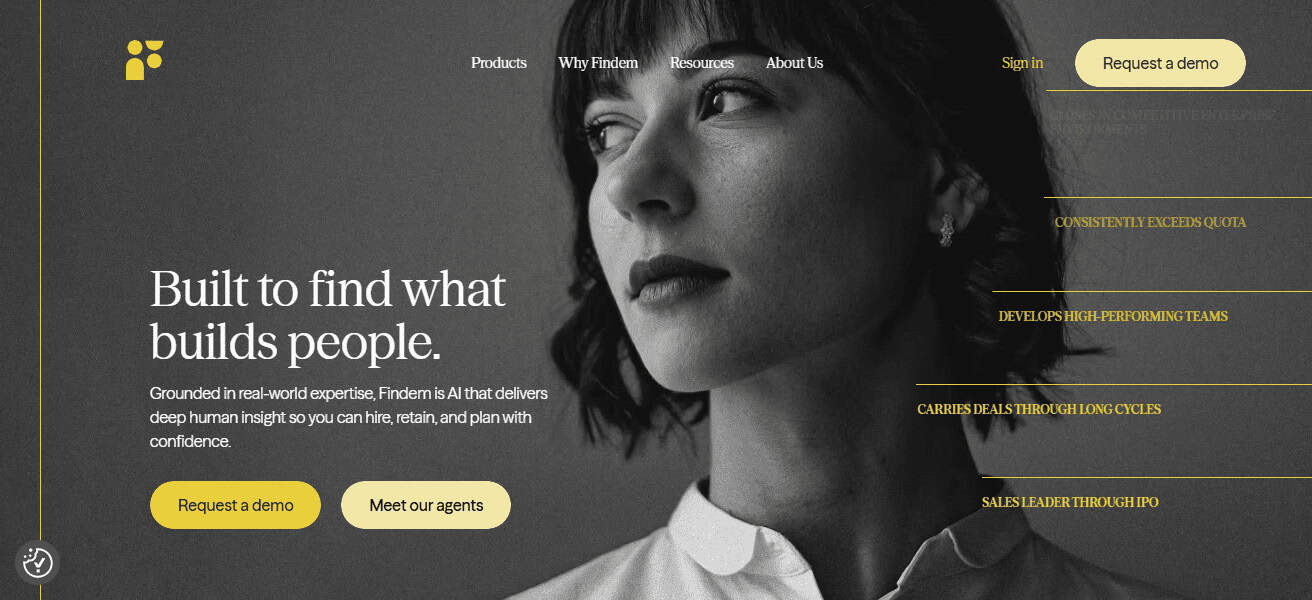
With its advanced analytics, you get insights into workforce trends and hiring performance. Findem provides data intelligence and automation to assist recruiters in making
better decisions on who to contact, along with the guidance of approximately 72% candidates that are actually qualified for a role, which helps businesses find high-quality talent faster and gain a competitive advantage.
| Pros | Cons |
|---|---|
| Uses data intelligence to uncover passive candidates with strong potential quickly. | Relies heavily on data quality and availability for accurate candidate insights. |
| Supports diversity hiring with inclusive and data-driven talent discovery features. | Advanced analytics may require training to interpret effectively. |
| Provides workforce insights to improve long-term hiring strategies and planning. | Pricing structure may be complex for smaller businesses to manage. |
10. Metaview
Metaview uses AI to improve the interview process through analytics and insights. It records and transcribes interview conversations, which automatically generate structured feedback notes for recruiters.
It helps to minimize manual note-taking, leading to greater uniformity in candidate evaluations. Metaview also spots patterns and surfaces actionable insights to help make better hiring decisions.
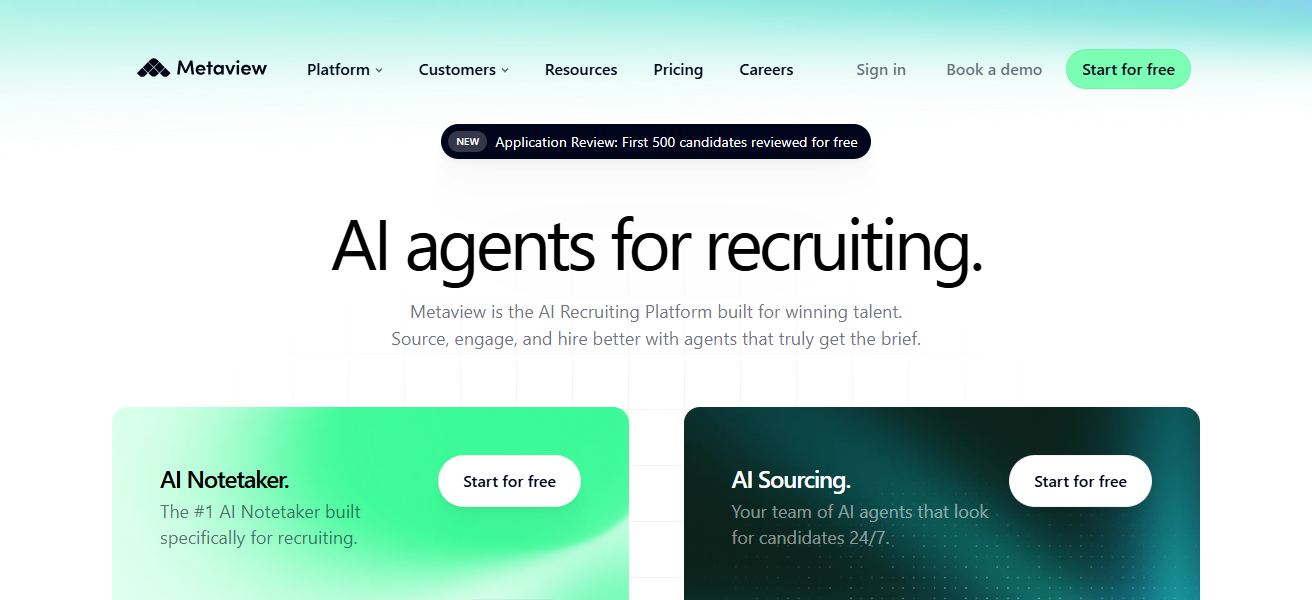
This allows users to get a structured, data-backed view of the interviews that improves collaboration, speed, and decision-making across teams.
In the end, this platform brings an improvement in the overall quality of hires; and helps you save time that can be utilized elsewhere, thus improving recruitment efficiency.
| Pros | Cons |
|---|---|
| Automatically generates interview notes, reducing manual effort for recruiters significantly. | May raise privacy concerns depending on recording and data storage practices. |
| Provides insights and patterns to improve hiring decisions and evaluation consistency. | Limited functionality outside interview analysis and feedback processes. |
| Enhances collaboration by sharing structured interview data across hiring teams. | Accuracy depends on the quality of recorded conversations and audio clarity. |
Final Verdict
The AI recruitment software tools have made hiring faster, smarter, and more accurate. They help automate the process of sourcing, screening, and matching candidates while lessening the manual load required of recruiters.
These platforms lead to better decisions, a more streamlined candidate experience, and non-discriminatory hiring → All in all, they facilitate organizations to search for better talent in less time, reduce the hiring duration, and outpace the competition in a fast-paced job market.
FAQ
How do AI hiring tools find better candidates?
They analyze skills, experience, and data patterns to match candidates more accurately with job requirements.
Are AI recruitment tools suitable for small businesses?
Yes, many tools offer scalable features that help small businesses streamline hiring and save time.
Do AI tools replace human recruiters?
No, they assist recruiters by automating repetitive tasks, allowing humans to focus on decision-making.
Can AI recruitment tools reduce hiring time?
Yes, they scan and rank resumes based on job criteria, saving recruiters significant time.