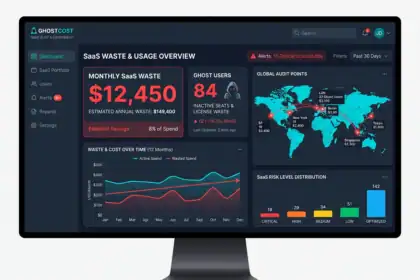
In this article, I will discuss the Best Platforms for Real-Time Compliance Breach Detection that help businesses monitor risks continuously, detect violations instantly, and maintain regulatory compliance.
These tools offer automation, real-time alerts, and integrations, making compliance management easier, faster, and more efficient for organizations aiming to reduce risks, avoid penalties, and ensure continuous audit readiness.
Key Points & Best Platforms for Real-Time Compliance Breach Detection
- Vanta – Automates continuous monitoring, collects real-time evidence, detects compliance gaps instantly, and triggers remediation workflows proactively.
- Drata – Provides continuous control monitoring, real-time alerts, automated testing, and quick remediation for compliance breaches across systems.
- Sprinto – AI-driven compliance platform enabling real-time monitoring, automated alerts, and guided remediation for continuous security compliance management.
- Hyperproof – Offers continuous controls monitoring, automated testing, and real-time dashboards to detect compliance failures and risks quickly.
- OneTrust – Unified governance platform tracking compliance issues, managing risks, and providing alerts, though limited real-time monitoring depth.
- ComplyScore – Uses AI analytics to detect compliance risks, monitor supplier behavior, and flag real-time breaches in operations.
- AuditBoard – Connects audit, risk, and compliance data, enabling real-time insights, alerts, and faster identification of control failures.
- LogicGate Risk Cloud – No-code GRC platform enabling customizable workflows, real-time monitoring, and automated alerts for compliance breaches.
- Secureframe – Automates evidence collection, continuously monitors controls, and alerts teams instantly when compliance issues or risks arise.
- MetricStream – Enterprise GRC platform providing real-time risk intelligence, continuous monitoring, and advanced analytics for compliance breach detection.
10 Best Platforms for Real-Time Compliance Breach Detection
1. Vanta
Vanta is the operating system for automating compliance and continuous monitoring in modern cloud environments with real-time breach detection.
It runs continuous control tests, done automatically and in some cases hourly, allowing compliance gaps to be recognized immediately instead of during scheduled audits.

Such as hundreds of integrated tools to collect every piece of evidence seamlessly and create a visible centralized risk.
AI-powered features provide remediation suggestions, SLA tracking and alerting capabilities which help teams to quickly respond to developer decisions that may breach the SLAs configured.
Such software is particularly valuable for organizations that are scaling compliance programs, as it automates labor-intensive processes while ensuring continuous readiness for audits and ongoing monitoring of potential breaches.
| Pros | Cons |
|---|---|
| Strong real-time monitoring with frequent automated control checks | Can be expensive for small businesses |
| Extensive integrations with cloud tools | Limited customization for complex workflows |
| Easy-to-use interface and fast onboarding | May not suit highly regulated enterprises |
| Automated evidence collection reduces manual work | Some advanced features require higher-tier plans |
2. Drata
Drata: Another compliance automation solution with continuous control monitoring and visibility into compliance health in real-time.
It gathers evidence passively from systems that it integrates with, continuously evaluates controls of the organization and notifies in real-time whenever any breach occurs.
The platform also features automated alerts, audit preparedness workflows, and centralized dashboards that empower teams to instantly detect and fix compliance issues.
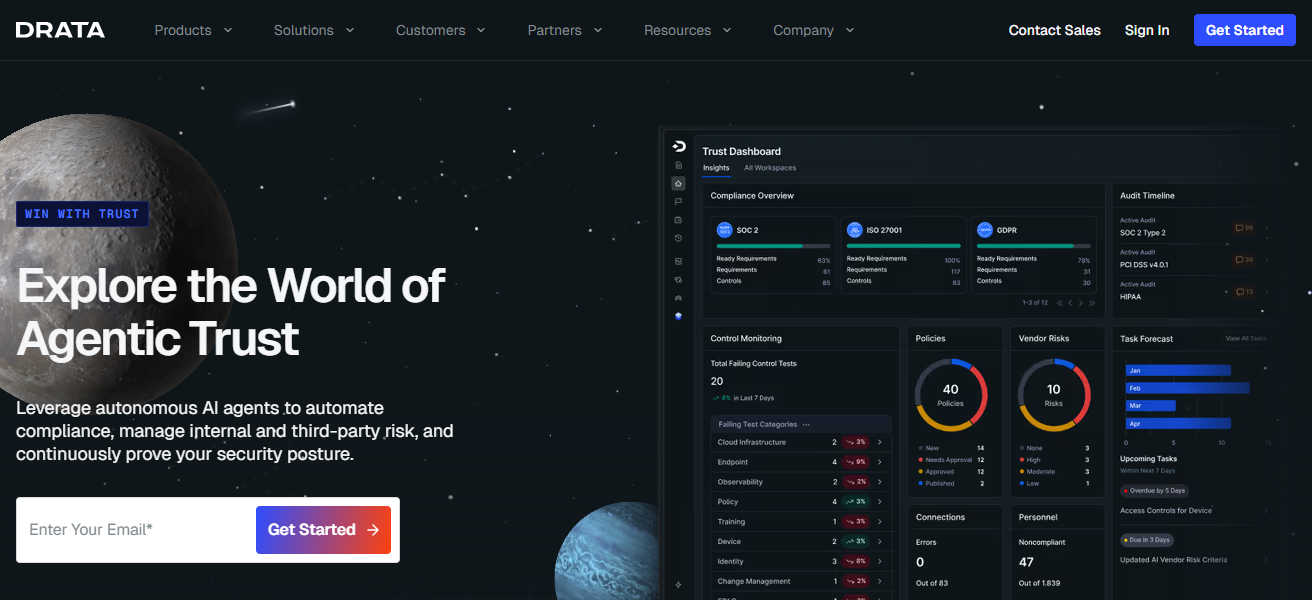
The real-time compliance engine is designed for engineering-driven organizations that need deep integrations and fast feedback loops — ideal for technical teams building products and wanting to automate security and compliance.
Drata reduces manual processes and allows for continuous validation, which means that compliance gaps are addressed proactively instead of reactively.
| Pros | Cons |
|---|---|
| Continuous control monitoring with real-time alerts | Pricing can be high for startups |
| Deep integrations with engineering tools | Setup may require technical expertise |
| Strong automation for audit readiness | UI can feel complex for beginners |
| Fast compliance validation cycles | Limited flexibility for niche compliance needs |
3. Sprinto
Sprinto is an AI-powered compliance platform that streamlines real-time monitoring and breach detection for high-growth companies.
It provides continuous monitoring of controls, automated evidence-gathering, and proactive alerts that alert teams when compliance posits are likely to fail.
Sprinto’s unified risk engine allows organizations to map controls across multiple frameworks, reducing duplication and improving efficiency. It also offers guided remediation workflows, so problems get fixed quickly and uniformly.
By automating almost all of the manual processes that typically consume significant resources, Sprinto can help organizations maintain continuous compliance without needing
To make heavy investments in compliance personnel, making it a perfect fit for startups and mid-sized companies looking for scalable solutions.
| Pros | Cons |
|---|---|
| AI-driven automation simplifies compliance processes | Fewer integrations compared to competitors |
| User-friendly and easy to deploy | Limited enterprise-grade features |
| Strong real-time alerts and monitoring | Customization options are moderate |
| Ideal for startups and mid-sized companies | Not suitable for highly complex environments |
4. Hyperproof
Hyperproof focuses on compliance operations through continuous monitoring, risk management, and real-time visibility into the effectiveness of controls.
It allows organizations to automate testing, monitor compliance activities and detect when controls fail in real time.
Hyperproof provides centralized dashboards and workflow automation that make it easier for teams to manage multiple frameworks in parallel, all while maintaining a clear view of compliance status.

Integrating with other tools, the platform automatically gathers evidence reducing repetitive work and making it more accurate.
Real-time insights and reporting capabilities help organizations detect breaches before they occur, prioritize risks in context, take corrective actions faster and provide better governance and ongoing compliance assurance.
| Pros | Cons |
|---|---|
| Excellent workflow automation and dashboards | Learning curve for new users |
| Supports multiple compliance frameworks efficiently | Real-time alerts not as fast as competitors |
| Strong reporting and audit tracking | Pricing may be high for small teams |
| Good integration ecosystem | Setup can be time-consuming |
5. OneTrust
OneTrust is a full-fledged software service for governance, risk, and compliance that consolidates privacy and data governance along with risk management capabilities.
It offers automated workflows for managing policies and performing vendor risk assessments, which aid organizations in tracking compliance across a multitude of domains.

Though OneTrust’s reporting and centralized dashboards are strong, its real-time monitoring capabilities are somewhat limited when compared to “newer” platforms, which tend to rely on periodic testing cycles.
However, it does better deliverability on the processes of complex compliance programs and integrate privacy controls with security frameworks. Its scalability and solid governance features serve organizations well, but real-time breach detection may involve additional integrations or complementary tools.
| Pros | Cons |
|---|---|
| Comprehensive GRC and privacy management platform | Limited real-time monitoring capabilities |
| Strong reporting and governance features | Complex implementation process |
| Scalable for large enterprises | Expensive compared to simpler tools |
| Excellent for data privacy compliance | Requires additional tools for real-time detection |
6. ComplyScore
ComplyScore is a risk intelligence platform designed to continuously monitor compliance primarily across supply chains and third-party ecosystems.
Using advanced analytics and AI, it assesses vendor behavior to identify anomalies, and detects potential compliance breaches in real time.
An option that collects data from different sources and delivers insights and risk scores so organizations can make decisions fast.
Especially in industries with intricate supplier networks, ComplyScore provides valuable risk insights to detect hidden dangers and guarantee compliance with regulations.
This organization uses its alerting and predictive capabilities in real time to mitigate compliance issues before they manifest as serious problems.
| Pros | Cons |
|---|---|
| Strong AI-driven risk intelligence and analytics | Limited brand recognition in market |
| Excellent for third-party and supply chain risk | Integration options may be limited |
| Real-time alerts for vendor-related risks | Not a full GRC platform |
| Predictive insights improve decision-making | May require additional tools for full compliance coverage |
7. AuditBoard
AuditBoardAn audit and internal controls management softwareGovernance, risk and compliance platform.
It aggregates audit, risk, and compliance data across the organization to give organizations a consolidated view of their control environment.
It does have a good reporting, workflow automation and collaboration features but real-time compliance is less developed than newer platforms.
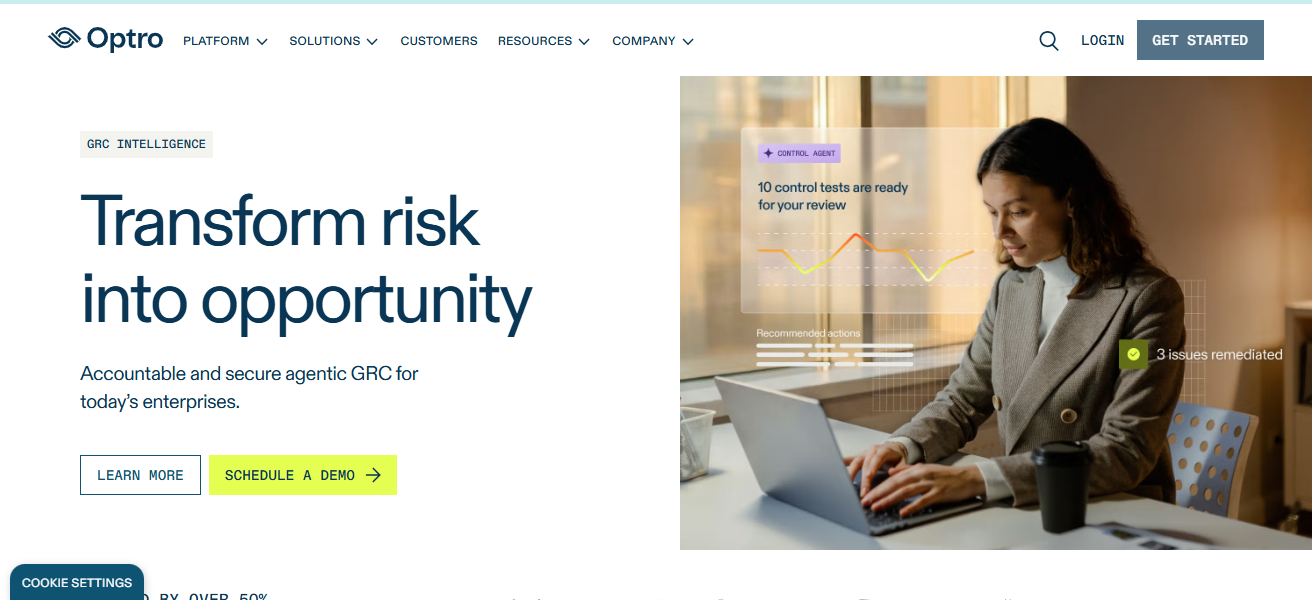
The reliance on manual processes and periodic evidence collection in AuditBoard can hinder real-time breach detection.
Nonetheless, this does remain a strong contender for enterprises focused on internal audits, SOX compliance and structured risk management who want quality insights into control effectiveness and audit readiness.
| Pros | Cons |
|---|---|
| Strong audit and internal control management | Limited real-time breach detection |
| Excellent collaboration and reporting tools | Relies more on periodic assessments |
| Ideal for SOX and audit-focused organizations | Less automation compared to newer platforms |
| Centralized compliance data management | Can be complex to implement |
8. LogicGate Risk Cloud
LogicGate Risk Cloud providing a flexible, no-code governance, risk and compliance platform that allows organizations to create tailored workflows for real-time compliance monitortoring. → It enables users to automate risk assessments, monitor control performance, and get notified when a compliance issue arises.

Its configurability makes it appropriate for organizations with special regulatory needs or complex processes. LogicGate integrates with these various systems to create seamless data flow and compliance status visibility.
Real-time dashboards and automation help organizations quickly identify breaches, optimize remediation efforts, and take a proactive approach to risk & compliance management.
| Pros | Cons |
|---|---|
| Highly customizable no-code platform | Requires setup time for customization |
| Real-time monitoring with automated workflows | UI can feel complex initially |
| Flexible for unique compliance requirements | Needs training for full utilization |
| Strong integration capabilities | Pricing may vary based on usage |
9. Secureframe
Secureframe is a compliance automation platform that streamlines ongoing monitoring and immediate identification of any compliance failures.
It streamlines control checks, gathers evidence and maintains an ongoing view of compliance status across frameworks such as SOC 2 and ISO 27001.
The platform provides built-in templates, training modules and vendor risk management features to help organizations efficiently maintain compliance.
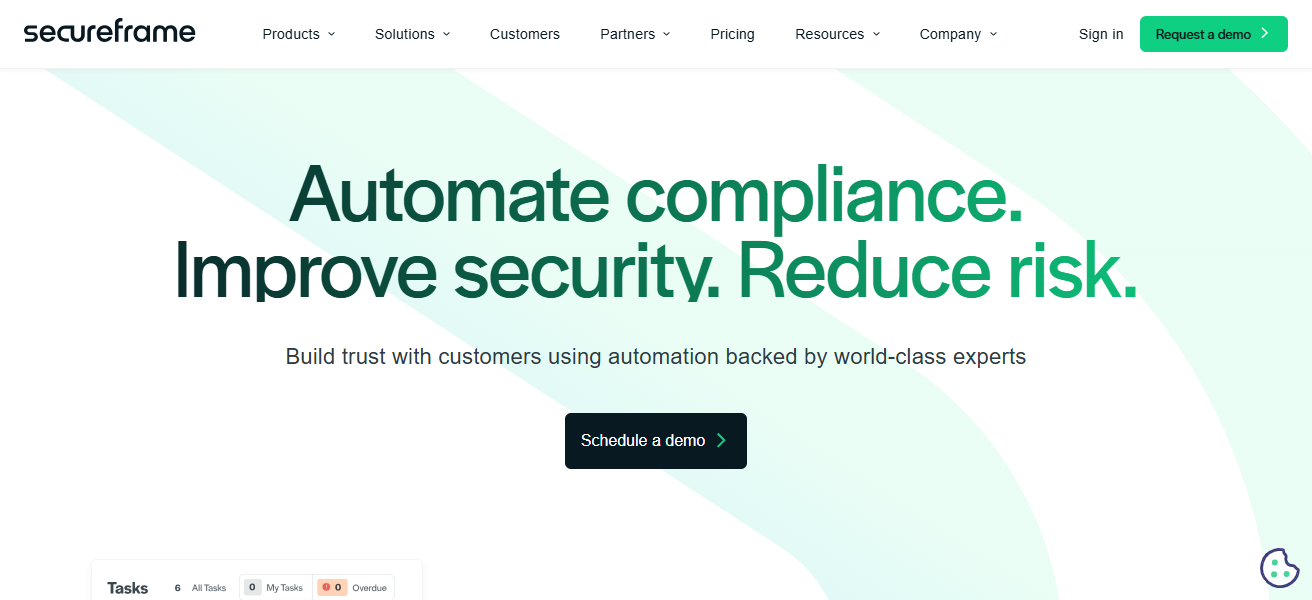
Secureframe alerts teams when controls break, so potential breaches can be resolved quickly. Indeed, while this might take a hit for not having that next-level depth you would need for an incredibly sophisticated environment,
its approach feels very systematic and easy to use making it a perfect fit for startups and growing companies who are looking to have solidities in place to ensure real-time compliance cloud monitoring solutions.
| Pros | Cons |
|---|---|
| Easy setup with automated compliance workflows | Limited advanced features for enterprises |
| Continuous monitoring and alerting | Fewer customization options |
| Built-in templates for frameworks like SOC 2 | Integration ecosystem is moderate |
| Ideal for startups and growing businesses | May not scale well for very large organizations |
10. MetricStream
Operational risk intelligence and enhanced, continuous monitoring of third party risks through the most sophisticated enterprise grade GRC platform in place.
It uses analytics, automation and artificial intelligence to discover potential breaches, measure control effectiveness and deliver predictive risk assessments.
They claim that the platform enables management of complex regulatory environments, including multiple frameworks and global compliance.
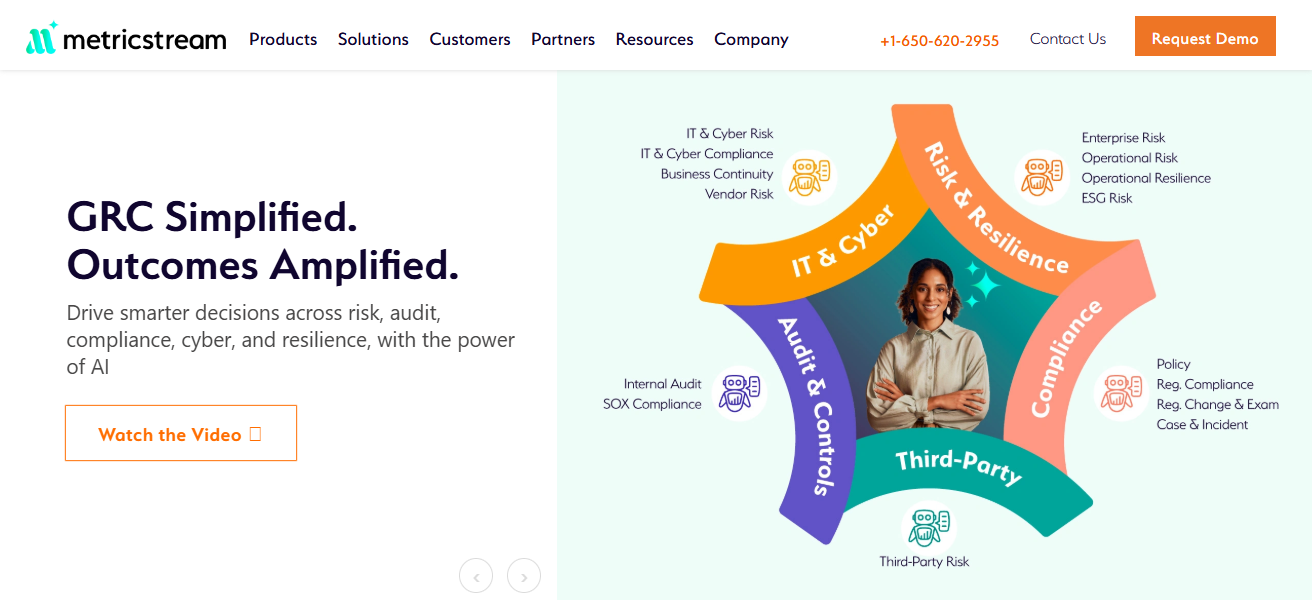
The real-time dashboards and reporting capabilities offered by MetricStream help decision-makers swiftly pinpoint emerging risks and institute corrective measures.
Its scalability and integration capabilities make it perfect for large enterprises who need to manage compliance comprehensively, identifying and mitigating potential breaches of compliance across varied operations before they occur.
| Pros | Cons |
|---|---|
| Enterprise-grade GRC with advanced analytics | High implementation and licensing cost |
| Strong real-time risk intelligence and monitoring | Complex setup and configuration |
| Supports global compliance frameworks | Requires dedicated resources to manage |
| Highly scalable and customizable | Not ideal for small businesses |
How To Choose Best Platforms for Real-Time Compliance Breach Detection
Real-Time Monitoring – Insist that the platform provides real-time control auditing and breach detection, not testing at periodic intervals.
Automation Capabilities – Determine the efficacy of automated evidence collection, testing, and reporting in reducing even manual compliance workload
Integration Support – Opt for the tools that can easily integrate or be used with cloud systems, applications and security infrastructure.
Alert & Notification System – Choose platforms with dynamic alerts, escalation workflows, and customizable notifications.
Scalability — Select a solution that scales with your business, from startup to enterprise-level compliance requirements.
Ease of Use – Friendly dashboards and easy setup saving time and training.
Customization — Assess whether workflows, controls and reports can be customized to fit your compliance needs.
Reporting & Analytics – Advanced dashboards and insights help you quickly identify risks and make better decisions.
Why Are real-time Compliance Platforms Important?
Bullseye Risk Detection — Highlights risks as they occur rather than waiting for audits.
Avoids Penalties – Helps you to prevent fines and problems when it is taken care early.
Continuous Monitoring – Monitor systems 24/7 for continuous compliance.
Response Time Improvement – It allows quick actions by providing real-time alerts and notifications.
Minimizes Manual Work – Automation of compliance activities such as evidential gathering and reporting.
Enhance Accuracy – Reduces the risk of human errors in compliance checks and documents.
Conclsuion
To conclude, the top real-time compliance breach detection approach equips organizations to be ahead with instant alerts on risks and uninterrupted compliance.
These tools help reduce manual effort and improve accuracy through automation, real-time alerts, and strong integrations.
The suitable platform will depend on the size of your business, compliance requirements, and how you want to scale in the future; this ensures long-term security, efficiency and regulatory readiness when it comes to operating your own business.
FAQ
What is real-time compliance breach detection?
It identifies compliance violations instantly using continuous monitoring instead of delayed audits or manual checks.
do these platforms support multiple frameworks?
Yes, most support frameworks like SOC 2, ISO 27001, GDPR, HIPAA, and PCI-DSS.
Are these platforms suitable for startups?
Yes, tools like Vanta and Sprinto are designed for startups with easy setup and scalability.
Are they expensive to implement?
Costs vary; startups find affordable options, while enterprise platforms may require higher investment.