This article will focus on the potential mistakes made by companies on the construction of private AI knowledge bases.
Numerous companies have recognized the potential of AI; however, the lack of understanding regarding the challenges, such as the quality of data, insufficient security, and a disregard for users, can lead to massive financial losses.
Analyzing these challenges can assist companies in creating effective, safe, and scalable AI knowledge systems to improve ROI.
What is a Private AI knowledge Base?
An example of an internal AI knowledge base is a system designed to capture, organize, and retrieve an organization’s knowledge.
This system allows for quick access to documents, data, and insights, leading to improved decision-making, collaboration, and productivity.
Such systems utilize AI to facilitate context-based responses, summarize information, and respond to information gaps.
When integrated correctly, knowledge-based systems become a trusted and reliable organizational knowledge system, providing knowledge resources to an organization. This reduces errors, saves time, and provides a system that staff can rely on.
Key Points & Mistakes Companies Make When Building Their Own Private AI Knowledge Base
Ignoring Data Quality Poorly cleaned or inconsistent data leads to unreliable outputs and erodes user trust quickly.
Lack of Clear Objectives Without defined goals, knowledge bases become unfocused, misaligned, and fail to deliver business value.
Overlooking User Needs Companies often prioritize technical features over usability, leaving employees frustrated and disengaged with tools.
Insufficient Security Measures Weak access controls expose sensitive information, risking compliance violations and potential costly data breaches.
Not Updating Regularly Stale knowledge bases quickly lose relevance, reducing usefulness and damaging credibility across the organization.
Ignoring Scalability Systems built without scalability struggle under growth, causing performance issues and limiting future expansion opportunities.
Poor Integration Strategy Failure to integrate with existing tools creates silos, duplications, and inefficiencies across workflows.
Neglecting Governance Policies Without governance, content becomes inconsistent, outdated, and unreliable, undermining organizational knowledge management efforts.
Underestimating Training Needs Employees untrained in AI tools misuse systems, reducing adoption rates and overall effectiveness significantly.
Overcomplicating Architecture Complex designs increase maintenance costs, slow deployment, and confuse users instead of simplifying processes.
Ignoring Feedback Loops Without user feedback, systems stagnate, fail to improve, and miss evolving organizational requirements.
Failing to Measure ROI Companies neglect performance metrics, making it impossible to justify investments or optimize future strategies.
Overreliance on Automation Blind trust in AI automation risks errors, misinformation, and reduced human oversight in decision-making.
Not Addressing Bias Unchecked biases in training data perpetuate unfair outcomes, damaging trust and organizational reputation significantly.
Skipping Pilot Testing Launching without pilots exposes flaws, wastes resources, and risks widespread adoption failure across teams.
15 Mistakes Companies Make When Building Their Own Private AI Knowledge Base
1. Ignoring Data Quality
Many companies think that simply acquiring large amounts of data is sufficient, yet insufficient, inconsistent, low-quality, or outdated data is a liability to AI knowledge bases. In a 2025 prediction, Gartner stated that 70% of AI data hygiene failures.

Without data cleaning, normalization, and validation processes, AI can produce false, misleading, or erroneous outputs. For example, multiple unstructured internal documents with conflicting information can hinder model accuracy.
In fact, unstructured internal documents can be a liability. Therefore, having high-quality, high-fidelity, and current datasets is a strongly recommended option to avoid high costs and damages.
2. Lack of Clear Objectives
A private AI knowledge base must clearly defined objectives; otherwise, it runs the risk of becoming just another expensive filing cabinet with little to no impact.
Companies often do not set measurable objectives, such as reducing customer support turnaround by 30% or streamlining internal decision-making processes.

In the absence of clearly defined objectives, it becomes impossible to evaluate the assistance of the business. According to a 2024 McKinsey report, companies with well-defined AI strategies outpace their competitors by three times.
Having well-defined objectives greatly affects the ease and effectiveness of data modeling and user engagement by facilitating the realization of actual business impact.
3. Overlooking User Needs
AI knowledge bases can encounter many issues when designers do not think about end-user needs. Employees require simple searching, answers provided in context, and easy retrieval of insights.
Users become frustrated when workflow integration is ignored and as a result, adoption decreases. As an example, poor usability results in 60% of enterprise AI tools underperforming (Forrester, 2024).

User interviews, usability testing, and real-world observation of interactions will establish how AI will be improved to meet the real needs of users and not the needs of theorists. This will improve adoption, increase engagement, and increase the overall return of investment.
4. Insufficient Security Measures
Data that is proprietary is extremely important. There is a limit to how much companies can afford to underestimate the risk of leaks, breaches, and access that is not authorized.
Private AI knowledge bases can contain trade secrets as well as sensitive information about employees or clients.

On average, AI related breaches can lead to a more than 5-million-dollar loss to an organization (IBM’s Cost of a Data Breach Report 2025).
This makes it necessary for multi-layer encryption, access controls, and monitoring that is constant.
If financial loss, loss of a good reputation, and loss of compliance to regulations is not enough to motivate a company to do something neglecting security measures, then nothing will.
5. Not Updating Regularly
AI knowledge bases will deteriorate without updates. Outdated information can lead to wrong recommendations, inefficiency, and increased frustration among users.
AI models that do not include updates will not be able to capture new products or regulatory mandates. Outdated products contribute greatly to the 52% of failed AI projects (IDC 2024) where contributors point to stale data as a primary cause.

In order for a knowledge base to be minimally adequate and to remain pertinent and helpful, systems must be designed that aides in the addition of new data
Retraining models, and the inclusion of feedback in order to be constant and to be of value over a period of time.
6. Ignoring Scalability
Building AI systems without foresight for additional growth is a missed opportunity. Over time, knowledge bases may even slow or cease operation altogether for larger user bases, queries, or datasets.
A knowledge model that works for 500 employees, may collapse with 5,000 queries a day. Scalable architectures, per Deloitte, will reduce long-term infrastructure costs by 40%.

Businesses should consider and plan for better storage, processing, and distributed archi-tecture, as early as possible, to support expansion without sacrificing performance or reliability.
7. Poor Integration Strategy
AI knowledge bases are of little to no value if they are not readily integrated with other existing platforms such as CRMs, ERPs, or collaboration tools.
When AI knowledge bases remain insulated, systems become redundant, and insights become siloed. Accenture relayed that 45% of AI projects fail due to inadequate integration in addition to insufficient governance.

When AI is fully integrated with systems across an organization, employees have the workflows and tools to attain instant reporting and real-time organizational insights in a completely seamless manner.
8. Neglecting Governance Policies
Unrestricted AI outputs, inconsistent data usage, and compliance risks are the result of insufficient governance.
Effective policies detailing data ownership, versioning, and accountability for decisions made by AI are a necessity.
Operational governance is a necessity if an organization does not want to risk penalties for non-compliance with regulations such as the GDPR or HIPAA.

Without effective governance, operational disruption is inevitable, as is the case for 61% of companies who maintain poor governance practices, per PwC.
Operational governance minimizes the risks and maximizes organizational trust in AI by standardizing processes, ethical usage, audit trails, accountability, and reducing legal, reputational, and operational risks.
9. Underestimating Training Needs
If employees are not trained in how to use AI, it may fail despite how advanced its knowledge base may be.
Employees should be trained to understand how to ask questions to the AI, how to interpret the answers, and what actions to take based on the answers.

Companies that trained employees on how to use AI were able to adopt it twice as fast (Deloitte, 2024). Training employees also alleviates some burden on IT as employees are less likely to misinterpret what the AI is saying.
Providing employees with routine training, relevant documentation, and self-paced training will allow employees to use AI to produce desirable business results.
10. Overcomplicating Architecture
AI systems that are too complex and modular become harder to expand and maintain. Companies often use too many features, have several models in a pipeline, and/or have too many microservices that result in greater latency and frustration during debugging.
The HBR (2024) states that 35% of AI systems fail due to overengineering. The systems of the future will be easier to maintain

Perform better, and have a pattern of reliability and documentation that is easier to modularize when the knowledge base of the business is simplified in flow and structure.
11. Ignoring Feedback Loops
If a knowledge base is not updated with feedback, it will inevitably become stale and misaligned with the expectations of the user. Users should be able to report inaccuracies, suggest changes, and confirm the output of the system.

Systems that use feedback to adjust in real-time were 45% more accurate (Gartner, 2025). Users need to be able to provide feedback to prevent losing their trust, as when users lose trust in the knowledge base they will stop using it altogether.
12. Failing to Measure ROI
Organizations deploy AI knowledge bases without tracking tangible business value metrics. AI value is demonstrated through operational metrics, e.g. support tickets resolved, sales made, errors prevented.

Without metrics demonstrating operational efficiency, user satisfaction, costs saved, and knowledge retention, leaders cannot justify further investments.
Defined ROI metrics demonstrate operational efficiency, user satisfaction, costs saved, and knowledge retention. AI knowledge bases have measurable ROI.
13. Overreliance on Automation
AI overreliance can backfire. AI can retrieve, summarize, and provide insights, but humans provide intelligence and decision-making around trust, ethics, and context.

HBR (2025) states 40% of AI project failures mark overreliance on AI. Exploiting AI alongside humans is more effective, without trust, compliance, and ethics gaps created by overuse of AI, machine outputs, and costs to the business.
14. Not Addressing Bias
Not managing AI bias can lead to bad decisions and reputational damage. Knowledge bases trained on bad data create more bad data. 30% of AI systems demonstrate poor bias in data (MIT Technology Review, 2024).

AI outputs can be measured by good data, which is legislature oriented, ethical, and aligned with good organizational practices.
15. Skipping Pilot Testing
Releasing an AI knowledge base without a pilot testing phase has issues like user experience and expectation misalignment.
A controlled release pilot allows users to test and gives the team an opportunity to iterate based on feedback, evaluate the usability and load data.
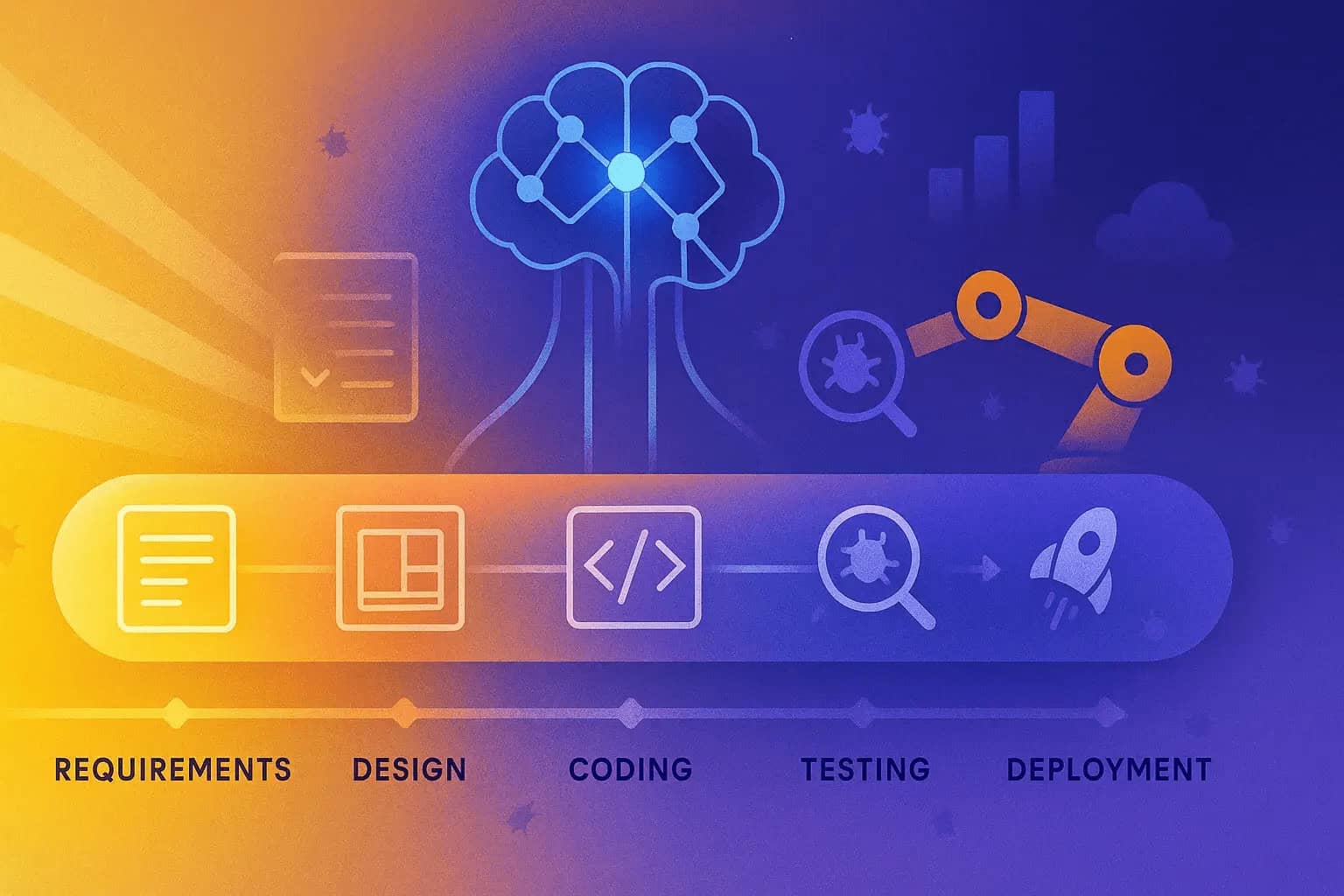
IDC (2024) states that structured pilots would have reduced AI project failures by 58%. Hidden challenges to integration, data gaps, and operational limits are identified with small scale trials, increasing confidence and making it easier to scale to the entire organization.
Why is setting clear objectives crucial for an AI knowledge base?
Focuses Tech Development: Tells appropriate data, features, and AI models needed.
Evaluates Performance Metrics: Tracks efficiency, accuracy, or user adoption KPIs.
Supports Business Strategy: Confirms AI tackles other than just technical needs.
Avoids Loss: Prevents feature and data collection redundancies.
Increases Value: Solving actual problems illustrates the AI’s value.
Why is measuring ROI important for AI knowledge base projects?
- Validates Investment: ROI shows if the AI system is valuable compared to the costs.
- Evaluates Performance: ROI captures high efficiency, high accuracy, and improved high quality decisions.
- Defines Improvement Drives: ROI identify areas to improved.
- Guides Direction: ROI informs leadership on whether to expand or contraction the system.
- Increases Accountability: ROI focuses the team more on outcomes and less on just implementation.
Conclusion
Finally, the construction of a private AI knowledge base is both powerful and problematic. Ignoring data quality, user neglect, insufficient security and inadequate pilot testing are common mistakes, these construction mistakes could reduce the potential of the construction and exacerbate the return on investment.
If these problems are addressed, and objectives are adequately determined, and the system is periodically updated along with the monitoring, the companies will have a trustworthy, scalable and high AI knowledge base construction.
FAQ
Is regular updating necessary?
Absolutely. AI knowledge bases become less effective if not continuously refreshed.
Can bias affect AI knowledge bases?
Yes, unaddressed bias in data can lead to unfair or misleading outputs.
Should user feedback be included?
Yes. Feedback loops improve accuracy, usability, and adoption.
Can security be overlooked?
No. Sensitive company information requires encryption, access control, and monitoring.