
In this article, we will discuss the Way AI Security Software Detections Threats even before humans notice and how modern Artificial Intelligence systems are capable of identifying cyber risks much faster than conventional means.
It describes techniques such as behavior analysis, anomaly detection, and machine learning, which can determine secretive threats in real time before they inflict damage or are detected by human security teams.
Key Points & Ways AI Security Software Detects Threats Before Humans Even Notice
| AI Detection Method | How It Works (Before Humans Notice) |
|---|---|
| Behavioral Analysis | Detects unusual user activity patterns like abnormal login times or file access. |
| Anomaly Detection | Identifies deviations from normal network traffic behavior in real time. |
| Machine Learning Models | Learns past attack patterns to predict and flag new, similar threats. |
| Real-Time Traffic Monitoring | Continuously scans data flow to spot suspicious spikes or leaks instantly. |
| Endpoint Monitoring | Tracks device-level activity to detect malware or unauthorized access early. |
| Phishing Detection Algorithms | Identifies fake emails using URL patterns, sender behavior, and content analysis. |
| Threat Intelligence Integration | Matches incoming data with global threat databases for early alerts. |
| File Behavior Analysis | Monitors how files act after execution to catch hidden malware activity. |
| Sandbox Testing | Runs suspicious files in a virtual environment to observe malicious behavior safely. |
| Predictive Risk Scoring | Assigns risk levels to users/devices before an actual attack happens. |
10 Ways AI Security Software Detects Threats Before Humans Even Notice
1. Behavioral Analysis
Behavioral analysis AI security systems continually track how users, devices, and applications behave normally. It establishes a baseline of typical activity, including login times, file access patterns, and network usage.
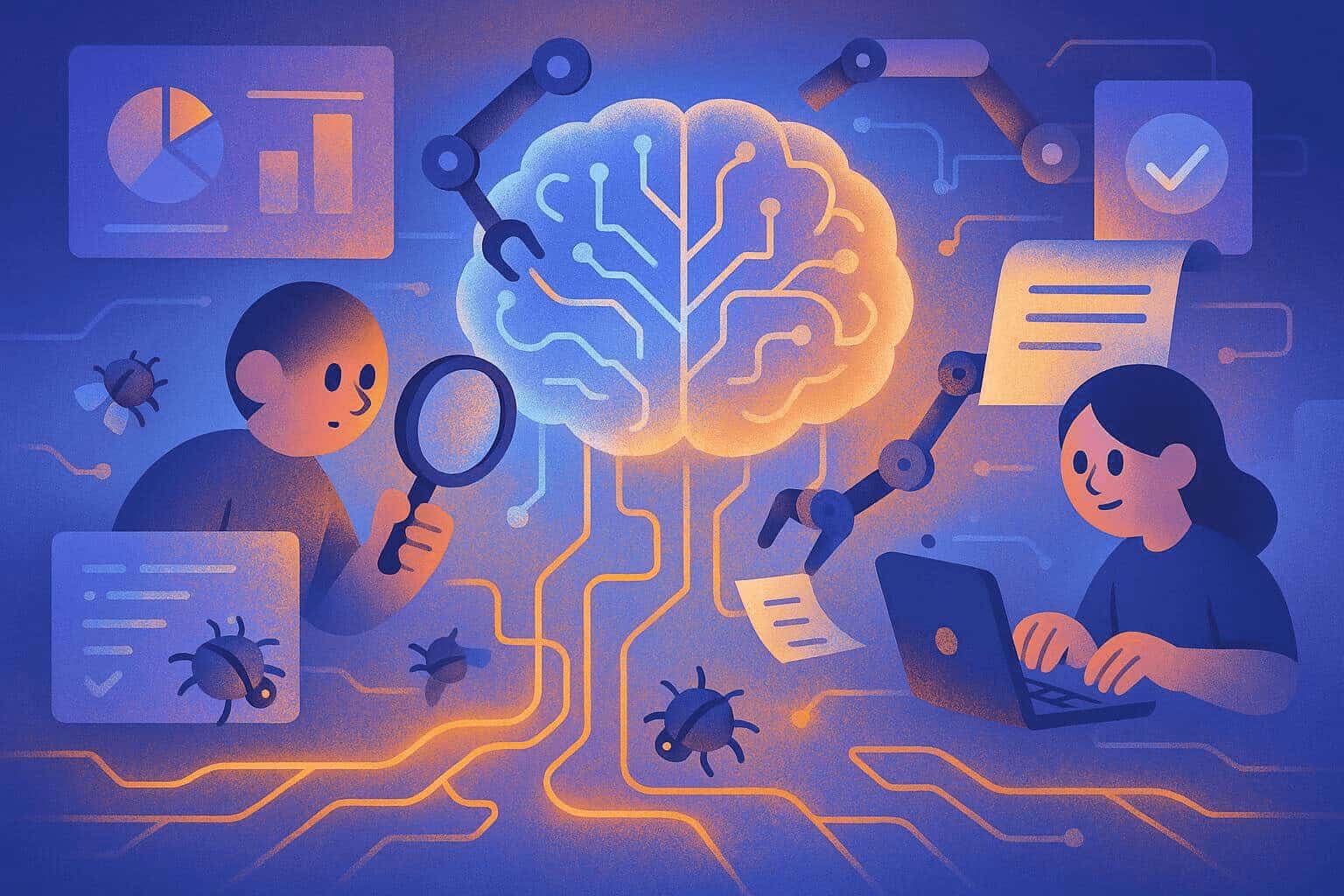
Specifically, the system identifies odd behaviours — if a user logs in from a new location or accesses confidential files at unusual hours, etc.
AI with relevant training data that extends only to October 2023 can detect even the slightest shifts in behavior as they occur; unlike humans, who must be manually reviewed, AI is quick to stop threats such as an employee working against company interests or a compromised account.
| Key Point | Explanation |
|---|---|
| User activity tracking | AI studies normal login times and usage patterns continuously. |
| Baseline creation | It builds a profile of typical user and system behavior. |
| Instant deviation detection | Flags unusual actions like late-night logins or file access. |
| Insider threat detection | Identifies suspicious activity from trusted users early. |
| Real-time response | Immediately alerts or blocks abnormal behavior patterns. |
2. Anomaly Detection
Artificial Intelligence uses anomaly detection to understand behaviours that deviate from what it is expected for particular systems.
This is done by looking over large datasets of network traffic, user behavior, and system logs to define what the “normal” activity in your systems looks like.

Even some tiny discrepancies get raised, such as suspicious data exports or unexpected system requests—the AI detects them and then label potentially dangerous.
This approach is particularly useful for combating unknown or zero-day attacks, as it relies not on known signatures but rather on abnormal behavior.
| Key Point | Explanation |
|---|---|
| Normal pattern learning | AI learns standard network and system behavior first. |
| Deviation identification | Detects even small changes from normal activity. |
| Unknown threat detection | Identifies zero-day attacks without predefined signatures. |
| Traffic irregularities | Spots unusual data transfers or system requests quickly. |
| Continuous monitoring | Works 24/7 without manual supervision or delay. |
3. Machine Learning Models
Machine learning models allow AI security tools to get better over time by learning from previous cyberattacks and changing threat patterns.
Huge datasets with information on malware behaviors and phishing attempts, as well as hacking techniques, train these models.

With time, they achieve higher precision in aspects like recognizing new and unknown threats. When a new attack matches recognized patterns, even in part
The system automatically identifies and blocks it. It enables AI to be one step ahead of attackers who vary their attack methods.
| Key Point | Explanation |
|---|---|
| Data-driven learning | AI trains on past cyberattack datasets. |
| Pattern recognition | Identifies similarities with known malware and attacks. |
| Self-improvement | Gets smarter with every new threat detected. |
| Predictive ability | Anticipates new attack methods based on trends. |
| Automated response | Blocks threats without human intervention. |
4. Real-Time Traffic Monitoring
Real-time traffic monitoring means that AI systems can inspect each incoming and outgoing network data constantly.
It instantly analyzes packet flow, data volume, and communication sources. If there is an unpredicted spike in traffic, abnormal data transfer, or connection to dubious external servers, the system instantly flags it as a red alert.

AI is not like regular systems that check the logs and react later. This stops attacks from stealing your sensitive data, communicating with ransomware systems, and exfiltration of sensitive information before the damage can spread through the network.
| Key Point | Explanation |
|---|---|
| Live data scanning | Monitors all incoming and outgoing network traffic. |
| Packet inspection | Analyzes data packets for suspicious activity. |
| Spike detection | Identifies sudden increases in network usage. |
| External connection alerts | Detects communication with unknown servers. |
| Instant blocking | Stops threats before they spread in the system. |
5. Endpoint Monitoring
Endpoint monitoring is specifically concerned with the devices connected to a network, such as laptops, servers, and mobile phones.
AI tracks things like software installations, file changes, and processes ongoing in the system—that is, continuous.
It will detect and quickly block malware execution and change logic if malware tries to execute itself or make unauthorized amendments.

AI is well-suited for this purpose, since endpoints are a typical first point of entry for attackers, and AI provides immediate security at the need of the device.
It stops the spread of any threat across the entire network, allowing organizations to maintain robust device-level security.
| Key Point | Explanation |
|---|---|
| Device tracking | Monitors laptops, servers, and mobile devices. |
| Process monitoring | Checks running applications and system processes. |
| Malware detection | Identifies unauthorized or harmful software activity. |
| Early threat blocking | Stops attacks at the device level immediately. |
| Network protection | Prevents spread across connected systems. |
6. Phishing Detection Algorithms
Phishing Trio: Phishing detection algorithms examine an email, message, or website to identify signs of fraud.
Suspected senders, structure of the email, links, and there are all sorts of elements checked by AI, hidden evil scripts

Also, compares messages with known phishing fingerprints. Even sophisticated phishing emails that appear actual can be detected due to minor failings in language, area names, or metadata.
It allows AI to prevent scams before any user even opens it – thus lowering the chance of credential theft or money loss by a very large margin.
| Key Point | Explanation |
|---|---|
| Email analysis | Examines sender details and message structure. |
| URL inspection | Detects suspicious or fake website links. |
| Content scanning | Finds misleading or harmful language patterns. |
| Pattern matching | Compares with known phishing attack databases. |
| Scam prevention | Blocks phishing before user interaction. |
7. Threat Intelligence Integration
When it comes to Threat intelligence integration, AI systems can link up with worldwide cybersecurity records saved in databases that list recognised threats.
Those databases contain malware signatures, hacker IP addresses, and attack techniques. This world intelligence is loaded in, and AI continuously compares incoming data with this.

If a match is detected, it immediately contains or quarantines the threat. Doing so ensures organizations can take advantage of real-time global cyber threat intelligence
Allowing them to protect against both prevalent and emerging cyberattacks in a fraction of the time it would take to uncover threats manually.
| Key Point | Explanation |
|---|---|
| Global database access | Uses worldwide cybersecurity threat data. |
| Malware signature matching | Compares data with known attack signatures. |
| IP reputation check | Identifies malicious IP addresses instantly. |
| Real-time updates | Continuously receives new threat information. |
| Fast blocking | Stops known threats before execution. |
8. File Behavior Analysis
Whereas file source analysis simply checks where a file is coming from, file behavior analysis looks at what happens when a file enters the system.
Try to change system settings, access sensitive data, or contact external servers, and AI watches. Same as all the events, Alerts are raised on suspicious operations in Settings.

Highly effective against malware that is hidden as a normal file. By analyzing conduct as opposed to appearance, AI can discover advanced threats that are easily undetectable by the conventional antivirus system.
| Key Point | Explanation |
|---|---|
| Post-entry monitoring | Detects threats even if the file looks safe. |
| Action tracking | Checks modifications, deletions, or access attempts. |
| Suspicious behavior detection | Flags abnormal file activity patterns. |
| Hidden malware discovery | Detects threats even if file looks safe. |
| System protection | Prevents damage before execution spreads. |
9. Sandbox Testing
Sandbox testing helps AI isolate suspicious files and run them in a controlled virtual environment.
The file is also trapped inside this sandbox, so it cannot cause havoc on actual systems. The behaviour right here — file change, network connectivity, or system modification — is observed by AI.

In the event that there is any sort of malicious activity, the file is blocked before it can ever come into contact with a real system.
This is particularly useful for discovering unknown malware. It offers a controlled environment, allowing security systems to learn about threats without putting any real infrastructure in danger.
| Key Point | Explanation |
|---|---|
| Virtual environment | Runs files in isolated safe space. |
| Behavior observation | Watches file actions without system risk. |
| Malware detection | Identifies harmful activities safely. |
| Risk prevention | Stops dangerous files before real execution. |
| Controlled testing | Ensures system safety during analysis. |
10. Predictive Risk Scoring
Predictive risk scoring is the practice of assigning a security risk level to users, devices, and activities long before an attack begins.
AI examines numerous variables — login histories, behavioral patterns, device wellness, and networks. Using this data, it determines a risk score.

Some high-risk behaviors may be restricted or more closely monitored. They help them prevent the attack instead of responding to it. Helps detect insider threats and in many early-stage cyberattacks.
| Key Point | Explanation |
|---|---|
| Risk evaluation | Assigns risk levels to users and devices. |
| Behavior analysis | Studies login and activity history. |
| Device health check | Evaluates system security status. |
| Early warning system | Predicts possible cyberattacks in advance. |
| Proactive defense | Restricts high-risk actions automatically. |
Choosing an AI Security Software to Recognize Threats Faster Than Humans
- Check real-time detection ability. Always select software that has the capability to detect threats in real-time and in-the-act, not after damage is done.
- Look for behavioral analysis features. Make sure it can observe user and system behaviour to catch abnormal activity early.
- Support for anomaly detection: Choose tools that can detect abnormal behaviors and identify unknown or zero-day threats
- Machine learning capability: Choose a software that gets smarter with every new cyberattack to which business data is exposed.
- Strong threat intelligence integration. It would need to tie in with world threat databases for quicker attribution of known attacks.
- Endpoint protection coverage: Ensure that it protects all machines, including laptops, servers, and mobile devices.
- Phishing detection strength. It is only true that the system has to efficiently detect fake emails, links, and fraudulent sites.
- File behavior monitoring. It is not just their source, but what the files do once they are in the system.
Conclsuion
The conclusion mentioned above is the key role of AI security software to detect cyber threats before the human eye sees them.
We leverage behavioral analysis, machine learning, anomaly detection, and real-time monitoring to instantly identify risks and avoid exposure.
These state-of-the-art systems keep adapting, making security quicker, smarter, and more dependable.
So how does AI enhance cybersecurity in the general term, which blocks threats at the initial stages and reduces human errors specifically?
FAQ
How does AI detect threats faster than humans?
AI analyzes large amounts of data instantly, identifying unusual patterns and behaviors much faster than manual human monitoring.
What is behavioral analysis in AI security?
It is a method where AI tracks normal user behavior and flags any unusual activity that may indicate a security threat.
What is anomaly detection?
Anomaly detection identifies abnormal patterns in system activity that do not match normal behavior, helping detect unknown threats
How do machine learning models help in security?
Machine learning models learn from past cyberattacks and improve over time to detect new and evolving threats automatically.