In this article, I will present Identity-as-a-Service: The End of Social Media Passwords, a pioneering method poised to change how we engage with social media.
IDaaS offers a method for social media logins to move away from conventional login procedures to an advanced, cloud-powered authentication system.
Using advanced biometrics, multifactor authentication, and centralized identity management, IDaaS will not only help you forget about the pain of social media login, but will also improve the security of social media and other digital services.
Overview
Most online activities today masquerade as a simple click, but they often require a multitude of credentials, making the Internet feel like a secure and high-risk environment.
With the rapid-fire creation of social media accounts, online shopping/e-commerce accounts, and email accounts, managing a growing list of accounts becomes a nuisance.
Having to remember countless usernames and passwords, deal with routine password changing, and keeping as much information as possible to keep phishing scams, and denial of access screens is a Grueling and tedious chore.
This is exactly the contrasting way of digital identity verification that IDaaS offers, or identity-as-a-service. This does not just add to the convenience of online activities; it refines digital identity itself.
What is Identity as a Service?
Identity-as-a-Service (IDaaS) is a cloud-based service for managing digital user identities and user authentication across various applications.
IDaaS eliminates the need for identity verification through the use of passwords and instead utilizes biometric scanners, multi-factor authentication (MFA), and cryptographic tokens.
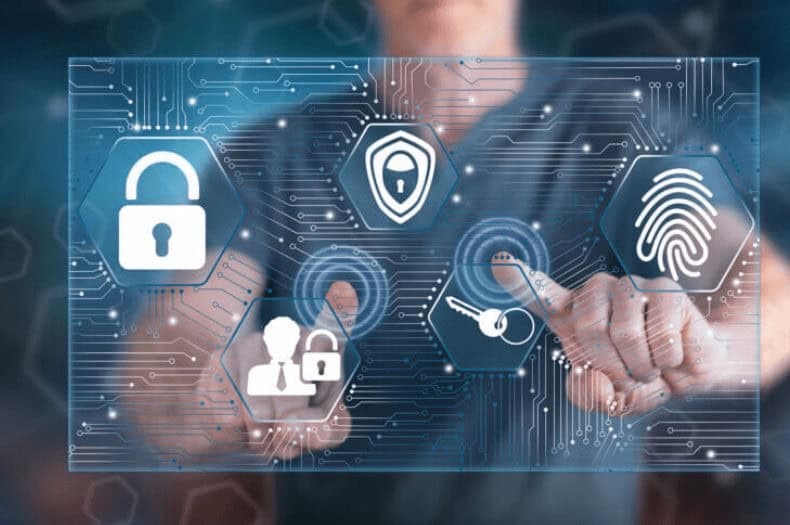
IDaaS allows users to log into apps and social media accounts and even enterprise systems using a single identity provider.
By using a single identity provider, users have a simplified and secure login process, and the chances of compromised accounts and credential theft are significantly reduced.
How IDaaS is Replacing Passwords
Passwordless Authentication
Organizations are replacing memorized passwords with biometrics like fingerprints or facial recognition and hardware-based security keys (WebAuthn/passkeys), offering stronger protection and faster, convenient login experiences for users.
Decentralized Identity & Cryptographic Keys
Instead of central servers storing credentials, users keep cryptographic keys in digital wallets, signing login transactions securely, ensuring that sensitive information remains private and resistant to breaches.
Single Sign-On (SSO) & Social Logins
IDaaS enables users to access multiple applications or social media platforms through one verified identity, reducing password fatigue and improving security by minimizing weak or reused credentials.
Adaptive Authentication
Authentication systems analyze real-time behavior, device patterns, and user location to verify identity, automatically adjusting security measures and eliminating the need for traditional password input.
How Does IDaaS Work?

Identity-as-a-Service (IDaaS) provides services by being a trusted third party to users and platforms. IDaaS provides a service to users with a streamlined and secure way of logging into platforms by bypassing traditional password-based systems. The following are the steps involved in a user logging into a social media platform using IDaaS:
Attempt to Social Media Login – Upon entering the social media platform the platform IDaaS provider authenticates the user.
User Identity Verification – The IDaaS provider uses techniques such as fingerprints (or face ID) and other biometric user identity or behavioral analysis or a cryptographic token to rupture the user identity.
Secure Digital Token Issuance – With a ruptured user identity the IDaaS provider creates a digital token and does not unmask or expose the user identity.
Token Accepted – The platform accepts the digital token and access is granted. The user is logged in without the need to do a password entry.
With a centralized cloud-based approach password-based systems are highly streamlined and secure.
Differences Between Identity as a Service and Traditional Identity Management

Here’s a clear comparison between Identity-as-a-Service (IDaaS) and traditional identity management:
| Feature | Traditional Identity Management | Identity-as-a-Service (IDaaS) |
|---|---|---|
| Deployment | On-premises; managed internally by an organization | Cloud-based; managed by third-party providers |
| Scalability | Limited; adding users or services often requires significant IT resources | Highly scalable; can handle millions of users across multiple platforms easily |
| Maintenance | Requires internal IT team for updates, patches, and troubleshooting | Provider handles updates, security patches, and compliance automatically |
| Authentication Methods | Primarily username/password, occasionally with basic MFA | Advanced authentication including biometrics, behavioral analytics, multifactor authentication, and cryptographic tokens |
| User Experience | Multiple passwords, complex login processes, frequent resets | Single identity across platforms; seamless, often passwordless login |
| Security | Vulnerable to weak passwords, breaches, and inconsistent policies | Centralized, robust security with real-time threat detection and anomaly monitoring |
| Cost | High upfront costs for infrastructure, software licenses, and IT staff | Subscription-based; lower upfront cost, predictable pricing, and reduced IT burden |
| Integration | Often limited to internal systems, complex to connect with external apps | Easy integration with cloud services, social media, and enterprise applications via standard protocols (OAuth, OpenID Connect) |
The End of Social Media Passwords
Facebook, Google, TikTok, and other social media platforms are starting to offer passwordless logins to users. Users can log in to social media accounts using either federated logins or biometric logins.
From a user’s standpoint, Logging in to accounts is as easy as performing a fingerprint scan or approving a push notification.
In terms of security, Users are no longer at risk of having weak passwords or having their passwords stolen.
With regards to scalability, platforms that use IDaaS (Identity as a Service) can do millions of logins in a day and remain reliable.
For users in India where social media platforms like WhatsApp, Instagram and TikTok are very popular, integrating passwordless logins using IDaaS can significantly decrease the rate at which social media accounts are hacked.
Risks and Challenges
Reliance on providers: When outsourcing identities, there is a reliance on vendor trust.
Data privacy: Biometric information is sensitive and must be protected.
Digital split: Some users do not possess advanced authentication capabilities.
Transition pains: Users of passwords may initially be unwilling to adapt to new methods.
There is little question that the difficulties described will be faced in the migration to the next generation of digital identities; however, the digital identity ecosystems of the future will not include passwords.
Future Outlook

Universal Passkeys: Cross-platform adoption of Passkeys technology is being championed by Apple, Google, and Microsoft.
Decentralized Identity: User control over credentials is likely to increase with new blockchain-based methods for decentralized ID management.
Regulatory Compliance: To counter cybercrime, stronger authentication methods are being legislated by governments, resulting in increased compliance costs for businesses.
IDaaS-powered authentication ecosystems are expected to emerge by 2030, making passwords a thing of the past in mainstream social media.
Conclusion
In conclusion, replacing social media passwords with Identity-as-a-Service technology brings us closer to safe and secure interactions online.
By incorporating cloud-based authentication, biometrics, and other verification methods, IDaaS makes access easier, fraud prevention stronger and overall security higher.
A future with social media logins that is passwordless, more user-friendly, and more secure from cyber threats is coming.
FAQ
How does IDaaS replace passwords?
It uses biometrics, multifactor authentication, and secure tokens to verify identity.
Which platforms support IDaaS?
Social media, enterprise apps, and cloud services can integrate with IDaaS providers.
Is it more secure than traditional passwords?
Yes, it reduces risks of breaches, phishing, and password reuse.
Do I need multiple accounts for IDaaS?
No, one IDaaS account can authenticate across multiple platforms.