In this post I will go over the tools that utilize AI to balance your crypto earnings and your everyday spending.
With an increase in the adoption of cryptocurrency, these solutions allow users to smoothly exchange digital assets for daily expenses.
They utilize AI to plan the best time to invests, automates this process and help save on cost by turning their crypto into real-world uses.
Key Points & Tools That Use AI To Synchronize Crypto Gains With Real-World Spending
- MetaMask Card: AI optimizes token swaps, enabling seamless real-time crypto spending directly from decentralized wallet balances worldwide.
- Bitget Wallet Card: Uses AI to convert crypto assets instantly, syncing gains with everyday purchases and spending efficiency globally.
- Bybit Card: AI tracks portfolio value, converting crypto into fiat automatically for smooth real-world transactions anytime globally.
- Nexo Card: AI selects optimal collateral assets, enabling spending without selling crypto while maximizing portfolio growth potential continuously.
- Crypto.com Visa Card: AI enhances rewards optimization, converting crypto holdings into fiat for everyday purchases with cashback benefits globally.
- Bleap Mastercard: AI-driven automation syncs crypto profits with spending, enabling instant conversions and efficient payment experiences worldwide seamlessly.
- Coinbase Card: AI monitors balances, converting selected cryptocurrencies instantly for purchases while optimizing fees and transaction timing automatically.
- Gnosis Pay: AI integrates smart contracts for secure spending, enabling direct crypto payments with decentralized financial control globally.
- ether.fi Cash: AI aligns staking rewards with spending, allowing users to utilize yield-generated income for daily expenses easily.
- Cypher Card: AI automates asset selection, converting crypto gains into fiat instantly for secure, seamless real-world spending globally.
10 Tools That Use AI To Synchronize Crypto Gains With Real-World Spending
1. MetaMask Card
Backed by Mastercard, the MetaMask Card released in 2026 allows users to spend directly from a self-custodial wallet without intermediaries.
At the moment of payment, it automatically converts crypto (USDC or ETH) into fiat while granting full control until execution.
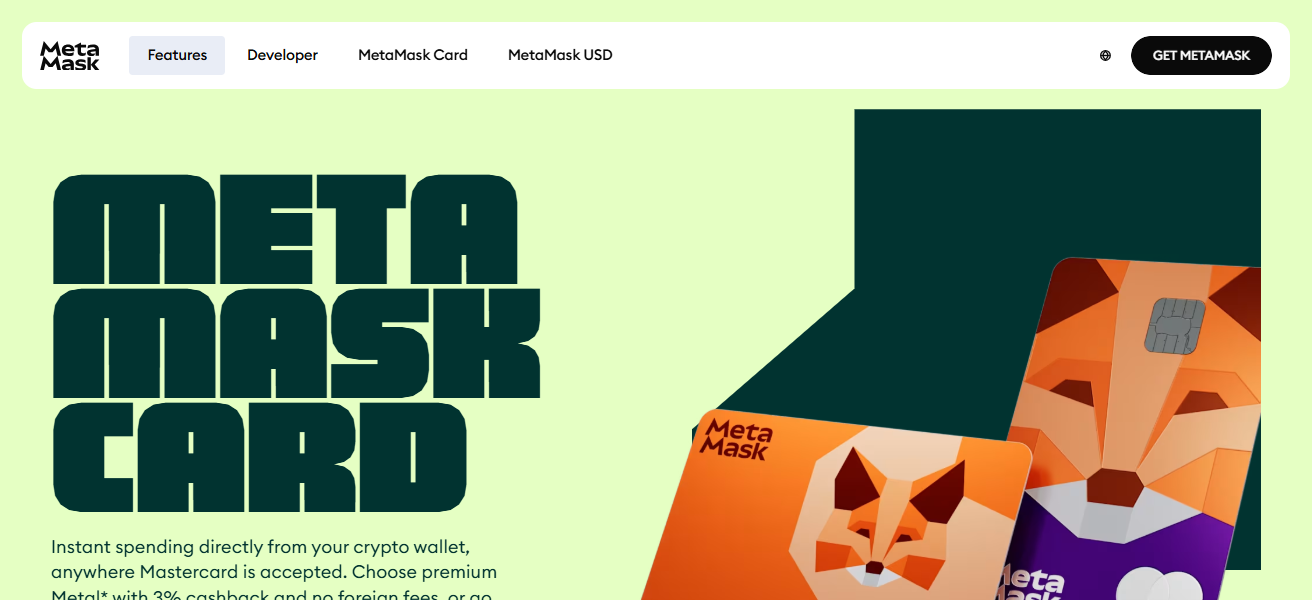
With over 150 million merchants worldwide, it provides integration with Apple Pay and Google Pay for easy usage.
Meanwhile, automated exchanges use better matchmaking and intelligent routing logic to mirror this AI-based efficiency, selecting tokens better and cutting down the associated costs. Cashback is between 1% and 3%, and Layer-2 xucks (such as Linea) allows for faster transaction processing at low-cost.
| Pros | Cons |
|---|---|
| Self-custodial spending ensures full control of funds | Limited regional availability during rollout phases |
| Real-time crypto-to-fiat conversion reduces friction | Requires Web3 knowledge for optimal use |
| Layer-2 integration lowers transaction fees significantly | Cashback rates lower than some competitors |
| Works with Apple Pay and Google Pay globally | Volatility impacts spending value instantly |
2. Bitget Wallet Card
The Bitget Wallet Card combines the power of decentralized wallet infrastructure with the convenience of real-world payments, offering users instant crypto-to-fiat conversion at checkout.
With smart backend systems in place, it dynamically chooses the best assets to spend with and correlates performance of portfolio assets directly with daily spending.
Designed for Web3 users, it enables the support of multiple chains and tokens, minimizing friction between DeFi earnings and real-life purchases.
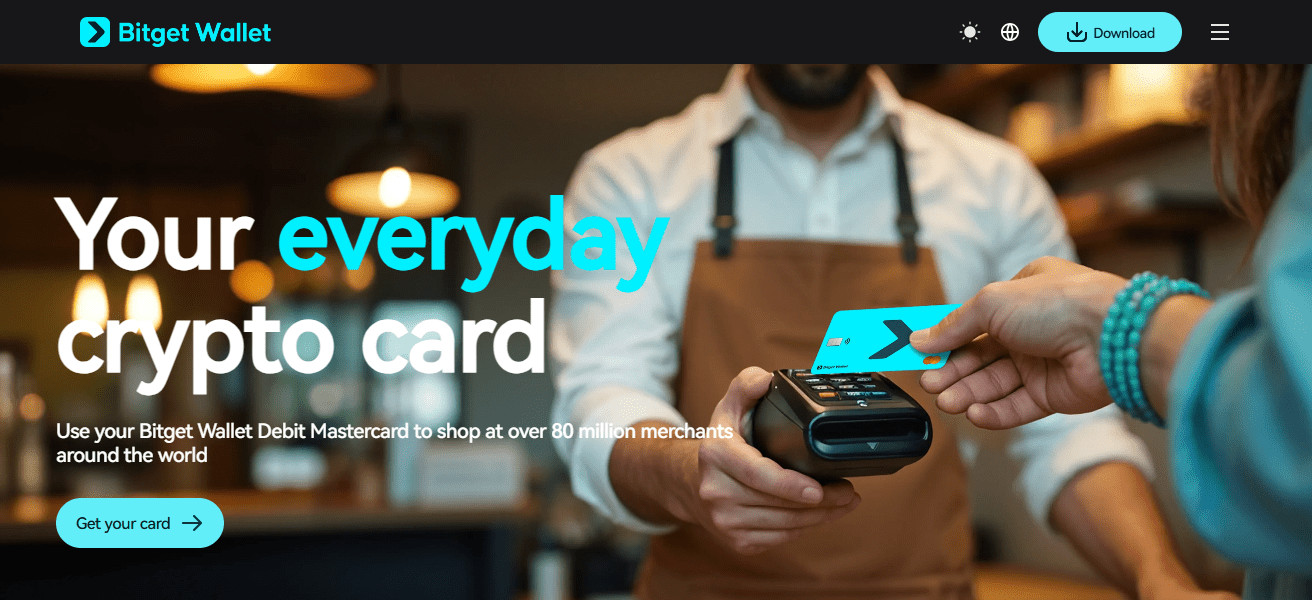
The shapes its public blockchain with a focus on automation, security, and usability across the globe, powering seamless spending at merchants around the world.
User behavior is monitored by AI-like analytics to time what this will convert, minimizing slippage, making it ideal for active traders who need to efficiently manage volatile crypto portfolios.
| Pros | Cons |
|---|---|
| Multi-chain support enhances flexibility for DeFi users | Still evolving ecosystem with limited track record |
| Smart asset selection optimizes spending efficiency | Availability may be restricted in some countries |
| Instant conversion minimizes delays at checkout | Less mainstream adoption compared to bigger platforms |
| Designed for Web3-native users and traders | UI complexity for beginners |
3. Bybit Card
The Bybit Card connects crypto in an exchange with everyday spending by converting assets to cash when the payment occurs.
It is available in various cryptocurrencies and fiat currencies, making it globally usable with competitive rates.
AI-powered portfolio tracking assists users in determining which assets to liquidate, reconciling both their long-term investments with short-term liquidity requirements.
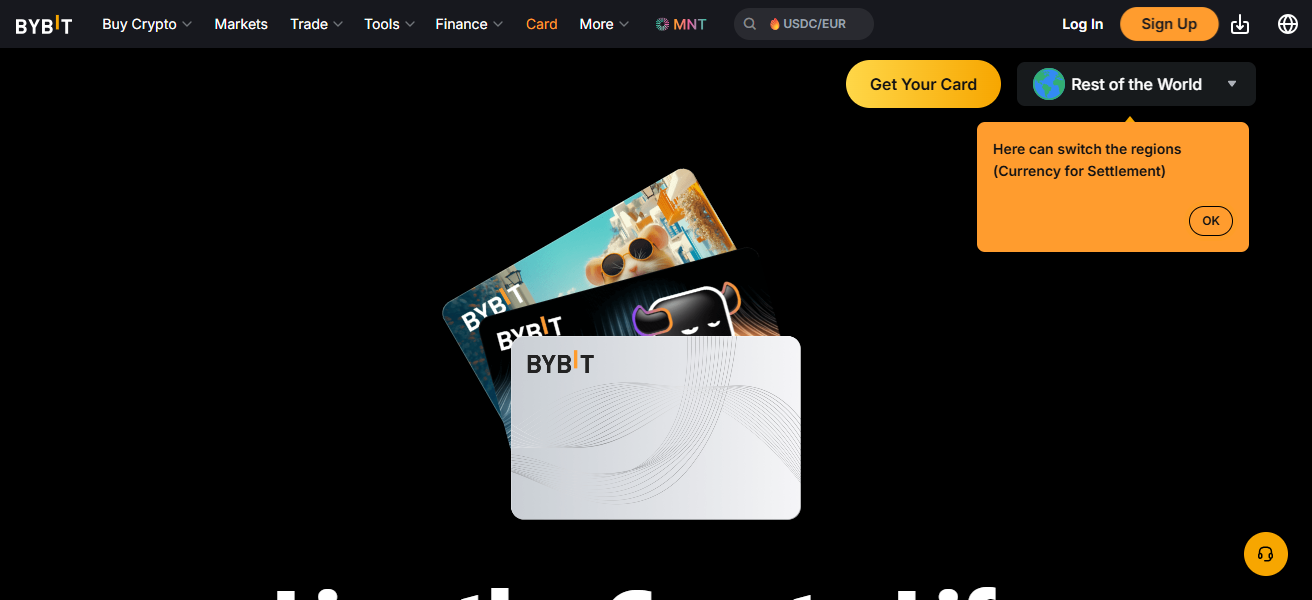
Reward cashback and spend analysis features could drive user engagement, while integration with Bybit’s trading ecosystem would allow for seamless fund transfers.
It uses its real-time conversion engine to keep wait times for conversions low, allowing traders the ability to access profit and use it immediately without manual withdrawals or complicated off-ramping steps.
| Pros | Cons |
|---|---|
| Seamless integration with trading accounts | Requires funds on centralized exchange |
| Real-time liquidation enables instant spending | Exposure to exchange-related risks |
| Competitive exchange rates for conversions | Limited DeFi integration |
| Cashback and rewards improve user value | Regulatory restrictions in certain regions |
4. Nexo Card
The Nexo Card is a first-of-its-kind credit-based product where users spend fiat and use crypto as collateral. Instead of disposing of assets, AI-based engines optimize allocation collateral and credit limits related to value.
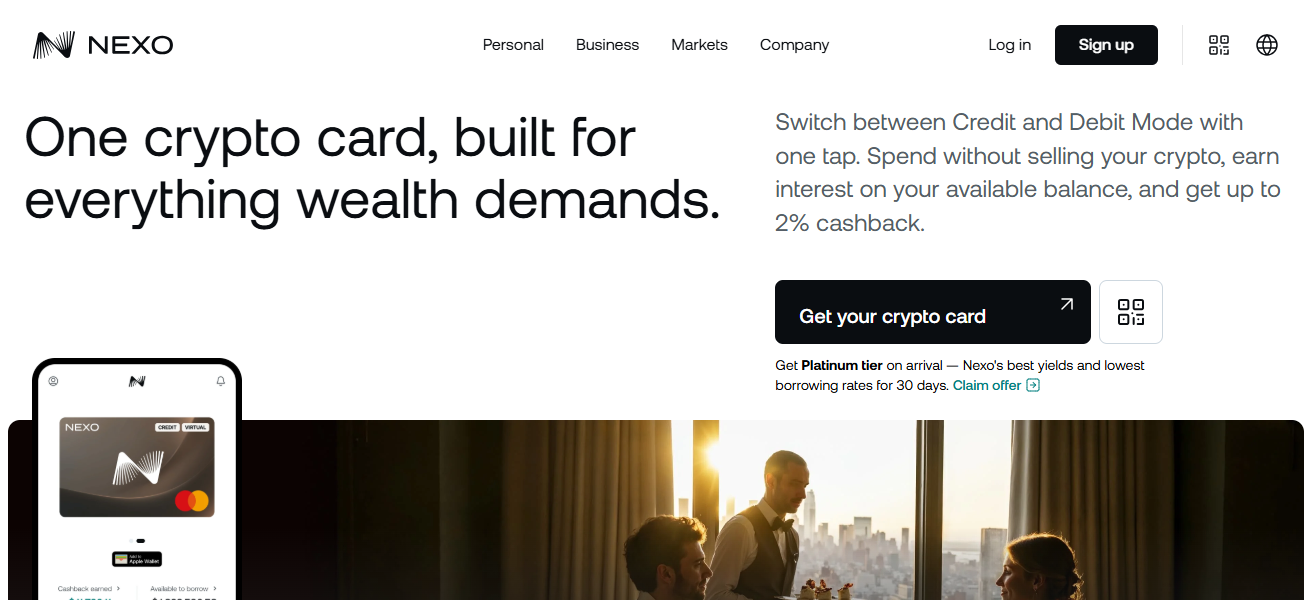
That keeps long-term crypto exposure while freeing up liquidity to make real-world purchases. Compatible with both debit and credit modes for versatile finance strategies Interest rates are optimized dynamically and borrowing conditions to reduce costs for users.
Cashback incentives and compatibility with Nexo’s yield offerings further augment capital efficiency, positioning it as the perfect tool for investors concerned with maintain their wealth as well as a payment convenience.
| Pros | Cons |
|---|---|
| Spend without selling crypto using collateral model | Interest charges apply on borrowed funds |
| Dual credit and debit modes provide flexibility | Requires maintaining collateral ratios |
| AI-based credit optimization improves efficiency | Risk of liquidation during market downturns |
| Strong rewards and yield integration | Not ideal for short-term users |
5. Crypto.com Visa Card
Crypto. com Visa Card is still one of the most adopted crypto payment solutions, with tiered benefits for CRO staking.
It turns the crypto into fiat at the point of sale, allowing spending across millions of merchants worldwide.

AI-augmented rewards programs customize cash back, refunds and benefits like streaming subscriptions or travel perks. The platform collaborates with a wider financial ecosystem that encompasses DeFi, NFTs, and trading services.
The mobile application offers real-time analytics, directly assisting users in budgeting and maximizing reward usage for a full-scale solution to regional seeking lifestyle incentives as well as crypto productivity.
| Pros | Cons |
|---|---|
| Widely accepted with strong global merchant network | Requires CRO staking for best rewards |
| Attractive cashback and lifestyle perks | High entry cost for premium tiers |
| Integrated ecosystem with DeFi and NFTs | Reward rates may change over time |
| User-friendly mobile app with analytics | Centralized custody risks |
6. Bleap Mastercard
The Bleap Mastercard is designed for easy transition between DeFi and standard payment methods. Users can invest crypto income directly, with automated conversion systems making the transactions as efficient as possible.
Using smart routing, the platform is designed to optimize for zero fees and low settlement times. Bleap caters to Web3-native users with multi-token and wallet support for more flexible asset management.
Its infrastructure emphasizes security, transparency, and real-time balance tracking. Through aligning DeFi yields with everyday spending circumstances
Bleap builds a seamless bridge between earning in crypto ecosystems and utilizing funds for economic activities in the real world on a global scale.
| Pros | Cons |
|---|---|
| Designed for seamless DeFi-to-real-world usage | Limited brand recognition currently |
| Multi-token support enhances flexibility | Early-stage product with evolving features |
| Efficient routing reduces transaction costs | Merchant acceptance depends on card network rollout |
| Real-time balance tracking improves control | Smaller ecosystem compared to competitors |
7. Coinbase Card
Coinbase Card Coinbase Card is a Visa debit card that lets you spend crypto or fiat directly from your Coinbase account. Its automatic conversion of selected cryptocurrencies to local currency at checkout allows acceptance for global merchants.

Users can access up to 4% cashback in crypto rewards, incurring no annual fees, while benefiting from strong security features such as two-factor authentication.
Rewards assets are flexible, and Apple Pay and Google Pay integration is offered. With AI-driven insights, it is beginner-friendly for optimizing spending patterns and is among the most widely trusted options for everyday crypto usage.
| Pros | Cons |
|---|---|
| Beginner-friendly with simple interface | Conversion fees can apply |
| Up to 4% crypto cashback rewards | Rewards vary by region and asset |
| Strong security and regulatory compliance | Fully centralized platform |
| Supports multiple cryptocurrencies and fiat | Limited advanced DeFi functionality |
8. Gnosis Pay
Gnosis Pay is a smart contract infrastructure that allows you to spend your crypto directly without the use of centralized custody. It used blockchain automation to process transactions in a secure, transparent manner.

Smart contract logic – akin to AI – manages funds and expenses, automating approvals and spending ceilings. It is integrated with the Gnosis ecosystem and supports stablecoins and decentralized identity solutions, which increases privacy and control.
The platform is aimed at more sophisticated users wanting programmable payments, such as DAOs and Web3-native applications where it is critical to leverage financial automation and decentralized governance.
| Pros | Cons |
|---|---|
| Fully decentralized with smart contract control | Complex setup for non-technical users |
| High transparency and security | Limited mainstream adoption |
| Supports programmable payments and automation | Fewer merchant integrations currently |
| Ideal for DAOs and Web3 applications | Requires understanding of blockchain infrastructure |
9. ether.fi Cash
ether. fi Cash bridges the gap between Ethereum staking and yieldearnt income — enabling users to spend their generated yield directly. It solves this by embedding liquid staking tokens so you can keep earning while maintaining liquidity for transactions.
Reward Allocations are also based on AI optimizations that guarantee users maximize their outputs before usage. Celo dollars are aimed at non-custodial users in line with the decentralized finance (DeFi) ethos.
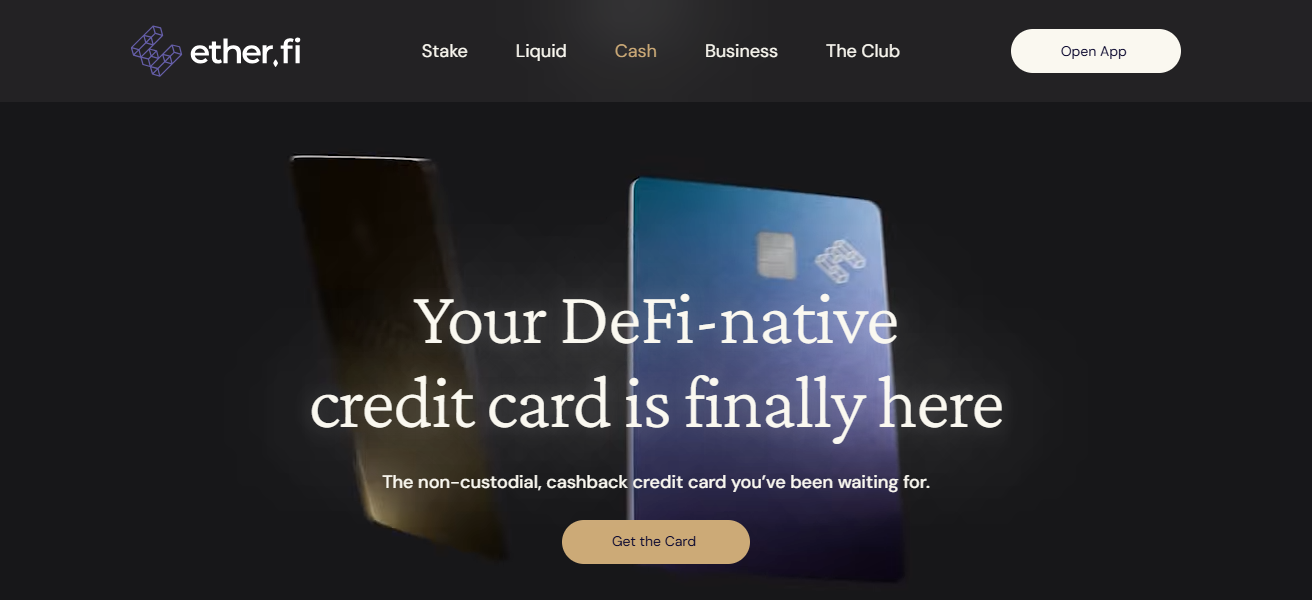
This allows users to consume staking yields without manually withdrawing them using automated conversion processes.
By turning passive income into usegable cash flow, this is especially appealing to longterm Ethereum holders needing practical utility from their staked ETH.
| Pros | Cons |
|---|---|
| Uses staking rewards for spending | Dependent on Ethereum staking yields |
| Maintains liquidity through liquid staking tokens | Exposure to ETH price volatility |
| Non-custodial design enhances security | Limited merchant ecosystem currently |
| Passive income converted into usable cash flow | Still emerging product category |
10. Cypher Card
Cypher Card is tailored for privacy-centric crypto payments, balancing secure asset management with real-world usability.
Through intelligent automation, the protocol chooses which assets are best for any transaction, while ensuring the balance of security, liquidity and value preservation.
Ideal for users focused on anonymity and decentralization, it can connect with non-custodial wallets and encrypted transaction solutions.
AI-powered surveillance improves fraud prevention and spending efficiency. It enables instant crypto-to-fiat conversion for seamless usage on International payment networks.
By prioritizing privacy while providing fluid spending features, it fills a niche gap for users who want financial freedom without compromising security during transactions.
| Pros | Cons |
|---|---|
| Flexible plans (free & premium tiers) | Premium card is expensive ($199) |
| Works as crypto debit card | ATM fees (2–3%) |
| Growing ecosystem | Limited public info vs big players |
| Suitable for Web3 users | Lower adoption |
Cocnsluion
Conclusion AI-Based Crypto Expenditure Tools: Bridging the Gap Between Digital Assets and Everyday Life They enable using crypto as easily as using good old money, automating conversions, optimizing timing and minimizing fees.
Be it cards or DeFi integrations, they provide added convenience, security and rewards — enabling users to effortlessly convert crypto profits into spending power in the real world.
FAQ
What are AI-driven crypto spending tools?
They are platforms that use artificial intelligence to automatically convert and manage crypto assets for real-world purchases.
How does AI help in crypto spending?
AI analyzes market trends and timing to optimize when crypto is converted into fiat, helping reduce losses and maximize value.
Do I need technical knowledge to use these tools?
No, most platforms are designed for beginners with simple apps and automated features.
Can I spend crypto directly without converting it?
Yes, these tools instantly convert crypto into fiat at checkout, so merchants receive traditional currency.