This article will introduce you to the top transaction monitoring platforms. These platforms enable companies to identify fraud, avoid money laundering, and keep in alignment with regulation requirements.
You will learn their primary functions and benefits, pricing, and most applicable scenarios. This guide will assist you in selecting the best transaction monitoring solution for your bank, fintech, or payment solution business.
What is a transaction monitoring platform?
A transaction monitoring platform is designed to flag problematic behavior and analyze compliance risks that stem from fraud and other illegal activities.
A transaction monitoring platform analyzes financial transactions and identifies suspicious activities and analytics gaps. Since these platforms help develop risk management and compliance processes, financial institutions (including banks, fintech firms, and payment process providers) rely on them to fulfill their AML and KYC obligations seamlessly.
How We Choose Best Transaction Monitoring Platforms
- Business Size and Transactions You need a solution that is mindful of the size of your business and the volume of transactions that you expect to process in the future.
- AML and Compliance The solution that you select should fulfill the requirements of AML, KYC, sanctions, and the regulations of various financial authorities in the jurisdictions in which your business operates.
- Artificial Intelligence and Machine Learning Select a solution that employs advanced Artificial Intelligence that is able to identify and block fraudulent activity while providing the least number of false alerts in the system.
- Integration The solution must be able to integrate with your existing payment gateways, banking systems, APIs, and compliance and regulatory systems.
- Price and Cost of Ownership You should calculate the subscription and implementation costs in conjunction with the maintenance costs, and the expected long-term scalability.
- Reporting and Analytics The solution should have customizable reporting, audit trails, real time alerts, and automation of compliance reporting.
Key Points & Best Transaction Monitoring Platforms
| Transaction Monitoring Platform | Explanation |
|---|---|
| Feedzai | AI-powered transaction monitoring detects fraud, reduces false positives, ensuring regulatory compliance across financial institutions. |
| ComplyAdvantage | Real-time monitoring identifies suspicious transactions, automates AML compliance, minimizing financial crime risks efficiently. |
| NICE Actimize | Advanced analytics monitor transactions continuously, preventing fraud, money laundering, and regulatory violations effectively. |
| SAS Anti-Money Laundering | Intelligent transaction monitoring uncovers hidden financial crimes through predictive analytics and automated investigations seamlessly. |
| Oracle Financial Crime and Compliance Management | Comprehensive monitoring solution strengthens AML compliance, detects anomalies, supporting secure financial transaction processing globally. |
| FICO TONBELLER | Risk-based transaction monitoring enhances fraud detection, ensuring compliance with evolving anti-money laundering regulations worldwide. |
| LexisNexis Risk Solutions | Real-time transaction screening identifies suspicious activities, reducing compliance burdens and operational investigation costs significantly. |
| Featurespace ARIC Risk Hub | Machine learning detects unusual transaction behaviors, improving fraud prevention with adaptive risk intelligence capabilities. |
| SEON | Flexible transaction monitoring combines digital footprint analysis, preventing fraud while streamlining customer verification processes. |
| Dow Jones Risk & Compliance | Comprehensive transaction monitoring integrates sanctions screening, protecting organizations from financial crime exposure globally. |
10 Best Transaction Monitoring Platforms
1. Feedzai
Feedzai is ideal for banks and payment providers who want a transaction-monitoring platform that offers AI-enhanced fraud detection. Its machine learning models capture and analyze transaction requests, at the same time identifying behaviors that signify a threat.

Feedzai’s technology equally balances the fight against false positive alerts that frustrate customers and the detection of potential fraud. Feedzai provides tools to meet various levels of
Anti-Money Laundering (AML) needs; it incorporates case management and risk evaluation and scoring features. The platform is built on the cloud, making it a reliable option for organizations needing real-time transaction monitoring, even those that process tens of millions of transactions daily.
Feedzai – Key Features
- AI-Powered Fraud Detection – Detects fraudulent transactions through machine learning and real-time analysis.
- Behavioral Analytics – Detects abnormal financial activities through spending pattern analysis.
- AML Compliance Tools – Automates anti-money laundering compliance processes and reporting.
- Risk Scoring Engine – Speeds up fraud investigations and decision-making through dynamic risk scoring.
- Scalable Cloud Platform – Offers reliability and speed to process millions of transactions daily.
| Pros | Cons |
|---|---|
| AI-powered fraud detection with adaptive machine learning. | Premium pricing may challenge smaller businesses. |
| Excellent real-time transaction monitoring capabilities. | Initial implementation requires technical expertise. |
| Reduces false positives through behavioral analytics. | Advanced customization may require professional services. |
| Supports AML compliance and case management. | Some enterprise features have a learning curve. |
| Highly scalable cloud-based infrastructure. | Best suited for medium to large financial institutions. |
2. ComplyAdvantage
The transaction-monitoring platform from ComplyAdvantage allows organizations to identify financial crime in a less time-consuming manner.
The platform uses the intelligence of an AI-powered risk detection system to identify illicit transactions and sanction and money-laundering-related crimes in real time.
Service automation of the platform removes a bulk of the tasks associated with Anti-Money Laundering (AML) compliance workflows, including manual transaction reviews.

This platform is especially useful to financial institutions due to its flexible risk policies and thorough auditing of all transactions and actions taken
including compliance with regulatory reporting. Because it is cloud-based, the platform lends rapid compliance capability to financial organizations faced with new financial exposure risks and threats.
ComplyAdvantage – Key Features
- Real-Time Transaction Monitoring – Monitors financial transactions and identifies potentially suspicious activities in real-time.
- AI Risk Intelligence – Uses risk data that is constantly updated through sophisticated artificial intelligence.
- Sanctions Screening – Screens customers against global sanctions and watch lists.
- Automated AML Workflows – Automates anti-money laundering compliance processes to minimize manual effort.
- Regulatory Reporting – Provides reports that satisfy audits and comply with global anti-money laundering regulations.
| Pros | Cons |
|---|---|
| Continuously updated global risk intelligence database. | Limited advanced analytics compared to specialized competitors. |
| Fast sanctions and watchlist screening. | Pricing can increase with transaction volume. |
| User-friendly cloud deployment. | Custom integrations may require developer resources. |
| Strong AML workflow automation. | Enterprise features available on higher-tier plans. |
| Excellent regulatory reporting tools. | Smaller organizations may not use every feature. |
3. NICE Actimize
NICE Actimize provides a transaction monitoring solution that is trusted by many of the world’s largest banks and financial institutions. It uses AI, behavioral analytics, and sophisticated risk models to pinpoint suspect financial activity. It provides multiple payment channel coverage.
It sends real-time alerts, and its automated, intelligent case management system provides significant operational benefits.

Its flexible monitoring rules help organizations meet global AML requirements, and reduce unnecessary alerts. Compliance teams using NICE Actimize can investigate complex financial crime cases faster and with greater confidence.
NICE Actimize – Key Features
- Behavioral Risk Analytics – Recognizes abnormal transactional customer payment behavior.
- Real-Time Alerting – Alerts instantaneously to suspicious financial activities and fraud.
- Case Management – Enhances efficiency in investigations through the unification of case collaboration and tracking.
- Custom Monitoring Rules – Simplifies the customization of compliance policies to specific institutions.
- Enterprise Scalability – Designed to meet the needs of financial institutions worldwide who process huge transaction volumes.
| Pros | Cons |
|---|---|
| Trusted by major global financial institutions. | Enterprise implementation can be time-consuming. |
| Advanced AI and behavioral analytics. | Higher licensing costs than many alternatives. |
| Comprehensive fraud and AML monitoring. | Requires experienced compliance administrators. |
| Powerful case investigation management. | Complex interface for new users. |
| Highly customizable monitoring rules. | Better suited for large organizations. |
4. SAS Anti-Money Laundering
SAS Anti-Money Laundering uses advanced predictive analytics to offer enhanced transaction monitoring. It also employs Intelligent risk detection. It analyzes behaviors and histories to uncover potential money laundering.

It is also offered with highly automated investigative tools that serve to reduce the burden of false-positive alerts. SAS Anti-Money Laundering also boasts a rich spate of reporting and regulatory compliance functionality, making it an ideal candidate for financial services firms with a multi-jurisdictional footprint.
SAS Anti-Money Laundering – Key Features
- Risk Profiling: Aims to understand client’s behavioral patterns for more precise iterative risk evaluations.
- Automated Investigations: Systematically filters out alerts for more efficient case investigations.
- Regulatory Compliance: Empowers clients to effectively adapt to rapidly changing global AML regulations.
- Advanced Reporting: Facilitates the preparation of comprehensive compliance reports for both internal and external regulatory assessments.
| Pros | Cons |
|---|---|
| Industry-leading predictive analytics capabilities. | Significant investment required for deployment. |
| Accurate customer risk profiling. | Requires trained analysts for optimal use. |
| Advanced reporting and compliance features. | Implementation may take several months. |
| Excellent fraud detection accuracy. | Smaller businesses may find it expensive. |
| Strong support for regulatory compliance. | Complex configuration for custom workflows. |
5. Oracle Financial Crime and Compliance Management
Oracle Financial Crime and Compliance Management offers enterprise level transaction monitoring. This product is bursting with capabilities meant specifically for banks, insurers and financial organizations.
This service includes real time analytics, artificial intelligence anomaly detection, and the ability to set and adjust compliance rules. This service is especially useful for AML monitoring and sanction compliance.

The service is designed ensuring compliance with the regulatory framework. The service offers extensive reporting and workflow automation enabling compliance to high-risk financial practice.
Oracle Financial Crime and Compliance Management – Key Features
- AI Transaction Monitoring – Uses advanced analytics to identify and assess atypical transaction behavior.
- Integrated Compliance Console – Consolidates the interfaces for AML case management and fraud investigations.
- Compliance Workflow Automation – Automated the issuance of alerts to support compliance operations.
- Enterprise Transaction Monitoring – Monitors an unlimited volume of transactions.
- International Regulatory Compliance – Rapidly accommodates changes in international financial regulations
| Pros | Cons |
|---|---|
| Enterprise-grade scalability and reliability. | Higher implementation and maintenance costs. |
| Unified dashboard for compliance management. | Best performance within Oracle ecosystem. |
| Strong workflow automation capabilities. | Requires experienced IT administration. |
| Supports global regulatory requirements. | Customization can be technically demanding. |
| Handles massive transaction volumes efficiently. | Not ideal for small financial firms. |
6. FICO TONBELLER
FICO TONBELLER is another comprehensive transaction monitoring system that is designed and is specifically geared toward the risk-based approach to the prevention of financial crime. This system software uses advanced analytics and configurable monitoring scenarios to identify suspicious transactions.

FICO TONBELLER enables financial institutions to set and adjust risk thresholds, automate investigations and manage anti-money laundering (AML) compliance more efficiently. The software also covers sanction screening, customer risk assessment, and automated reporting to the regulators.
FICO TONBELLER goes a long way to enabling organizations to mitigate exposure to fraud, improve the quality of investigations, and keep pace with the challenging financial regulatory compliance landscape.
FICO TONBELLER – Key Features
- Risk Based Monitoring – Enables prioritization and flexible risk assessments for suspicious transaction behavior.
- Automated Sanctions Screening – Examines transactions against sanctions and watch list data.
- Customer Risk Profiles – Provides greater compliance visibility by automating the creation of customer profiles.
- Adaptive Rule Configuration – Supports flexible configuration for AML rule testing.
- Automated Compliance Reporting – Supports automated reporting and compliance with a regulatory framework.
| Pros | Cons |
|---|---|
| Flexible risk-based transaction monitoring. | User interface appears less modern. |
| Strong AML and sanctions screening. | Initial setup requires compliance expertise. |
| Customizable monitoring scenarios. | Premium enterprise licensing costs. |
| Comprehensive customer risk profiling. | Smaller organizations may need fewer features. |
| Reliable regulatory reporting capabilities. | Learning curve for advanced configurations. |
7. LexisNexis Risk Solutions
LexisNexis Risk Solutions offers a proactive approach to transaction monitoring by providing automated compliance checks that couple real-time case screening with sophisticated global risk intelligence.
This system automatically flags potentially problematic payments, identifies politically exposed persons, recognizes sanctions matches, and detects other financial crime indicators.
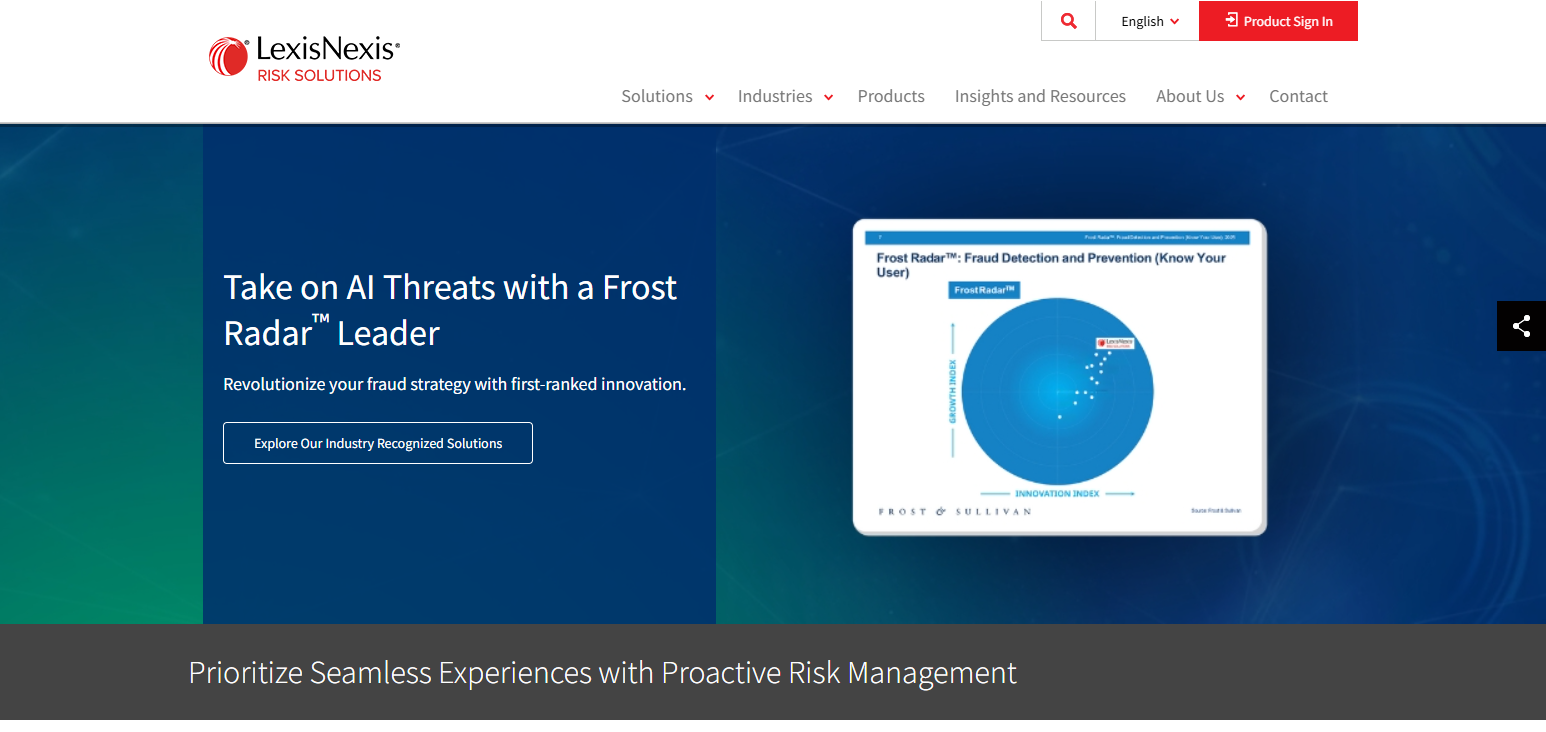
Automation of the monitoring process alleviates the burden of manual compliance, while also enhancing the quality of compliance and reducing the time necessary to conduct investigations. This solution can be integrated into currently utilized compliance systems to automate risk management.
LexisNexis Risk Solutions continues to maintain its data, allowing clients to comply with global AML laws and increase defenses against financial crimes and threats.
LexisNexis Risk Solutions – Key Features
- Workflow Integration – Cuts down on implementation time by seamlessly integrating with existing systems for compliance and fraud management.
- Automated Investigations – Optimizes the workload of analysts through smart case prioritization.
| Pros | Cons |
|---|---|
| Extensive global compliance intelligence database. | Subscription costs increase with usage. |
| Excellent PEP and sanctions screening. | Advanced integrations require technical resources. |
| Reliable real-time transaction monitoring. | Interface may seem complex initially. |
| Strong automation reduces manual investigations. | Best features available in enterprise plans. |
| Integrates well with existing systems. | Smaller companies may find pricing expensive. |
8. Featurespace ARIC Risk Hub
Featurespace ARIC Risk Hub utilizes adaptive machine learning to monitor transaction streams and identify fraudulent activities in real-time. Rather than depending exclusively on an inflexible set of rules, this product learns the typical spending patterns of customers and identifies deviations with greater accuracy.

This adaptive model also lessens the burden of false positives. The ARIC Risk Hub product suite designs a framework for real-time risk scoring and intelligent decision making for banks and payment processors and financial services in an online environment. Its robust and elastic design guarantees even accuracy of monitoring in a context of exceedingly high velocity transactional throughput.
ARIC Risk Hub – Key Features
- Adaptive Machine Learning – Develops an understanding of customer behaviors for a more precise fraud detection.
- Real-Time Decision Engine – Completes an assessment of the transaction prior to the payment being fully authorized.
- False Positive Reduction – Uses adaptive analytics to create fewer false fraud alerts.
- Behavioral Intelligence – Identifies transaction anomalies that traditional systems are unable to detect.
- Scalable Performance – Able to keep pace with the transaction demands of financial institutions across the globe.
| Pros | Cons |
|---|---|
| Adaptive AI improves detection accuracy continuously. | Premium solution for enterprise customers. |
| Significantly reduces false positive alerts. | Requires quality historical transaction data. |
| Excellent real-time fraud prevention. | Limited public pricing transparency. |
| Learns customer behavior automatically. | Setup requires machine learning expertise. |
| Scales effectively with business growth. | Better suited for large payment providers. |
9. SEON
SEON combines several techniques including the monitoring of digital footprints, device and transaction fingerprinting, behavioral analysis, and various fraud detection methodologies to identify illicit payments.
SEON offers a highly customizable platform to automate the management of payment-related business risks, chargebacks, and fraud losses.
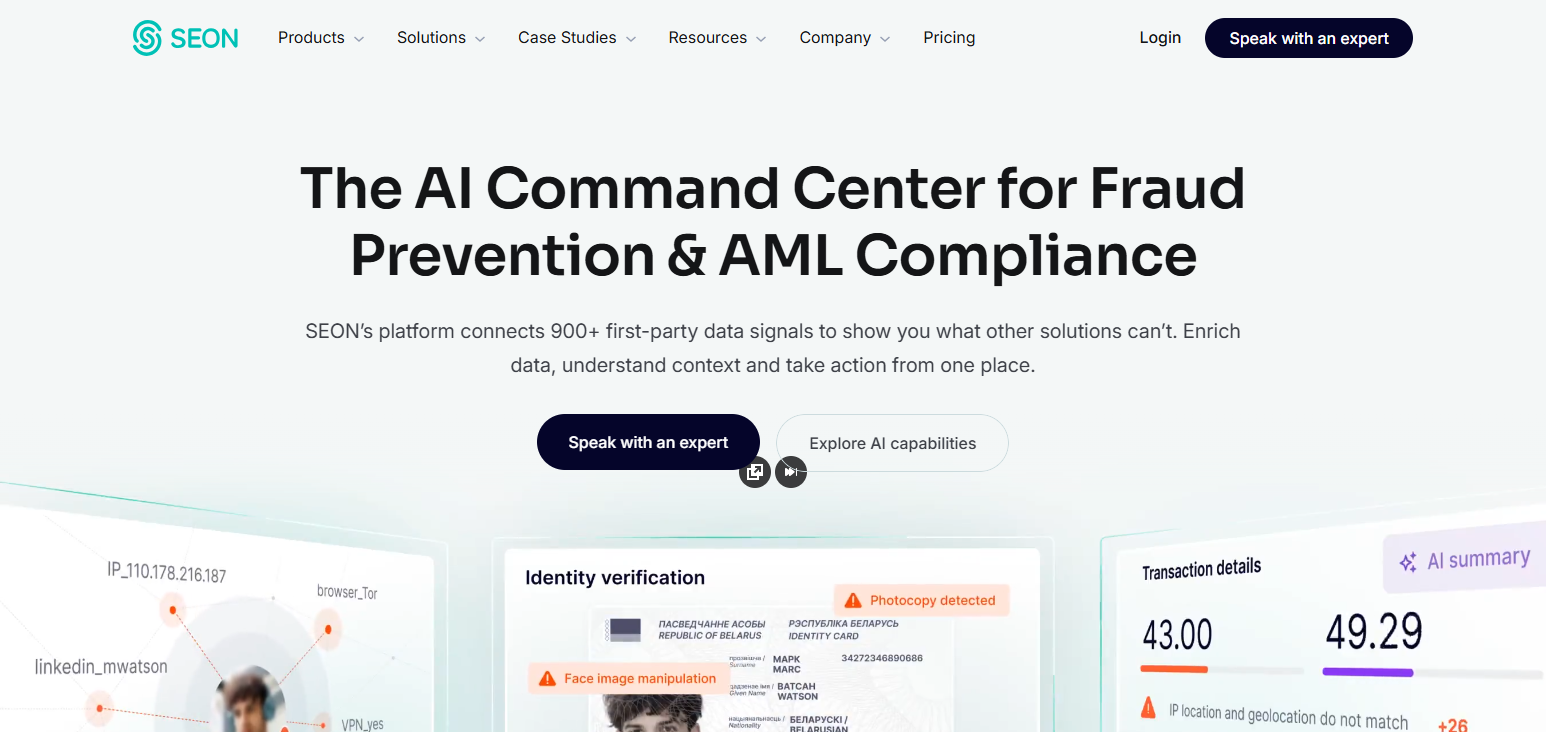
This product suite is easily integrated into any payment solution and helps legal obligations for payment transactions, compliance, and customer experience. This results in a highly automated solution to manage payment-related business risks.
SEON – Key Features
- Digital Footprint Analysis – Offers a more comprehensive fraud detection ability by analyzing customer online identity signals.
- Device Fingerprinting – Consistently identifies devices that are attempting to carry out fraudulent financial transactions.
- Custom Risk Rules – Empowers businesses to create self-defined fraud prevention rules.
- Chargeback Prevention – Identifies fraudulent transactions prior to the completion of payment authorization.
- Easy API Integration – Facilitates a swift connection to payment gateways and other applications used in business.
| Pros | Cons |
|---|---|
| Easy integration through flexible APIs. | Some advanced features require premium plans. |
| Strong digital footprint analysis. | Less focused on traditional banking compliance. |
| Effective chargeback prevention tools. | Custom rule optimization takes time. |
| User-friendly dashboard and interface. | Smaller datasets may reduce AI effectiveness. |
| Ideal for fintech and eCommerce businesses. | Enterprise reporting options are more limited. |
10. Dow Jones Risk & Compliance
Offering reliable global risk intelligence and sanctions data, Dow Jones Risk and Compliance provides extensive transaction monitoring. Financial transactions are constantly reviewed against sanctions lists, watchlists, and databases of adverse media and politically exposed persons.
Automated transactions help compliance teams identify financial crime risks and ease the burden of regulatory reporting.
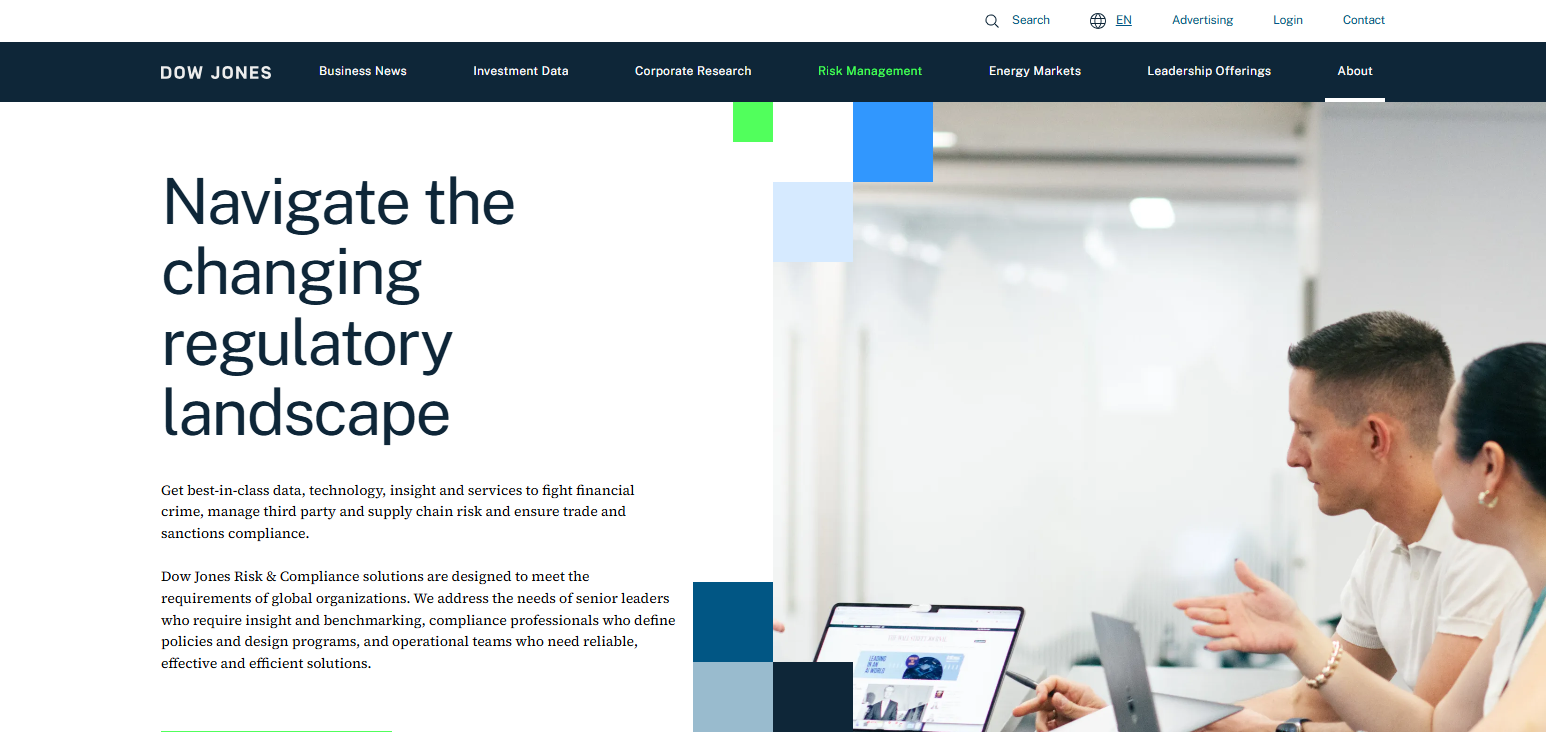
With extensive global data, organizations are empowered to make compliance-related decisions with confidence. Enhanced protection from evolving financial crime risks is coupled with advanced measures against money laundering and improved operational efficiency.
Dow Jones Risk & Compliance – Key Features
- Sanctions Screening – Evaluates whether a transaction would violate a global sanction or other regulatory watchlists.
- Adverse Media Monitoring – Leverages the trusted global news intelligence to help clients identify financial crime risks
- PEP Screening – Advanced detection of compliance concerning politically exposed persons.
- Automated Compliance Alerts – Automated alerts for suspicious financial activities.
- Global Risk Intelligence – Reliable compliance data for clients facilitating financial transactions across the globe.
| Pros | Cons |
|---|---|
| Trusted global sanctions and risk intelligence. | Premium pricing for comprehensive datasets. |
| Extensive adverse media monitoring coverage. | Primarily focused on compliance rather than fraud detection. |
| Reliable PEP and watchlist screening. | Requires integration with existing compliance systems. |
| Frequently updated global regulatory data. | Advanced customization may require additional support. |
| Strong international compliance capabilities. | Best value for medium and large enterprises. |
Conclusion
In conclusion, selecting the ideal transaction monitoring platform involves considering your organization’s compliance needs, amount of transactions, and your organization’s anticipated measure of fraud.
The top-rated options of Feedzai, ComplyAdvantage, NICE Actimize, and SEON offer excellent solutions of AI-based monitoring, AML compliance, and risk detection in real-time.
Address the features as well as the scalability, ease of integration, and cost of the solutions to choose the option that bolsters security, optimizes operations, and maintains compliance with the changing financial norms.
FAQ
Which industries use transaction monitoring platforms?
Banks, fintech companies, payment processors, cryptocurrency exchanges, insurance providers, lenders, and e-commerce businesses commonly use these solutions.
What features should the best transaction monitoring platform include?
Look for AI-powered fraud detection, AML compliance, sanctions screening, behavioral analytics, real-time monitoring, reporting, API integrations, and automated case management.
How does AI improve transaction monitoring?
AI detects unusual transaction patterns, adapts to emerging fraud techniques, reduces false positives, and improves investigation efficiency through intelligent risk analysis.
Can transaction monitoring platforms help with AML compliance?
Yes. Most platforms include AML monitoring, sanctions screening, customer risk scoring, regulatory reporting, and automated compliance workflows.