We will also talk about the SaaS tools available in 2026 that each legal firm needs to automate daily operations.
Today, with mounting client expectations and growing case complexity, new-age law firms are quickly leveraging AI-led SaaS platforms to automate processes, eliminate manual effort, and be more productive.
Whether it is case management or billing, automation has now become a need of the hour if firms wish to scale efficiently and remain relevant in the digital form.
Key Points & SaaS Tools Every Legal Firm Needs to Automate Daily Operations
- Clio Manage centralizes case management, billing, and documents, improving law firm productivity daily.
- PracticePanther automates workflows, tracks time, and manages clients, streamlining operations for modern firms.
- Filevine offers project-based case tracking, collaboration tools, enhancing efficiency across legal teams.
- MyCase simplifies client communication, billing, and document storage, ensuring smooth daily legal operations.
- Clio Draft automates document creation, reduces errors, and accelerates drafting for busy attorneys.
- NetDocuments provides secure cloud storage and compliance tools, enabling safe document management anywhere.
- Ironclad automates contract lifecycle management, streamlining approvals and reducing legal bottlenecks significantly overall.
- Gavel automates legal workflows, builds document automation, improving scalability for law firms.
- Lawmatics handles client intake, CRM automation, marketing campaigns, boosting firm growth efficiently.
- Calendly automates scheduling, eliminates back-and-forth emails, simplifying appointment booking for lawyers daily.
- PandaDoc streamlines document signing, proposals, and contracts, accelerating deal closures for legal services.
- TimeSolv tracks billable hours, invoicing, reporting, maximizing revenue, and financial visibility easily.
12 SaaS Tools Every Legal Firm Needs to Automate Daily Operations
1. Clio Manage
We are now in 2026, and Clio Manage has evolved into the de facto operating system for law firms with a combination of case management, billing, and communication all on one platform.
The core of its work is an AI-powered time tracking to automatically record billable actions, helping firms fetch 20% more revenue.
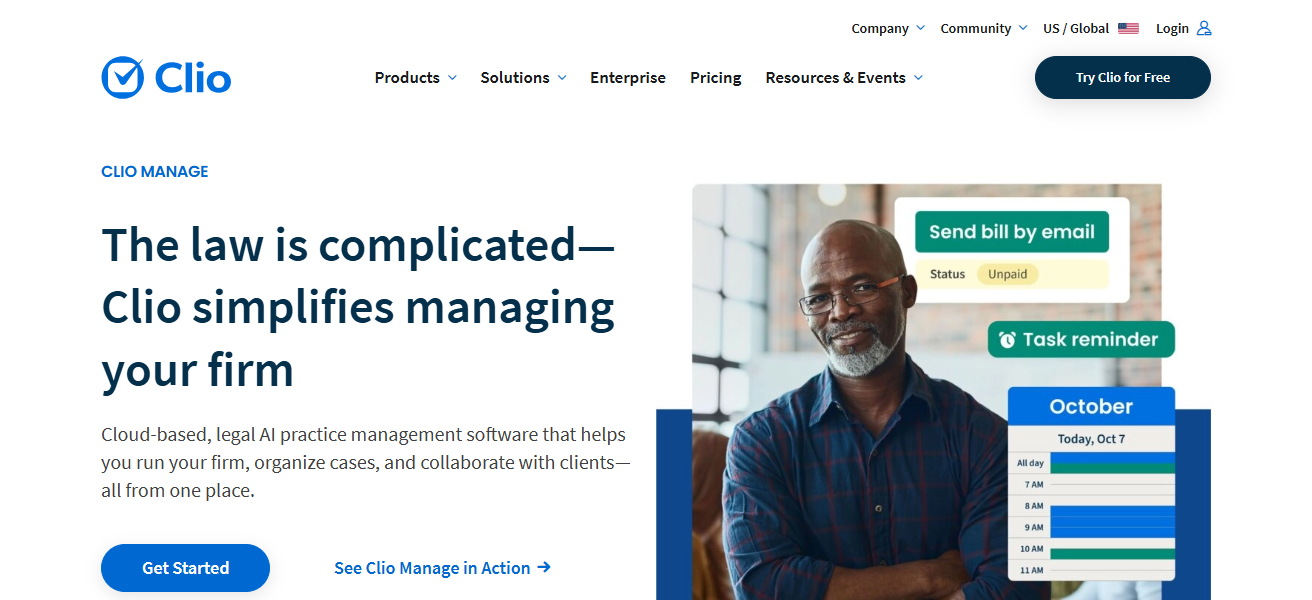
Gathered over 150 integrations that included accounting and document tools that form a workflow ecosystem.
With cloud-native security, this makes remote work easier, and real-time client updates provide that additional transparency, which is perfect for either hybrid or growing legal practices.
| Pros | Cons |
|---|---|
| Centralized dashboard simplifies case, billing, and communication workflows | Pricing can be high for small or solo law firms |
| AI time tracking reduces missed billable hours significantly | Learning curve for teams new to legal SaaS platforms |
| 150+ integrations enable seamless ecosystem connectivity | Heavy reliance on integrations may cause sync issues |
| Secure cloud access supports remote and hybrid work models | Requires stable internet for full functionality |
| Real-time updates improve client transparency and satisfaction | Customization options can feel limited for niche needs |
2. PracticePanther
In 2026, PracticePanther takes the lead in automating legal workflows and helping reduce up to 70% manual work for firms.
You are trained with a deadline prediction and electronic reminder system that sends reminders based on the type of case, making missed tasks rare.

Les intégrations de paiement intégrées permettent d’accélérer les encaissements et d’améliorer la régularité des flux de trésorerie.
It has enterprise-grade analytics dashboards that give insights into firm performance, and its mobile-first design enables lawyers to manage operations from anywhere, which makes it an outstanding tool in fast-paced legal environments.
| Pros | Cons |
|---|---|
| Automation reduces manual legal tasks up to 70% | Advanced features may require higher-tier plans |
| AI-driven reminders improve deadline management accuracy | The interface can feel cluttered with multiple features |
| Built-in payments accelerate cash flow and collections | Limited offline functionality for remote scenarios |
| Mobile-first design enhances on-the-go productivity | Custom reporting options are somewhat restricted |
| Detailed analytics help optimize firm performance | Integration setup may require technical assistance |
3. Filevine
Filevine positions legal work as a structured project, which is a boon for litigation-first firms. New for 2026 is AI-powered document summarization, saving hours of reviewing case files.
These tools allow several users to work in real-time at the same time, which helps a lot in the efficiency of work.

Custom workflows work across different practice areas, and integrated communication keeps all the conversations in one place.
For firms that handle high-volume legal operations, Filevine is an excellent option because teams using the program report resolving cases faster and dramatically better coordination between people working on a case.
| Pros | Cons |
|---|---|
| Project-based structure improves case organization and tracking | May feel complex for small or simple legal practices |
| AI document summarization saves time on large case files | Premium pricing compared to traditional tools |
| Real-time collaboration boosts team productivity | Initial onboarding and setup can be time-consuming |
| Highly customizable workflows for different practice areas | Requires training to fully utilize advanced features |
| Centralized communication reduces email fragmentation | Performance may slow with extremely large datasets |
4. MyCase
My Case — If you are looking for a tool to manage your law firm that simplifies communication, billing, and storage all in one platform.
Its client portal features introduced in 2026 provide clients with real-time messaging and payment tracking for increased transparency.

Automated billing cuts down on admin work, and cloud storage provides peace of mind that your data is compliant with global regulations.
The process of onboarding is simple with its intuitive interface, and it is best suited for small and mid-sized firms that want to enable the technology without bringing in an overwhelming tech complexity.
| Pros | Cons |
|---|---|
| Simple interface ideal for small and mid-sized firms | Lacks deep customization for complex legal workflows |
| Client portal improves communication and transparency | Limited advanced analytics compared to competitors |
| Automated billing reduces administrative workload | The integration ecosystem is smaller than the larger platforms |
| Secure cloud storage ensures compliance and accessibility | Some features are locked behind premium plans |
| Easy onboarding with minimal technical requirements | Not ideal for large enterprise-level law firms |
5. Clio Draft
Clio Draft is revolutionizing the way legal documents are created through automation powered by AI. By 2026, it launched AI-Powered Clause Suggestions that reduced drafting errors by applying intelligent clause suggestions based on the case context.
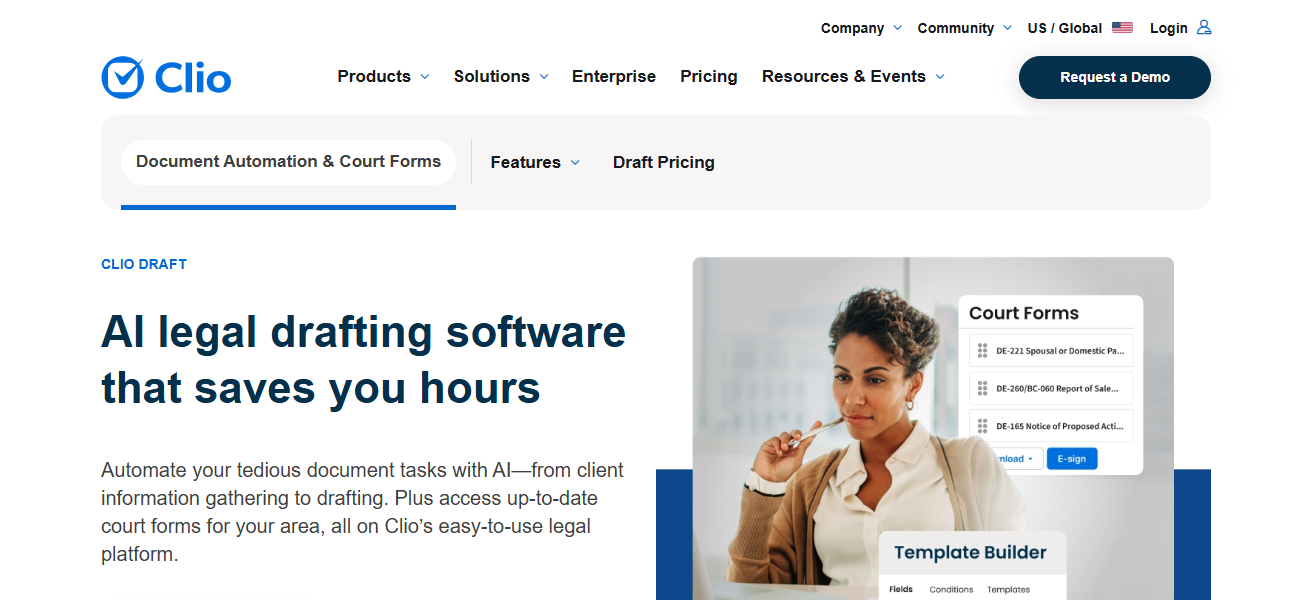
In minutes, the lawyers find out complex documents that have improved the turnaround times by around 60%. Automating your court e-filing ensures faster submissions while keeping you compliant.
It is especially useful for firms with high volumes of documentation, allowing them to concentrate on strategic legal work rather than repetitive tasks.
| Pros | Cons |
|---|---|
| AI-assisted drafting speeds up document creation significantly | Limited usefulness outside document-heavy practices |
| Reduces human errors in legal documentation | Requires setup of templates for full efficiency |
| Court form integrations ensure compliance and accuracy | Subscription cost may add up with Clio ecosystem |
| Saves hours on repetitive drafting tasks | Learning automation logic may take time initially |
| Seamless e-filing integration improves submission speed | Custom templates require ongoing maintenance |
6. NetDocuments
NetDocuments stands out as the market leader for secure legal document management with enterprise-grade encryption and compliance features.
Its AI-powered search and classification tools also make document retrieval immensely faster in 2026. The platform allows you to make sure global standards supporting GDPR and HIPAA by protecting data.
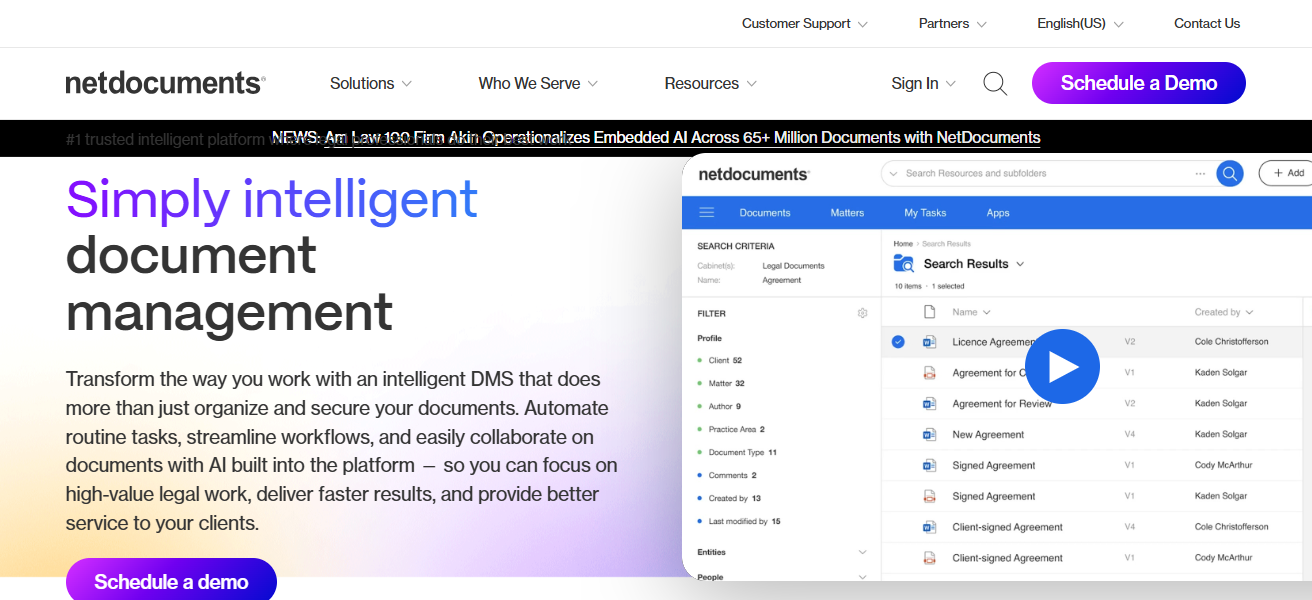
Collaboration and version control built in enable efficient workflow from anywhere. NetDocuments has superior security and organizing skills to handle sensitive legal data among all firms.
| Pros | Cons |
|---|---|
| Enterprise-grade security ensures data protection compliance | Higher cost compared to basic document tools |
| AI search and classification improve document retrieval | Setup and migration can be complex |
| Supports global compliance standards like GDPR and HIPAA | Requires user training for optimal use |
| Version control prevents document duplication issues | The interface may feel outdated to some users |
| Cloud access enables remote collaboration securely | Performance depends on internet connectivity |
7. Ironclad
Ironclad is the leader in contract lifecycle management, leveraging automation and AI insights to transform how contracts flow through an organization.
His 2026 features include prediction analytics that flag risks prior to finalizing contracts. Automated approval workflows enhance operational efficiency by reducing turnaround time by upto 60%.
This means organizations can see the entire contract lifecycle through CRM and procurement systems using seamless integration.
As firms handling high volumes of contracts process faster with fewer bottlenecks and better compliance, legal teams rely on Ironclad.
| Pros | Cons |
|---|---|
| Automates contract workflows, reducing turnaround time significantly | Expensive for small legal teams or startups |
| AI analytics identify risks before contract execution | Complex setup for initial workflow configuration |
| Real-time collaboration eliminates approval bottlenecks | Requires integration for full ecosystem benefits |
| CRM integrations provide end-to-end contract visibility | Learning curve for non-technical legal staff |
| Scales easily for high-volume contract environments | Overkill for firms with low contract volume |
8. Gavel (formerly Documate)
Gavel lets law firms create automated legal workflows without writing code. This 2026 platform includes features like drag-and-drop builders and AI-assisted logic creation to bring automation into the hands of non-technical users.
It makes it quite easy for the firms to automate their client intake as well as document generation and compliance.

It also powers client-facing self-service tools, thereby allowing firms to scale their servicing without adding headcount.
Gavel is the best choice for firms that want to keep growing but are looking to make their operations more efficient.
| Pros | Cons |
|---|---|
| No-code automation builder accessible for non-technical users | Limited advanced customization compared to developers tools |
| Speeds up client intake and document automation workflows | Requires time to design effective workflows |
| Supports scalable legal service delivery models | Smaller integration ecosystem than competitors |
| Enables client self-service tools for efficiency | May not suit highly complex legal processes |
| Reduces operational costs through automation | Limited advanced customization compared to developer tools |
9. Lawmatics
Lawmatics has everything from CRM to client intake and marketing automation in an all-in-one solution. In 2026, it rolled out AI-powered lead scoring and automated follow-ups, increasing conversions by over four times.
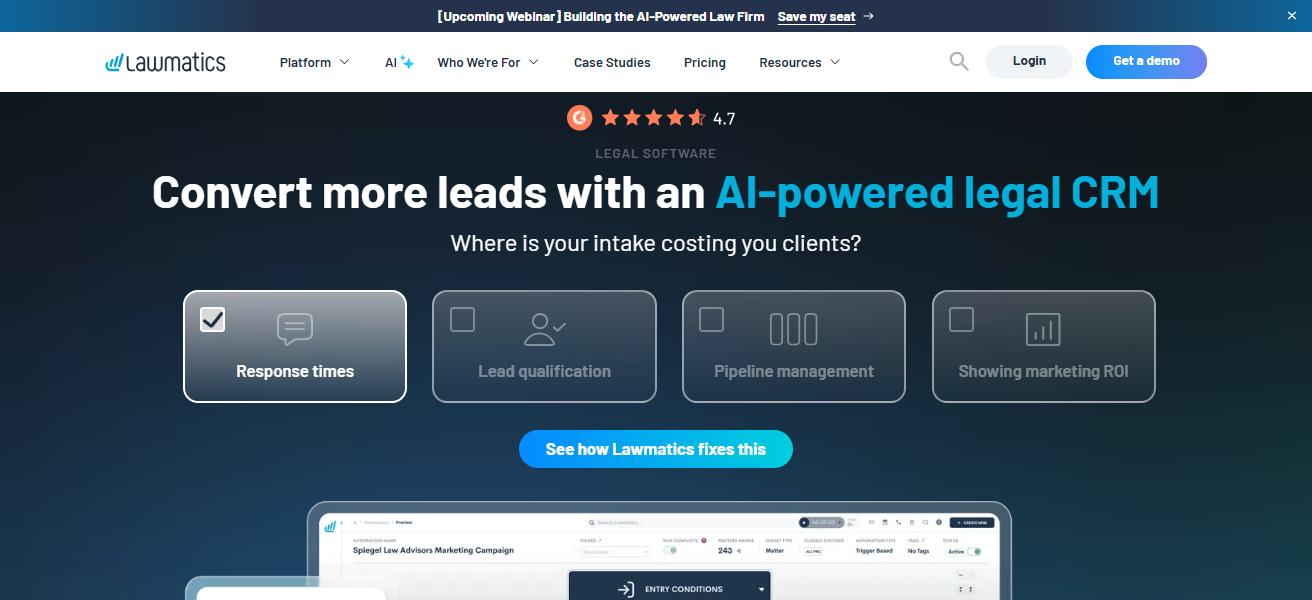
Custom pipelines allow firms to track leads and cases efficiently, while email & SMS automation increases client engagement.
The analytics tools it provides mean this becomes easier for law firms to see how well their marketing strategies turn a profit or not, helping them scale client acquisition effectively.
| Pros | Cons |
|---|---|
| Combines CRM and marketing automation in one platform | Can be overwhelming for first-time CRM users |
| AI lead scoring improves client conversion rates | Pricing may be high for smaller firms |
| Automated follow-ups enhance client engagement | Requires proper setup for best performance |
| Custom pipelines streamline intake and case tracking | Limited third-party integrations compared to CRMs |
| Analytics provide clear marketing ROI insights | Learning curve for advanced automation features |
10. Calendly
Calendly automates scheduling and takes the manual booking of appointments away. 2026 updates include intelligent meeting routing and seamless integration with CRM and video conferencing tools.

Lawyers have the ability to customize exactly what type of availability they would like to give and can also collect payment on a consultation in advance, helping them minimize no-shows.
This tool enhances time management and client experience exponentially, making it a no-brainer solution for optimizing the daily scheduling operations of law firms.
| Pros | Cons |
|---|---|
| Eliminates scheduling back-and-forth emails efficiently | Supports paid bookings, reducing no-shows |
| Easy integration with calendars and meeting tools | Advanced features require paid plans |
| Supports paid bookings reducing no-shows | Not built specifically for legal workflows |
| Simple interface ensures quick adoption | Branding limitations in lower-tier plans |
| Automates meeting routing and availability management | Dependency on external integrations |
11. PandaDoc
PandaDoc is a document workflow software that encompasses automation and eSignature capabilities.
Its analytics, based on AI, tracks client engagement and predicts the probability of closing deals, thereby enabling firms to optimize their processes.
They can create, send, and sign documents in a single platform, which reduces the turnaround time for projects.
Integration with CRM and payment systems allows smooth workflows. Making legal services efficient, paperless, and client-friendly with PandaDoc
| Pros | Cons |
|---|---|
| Streamlines document creation and eSignatures in one place | Pricing may be high for small firms |
| AI analytics track document engagement and performance | Limited offline functionality |
| CRM integrations improve workflow efficiency | Template customization can be complex initially |
| Reduces paperwork and speeds up deal closures | Overkill for firms with minimal document needs |
| Enhances client experience with digital workflows | Requires internet for full feature access |
12. TimeSolv
TimeSolv is a niche solution designed specifically for legal billing and time tracking. In 2026, you introduced AI-based time capture and billing suggestions to promote accurate invoicing.
Industry-standard danel reports based on cash flows enable firms to closely analyse their profitability and adjust pricing where necessary.
Integration with accounting tools takes financial management to the next level. It minimizes billing errors while improving revenue visibility, which ensures law firms maintain a stable cash flow and financial health in the long run.
| Pros | Cons |
|---|---|
| Accurate time tracking maximizes billable revenue | Interface may feel outdated to some users |
| AI billing suggestions improve invoicing accuracy | Limited non-legal use case flexibility |
| Detailed financial reports aid profitability analysis | Requires integration for full accounting features |
| Simplifies invoicing and payment tracking processes | Setup may take time for new users |
| Helps reduce billing errors and revenue leakage | Mobile experience less robust than competitors |
Conclusion
In conclusion, SaaS tools are no longer optional for legal firms—they are essential for survival and growth in 2026.
From automating workflows to enhancing client experiences, these platforms help law firms operate smarter and scale faster.
By adopting the right combination of tools, firms can reduce manual effort, improve efficiency, and stay competitive in an increasingly digital legal landscape.
FAQ
What are SaaS tools for legal firms?
SaaS tools are cloud-based software solutions that help law firms automate tasks like case management, billing, document handling, and client communication.
Why are legal firms adopting SaaS tools in 2026?
Firms are adopting SaaS tools to reduce manual work, improve efficiency, enhance client experience, and scale operations with AI-driven automation.
Which SaaS tool is best for small law firms?
Tools like MyCase and Clio Manage are ideal for small firms due to ease of use and all-in-one functionality.
Are SaaS tools secure for legal data?
Yes, most modern legal SaaS platforms offer enterprise-grade encryption and comply with standards like GDPR and HIPAA.
Can SaaS tools improve law firm profitability?
Absolutely. Automation reduces costs, improves billing accuracy, and increases efficiency, leading to higher profitability.