This article will review the leading AI Crypto Agents that are modernizing automation, intelligent decision-making, and decentralized solutions within the cryptocurrency and Web3 space. These
AI agents aid users with market analysis, automation of blockchain procedures, optimization of DeFi functions, and the creation of advanced apps. We will look at their features, advantages, and drawbacks to better understand what role they will play in the crypto space going forward.
What Are AI Crypto Agents?
AI Crypto Agents are advanced DeFi Agents. They are automated programs driven by the fusion of AI technologies and blockchain. They perform analytical tasks on the market, and automate trades and finances within DeFi. They can also operate within the frameworks of Web3. AI Crypto Agents optimize convenience within the ever-evolving world of crypto for users and developers.
Why Choose AI Crypto Agents?
- Automate Online Trading:With the help of AI Crypto Agents, online trading becomes more straightforward. Agents do the hard part by processing and analyzing data and handling all transactions.
- Conduct Deeper Crypto Research:AI Crypto Agents provide helpful insights that allow room for better investment decisions. This is made possible by their ability to analyze data trends and the blockchain.
- DeFi Automation:Agents improve the automation of decentralized finance. This is made possible through the management of smart contracts, which are self-executing contracts with the ability to automate transactions.
- Less Work Required:The AI and agent combination of smart technology is easily employed in the crypto world to achieve the desired goals with little to no work required by a human.
- Promote Web3 Advancements:AI Agents can be employed by developers in the creation of more advanced decentralized applications and automation of blockchain technology.
Key Points & Best AI Crypto Agents
| AI Crypto Agent | Explanation |
|---|---|
| Fetch.ai Agent | Automates crypto tasks using autonomous AI agents for decentralized financial operations. |
| SingularityNET Agent | Provides AI-powered blockchain services through decentralized intelligence marketplaces and networks. |
| Autonolas Agent | Builds autonomous agents for DeFi automation, governance, and blockchain interactions. |
| Virtuals Protocol Agents | Creates AI agents enabling tokenized personalities and crypto-based digital economies. |
| Bittensor Agents | Uses decentralized machine learning networks to reward AI model contributions. |
| Numerai AI Agent | Applies AI predictions for crypto strategies using decentralized data science. |
| Cortex AI Agent | Combines blockchain technology with AI models for smart applications. |
| Ocean Protocol Agents | Enables AI agents accessing decentralized data marketplaces for intelligence sharing. |
| Giza AI Agent | Develops autonomous AI systems for blockchain applications and smart contracts. |
| ChainGPT Agent | Offers AI tools for crypto analysis, trading, and blockchain development. |
10 Best AI Crypto Agents
1. Fetch.ai Agent
Fetch.ai is an industry frontrunner developing AI Agents. Fetch employs autonomous agents and uses an innovative mixture of machine learning and blockchain technologies to design smart economic infrastructures.
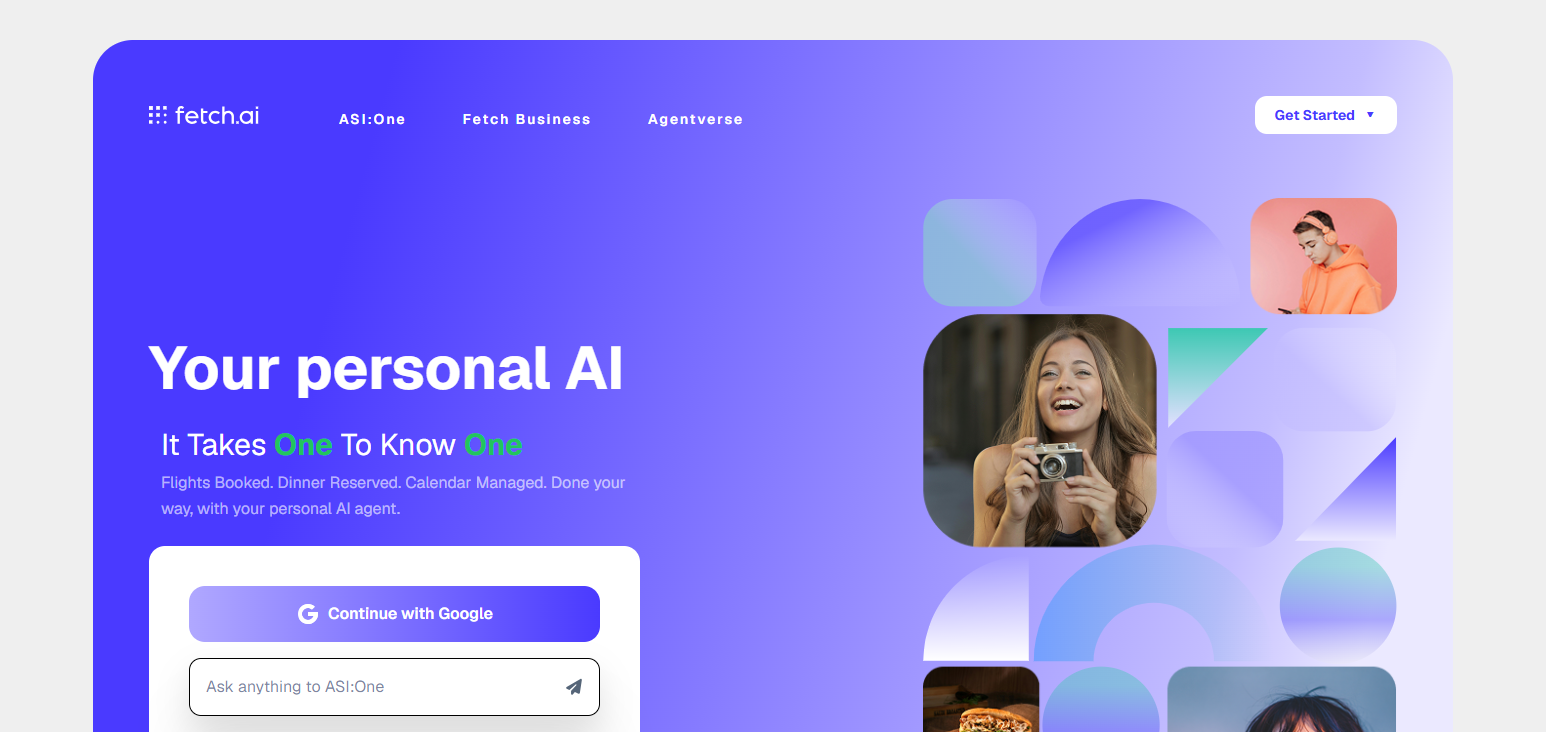
By 2026, Fetch’s ecosystem will host autonomous AI agents for DeFi, autonomous mobility, and business workflow solutions. This will aid developers and crypto users significantly.
Features Fetch.ai Agent
- Autonomous AI Agents Development Developers can use Fetch.ai to build completely autonomous agents that can perform tasks without human supervision. This includes things like the processing of information, making trades, and running business processes.
- AI + Blockchain Integration Fetch.ai’s framework allows for the integration of machine learning and blockchain to establish decentralized systems in which AI agents can communicate, transact, and work together.
- DeFi Automation Fetch.ai agents can automate DeFi tasks including managing portfolios, market assessments, trade liquidity, and formulating trading strategy.
- Smart Economic Infrastructure Fetch.ai builds advanced digital ecosystems that allow autonomous agents to offer services, reach agreements, and transact with minimal friction.
- Multi-Industry Applications Fetch.ai embraces the use of AI agents in finance, mobility, supply chains, healthcare, and the automation of workflows in enterprises.
| Pros | Cons |
|---|---|
| Supports autonomous AI agents for DeFi, mobility, and business automation. | The ecosystem can be complex for beginners to understand and use. |
| Combines AI and blockchain for decentralized intelligent systems. | Requires strong blockchain knowledge for advanced implementation. |
| Enables automated transactions and smart economic activities. | Adoption depends on wider developer and enterprise participation. |
| Provides tools for developers to build customized AI solutions. | Scalability challenges may appear with increasing network usage. |
| Offers multiple real-world AI agent use cases. | Competition from other AI blockchain projects is increasing. |
2. SingularityNET Agent
The decentralized marketplace of SingularityNET facilitates collaboration and value exchange of AI agents and services via blockchain. Decentralization of intelligent services enables the building of AI applications in finance, robotics, data analysis, and other fields.
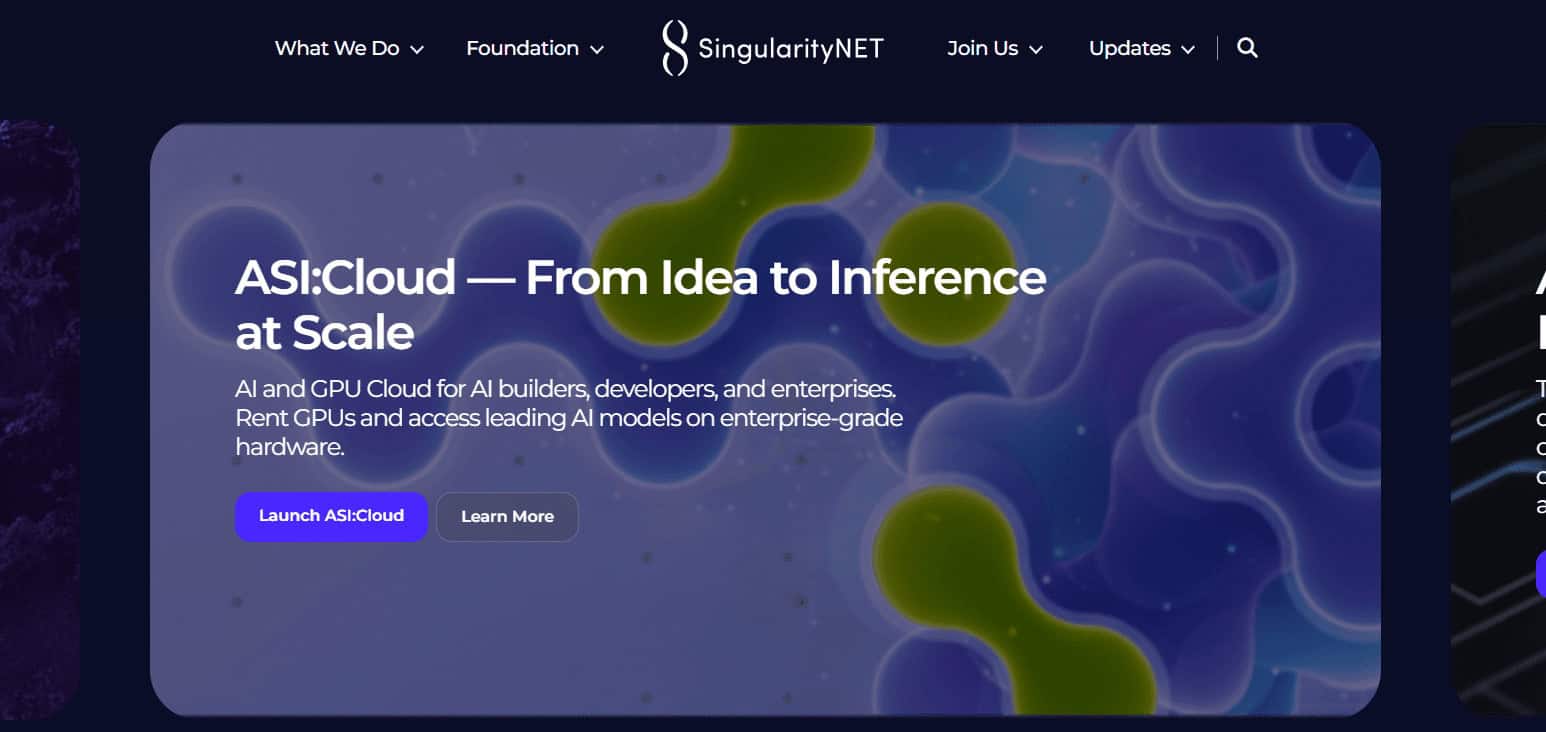
The demand for decentralized autonomous AI is growing in 2026; thus, the company will continue optimizing the accessibility and interoperability of AI and the automated services of blockchain.
Features SingularityNET Agent
- Autonomous AI Agents Development Developers can use Fetch.ai to build completely autonomous agents that can perform tasks without human supervision. This includes things like the processing of information, making trades, and running business processes.
- AI + Blockchain Integration Fetch.ai’s framework allows for the integration of machine learning and blockchain to establish decentralized systems in which AI agents can communicate, transact, and work together.
- DeFi Automation Fetch.ai agents can automate DeFi tasks including managing portfolios, market assessments, trade liquidity, and formulating trading strategy.
- Smart Economic Infrastructure Fetch.ai builds advanced digital ecosystems that allow autonomous agents to offer services, reach agreements, and transact with minimal friction.
- Multi-Industry Applications Fetch.ai embraces the use of AI agents in finance, mobility, supply chains, healthcare, and the automation of workflows in enterprises.
| Pros | Cons |
|---|---|
| Provides a decentralized marketplace for AI services. | The platform may have a learning curve for new users. |
| Enables AI agents to collaborate across different applications. | Limited mainstream adoption compared to centralized AI platforms. |
| Supports AI development in finance, robotics, and analytics. | Performance depends on available AI service providers. |
| Encourages transparent AI service exchange through blockchain. | Decentralized infrastructure can create operational complexity. |
| Promotes open-source and interoperable AI development. | Network growth depends on developer contributions. |
3. Autonolas Agent
Autonolas will provide the frameworks for building autonomous AI agents that span across all blockchain networks. These agents will facilitate the automation of decentralized finance, governance, data, and smart contract services.

Autonolas will focus on building a set of composite AI agents. In 2026, the framework will gain popularity because of the systems which integrate AI with decentralized frameworks and that allow developers to build autonomous crypto frameworks.
Features Autonolas Agent
- Cross-Blockchain AI Agents Autonolas gives developers the ability to create fully autonomous AI agents that function across multiple blockchain networks.
- DeFi Automation Solutions Their agents create automation for numerous decentralized finance tasks, including trade strategies, liquidity tasks, and finance functions.
- Smart Contract Automation Autonolas empowers AI agents to work directly with smart contracts and perform automated actions on the blockchain.
- Modular Agent Framework Developers can assemble customized AI agents by piecing together various components, tools, and blockchain offerings.
- Decentralized Governance Support Autonolas agents can perform functions within DAOs and assist with governance and decision-making on blockchains.
| Pros | Cons |
|---|---|
| Allows creation of autonomous AI agents across multiple blockchains. | Requires technical expertise to build advanced agents. |
| Supports automation of DeFi, governance, and smart contracts. | The ecosystem is still developing compared to established platforms. |
| Provides modular frameworks for customized AI solutions. | Limited awareness among general crypto users. |
| Helps developers create decentralized autonomous systems. | Cross-chain operations may introduce technical challenges. |
| Enables innovative Web3 automation use cases. | Adoption depends on future blockchain integrations. |
4. Virtuals Protocol Agents
In the Virtuals Protocol ecosystem, users can create, tokenize, and monetize virtual AI agents that can be digital personas, in-game characters, virtual influencers, and automated services in crypto.
The Virtuals Protocol brings together AI and blockchain-based ownership, further allowing communities to participate in the economy of AI agents.
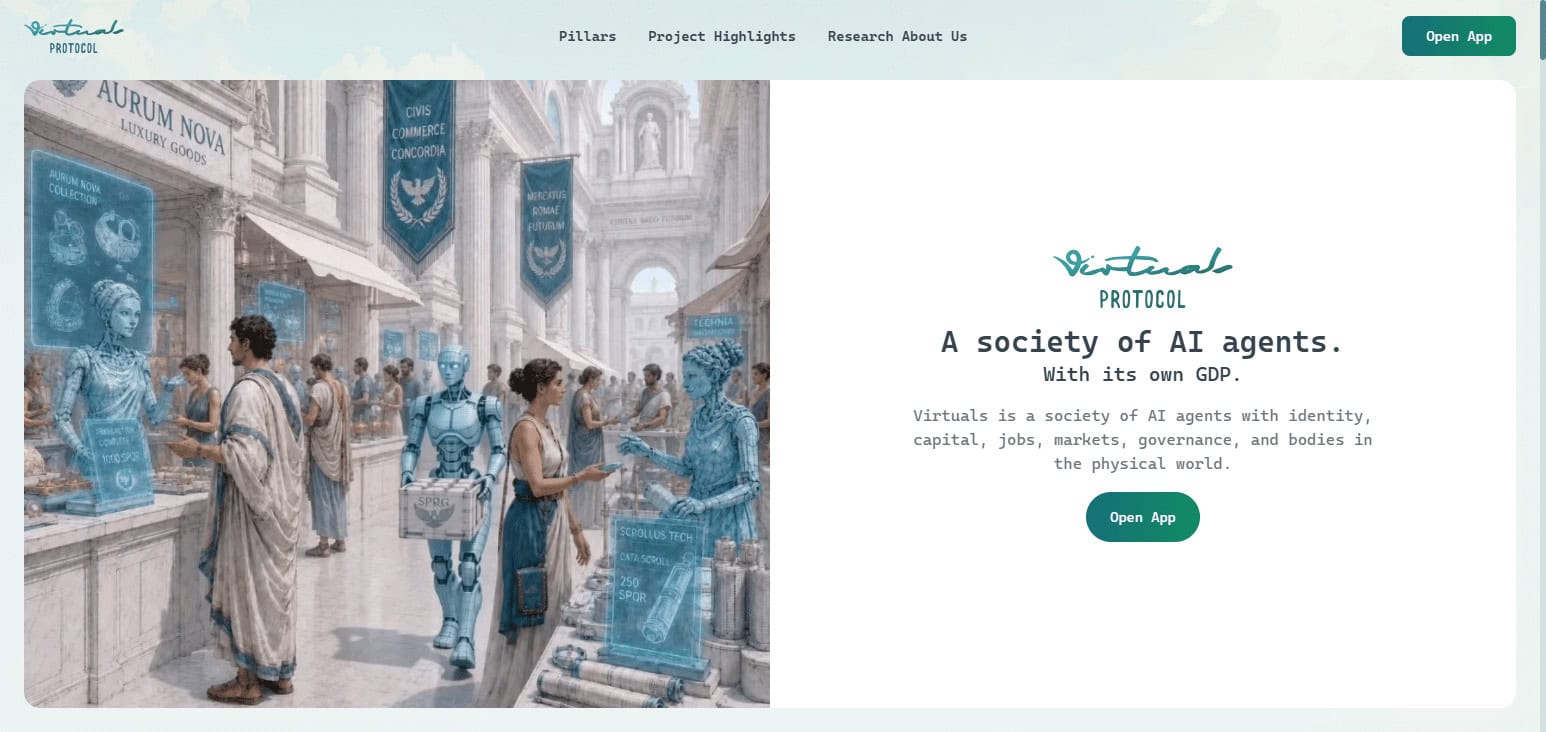
As it currently stands, the protocol is gaining traction by 2026 for its capabilities to generate transparent, interactive, AI digital assets with guaranteed ownership and revenue sharing.
Features Virtuals Protocol Agents
- AI Agent Tokenization Users can develop and tokenize AI agents, digital assets, and gain ownership on the blockchain.
- Virtual AI Personalities AI digital personas, characters in games, virtual influencers, and assistants can be automated.
- Revenue Sharing Model Communities and users can gain ownership of AI agents and participate in the economy.
- Blockchain Ownership Management Virtuals Protocol enhances the decentralized management of AI ownership by improving auditability on the blockchain.
- Interactive AI Experiences AI experiences can be designed by the community and are engaging in the realms of gaming, entertainment, and Web3.
| Pros | Cons |
|---|---|
| Enables creation and tokenization of AI-powered digital agents. | AI agent quality depends on creator development skills. |
| Provides ownership and monetization opportunities through blockchain. | Virtual AI assets may face market volatility risks. |
| Supports gaming, entertainment, and virtual influencer applications. | New users may find token-based systems complicated. |
| Creates transparent revenue-sharing models. | Long-term sustainability depends on community growth. |
| Combines AI creativity with Web3 ownership. | Regulatory concerns around digital asset ownership may arise. |
5. Bittensor Agents
Bittensor combines AI and blockchain to create a decentralized intelligence network. Within Bittensor, AI agents can join one of many specialized subnets to provide unique computational services and get paid according to the quality of their work.

Due to the network’s focus on opening up collaboration between model developers and AI, compared to the majority of AI networks that are centralized, Bittensor is one of the leading projects in the realm of blockchain artificial intelligence.
Features Bittensor Agents
- Decentralized AI Network An open ecosystem for AI has been formed by Bittensor, enabling the development of AI models through community-based computing.
- AI Model Collaboration Agents operate in a network environment composed of specialized subnetworks which house various AI Models to collaborate and refine.
- Blockchain-Based Reward System Contributors will receive rewards aligned with their AI services’ quality, accuracy, and usefulness.
- Open AI Infrastructure Bittensor offers a means to develop models in a decentralized manner in opposition to closed, centralized AI systems.
- Specialized AI Subnets Using distinct subnets for particular computing functions allows the platform to facilitate a range of AI services.
| Pros | Cons |
|---|---|
| Creates a decentralized network for AI model collaboration. | The technology is complex for non-technical users. |
| Rewards AI contributors based on model performance. | AI subnet quality can vary significantly. |
| Provides an alternative to centralized AI infrastructure. | High computational requirements may limit participation. |
| Encourages open AI development and innovation. | Network economics can be difficult to understand. |
| Supports specialized AI applications through subnets. | Competition from traditional AI companies remains strong. |
6. Numerai AI Agent
Numerai is a project that combines AI and decentralized data science to create models that predict stock market movements. Numerai’s AI agents analyze data patterns to construct investment recommendations, formulate better trading techniques, and automate these improvements using ML.
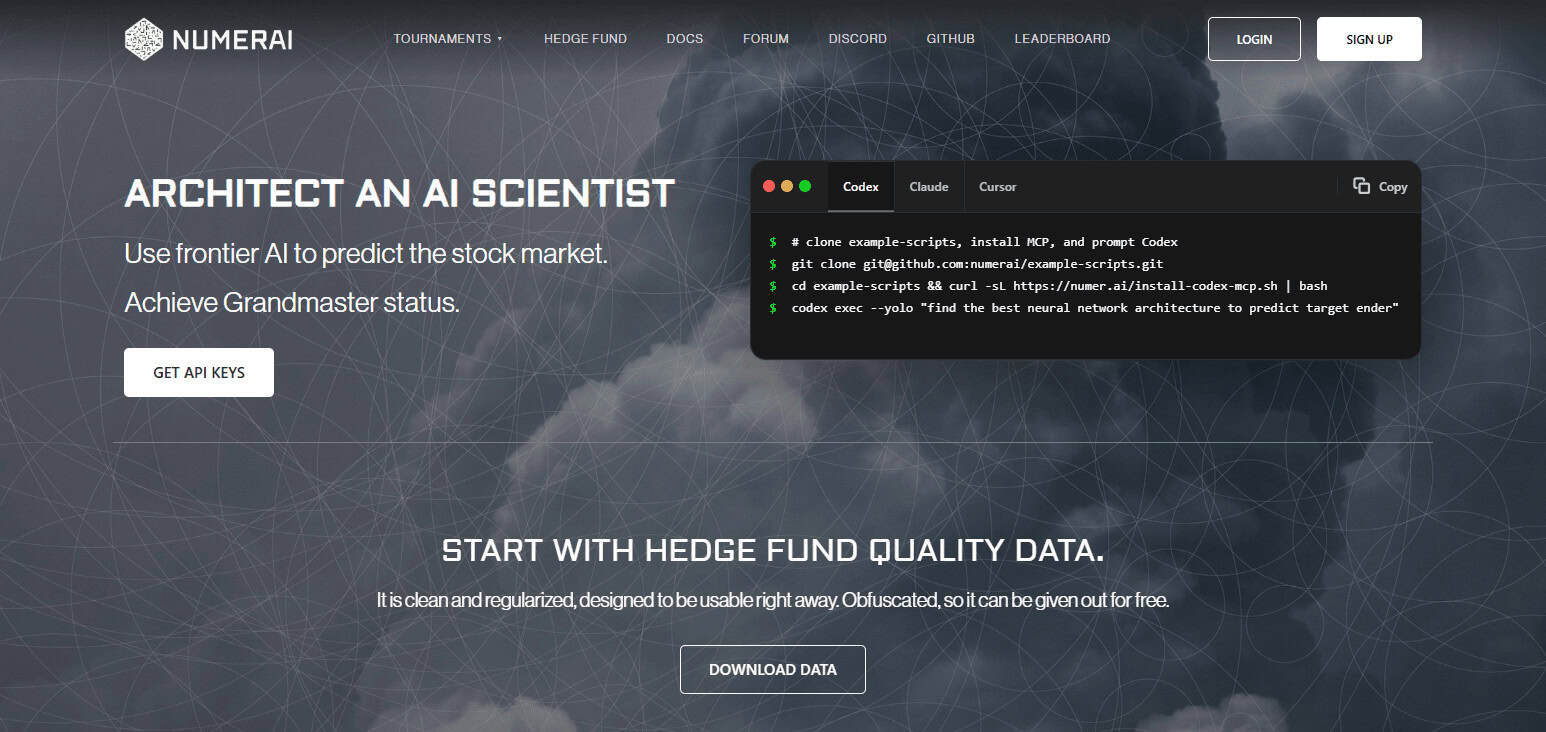
Numerai employs a blockchain-based economic model to reward data scientists for submitting accurate market predictions. As of 2026, Numerai’s framework is a viable option for investors who are looking for automated and optimized quantitative market methodologies.
Features Numerai AI Agent
- AI-Based Financial Predictions Numerai brings together financial data and AI to formulate predictions on the stock market.
- Automated Quant Trading AI agents assist in the automatic creation of trading strategies by detecting patterns in the market.
- Data Science Competition Platform Numerai hosts a competition for data scientists to propose and submit their models for a chance of winning awards based on the accuracy of their models.
- Blockchain-Based Reward System Numerai’s model of AI market analysis encourages accuracy, usefulness, and a value-add by incorporating a crypto-based reward system.
- AI Analytics for Investing Numerai equips tools to aid investors by incorporating the power of advanced AI analytics to assist in the formulation of informed decisions.
| Pros | Cons |
|---|---|
| Uses AI and machine learning for financial prediction models. | Market predictions cannot guarantee investment success. |
| Rewards data scientists for accurate AI models. | Mainly focused on quantitative finance use cases. |
| Provides a unique decentralized data science ecosystem. | Requires advanced data science knowledge to participate. |
| Helps improve investment strategies using AI insights. | Financial data models can become outdated over time. |
| Combines blockchain incentives with machine learning. | Limited application outside financial markets. |
7. Cortex AI Agent
Cortex emphasizes the embedding of AI models into the blockchain. Their structure enables the use of AI models via smart contracts.
This means the development of advanced decentralized applications is possible. Cortex AI agents support automated decision-making, predictive modeling, and blockchain services.
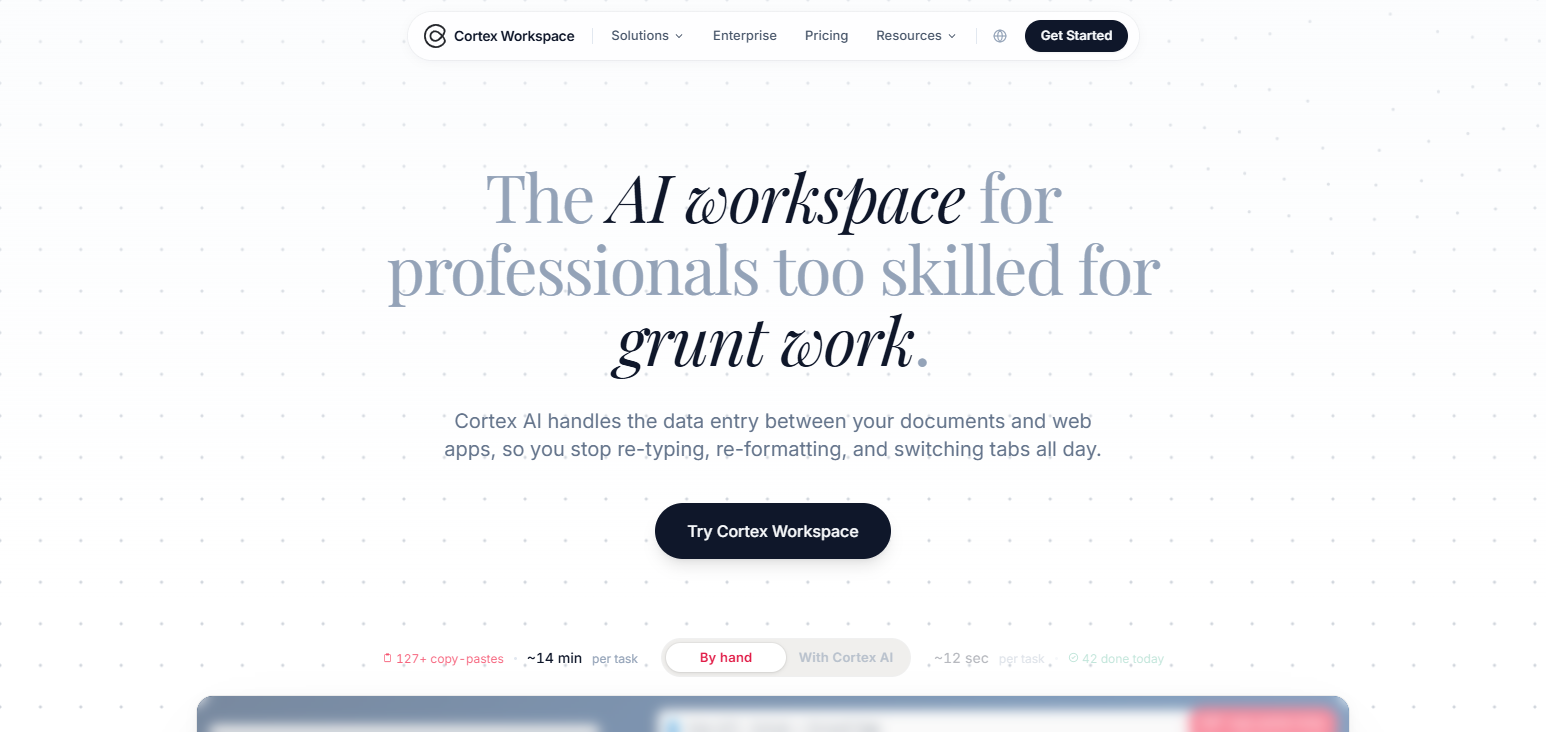
Cortex AI combines the power of machine learning with the capabilities of blockchain networks. It makes the development of the next-generation crypto/blockchain projects possible by bridging the gap between traditional AI and Web3.
Features Cortex AI Agent
- AI and Blockchain Model Inclusion Cortex allows the direct embedding of AI Models to Blockchain.
- AI Smart Contracts Smart Contracts can now operate with AI model reasoning to provide automated and intelligent execution.
- Emerging dApp Support Cortex assists developers in the construction of cutting-edge dApps with integrated AI.
- Enhanced Decision Making AI agents evaluate and interpret data from the Blockchain to provide predictions that assist and enhance decision making.
- AI and Web3 Bridging Cortex enables the fusion of mainstream AI with Blockchain to facilitate advanced applications in crypto.
| Pros | Cons |
|---|---|
| Enables AI models to run through blockchain smart contracts. | AI model integration requires technical expertise. |
| Supports intelligent decentralized application development. | Blockchain AI execution can be resource-intensive. |
| Helps automate decision-making processes. | Limited adoption compared to major AI ecosystems. |
| Bridges traditional AI with Web3 technology. | Developers may face challenges in deployment complexity. |
| Provides opportunities for AI-powered dApp creation. | Scaling AI computations on blockchain remains challenging. |
8. Ocean Protocol Agents
Ocean Protocol designed a way for AI agents to interact with, exchange and monetize decentralized data safely. For training state-of-the-art AI models, data becomes available. Ocean Protocol designed marketplaces in which users keep control of their data.
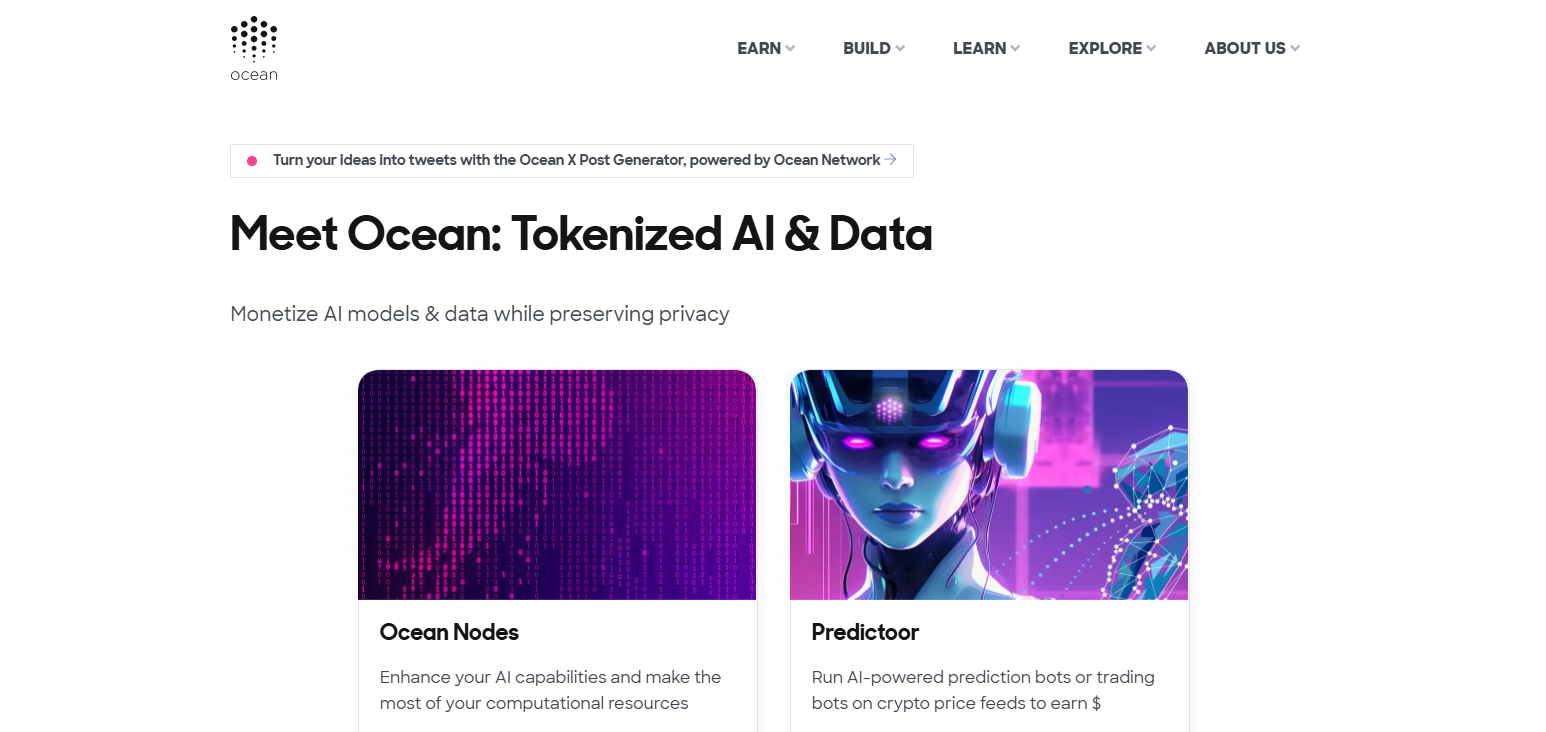
Its AI Agents are capable of working with trusted data for analytics, prediction and intelligent modeling. In 2026, Ocean Protocol will be working to advance decentralized AI by promoting data availability, and safely and efficiently integrating different blockchain structures while ensuring user privacy.
Features Ocean Protocol Agents
- Decentralized Data Access Data resources that are decentralized are made accessible to AI Agents through Ocean Protocol.
- Data Monetization Platform Ocean Protocol allows users to sell data that they share, all while ensuring that users retain full data ownership.
- AI Model Training Support Ocean Protocol contains sufficient data for training elite AI models.
- Privacy-Preserving Data Exchange Ocean Protocol allows AI analytics to operate while also safeguarding sensitive data.
- AI-Powered Data Intelligence Data Agents have the ability to source data to implement forecasts and analytics to improve critical thinking and decision-making.
| Pros | Cons |
|---|---|
| Enables secure decentralized data sharing for AI systems. | Data quality depends on external contributors. |
| Allows users to maintain ownership of their data. | Managing decentralized data marketplaces can be complex. |
| Supports AI model training with valuable datasets. | Limited adoption among traditional enterprises. |
| Provides privacy-focused data exchange solutions. | Data privacy regulations may affect operations. |
| Helps create AI applications using trusted data sources. | Requires technical knowledge for effective usage. |
9. Giza AI Agent
Giza AI builds autonomous AI agents that are dedicated to blockchain, smart contracts and decentralized workflows. The purpose of the platform is to allow users to build intelligent systems that are capable of performing tasks automatically with the assurance of transparency through the Blockchain.

Giza AI integrates Machine Learning models with Web3, and thus allows the creation of more intelligent decentralized applications. With the increased focus on AI automation, Giza AI will be a major player in crypto development in 2026.
Features Giza AI Agent
- Autonomous Blockchain Agents Giza AI specializes in the creation of intelligent agents that automate tasks pertaining to blockchains.
- Smart Contract Intelligence Giza’s AI agents simplify the analysis, operation, and automation of smart contracts.
- Machine Learning Integration The combination of ML with Web3 is the basis of Giza’s innovative decentralized applications.
- Transparent AI Automation The automation of AI tasks can be not only verified, but also secured through the use of Blockchain.
- Developer-Friendly AI Tools Giza provides modular frameworks that allow developers the freedom to create AI agents tailored to specific crypto usage.
| Pros | Cons |
|---|---|
| Builds autonomous AI agents for blockchain workflows. | The platform is relatively new compared to established AI tools. |
| Integrates machine learning with Web3 applications. | Requires developer knowledge for customization. |
| Supports automated smart contract interactions. | Limited ecosystem maturity at present. |
| Provides transparent blockchain-based AI execution. | Adoption depends on developer community growth. |
| Helps create intelligent decentralized applications. | Scaling AI automation across blockchains can be challenging. |
10. ChainGPT
ChainGPT offers tools powered by blockchain technology and AI for crypto users. Its AI agents provide insight into markets as well as smart contract creation, crypto research, and automated trading.

Combining LLMs and blockchain tech, ChainGPT provides ease of use for complicated Web3 tasks. In 2026, the company plans to keep expanding its AI ecosystem, enabling users to access real-time crypto intelligence for better decisions when building blockchain applications.
Features ChainGPT
- AI-Powered Crypto Assistant ChainGPT aims to simplify multiple tasks related to Blockchain through the use of an intelligent AI tool.
- Smart Contract Generation ChainGPT uses AI to assist users in the operation and enhancement of smart contracts in the Blockchain.
- Automated Crypto Research ChainGPT is an AI research assistant for all inquiries pertaining to Blockchain and its related technologies.
- AI Trading Assistance ChainGPT provides analysis of trading in Blockchain technologies, and aids users in the design of trading strategies.
| Pros | Cons |
|---|---|
| Provides AI-powered crypto research and market insights. | AI-generated information may require user verification. |
| Helps developers create and analyze smart contracts. | Advanced features may require technical understanding. |
| Simplifies complex Web3 tasks using AI tools. | Market analysis accuracy depends on available data. |
| Supports automated crypto workflows and trading assistance. | Crypto market volatility can impact AI recommendations. |
| Combines large language models with blockchain technology. | Faces competition from other AI crypto assistant platforms. |
Conclusion
In summary, AI Crypto Agents combine automation, smart insights, and decentralized systems, which are essential aspects of the blockchain. The best AI Crypto Agents such as Fetch.ai, SingularityNET
Bittensor, and ChainGPT help users and developers streamline crypto operations and facilitate the development of sophisticated Web3 applications. The integration of AI and blockchain will further the presence of these agents in the digital financial ecosystem.
FAQ
Which are the best AI Crypto Agents in 2026?
Fetch.ai, SingularityNET, Autonolas, Virtuals Protocol, Bittensor, Numerai, Cortex, Ocean Protocol, Giza AI, and ChainGPT are popular AI Crypto Agents.
What are the benefits of AI Crypto Agents?
They improve automation, provide faster analysis, reduce manual work, and help users make better crypto decisions.
Can AI Crypto Agents automate trading?
Yes, many AI agents can analyze market trends, generate insights, and assist with automated crypto trading strategies.
Are AI Crypto Agents safe to use?
AI Crypto Agents can improve efficiency, but users should evaluate security, smart contracts, and platform reliability before use.