In this article, I will address which Autonomous Trading Platforms are the most effective. These platforms are an intersection of the usage of AI, automation, and algorithmic-based technology, and have come a long way in making life simpler for modern traders.
These platforms are great for traders looking to analyze markets, create automated strategies, and even construct portfolios and execute trades.
There is a lot of different platforms to choose from, especially considering the various levels from AI empowered tools to professional algorithmic solutions. I will examine all of them and their advantages and disadvantages.
Key Points & Best Autonomous Trading Platforms
| Autonomous Trading Platform | Explanation |
|---|---|
| Trade Ideas | AI-powered platform providing automated trading signals, scanning, and strategy execution tools. |
| TrendSpider | Automated technical analysis platform using AI for charts, patterns, and trading decisions. |
| MetaTrader 5 | Advanced trading platform supporting automated bots, algorithms, and expert advisors globally. |
| QuantConnect | Algorithmic trading platform enabling developers to build, test, deploy strategies. |
| Alpaca | API-based trading platform offering automated investing and algorithmic trading solutions. |
| eToro | Social trading platform enabling automated copying of successful investor strategies. |
| Composer | No-code platform creating automated investment strategies with customizable portfolios easily. |
| Interactive Brokers | Professional brokerage offering algorithmic tools, APIs, and automated trading features. |
| Tickeron | AI-driven platform providing automated market predictions, signals, and trading insights. |
| Capitalise.ai | Natural language automation platform creating algorithmic trading strategies without coding. |
10 Best Autonomous Trading Platforms
1. Trade Ideas
Trade Ideas is best for active traders needing assistance with market analysis and trade suggestions. It features a premium AI, Holly, which runs through various market scenarios and provides potential trades based on the data and patterns it observes.
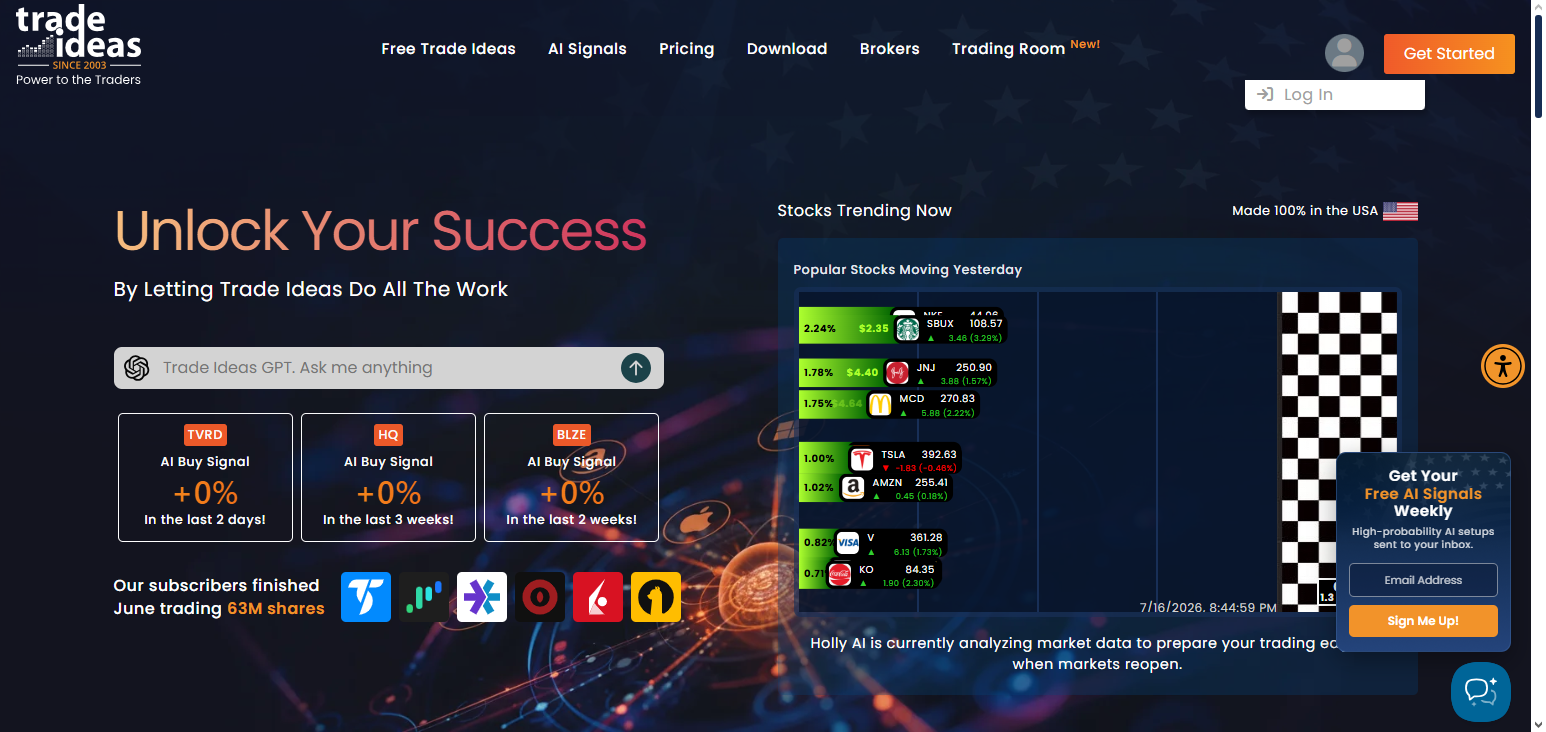
Holly and Trade Ideas also take measures to ensure that the potential trades follow certain guidelines. Notable features include stock scanning, alerts, the ability to backtest, and optimization strategies.
It is predicted that Trade Ideas will be at the forefront of developing AI and guiding automation for trading. Its focus remains on helping traders locate opportunities and reduce the need to monitor the market.
Trade Ideas Features
- Holly, an AI trading assistant, identifies thousands of trading opportunities.
- Instant stock scans execute trades with complex algorithms.
- Automated backtesting helps traders test strategies without taking a risk.
- Custom alerts send traders warnings for significant market events.
- Tools for strategy optimizations help traders avoid bad decisions.
| Pros | Cons |
|---|---|
| Advanced AI engine provides real-time trading opportunities. | Premium plans can be expensive for beginners. |
| Powerful stock scanner improves market research efficiency. | Mainly focused on active stock traders. |
| Automated backtesting helps test trading strategies. | Learning curve for advanced features. |
| Holly AI offers data-driven trading suggestions. | Limited support for some international markets. |
| Custom alerts improve trade monitoring capabilities. | AI suggestions still require human verification. |
2. TrendSpider
TrendSpider combines AI and automated technical analysis. Unlike many other platforms, it takes the time to help traders locate trends and chart patterns and helps assist support levels and trading opportunities.
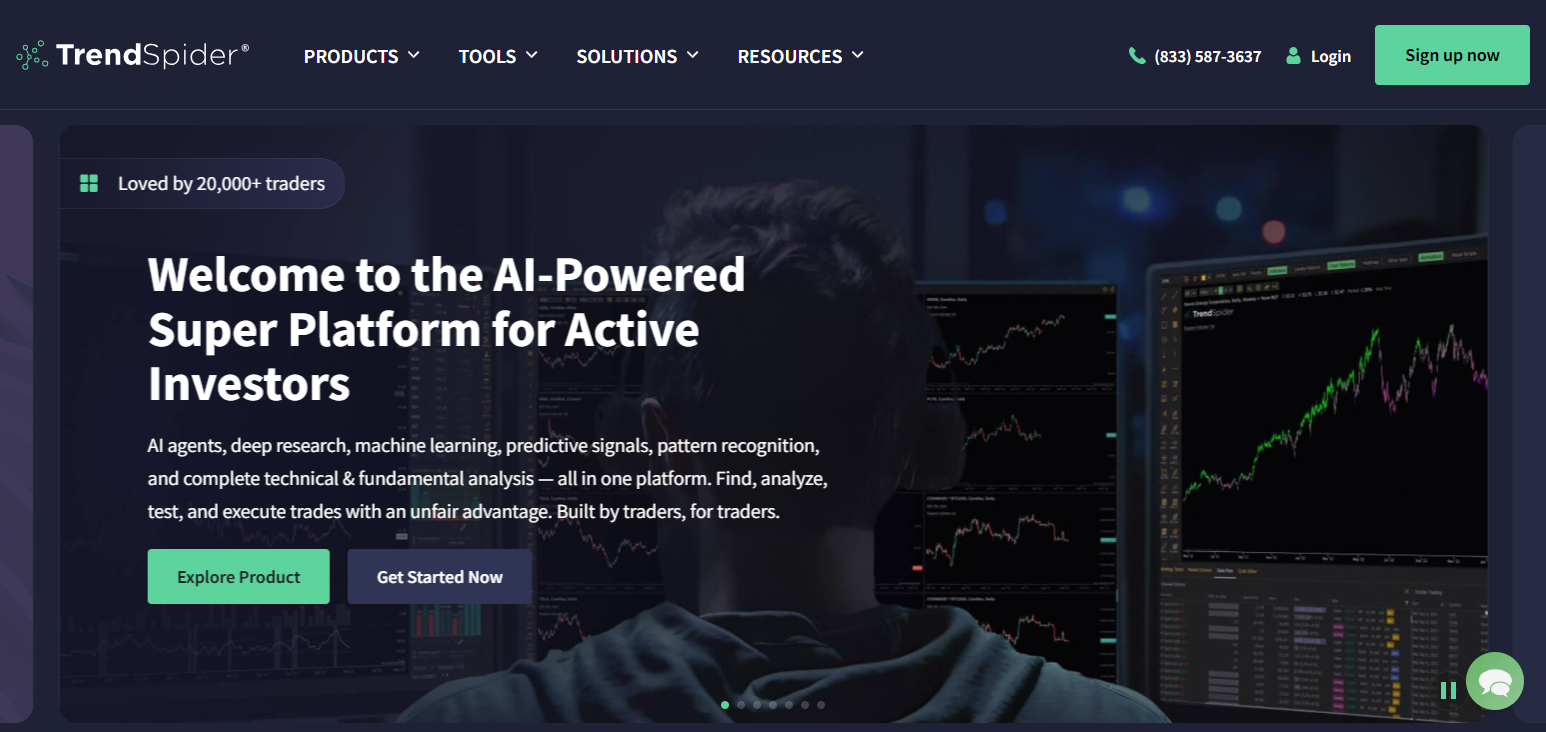
It features multi-timeframe automated analysis, AI pattern recognition, smart alerts, and backtesting of trading strategies. With its machine learning, it provides a higher level of accuracy and faster research solutions across all trading areas of stocks, crypto, and financial markets.
TrendSpider Features
- Automated analyses of charts and detection of patterns and trends are done via AI.
- Automated analyses and interpretations of data across multiple timeframes are done via AI.
- Smart alerts send traders notifications for significant price movements.
- The charts and data simplify the analyses and interpretations of an automated trading strategy.
| Pros | Cons |
|---|---|
| AI-powered chart analysis saves significant research time. | Subscription pricing may be costly for new traders. |
| Automated trend detection improves technical analysis. | Requires learning technical analysis concepts. |
| Supports multiple asset classes including crypto. | Some advanced tools feel complex initially. |
| Smart alerts help identify market movements quickly. | Not designed for complete trading beginners. |
| Strong backtesting capabilities improve strategy evaluation. | Limited fundamental analysis features. |
3. MetaTrader 5
MetaTrader 5 remains a favorite for many due to its support of autonomous trading via the use of Expert Advisors and algorithmic trading. It features all the trading tools a professional needs, including advanced charting and analysis, automated order execution, and access
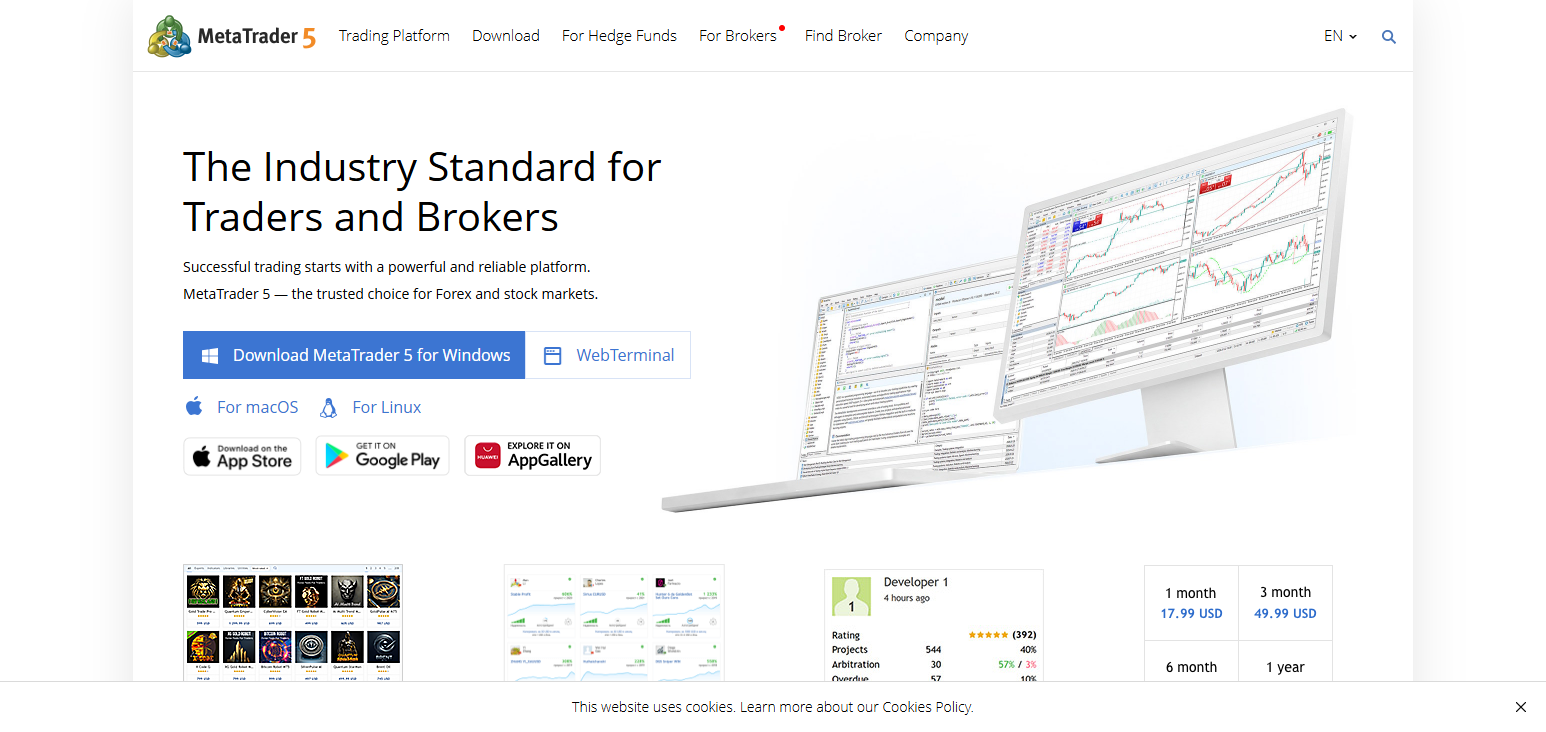
To all financial markets. In 2026, MetaTrader 5 will still be the top choice for professional traders due to its extensive automation, its developer community, and its advanced algorithmic trading support.
MetaTrader 5 Features
- The trading platform supports automated trading strategies and the use of Expert Advisors.
- The platform offers sophisticated tools to analyze and assess the market.
- The programming language MQL5 allows the user to create a trading robot.
- The trading platform supports the automated execution of trades.
- MetaTrader 5 supports multiple trading instruments.
| Pros | Cons |
|---|---|
| Supports powerful Expert Advisors for automation. | Interface may appear outdated for some users. |
| Wide broker compatibility across global markets. | Requires coding knowledge for custom bots. |
| Advanced charts and technical indicators available. | Quality of EAs varies significantly. |
| Supports multiple assets and trading strategies. | Beginners may face a steep learning curve. |
| Large developer community provides resources. | Automated strategies need regular monitoring. |
4. QuantConnect
QuantConnect is an algorithmic trading platform for autonomous use by traders, quantitative analysts, and institutional investors. It allows automated trading strategies to be created, backtested, and deployed over multiple asset classes (equities, options, forex, and even crypto).
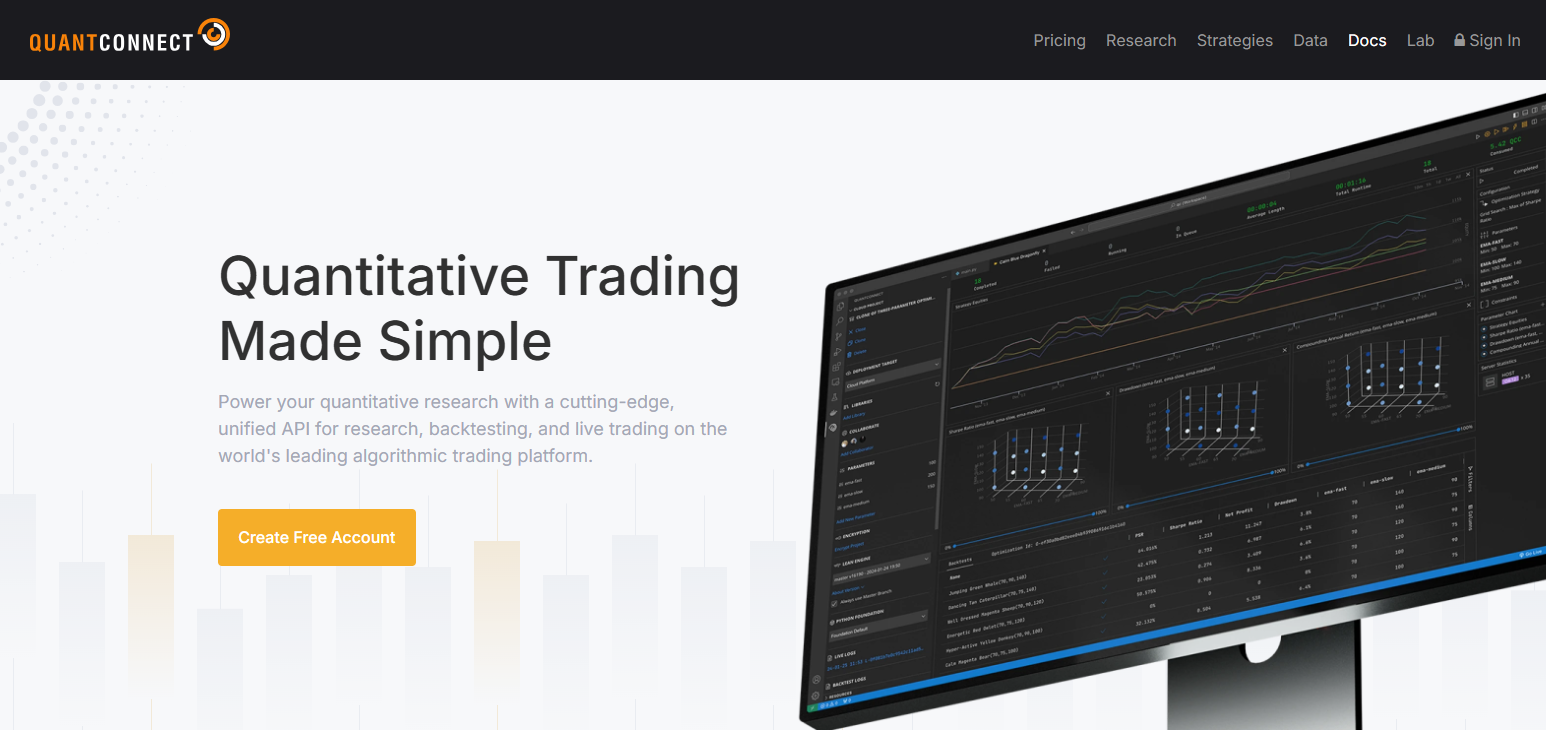
It also has cloud-based computing, a plethora of historically recorded market data, and flexibility in programming languages via Python and C#. It will remain popular with professionals in 2026 for creating advanced trading systems and frameworks for quantitative investments driven by AI.
QuantConnect Features
- The platform offers trading automation via algorithms and cloud technology.
- The platform offers a lot of data to test trade strategies.
- The platform supports multiple programming languages, including Python and C#.
- The platform offers robust and advanced tools for the trade automation.
- The platform allows the use of automated strategies for trading all instruments.
| Pros | Cons |
|---|---|
| Excellent platform for quantitative strategy development. | Requires programming knowledge for advanced usage. |
| Supports Python and C# algorithm development. | Less suitable for casual retail traders. |
| Cloud computing enables powerful backtesting. | Data subscriptions may increase costs. |
| Provides extensive historical market datasets. | Interface can feel technical for beginners. |
| Supports multiple financial asset classes. | Requires time to build complex strategies. |
5. Alpaca
Alpaca is an API-centric autonomous trading platform. It allows developers and organizations to create automated investment applications using its commission-free trading APIs, real-time market data, and the ability to trade fractional shares along with the automatic execution of algorithms.
The APIs allow developers to create automated trading applications and define a bespoke investing experience. With AI-powered financial tools gaining more traction in 2026,
Alpaca reinforces automated portfolio management and quantitative strategies along with its infrastructure for modern investors by enabling disruption in trading.
Alpaca Features
- The infrastructure supports trading automation via the use of APIs.
- The use of real-time market data supports the speedy execution of trades.
- The ability to trade fractional shares supports the automation of the trading portfolio.
- The platform supports the use of APIs to create automated trading strategies.
| Pros | Cons |
|---|---|
| Developer-friendly API enables custom automation. | Limited availability in some countries. |
| Commission-free trading supports cost-effective investing. | Mainly focused on US markets. |
| Real-time market data improves automation. | Requires technical skills for customization. |
| Supports fractional shares and portfolio automation. | Fewer built-in trading tools than competitors. |
| Good infrastructure for fintech applications. | Not ideal for traditional manual traders. |
6. eToro
eToro is a social trading platform. It combines a community investing framework with automation. Its CopyTrader technology enables users to mimic strategies of analyzed investors with a specified performance and risk preference.
eToro contains various asset classes (stocks, crypto, ETFs, and commodities). In 2026, eToro continues to expand its AI investing features to assist novice investors with automated portfolio management, while providing seasoned investors the ability to export their strategies for the global investing community.
eToro Features
- CopyTrader mirrors the strategies of top investors.
- Community-based network for collaborative investment strategies.
- Automated portfolio copying according to risk appetite.
- Offers trading for diverse asset classes.
- Enhanced portfolio management via AI investing tools.
| Pros | Cons |
|---|---|
| CopyTrader simplifies automated investing for beginners. | Less control over copied strategies. |
| Large global trading community available. | Spreads and fees can vary. |
| Supports stocks, crypto, ETFs, and commodities. | Advanced algorithmic tools are limited. |
| User-friendly platform design improves accessibility. | Performance depends on selected traders. |
| Social investing features provide market insights. | Not preferred by professional algorithm developers. |
7. Composer
Composer is a no-code autonomous trading application. Composer allows users to create their own autonomous investment strategies without any coding knowledge. With its visual strategy builder, users are able to create really sophisticated, yet fully customized, investment portfolios.
The application also allows users to create automated rules and quantitative models. The main improvement that Composer provides to algorithmic investing is its ease-of-use for everyday retail investors.
In 2026, Composer is a pioneer among retail trading platforms by providing everyday investors custom, portfolio-based, AI-automated investment strategies.
Composer Features
- No-code simplifies the automation of investment strategies.
- Visual aids design trading strategies for further customization.
- Strategies are triggered automatically by market conditions.
- Assess the viability of strategies with backtesting.
- AI investing simplifies trading with algorithms for novice traders.
| Pros | Cons |
|---|---|
| No-code strategy creation makes automation accessible. | Limited advanced customization options. |
| Visual builder simplifies portfolio automation. | Mainly focused on US investments. |
| Allows testing before deploying strategies. | Fewer professional trading features. |
| Suitable for beginner algorithmic investors. | Subscription required for advanced functionality. |
| Helps create personalized automated portfolios. | Not suitable for high-frequency trading. |
8. Interactive Brokers
Interactive Brokers provides professional-grade autonomous trading capabilities due to its advanced API, algorithmic order types, and automated trading tools.
Interactive Brokers caters to developers, hedge funds, and professional traders by providing superior trading and execution capabilities across the globe.
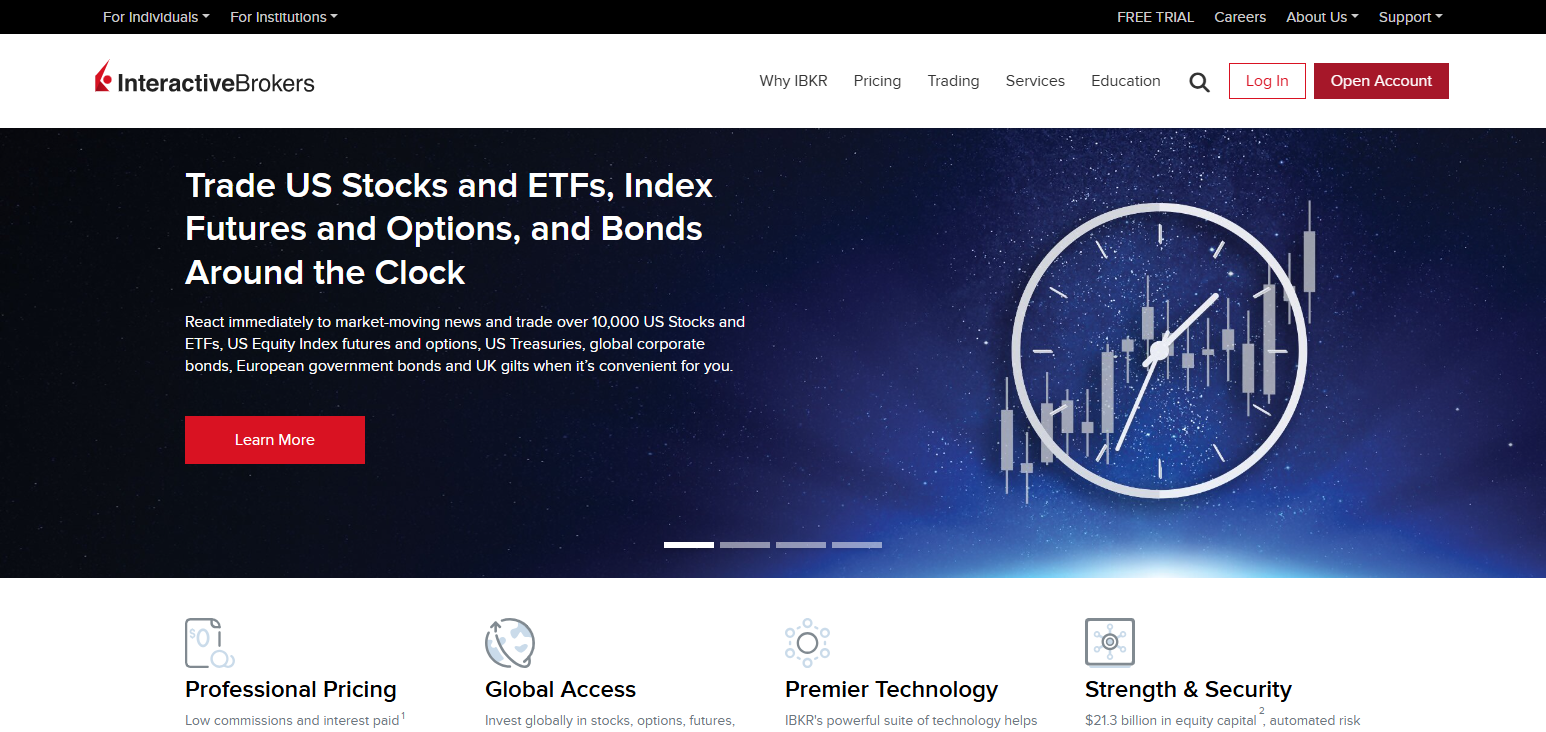
Within the global marketplace, users can connect their own trading algorithms, automate the management of their portfolios, and use Interactive Brokers’ extensive collection of market data. Automated trading and professional investor concerns place Interactive Brokers ahead of its competitors in 2026.
Interactive Brokers Features
- Comprehensive APIs for advanced trading algorithms.
- Automated execution of trades across many markets.
- An extensive library of real-time market information.
- Advanced algorithms are available for institutional trading.
- Automation of portfolio management is improved via interactive tools.
| Pros | Cons |
|---|---|
| Professional-grade automation tools and APIs. | Platform complexity can overwhelm beginners. |
| Access to global markets and assets. | Requires experience for advanced features. |
| Powerful algorithmic order execution options. | Interface is less beginner-friendly. |
| Strong reputation among institutional traders. | Minimum requirements may apply for some services. |
| Extensive market data and research tools. | Customer support experience varies by region. |
9. Tickeron
Tickeron is an AI-based autonomous trading platform. With the use of artificial intelligence, Tickeron is able to automate the prediction and analysis of market trends, as well as create opportunities for investors with data-driven suggestions.
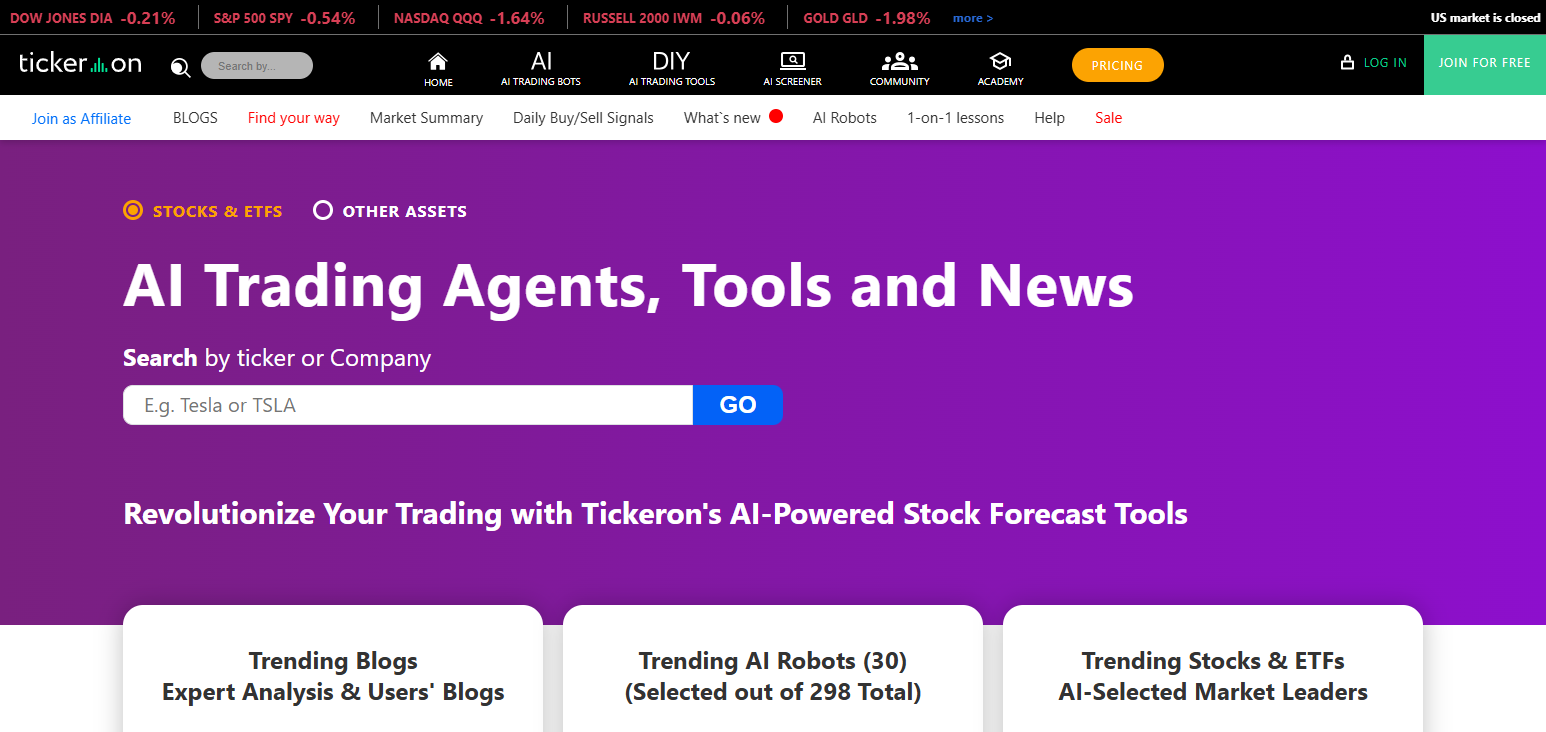
The platform even provides users with AI robots, automated pattern recognition, and the assessment of their portfolios. In 2026, Tickeron remains dedicated to the AI-based support of user decisions, automated market analysis, and the improvement of users’ trading strategies.
Tickeron Features
- AI generates automated trading prompts and predictions.
- Rapid identification of market opportunities via patterns.
- ML for analyzing the financial markets.
- Analyses of portfolios and the performance of investments.
- AI-driven trading research on crypto and stocks.
| Pros | Cons |
|---|---|
| AI predictions help identify trading opportunities. | AI predictions are not guaranteed outcomes. |
| Provides automated trading robots and signals. | Premium features require paid subscriptions. |
| Pattern recognition improves technical analysis. | Limited control over AI decisions. |
| Supports stocks and cryptocurrency markets. | Accuracy depends on market conditions. |
| Useful for traders seeking AI assistance. | Less suitable for advanced developers. |
10. Capitalise.ai
Capitalise.ai is a groundbreaking autonomous trading platform. Users can craft strategies with natural language instructions. Because users can develop complex trading rules without the need to code, traders (beginners and professionals alike) have greater access to algorithmic trading.
Capitalise.ai’s mechanisms also create a level of autonomy with backtests, alerts, and executions. In 2026, Capitalise.ai will still be at the forefront of innovation by merging artificial intelligence with no-code automation to allow users to develop bespoke trading systems quickly and easily.
Capitalise.ai Features
- Coding is unnecessary for the automation of strategies.
- Automated market opportunity monitoring.
- Strategies can be tested prior to execution.
- Intelligent notifications for trading are provided.
- Automation is applied to many financial markets.
| Pros | Cons |
|---|---|
| No-code automation allows easy strategy creation. | Limited availability with some brokers. |
| Natural language commands simplify trading automation. | Advanced traders may need more customization. |
| Automated alerts and execution improve efficiency. | Depends on connected broker infrastructure. |
| Supports strategy testing before deployment. | Not designed for complex institutional systems. |
| Beginner-friendly AI trading workflow. | Requires understanding of trading rules and risks. |
Conclusion
In Conclusion: Best Autonomous Trading Platforms Autonomous Trading Platforms are revolutionizing investing. This disruption is the merger between Artificial Intelligence, Automation, and Algorithms.
Trade Ideas, MetaTrader 5, QuantConnect, and Capitalise.ai offer market analysis, automated strategy execution, and assistance with smarter decisions.
Although, speed and efficiency are the hallmarks of these tools, successful trading requires risk management and an understanding of the market. Selecting the best platform is influenced by your goal, experience, and trading needs.
FAQ
How do Autonomous Trading Platforms work?
These platforms analyze real-time market data, identify trading opportunities, apply predefined strategies, and automatically execute trades based on programmed rules or AI models.
Are Autonomous Trading Platforms suitable for beginners?
Yes, many platforms like eToro, Composer, and Capitalise.ai offer beginner-friendly automation features without requiring advanced programming knowledge.
Which is the best Autonomous Trading Platform in 2026?
The best platform depends on user needs. Trade Ideas and TrendSpider are strong for AI analysis, while QuantConnect and MetaTrader 5 suit algorithmic traders.
Can Autonomous Trading Platforms make profitable trades automatically?
Autonomous platforms can improve trading efficiency and decision-making, but profitability is not guaranteed because market conditions and risks constantly change.