I will talk about B2B Neobanks Offering Built-In FX and Cross-Border Payments in this article. B2B neobanks help companies with global transactions, multi-currency accounts, and payments made internationally.
These digital banks help customers by providing speedier transfers, clear foreign exchange, and automated finance. This guide will address the leading B2B neobanks, the features they offer, their pricing models, advantages, and the best business use cases.
What Are B2B Neobanks with Built-In FX and Cross-Border Payments?
B2B neobanks that offer FX and cross-border payments are digital banking services for businesses that facilitate cross-border transaction and currency exchange services.
They feature multi-currency accounts, real-time FX, cross-border payment capabilities, and automated finance services, free of the legacy banking infrastructure. These services provide improved cash flow and business operations by modern banking infrastructure.
Key Points & B2B Neobanks Offering Built-In FX and Cross-Border Payments
| B2B Neobank | Explanation |
|---|---|
| Wise Business | Provides low-cost international transfers, multi-currency accounts, and transparent FX exchange services globally. |
| Airwallex | Offers global business accounts, embedded FX, cards, and cross-border payment solutions. |
| Revolut Business | Enables international payments, currency exchange, expense management, and corporate banking features. |
| Mercury | Provides startups banking services with international payments and foreign currency support. |
| Brex | Delivers corporate cards, global payments, expense controls, and FX capabilities. |
| N26 Business | Supports business banking, international transfers, and currency exchange features efficiently. |
| Payhawk | Combines corporate spending, expense management, global payments, and FX services. |
| Intergiro | Offers European business accounts with payments, cards, and currency solutions. |
| Juni | Provides ecommerce businesses multi-currency accounts, payments, and financial management tools. |
| Novo | Supports small businesses with banking, payments, and international transaction capabilities. |
10 B2B Neobanks Offering Built-In FX and Cross-Border Payments
1. Wise Business
Wise Business leads the field of B2B neobanks embedding FX and cross-border payment services for global businesses. Wise Business customers can hold, receive, and convert over 40 currencies with real mid-market rates.
Companies can obtain local account details in the US, the UK, and the European region. International payments become more convenient with Wise Business.
Depending on the region, there is a minimal setup fee, and conversion fees are fully disclosed and depend on the currency pairs.
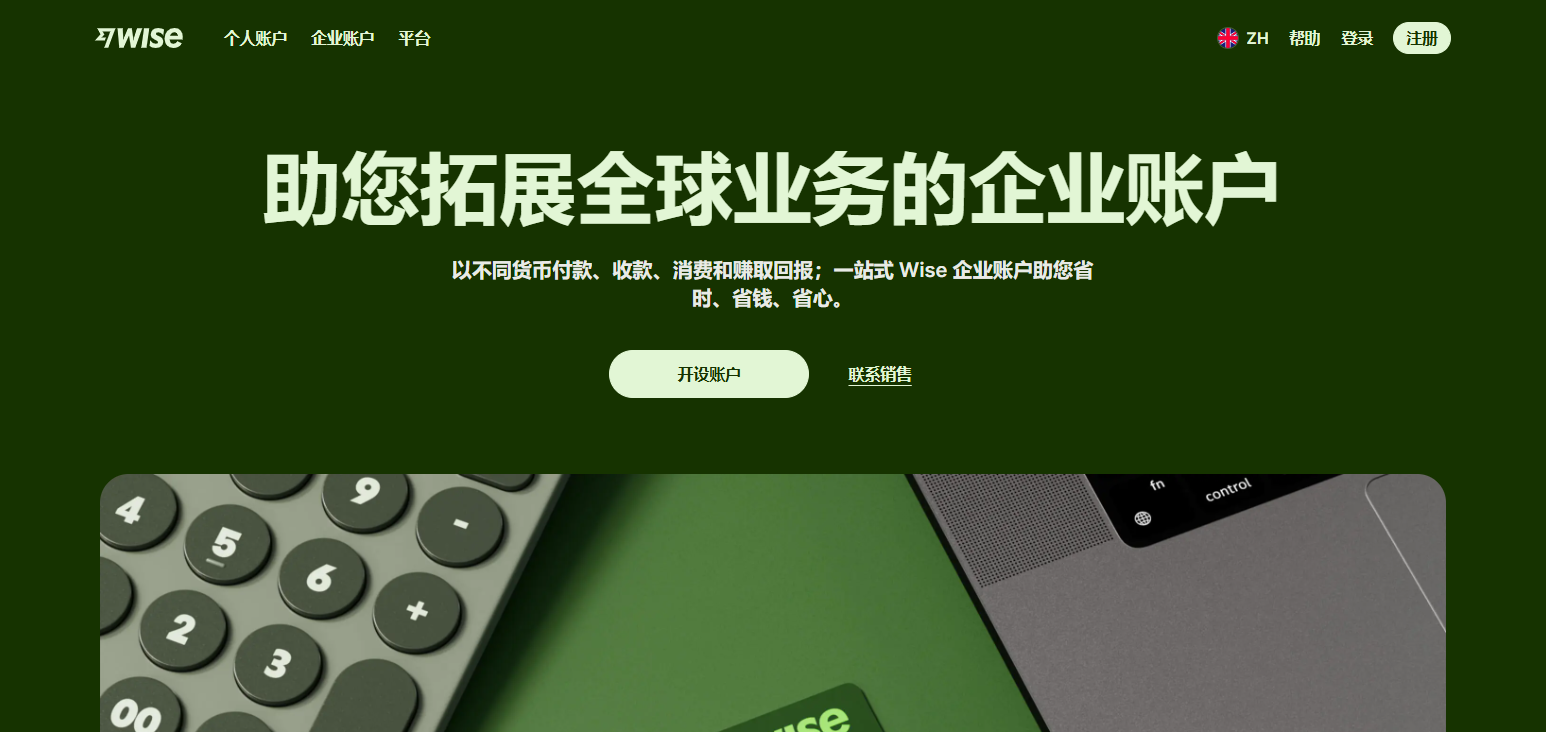
Wise Business is ideal for freelancers, exporters, and SaaS businesses, and those with many cross-border transactions and an interest in channeling funds away from traditional banking systems.
Best For: Global small and medium enterprises, freelancers, and cross-border vendors Pricing: Inexpensive transfer fees and disclosed FX conversion fees Availability: Many countries in North America, Europe, and Asia-Pacific
Wise Business – Pros & Cons
| Pros | Cons |
|---|---|
| Supports 40+ currencies with transparent real exchange rates. | Limited advanced banking features compared with traditional banks. |
| Offers low-cost international transfers for global businesses. | Not ideal for companies needing credit facilities or loans. |
| Provides local bank details in multiple regions. | FX fees can increase during high-volume transactions. |
| Easy setup and user-friendly business dashboard. | Some countries have limited account availability. |
| Reduces hidden currency conversion costs significantly. | Customer support availability varies by region. |
2. Airwallex
Airwallex combines global accounts, embedded foreign exchange, corporate cards, and international payments, creating a comprehensive B2B neobank solution.
Through Airwallex, businesses can multi-currency accounts, receive payments, convert currencies, and make cross-border payments independent of a traditional bank.
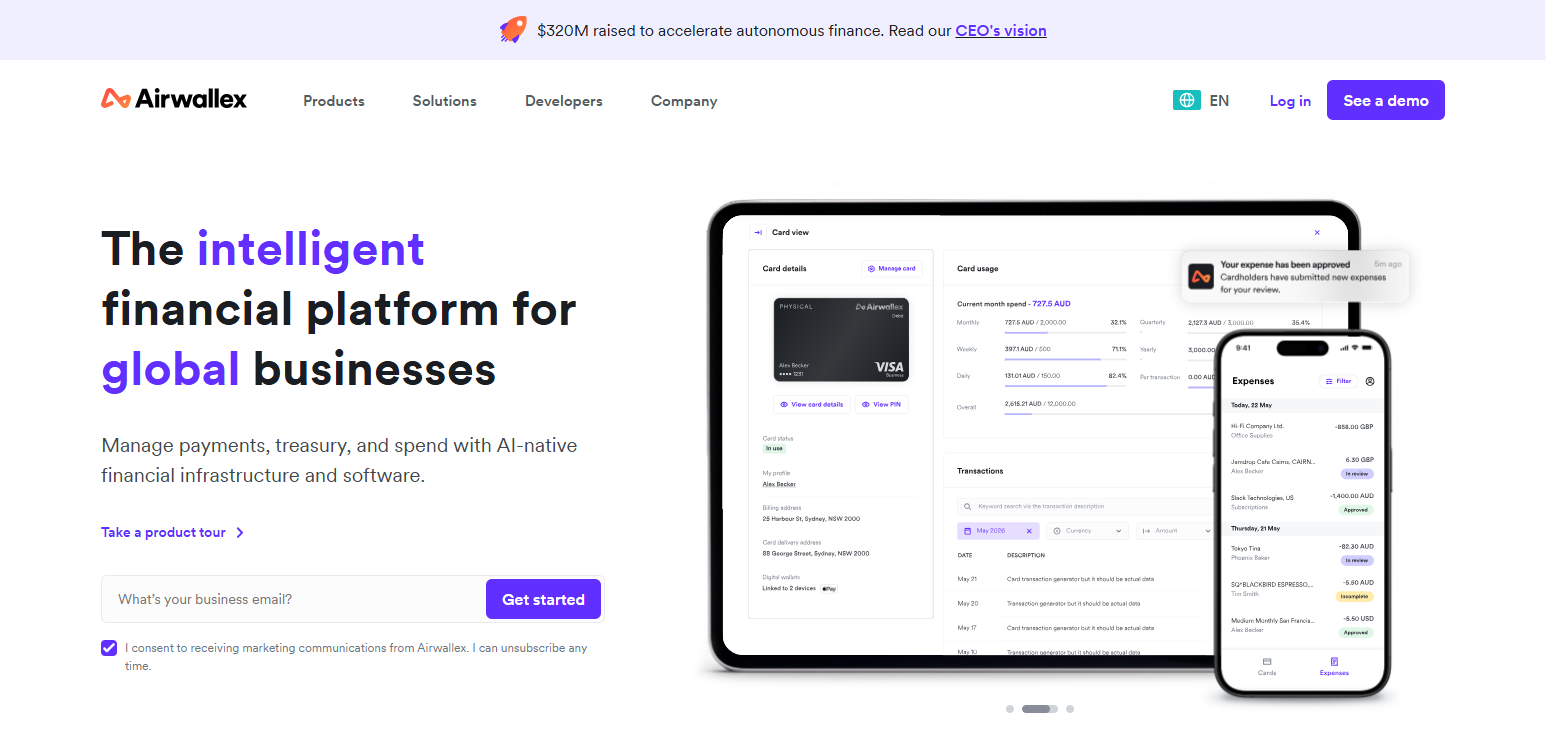
Airwallex also offers other financial services integrated into a global payment system, and supports most major currencies. Pricing is based on the business, transaction volume, and services used.
Airwallex is highly advantageous to ecommerce businesses, SaaS, marketplaces, and other businesses with a high degree of financial automation, and many cross-border transactions.
Best For: Ecommerce, SaaS companies, global enterprises Pricing: Custom plans based on business usage Availability: Asia-Pacific, Europe, North America, and global markets
Airwallex – Pros & Cons
| Pros | Cons |
|---|---|
| Provides multi-currency accounts and global payment infrastructure. | Pricing structure can be complex for small businesses. |
| Supports API integrations for embedded finance solutions. | May require technical knowledge for advanced features. |
| Offers competitive FX rates for international transactions. | Not available equally in all global regions. |
| Includes corporate cards and expense management tools. | Premium features may increase operational costs. |
| Suitable for fast-growing international companies. | Smaller businesses may find features overwhelming. |
3. Revolut Business
Revolut Business provides digital banking, international payments, currency exchange, business cards, and tools for managing expenditure.
Even more, Businesses can now manage many currencies, make payments around the globe, and spend less time monitoring employee spending–all thanks to Revolut Business’ centralized dashboard. Revolut Business gives your budget more flexibility by offering subscription plans tailored to your company’s size and features.
With the built FX tools, Revolut Inflation works to lessen the reliance on traditional banking. For that reason, it is most preferred by Startups, Remote Teams, and International companies
that need a banking solution with Payment Automation that Revolut Business’ competitors do not offer. Best For: Startups, remote companies, international teams Pricing: Subscription plans with feature-based pricing Availability: Europe, UK, selected global markets
Revolut Business – Pros & Cons
| Pros | Cons |
|---|---|
| Enables quick currency exchange and international payments. | Exchange limits may apply on lower-tier plans. |
| Provides corporate cards and employee spending controls. | Customer support quality differs by location. |
| Supports multiple currencies in one account. | Advanced features require paid subscriptions. |
| Offers modern digital banking experience. | Regulatory availability varies between countries. |
| Useful for remote and global teams. | Not suitable for businesses needing traditional banking services. |
4. Mercury
Mercury is a neobank offering B2B services with a focus on the needs of start-up, technology, and online-based businesses that need modern banking. Mercury offers business accounts, international payments, business cards, and banking integration with accounting.
Businesses can make global payments and run their business in the US because of Mercury’s partner network. Most everyday banking functions are offered with no monthly fees.

Mercury is very popular among start-up businesses and especially those that are funded by venture capital or those with a strong online presence aiming to automate and manage their business finances on a global scale in a timely manner.
Best for: Startups, Online Businesses, Tech Companies Pricing: No monthly fee options available for basic accounts Availability: Most US businesses with some global payment options available
Mercury – Pros & Cons
| Pros | Cons |
|---|---|
| Designed specifically for startups and technology companies. | Primarily focused on US-based businesses. |
| Offers free business banking options. | Limited direct international banking capabilities. |
| Integrates with accounting and business software. | Requires US eligibility for account opening. |
| Provides virtual cards and financial management tools. | Not ideal for large multinational corporations. |
| Simple digital banking experience for entrepreneurs. | Foreign currency features depend on partners. |
5. Brex
Brex provides a suite of tools that incorporates corporate cards, payments, and automated expense management. Using Brex, businesses are able to manage employee spending and automate expense reporting.
Brex provides a number of products and services geared towards Startups and Enterprises, as well as large Multinational Corporations.
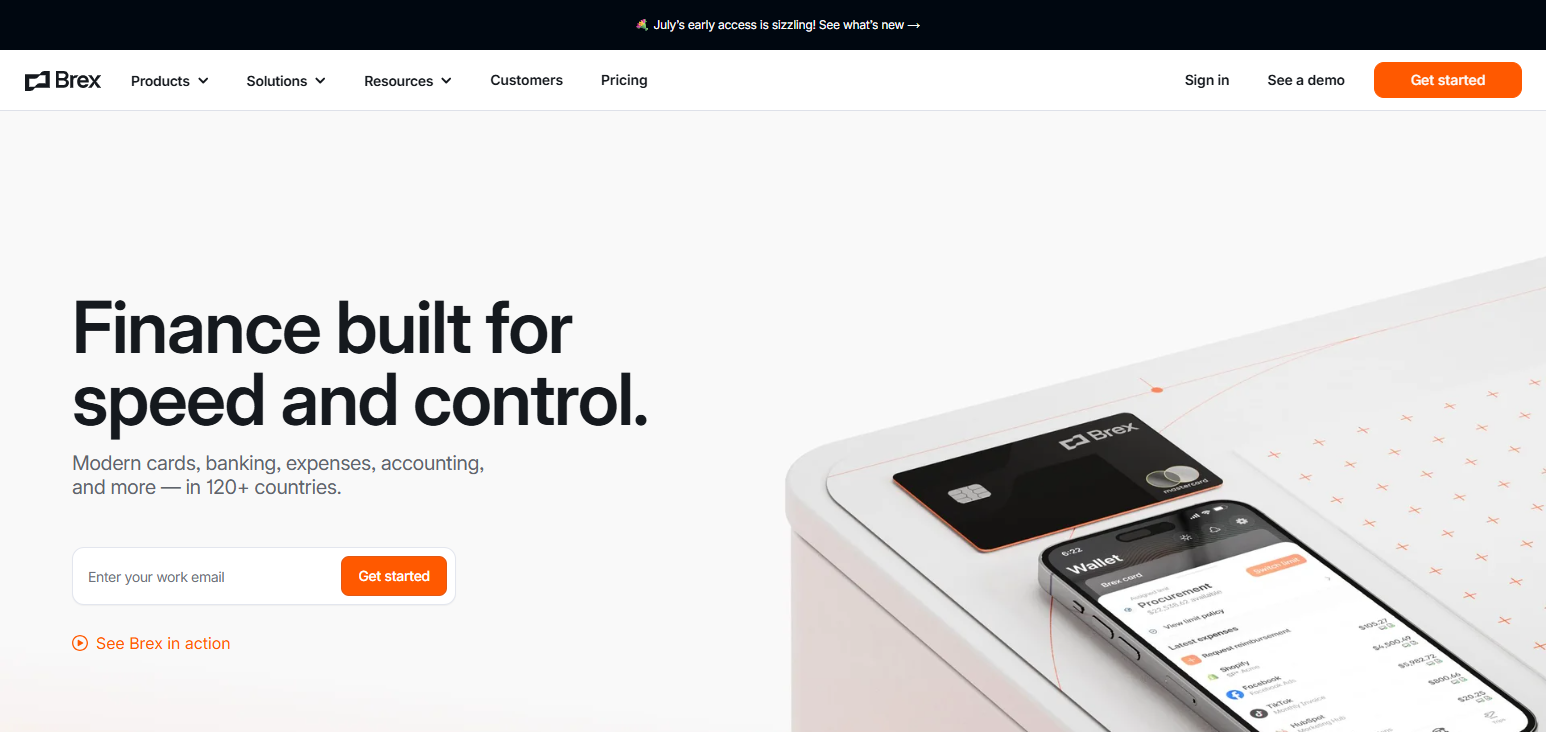
Its global payment tools are beneficial to businesses that have a lot of employees, customers, and suppliers located in different countries. Best for: Startups, Enterprises, Finance Teams Pricing: Customized based on corporate needs Availability: U.S. and select other markets
Brex – Pros & Cons
| Pros | Cons |
|---|---|
| Provides advanced corporate spending management tools. | Mainly designed for venture-backed businesses. |
| Offers global cards and payment solutions. | May not suit very small businesses. |
| Automates expense tracking and reporting processes. | Pricing depends on business requirements. |
| Improves visibility into employee spending. | Requires business qualification approval. |
| Supports enterprise financial workflows. | Less focused on personal banking-style services. |
6. N26 Business
N26 Business supplies digital banking solutions for easy financial management for freelancers, entrepreneurs, and small businesses. With their business accounts, cards, and banking services, they provide tools to seamlessly conduct international business.

Their accounts either cost money or don’t, depending on which features a country has. A benefit of their almost entirely digital solution is that they allow users to control payments and view transactions.
N26 is great for small businesses and freelancers that are in need of easy to use digital banking tools. Best For: Freelancers, small businesses, and entrepreneurs Pricing: Paid and free options available Availability: Primarily used in Europe
N26 Business – Pros & Cons
| Pros | Cons |
|---|---|
| Provides simple mobile-first business banking. | Available mainly in European markets. |
| Offers easy account management through mobile apps. | Limited enterprise-level financial features. |
| Supports digital payments and transaction tracking. | International business tools are less advanced. |
| Provides free and premium account options. | Not designed for large corporations. |
| Suitable for freelancers and entrepreneurs. | Currency support depends on region. |
7. Payhawk
All-in-one business finance solution, Payhawk, merges corporate cards with expense management, invoicing, and international payment solutions.
Payhawk helps businesses issue cards to employees, gives the power to automate expense tracking and reimbursements, and sets spending limits across countries.

With multi-currency support, global businesses use Payhawk to streamline financial operations. Payhawk’s subscription plans vary based on the size of the business, the features, and the area of coverage. Ideal for mid to large businesses
Payhawk aims to help businesses manage and control their employees’ spending and their cross-border payment processes. Best For: Enterprises, global businesses, finance teams Pricing: Subscription-based plans that are highly customizable Availability: Europe, UK, US, and the rest of the world
Payhawk – Pros & Cons
| Pros | Cons |
|---|---|
| Combines expense management, cards, and payments. | Subscription pricing may be expensive for startups. |
| Supports multi-country employee spending control. | Best features require higher-tier plans. |
| Provides automated invoice and expense processing. | May require implementation time for large teams. |
| Improves financial visibility for companies. | Less suitable for individual entrepreneurs. |
| Helps manage international business expenses efficiently. | Availability differs across markets. |
8. Intergiro
Intergiro offers a digital banking infrastructure that enables businesses to manage their accounts, payments, cards, and flexible currency solutions. Primarily focused on digital banking for businesses
Intergiro helps fintechs, marketplaces, and platforms embed financial services in their products. Intergiro’s modern APIs support businesses’ payment workflows and card issuing with international payments.

As with most of the infrastructure offered by Intergiro, pricing is highly dependent on the business needs and payment card volumes.
Intergiro is best for businesses that are looking to offer payment solutions within Europe and are seeking embedded finance solutions. Best For: Fintechs, marketplaces, and payment services Pricing: Customize your APIs and services Availability: European Financial Markets
Intergiro – Pros & Cons
| Pros | Cons |
|---|---|
| Provides embedded banking infrastructure for businesses. | More suitable for fintech companies than SMEs. |
| Supports payment APIs and card issuing solutions. | Requires technical integration knowledge. |
| Enables companies to build financial products. | Pricing details are less transparent publicly. |
| Offers European payment infrastructure capabilities. | Not designed as a traditional business bank. |
| Helps marketplaces scale payment operations. | Limited brand recognition compared with major neobanks. |
9. Juni
Juni is a financial platform for ecommerce businesses that deal with international sales and advertising in multiple currencies. Juni provides businesses with layered multi-currency accounts, payment tools, expense tools, and financial reports.

Juni helps online brands manage cash flow internationally and reduces hassle from payment providers. Juni is best for ecommerce, digital marketing, and cross-border merchants that need more control of international payments.
Pricing is based on features and account and transaction requirements. Best For: Ecommerce brands and merchants Pricing: Feature based Availability: Europe and some international markets
Juni – Pros & Cons
| Pros | Cons |
|---|---|
| Designed specifically for ecommerce businesses. | Limited availability outside supported markets. |
| Supports multi-currency financial management. | Less suitable for non-digital businesses. |
| Helps track advertising and operational expenses. | Advanced tools may require paid plans. |
| Improves cash flow visibility for online sellers. | Smaller ecosystem compared with larger neobanks. |
| Integrates financial operations into one platform. | Primarily focused on ecommerce use cases. |
10. Novo
Novo focuses on small businesses and independent professionals. Novo provides a seamless digital experience for everyday business banking via business checking accounts, payment tools, and invoicing. Novo accounts typically do not have a monthly fee, which is good for small businesses that are cost-sensitive.

Novo’s limited international payments may be a drawback for some, but for small, digital, and cost-sensitive US businesses, Novo is a great option. Best For: Small businesses and entrepreneurs Pricing: Free business banking Availability: United States
Novo – Pros & Cons
| Pros | Cons |
|---|---|
| Offers simple digital banking for small businesses. | Mainly available for US businesses. |
| Provides no monthly fee business banking options. | Limited international payment capabilities. |
| Easy integration with business applications. | Lacks advanced FX management tools. |
| User-friendly interface for entrepreneurs. | Not suitable for multinational companies. |
| Helps startups manage daily banking activities. | Depends on partners for additional financial services. |
How To Choose the Right B2B Neobank for Cross-Border Payments
- Examine Foreign Exchange Costs: Assess the price of currency conversions, rates, and any leftover transaction costs.
- Check Where You Can Bank: Make sure the neobank operates where your business does.
- Analyze Payment Timing: Check how long international payments and transactions take.
- Evaluate Business Needs: Assess what business integrations like APIs, accounting software, and ERP systems are available.
- Crosscheck Safety & Compliance: Check regulation and licensing along with security and data protection policies.
Future Trends In B2B Neobanks and Global Payments (2026)
- AI Financial Automation:All payment and cash flow processes will be automated. AI will also assist in forecasting, fraud detection, reconciliation, and financial decision automation.
- International Payment Networks:Payment networks will enable instant global transactions, cutting economic costs and bettering the value and transparency of each transaction.
- Embedded Banking Services:Banking services will be embedded directly into platforms, streamlining payment and financial operations.
- Blockchain Cross-Border Settlement:Cross-border transactions will settle faster and with less cost due to trade-offs in settlement security from blockchain architecture.
- Digital Identities and Compliance:Digital identities and automated compliance will lessen the burden of KYC, AML, and other compliance and regulatory requirements.
Conclusion
In Conclusion B2B neobanks built with FX and cross-border payments are changing how global business finance operates by reducing friction in cross-border transactions. B2B neobanks with multi-currency accounts, automated payments, and real-time
FX help businesses operate internationally. Digital banking is changing the way businesses operate, and these neobanks will continuously assist businesses with borderless payment systems.
FAQ
Why should businesses use B2B neobanks for global payments?
Businesses use B2B neobanks to reduce FX costs, speed up international transfers, manage multiple currencies, and simplify global financial operations.
How do B2B neobanks handle foreign exchange transactions?
These platforms provide real-time currency conversion, competitive exchange rates, transparent fees, and automated FX management tools for businesses.
Which businesses benefit most from B2B neobanks?
Global SMEs, ecommerce companies, SaaS businesses, exporters, freelancers, and multinational enterprises benefit from these digital banking solutions.
Do B2B neobanks support multiple currencies?
Yes, many B2B neobanks offer multi-currency accounts that allow businesses to hold, receive, and send different currencies.