This article outlines the Embedded Lending APIs Powering B2B SaaS Buy-Now-Pay-Later changing business financing. These APIs allow SaaS modules to add automated lending, real-time credit decisions, adaptive payment plans, and integrated BNPL.
We’re going to review their use cases, advantages and disadvantages, as well as their role in modernizing financial services in B2B ecosystems.
What Are Embedded Lending APIs?
Embedded Lending APIs are advanced technology tools for SaaS, marketplace, and digital solutions providers, allowing the integration of automated lending services within an application.
Businesses can embed APIs to partner with lenders to provide automated credit decisions, instant funding, dynamic repayment options, and Buy-Now-Pay-Later services.
Leveraging transactional data, artificial intelligence, and analytics, embedded lending APIs allow businesses to rapidly provide financing and lending options without the heavy investment in lending technology or infrastructure.
The embedded lending APIs increase customer satisfaction and offer businesses an additional revenue stream.
Key Points & Embedded Lending APIs Powering B2B SaaS Buy-Now-Pay-Later
| Embedded Lending API | Explanation |
|---|---|
| Stripe Capital API | Enables SaaS platforms to offer fast business financing through embedded lending solutions. |
| Square Loans API | Provides merchants quick access to loans integrated within business software platforms. |
| Pipe API | Helps B2B SaaS companies provide revenue-based financing directly to customers. |
| Parafin API | Allows platforms to embed flexible financing options for small businesses easily. |
| Liberis API | Delivers embedded funding solutions using automated revenue-based lending capabilities for businesses. |
| YouLend API | Powers seamless lending experiences through partnerships with digital commerce platforms globally. |
| Kanmon API | Offers embedded credit solutions helping SaaS businesses provide working capital access. |
| Wayflyer API | Enables SaaS platforms to integrate growth financing for online businesses. |
| Capchase API | Provides recurring revenue financing options through simple embedded SaaS integrations. |
| Resolve API | Delivers B2B buy-now-pay-later financing with automated payment management tools. |
10 Embedded Lending APIs Powering B2B SaaS Buy-Now-Pay-Later
1. Stripe Capital API
Stripe Capital API helps SaaS platforms and marketplaces embed business financing within their platforms, without building their own lending infrastructure. This API analyzes a business’s payment activities, revenue, and transaction data to determine the most suitable funding offer.

Integrating AI for risk evaluation and automated repayment offers to customers improves the borrower’s journey with faster approvals. For B2B SaaS, Stripe Capital provides additional revenue opportunities by financing embedded features, in the software ecosystems they develop.
| Pros | Cons |
|---|---|
| Enables quick financing integration without building lending infrastructure. | Mainly benefits businesses already using Stripe payment ecosystems. |
| Uses transaction data for faster funding decisions. | Limited customization compared with fully independent lending platforms. |
| Improves SaaS customer retention through financial services. | Availability depends on regional eligibility requirements. |
| Supports automated repayment and risk management workflows. | Businesses may have less control over lending policies. |
2. Square Loans API
Square Loans API helps software platforms provide fast business loans by leveraging payment insights from their merchants. It eliminates lending barriers such as manual eligibility checks and applications with rigid repayment terms. Instead, Square Loans offers an automated process with flexible terms.

Embedded lending uses Square Loan APIs to assist small businesses in obtaining working capital without the lengthy process of interfacing with banking systems. B2B SaaS companies can finance embedded features directly in their platforms to boost customer adoption and retention while growing additional financial services revenue.
| Pros | Cons |
|---|---|
| Provides fast merchant financing using real-time payment insights. | Primarily focused on Square-based merchant networks. |
| Reduces paperwork through automated loan approval processes. | Less suitable for complex enterprise lending requirements. |
| Helps SaaS platforms increase customer engagement. | Financing options may vary by market location. |
| Offers flexible repayment models based on business activity. | Limited branding control for embedded lending experiences. |
3. Pipe API
Pipe API helps B2B SaaS businesses offer financing by connecting subscribers to instant funding. Pipe evaluates the business’s performance data to finance opportunities, unlike traditional lending infrastructure that relies on credit scores, and is aligned to support modern SaaS businesses seeking funding to grow their businesses.

The demand for embedded finance is growing and Pipe API helps SaaS businesses convert their customers’ recurring revenue to financing offers.
| Pros | Cons |
|---|---|
| Converts recurring SaaS revenue into immediate growth capital. | Revenue-based financing can become expensive over time. |
| Helps companies raise funds without equity dilution. | Requires strong recurring revenue data availability. |
| Supports flexible financing models for subscription businesses. | Not ideal for early-stage companies without predictable income. |
| Uses performance-based evaluation instead of traditional credit checks. | Funding limits may depend on revenue history. |
4. Parafin API
Parafin API helps businesses, such as payment SaaS, marketplaces, and other platforms, add digitally integrated financing options into their user experiences. Parafin API focuses on digitized lending for small businesses.

It also streamlines the underwriting process, making funding decisions much faster. As embedded lending options continue to grow in the B2B SaaS world
Parafin helps businesses offer customized loans, optimize the management of loan repayments, and increase financial capacity, all without the added complexity of managing a lending operation.
| Pros | Cons |
|---|---|
| Offers seamless embedded financing for SaaS platforms. | Mostly targets small business financing needs. |
| Provides automated underwriting using transaction data. | Limited availability across certain industries. |
| Helps platforms launch lending products faster. | Dependence on third-party lending infrastructure. |
| Improves customer access to working capital. | May require integration adjustments for complex platforms. |
5. Liberis API
Liberis API offers embedded funding through the fusion of alternative data, automated financing, and a seamless workflow. It empowers SaaS businesses to implement revenue-based financing for small and medium-sized businesses.

While most lending systems create a rigid structure, Liberis creates customized repayment plans by assessing the performance of the business. Recent advances in embedded finance emphasize the necessity of real-time underwriting.
With Liberis, software companies can deliver faster funding solutions and enhance customer experience by embedding finance in their offerings.
| Pros | Cons |
|---|---|
| Provides flexible revenue-based financing solutions. | Financing costs may be higher than traditional loans. |
| Uses alternative data for faster approvals. | Not suitable for businesses with unstable revenue. |
| Supports automated funding workflows for SaaS platforms. | Limited control over lending terms. |
| Helps businesses improve cash flow management. | Regional availability restrictions may apply. |
6. YouLend API
YouLend API enables platforms to provide financing to merchants and business users through embedded lending solutions. YouLend features an automated financing application coupled with a data-oriented risk assessment for the provision of flexible funding.

B2B SaaS companies can conveniently embed lending features without the burden of a complex banking infrastructure. As embedded commerce platforms gain traction, YouLend helps businesses offer financing and improve cash flow for growth.
| Pros | Cons |
|---|---|
| Enables easy integration of financing into digital platforms. | Mainly focused on commerce and merchant ecosystems. |
| Provides personalized funding options using business data. | Platform fees can impact overall profitability. |
| Supports automated application and approval processes. | Requires compliance management across regions. |
| Helps SaaS providers add new revenue streams. | Limited customization for specialized lending models. |
7. Kanmon API
Kanmon API offers credit solutions to embedded lending APIs for SaaS platforms that cater to small and medium-sized enterprises (SMEs). It provides a way for software makers to offer their users working capital financing by embedding the loan underwriting API into their software.

Kanmon’s API focuses on operational and financial data, which helps to expedite the lending process by reducing the amount of paperwork.
The embedded lending APIs are becoming widely used by APIs, and Kanmon’s API is a great solution for SaaS companies to offer additional customer value through embedded finance.
| Pros | Cons |
|---|---|
| Provides embedded credit solutions for small businesses. | Less recognized compared with larger lending APIs. |
| Simplifies working capital access through automation. | May have limited global market coverage. |
| Uses business data for efficient credit evaluation. | Funding options depend on customer financial performance. |
| Helps SaaS companies improve customer value. | Integration requires technical implementation resources. |
8. Wayflyer API
Wayflyer API helps digital businesses and SaaS platforms to provide their users with growth financing through a data-enabled lending solution. It helps users access working capital through revenue-based lending, which is less restrictive than a traditional bank.

Wayflyer financing is well suited for users that want to fund their growth, marketing, or improve the functions of their business. As the embedded finance model is becoming widely adopted in B2B SaaS, Wayflyer API offers a simple lending solution to software makers that want to offer a financial service.
| Pros | Cons |
|---|---|
| Provides growth financing based on business performance. | Mainly designed for digital commerce businesses. |
| Helps companies access capital without traditional loans. | Funding costs may increase with repayment structures. |
| Supports data-driven financing decisions. | Less suitable for non-revenue-based businesses. |
| Improves financial flexibility for growing companies. | Approval depends heavily on revenue consistency. |
9. Capchase API
Capchase API provides solutions to embedded financing for SaaS and recurring revenue businesses. It provides a way for SaaS platforms to offer non-dilutive funding to their users.
With a SaaS platform, businesses are able to maintain ownership of their business and funding that offers financial flexibility.
With the subscription and recurring revenue model, SaaS businesses are able to grow quickly with the funding; Capchase offers a seamless lending experience through the automation of data. Because of these offerings, Capchase exemplifies a lending solution that is embedded within an ecosystem.
| Pros | Cons |
|---|---|
| Designed specifically for recurring revenue SaaS businesses. | Requires predictable subscription revenue models. |
| Provides non-dilutive financing options. | Not ideal for businesses without recurring income. |
| Helps SaaS companies manage cash flow efficiently. | Financing terms may vary significantly. |
| Supports automated funding through API integration. | Limited suitability outside SaaS-focused businesses. |
10. Resolve API
Resolve API provides buy-now-pay-later API solutions for B2B companies. It allows software companies to incorporate payment terms and credit control within their systems. Flexible payment terms encourage customers to buy services, and Resolve takes care of the financing.
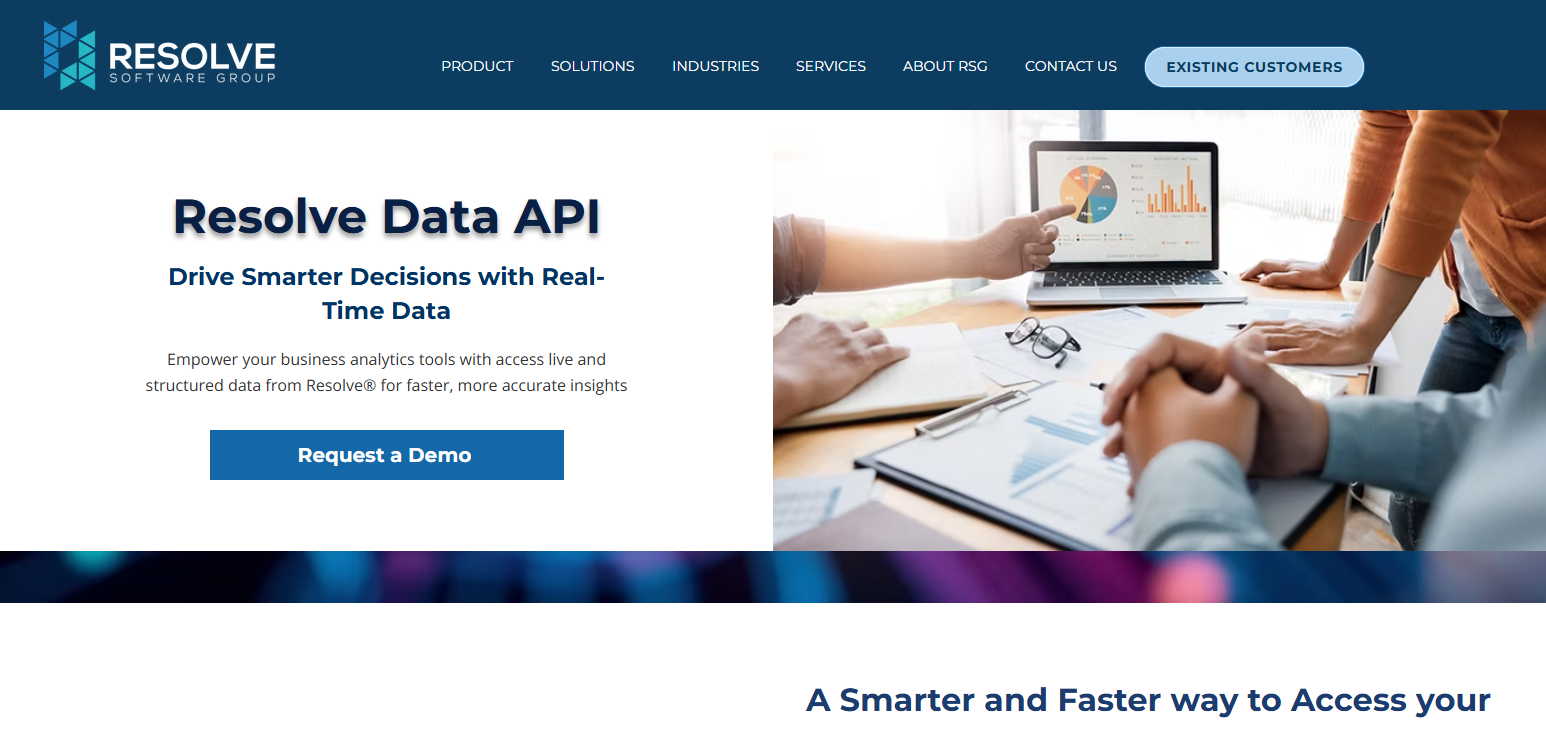
It handles the credit, invoicing, and payment collection through its API. As B2B commerce embraces flexible payment solutions, Resolve allows SaaS companies to provide the best purchasing experience and maximize customer conversions.
| Pros | Cons |
|---|---|
| Enables B2B buy-now-pay-later payment solutions. | Requires effective credit risk management processes. |
| Improves sales conversion through flexible payment terms. | Customer defaults can create financial risks. |
| Automates invoicing and payment collection workflows. | May require additional compliance handling. |
| Helps SaaS platforms increase customer purchasing flexibility. | Integration complexity can increase for large enterprises. |
Key Features of Embedded Lending APIs
- Automated Credit Underwriting Evaluates borrower risk using AI algorithms alongside transaction data and revenue history. Improves lending decisions through manual verification reduction, assessment process automation, and expedited approvals.
- Real-Time Funding Decisions Makes loan approvals and access to funds much quicker by analyzing financial data in real time. Provides businesses with working capital in a much shorter time frame compared to traditional banking processes.
- Flexible Repayment Management Provides multiple repayment models to accommodate differing business needs. Reduces financial burden by matching payment schedules to cash flow.
- API-Based Integration Gives the ability to embed lending services in SaaS platforms through API connections. Reduces complexity in business operations, development, and meeting compliance requirements.
Choosing The Best Embedded Lending API for SaaS
- Scalable APIs: SaaS providers must choose APIs backed by growable documentation.
- Compatible Lending Models: Does the API accommodate your business model as well as your customer financing and lending needs?
- Embedded Lending APIs Pricing Tiers: What are the API setup costs? Transaction fees? Costs of revenue-sharing?
- Ease of Compliance: API providers must protect customer data as well as security and regulatory standards.
- Smooth Customer Experience: APIs should enable your customers to complete lending applications and workflows with minimal friction.
- Automated Risk & Fraud Technologies: Determine assisted lending, credit, and fraud technologies offered by APIs.
Cocnlsuion
In conclusion, reshaping the B2B SaaS market with embedded lending APIs and seamless Buy Now Pay Later, faster funding, and automatic credit management is here to stay.
B2B SaaS applications will create customer satisfaction and engagement, and B2B lending opportunities with the use of embedded lending APIs.
The improved technologies of real-time analytics and artificial intelligence will greatly enhance embedded finance applications.
FAQ
How do Embedded Lending APIs benefit B2B SaaS companies?
They help SaaS companies offer financing options, improve customer retention, and create additional revenue streams.
How do Embedded Lending APIs work?
They connect SaaS platforms with lenders using APIs for credit checks, funding decisions, and repayment management.
Why are B2B SaaS companies adopting Buy-Now-Pay-Later solutions?
B2B BNPL helps businesses manage cash flow while allowing customers to purchase services with flexible payments.
Which are the top Embedded Lending APIs for SaaS platforms?
Popular APIs include Stripe Capital, Square Loans, Pipe, Parafin, Liberis, YouLend, Kanmon, Wayflyer, Capchase, and Resolve.