This article presents options for the best crypto APIs for DeFi applications and yield tracking. For developers, businesses, and crypto enthusiasts, this article presents solutions, benefits, features, and pricing.
Additionally, I will go over supported blockchains and the ways these APIs facilitate DeFi development, portfolio tracking, and real-time yield tracking across different blockchain networks.
What Are Crypto APIs for DeFi Applications?
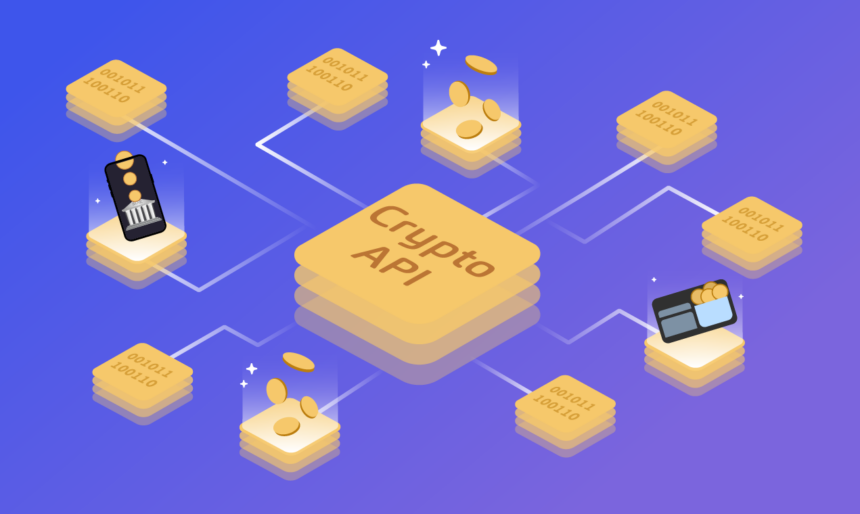
Crypto APIs focused on DeFi enable developers to work with data on blockchains, wallets, token pricing, events from smart contracts, as well as staking and yield farming data. The APIs offer DeFi application developers the ability to access data that is real-time, secure, and scalable.
DeFi app developers will not need to interface with the blockchain infrastructure directly. These APIs are widely leveraged when developing tools for portfolio management, DeFi data analytics, trading systems, as well as investment dashboards.
Why Crypto APIs For DeFi and Yield Tracking?
- Up-to-the-Second Data With on-chain transactions and other real-time data, Crypto APIs provide DeFi apps with the latest data and answers, including real-time transaction data, wallet info, token prices, and smart contract events.
- Yield Evaluation Using Crypto APIs allows users to compare different DeFi protocols. Crypto APIs helps capture and calculate Staking rewards, interest rates, liquidity yields, and other farming yields.
- Complete Portfolio With Crypto APIs users can track their DeFi positions, token balances, Wallets, and even NFTs. Crypto APIs even allows users to assess their positions across different blockchains.
- Built Infrastructure Without the need to build a blockchain integration infrastructure, developers are able to rely on pre-built integration for services. This enables developers to focus on building the app rather than worrying about infrastructure.
- Integration Across Blockchains The best crypto APIs provide integration services across multiple blockchains, and even provide DeFi applications services across multiple networks like Ethereum, BNB Chain, Polygon, Solana, and Arbitrum.
Key Points & Best Crypto APIs for DeFi Applications and Yield Tracking
| Crypto API | Explanation |
|---|---|
| Moralis API | Provides cross-chain DeFi data, wallet tracking, token balances, and yield analytics seamlessly. |
| CoinGecko API | Delivers live cryptocurrency prices, DeFi market metrics, and protocol information accurately worldwide. |
| DefiLlama API | Tracks total value locked, yields, protocols, chains, and historical DeFi statistics efficiently. |
| Covalent API | Offers unified blockchain data, wallet portfolios, transactions, balances, and DeFi insights instantly. |
| Alchemy API | Enables reliable blockchain infrastructure, DeFi application development, enhanced performance, and scalable integrations efficiently. |
| QuickNode API | Provides high-speed blockchain nodes, DeFi connectivity, transaction broadcasting, and dependable API performance consistently. |
| Bitquery API | Supplies blockchain indexing, DeFi analytics, token transfers, DEX data, and powerful GraphQL queries. |
| DexScreener API | Monitors decentralized exchange prices, liquidity, trading volumes, pairs, and market movements continuously. |
| DeBank API | Tracks DeFi portfolios, wallet assets, lending positions, staking rewards, and protocol exposure effortlessly. |
| Zerion API | Delivers comprehensive wallet tracking, DeFi investments, portfolio performance, yields, and transaction history accurately. |
10 Best Crypto APIs for DeFi Applications and Yield Tracking
1. Moralis API
Developers of DeFi applications find the Moralis API convenient and helpful as it brings multi-chain data to their fingertips. It can be called to get wallet balances, tokens, NFTs, and transactions.

It can also be used to watch events and transactions in real-time. Moralis API provides the necessary tools and infrastructure to develop staking dashboards, yield farming applications, portfolio trackers, and other DeFi applications. The time it takes to develop applications relying on Moralis API is also reduced as it is cross-chain.
Moralis API Features
- Unified developer-friendly API systems and cross-chain integrations spanning multiple blockchains.
- Instant retrieval of wallet balances, NFTs, tokens, and complete transaction histories across supported blockchains.
- Real-time monitoring of blockchain events using reliable webhooks and automated notification systems.
- Application of DeFi infrastructures simplified using scalable and secure REST APIs.
- Secure authentication and rapid data delivery at enterprise-level performance for demanding decentralized applications.
| Pros | Cons |
|---|---|
| Excellent cross-chain blockchain support. | Premium features require paid plans. |
| Easy-to-use REST APIs for developers. | Some advanced endpoints have rate limits. |
| Real-time wallet and transaction tracking. | Learning curve for beginners. |
| Supports NFTs, tokens, and DeFi data. | Limited free-tier request quotas. |
| Fast integration with modern Web3 applications. | Advanced analytics require additional services. |
2. CoinGecko API
CoinGecko API is great for yield tracking tools and DeFi dashboards as it provides one of the largest crypto market datasets. It saves developers the hassles of building/blocking infrastructure by providing tools to access market volume, live prices, and other metrics.

It serves thousands of tokens and multiple chains, allowing accurate market assessment, portfolio evaluation, and price tracking in DeFi.
CoinGecko API Features
- Cryptocurrency prices and market updates in real-time across thousands of digital assets.
- Historical price charts and market data.
- Consistent global trading data and exchange statistics.
- Flexible price conversion and comparison across markets with multi-currency support.
- Cryptocurrency data is significantly easier to integrate without blockchain node management.
| Pros | Cons |
|---|---|
| Large cryptocurrency market database. | No direct blockchain transaction execution. |
| Reliable live and historical price data. | Free plan has API limitations. |
| Covers thousands of cryptocurrencies globally. | Advanced endpoints require paid subscription. |
| Easy integration for portfolio tracking. | Primarily focused on market information. |
| No blockchain node maintenance required. | Slight update delays during heavy traffic. |
3. DeFiLlama API
DefiLlama API tracks staking rates, lending rates, and blockchain growth and offers DeFi analytics services. Developers leverage DeFiLlama API to view and compare multiple chains and DeFi protocols.

The API is updated frequently and serves protocol data. DeFiLlama helps investors find high yields and low risks and is community driven and based on blockchain data.
DefiLlama API Features
- Continuous tracking of Total Value Locked across decentralized finance protocols and blockchains.
- Staking yields and lending and farming rates updated daily.
- Community-driven decentralized finance datasets monitored for better insight into growing protocols.
- Historical DeFi analytics and cross-chain comparisons modernize DeFi.
- Comprehensive monitoring of decentralized finance ecosystems shows developers where to yield.
| Pros | Cons |
|---|---|
| Excellent DeFi TVL tracking. | Limited non-DeFi blockchain features. |
| Community-driven transparent protocol data. | Some protocol updates depend on contributors. |
| Historical yield and protocol analytics. | No transaction broadcasting functionality. |
| Covers numerous blockchain ecosystems. | Limited wallet management capabilities. |
| Useful for yield comparison tools. | Focused mainly on analytics data. |
4. Covalent API
Covalent API provides a way for developers to access a variety of different blockchain services without the need for separate integrations for each blockchain network.

Using Covalent to build a crypto wallet or a portfolio management tool streamlines development by reducing the complexity of building out different integrations, and offers better performance.
Covalent provides developers with access to balances, transfers, NFTs, DeFi positions, and historical transactions, as well as portfolio analysis services.
Covalent API Features
- Offers a single view of blockchain data via standardized APIs across all supported blockchain networks.
- Uses APIs to easily extract wallet balances, token transfers, NFTs, and previous iterations of blockchain transactions.
- Accurately captures extensive analytics for wallet cryptocurrency portfolios and transactional analyses for decentralized finance applications.
- Removes the need for complex and labor-intensive blockchain indexing with flexible and easy to use infrastructure solutions today for developers.
- Caters to enterprise-level blockchain applications needing consistent, comprehensive, and reliable access to decentralized data.
| Pros | Cons |
|---|---|
| Unified API across multiple blockchains. | Some endpoints require premium access. |
| Comprehensive wallet and portfolio analytics. | Response times vary for complex queries. |
| Simplifies blockchain integration significantly. | Large datasets increase API usage. |
| Historical blockchain data available. | Advanced features increase development costs. |
| Excellent for enterprise applications. | Documentation may overwhelm beginners. |
5. Alchemy API
Alchemy API provides tools and infrastructure for blockchain development at the level needed for highly scalable DeFi applications.
Beyond basic access to blockchain data, its APIs are built to support higher levels of interoperability and advanced features like transport monitoring, webhooks, and automated performance analytics.
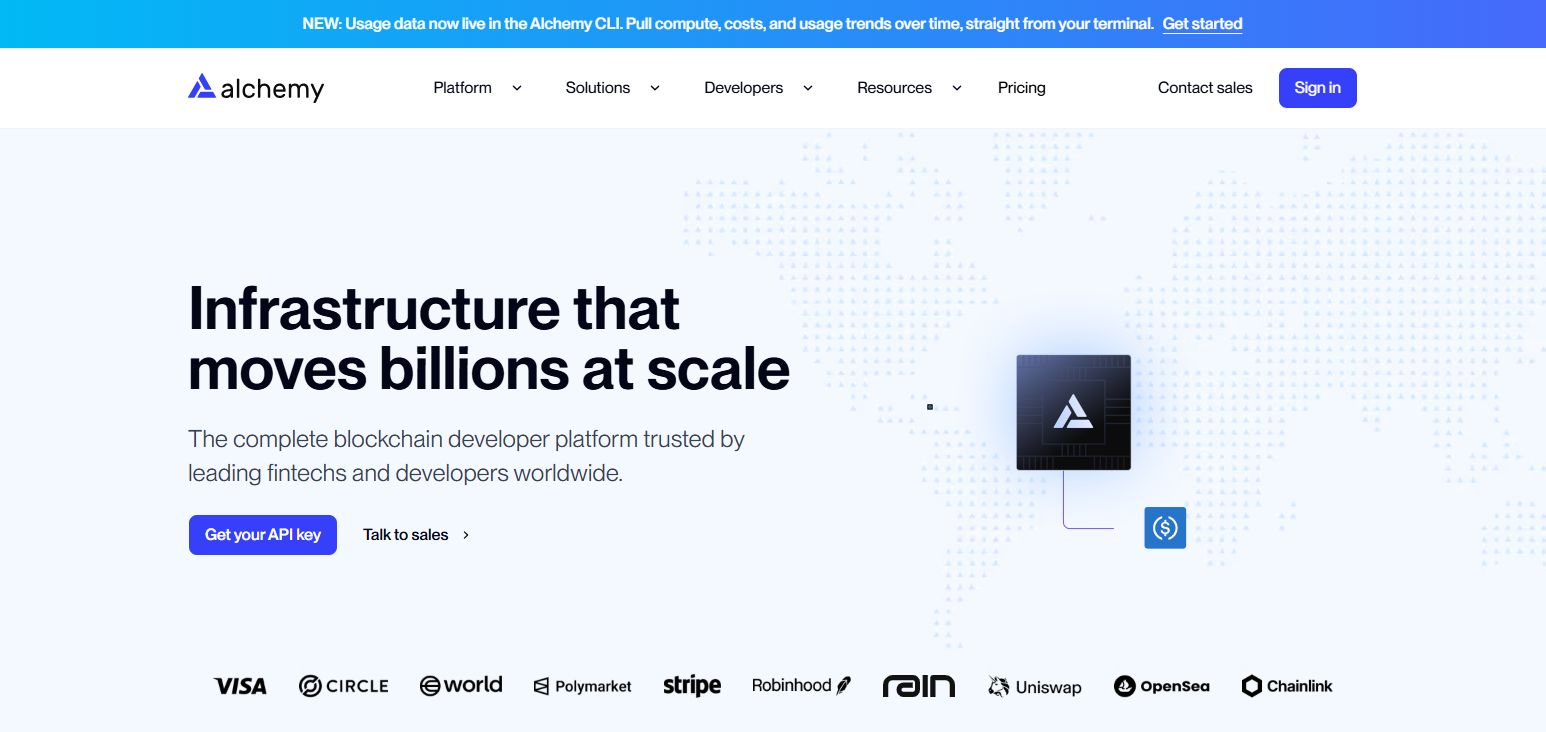
Its infrastructure is designed for the high demands of load and low latency that is required for on-chain applications like decentralized exchanges, lending, and other blockchain tools and services that need a high level of availability.
Alchemy API Features
- Provides consistently outstanding network reliability for decentralized finance applications backed with scalable blockchain infrastructure.
- Supplies developers with advanced APIs, webhooks, and enhanced debugging and blockchain monitoring tools.
- Exhibits exceptional application performance and fast response times despite handling massive transaction volumes on a global scale.
| Pros | Cons |
|---|---|
| Enterprise-grade blockchain infrastructure. | Premium pricing for high usage. |
| Excellent uptime and reliability. | Advanced features need configuration. |
| Powerful debugging and monitoring tools. | Free tier has request limits. |
| Supports multiple blockchain networks. | Overkill for small projects. |
| High-performance Web3 infrastructure. | Usage costs grow with scale. |
6. QuickNode API
QuickNode API offers developers rapid and reliable access to multiple blockchains. QuickNode helps developers looking to build DeFi tools with the speed and reliability to ensure seamless user experiences on the blockchain, even when it is most busy, with a robust and global infrastructure.

QuickNode optimizes the infrastructure even further by reducing latency for smart contract interactions and other on-chain transactions, as well as for real-time broadcasting and on-chain indexing.
QuickNode API Features
- Provides access to high-performance blockchain nodes with minimal latency globally across supported networks.
- Supports real-time transaction broadcasts consistent with reliable decentralized finance application performance and blockchain interactions.
- Optimized RPC infrastructure with dependable network connectivity allows execution of smart contracts across many blockchains.
- Consistent reliability provides the scalable blockchain infrastructure for enterprise-level decentralized applications and thriving crypto platforms.
- Consistent reliability provides the scalable blockchain infrastructure for enterprise-level decentralized applications and thriving crypto platforms.
| Pros | Cons |
|---|---|
| Extremely fast blockchain node access. | Premium plans can be expensive. |
| Low-latency RPC performance globally. | Limited free usage quotas. |
| Reliable infrastructure during network congestion. | Advanced features require higher plans. |
| Supports numerous blockchain networks. | Custom configurations require technical knowledge. |
| Easy deployment for developers. | High-volume requests increase costs. |
7. Bitquery API
Bitquery API provides an analytics tool for blockchain transactions, and allows advanced queries using GraphQL and SQL. Using Bitquery, you can analyze blockchain transactions at any level of detail.
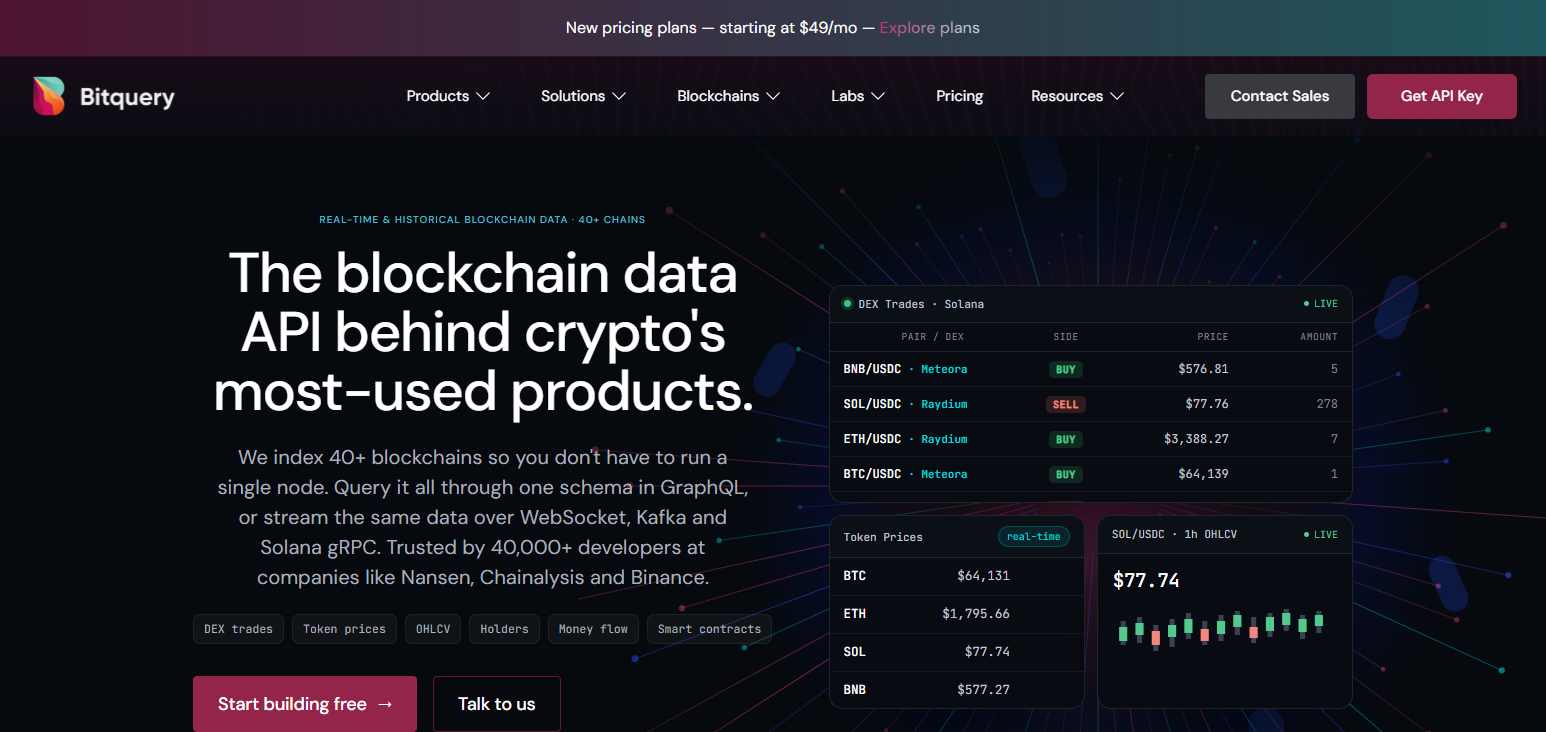
You can examine the behavior of wallets, DeFi transactions, token transfer and even the activity of DEXs and liquidity pools. For blockchain trading apps, crypto research, compliance, and even trading intelligence, Bitquery is a valuable tool.
Bitquery API Features
- Supports advanced blockchain analytics with flexible GraphQL queries and data filtering similar to SQL.
- Accurately depicts token transfer queries, decentralized exchange queries, and liquidity pool queries.
- Enables comprehensive analysis of smart contracts across blockchains and offers tools for complex decentralized finance investigations.
- Observes the patterns of blockchain users to assist developers in examining the details of global transactional and financial activities.
- Provides subscription-based, advanced, and real-time analytics of blockchain networks and their ecosystems to facilitate market and operational readiness.
| Pros | Cons |
|---|---|
| Powerful GraphQL blockchain queries. | Query syntax requires learning. |
| Deep blockchain analytics capabilities. | Premium analytics cost more. |
| Excellent DeFi transaction monitoring. | Complex queries may affect performance. |
| Supports multiple blockchain ecosystems. | Not beginner-friendly initially. |
| Ideal for research and compliance. | Limited free-tier analytics requests. |
8. DexScreener API
DexScreener API provides the intelligence of a centralized exchange for the decentralized exchanges. It can be used to source real-time token prices and the liquidity and trading metrics of token pairs, as well as other newly launched tokens.

Developers add the DexScreener API to their DeFi apps to keep track of the on-chain trading activity of numerous decentralized exchanges. Real-time data helps traders make sound trading decisions in a decentralized environment.
DexScreener API Features
- Offers users access to real-time data on decentralized exchanges as well as constantly refreshed market data on various blockchains.
- Provides real-time data on market activity, token pairs, volume, and liquidity, as well as exchange trading activity.
- Highlights investment opportunities in the emerging decentralized finance market by tracking trends in newly launched tokens.
| Pros | Cons |
|---|---|
| Real-time decentralized exchange prices. | Focuses mainly on DEX markets. |
| Tracks liquidity and trading volume. | Limited portfolio management features. |
| Supports multiple blockchain ecosystems. | No blockchain infrastructure services. |
| Excellent for trading dashboards. | Advanced analytics are limited. |
| Easy integration with DeFi platforms. | Historical datasets are less comprehensive. |
9. DeBank API
DeBank API provides tracking of decentralized finance (DeFi) wallet activities and allows vantage of lending, liquidity, and other pool and stake positions. DeBank also provides tracking for other interactions in DeFi wallets, such as liquidity.
DeBank focuses on multiple blockchains and automatically assesses portfolio performance and DeFi exposure. Apps that use DeBank provide comprehensive views of user activities within DeFi.
DeBank API Features
- Accurately tracks user expenses by integrating APIs from various blockchains to track DeFi activities.
- Integrates data to track DeFi user positions in lending, liquidity pools, and staking.
- Provides accurate calculations of portfolio performance based on real-time flows of DeFi and cryptocurrency pricing.
- Provides comprehensive views of user investments by tracking all DeFi wallet assets.
- Facilitates easy monitoring of decentralized finance activities by integrating reliable cross-blockchain data services.
| Pros | Cons |
|---|---|
| Comprehensive DeFi portfolio tracking. | API access restrictions may apply. |
| Supports multiple blockchain networks. | Limited non-DeFi market analytics. |
| Tracks staking and lending positions. | Some enterprise features are premium. |
| Accurate wallet exposure calculations. | Documentation is less extensive. |
| Great for investment dashboards. | API availability varies by endpoint. |
10. Zerion API
The Zerion API offers DeFi investors fully integrated portfolio tracking. Using Zerion API, developers can manage wallet balance, token holdings, DeFi investments, and even NFTs. Zerion also makes tracking user transactions easier.
Zerion API supports different blockchain ecosystems, and provides the latest market data and asset valuations.
Developers can use this API to provide their customers with user-friendly and easy-to-interpret performance tracking solutions. These solutions can be integrated to service overall wealth management and investment tracking systems.
Zerion API Features
- Monitors cryptocurrencies and tracks wallet balances with DeFi investment coverage.
- Tracks tokens and NFTs with a history of transactions and real-time performance across all blockchains.
- Supports instant valuation of DeFi assets to assist optimal investment decisions and post-trade activities.
- Makes it easy for developers to create user-friendly cryptocurrency dashboard portfolios that include extensive blockchain analytics.
- Provides solutions for managing portfolios and tracking investments that seamlessly integrate multiple blockchain ecosystems.
| Pros | Cons |
|---|---|
| Complete crypto portfolio management. | Premium features require subscription. |
| Supports NFTs and DeFi assets. | Free usage limits exist. |
| Real-time asset valuation updates. | Focused mainly on portfolio tracking. |
| Multi-chain wallet integration support. | Limited advanced blockchain analytics. |
| Easy-to-build investment dashboards. | Enterprise integrations may require customization. |
How To Choose the Best Crypto API
Supported Blockchains You should consider APIs that support multiple networks, like Ethereum, Solana, Polygon, BNB Chain, and Arbitrum.
Data Accuracy Real-time updates are crucial to accuracy. Make sure the API data is dependable and updated regularly for effective DeFi metrics and yield calculations.
API Speed & Reliability To ensure that your application runs smoothly, choose an API that is low latency, high uptime, and fast.
Pricing Evaluate the free and paid options and compare your project’s budget and price limits against the requests limits and features.
Security Features APIs should have authenticated, encrypted, and secured connections, API keys, rate limits, and enterprise-grade protections.
Conclsuion
In conclusion, when selecting the Best Crypto APIs for DeFi Applications and Yield Tracking, you need to consider the needs of your project, the blockchain you are targeting, and the scalability and budget you have.
Moralis, CoinGecko, DefiLlama, Covalent, Alchemy and QuickNode are some of the APIs available today, that give modern DeFi Solutions good data and infrastructure.
With the appropriate API, developers can build secure and rich applications containing yield tracking, portfolio monitoring and real-time data from the blockchain.
FAQ
Which is the best crypto API for DeFi development?
Moralis, Alchemy, QuickNode, and Covalent are among the best choices because they provide reliable blockchain infrastructure and comprehensive DeFi data.
Which API is best for tracking DeFi yields?
DefiLlama API is one of the best options for tracking Total Value Locked (TVL), staking rewards, lending rates, and yield farming opportunities.
Can these APIs support multiple blockchains?
Yes. Most leading crypto APIs support multiple blockchain networks, including Ethereum, BNB Chain, Polygon, Arbitrum, Avalanche, Solana, and others.
Are free plans available for crypto APIs?
Yes. Many providers such as CoinGecko, Moralis, DefiLlama, and Alchemy offer free plans with limited API requests for developers.