In this article, I will review the top e-commerce payment gateways created to aid businesses in facilitating safe and convenient payment methods for international transactions. We will look at their important features
How accessible they are globally, which currencies they process, transaction volumes, safety measures, and the advantages of a business to deterrence e-commerce companies from selecting appropriate international payment gateways for them to grow their business globally.
Key Points & Best E-commerce Payment Gateways for Seamless Global Transactions
| Payment Provider | Explanation |
|---|---|
| Stripe | Flexible developer tools, 135+ currencies, custom checkouts, global cards. |
| Adyen | Enterprise scale, 150+ currencies, massive volumes, advanced fraud protection. |
| Checkout.com | API-first platform offering smart routing and 150+ currencies globally. |
| Airwallex | Cross-border payments, 20+ settlement currencies, 160+ local payment methods. |
| PayPal | Trusted consumer payments, 400+ million users, 100+ currencies worldwide. |
| 2Checkout (Verifone) | Global digital sales, recurring billing, localized compliance across multiple territories. |
| Braintree | Supports marketplaces and subscriptions with multi-currency PayPal-backed payment processing. |
| Amazon Pay | Fast checkout using stored Amazon credentials and trusted shipping profiles. |
| Authorize.Net | Reliable payments, Visa-backed fraud protection, digital wallets, established businesses. |
| Square | Combines online payments with in-person point-of-sale retail transactions seamlessly. |
| Helcim | Transparent interchange-plus pricing helps growing merchants reduce processing fees. |
| Shopify Payments | Native Shopify integration provides automated multi-currency features for online stores. |
12 Best E-commerce Payment Gateways for Seamless Global Transactions
1. Stripe
Stripe is a payment platform for building e-commerce solutions like SaaS or marketplaces. Stripe was founded in 2010 and launched their first payment service in 2011. The Collison brothers, Patrick and John, who founded Stripe, are from Ireland.
Stripe’s developer focused approach builds payment systems using simple application programming interfaces (APIs).

Stripe continues to offer a wide variety of payment related infrastructure including payment systems, billing and subscriptions, fraud prevention, integration for tax automation, API based identity systems, payment links, systems for marketplace payments, and even embedded financial infrastructure.
Stripe claims to have grown rapidly and entered other markets outside of the U.S. and Canada. Stripe supports over 135 currencies when they do business across borders.
Availability: Stripe payment infrastructure is available in many markets across North America, Europe, Asia-Pacific, and other markets, as long as merchants qualify.
Background: Stripe was founded to provide a simpler way to integrate payment systems for developers with easy-to-use APIs.
Stripe Features
- APIs for Developers – Highly flexible payment APIs allow developers to build payment processes for their clients the way they choose.
- Global Payments – Payment across several currencies and international payment methods by card.
- Custom Checkout – Payment options via payment links, checkout pages, or embedded payment widgets.
- Subscriptions & Security – Security during payment via Authentication, prevention of fraud, wallets, and recurring payment via billing.
2. Adyen
Incorporated in 2006, Adyen is a payment technology firm based in Amsterdam. Adyen was created to provide payment infrastructure to large enterprises as a unified solution. Adyen was founded by van der Does and Schuijff.
Each of the major regions of the world has its own unique payment systems. Rather than creating a unique payment system for each region, van der Does and Schuijff opted to create an integrated payment system for each of the major regions of the world.

More specifically, their payment system integrated online payments, point-of-sale payments, payment processing, risk management, and other payment-related services.
Their integrated payment system enables them to operate payment processing and merchant services in many of the major business regions of the world, including Europe, Singapore, Hong Kong, Australia, and New Zealand.
Adyen Features
- Global Scale – Designed to speed up payment processing for large volumes of international transactions.
- Multi-Currency – Payment methods for 150+ international currencies.
- Fraud Prevention – Advanced machine learning technology to spot high risk payment transactions.
- Omnichannel Payments – Integrates payment options across online, mobile, and physical checkout options.
3. Checkout.com
Checkout.com provides payment processing, acquiring, fraud management, routing, and other financial services, primarily targeting the enterprise market. The company was founded in 2009, when Guillaume Pousaz launched Opus Payments in Singapore to process payments for merchants in Hong Kong.
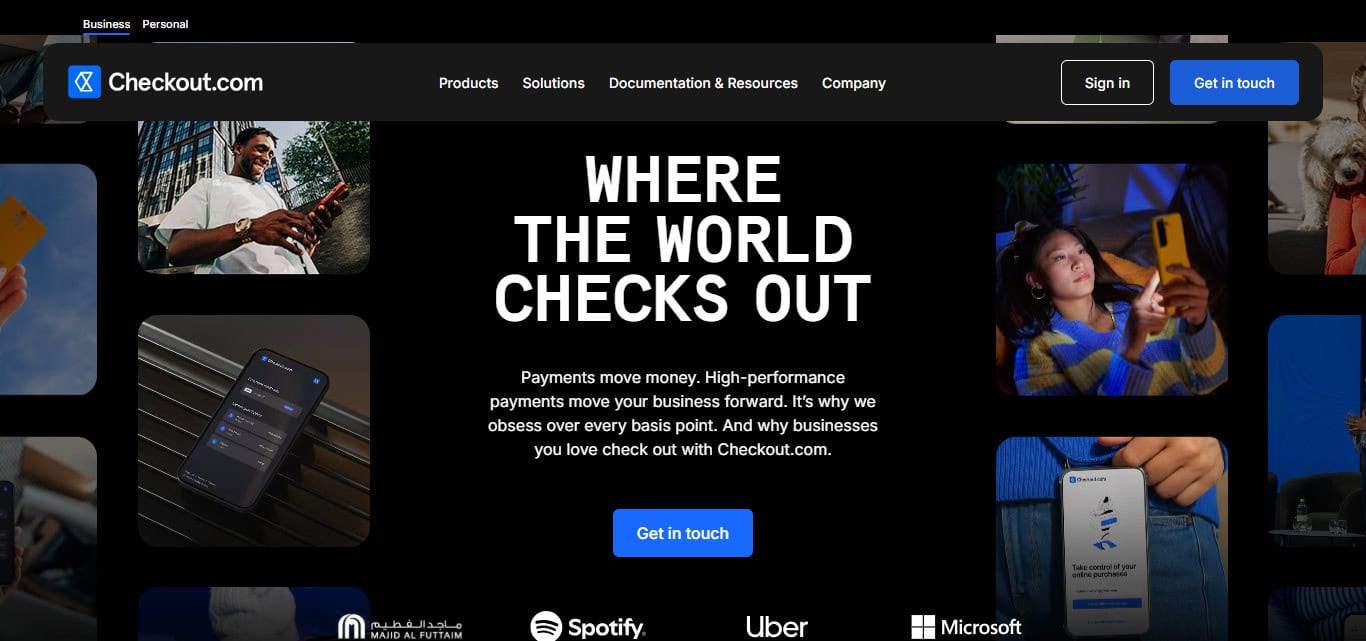
Later, in 2012, the company was moved to London and rebranded to Checkout.com. As a principal member of Visa and Mastercard, Checkout.com rapidly expanded its payment infrastructure, and by 2013, Checkout.com was a principal member of both networks. Launched: 2009 as Opus Payments; rebranded Checkout.com 2012.
Where available: Global, subject to payment availability which depends on the country, product, licensing, and regulations of the merchant. Background: Singaporean payment infrastructure provider that operates out of London.
Checkout.com Features
- API-First – Built with flexible APIs to integrate payment options across websites and applications.
- Smart Routing – Improves payment times and authorization success rates.
- Global Currency – Payment for international markets and currencies.
- Fraud & Optimization – Payment analytics, fraud prevention, and payment transaction optimization.
4. Airwallex
Airwallex specializes in multiple areas of financial technology, including cross-border payments, foreign exchange, international business accounts, multi-currency business cards, and international eCommerce payment acceptance.
Co-founders Jack Zhang and others started Airwallex out of their difficulties processing cross border payments with their coffee shop and sourcing products internationally.

This convinces them that there was a greater market for faster and more efficient cross border payments for businesses. Founded in 2015 in Melbourne, Australia. 200+ countries for transfers, with product availability differing by market.
Background: Made to eliminate the challenges presented by cross border banking and foreign-exchange for businesses that operate internationally.
Airwallex Features
- Cross-border Payments – Made to simplify payment transactions across international business.
- Multi-currency Accounts – Currency accounts to hold and manage multiple international currencies.
- Local Payment Methods – Payment options for 160+ international payment methods.
- Foreign Exchange – Built to speed up payments and integration for currency exchange transactions.
5. PayPal
PayPal is one of the most popular and important electronic payment instruments for online shopping. PayPal was founded in 1998 in Silicon Valley. Initially PayPal was one of the early digital payment companies and has developed into a globally well known online wallet.
With PayPal, a customer is able to shop online without revealing their banking or credit card details to every single seller.
PayPal has added so many innovative payment services over the years including offering a payment gateway to merchants, PayPal Checkout, PayPal Subscriptions, in addition to their international payment transfers and business accounts.
Founded in 1998. 200+ countries and regions, with country specific features and constraints. Background: Developed from Silicon Valley digital-payment businesses into a globally recognized digital wallet and merchant-payment ecosystem.
PayPal Features
- Trust & Recognition – A trusted payment option for consumers around the world.
- International Transactions – Payment transactions used by international consumers in several regions and currencies.
- Digital Wallet: Optimizes checkout with available PayPal payment methods.
- Buyer Protection: Eligible customers are given purchase protections and the ability to dispute a transaction.
6. 2Checkout (Verifone)
Verifone acquired 2Checkout, a global digital commerce and payment platform aimed at companies that sell software, digital products, subscriptions and other offerings internationally, in 2020. Since 2006, 2Checkout has developed its digital commerce solution to allow businesses to take payments and sell internationally.
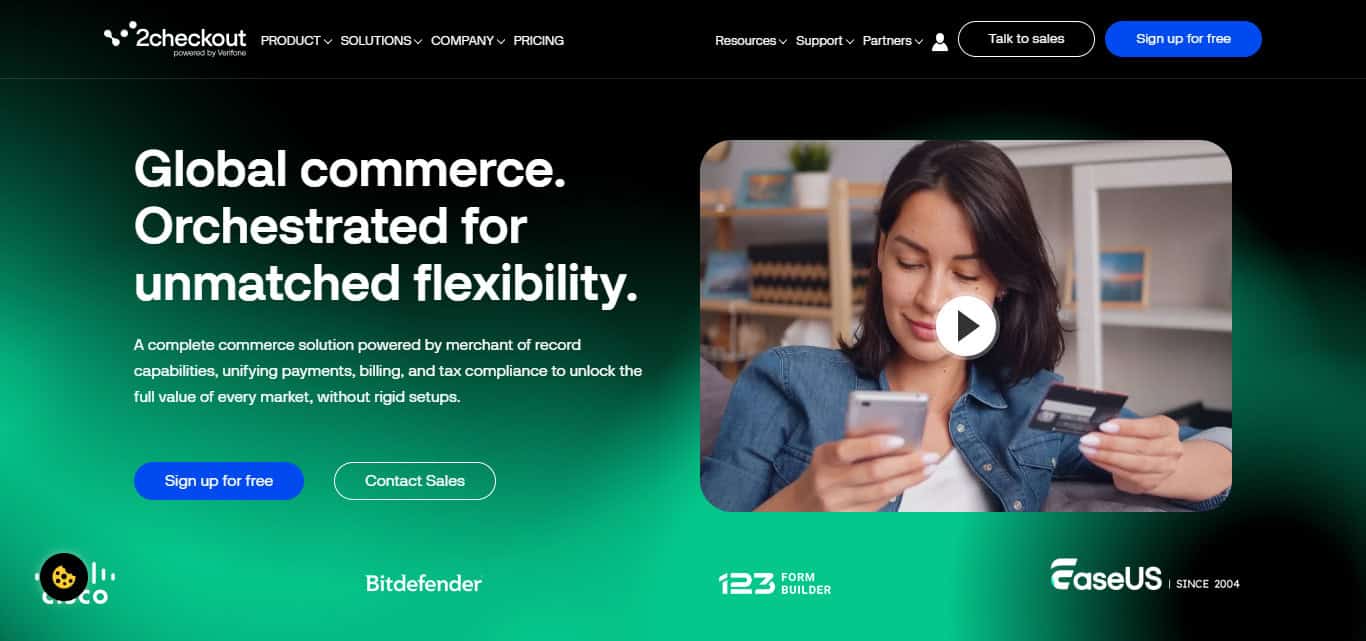
It has since transcended basic payment processing to focus on subscription billing, digital commerce, tax, compliance and risk management, and customer lifecycle management. In 2020, Verifone acquired 2Checkout and brought the platform under the subset of its payments infrastructure. Founded in 2006; acquired by Verifone in 2020.
Where available: Designed for international digital commerce across numerous markets. Built around digital commerce, monetization, payments, subscription billing, compliance and global selling.
2Checkout (Verifone) Features
- Global Digital Commerce: Enables the digital selling of products and services across borders.
- Recurring Billing: Automates and manages recurring payments and subscription-based services.
- Localized Payments: Creates custom checkout experiences for customers across different regions.
- Compliance Support: Supports merchants in managing complex international payment, tax, and related legislation.
7. Braintree
An online payment processor, Braintree, supports online payments, mobile commerce, marketplaces, subscription-based services, and cross-currency transactions. Braintree was first established in Chicago in 2007, where it provided payment tools that the technology community appreciated.
Braintree saw exponential growth as the mobile and online commerce world boomed. In September 2013, Braintree was acquired by PayPal. Ever since then, Braintree has continued to operate as PayPal’s payment processing service under the PayPal umbrella; however, Braintree continues to focus its development efforts on the payment processing technologies offered.
Founded in 2007; acquired by PayPal in 2013. International availability depends on the merchant’s location and supported services. Braintree began as a developer-centric payment technology and has since been integrated into PayPal’s global payment service.
Braintree Features
- Marketplace Support: Payment infrastructure that supports marketplace connectors.
- Subscription Payments: Automates and supports subscription-based businesses.
- Multi-Currency Processing: Allows merchants the freedom to transact in multiple supported currencies.
- PayPal Integration: Allows businesses to accept PayPal payments along with card payments and other payment methods.
8. Amazon Pay
Amazon Pay is Amazon’s service for third-party merchants to enable customers to complete purchases using payment and delivery information associated with their Amazon accounts. Amazon introduced the service to let customers using Amazon’s marketplace checkout experience on other websites.

An advantage of the service is that customers can store their payment information and do not have to enter payment information on merchant websites.
Amazon says the service helps merchants provide a familiar checkout experience. Amazon Pay is Amazon’s merchant payment service from the early 2000s. Selected areas of North America, Europe, and Asia (countries above) offer the service.
Amazon Pay Features
- Fast Checkout: Purchase and checkout process simplified using Amazon account payment details.
- Trusted Experience: Payment experience using Amazon’s checkout methods.
- Stored Credentials: Saved payment details eliminates the need for repeated manual entry.
- Shipping Information: Checkout information using saved delivery details.
9. Authorize.Net
Authorize.Net was founded in 1996 and was one of the first payment gateways. As online shopping was still new, Authorize.Net and other companies that provided payment gateways filled an important business necessity.
As the years past, Authorize.Net continued to add features that allow businesses to create payment gateways for in-person, over-the-phone, or online payments.

This company focused on smaller businesses and continues to serve small to medium enterprises. Authorize.Net is now a subsidiary of Visa. Launched: 1996.
Where available: Primarily designed around eligible merchants in supported markets, with availability dependent on merchant account and processor arrangements. Background: One of the early internet payment gateways; now wholly owned by Visa.
Authorize.Net Features
- Reliable Processing: Reliable payment gateway infrastructure for online businesses.
- Fraud Protection: Detects and prevents fraudulent transactions with included tools.
- Digital Wallets: Supports digital wallet payment options.
- Recurring Billing: Establishes automated recurring payments for a business.
10. Square
Square offers a payment and commerce service that integrates online payments with point-of-sale technology, which serves small and large businesses across all retail, service, restaurant, and omnichannel sectors.
In 2009, Square started its payment service by launching a mobile card reader in the United States that enabled small businesses to accept payments via mobile products.

Later, Square created online stores, retail software, appointment scheduling, restaurant facilities, payment terminals, business management, and other commerce services.
Square Features
- Online Payments: Enables online transaction processing on a business’s website.
- Point-of-Sale: Sells physical POS systems for retail and services businesses.
- Omnichannel Commerce: melds in-person transactions with the online sale and operation of a business.
- Business Management: contains tools consist of management of Sales and Payments in addition to the management of Customers and Inventory.
11. Helcim
Helcim aims to simplify payment processing through the use of innovative technology while also incorporating pricing models that give merchants greater control and transparency. Nicolas Beique founded Helcim primarily in Calgary, and it has since grown from a local startup into a broader payment platform.
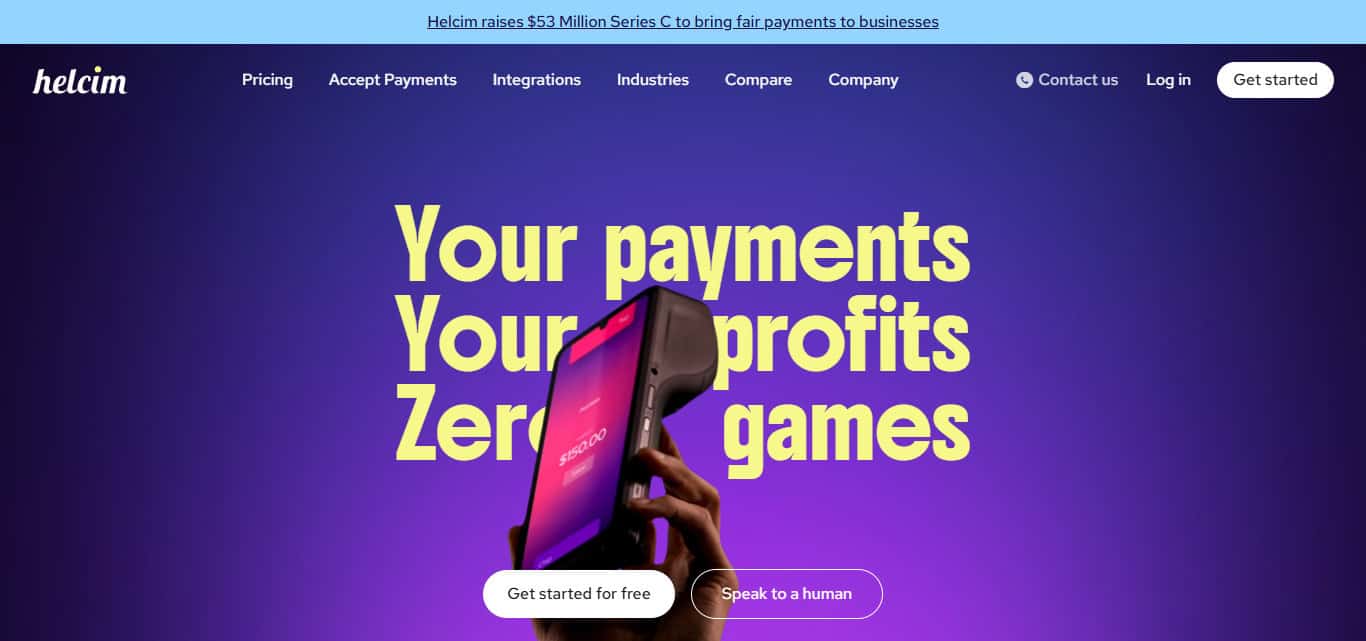
Beique recognized problems in traditional payment systems, such as unclear and complex pricing models, hidden fees, and a lack of both customer service and flexibility with contracts. Helcim’s solution includes all the necessary tools for payment processing in a single service with transparent pricing and greater control.
Founded and launched by Nicolas Beique, the company started in Calgary, Canada, and is currently focused on North American merchants with varying product availability based on location.
Helcim Features
- Transparent Pricing: uses interchange-plus pricing to simplify processing costs.
- Lower Processing Costs: is geared towards growing merchants and can assist with lowering their payment processing costs.
- Online Payments: supports online checkouts, invoices, payment links, and recurring payments.
- Merchant Tools: features tools for managing payments, customers, and sales transactions.
12. Shopify Payments
Shopify Payments is an integrated payment processing system in the Shopify e-commerce system that supports major card transactions. On August 12, 2013, Shopify merchants in the US were the first to be able to process and manage card transactions within their Shopify stores without setting up a third-party payment gateway.
Shopify Payments was built using Stripe, and payment transactions were integrated into the Shopify order and store management system on August 12, 2013, in the US.
Available: Has expanded to many countries including the US, Canada, UK, Australia, Germany, Japan, Singapore, Spain, Netherlands, Denmark, etc, where applicable. depending on the eligibility.
Shopify Payments Features
- Native Shopify Integration: is a Shopify payment-processing service that can be configured within Shopify with no need for a payment gateway.
- Multi-Currency: provides payment features needed to sell internationally.
- Simplified Management: payment and payout management and order management can be managed through Shopify.
- Shopify Checkout: provides a fast checkout experience built into Shopify checkout.
Conclusion
As global transactions are easier than ever, having a reliable e-commerce payment gateway is critical to your business. Considering things like support for international payments, competitive fees, conversion to multiple currencies, and online payment security helps narrow the field of contenders for payment gateways.
Each of these things are offered by the industry leaders, Stripe, PayPal, Adyen, and Checkout.com, among others, as their primary focuses. Making the correct pick from these payment gateways can result in decreased payment inhibition for your clientele and the progressive growth of your business internationally.
FAQ
What is the best e-commerce payment gateway?
Stripe, PayPal, Adyen, and Checkout.com are popular global options.
What should businesses consider?
Transaction fees, supported currencies, payment methods, and easy integration
Are payment gateways secure?
Yes, reputable gateways use encryption and fraud protection.
Can gateways accept international payments?
Most leading gateways support multiple currencies and countries, enabling seamless cross-border transactions.