This article will introduce the best expanding forex brokers in Latin America and the platforms gaining positive recognition throughout the region. Brokers operating in Latin American countries such as Brazil, Mexico
Chile, and Colombia, are providing low spreads, more advanced trading tools, and support and education for the traders. These brokers are gaining popularity and a lot of traders are drawn to them. I will now introduce the best forex brokers expanding across Latin America.
Why Latin America Is Becoming a Forex Trading Hotspot
- Better internet and smartphone access – With more access to the internet, people are able to take advantage of the availability of forex trading.
- Better understanding of finances and investments– More people are educated enough to understand the world of investing, and, as a result, the search for global financial opportunities.
- Need for more investing alternatives– Investors are looking for more investment options than their savings and the stock market.
- Development of digital payments and fintech – Modern payment options are making it easier and more efficient to deposit into and withdraw from trading accounts.
- The youth of the nation are more interested in trading– Now, younger investors are more interested in mobile investing than tradititonal investment options.
Key Points & Best Forex Brokers Expanding in Latin America
| Forex Broker | Explanation |
|---|---|
| XM | Expanding across Latin America with localized services and competitive trading conditions. |
| Exness | Growing rapidly through low spreads, multilingual support, and regional partnerships. |
| AvaTrade | Entering Latin markets by offering educational resources and diverse asset classes. |
| FP Markets | Expands regionally through advanced platforms and competitive commission-free trading solutions. |
| Pepperstone | Building Latin American presence with fast execution and institutional-grade liquidity access. |
| IC Markets | Attracting traders through tight spreads and support for algorithmic trading strategies. |
| FBS | Strengthening regional footprint through promotions, bonuses, and localized customer assistance programs. |
| HFM | Expanding via educational webinars and broad trading products for Latin investors. |
| Tickmill | Increasing market share with transparent pricing and reliable trading infrastructure services. |
| XTB | Expanding aggressively by offering user-friendly platforms and extensive investor education materials. |
10 Best Forex Brokers Expanding in Latin America
1. XM
XM is a broker that understands the need for providing multilingual support for their services in Latin America, and creates region-specific educational content and Payment Methods. Because of their low Minimum Deposit Requirements and access to Mexico’s, Colombia’s, and Peru’s Forex,
Commodities and Stock CFD markets through the popular MetaTrader platforms, XM has distributed itself rapidly in Latin America. XM is also focused heavily on trader education by analyzing the Market through webinars in Spanish and Portuguese.
Flexible account options and strong customer service, provides XM the edge to be an attractive international broker, as the Latin American trading market is focused on beginner and experienced trader
XM Pros & Cons
| Pros | Cons |
|---|---|
| Low minimum deposit suitable for beginners | Limited availability of certain advanced trading tools |
| Strong educational resources in Spanish and Portuguese | Inactivity fees may apply on dormant accounts |
| Supports MetaTrader 4 and MetaTrader 5 platforms | Fewer stock CFDs than some competitors |
| Multiple account types for different traders | No proprietary trading platform |
| Localized payment methods in Latin America | Customer support availability varies by region |
2. Exness
Another broker that has rapidly emerged in Latin America for their ultra-low spreads, instant withdrawals, and trading infrastructure, is Exness. Exness has provided Spanish and Portuguese customer support.

This means traders in Brazil and all of Latin America can access the Global Financial Markets with greater ease.
Exness also appeals to the trading community actively by providing multiple account types and high liquidity. Their mobile trading infrastructure has provided a professional trading environment that has garnered market interest in the region.
Exness Pros & Cons
| Pros | Cons |
|---|---|
| Ultra-low spreads and competitive trading costs | Product selection varies by jurisdiction |
| Instant deposit and withdrawal processing | Educational content is less extensive than competitors |
| Excellent support for scalping and day trading | High leverage can increase trading risks |
| Multiple account options for professionals | Some advanced tools require experience |
| Strong multilingual customer service | Limited investor protection in certain regions |
3. AvaTrade
In Latin America, AvaTrade’s attractive offering of educational resources and trading instruments blossomed into a viable marketplace.
AvaTrade has easy access to trade Forex, Crypto, Stocks, Commodities, and ETFs, and has multiple Platforms to choose from to either trade MetaTrader or their own Trading Platform.
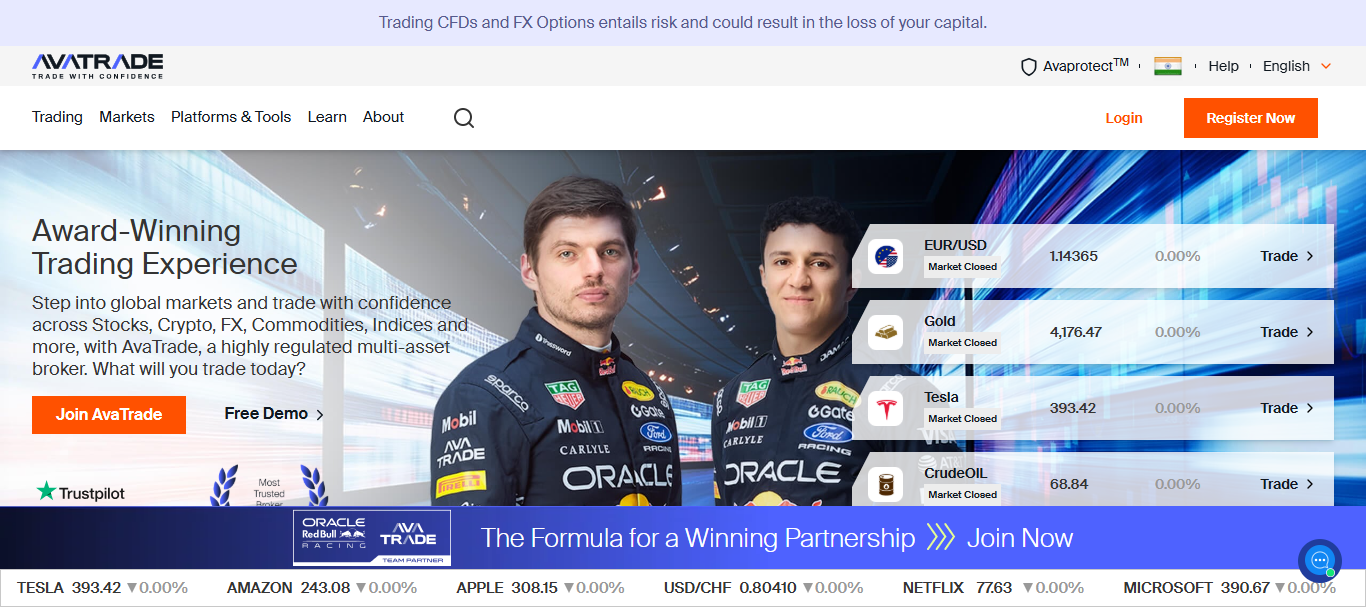
AvaTrade devotes resources to educating entry-level investors and provides these resources in regional languages. It ensures that beginner investors have easy access to learning webinars.
Strong safety and regulatory standards take precedence in Latin American countries. AvaTrade addresses these needs and provides risk management tools.
AvaTrade Pros & Cons
| Pros | Cons |
|---|---|
| Highly regulated global broker | Inactivity fees after prolonged account dormancy |
| Extensive educational materials and webinars | Spreads can be higher than ECN brokers |
| Offers forex, stocks, ETFs, and cryptocurrencies | Limited customization on proprietary platform |
| Strong risk management tools available | Fewer account types compared with competitors |
| Beginner-friendly trading environment | Professional traders may seek lower commissions |
4. FP Markets
Latin American region has the benefits of superior technology to access markets offered by FP Markets. FP Markets has introduced cTrader and MetaTrader to their lists as trading platforms for professional traders.
FP Markets is currently providing great trading technology and services to Latin American markets using deep pools of cTrader and MetaTrader.
FP Markets Pros & Cons
| Pros | Cons |
|---|---|
| Tight spreads and competitive commissions | Educational resources are still developing |
| Supports MetaTrader and cTrader platforms | Limited proprietary trading tools |
| Suitable for algorithmic and automated trading | Customer support not available 24/7 everywhere |
| Deep liquidity and fast execution speeds | Fewer regional offices in Latin America |
| Wide selection of trading instruments | Research tools could be more comprehensive |
5. Pepperstone
Easier access to institutional level liquidity and fast trade execution makes Pepperstone a popular choice among Latin American traders. Algorithmic traders and those using advanced trading strategies are some groups of traders
Who are benefitting greatly from lower latency with Pepperstone. The use of MetaTrader, cTrader, TradingView and other integrated professional trading platforms all add to advanced analytical tools.
Pepperstone Pros & Cons
| Pros | Cons |
|---|---|
| Excellent execution speed and low latency | Does not offer proprietary trading platform |
| Supports TradingView, MT4, MT5, and cTrader | Product range smaller than multi-asset brokers |
| Competitive spreads for active traders | Limited educational content for beginners |
| Strong reputation among professional traders | Some features depend on account jurisdiction |
| Ideal for scalping and algorithmic trading | No fixed-spread account options |
6. IC Markets
IC Markets is also looking at Latin American markets with an innovative trading environment designed for high-frequency and algorithmic trading that offers some of the narrowest spreads in the industry.
To increase order execution speed and provide better pricing, the broker gives users direct access to deep liquidity. Support for Expert Advisors and automated trading systems may be the reason experienced traders from Brazil, Chile, and Mexico, have all flocked to the broker.

Additionally, IC Markets focuses on improving the quality and quantity of their educational materials and customer service in response to the requirements of each region.
Brokers who look for trading conditions of an institutional quality, prefer IC Markets because IC Markets favors technology and is committed to transparency.
IC Markets Pros & Cons
| Pros | Cons |
|---|---|
| Industry-leading low spreads | Beginner educational content is limited |
| Excellent for Expert Advisors and automation | No proprietary trading platform |
| Deep institutional liquidity access | Customer service can be slower during peak periods |
| Fast execution with minimal slippage | High leverage may increase risk exposure |
| Supports multiple professional platforms | Fewer research reports than larger brokers |
7. FBS
FBS has been expanding throughout Latin America by providing localized customer service, as well as limited time offers which provide lower entry costs. Traders are provided with a lot of tools from FBS.
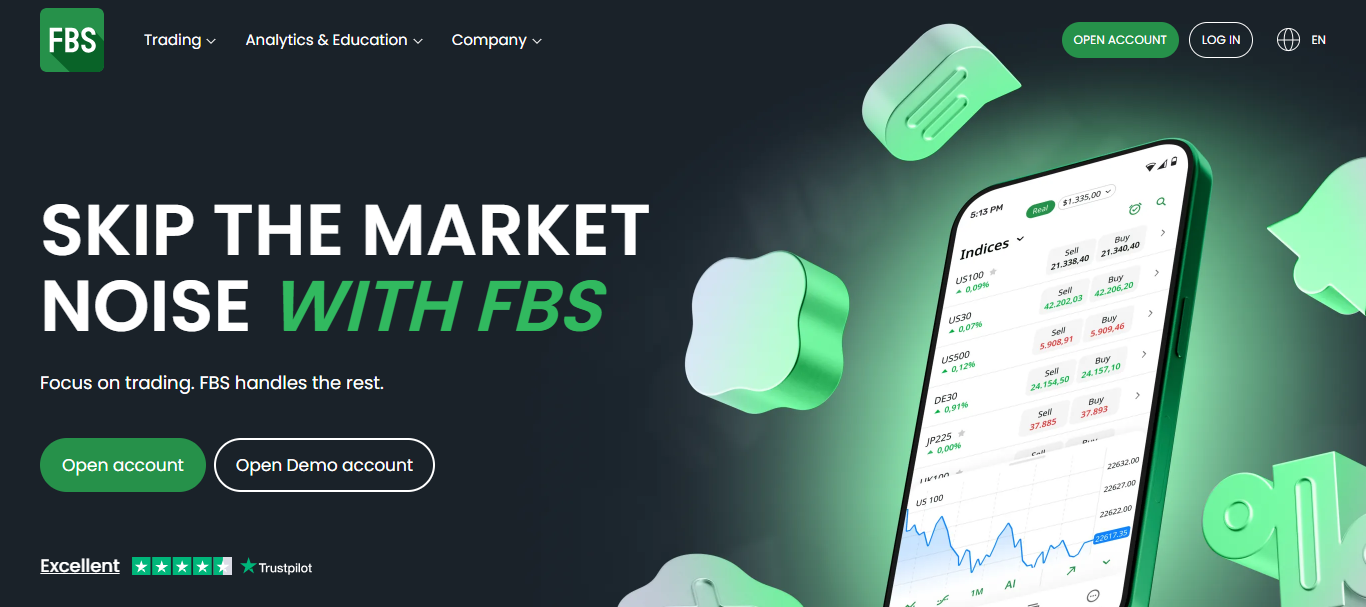
For example, they recently added a trading community and completed a mobile app. Various mobile payment methods available in Latin America are integrated, allowing for easy deposit and withdrawals. Altogether, this creates a very appealing user experience, which has allowed FBS to gain a large customer base in the region.
FBS Pros & Cons
| Pros | Cons |
|---|---|
| Very low entry requirements for beginners | Trading conditions vary between jurisdictions |
| Attractive promotions and bonus campaigns | Limited advanced research tools |
| Easy-to-use mobile trading applications | Some account types have wider spreads |
| Supports multiple payment methods | Product range smaller than major competitors |
| Strong localized customer assistance | Fewer professional trading features |
8. HFM (HotForex)
HFM, previously HotForex, is using localized customer service and an excellent variety of trading tools, to draw in customers. HFM focuses on customer education and has frequent online webinars and trading courses in many different languages.
They also to have good trading tools which offer the ability to trade many different products. HFM’s flexible account structures have gained them a large customer base throughout Latin America.
Its combination of educational offerings and access to the wider market strengthens its competitive position in Latin America.
HFM (HotForex) Pros & Cons
| Pros | Cons |
|---|---|
| Comprehensive educational resources and webinars | Spreads on some accounts can be higher |
| Broad selection of trading products | Commission structures differ across account types |
| Flexible account options for all traders | Platform customization remains limited |
| Strong multilingual customer support | Fewer social trading features than competitors |
| Well-established reputation in emerging markets | Advanced traders may prefer ECN alternatives |
9. Tickmill
Tickmill is capitalizing on its share of the Latin American market by using a clear pricing model and trading technology. Brokers can use low trading costs, fast execution of trades, and good support to automated trading, making the model favorable to advanced traders.
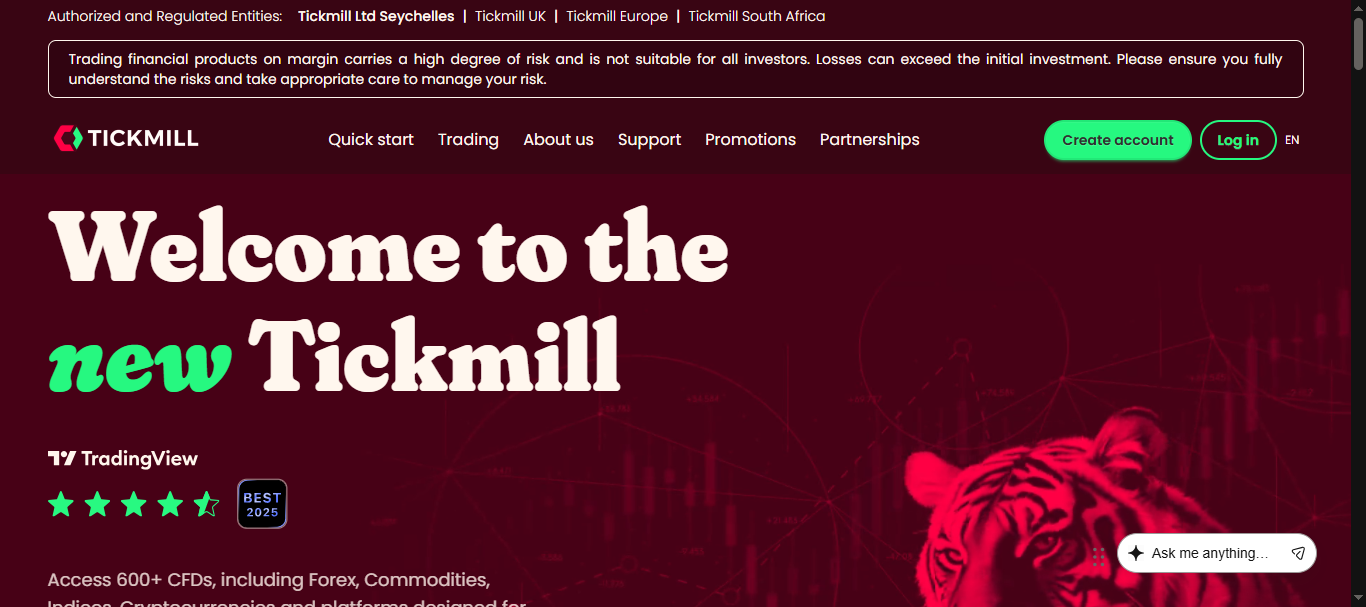
Tickmill has also created educational materials and actively engages with the Spanish-speaking community to develop its reputation in those markets.
Tickmill’s investment to keep their trading spreads competitive and their customer service reliable has built their reputation for traders looking for advanced conditions to carry out their trades. Tickmill continues to extend its presence in Latin America.
Tickmill Pros & Cons
| Pros | Cons |
|---|---|
| Extremely competitive trading costs | Limited number of tradable instruments |
| Reliable execution and transparent pricing | Educational resources are relatively basic |
| Excellent for automated trading strategies | Fewer proprietary analytical tools |
| Strong regulatory framework | Smaller global brand recognition |
| Low commissions on professional accounts | Limited social trading capabilities |
10. XTB
XTB is rapidly increasing its presence in Latin America by integrating easy to use trading platforms with extensive trading education. XTB’s proprietary platform integrates easy to use and modern charting, real time analysis, and seamless mobile trading.
Along with a user friendly trading platform, XTB has developed extensive educational resources. This includes educational videos, webinars, and insights on the market geared to every level of trader.
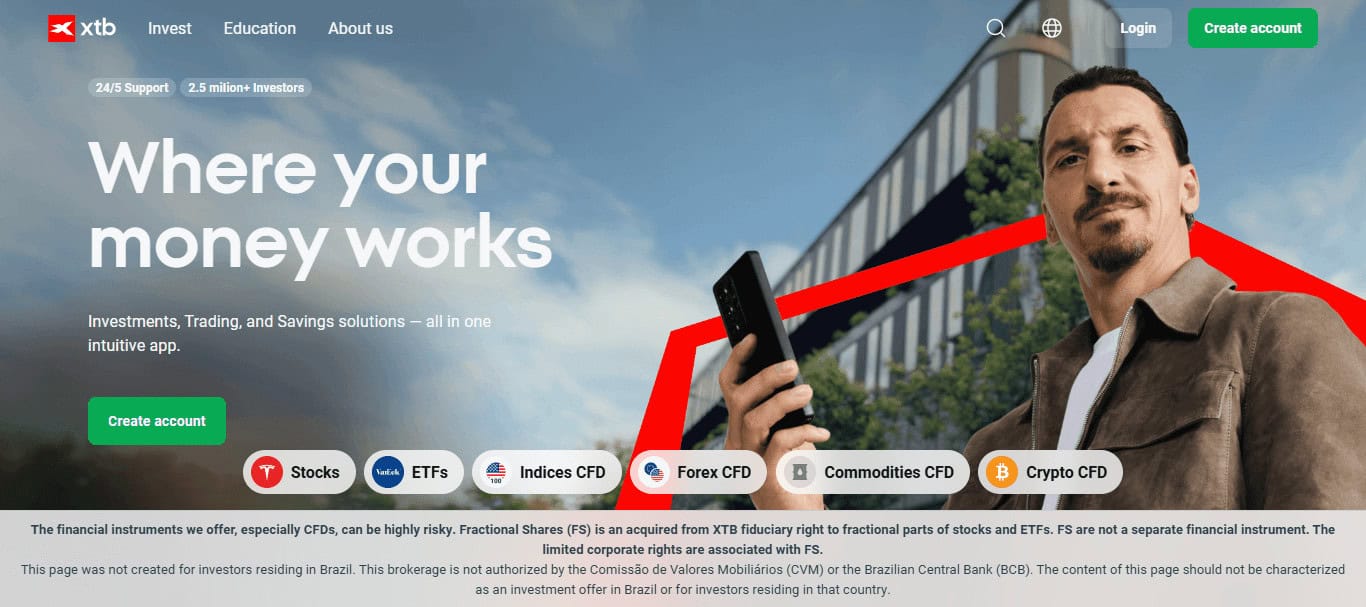
The combination of trading technology and a strong focus on education has allowed XTB to have an established user base in the emergent Latin American markets. As online trading becomes more common in Latin America, XTB is one of the most competitive international brokers in the region.
XTB Pros & Cons
| Pros | Cons |
|---|---|
| User-friendly proprietary trading platform | No support for MetaTrader platforms |
| Extensive educational content and webinars | Limited availability in certain countries |
| Excellent market research and analysis tools | Some products carry higher spreads |
| Strong mobile trading experience | Fewer account types than competitors |
| Broad range of tradable instruments | Advanced algorithmic trading support is limited |
When Considering forex brokers in Latin America, weigh the following:
- Regulation and Investor Protection – Select brokers who are regulated, and who are active in the practice of ensuring safety, and fund protection.
- Trading Costs and Spreads – Choosing brokers that charge lower commissions and offer lower spreads can maximize overall profitability.
- Deposit/Withdrawal methods – The availability of convenient payment methods means that funding the account and making withdrawals will happen with little delays.
- Availability of Local Language Support – Having support in your native language will make communication clearer, and improve your trading experience.
- Trading Platforms and Mobile Apps – Better trading platforms are those with better analytical tools, and those that provide seamless mobile trading access.
- Educational Resources and Market Research – Superior quality education and research help traders with informed decisions with respect to their investments.
- Customer Support and Account Types – Satisfaction of customer support needs and a diverse range of account types will cater to trading needs successfully.
Cocnsluion
In summary, Latin America is becoming an example to the world of how successful international online trading has become. Global brokers, such as XM, Exness, Pepperstone, and XTB offer local services and competitive, cutting edge trading platforms.
Latin America has attracted FX services to cater to both beginners and professional traders. It is highly recommended to assess the regulatory requirements, your trading style and preferred features to narrow down the list of options before putting down an account with any broker.
FAQ
Which is the best forex broker in Latin America for beginners?
XM and FBS are popular due to low deposits and educational resources.
Which broker offers the lowest spreads?
Exness, IC Markets, and Tickmill are known for extremely tight spreads.
Are these forex brokers regulated?
Yes, most are regulated by reputable international financial authorities.
Which broker is best for algorithmic trading?
Pepperstone and IC Markets are excellent for automated trading strategies.
Can Latin American traders trade cryptocurrencies?
Yes, brokers like AvaTrade, HFM, and Exness offer crypto trading.