This article covers the Best Commercial Fractional Real Estate Platforms. These allow investors to buy shares in cash flow positive real estate with reduced capital. These platforms provide access to office buildings, retail centers, apartments, and industrial facilities.
With the platforms, passive income, portfolio diversification, and professional management are available, making commercial real estate easier to invest in.
What Is Fractional Real Estate?
Fractional real estate allows investors to collectively purchase a property by purchasing shares rather than purchasing a whole property.
Thanks to various online investment platforms, retail investors have the opportunity to purchase shares of various commercial real estate including buildings, apartments, offices, retail centers, and even farmland.
These shares enable investors to receive a portion of the profits generated by rental income and capital appreciation.
Fractional real estate decreases the financial constraints of direct real estate investing while also improving the diversity of the investor’s portfolio.
Moreover, investors receive real estate that is professionally managed and, in comparison to direct real estate investing, substantially less time and effort is required from the investor.
Key Points & Best Fractional Real Estate Platforms for Investing in Commercial Property
| Fractional Real Estate Platform | Explanation |
|---|---|
| Arrived Homes | Allows investors purchasing shares in income-generating commercial and residential properties online. |
| Fundrise | Offers diversified private real estate portfolios with low minimum investment requirements. |
| RealtyMogul | Provides access to commercial properties through REITs and individual investment deals. |
| CrowdStreet | Connects accredited investors with institutional-quality commercial real estate investment opportunities nationwide. |
| EquityMultiple | Enables passive investing in professionally managed commercial real estate debt opportunities. |
| Streitwise | Focuses on income-producing commercial properties delivering consistent dividends to investors regularly. |
| DiversyFund | Reinvests profits automatically into multifamily commercial properties for long-term appreciation growth. |
| Yieldstreet | Offers alternative investments including commercial real estate with diversified asset exposure. |
| AcreTrader | Provides fractional ownership opportunities in farmland and agricultural commercial real estate investments. |
| First National Realty Partners | Gives accredited investors access to grocery-anchored commercial properties generating stable income streams. |
10 Best Fractional Real Estate Platforms for Investing in Commercial Property
1. Arrived Homes
Arrived Homes has stepped beyond residential properties. By offering new options to everyday investors, they have made real estate investing easier. Investors buy fractional parts of self-sustaining properties and do not need to deal with tenants or upkeep.
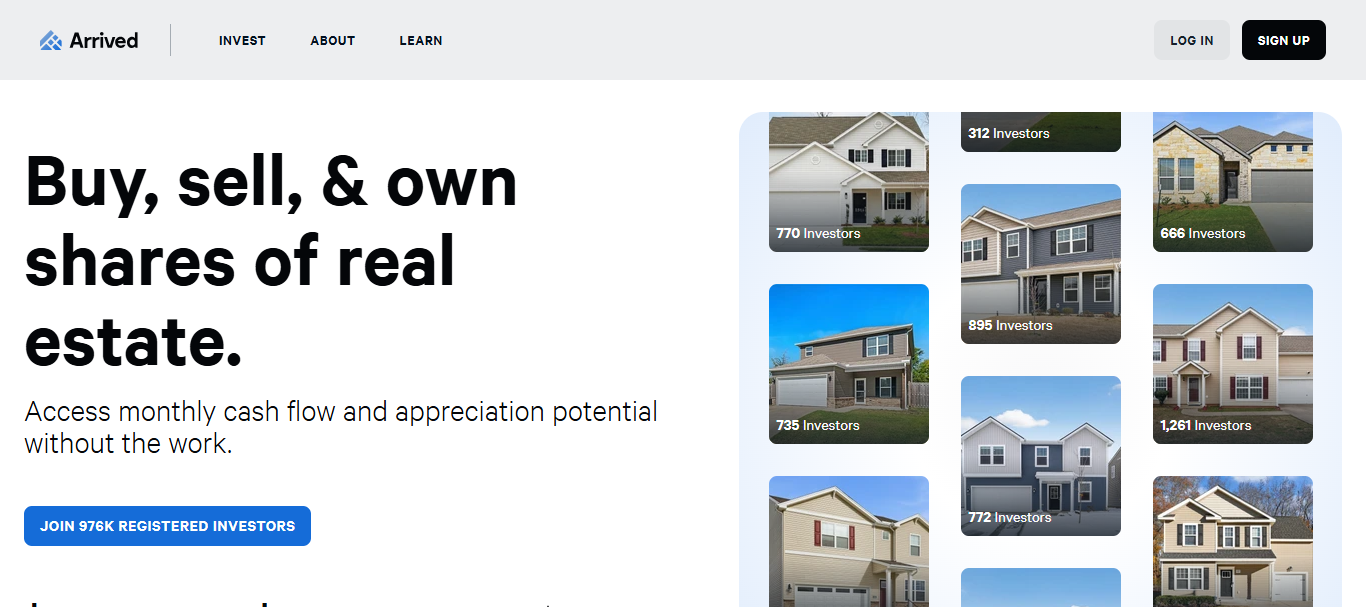
Their low investment thresholds and simplistic dashboards draw in new investors. Users can see how the properties they have invested in are performing, and may receive distributions if there is a tenant in the property. Users have the option to invest in real estate with far less capital than would be typically required.
Arrived Homes Pros & Cons
| Pros | Cons |
|---|---|
| Very low minimum investment requirements. | Limited commercial property offerings compared to competitors. |
| Beginner-friendly and easy-to-use platform. | Returns depend heavily on local property markets. |
| Passive income through rental distributions. | Property liquidity can be limited. |
| No property management responsibilities. | Investment options may sell out quickly. |
| Provides portfolio diversification opportunities. | Management fees can reduce net returns. |
2. Fundrise
Fundrise is a widely known and popular fractional real estate investing platform. They balance accessibility with professional management of user portfolios. Their users are automatically diversified in their real estate investing in apartments, infrastructure, and mixed-use real estate.
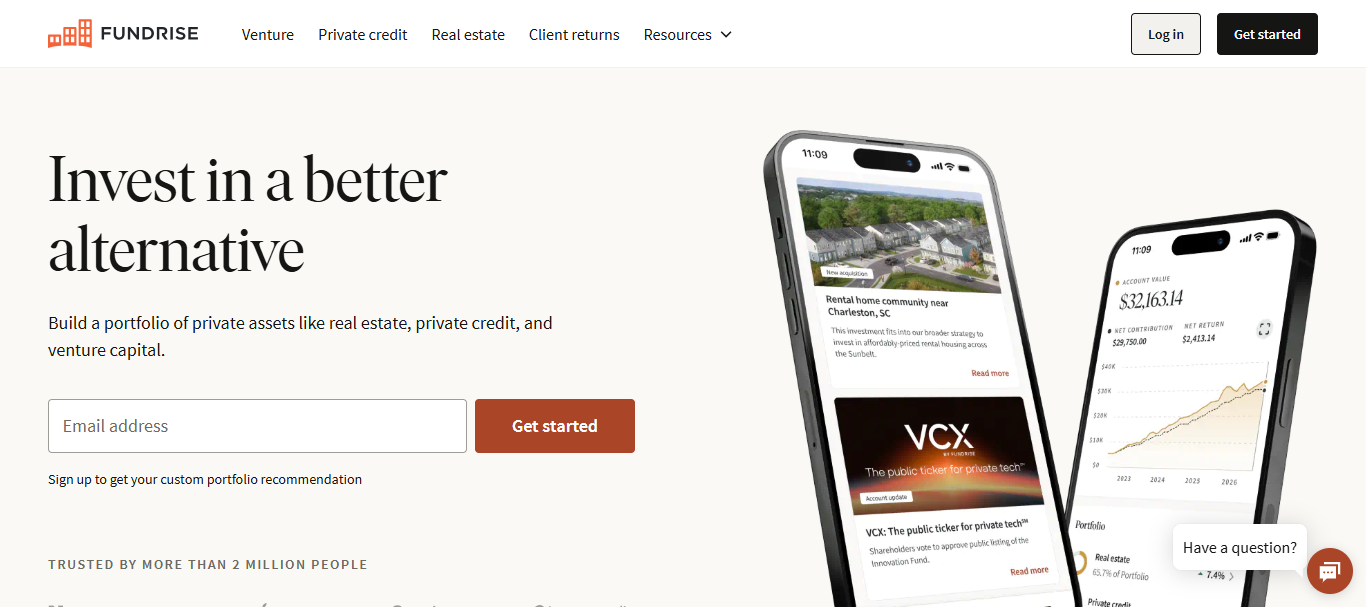
This platform is a great option for a user who is looking to be invested in real estate, specifically in commercial real estate, but does not want to go through the process of being an accredited investor.
Fundrise Pros & Cons
| Pros | Cons |
| Low investment minimum for new investors. | Limited liquidity compared to publicly traded REITs. |
| Diversified portfolio across multiple property sectors. | Investors have less control over property selection. |
| Automated portfolio management and reinvestment. | Redemption requests may involve fees. |
| Available to non-accredited investors. | Performance can vary with market cycles. |
| Strong historical track record and transparency. | Some investments require long holding periods. |
3. RealtyMogul
RealtyMogul offers access to commercial real estate via real estate investment trusts (REITs) and property offerings. The platform offers investments in office buildings, multifamily apartments, retail centers, and industrial properties that were previously only accessible to institutional investors. RealtyMogul is known for its transparent reporting and its painstaking vetting of investment opportunities.

RealtyMogul is a more inclusive commercial real estate investment platform as it offers more options to accredited and nonaccredited investors. RealtyMogul is focused on professionally managed assets, which aids investors in earning passive income and takes away some burdens of owning the properties.
RealtyMogul Pros & Cons
| Pros | Cons |
| Access to institutional-quality commercial properties. | Some offerings require accredited investor status. |
| Transparent reporting and investment updates. | Higher minimum investments for certain deals. |
| Multiple investment options through REITs. | Limited liquidity before investment maturity. |
| Professional property management teams. | Returns are not guaranteed. |
| Diversified commercial property exposure. | Market downturns can affect performance significantly. |
4. CrowdStreet
CrowdStreet is known for offering access across all 50 states to institutional commercial real estate. The platform focuses on accredited investors and offers large office, industrial, and multifamily projects.
CrowdStreet has a unique and direct advantage of offering ownership and investment opportunities that are the result of a painstaking selection process.

CrowdStreet is a marketplace for commercial real estate investment opportunities, and provides the investing public with an unprecedented amount of control and transparency to aid the construction of a commercial real estate investment portfolio of their choosing.
CrowdStreet Pros & Cons
| Pros | Cons |
| Access to exclusive commercial real estate projects. | Primarily available to accredited investors. |
| Ability to choose individual investments directly. | Higher minimum investment requirements. |
| Strong sponsor and project selection process. | Investments can be illiquid for years. |
| Detailed market research and reporting. | Requires extensive due diligence by investors. |
| Potential for higher long-term returns. | Greater risk than diversified real estate funds. |
5. EquityMultiple
EquityMultiple focuses on professionally managed commercial real estate opportunities and includes equity investments, preferred equity, and real estate debt. This platform is geared towards accredited investors that want to earn passive income and want to diversify their portfolios.

Their investment options include multifamily housing, self-storage, and industrial buildings located in developed markets. EquityMultiple includes different investment structures that correspond to the different risk and income profiles.
Their analyses of properties and sponsors allow their clients to make informed decisions and thus participate in excellent commercial real estate projects.
EquityMultiple Pros & Cons
| Pros | Cons |
| Offers equity, debt, and preferred investments. | Restricted mainly to accredited investors. |
| Professionally vetted investment opportunities. | Relatively high investment minimums. |
| Diversification across commercial property types. | Long holding periods reduce liquidity. |
| Multiple risk and return profiles. | Economic downturns may affect property values. |
| Comprehensive investment analytics and reports. | Some deals carry substantial market risk. |
6. Streitwise
Streitwise is known for investing in income-producing commercial properties and paying dividends. Their investments include office and mixed-use properties located in economically strong areas.
Many real estate investment platforms focus on rapid appreciation, but Streitwise focuses on cash flow and income generation for the long term.

Their clients benefit from professional asset management with a low barrier for entry. This creates the potential for passive income for a large number of clients that own low value fractions of the overall commercial real estate asset.
Streitwise Pros & Cons
| Pros | Cons |
| Consistent focus on dividend income. | Limited property diversification compared to competitors. |
| Low minimum investment requirements. | Heavy exposure to office real estate. |
| Available to non-accredited investors. | Slower capital appreciation potential. |
| Professional asset management team. | Liquidity options are somewhat restricted. |
| Transparent reporting and performance updates. | Dividend payments are not guaranteed. |
7. DiversyFund
DiversyFund allows investors to appreciate long term value by reinvesting profits into multifamily commercial properties. Instead of traditional dividends, the value of the properties is enhanced through DiversyFund’s renovations and improvements.
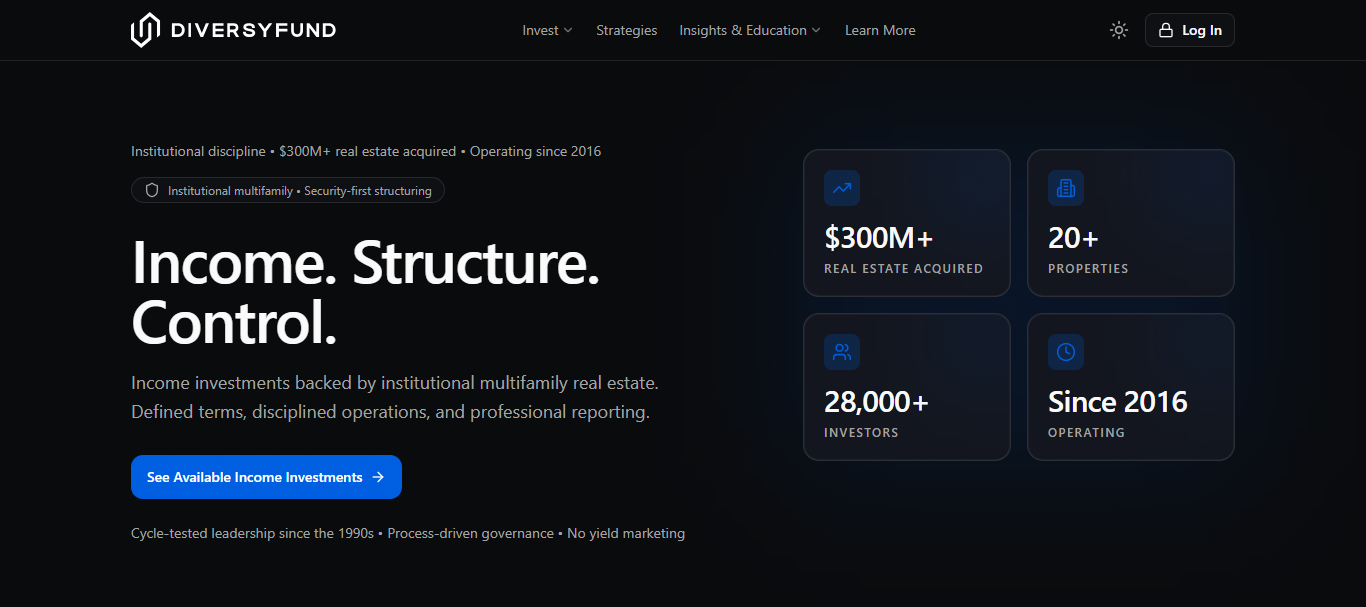
This method of investment appeals to those that are interested in the value of their wealth and not the immediate return.
This investment company simplifies the investment process by taking care of the renovations and management. Using this method, investors can build their portfolio in the commercial space without much effort.
DiversyFund Pros & Cons
| Pros | Cons |
| Automatic reinvestment supports long-term growth. | No regular dividend distributions. |
| Low investment minimums for beginners. | Investors must wait years for returns. |
| Professional management of multifamily properties. | Limited control over investment choices. |
| No management fees for investors. | Property market declines can impact gains. |
| Focuses on long-term appreciation strategies. | Limited liquidity before project completion. |
8. Yieldstreet
Yieldstreet is a platform that allows clients alternative investment options like commercial real estate and private credit. This is ideal for clients that are interested in a wider variety of options than traditional stocks and bonds.

Within commercial real estate, Yieldstreet offers debt investments and the purchasing of varying levels of risk, income-producing properties. Yieldstreet highlights, through its technology, that the investment process is easier the more complex the investments are.
Because Yieldstreet offers so many investment options that are all professionally managed, it is a popular choice for clients that would like to invest in alternative assets.
Yieldstreet Pros & Cons
| Pros | Cons |
| Access to alternative investment opportunities. | Certain investments require accreditation. |
| Diverse asset classes beyond real estate. | Some investments carry higher risks. |
| Detailed educational resources and analytics. | Fees may be higher than traditional investments. |
| Potential for attractive income opportunities. | Investments can be complex for beginners. |
| Professionally managed investment products. | Limited liquidity during investment terms. |
9. AcreTrader
AcreTrader is a unique investment option that offers partial ownership to farmland and agricultural real estate. These types of properties especially entice investors due to their stable returns and low correlation with the stock market.

Clients can buy managed farmland by purchasing equity, and they do not have to deal with the day-to-day operations.
AcreTrader is a great choice for individuals looking to invest in commercial real estate, diversify their portfolio, and invest in agricultural property, because they have done the research for every piece of farmland and provide it to the public.
AcreTrader Pros & Cons
| Pros | Cons |
| Unique exposure to farmland investments. | Investments are generally long-term commitments. |
| Lower correlation with stock market volatility. | Limited secondary market liquidity. |
| Professional farm management services included. | Returns depend on agricultural conditions. |
| Detailed property due diligence reports. | Some offerings require significant capital. |
| Potential hedge against inflation. | Fewer investment opportunities than larger platforms. |
10. First National Realty Partners
First National Realty Partners specializes in grocery-anchored commercial properties that have retail leases with national tenants. Properties of this type tend to produce consistent cash flow, because grocery stores and essential retailers have a sustained level of demand even in a recession.
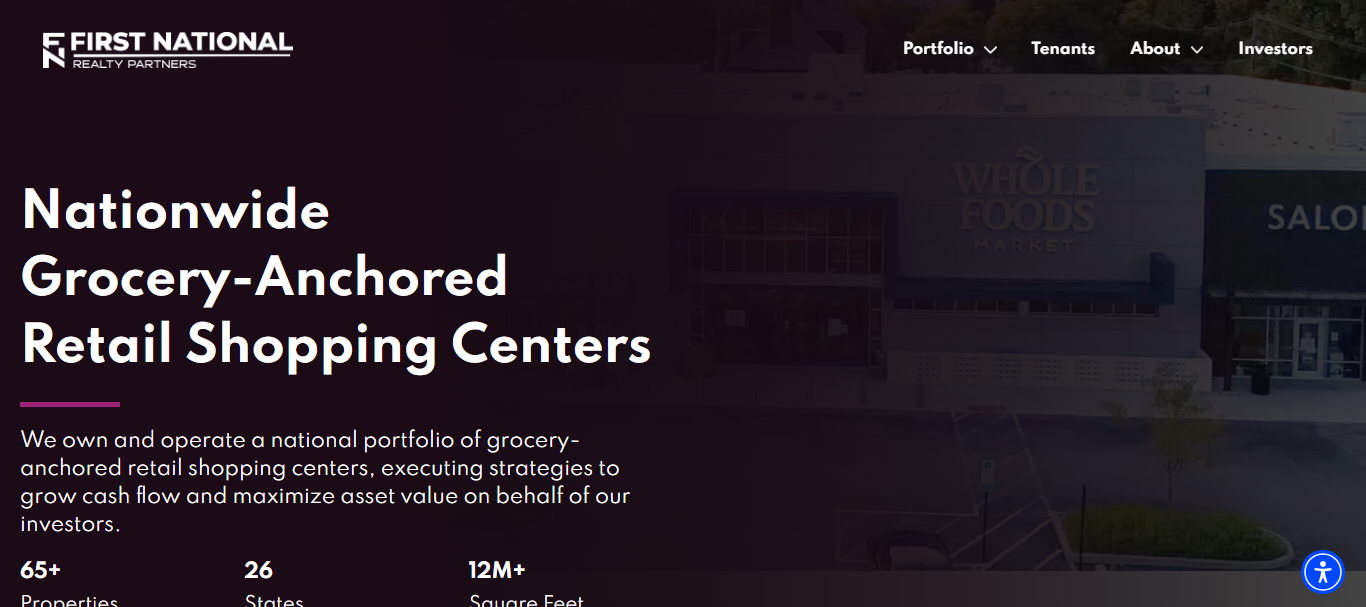
First National Realty Partners provides accredited investors the opportunity to invest in commercially institutional-grade assets that have been previously inaccessible to the individual investor.
The blend of extensive market research and analysis, tenant research, and professional management of properties gives investors seeking a stable cash flow and an investment with a long-term horizon of growth in commercial real estate with a necessity-based approach confidence in the offering of First National Realty Partners.
First National Realty Partners Pros & Cons
| Pros | Cons |
| Focus on essential retail properties. | Available mainly to accredited investors. |
| Potential for stable rental income. | Higher minimum investment requirements. |
| Professionally managed commercial assets. | Limited liquidity before asset sale. |
| Strong tenant base with national brands. | Concentration in retail sector creates risks. |
| Access to institutional-quality properties. | Returns depend on tenant performance and occupancy. |
Before Selecting a Platform, Analyze the Following Factors
- Minimum Investment Requirements: Indicates the required capital for initial investment.
- Investor Eligibility (Accredited vs Non-Accredited): Refers to the type of investors (accredited or non-accredited) who can engage in the offered investment.
- Historical Performance: Provides access to returns and data about the platform’s investment performance over time.
- Fee Structure: Outlines the fees for fund management and transactions and the impact on the overall return on the investment.
- Types of Properties Available: Refers to the availability of various property types in the investment such as office, retail, multifamily, industrial, and mixed-use.
- Liquidity Options: Refers to the facility for investors to sell their shares and redeem their funds.
- Transparency and Reporting: Describes the frequency of reports and the inclusion of financial statements and performance of the investment.
- Customer Support and User Experience: Describes the quality of the platform and the investment, the education of the investors, and customer support.
Conclusion
In conclusion, because of the best fractional real estate platforms, investing in commercial property is now more accessible than ever.
By using commercial property platforms like Fundrise, RealtyMogul, and CrowdStreet, an investor can now use a completely passive investment platform and invest as little cash as he wants.
Make sure you look at your goals and risk preferences before signing up for any of the platforms to see what your options are for cashing out as well as how much they will charge you.
FAQ
What is a fractional real estate platform?
A platform that allows multiple investors to own shares of commercial properties.
How much money do I need to start investing?
Some platforms allow investments starting from as little as $10 to $100.
Can beginners invest in fractional real estate?
Yes, many platforms are designed specifically for beginner and non-accredited investors.
Do I earn passive income from these investments?
Yes, investors can receive rental income and potential property appreciation returns.