This article will review the most useful crypto swapping desks for Lightning Network transactions and will cover how each of these tools helps swap between Bitcoin, Lightning transactions, and cryptocurrencies.
We will include key features, benefits, and drawbacks, and will cover all of the networks they connect to, ease of use, and their position in the market.
This should help readers make a decision on what swapping desk should be used for the fastest, convenient cryptocurrency transactions and where the service will be non-custodial.
Key Points & Best Lightning Network Crypto Swapping Desks
| Platform | Explanation |
|---|---|
| Boltz Exchange | Non-custodial service enabling atomic swaps across Lightning, Bitcoin, Liquid, and Arbitrum. |
| Submarine Swaps | Trustless protocol bridging Layer 1 and Layer 2, enabling on-chain Bitcoin payments. |
| LightningNetwork+ | Community liquidity desk helping routing operators balance incoming and outgoing channel capacity. |
| FixedFloat | Automated swap desk converting Lightning Bitcoin into USDT, Ethereum, Monero, and more. |
| SimpleSwap | User-friendly exchange supporting over 1,000 assets, including seamless conversions into Lightning payments. |
| ChangeNOW | Registration-free non-custodial platform offering liquid, instant Lightning Bitcoin swaps into major altcoins. |
| Exolix | Anonymous instant swap service supporting cross-chain transactions without maximum limits for users. |
| Phoenix Wallet | Self-custodial Lightning wallet automatically converts on-chain Bitcoin into balance for fees. |
| Muun Wallet | Unified wallet using submarine swaps to pay Lightning invoices from on-chain Bitcoin. |
| Aqua Wallet | Bitcoin wallet integrating Lightning and Liquid, using Boltz for seamless off-chain swaps. |
10 Best Lightning Network Crypto Swapping Desks
1. Boltz Exchange
Boltz is a privacy-centric, non-custodial exchange with atomic swaps between Bitcoin’s Lightning Network and on-chain assets.
Backstory: Boltz commenced operations by providing submarine swap services to help Lightning Network users move their assets across the on-chain and off-chain paths of Bitcoin, without losing
Custody. Introduced: in 2019, the first public release of Boltz was announced, followed by the development of an exchange and the addition of additional assets.
Boltz subsequently offered swaps for Liquid and stablecoins. Trust minimization is one of Boltz’s advantages. HTLC-based atomic swaps reduce the counterparty risk of custodial custody. It provides a convenient way to convert between different networks.
Boltz Exchange Features
- Non-custodial: Users remain in control of all funds in each step of the process.
- Atomic swaps: Allows for direct exchanges between Lightning, Bitcoin, and Liquid.
- Cross-chain support: Supports swaps involving Bitcoin, Liquid, and Arbitrum.
- Privacy-centric: Provides a way to avoid reliance on centralized cryptocurrency exchanges
| Pros | Cons |
|---|---|
| Non-custodial architecture gives users greater control over funds. | Swap availability depends on supported assets and available liquidity. |
| Atomic swaps reduce reliance on trusted intermediaries. | Cross-chain swaps can involve network and routing fees. |
| Supports Bitcoin, Lightning, Liquid, and selected other networks. | More advanced features may be difficult for beginners. |
| Privacy-oriented design is attractive to self-custody users. | Users remain responsible for wallet security and transaction mistakes. |
2. Submarine Swaps
Submarine Swaps are different from exchanges. They allow movement of Bitcoin between the Lightning Network and Bitcoin’s blockchain. Background: This technology was developed within the Lightning Network.
Early iterations include work done by Alex Bosworth and subsequent services such as Lightning Loop and Boltz. There is no single, generally agreed upon, launch date as submarine swaps describe a protocol rather than a service or exchange
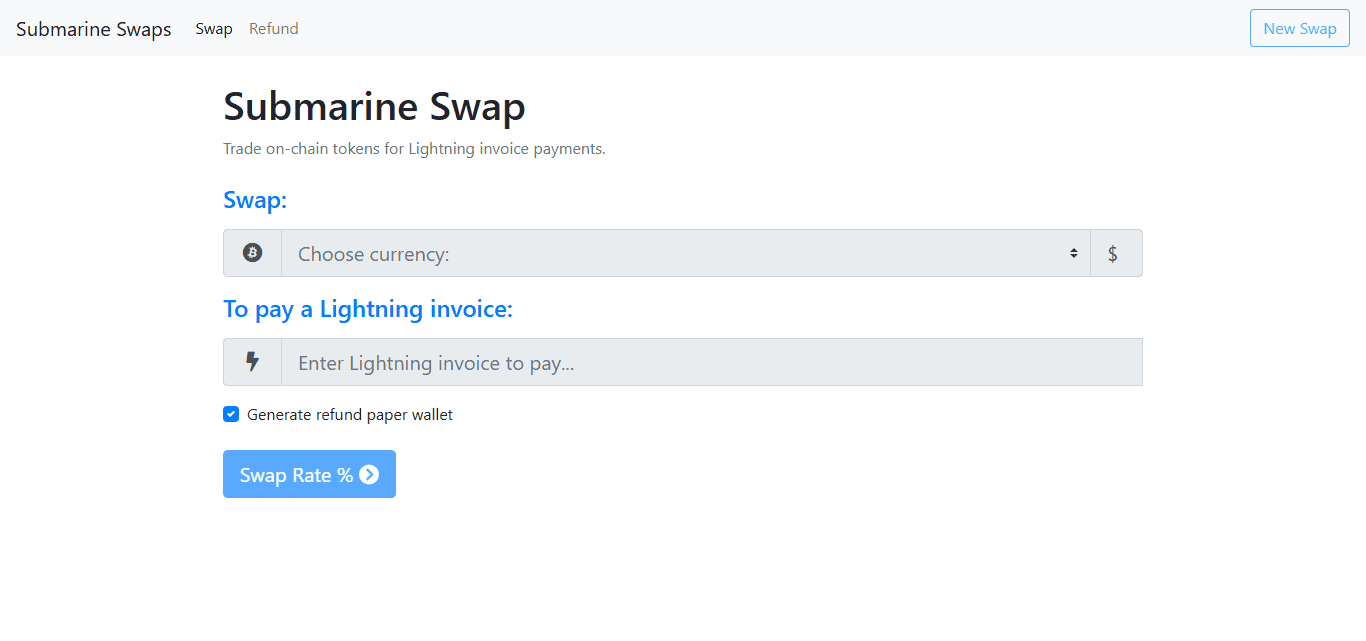
but they use hashed timelock contracts to link on-chain transactions to Lightning payments. This makes trust minimized, cross-layer Bitcoin swaps without the need for a traditional custodial service.
Submarine Swaps Features
- Layer bridging: Bridges Bitcoin’s on-chain network with the Lightning network.
- Trustless payments: Utilizes cryptographic technologies instead of trust-based systems and intermediaries.
- Lightning invoices: Lets users make Bitcoin payments on the Lightning network.
- Liquidity management: Allows users to shift value between various layers of Bitcoin.
| Pros | Cons |
|---|---|
| Connects Bitcoin’s base layer with the Lightning Network. | Transactions can involve additional swap-related fees. |
| Uses cryptographic mechanisms to minimize trust requirements. | Requires understanding of Lightning payment mechanics. |
| Enables on-chain Bitcoin to pay Lightning invoices. | Liquidity constraints can affect successful transfers. |
| Useful for managing funds across Bitcoin layers. | Not a standalone cryptocurrency exchange by itself. |
3. LightningNetwork+
Lightning Network Plus (LN+) is a community focused service as opposed to a traditional cryptocurrency swap exchange.
Backstory: it was launched to assist collaboration amongst the community of Lightning Network Services. Introduced: LN+ has no explicitly published launch date, therefore a definite launch date should not be assumed.

Operators can set up dual, triangular, square, and other channel arrangements of higher order within its liquidity swaps to control the incoming and outgoing capacity. Later on, its liquidity pool introduced credits that facilitated more flexible longer-term engagement with liquidity.
Because of this, it is more accurate to consider LN+ as a liquidity desk in the Lightning Network rather than a service that allows swapping of BTC for altcoins.
LightningNetwork+ Features
- Liquidity swaps: Supports the exchange of channel liquidity by Lightning node operators.
- Channel balancing: Enhances inbound and outbound Lightning capacity.
- Multiple structures: Provides support for dual, triangle, square, and larger liquidity structures.
- Community-driven: Creates connections amongst independent Lightning operators
| Pros | Cons |
|---|---|
| Helps Lightning node operators obtain useful channel liquidity. | Primarily designed for Lightning node operators. |
| Supports multiple liquidity-swap structures. | Requires technical knowledge of Lightning channels. |
| Can improve incoming and outgoing channel capacity. | Finding suitable swap partners may take time. |
| Community-based approach encourages decentralized liquidity coordination. | Liquidity arrangements still require careful node management. |
4. FixedFloat
FixedFloat is an automatic service that offers fast and simple cryptocurrency swaps. It was developed for swift conversions and later became a valuable service provider for the Lightning Network users who required swapping Lightning Bitcoin for other currencies.
While its launch is said to be in 2018, historical records on the service are inadequate in comparison to some other services.
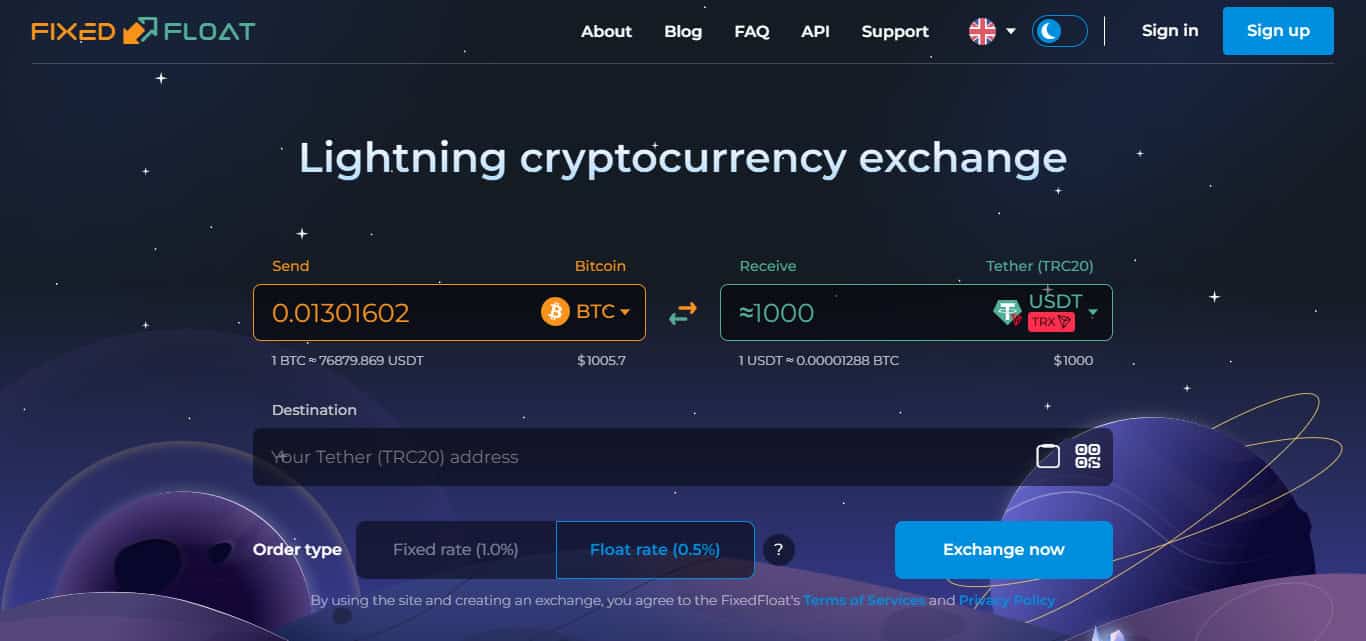
Potential clients appreciate FixedFloat’s flexibility and automated fixed and floating exchange-rate swaps. It can process exchanges for Bitcoin, Lightning Bitcoin, most stablecoins, Ethereum, Monero, and a number of different digital currencies.
FixedFloat Features
- Instant swaps: Automates the conversion of cryptocurrencies.
- Lightning: Supports the exchange of Bitcoin Lightning transactions.
- Multiple assets: Supports cryptocurrencies like USDT, Ethereum, and Monero.
- Rate choices: Has both fixed and floating rates of exchange.
| Pros | Cons |
|---|---|
| Provides fast automated cryptocurrency conversions. | Exchange rates can vary with market conditions. |
| Supports Bitcoin Lightning transactions. | Fees and spreads can reduce final received amounts. |
| Offers numerous cryptocurrency conversion options. | Users must carefully verify destination addresses. |
| Fixed and floating rate options provide flexibility. | Availability of particular assets can change over time. |
5. SimpleSwap
SimpleSwap was designed to allow instant conversions of assets from one crypto to another without the need for users to possess a traditional trading account. Upon its release as one of the first, user-friendly exchanges with numerous crypto options, SimpleSwap quickly grew and integrated additional services.
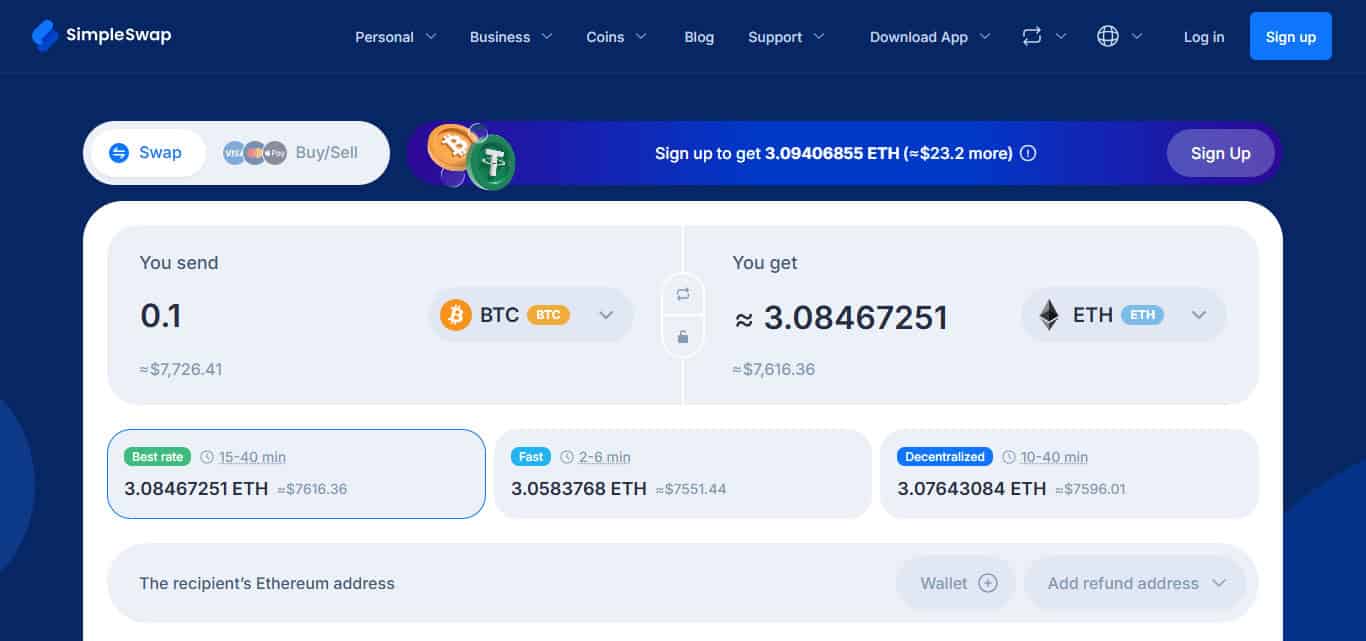
Official Release: SimpleSwap released its exchange in April 2018 supporting over 100 different crypto options. It soon added a public API and fixed-rate exchanges. For Lightning users,
SimpleSwap is useful in a workflow where a user provides a Lightning transaction and information for a payment and is then given the converted crypto. In this way, SimpleSwap helps to connect the Lightning payment network to the crypto payment network.
SimpleSwap Features
- Easy interface: Features a fast process for swapping cryptocurrencies.
- Broad support: Has more than 1,000 cryptocurrencies and digital assets.
- Lightning support: Let’s users make Lightning payments.
- Account simplicity: Designed to be easier to use than traditional accounts
| Pros | Cons |
|---|---|
| Simple interface makes cryptocurrency swapping accessible. | Large asset selection can make choosing pairs confusing. |
| Supports a very broad range of digital assets. | Rates and fees may differ between individual swaps. |
| Lightning compatibility expands Bitcoin payment flexibility. | Swap availability depends on supported trading pairs. |
| Does not require conventional exchange-account management. | Users still face normal blockchain transaction risks. |
6. ChangeNOW
ChangeNOW is another large, instant crypto exchange that does direct asset swaps, meaning its users do not have to keep a balance in one of ChangeNOW’s accounts. Background: ChangeNOW has evolved from solely being an instant swap exchange to a crypto ecosystem of exchanges, payments, wallets, and other digital asset services.
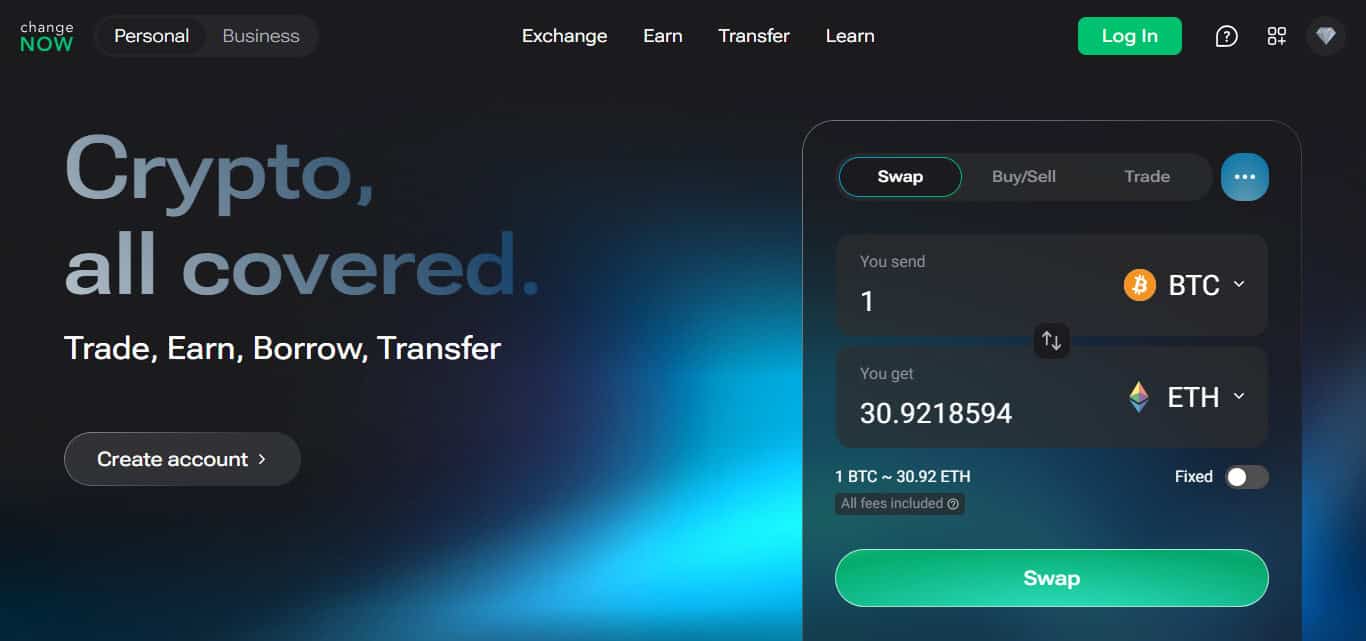
Official Release: the instant exchange part of its roadmap shows that ChangeNOW launched its platform in September 2017.
ChangeNOW provides Lightning Network users with easy access to a great amount of crypto liquidity to convert between Bitcoin and major alternatives. Its goal of simplified exchanges means that users can skip order book trading and do direct swaps.
ChangeNOW Features
- Registration-free: Does not require users to make an account in order to swap crypto.
- Minimized Custodial Time: This aims to decrease held custody of users’ cryptocurrencies.
- Large Liquidity: Offers liquidity for several supported cryptocurrencies.
- Lightning Swaps: Offers swaps of Lightning Bitcoin for most major cryptocurrencies.
| Pros | Cons |
|---|---|
| Registration-free swapping provides a convenient user experience. | Exchange rates and fees can vary between transactions. |
| Supports a broad selection of cryptocurrencies. | Not every asset necessarily has Lightning compatibility. |
| Provides access to substantial cryptocurrency liquidity. | Large swaps may require suitable available liquidity. |
| Convenient for converting Lightning Bitcoin into other assets. | Users must verify transaction details before confirming swaps. |
7. Exolix
Exolix aims to be an instant crypto exchange that makes cross-chain asset conversion and swapping faster and easier. Background: Exolix aimed to be a registration less exchange where users can swap crypto without maintaining an account.
It was also integrated in other 3rd party Web3 frameworks making cross-chain conversion infrastructure available to wallets or other crypto based frameworks.
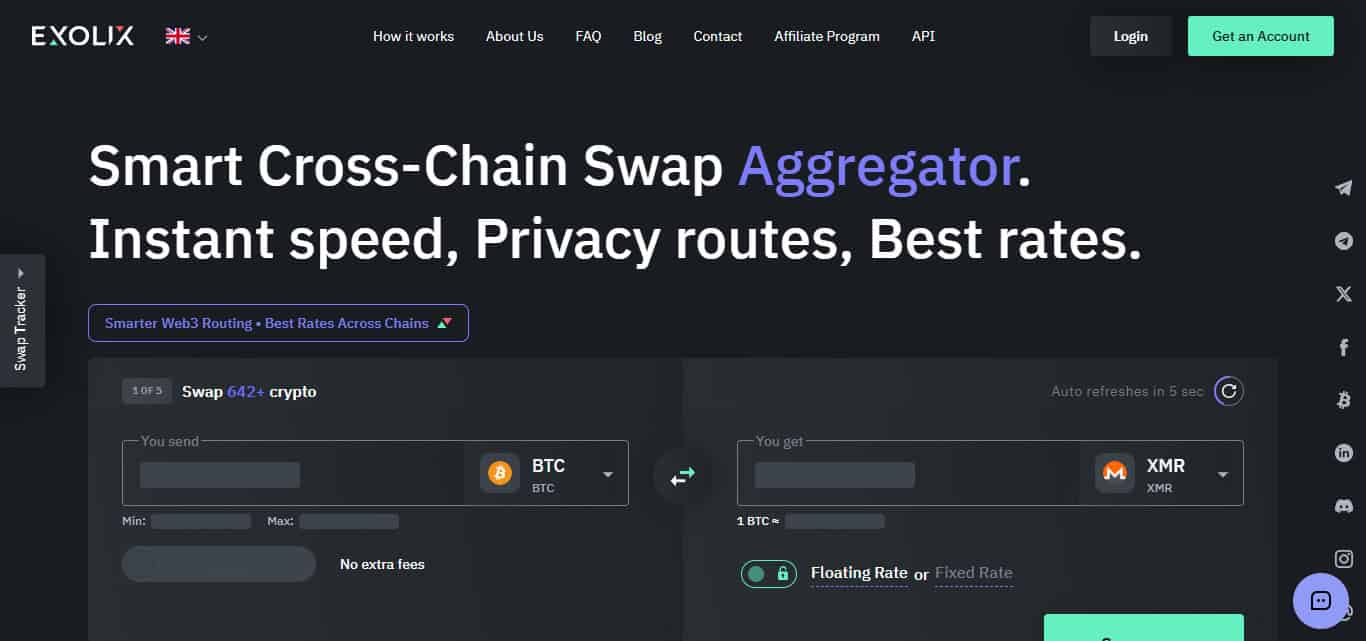
Launched: No confirmed primary source directs us to a specific year for launch, so we can neither confirm nor deny a year, and should avoid generalizing. Lightning users should know that a connection from Bitcoin to other crypto is now one of the many available.
Exolix Features
- Instant Swaps: Offers crypto swaps across different networks.
- Swap Assets: Users can swap assets without creating exchange accounts.
- Cross Chain: Offers swaps for different blockchain based crypto assets.
- Large Swaps: Has swaps without traditional maximum swaps.
| Pros | Cons |
|---|---|
| Provides automated cross-chain cryptocurrency swapping. | Supported assets and networks may change periodically. |
| Registration-free design simplifies the swapping process. | Exchange spreads and network fees affect final amounts. |
| Suitable for users seeking straightforward asset conversions. | Users need to understand different blockchain confirmations. |
| Designed to accommodate large cryptocurrency transactions. | Large transactions can still depend on available market liquidity. |
8. Phoenix Wallet
The Phoenix Wallet is one of the first self-custodial Lightning wallets built by ACINQ, a company that developed some of the first significant pieces of infrastructure for the Lightning Network. Background Phoenix is ACINQ’s second-generation attempt to build a Lightning wallet that conceals the underlying complexities of the Lightning Network.
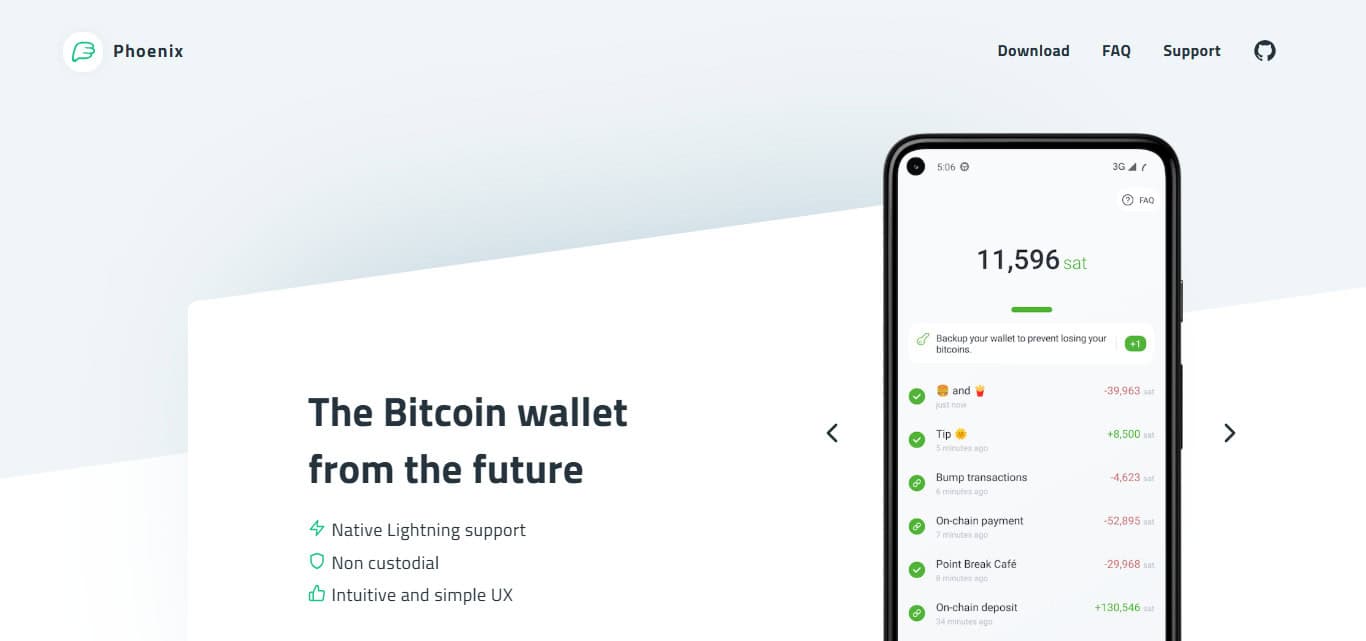
Launched: Phoenix was released to the public on December 12, 2019. Phoenix differentiates itself from other Lightning Network wallets because it doesn’t require its users to deal with channel or liquidity management.
Instead, it focuses on simplification and automating key Lightning operations. Phoenix is a good demonstration of how self-custodial Lightning Network wallets can be made easier with automated liquidity and swap technologies.
Phoenix Wallet Features
- Self-custody: Users control Bitcoin Lightning funds.
- Lightning Focus: Provides a simplified Lightning payment experience.
- Auto Liquidity: Handles important Lightning liquidity operations automatically.
- On-chain Deposits: Automated conversions for Bitcoin to Lightning.
| Pros | Cons |
|---|---|
| Self-custody gives users control over their Bitcoin. | Users are responsible for protecting wallet credentials. |
| Designed specifically for an easy Lightning experience. | Lightning functionality depends on network liquidity. |
| Automates several liquidity-management processes. | Automated operations can involve service and network fees. |
| Reduces the complexity of manually managing channels. | Primarily focused on Bitcoin rather than broad multi-chain swapping. |
9. Muun Wallet
Muun is a self-custodial wallet that allows users to perform Lightning payments without the requirement of managing Lightning channels. Background: Muun aimed for continuous user experience when performing on-chain and Lightning payments.

Launched: Muun released its wallet in October 2019, and introduced the Lightning Network payment functionality in 2020. Muun simplified its payment system by implementing submarine swaps to connect Lightning Network transactions with on-chain Bitcoin.
Muun Wallet Features
- Unified Balance: integrates Bitcoin and Lightning wallets.
- Self-custody: Users control funds in their wallet.
- Automated Swaps: Routes swaps from Bitcoin to Lightning payment.
- Simple Payment: eliminates the complexity of managing Lightning payment channel
| Pros | Cons |
|---|---|
| Unified interface simplifies Bitcoin and Lightning payments. | Its architecture differs from traditional Lightning wallets. |
| Self-custodial design keeps control with the user. | Users must securely manage their recovery information. |
| Submarine swaps simplify paying Lightning invoices from Bitcoin. | Swap mechanisms may introduce additional transaction costs. |
| Beginner-friendly approach reduces Lightning complexity. | It is primarily a wallet rather than a general crypto exchange. |
10. AQUA Wallet
AQUA Wallet is a Bitcoin and stablecoin focused wallet developed by JAN3, and has strong integration for Bitcoin, Liquid, and Lightning related functionality.
Background: AQUA was initially developed in 2020, and the JAN3 version was released to the public on January 3, 2024. The Wallet is highly focused on Bitcoin and Liquid related assets and stablecoins and simplified Layer-2 transactions.
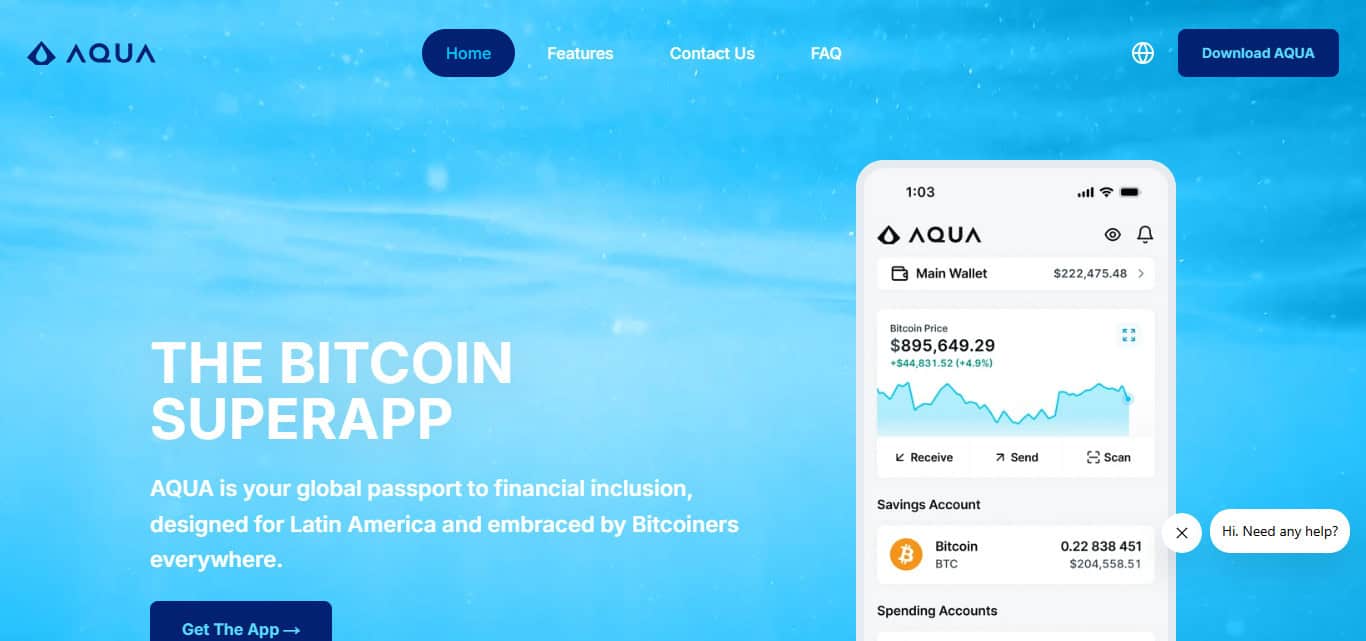
Its integration with swap services such as Boltz enables users to move BTC across supported ecosystems without having to worry about managing individual channels on Lightning Network. This adds more value for users who prefer to do self-custody in a more simplified way.
AQUA Wallet Features
- Bitcoin Focus: Focuses on wallet experiences for Bitcoin and related assets.
- Liquid Integration: supports the Liquid network and related Bitcoin assets.
- Lightning: integrates Lightning related services and transactions.
- Boltz: Uses Boltz to facilitate convenient cross network swaps.
| Pros | Cons |
|---|---|
| Combines Bitcoin and Liquid functionality in one wallet. | Multi-network functionality can require additional user understanding. |
| Supports stablecoin and Liquid-based asset use cases. | Available features depend on supported networks and assets. |
| Lightning integration improves Bitcoin payment flexibility. | Network fees can affect smaller transactions. |
| Boltz integration enables convenient cross-network swapping. | Users remain responsible for self-custody and transaction security. |
How We Choose Best Lightning Network Crypto Swapping Desks
- Security: The platforms we select must support strong security as well as secure transaction mechanisms.
- Non-Custodial: We favor those services that do not take control of client funds.
- Lightning Support: We check the integration of the Lightning Network and check the platform’s payment functionality.
- Swap Speed: We check through how swift the platforms are in executing crypto swaps.
- Assets Supported: We check the range of cryptocurrencies and blockchains that the platforms support.
- Fees: We check swap fees, network fees, and total transaction costs.
Conclusion
To conclude, the Best Lightning Network Crypto Swapping Desks provide services to fastly swap Bitcoin into other various crypto assets.
For example, Boltz, FixedFloat, SimpleSwap, and ChangeNow are solutions where you can choose between the speed or liquidity that costs the most, or if you want to maintain your privacy, pick solutions that offer less asset support.
Your decision should be based on your preference, including affordability and security of the solution, ease of use, custody, and if you want to fully control your assets.
FAQ
Which platform is best for non-custodial Lightning swaps?
Boltz is a leading option for non-custodial atomic Lightning swaps.
Can Lightning Bitcoin be swapped for other cryptocurrencies?
Yes, supported platforms can exchange Lightning Bitcoin for various assets.
Are Lightning Network swaps faster than on-chain transactions?
Lightning swaps can settle faster because transactions occur off-chain.
Do Lightning swapping desks require account registration?
Several platforms offer swaps without requiring traditional account registration.
Are Lightning crypto swapping desks completely anonymous?
Privacy varies by platform, transaction type, and applicable compliance requirements.