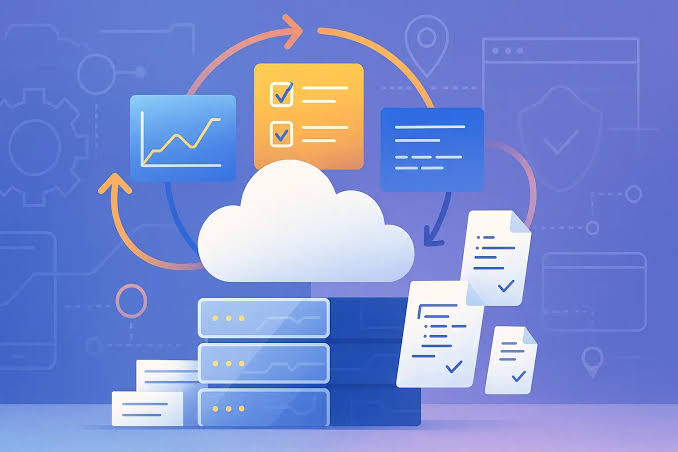
This articles focuses on Synthetic Data Generation Platforms for Privacy-Preserving ML Training. Primarily, these platforms assist the users in the development of AIs by generating secure, realistic, and privacy-safe datasets.
By using these platforms, organizations can shield sensitive information when training machine learning models.
Additionally, these platforms assist organizations with regulatory compliance, and may even expedite the adoption of AI in business practices. This article will cover the features, advantages, use cases, and leading products in the field.
What Are Synthetic Data Generation Platforms?
AI powered Synthetic Data Generation Platforms are tools that use Machine Learning and generative models to create safe privacy datasets to train, test, and analyze Machine Learning models.
These datasets mimic the structures, patterns, and behaviors of real world data while leaving out sensitive information. These platforms are able to create artificial datasets faster than traditional methods and dataset generation companies.
While making data more accessible to an organization, synthetic data platforms decrease legal compliance issues, security concerns, and improve the organization’s capacity to scale enterprise AI. They also help an organization protect sensitive information for both the organization and the customer.
Why Privacy-Preserving ML Training Needs Synthetic Data
Less Risk of Sensitive Customer Data Exposure When organizations want to use ML models, they traditionally have to use their customer records. With Synthetic Data, organizations can create data that looks like their real data but does not have sensitive customer information. This means that organizations do not have to expose customer records to train their ML models.
Helps Ensure Compliance with GDPR, HIPAA, and Other Privacy Regulations The use of real customer data in ML models makes compliance with the GDPR, HIPAA, and other privacy regulations very difficult. However, with the use of Synthetic Data, organizations can create data that looks like real customer data and use it to train their ML models. This helps organizations use privacy-preserving methods and comply with privacy regulations.
Eases Data Sharing Among Organizations Synthetic Data helps organizations to freely share and collaborate with other organizations, because there is no real private customer data. This allows research teams, collaborators, and developers to have the data they need for analysis and AI training while maintaining security and confidentiality.
Faster AI Training with Preserving Privacy With the use of Sensitive Data, organizations can now train their ML models in a secure environment that does not expose sensitive customer information. This helps organizations to be more secure and responsible with AI, because they can now more easily adopt and implement AI in their organization.
Key Points & Synthetic Data Generation Platforms for Privacy-Preserving ML Training
| Synthetic Data Generation Platform | Explanation |
|---|---|
| Gretel AI | Generates realistic synthetic datasets while protecting sensitive information during machine learning model training. |
| Mostly AI | Creates privacy-safe synthetic data preserving statistical accuracy for enterprise analytics and AI development. |
| Tonic.ai | Produces synthetic databases for developers while maintaining privacy and compliance requirements effectively. |
| Synthesized | Generates high-quality synthetic data enabling secure machine learning without exposing real datasets. |
| Hazy | Creates artificial datasets using AI models for privacy-focused business applications. |
| DataCebo | Provides synthetic data generation tools for testing software without compromising confidential information. |
| YData | Helps teams generate synthetic datasets for machine learning experimentation and validation. |
| NVIDIA Nemotron Synthetic Data Generation | Uses advanced AI models to create scalable synthetic training data efficiently. |
| MOSTLY AI Synthetic Data | Delivers enterprise-grade synthetic datasets supporting compliance, privacy, and machine learning workflows. |
| Synthesis AI | Generates computer vision synthetic data for training advanced artificial intelligence systems. |
10 Synthetic Data Generation Platforms for Privacy-Preserving ML Training
1. Gretel AI
Designing privacy-safe datasets for ML and analytics becomes easier with leading synthetic data generation companies like Gretel AI. Their models use advanced Generative AI to gather data patterns without any sensitive information.

Gretel AI proudly supports structured, text, and time-series data generation while maintaining both the utility of data and necessary data rules and regulations.
Based on the leading privacy regulations (GDPR and HIPAA), more enterprises in 2026 will use Gretel AI to assist in the development of secure AI systems, test applications, and build ML systems.
Gretel AI Pros & Cons
| Pros | Cons |
|---|---|
| Generates realistic synthetic datasets with strong privacy protection capabilities. | Advanced features may require technical expertise for implementation. |
| Supports multiple data types including text, structured, and time-series data. | Large-scale enterprise usage can increase operational costs. |
| Helps organizations meet GDPR, HIPAA, and compliance requirements. | Synthetic outputs may require validation for complex datasets. |
| Enables faster AI model development without exposing sensitive information. | Limited customization may affect highly specialized use cases. |
2. Mostly AI
Building ML systems without customer data is possible with Mostly AI’s enterprise-grade synthetic data solutions. Their technology uses AI to examine the original data sample and generate approximated sample data sets that are both statistically accurate and preserve the same data relationships and patterns.
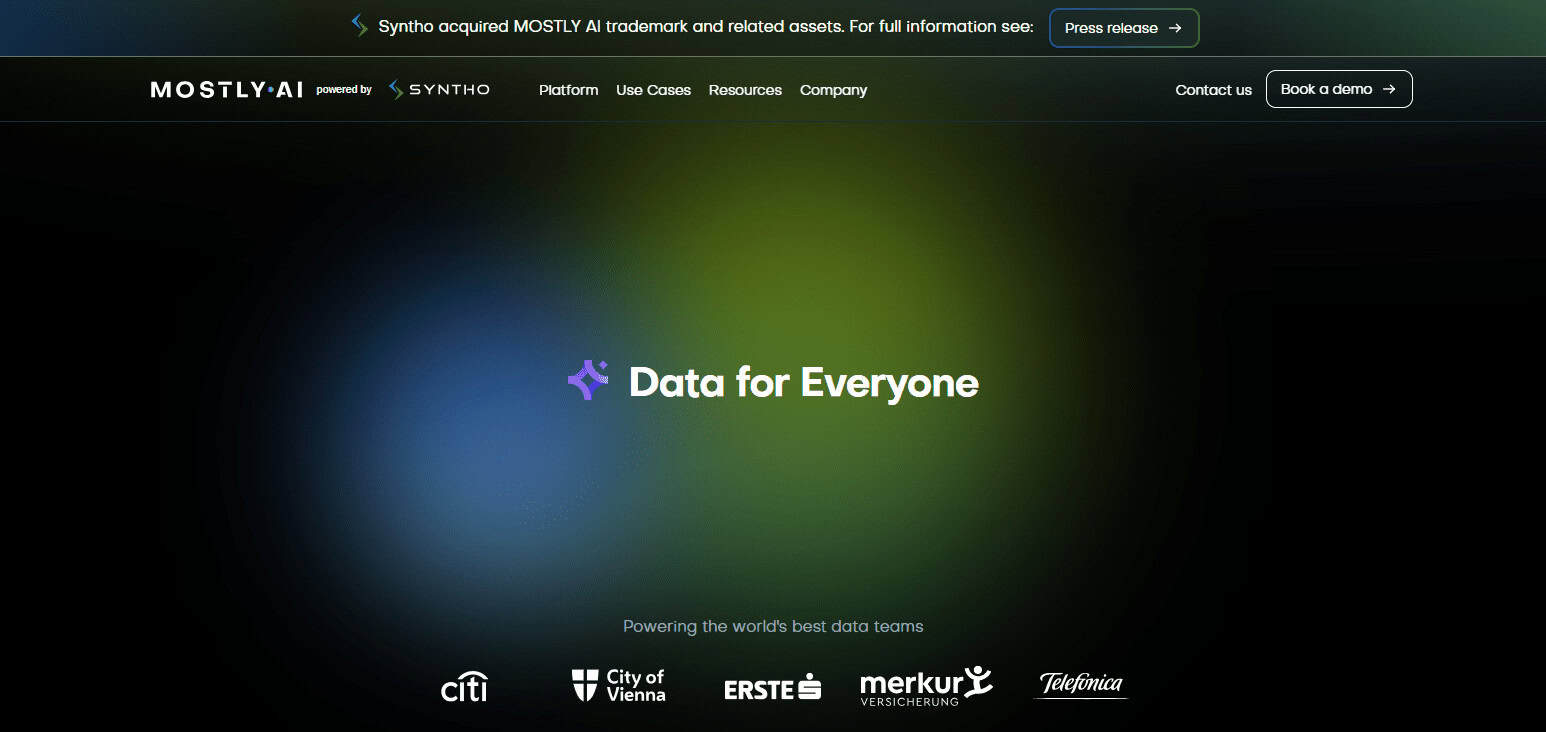
Supported data privacy for banking, healthcare, insurance, and government data is respected and encouraged. Responsible ML practices is a newer trend that should be embraced. With That in mind, Mostly AI can help provide synthetic data while enabling customers to innovate without the data privacy compliance and synthesis risks.
Mostly AI Pros & Cons
| Pros | Cons |
|---|---|
| Creates highly accurate synthetic data while preserving original patterns. | Pricing can be expensive for small businesses and startups. |
| Designed for regulated industries like healthcare and finance. | Requires quality evaluation before replacing real datasets completely. |
| Improves secure data sharing between organizations and teams. | Complex enterprise deployments may need expert support. |
| Supports privacy-focused machine learning development at scale. | May require additional tools for advanced analytics workflows. |
3. Tonic.ai
Tonic.ai offers realistic synthetic databases. Instead of using production databases and real customer data, teams can use Tonic.ai for data generation as part of their development lifecycle.
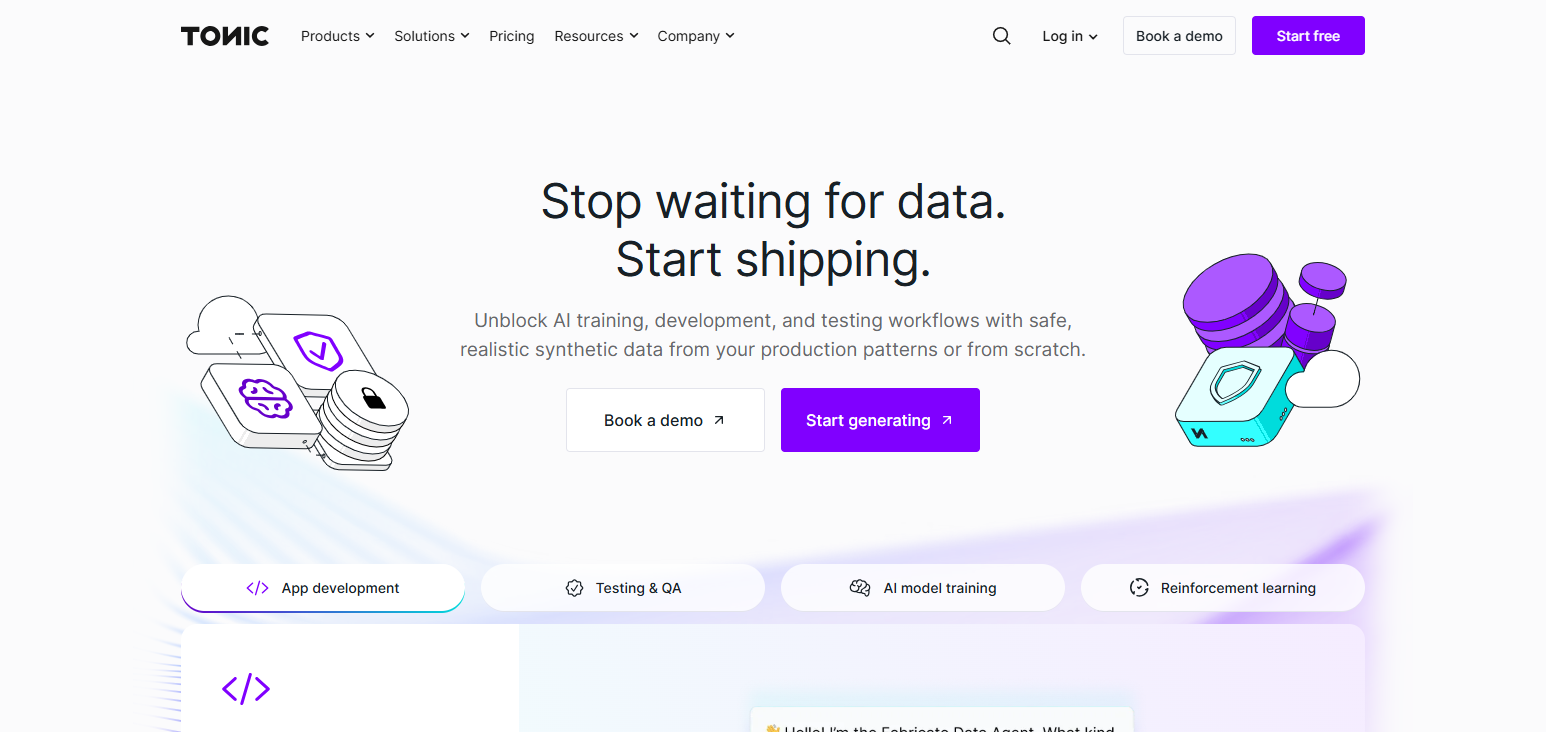
The tool provides data environments for enterprise applications that use different forms of data masking and transformations. Tonic.ai is helpful for testing the use of AI in enterprise applications for continuous and secure deployment.
Tonic.ai Pros & Cons
| Pros | Cons |
|---|---|
| Provides realistic synthetic databases for application testing. | Primarily focused on database-related synthetic data generation. |
| Protects production data by reducing exposure risks. | Advanced features may have a learning curve. |
| Helps developers create secure testing environments quickly. | Less suitable for highly specialized AI research projects. |
| Supports data masking and transformation workflows effectively. | Enterprise pricing may not fit smaller teams. |
4. Synthesized
Synthesized is a synthetic data platform that provides privacy-preserving data generation for the safe development of AI and software. The platform is focused on complex data generation that reduces risk for personal data exposure.

Synthesized is transforming automated creation of datasets that are used for AI and application testing. In 2026, Synthesized is expected to be the solution that many organizations implement to achieve regulatory compliance for data protection while creating a training environment for AI at scale.
Synthesized Pros & Cons
| Pros | Cons |
|---|---|
| Generates high-quality synthetic datasets for AI applications. | Requires technical knowledge for advanced configurations. |
| Supports automated synthetic data creation processes. | Synthetic results may need manual verification. |
| Helps organizations maintain privacy compliance standards. | Limited awareness compared with larger AI platforms. |
| Improves accessibility of sensitive enterprise datasets. | Some complex datasets may require additional tuning. |
5. Hazy
Hazy is a synthetic data generation solution that uses AI to provide businesses with a way to generate artificial datasets and keeps sensitive information safe. It uses a privacy-preserving and a more advanced machine learning approach to provide organizations data for analytics and research.

Organizations can use Hazy to create and generate data and allow their employees to analyze and do research on the data. Hazy provides a solution for regulated industries that allows organizations to create and develop AI models and remain compliant.
Hazy Pros & Cons
| Pros | Cons |
|---|---|
| Uses AI algorithms to create privacy-preserving synthetic datasets. | Platform availability may vary across regions. |
| Enables secure data sharing without revealing confidential information. | May require customization for industry-specific requirements. |
| Supports analytics and machine learning development. | Smaller ecosystem compared with major competitors. |
| Helps reduce privacy risks from sensitive data usage. | Complex models may need additional validation processes. |
6. DataCebo
DataCebo offers solutions for generating synthetic data with the goal of enabling businesses to create realistic datasets for software development and testing.
Using DataCebo’s flagship technology, businesses would be empowered to develop production-like environments while safeguarding sensitive data of its employees and customers.
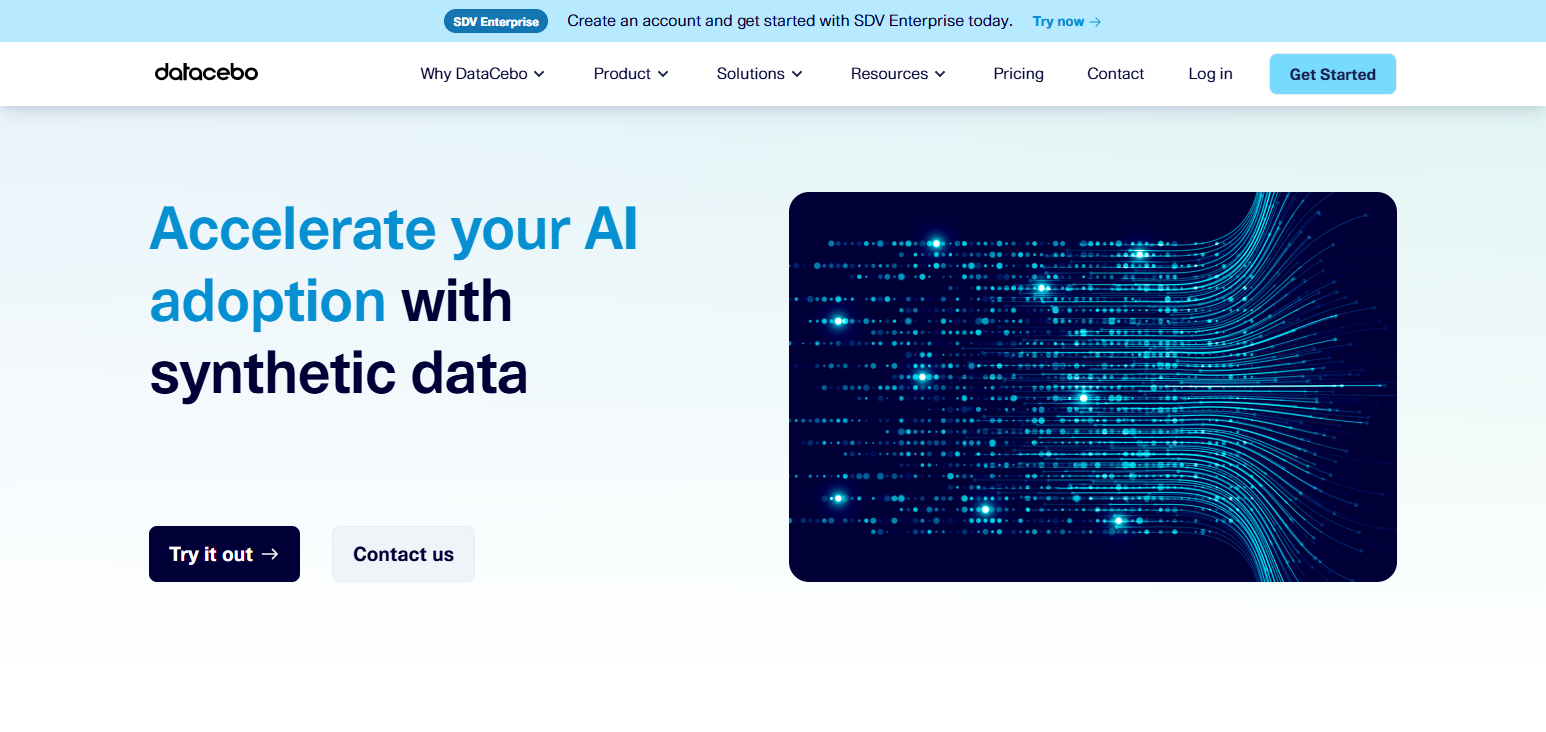
DataCebo claims that its platform improves the efficiency of application testing while also providing datasets that are both scalable and diverse.
By 2026, it is believed that DataCebo will have helped businesses to modernize their development frameworks, improve their quality assurance procedures, and most importantly, mitigate data privacy concerns caused by the usage of operational data.
DataCebo Pros & Cons
| Pros | Cons |
|---|---|
| Creates realistic datasets for software testing environments. | Mainly focused on testing rather than broad AI training. |
| Helps developers avoid using sensitive production data. | May require integration effort with existing systems. |
| Improves quality assurance and application development speed. | Limited support for certain advanced ML workloads. |
| Provides scalable synthetic data generation capabilities. | Smaller market presence compared to enterprise competitors. |
7. YData
YData focuses on providing their clients with the ability to create privacy-preserving datasets to help their clients build machine learning models with confidence.
Their platform has solutions for data generation and enhancement, data profiling, and the generation of synthetic datasets as they pertain to the context of various fields. YData aims to enhance the usability of data while allowing their clients to meet the requirements of privacy-focused regulations.
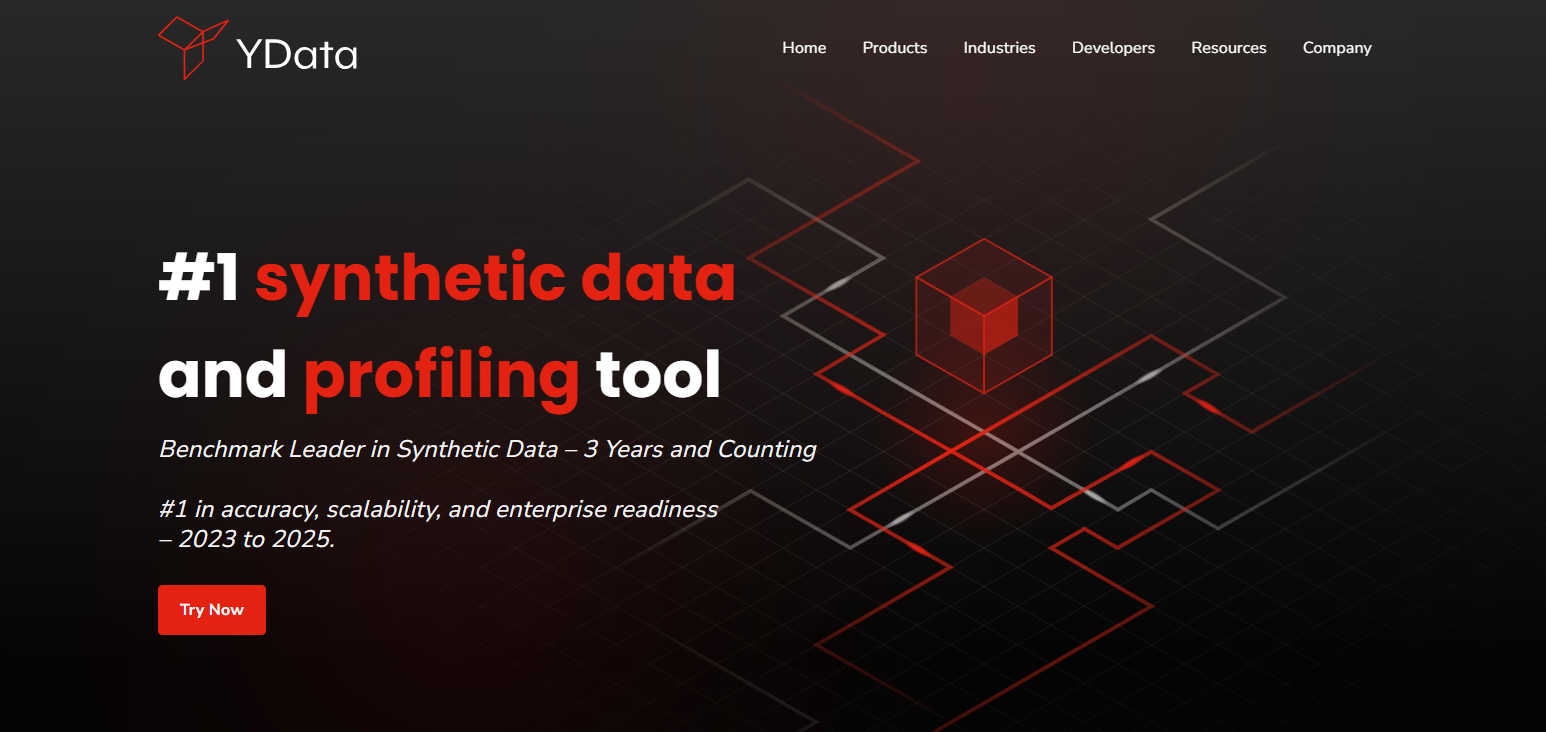
Given the growing popularity of AI, their platform allows businesses to build models in a shorter time by overcoming insufficient data problems, while limiting the use of sensitive real-world data.
YData Pros & Cons
| Pros | Cons |
|---|---|
| Helps data scientists generate reliable synthetic datasets. | Requires machine learning knowledge for effective usage. |
| Improves data quality and accessibility for AI projects. | Some advanced features may need additional configuration. |
| Supports privacy-friendly machine learning workflows. | Performance depends on original dataset quality. |
| Helps overcome limited data availability challenges. | May not fully replace real-world data scenarios. |
8. NVIDIA Nemotron Synthetic Data Generation
Using state-of-the-art generative AI models, NVIDIA Nemotron Synthetic Data Generation creates enormous synthetic datasets to help train the next generation of advanced AI systems. NVIDIA helps developers building leading-edge AI applications by generating diverse and realistic training data.

Their technology mitigates the challenges of the data training gap, costly data collection and privacy issues. By 2026, NVIDIA’s synthetic data will be a crucial resource for businesses developing advanced robotics, AI systems and large language models.
NVIDIA Nemotron Synthetic Data Generation Pros & Cons
| Pros | Cons |
|---|---|
| Uses advanced generative AI models for large-scale data creation. | Requires powerful computing infrastructure for deployment. |
| Supports enterprise AI, robotics, and language model training. | Implementation can be complex for smaller organizations. |
| Generates diverse training datasets efficiently. | NVIDIA ecosystem dependency may limit flexibility. |
| Helps reduce data collection costs and privacy concerns. | Requires specialized AI expertise for optimization. |
9. MOSTLY AI Synthetic Data
Privacy becomes a challenge when building AI and analytics solutions with REAL data. MOSTLY AI Synthetic Data comes to the rescue in industries like Finance and Healthcare, where private data is the core asset of the business.
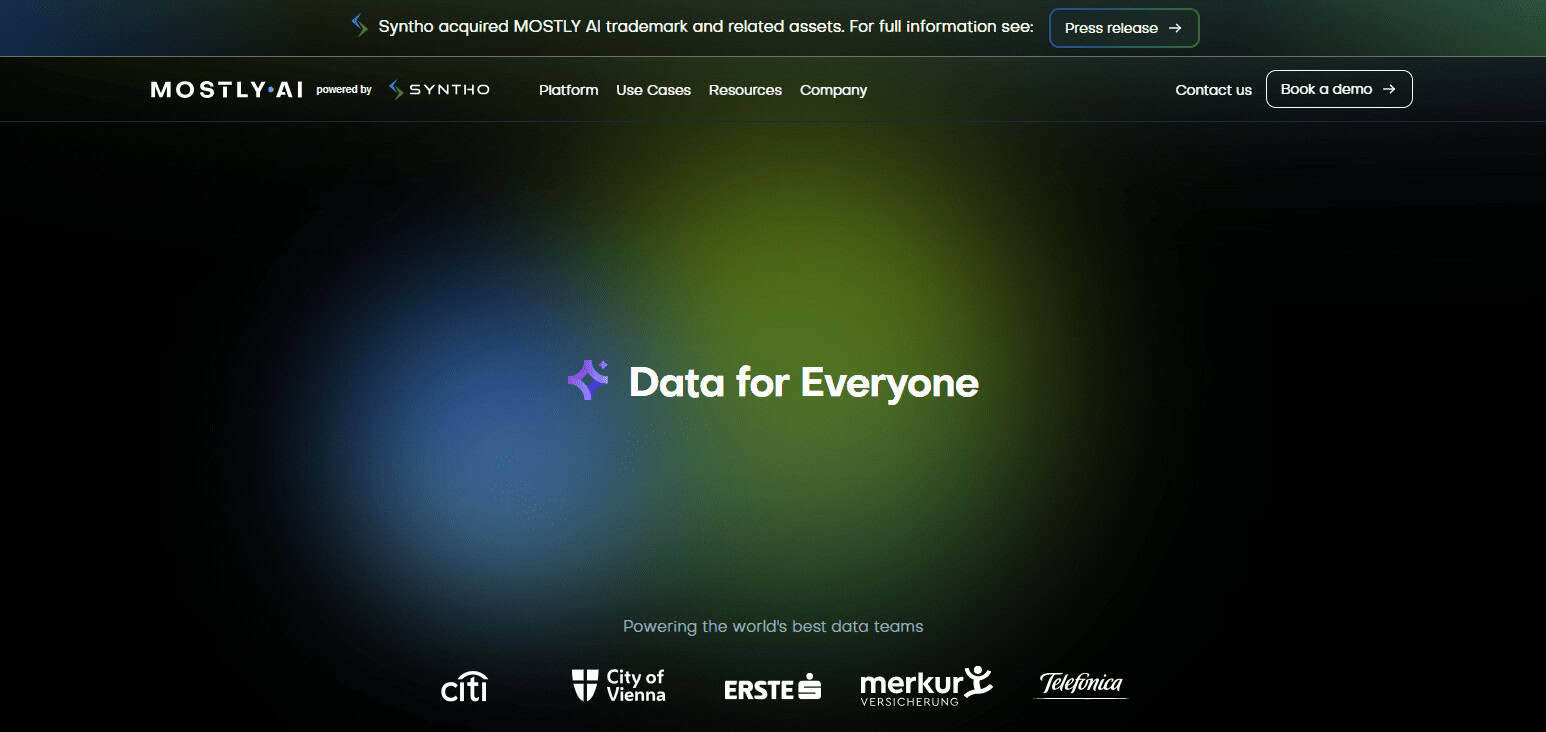
With the capability of generating privacy-safe datasets of REAL data from a business, MOSTLY AI saves organizations the hassle of managing compliance and regulatory documentation while sharing data safely and expediting the development and testing of AI solutions.
MOSTLY AI Synthetic Data Pros & Cons
| Pros | Cons |
|---|---|
| Provides enterprise-grade synthetic data with strong privacy controls. | Enterprise plans may involve higher investment costs. |
| Maintains statistical accuracy of sensitive datasets. | Requires testing before production-level AI usage. |
| Supports industries with strict compliance requirements. | Complex datasets may need additional refinement. |
| Enables secure collaboration and data experimentation. | Smaller teams may find setup challenging. |
10. Synthesis AI
Synthesis AI excels in the generation of REALISTIC synthetic data in the form of images and videos for the development and training of AI Models.
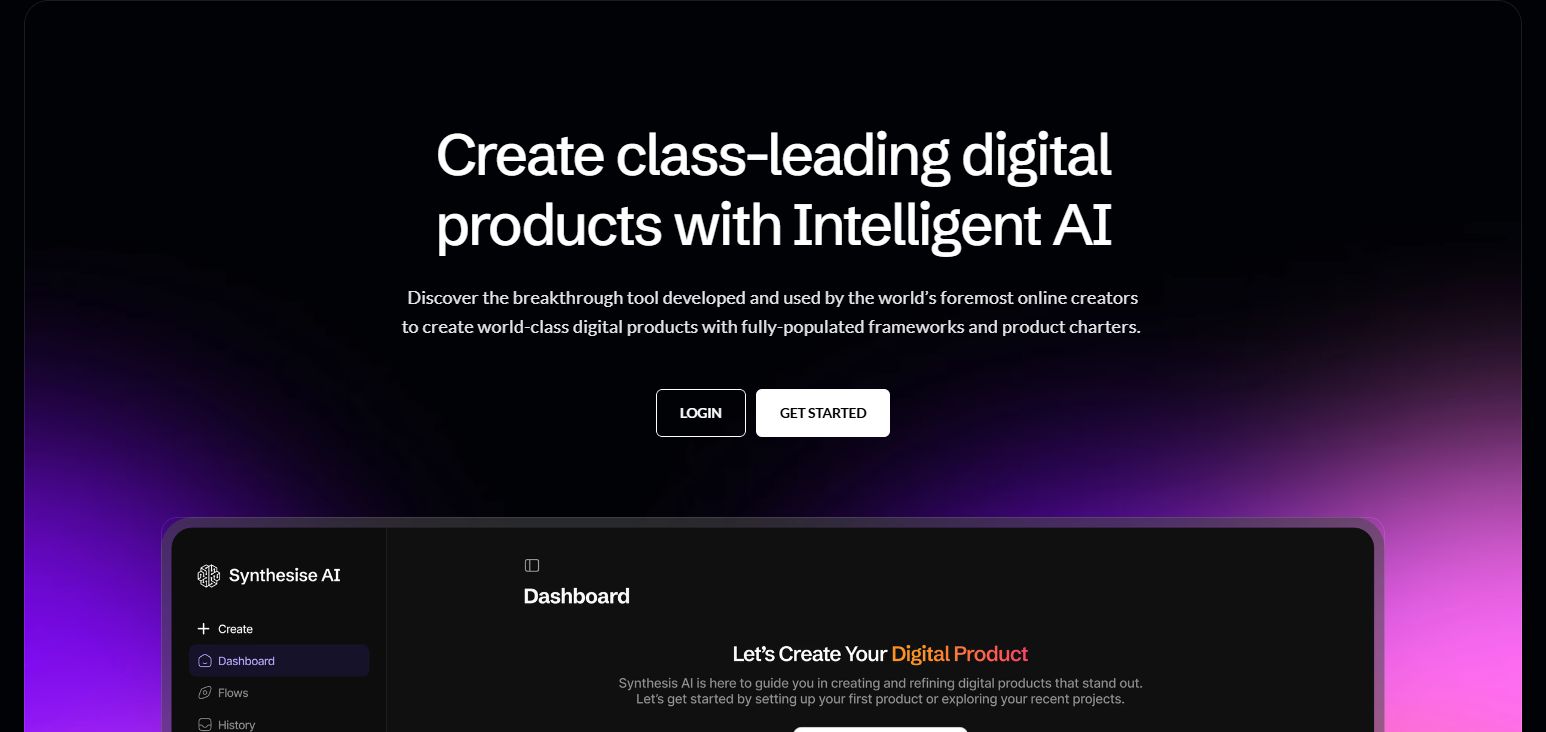
With the ability to create simulated environments, Synthesis AI helps organizations build and enhance AI, with the added benefit of developing image computer vision systems, in a variety of industries from autonomous vehicles to highly specialized smart devices.
Even in 2026, Synthesis AI is committed to enabling the development of AI with privacy in mind, while helping organizations to avoid the tedious and often impossible challenge of collecting REAL images from the world.
Synthesis AI Pros & Cons
| Pros | Cons |
|---|---|
| Generates realistic computer vision datasets for AI training. | Primarily focused on visual data generation. |
| Reduces dependency on expensive real-world image collection. | May require specialized hardware for advanced simulations. |
| Supports autonomous vehicles, robotics, and smart devices. | Not designed for general-purpose structured data generation. |
| Provides accurate labeled synthetic images for computer vision models. | High-end solutions may be costly for smaller companies. |
How To Choose the Best Synthetic Data Generation Platform
Evaluate Data Requirements and Use Cases Using the applicable machine learning contexts and models, select the platforms that fit your data types and your corresponding industry requirements.
Check Privacy and Compliance Capabilities Check for privacy features that secure the data and accommodate GDPR, HIPAA, and the other regulations.
Analyze Integration Options Choose platforms that provide seamless integration for the other AI tools, data, and the workflows that you have.
Consider Scalability and Performance Choose the platforms that can grow with you and that create and/or consume large datasets reliably and quickly.
Compare Pricing and Support Services Consider the price, the level of service and support, and the quality and availability of the documentation and other resources.
Conclusion
In Conclusion As privacy protection for machine learning becomes increasingly important, the role of synthetic data generation platforms will only grow. By creating realistic, but not dangerous, data, these systems make data generation easier and more efficient.
These platforms allow data generation without the usual concerns surrounding data privacy. The most sophisticated systems help businesses develop models with privacy, data accuracy, and Data Protection Compliance all ensured.
FAQ
Which is the best Synthetic Data Generation Platform?
Gretel AI, Mostly AI, Tonic.ai, Synthesized, and NVIDIA solutions are popular choices.
Is synthetic data secure for enterprise use?
Yes, synthetic data reduces privacy risks by replacing sensitive information with generated datasets.
Can synthetic data replace real-world datasets?
Synthetic data can support real datasets but may not completely replace complex real-world scenarios.
How do synthetic data platforms ensure privacy compliance?
They use privacy techniques to support regulations like GDPR, HIPAA, and data protection standards.