
This article analyzes the best Tier-1 forex liquidity providers. Tier-1 providers offer accessible wholesale market pricing with the benefits of deep liquidity and competitive pricing. Additionally, they facilitate fast execution with advanced trading technologies, and support institutional clients.
Liquidity providers assist brokers, hedge funds, and financial institutions in accessing the interbank foreign exchange market.
I am going to summarize the major characteristics and benefits of these Tier-1 FX liquidity providers, while also addressing their main disadvantages and potential future trends in the liquidity business.
What Are Tier-1 Forex Liquidity Providers?
Tier-1 Forex Liquidity Providers are large, internationally recognized, Tier-1 banks, financial institutions, and the major institutional market makers that participate, and provide the most depth of liquidity, in the Forex market.
They allow brokers, hedge funds, and trading firms access to the largest pools of currencies at the best prices, with the best and most efficient execution. These providers incorporate advanced, industry-leading,
Technologies; multi-bank infrastructures; and institutional grade infrastructures to ensure and maintain tightest spreads, and the lowest slippage with the best trading conditions in Forex across the markets worldwide.
Why Choose Tier-1 Forex Liquidity Providers?
- Greater Liquidity: Allows brokers to access the full depth of the global institutional currency market and trade with greater volumes.
- Better Trade Execution: Significantly reduces the time taken for orders to be executed and the risk of slippage.
- Tighter Forex Spreads: Results in better pricing and a greater number of available liquidity sources.
- Better Market Conditions: Assures liquidity with high execution quality, regardless of market volatility.
- Greater Broker Confidence: Assures brokers more advanced trading conditions.
Key Points & Best Tier-1 Forex Liquidity Providers
| Tier-1 Forex Liquidity Provider | Key Description |
|---|---|
| JPMorgan Chase | Largest US bank offering dominant institutional FX liquidity and global trading solutions. |
| Deutsche Bank | Premier FX provider specializing in forwards, swaps, and spot market liquidity. |
| UBS | Leading global FX dealer delivering deep liquidity and competitive pricing. |
| Citigroup | Provides institutional FX liquidity with advanced electronic spot trading capabilities. |
| Barclays | Offers deep Forex liquidity through its advanced BARX trading platform. |
| XTX Markets | Algorithmic market maker delivering massive FX liquidity and pricing efficiency. |
| Citadel Securities | Provides ultra-fast execution and competitive institutional market-making liquidity solutions. |
| LMAX Exchange | Institutional trading venue offering transparent, neutral, high-quality FX execution. |
| Jump Trading | Quantitative trading firm providing advanced liquidity and market-making services. |
| Optiver | Technology-driven market maker delivering tight spreads across major currency pairs. |
10 Best Tier-1 Forex Liquidity Providers
1. JPMorgan Chase
Being one of the largest banks globally, JPMorgan Chase plays a major role in institutional Forex liquidity. Their dedicated networks allow for deep liquidity in FX across spot, forwards, swaps, and options.
Their electronic infrastructures let institutional clients access JPMorgan pricing, execution, and reliability. Their relationships and presence give JPMorgan leverage compared to its competitors.
JPMorgan Chase Features
- Global FX Liquidity Network – Covers all major markets and many of the emerging markets with deep FX liquidity.
- Multi-Product FX Solutions – Provides a variety of currency trading products such as spots, forwards, and options, amongst others.
- Advanced Electronic Trading – Provides fast execution through advanced trading technology.
- Access to the Institutional Market – Provides liquidity to banks, hedge funds, corporates, and professional trading firms.
- Strong Risk Management – Provides tools to mitigate and manage risk with respect to currency and market exposures.
| Pros | Cons |
|---|---|
| Provides one of the deepest institutional FX liquidity pools globally. | Primarily designed for large institutions, not small brokers. |
| Offers advanced trading technology and electronic execution solutions. | Requires higher onboarding standards and compliance checks. |
| Supports multiple FX products including spot, swaps, and options. | Pricing structures may be complex for smaller firms. |
| Strong global banking network improves market access. | Higher operational requirements for integration. |
| Excellent risk management and institutional support. | Limited accessibility compared with retail-focused providers. |
2. Deutsche Bank
Deutsche Bank has established itself as a top institutional Forex liquidity provider, especially in FX forwards, swaps, and spot.
With great electronic offerings and a global reach in currencies, Deutsche Bank is hard to compete with in pricing and execution.
Their office locations in major financial hubs give their clients access to liquidity and Deutche’s tailored risk solutions. For their clients, Deutsche Bank also enhances their trading abilities with their FX market-making.
Deutsche Bank Features
- Wide Coverage of FX Products – Provides liquidity to spots, forwards, swaps, and a variety of structured FX products.
- Sophisticated Pricing Models – Electronic trading results in competitive prices at the institutional level.
- Expertise in Global Currencies – Access to all major, minor, and even some emerging market currency pairs.
- Reliability of Market Access for Trade Execution – Allows high-volume trading.
- Risk Management for Institutions – Offers currency risk management and hedging.
| Pros | Cons |
|---|---|
| Strong reputation in global Forex forwards and spot markets. | Institutional services may involve complex agreements. |
| Provides competitive pricing through advanced electronic platforms. | Mainly suitable for professional trading entities. |
| Wide currency coverage including emerging markets. | Higher minimum requirements for partnerships. |
| Offers professional hedging and risk solutions. | Technology integration can require technical expertise. |
| Experienced FX market-making capabilities. | Service costs may be higher than smaller providers. |
3. UBS
UBS has a global reputation in institutional trading with solid liquidity and pricing. Their institutional offering covers major, emerging and even complex FX.
Their electronic and trade solutions also execute quickly. UBS’s network, stability, and FX trading also make them an efficient partner with a large range of professional trading firms.
UBS Features
- Market Depth – Provides access to liquidity in all global Forex markets.
- Electronic Institutional FX Trading – Utilizes sophisticated technology for the trading of FX.
- Market Depth with Competitive Pricing – Strong market depth ensures competitive pricing.
- Global Reach of UBS Banking Services – Ensures connectivity to all currency markets and liquidity across the globe.
- FX Market Enhancements – Provides tools and insights for the market to assist in the decision-making process of a trader.
| Pros | Cons |
|---|---|
| Provides deep Forex liquidity with global market access. | Mainly targets institutional and corporate clients. |
| Strong pricing capabilities across major currency pairs. | Account setup process can be lengthy. |
| Advanced electronic trading infrastructure. | May not suit smaller brokerage firms. |
| Offers valuable market research and analytics. | Requires strong compliance documentation. |
| Trusted global banking reputation. | Premium services can involve higher costs. |
4. Citigroup
As one of the largest Forex market makers globally, Citigroup provides comprehensive institutional liquidity across the world’s currency markets. Citigroup provides electronic FX trading, spot liquidity, forwards, swaps, and tailored currency solutions.
With its trading technology, Citi can provide clients with liquidity, accurate pricing, and a multitude of execution options. Citigroup’s robust global positioning empowers its brokers and clients to better manage their currency exposure across developed and developing markets.
Citigroup Features
- Strong Global Presence in the FX Market – One of the largest global providers of Forex liquidity.
- Advanced Electronic FX Trading – Fast execution of transactions for currencies via highly advanced trading platforms.
- Multi-Currency Liquidity: Covers broad currency ranges in developed and emerging markets.
- Customized FX Products: Offers tailored institutional trading solutions.
- Global Risk Management: Provides tools for efficient currency exposure management.
| Pros | Cons |
|---|---|
| One of the largest Forex liquidity providers worldwide. | Complex solutions may require expert management. |
| Provides extensive multi-currency market coverage. | Better suited for large financial institutions. |
| Advanced electronic FX trading capabilities. | Higher operational requirements for integration. |
| Offers customized currency solutions. | Pricing may vary depending on trading volume. |
| Strong global risk management infrastructure. | Limited accessibility for smaller market participants. |
5. Barclays
Liquid Forex institutional trading through Barclays’ electronic trading platform, BARX, provides advanced liquidity. Barclays’ platform creates direct connectivity for professional traders to optimal FX liquidity with the real-time pricing and execution necessary to trade efficiently.
Through decades of experience in the global currency markets, Barclays provides liquidity to spot FX traders, as well as forwards and options, throughout its many product offerings, which helps its clients be asset and hedge fund managers as well as corporates and banks.
Barclays Features
- BARX Trading Platform: Offers superior electronic access to the Forex liquidity markets.
- Deep Institutional Liquidity: Enables high volume trading with competitive pricing.
- Multiple FX Instruments: Liquidity for spots, forwards, swaps, and options.
- Real-Time Market Data: Pricing and market data served as they are.
- Global Trading Expertise: Decades long institutional Forex market expertise.
| Pros | Cons |
|---|---|
| BARX platform provides advanced Forex trading access. | Requires institutional-level account approval. |
| Strong liquidity across major currency markets. | Technology setup may require professional support. |
| Offers multiple FX instruments and solutions. | Not ideal for small-scale traders. |
| Provides reliable real-time market pricing. | Service fees can be relatively high. |
| Decades of Forex market experience. | Limited availability for retail-focused businesses. |
6. XTX Markets
XTX Markets is a technology-centric market maker that provides demand-based liquidity through the use of algorithmic and high-volume trading. The firm uses sophisticated quantitative models, artificial intelligence, and automated trading to provide competitively priced Forex trading.
By offering efficient execution with tight spreads and a continuous market presence, XTX Markets has established itself as a preeminent provider of liquidity in the FX markets. XTX Markets’ technology-centric focus positively impacts the liquidity of trading in institutional environments.
XTX Markets Features
- Algorithmic Market Making: Quant models for continuous liquidity in Forex.
- AI-Powered Trading Systems: Makes trading and pricing smarter with tech.
- High-Volume Liquidity: Huge volumes of trading covered in all the currencies.
- Tight Spread Offering: Spreads offered are automated and competitive.
- Technology-Driven Infrastructure: The tech and compute to run markets efficiently
| Pros | Cons |
|---|---|
| Uses advanced algorithms for efficient liquidity provision. | Technology-driven model may be complex to understand. |
| Provides competitive spreads through automated pricing. | Primarily serves institutional trading firms. |
| Handles large trading volumes globally. | Limited traditional banking services. |
| Strong AI and quantitative trading capabilities. | Requires advanced technical integration. |
| Offers continuous market-making liquidity. | Less suitable for smaller Forex brokers. |
7. Citadel Securities
Citadel Securities provides lightning fast execution and advanced market making technology. They utilize different algorithms, and quantitative analysis to provide favorable prices to different markets, and most prominently to the Forex market.
They help reduce costs while improving the execution of trades, while also providing consistent liquidity regardless of market conditions. Their technology enables them to provide the best market making services to institutional clients.
Citadel Securities Features
- Ultra-Low Latency Execution: Super fast order processing for institutions.
- Advanced Market Making: Quant models for smart liquidity.
- Competitive Pricing Models: Forex pricing rendered smart and cheap.
- High-Speed Trading Infrastructure: Large scale trading support for institutions.
- Global Asset Coverage: Liquidity across all markets and instruments.
| Pros | Cons |
|---|---|
| Provides ultra-fast execution with low latency technology. | Mostly focused on institutional clients. |
| Uses advanced quantitative models for pricing. | High technical requirements for connectivity. |
| Delivers competitive liquidity across markets. | Limited transparency compared with exchange models. |
| Strong market-making expertise and infrastructure. | Partnership access can be highly selective. |
| Supports high-volume trading operations. | May involve complex risk management processes. |
8. LMAX Exchange
Active Forex execution should be transparent and impartial; LMAX Exchange understands this and therefore has adopted a regulated, multilateral trading facility. By using a trading system that enables participants to actively trade against one another
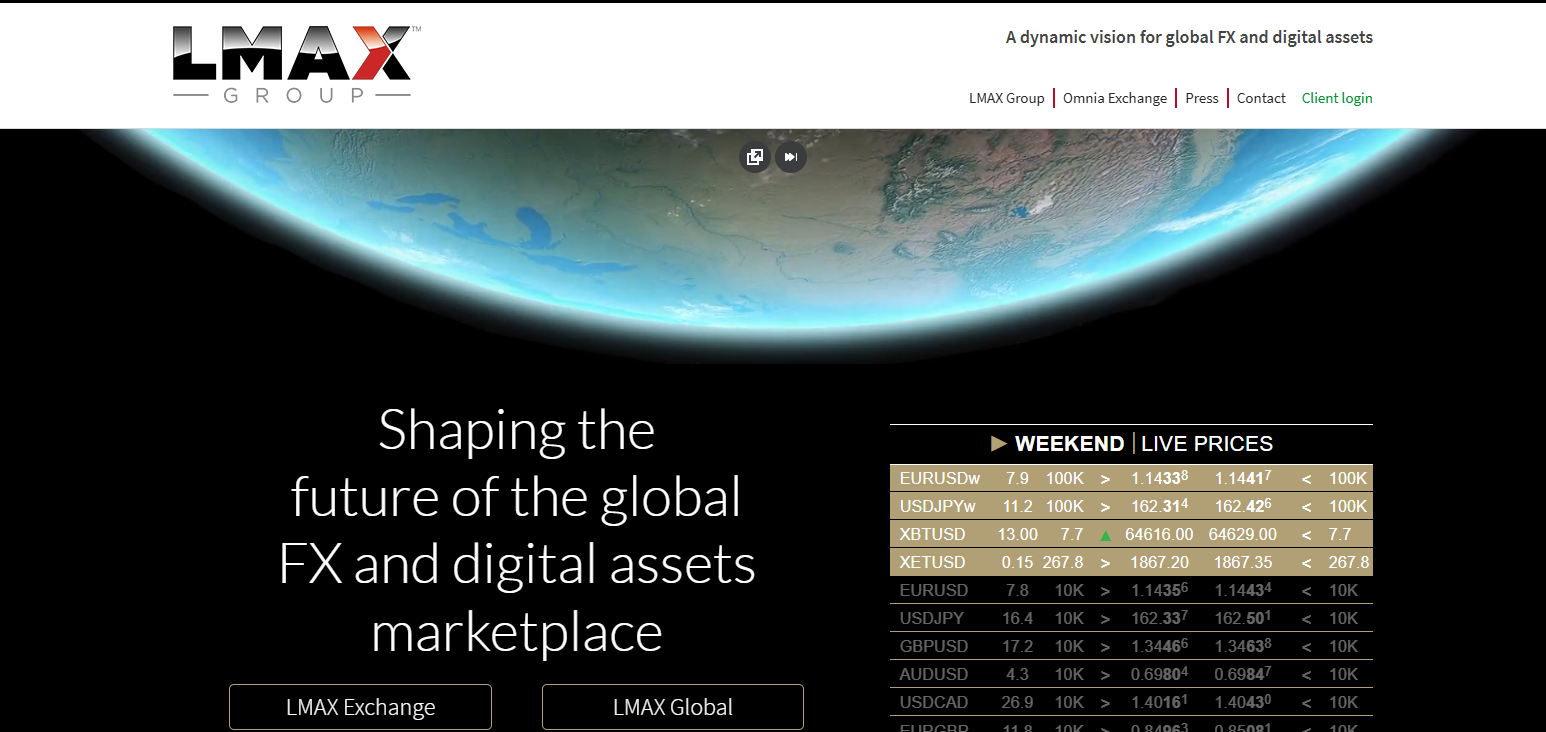
LMAX has created a system with vast liquidity and fast execution that is a great addition to banks, brokers, and professional traders. Their pricing greatly reduces the discrepancies of trading participants.
LMAX Exchange Features
- Neutral Execution Model: Provides an institutional exchange with an impartial execution environment.
- Direct Market Access: Traders have Direct Access to Participants and Providers of Liquidity.
- High Grade Execution: This system incorporates brokers, banks, and professional traders.
- Controlled Trade System: This provides a safe and clear system for operation in the market
| Pros | Cons |
|---|---|
| Provides transparent exchange-based Forex execution. | Exchange model may differ from traditional liquidity models. |
| Offers direct market access for professional traders. | Requires understanding of institutional trading systems. |
| Real-time order matching improves transparency. | May not provide all customized banking solutions. |
| Regulated environment increases trust and security. | Smaller currency coverage compared with major banks. |
| Suitable for brokers seeking neutral execution. | Integration requires technical expertise. |
9. Jump Trading
Jump Trading is a global quantitative trading firm. They market make and provide liquidity to different financial markets. Jump Trading utilizes advanced algorithms and automated trading technologies to facilitate the trading of different markets.
When looking at the Forex market, Jump Trading provides liquidity, pricing, and execution that is rapid and favorable. They help institutional traders receive significant liquidity across different Forex markets.
Jump Trading Features
- Quant Trading: This system incorporates advanced math models for market making.
- Computing Power: This system makes the provision of liquidity quick and efficient.
- Market Making Automation: This system provides consistent pricing to all markets.
- Liquidity: This system works to facilitate the efficiency of the Forex market.
- Trading: This system makes the execution of trades and orders more efficient and faster through data research.
| Pros | Cons |
|---|---|
| Uses advanced quantitative models for liquidity management. | Limited public information about services. |
| Provides high-speed market-making capabilities. | Mainly works with institutional participants. |
| Strong technology infrastructure supports fast execution. | Requires sophisticated trading connections. |
| Contributes significant liquidity to financial markets. | Not designed for smaller brokerage operations. |
| Data-driven strategies improve execution efficiency. | Partnership opportunities may be selective. |
10. Optiver
Optiver is an advanced technology market maker. They stand out for providing competitive prices and sought after financial services around the globe. With the help of automated systems, research and trading algorithms, Optiver speeds up trading and pricing.

Within forex especially, Optiver helps trade between the top currency pairs and works to create an efficient market. Their technology and knowledge of both risk and market systems, make them an outstanding source of liquidity.
Optiver Features
- Technology-Based Market Making: Helps in the management of market liquidity through cutting-edge technology.
- Tight Forex Spreads: Contributes to the efficiency of pricing in currency pairings.
- Automated Trading Solutions: Uses algorithms for precise market pricing.
- Global Market Participation: Supplies liquidity in all global financial markets.
- Strong Risk Management: Provides clear market supervision through advanced models.
| Pros | Cons |
|---|---|
| Provides tight spreads through advanced market-making technology. | Focus is mainly institutional rather than retail markets. |
| Uses automated systems for efficient pricing. | Requires advanced connectivity solutions. |
| Strong risk management improves market stability. | Limited direct broker-focused offerings. |
| Global presence across multiple financial markets. | Competitive access may require strict qualification. |
| Technology-driven approach improves execution quality. | May involve complex integration processes. |
Future Trends in Tier-1 Forex Liquidity Providers (2026)
- AI and Liquidity: Managing liquidity better with AI to provide optimal pricing and allocation while assisting in risk management.
- Algorithmic Market Making: More sophisticated algorithms will allow markets to be more efficiently traded.
- Risk in Real Time: Faster monitoring of markets will allow quicker decisions in risk management.
- Blockchain and Settlements: Faster Forex settlement with greater clarity and security.
- Multi-Asset Liquidity: Greater accessibility to Forex, commodities, crypto, indices, etc. via a single provider.
Conclsuion
In Conclusion Selecting the Right Tier-1 Forex Liquidity Providers enable brokers and other institutions to gain optimal liquidity, with fast execution, tight spreads, and solid market infrastructure.
Top-tier liquidity providers are global banks and sophisticated market makers, which typically offer excellent technology, professional systems, and good risk management.
As the Forex markets develop in 2026, the use of Artificial Intelligence to provide liquidity, automation, and multi-asset solutions will provide even better opportunities to trade efficiently and access the markets.
Frequently Asked Questions (FAQ)
Who Are the Best Tier-1 Forex Liquidity Providers?
Top providers include JPMorgan Chase, Deutsche Bank, UBS, Citigroup, Barclays, XTX Markets, Citadel Securities, LMAX Exchange, Jump Trading, and Optiver.
How Do Tier-1 Liquidity Providers Work?
They connect brokers and institutional traders with global financial markets by providing real-time pricing, liquidity access, and efficient order execution.
What Are the Main Benefits of Tier-1 Forex Liquidity Providers?
Key benefits include lower trading costs, better market depth, reliable execution, improved pricing transparency, and stronger risk management.
Are Tier-1 Forex Liquidity Providers Only for Large Institutions?
Most Tier-1 providers mainly serve banks, hedge funds, and large brokers, but smaller brokers can access them through liquidity aggregators.