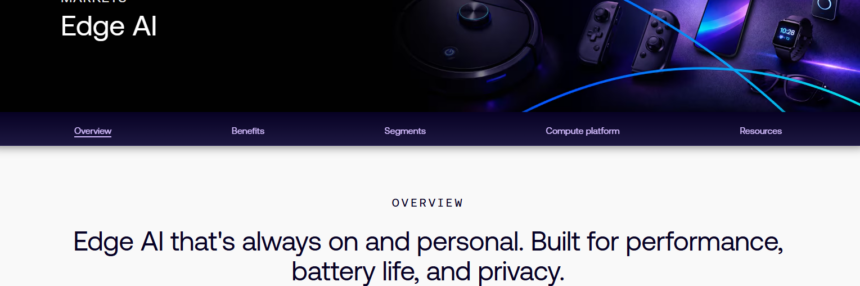
This article explores Edge AI Computing Hardware for Autonomous Manufacturing. Smart factories are changing with edge devices. Computing solutions enable factories to process data, automate tasks, predict machine failures and make decisions without people.
AI processors and Industrial Edge Platforms have made manufacturers more efficient and have reduced downtime and have built systems for the next generation of the 4th Industrial Revolution.
Significance of Edge AI in Automated Manufacturing
- Instantaneous Processing: Data can be analyzed as it is generated, which allows machines to respond and adjust even faster.
- Lower Latency: Response times can be made faster because information does not have to travel long distances to be processed.
- Greater Productivity: Manufacturing is more productive when errors are minimized and workflows are optimized.
- Proactive Problem Solving: Equipment can be monitored for potential issues before malfunctioning occurs.
- Autonomous AI Systems: Intelligent machines and automated robots enhance the systems used in manufacturing processes.
Key Points & Edge AI Computing Hardware Powering Autonomous Manufacturing
| Edge AI Computing Hardware | Explanation |
|---|---|
| NVIDIA Jetson AGX Orin | Enables real-time AI processing for robots, automation, and industrial machine vision systems. |
| Intel Edge AI Hardware | Provides powerful processors for smart factories, analytics, and autonomous industrial operations. |
| Google Coral Edge TPU | Accelerates machine learning workloads with efficient low-power edge AI processing capabilities. |
| Hailo-8 AI Processor | Delivers high-performance AI inference for robotics, cameras, and manufacturing automation systems. |
| Qualcomm RB5 Platform | Supports intelligent robotics with advanced AI, connectivity, and edge computing features. |
| Siemens Industrial Edge Devices | Integrates AI applications with industrial machines for optimized manufacturing processes. |
| Advantech Edge AI Systems | Provides rugged computing solutions for factory automation and predictive maintenance applications. |
| AMD Kria SOM | Enables adaptable AI acceleration for industrial robots and embedded manufacturing systems. |
| AAEON UP AI Edge Platforms | Offers compact AI computing solutions for smart factory automation environments. |
| Dell Edge Gateway Systems | Supports secure edge analytics, AI workloads, and connected manufacturing operations. |
10 Edge AI Computing Hardware Powering Autonomous Manufacturing
1. NVIDIA Jetson AGX Orin
NVIDIA Jetson AGX Orin makes advanced edge AI computing accessible in autonomous manufacturing environments. With powerful AI inference capabilities, industrial robots, smart cameras, and automated machines, are able to limit the need for cloud processing.
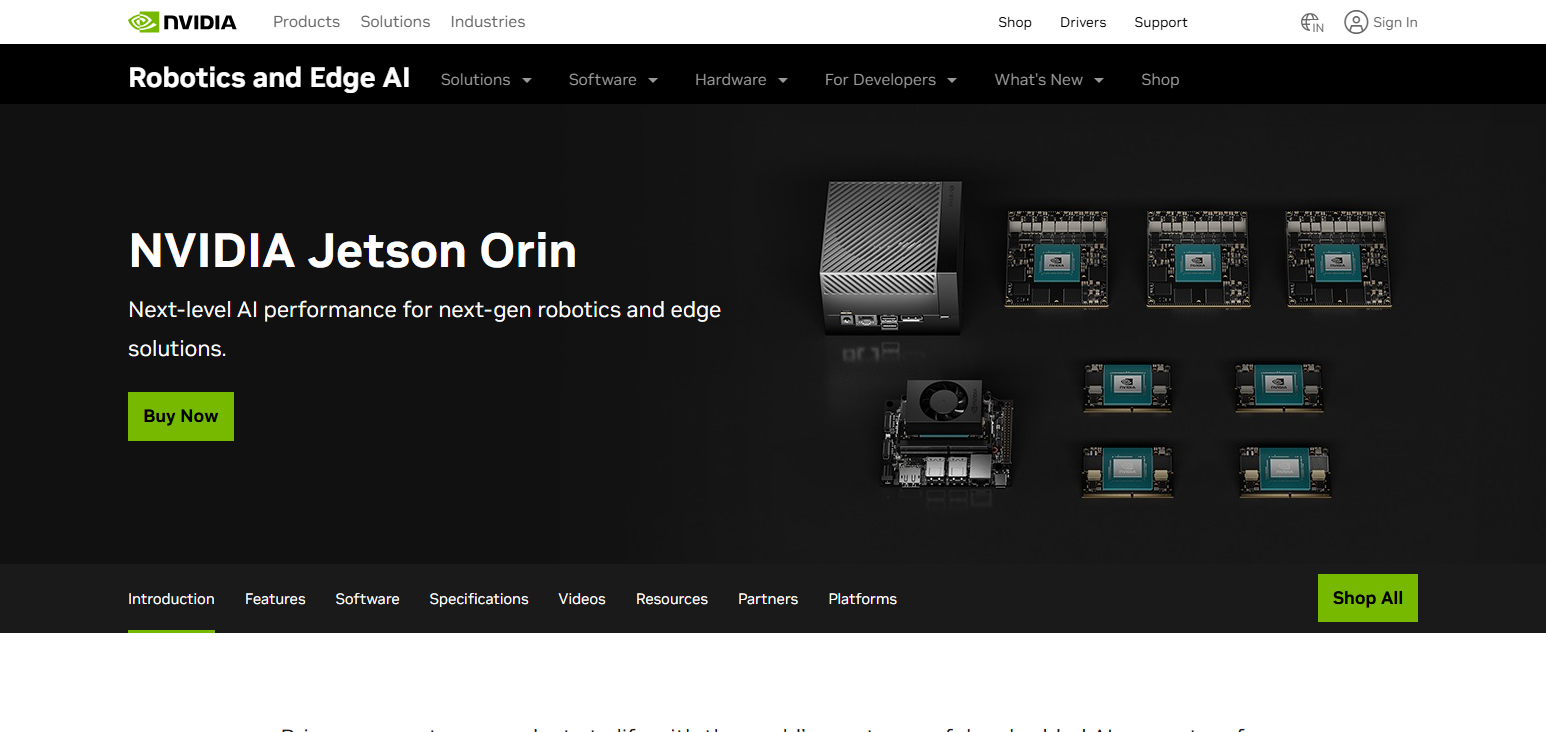
With industry-leading GPU architecture, Jetson AGX Orin is able to execute real-time decision-making, computer vision, predictive maintenance, and robotic automation.
As a result, manufacturers can build intelligent factories, and ensure that their machines are always working to optimize accuracy, and reduce latency within their environments.
NVIDIA Jetson AGX Orin Features
- High-Performance AI Processing: Industry automation and AI tasks processing are accelerated by the advanced GPU.
- Real-Time Computer Vision: Smart cameras and robots can find defects, objects and identify problems in operations right away.
- Robotics Optimization: Fully autonomous robots with optimized navigation, control and decision-making are supported.
- Low-Latency Edge Computing: Manufacturing data can be processed without the heavy reliance of cloud services.
- Scalable AI Development: Offers flexibility to choose from various AI frameworks to create custom solutions for smart factories.
| Pros | Cons |
|---|---|
| Delivers powerful GPU-based AI processing for real-time manufacturing automation. | Higher hardware cost compared with basic edge computing solutions. |
| Supports advanced robotics, computer vision, and autonomous machine operations. | Requires technical expertise for AI model deployment and optimization. |
| Reduces cloud dependency through local AI inference capabilities. | High-performance workloads may require additional cooling solutions. |
| Provides excellent performance for industrial AI applications. | Overpowered for simple automation tasks with limited AI requirements. |
| Supports multiple AI frameworks and development environments. | Limited compatibility with some traditional industrial software systems. |
2. Intel Edge AI Hardware
Intel Edge AI hardware integrates high-performance computing, AI acceleration, and industrial-grade reliability, and is the backbone of intelligent factories. Based on Intel processors, manufacturers can operate machine learning models for quality inspections,
Automation, and analytics. By working with the AI industrial framework, Intel Edge hardware brings autonomy, real-time monitoring, and optimal resource management to manufacturing operations.
Intel Edge AI Hardware Features
- Powerful Industrial Processors: High-performance CPUs built for manufacturing AI applications are provided.
- AI Acceleration Support: AI capabilities provide better acceleration of machine learning applications.
- Smart Factory Integration: Interoperability with industrial systems, sensor, and automation is supported.
- Real-Time Analytics: Provides capability to analyze manufacturing data when needed.
- Enterprise Security: Secure environments for computing in manufacturing may be used.
| Pros | Cons |
|---|---|
| Provides reliable processors for industrial AI and automation workloads. | AI acceleration performance may vary across different Intel platforms. |
| Supports multiple operating systems and industrial applications. | Higher energy consumption compared with specialized AI chips. |
| Offers strong compatibility with existing factory infrastructure. | Requires proper hardware configuration for maximum AI performance. |
| Enables real-time analytics and predictive maintenance solutions. | Advanced AI workloads may need additional accelerators. |
| Provides enterprise-grade security and scalability. | Initial deployment costs can be significant for small manufacturers. |
3. Google Coral Edge TPU
Google Coral Edge TPU is a low-cost and efficient AI accelerator for edge environments. Smart factories can rapidly deploy machine learning, computer vision, and quality inspection automation through the use of robotic systems and/or inspection cameras.
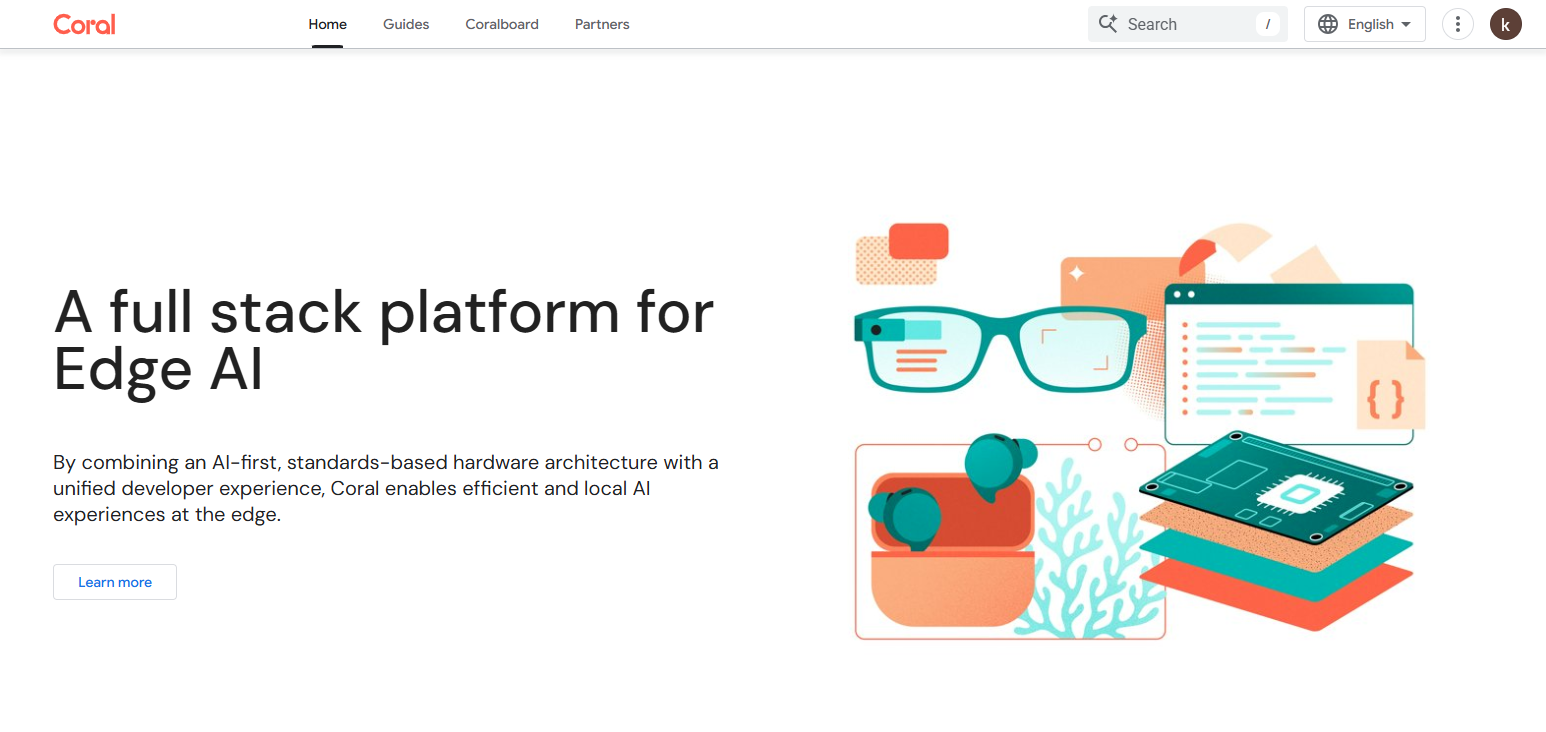
Using a scalable AI architecture, smart factories may automate quality control and maintenance of their systems, as well as defect detection, all at a lower infrastructure cost.
Google Coral Edge TPU Features
- Energy Efficient AI Processing: Power consumption for conducting AI tasks is very low.
- Fast Vision Intelligence: Quality assessment of images is done via near real time AI.
- Compact Hardware Design: Form factor is small for easy integration within industrial hardware and smart cameras.
- Offline AI Capability: AI processes can be performed without constant cloud connectivity.
- Cost-Effective Deployment: Automated AI solutions for manufacturing can be economically deployed.
| Pros | Cons |
|---|---|
| Provides efficient AI inference with very low power consumption. | Limited performance for extremely complex AI models. |
| Ideal for smart cameras and machine vision applications. | Requires models to be optimized for TensorFlow Lite. |
| Reduces operational costs through energy-efficient processing. | Less suitable for large-scale industrial AI workloads. |
| Enables fast local decision-making without cloud dependency. | Limited memory capacity compared with high-end AI platforms. |
| Compact design supports flexible factory deployment. | May require additional hardware for complete industrial solutions. |
4. Hailo-8 AI Processor
Designed to perform high-speed inference for industrial automation and AI-enabled robotics, Hailo-8 AI Processors are edge AI chips.
Hailo-8 processors allow advanced neural networks to be run by manufacturers for AI-enabled systems, such as automated inspection and object detection systems, as well as intelligent robotics.
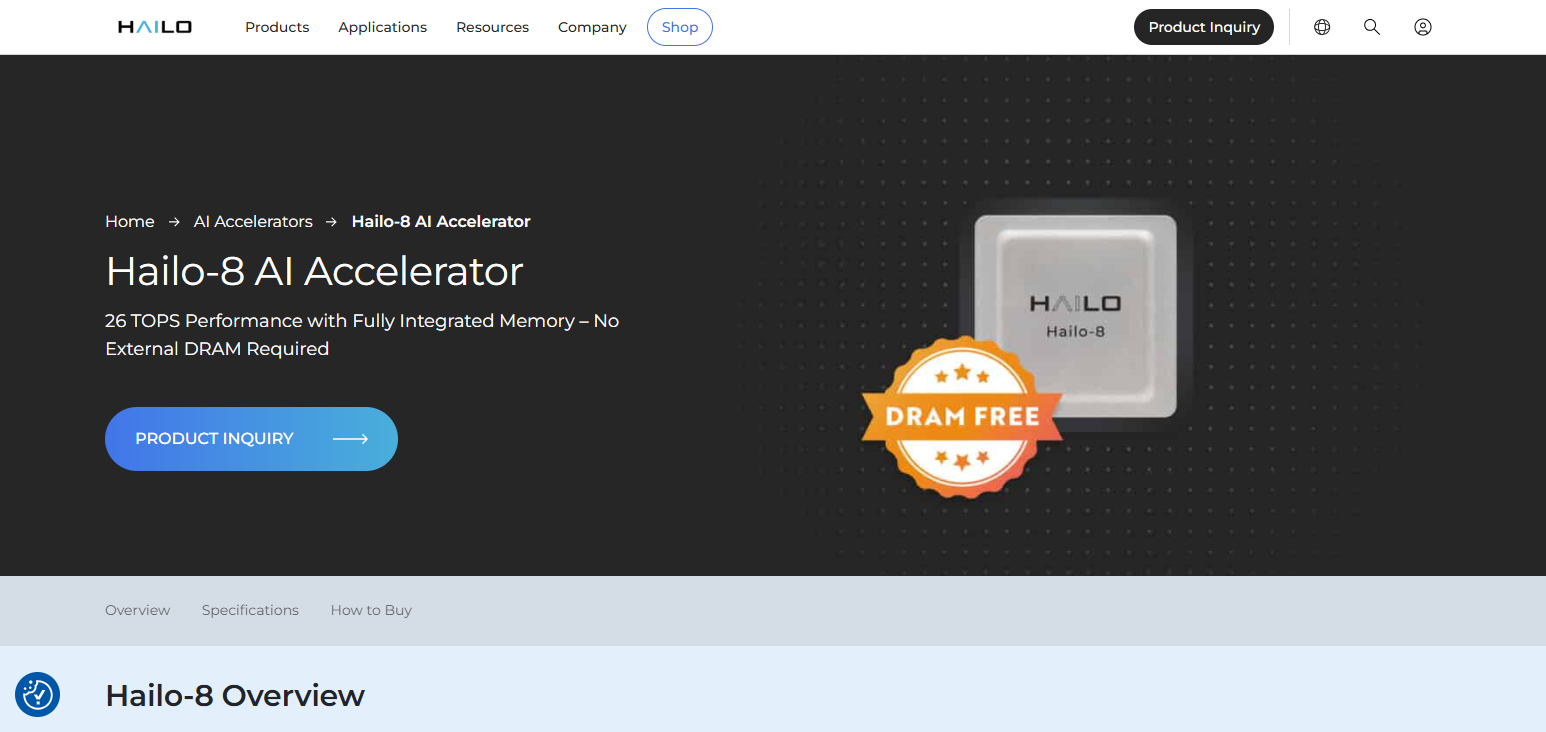
Hailo-8 processors are built specifically for AI computation, which allows these processors to achieve high performance with significantly lower power consumption.
For factories looking to implement autonomous machines and smart cameras that make real-time decisions to boost productivity and efficiency, these processors are well-suited.
Hailo-8 AI Processor Features
- Dedicated AI Acceleration: Industrial grade applications can benefit from AI acceleration.
- Rapid AI Decision Making: Supports the need for fast AI decisions in machines and autonomous robots.
- Efficient Use of Energy: Provides optimal performance while decreasing energy costs.
- Advanced Computer Vision: Analyzes images and inspects them for automation.
- Flexible Scalability: Provides multiple options for smart factories and can be deployed in multiple areas
| Pros | Cons |
|---|---|
| Delivers high-performance AI inference with low power usage. | Limited ecosystem compared with major AI hardware providers. |
| Designed specifically for edge AI and industrial automation. | Requires technical knowledge for hardware integration. |
| Supports real-time computer vision applications efficiently. | Not ideal for general-purpose computing tasks. |
| Reduces latency in autonomous manufacturing operations. | Limited availability in some global markets. |
| Provides scalable AI acceleration for smart factories. | May require customized software development. |
5. Qualcomm RB5 Platform
Bringing cutting-edge AI, robotics, and advanced communication to an autonomous manufacturing system, Qualcomm RB5 Platform is an assembly of advanced intelligent autonomous systems and industrial automation elements.
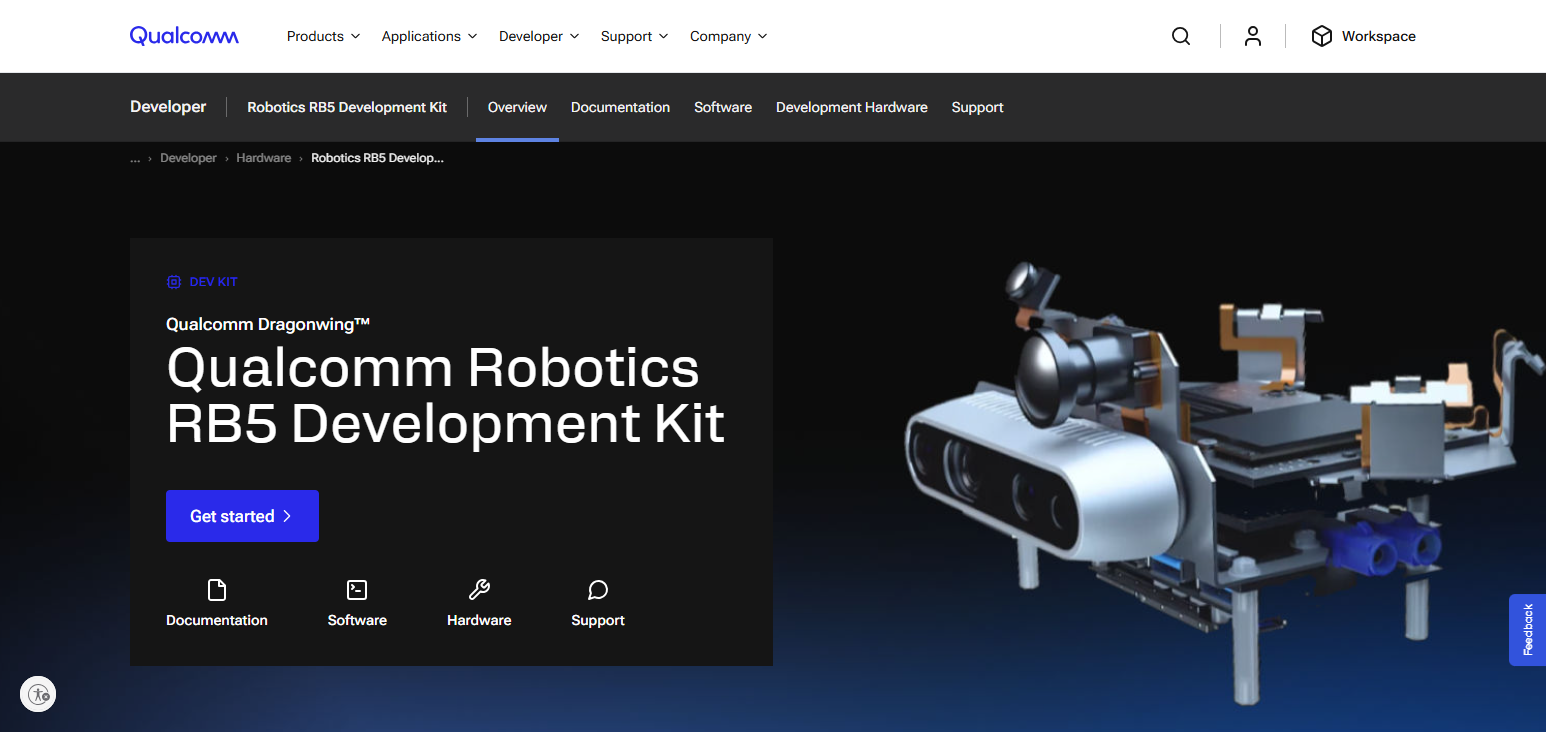
Built for real-time processing, this platform is a seamless integration of AI processing and acceleration, and computer vision, with a focus on secure connectivity.
Factories are able to design more advanced robotics systems and easily implement robotic systems for tasks such as autonomous navigation, monitoring machines, and handling materials.
Qualcomm RB5 Platform Features
- Powerful AI for Advanced Robotics: Creates highly intelligent robots with advanced AI processing.
- Seamless Integrated Technology: Provides advanced wireless and IoT communication across factories.
- Computer Vision Processing: Provides object detection and tracking for autonomous operations.
- Secure Edge Technology: Provides security solutions for the protection of industrial data.
- Support for Autonomous Machines: Creates intelligent robots for factory automation.
| Pros | Cons |
|---|---|
| Combines AI processing, robotics, and advanced connectivity features. | More focused on robotics than general manufacturing workloads. |
| Supports autonomous robots and intelligent machine systems. | Development complexity can be challenging for beginners. |
| Provides efficient edge AI performance with low power consumption. | Limited industrial adoption compared with established platforms. |
| Enables advanced computer vision and automation applications. | Requires compatible software frameworks for full utilization. |
| Supports secure IoT and connected manufacturing solutions. | Hardware customization may increase implementation costs. |
6. Siemens Industrial Edge Devices
Siemens Industrial Edge Devices facilitate the connection of conventional manufacturing systems and modern automated AI manufacturing systems. These advanced industrial devices help companies place analytics and AI and ML automation right on the production floor.
Siemens Industrial Edge Devices help manufacturing systems become smarter by processing and using real-time operational data. These devices support energy optimization and real-time monitoring of production and help industries remain competitive and meet the standards of Industry 4.0.
Siemens Industrial Edge Devices Features
- Standard Industrial Reliability: Built for reliability in the harsh continuous operation of manufacturing.
- Supports Predictive Maintenance: Analyzes data with the help of AI to identify issues before failures.
- Real Time Processing: Analyzes data close to the machines.
- Works with Industry 4.0: Creates seamless interactions between automation and digital manufacturing.
- Resource Optimizing: Intelligent monitors help reduce resource consumption.
| Pros | Cons |
|---|---|
| Provides industrial-grade reliability for factory environments. | Higher cost compared with consumer edge devices. |
| Integrates easily with Siemens automation ecosystems. | Works best within Siemens-based industrial environments. |
| Supports predictive maintenance and real-time production monitoring. | May require specialized Siemens expertise for deployment. |
| Improves operational efficiency through local data processing. | Less flexible for highly customized AI applications. |
| Designed for Industry 4.0 transformation initiatives. | Licensing and software costs can increase expenses. |
7. Advantech Edge AI Systems
Designed specifically for use in tough industrial environments, Advantech Edge AI Systems provide rugged computing solutions. AI automation, maintenance, and real-time data analysis are system features designed to enhance the processing done on plant floors.
Built for the challenges factories face, Advantech systems allow factories to analyze the performance of machines and discover anomalies to better the quality of the production.
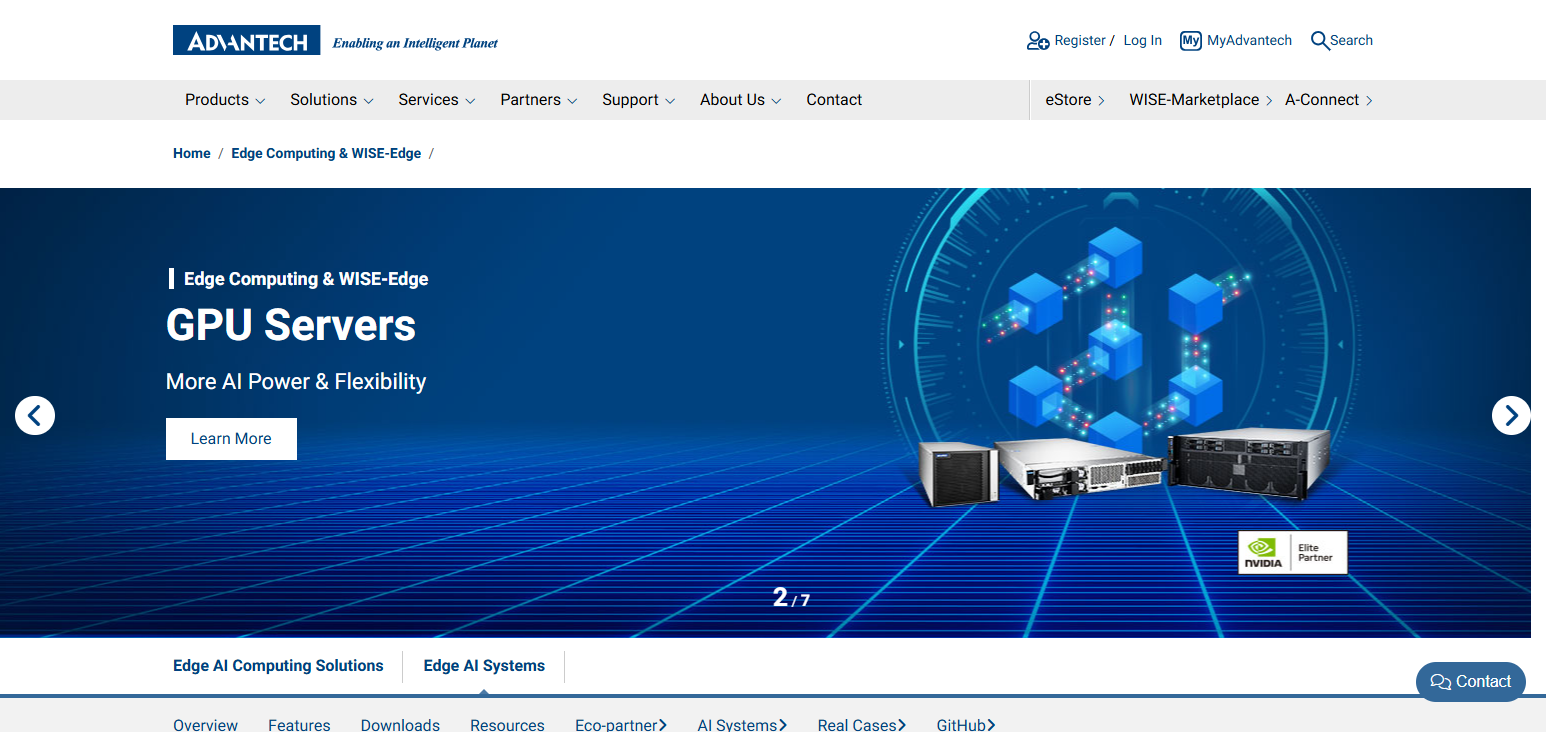
With flexible design options, these systems can be interconnected with industrialized robotic and sensor systems, and IrIoT networks. This makes the systems a key resource for factories looking to build integrated systems of autonomous machines that are scalable and flexible.
Advantech Edge AI Systems Features
- Durability for Harsh Environments: Reliable performance in harsh factory environments.
- Supports AI for Smart Manufacturing: Automation of AI-based manufacturing.
- Customizable and Flexible Design: Multiple designs to suit the industrial need.
- Efficient IoT Solutions: Connects all machines and sensors.
- Empowers Predictive Maintenance: Predictive Maintenance is simplified through advanced analytics.
| Pros | Cons |
|---|---|
| Built for harsh industrial environments with strong durability. | Hardware pricing can be higher than standard computers. |
| Supports AI automation, IoT, and machine monitoring applications. | Requires technical knowledge for industrial configuration. |
| Offers flexible hardware options for different manufacturing needs. | Some models may have limited AI acceleration power. |
| Enables reliable long-term factory deployments. | Complex systems may need professional maintenance support. |
| Compatible with industrial sensors and automation equipment. | Initial setup may require additional integration efforts. |
8. AMD Kria SOM
AMD Kria Systems-on-Modules provide programmable AI for the automation of industries and manufacturing systems. By embedding programmable logics with advanced computational systems, the Kria systems offer manufacturers modular and programmable systems for their specific needs.
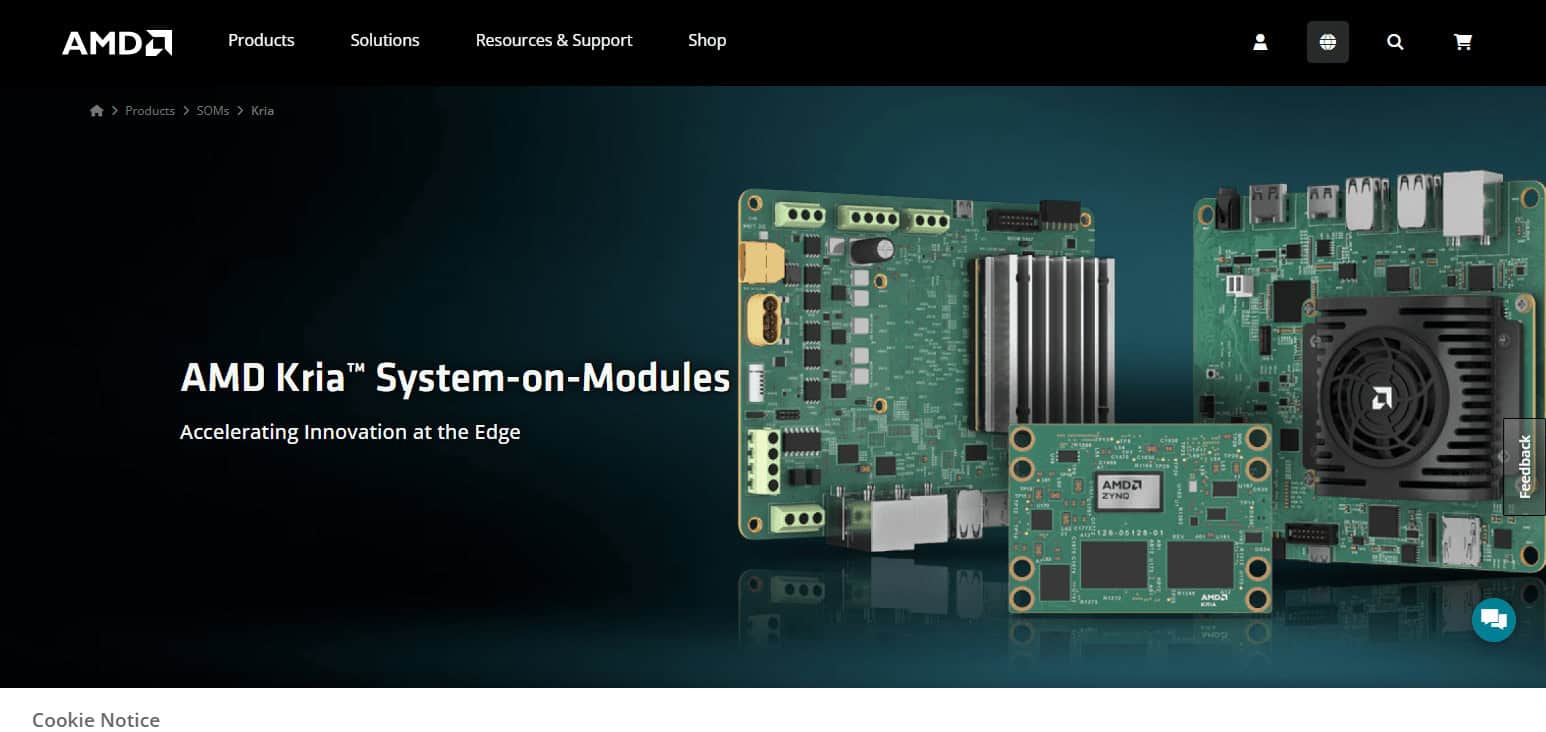
With Kria, the engineering staff of the manufacturing plant can easily implement and control robotic systems and automate the further processing of information through the systems.
Due to the programmable nature of Kria, manufacturing plants that want to implement flexible edge AI solutions for automation and manufacturing systems, can use the Kria systems for such purposes.
AMD Kria SOM Features
- Programmable AI Acceleration: Solutions for AI via an advanced computing framework.
- Real-Time Processing: Rapid analysis for vision systems. Control of robotics functions.
- Flexible Deployment: Manufacturers can modify solutions to suit production demands.
- Embedded Systems Support: Small form factor for automation of industrial processes.
- Performance Scalability: Upgrades available for evolving requirements of Smart Factories.
| Pros | Cons |
|---|---|
| Provides flexible AI acceleration through programmable architecture. | Requires FPGA development skills for customization. |
| Supports real-time vision processing and robotics applications. | Higher learning curve compared with ready-to-use platforms. |
| Allows manufacturers to customize solutions for specific needs. | Software ecosystem is smaller than NVIDIA solutions. |
| Offers scalable performance for embedded industrial systems. | Development time can increase for complex applications. |
| Suitable for advanced autonomous manufacturing projects. | May require additional engineering resources for deployment. |
9. AAEON UP AI Edge Platforms
AAEON UP AI Edge Platforms provide small and powerful computers for the automation of advanced manufacturing systems. A firm use of the AAEON systems are in industrial robotic systems and in the AI-based automated inspection and monitoring systems.

AAEON systems are small enough to fit easily into industrial systems, yet powerful enough to make reliable AI-based computations for those systems. Edge AIEON systems provide advanced manufacturing systems the ability to make timely AI-based decisions
By bringing AI-based computation close to the manufacturing systems. For manufacturing systems that need built autonomy and flexibility, these systems are easily adaptable and provide autonomy.
AAEON UP AI Edge Platforms Features
- Compact Edge AI: Tiny AI Systems for integration into factory equipment.
- Machine Vision Systems: Automated product inspection and quality control.
- Industrial IoT Systems: Interfaces with devices and smart manufacturing networks.
- Cost-Effective AI Edge Solutions: Low-cost Intelligent systems for edge application.
- Versatile Automation: Robotics, monitoring, and smart factory applications.
| Pros | Cons |
|---|---|
| Compact design allows easy integration into factory equipment. | Limited processing power for highly complex AI workloads. |
| Provides affordable edge AI solutions for manufacturers. | Not designed for extremely large industrial deployments. |
| Supports robotics, automation, and machine vision applications. | Performance depends heavily on selected hardware configuration. |
| Offers flexible connectivity options for industrial environments. | Requires external components for advanced AI acceleration. |
| Helps small and medium manufacturers adopt edge AI. | Limited brand recognition compared with major technology providers. |
10. Dell Edge Gateway Systems
Dell Edge Gateway Systems facilitate secure edge computing in connected manufacturing systems by processing data on the edge and performing analytics using AI. Gateway systems give factories increased control of the data generated by machines while minimizing the need for cloud-based computing.
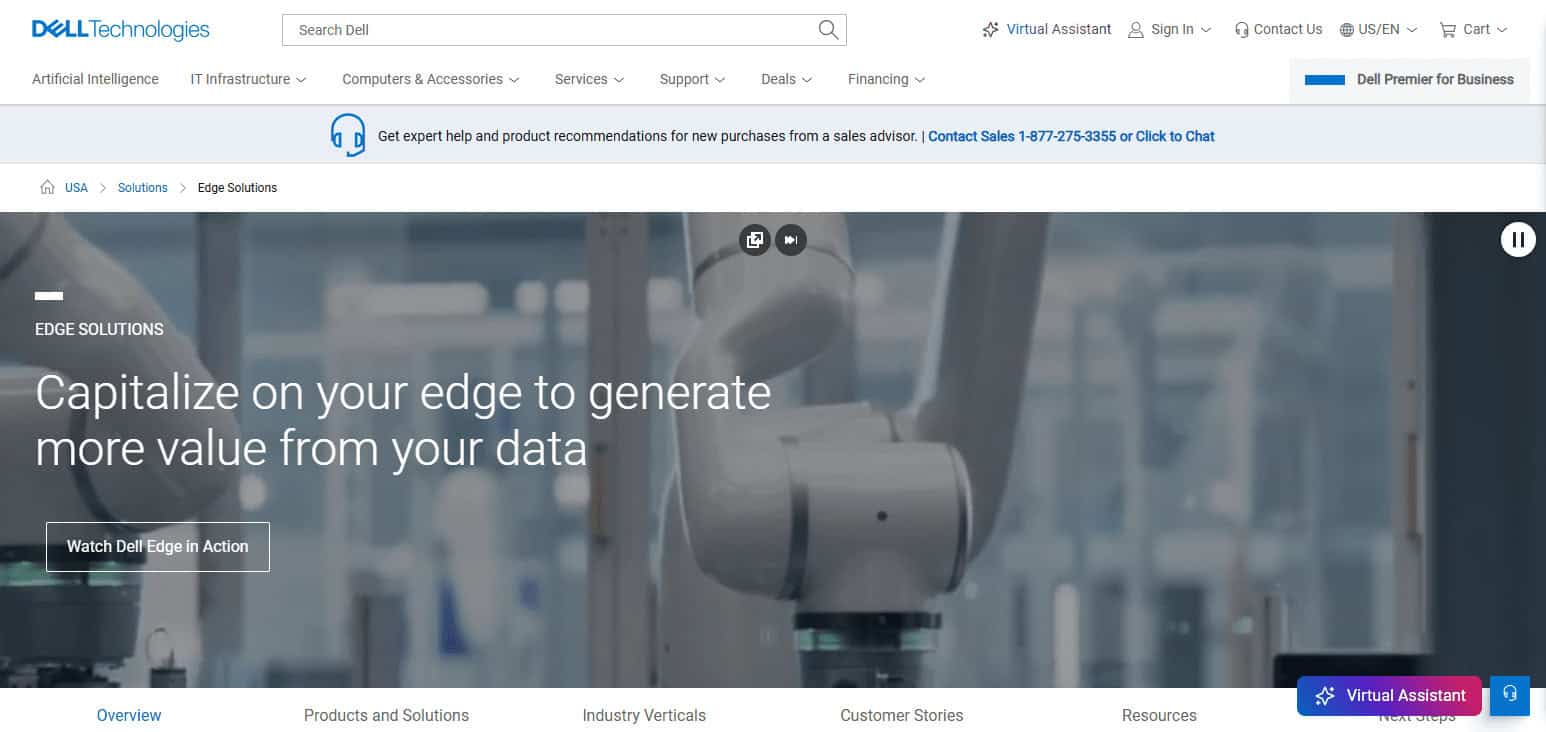
Dell’s edge systems support industrial IoT, predictive maintenance, automation monitoring, and real-time insights to improve factory operations. Since the edge computing systems are built for enterprise customers
They provide the security and reliability to support the manufacturing use cases enabled by building intelligent factories capable of operating faster and providing insights to support better decision making.
Dell Edge Gateway Systems Features
- Secure Edge Systems: Safe computing for industrial environments.
- Fast Industrial Analytics: Instant insights from machine data.
- Flexible Industrial IoT: Links shop floor to enterprise systems.
- Remote Operations: Unified control of all connected manufacturing systems.
- Industrial Scalability: Full support for demands of advanced automated manufacturing.
| Pros | Cons |
|---|---|
| Provides secure and reliable industrial edge computing infrastructure. | Higher investment cost for small manufacturing companies. |
| Supports IoT connectivity and real-time operational analytics. | Less specialized for AI workloads than dedicated AI chips. |
| Offers enterprise-level security and remote management features. | Requires additional AI software tools for advanced applications. |
| Integrates well with existing enterprise IT environments. | Hardware size may not suit compact industrial setups. |
| Suitable for large-scale connected manufacturing operations. | Power requirements can be higher than lightweight edge devices. |
Advantages of Edge AI for Manufacturers
- Rapid Data Interpretation: Operations and data are analyzed in real time.
- Minimal Downtime: Anticipates machine malfunctions and enhances maintenance schedules and techniques.
- Augmented Output: Implements automation and refines production processes.
- Decreased Expenditures: Further lessens dependence on cloud computing and lowers operating costs.
- Refined Quality Control: AI-powered inspections identify flaws during the manufacturing process.
Conclusion
In Conclusion Edge AI Computing Hardware Powering Autonomous Manufacturing is revolutionizing the industrial sector. Faster processing coupled with smarter automation and real-time decision-making is leading the charge.
Dedicated hardware revolutionizing the smart factory means greater output, reduced cost, and improved machine performance. Edge AI is central to smart factories, especially as manufacturers migrate to using more Industry 4.0 technologies.
FAQ
Which industries use Edge AI computing hardware?
Manufacturing, automotive, electronics, healthcare, and logistics industries use Edge AI.
What are examples of Edge AI hardware platforms?
NVIDIA Jetson, Intel Edge, Google Coral, Hailo-8, and Siemens Edge devices.
Can Edge AI work without cloud computing?
Yes, it can process critical data locally without continuous cloud dependency.
How does Edge AI support predictive maintenance?
It analyzes machine data to detect failures before equipment breakdowns occur.