
In this article, I explain about the Legal Tech Brands Capitalizing on global law with artificial intelligence, automation, and cloud technology.
Ironclad, Harvey, and Clio are the (digital) new face of legal research, contract management, compliance tracking, or digital legal services.
These platforms assist businesses and law firms across the globe in enhancing productivity, lowering operational costs and modernizing legal workflows seamlessly.
Key Poinst & Legal Tech Brands Dominating 2026
| Legal Tech Brand | Word Explanation |
|---|---|
| Ironclad | Ironclad simplifies contract workflows using automation, collaboration tools, and AI-powered legal management features. |
| Clio | Clio helps law firms manage cases, billing, documents, clients, and remote legal operations. |
| Harvey | Harvey delivers generative AI solutions assisting lawyers with research, drafting, and legal analysis. |
| Legora | Legora improves legal productivity through AI-driven document review, compliance, and workflow automation solutions. |
| Everlaw | Everlaw streamlines litigation processes with cloud-based ediscovery, collaboration, and advanced analytics capabilities. |
| Luminance | Luminance uses machine learning technology for contract analysis, due diligence, and compliance monitoring. |
| Sirion | Sirion enhances contract lifecycle management using AI-driven insights, risk tracking, and automation tools. |
| SpotDraft | SpotDraft automates contract drafting, approvals, storage, and collaboration for modern legal teams efficiently. |
| LegalZoom | LegalZoom provides affordable online legal services, business formation, compliance, and attorney support nationwide. |
| LexisNexis Legal & Professional | LexisNexis Legal & Professional offers legal research, analytics, compliance, and AI-powered professional solutions. |
10 Legal Tech Brands Dominating 2026
1. Ironclad
Ironclad is OEMing contract lifecycle management, then layering on enterprise-grade AI and all the other head-turning technologies to rule legal tech for years to come.
Over enterprise agreements quicker with Smart AI extraction, verification queues, and contract relationship mapping features — introduced in 2026.
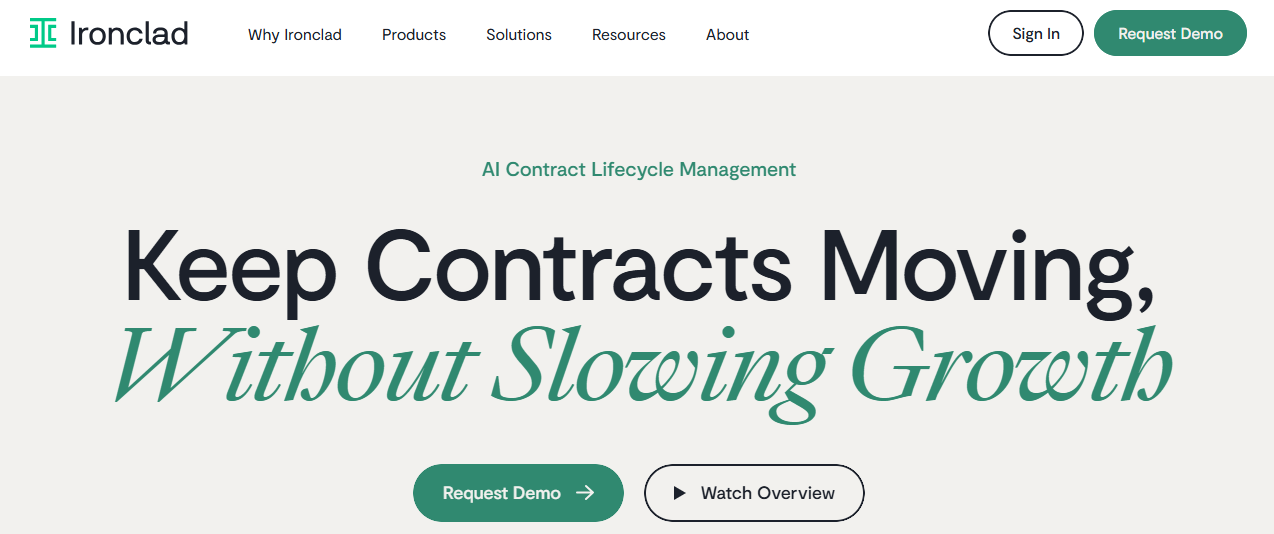
Bina’s platform operates within the billions of contract records while embedding itself in Salesforce and Snowflake ecosystems. Ironclad is becoming the go-to choice for legal departments that want to automate workflows
Track compliance with contracts and speed up negotiations. Moreover, the company uses AI-powered insights to significantly reduce manual contract reviews, optimize efficiency of operations for global businesses and modern corporate legal teams.
| Pros | Cons |
|---|---|
| Advanced AI automates contract lifecycle management efficiently | Premium enterprise pricing may challenge smaller businesses |
| Seamless integrations with Salesforce and Snowflake ecosystems | Requires onboarding time for complex enterprise workflows |
| Strong compliance tracking and approval automation features | Customization options may need technical expertise |
| Reduces manual contract review significantly for legal teams | Some advanced features unavailable in lower-tier plans |
| Supports large-scale enterprise contract processing globally | Heavy reliance on cloud infrastructure concerns some firms |
2. Clio
As one of the most recognized legal tech brands with larger law firms globally, Clio is still the big boy for smaller and mid-market practices as well.
Its cloud-based ecosystem streamlines processes such as billing, case management, scheduling, and communication with clients through one easy dashboard.
Discussion† in the industry lately has focused on Clio’s expertise at automating administrative work and creating a remote environment to run the legal side of things.
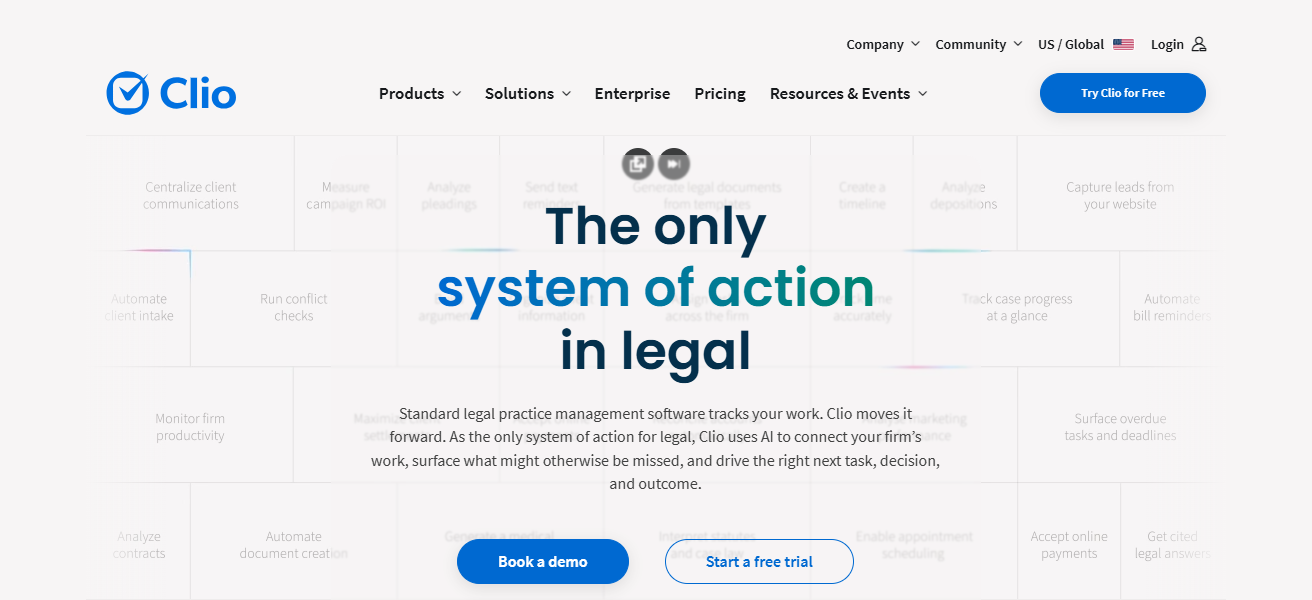
Lawyers’ platform for virtual consultations, digital payments, and document management helps solve these complexities by allowing lawyers to improve productivity without compromising efficiency.
Clio Modern at Scale covered how Clio’s expanding integrations and mobile-first experience continue attracting modern firms seeking scalable and efficient practice management solutions.
| Pros | Cons |
|---|---|
| Excellent cloud-based practice management for law firms | Advanced reporting tools are limited to enterprise firms |
| Mobile-friendly dashboard improves remote legal operations | Subscription costs increase with additional integrations |
| Simplifies billing, scheduling, and document organization | Internet dependency affects offline accessibility |
| Supports digital payments and virtual consultations easily | Some customization features require premium subscriptions |
| Strong third-party integrations enhance workflow efficiency | Large firms may need more advanced litigation tools |
3. Harvey
By training lawyers to automate research, drafting, compliance, and due diligence tasks, Harvey has become an international leader in legal AI.
By 2026, Harvey had averaged a $11 billion valuation based on the launch of hundreds of agents running complex daily legal AI workflows.

Large firms like HSBC now use Harvey for enterprise legal operations to enhance efficiency and speed of response. This helps lawyers build personalized AI workflows without code.
Harvey is rapidly being adopted by law firms around the world, and it shows how generative AI is revolutionising traditional legal services across the globe.
| Pros | Cons |
|---|---|
| Powerful generative AI improves legal research speed | AI-generated outputs still require human verification |
| Supports customized AI workflows without coding expertise | Enterprise pricing may exceed smaller firms’ budgets |
| Widely adopted by global law firms and institutions | New users may face learning curve initially |
| Automates drafting, compliance, and due diligence tasks | Data privacy concerns remain among conservative firms |
| Enhances productivity with intelligent legal AI agents | New users may face a learning curve initially |
4. Legora
Legora is one of the fast-growing AI-powered legal tech companies in the market, specializing in compliance monitoring and smart legal research.
The market position of the company was reinforced when it acquired Australian startup Graceview in 2026, augmenting its multi-jurisdictional regulatory scanning activity.

Legora provides automated legal updates and compliance intelligence for top international law firms. To spur growth, it is aggressively hiring legal engineers and artificial intelligence specialists internationally.
Legora is being utilized increasingly by businesses looking to improve decision-making accuracy and efficiency of their legal departments, while also decreasing manual tracking around regulatory changes.
| Pros | Cons |
|---|---|
| Strong compliance monitoring across multiple jurisdictions | Brand recognition still growing globally |
| AI-driven legal research improves operational efficiency | Smaller ecosystem compared with established competitors |
| Automated regulatory updates reduce manual tracking workloads | Advanced integrations may require technical setup |
| Expanding international presence increases enterprise credibility | Limited public pricing transparency for customers |
| Supports intelligent compliance intelligence for law firms | Some features are better suited for enterprise organizations |
5. Everlaw
Everlaw: Continuing to Lead the Future of Ediscovery and Litigation Tech with Powerful Cloud-Based Investigation and Collaboration Tools.
Everlaw is used by legal professionals for document review, trial preparation, evidence management, and mass litigation.
The platform is often acknowledged by the industry for making complex discovery processes easy with integrated analytics and AI-driven workflows.

This legally collaborative environment enables legal teams to securely review documents using an internet-connected device from any location to support litigating cases in a remote manner based on modern litigation practices.
As we learn more about managing legal data, the enterprise providers continue to find ways to keep us interested.
Everlaw’s innovation in digital investigations and legal data management through cloud-based discovery solutions is a prime example of why they remain a strong competitor within the space.
| Pros | Cons |
|---|---|
| Excellent cloud-based ediscovery and litigation management tools | Pricing can become expensive for smaller practices |
| AI-assisted analytics simplify complex investigations efficiently | Requires stable internet for optimal performance |
| Secure collaboration supports remote legal teams globally | Large datasets may require additional storage costs |
| Intuitive interface improves evidence organization processes | Learning advanced analytics features may take time |
| Strong reputation among enterprise litigation professionals | Limited suitability for non-litigation legal operations |
6. Luminance
Luminance is different from general legal tech products because it applies machine learning algorithms to deliver AI-enabled corporate services such as contract analysis, compliance detection, and due diligence reviews.
The platform automatically recognizes anomalies, clauses that are risky and negotiation opportunities in vast amounts of legal document data.
More global law firms are relying on Luminance to expedite mergers, acquisitions, and corporate investigations while reducing legal risks.

Its pattern-recognition technology is superior to manual methods for dramatically improving review accuracy.
Luminance uses AI automation to analyse complex documentation quickly, while ensuring high standards of compliance and operational transparency through intuitive dashboards.
| Pros | Cons |
|---|---|
| Machine learning improves contract analysis accuracy significantly | AI recommendations still need legal expert oversight |
| Detects risky clauses and anomalies automatically | Enterprise implementation may require training resources |
| Accelerates mergers and acquisitions due diligence processes | Smaller firms may find pricing expensive |
| Enhances compliance monitoring with intelligent automation | Complex systems may overwhelm non-technical users |
| Reduces manual document review workload efficiently | Integration capabilities vary across legacy software environments |
7. Sirion
The contract lifecycle management category is led by Sirion, which enables enterprises to log and keep track of ongoing obligations, performance outcomes from suppliers, and legal compliance in real time.
Its AI-based analytics platform delivers actionable insights from contracts that help in mitigating financial risks and strengthening governance.
More organizations are extensively adopting the Sirion platform to efficiently automate contract generation, negotiation, and renewal tracking processes.
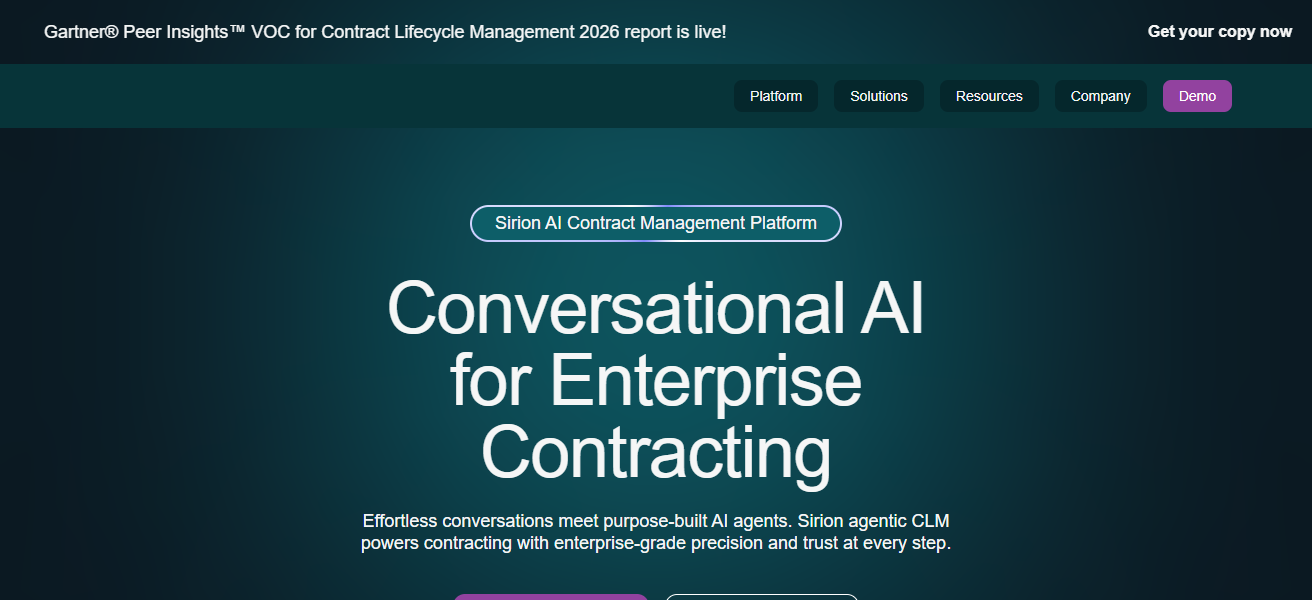
Predictive insights from the platform help companies see the operational problems that can lead to costly legal disputes.
Sirion, with its strong enterprise focus as well as a unique approach to risk-neutrality, is the solution of choice for multinational corporations managing complex contractual ecosystems on an international scale.
| Pros | Cons |
|---|---|
| Real-time contract intelligence improves governance visibility | The setup process can be time-consuming initially |
| AI-powered analytics reduce financial and legal risks | Setup process can be time-consuming initially |
| Automates renewals, obligations, and supplier tracking effectively | Premium features may increase operational costs |
| Strong predictive insights prevent contractual disputes early | Requires employee training for maximum efficiency |
| Excellent scalability for multinational corporate environments | An enterprise-focused platform may overwhelm small businesses |
8. SpotDraft
It’s simple, efficient digital automated contract drafting & approval processes have made SpotDraft an unparalleled success among both startups and corporate legal teams.
The intelligent automation platform accelerates document generation, workflow approvals, and digital collaboration without requiring a specialized legal mind.
SpotDraft Businesses leverage SpotDraft to centralize contract storage, improve visibility, and decrease negotiation delays by 90%.

The firm places an emphasis on easy-to-use interfaces and AI-based contract intelligence for scaling firms.
SpotDraft is preferred by modern businesses looking to scale on the speed and cost of contract management across various industries. As legal operations become more digital, SpotDraft continues to attract innovative businesses
| Pros | Cons |
|---|---|
| Simplifies contract drafting and approval workflows efficiently | Advanced enterprise features still evolving rapidly |
| User-friendly interface ideal for startups and growing businesses | Limited offline functionality compared with desktop systems |
| Centralized contract storage improves organizational visibility | Custom integrations may require technical expertise |
| AI-powered automation reduces negotiation delays significantly | Smaller global presence than established competitors |
| Cost-effective solution for modern legal operations teams | Complex legal workflows may need additional customization |
9. LegalZoom
LegalZoom continues to be a major player in the online legal services sector by providing affordable and accessible assistance for individuals and small businesses.
You will use digital-first services for business registration, trademark filing, compliance support, and legal documents generation on the platform.
SMEs are becoming more and more attracted to LegalZoom because it is simplifying the workflows, providing subscription-based legal plans, and offering easier access to consultations from a wide range of attorneys.
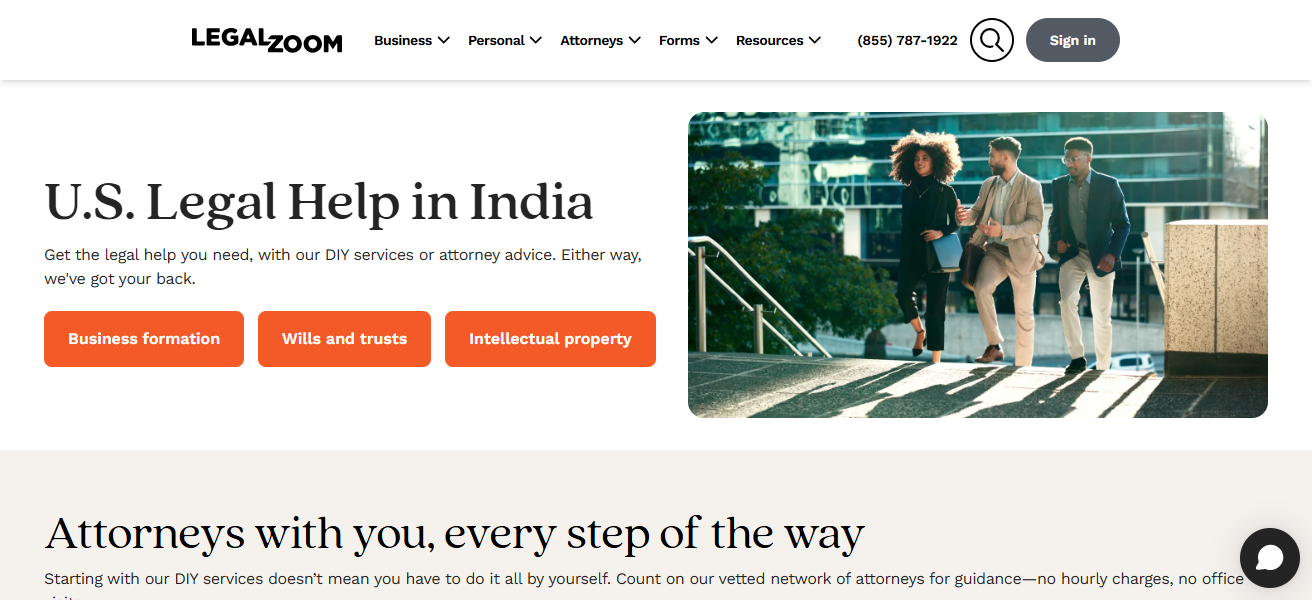
There have been notable recent technological innovations all around automating easy tasks, together with providing customized legal advice for startups and freelancers.
LegalZoom’s knack for marrying efficiency, affordability, and national reach maintains its powerful position in the growing online legal services market.
| Pros | Cons |
|---|---|
| Affordable legal services for individuals and startups | Limited personalization compared with traditional law firms |
| Easy business registration and trademark filing processes | Complex legal matters still require external attorneys |
| Subscription plans improve accessibility and convenience | Some upselling tactics frustrate certain users |
| Nationwide accessibility supports remote legal assistance | Customer support response times occasionally inconsistent |
| User-friendly platform simplifies legal document creation | Not ideal for enterprise-level legal requirements |
10. LexisNexis Legal & Professional
LexisNexis Legal & Professional continued the actualization of legal research with its artificial intelligence-driven Protégé platform, launched to global markets in 2026.
It integrates authoritative legal databases with a powerful set of intelligent workflows, allowing attorneys to easily automate tasks like drafting, research, summarization, and compliance while retaining accuracy.

Recent integrations of Anthropic technology only reinforced its AI-driven legal automation capabilities.
Adding millions of new records every day from news sources, LexisNexis analyzes billions of documents so you can have access to the most powerful legal intelligence resources available.
The highly secure, with a focus on verifiable citations and workflow automation platform, is being used by modern law firms everywhere across the globe.
| Pros | Cons |
|---|---|
| Massive legal database supports accurate legal research | Premium subscriptions can be expensive for smaller firms |
| AI-powered Protégé platform enhances legal productivity | Advanced tools may require professional training initially |
| Verifiable citations improve legal drafting reliability | Interface complexity may overwhelm beginner users |
| Strong enterprise-grade security and compliance standards | Heavy information volume can slow research workflows |
| Automates summarization, drafting, and legal analysis efficiently | Smaller firms may underutilize advanced enterprise features |
Conclusion
To sum up, Legal tech brands are revolutionising the ASEAN and global legal market with AI, automation, and cloud-powered solutions.
Companies such as Ironclad, Harvey, and LexisNexis Legal & Professional continue providing efficiencies to compliance and legal research capabilities.
These platforms will be instrumental in accelerating the digital transformation of legal operations to make them smarter, quicker, and less expensive for businesses and law firms all over the globe.
FAQ
What are legal tech brands?
Legal tech brands provide software improving legal workflows, research, compliance, and contract management processes.
Why is legal technology growing rapidly?
AI automation, remote work, and digital transformation increase demand for efficient legal solutions globally.
Which company leads legal contract management?
Ironclad is widely recognized for advanced contract lifecycle management automation.
Why do law firms prefer Clio?
Clio simplifies billing, case management, scheduling, and client communication through cloud-based systems.