
In this article, I am going to tell you about Fast-Growing Legal Software Brands Right Now Taking Over The Legal Industry with AI Automation and Cloud.
These legal technology companies have experienced explosive growth by helping law firms and enterprises achieve efficiency gains in productivity, contract management, compliance, and legal research.
These brands are the architects of modern legal operations, from AI-powered drafting tools to enterprise workflow platforms on a global level.
Key Poinst & Fast-Growing Legal Software Brands Right Now
| Brand | Word Explanation |
|---|---|
| Clio | Cloud-based legal management platform expanding globally through AI-powered workflow automation solutions. |
| Ironclad | Contract lifecycle platform simplifying negotiations, approvals, compliance, and enterprise legal collaboration efficiently. |
| Harvey | AI legal assistant transforming research, drafting, compliance, and law firm productivity rapidly. |
| Luminance | Advanced contract analysis software using machine learning for faster legal document reviews globally. |
| Everlaw | Litigation and eDiscovery platform helping firms manage investigations, evidence, and case preparation seamlessly. |
| Genie AI | An open-source legal drafting platform is improving contract creation with collaborative artificial intelligence technology features. |
| Spellbook | AI-powered Microsoft Word assistant accelerating contract drafting, review, and legal document editing processes. |
| Sirion | Enterprise contract management software enhances supplier agreements, compliance monitoring, and operational transparency globally. |
| Brightflag | Legal operations platform optimizing corporate legal spending, invoice reviews, and outside counsel management. |
| Robin AI | Robin AIAn |
10 Fast-Growing Legal Software Brands Right Now
1. Clio
Clio Your Personal Legal Practice Assistant Clio is once again changing the face of how legal professionals manage their business by bundling everything together with automation, billing intelligence, and client communication into one system utilizing Artificial Intelligence.
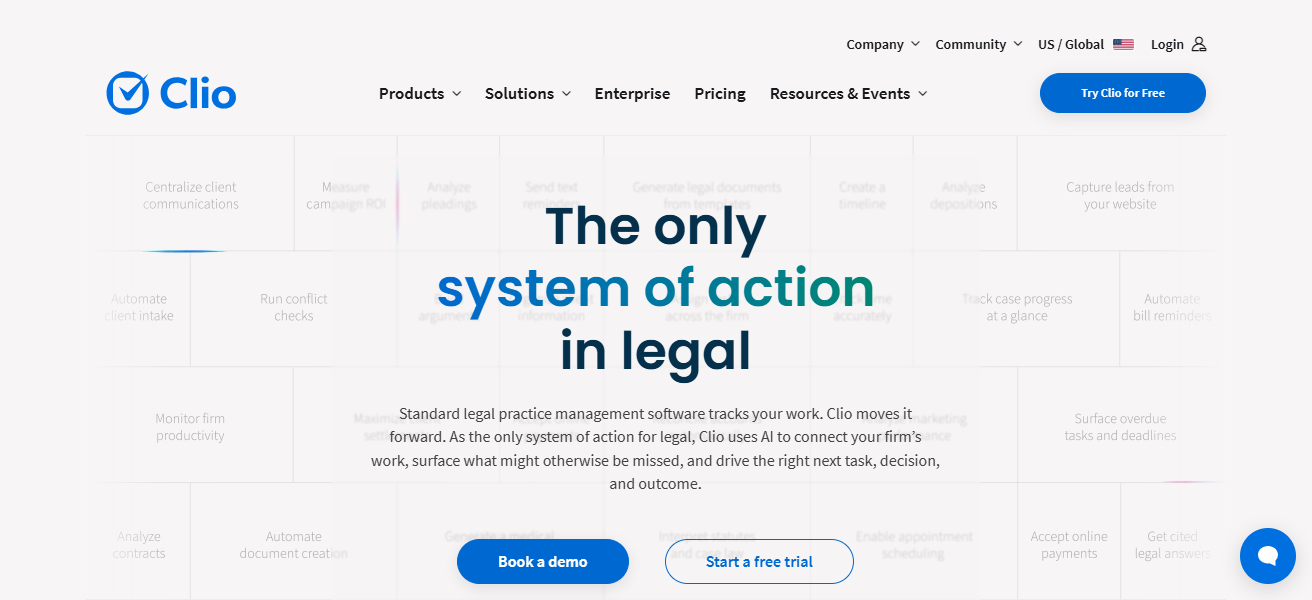
Clio grew aggressively in 2026 after major acquisitions and more deeply embedded AI, allowing small and mid-sized law firms to modernize their operations even faster.
Its cloud-first infrastructure attracts companies looking for scalable remote workflows through its growing ecosystem of marketplaces.
Industry leaders now consider Clio a consolidator, influencing the direction of global legal operations technology.
| Pros | Cons |
|---|---|
| Strong cloud-based legal practice management ecosystem for growing law firms. | Premium features become expensive for smaller independent legal practices. |
| AI-powered billing and automation improve productivity and client communication significantly. | Advanced customization options may require technical onboarding support initially. |
| Large integration marketplace supports accounting, payments, and document management systems. | Internet dependency limits accessibility during connectivity or server issues occasionally. |
| Remote-friendly infrastructure supports hybrid and distributed legal team collaboration effectively. | Some firms may experience learning curve transitioning from traditional software. |
2. Ironclad
Ironclad has built a way to automate contract lifecycle management for enterprise legal departments globally, and they are going gangbusters through the use of AI.
By using agentic AI capabilities, the intelligent automation platform simplifies approvals, negotiation tracking, compliance monitoring, and contract analytics.
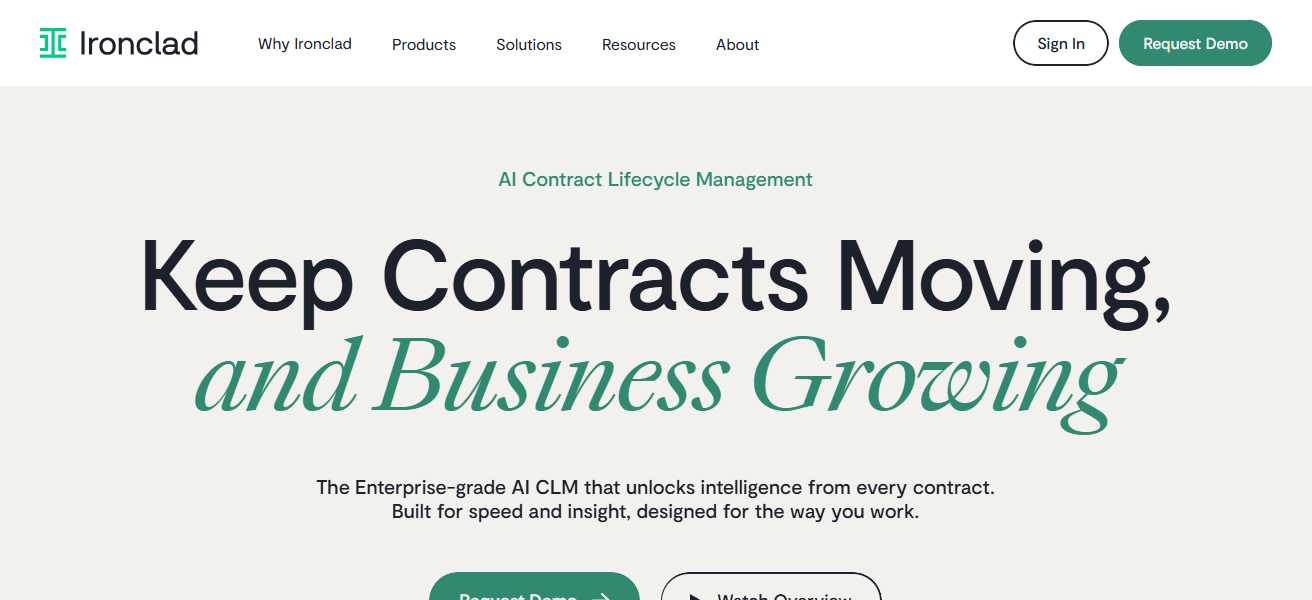
Ironclad was reportedly on an annual recurring revenue run rate of over $200 million in 2026 and had begun to draw the attention of global enterprises, such as technology and financial companies.
Ironclad is often preferred by businesses to reduce legal bottlenecks, speed up procurement cycles, and improve operational visibility across complex commercial agreements.
| Pros | Cons |
|---|---|
| Advanced contract lifecycle automation reduces enterprise legal workflow bottlenecks efficiently. | Primarily designed for enterprises, limiting affordability for smaller businesses. |
| AI-powered analytics improve compliance monitoring and contract visibility across departments. | A feature-rich interface may feel overwhelming for first-time legal software users. |
| Strong approval workflows accelerate procurement and negotiation management processes globally. | A complex implementation process may require dedicated onboarding and integration assistance. |
| A complex implementation process may require dedicated onboarding and integrations assistance. | Pricing transparency remains limited compared with competing contract management platforms. |
3. Harvey
Harvey has emerged as one of the fastest-growing AI legal platforms since the company was spun off from a multimillion-dollar valuation, all the way to multibillion-dollar valuations and widespread Big Law adoption.
The platform uses tailored AI agents trained on specialist legal datasets to automate legal drafting, compliance reviews, contract analysis, and complex legal research.

Harvey began to use new generation agent-building solutions in 2026, allowing lawyers to automate repetitive workflows without the need for coding skills.
Leading global businesses are using Harvey to enhance productivity, shorten research time for decision making, and modernize the delivery of legal services.
| Pros | Cons |
|---|---|
| Automates legal drafting, compliance reviews, and advanced legal research tasks rapidly. | AI-generated outputs still require human legal verification for sensitive matters. |
| Widely adopted by major global law firms and enterprise legal departments. | High enterprise-focused pricing may limit accessibility for smaller legal practices. |
| Agent-building tools simplify workflow automation without extensive coding knowledge required. | Regulatory concerns surrounding generative AI continue affecting legal industry adoption. |
| Significantly reduces repetitive workloads and improves lawyer productivity across operations. | Dependence on AI systems may create accuracy concerns during complex cases. |
4. Luminance
Luminance is building tremendous traction with its proprietary “Legal-Grade AI” technology built for contract analysis and negotiations.
In a time when many competitors build on third-party models, Luminance has chosen to design its own bespoke AI infrastructure that prioritizes accuracy, compliance, and enterprise security.

The company unlocked global growth in 2026 by attracting investment from major corporations and launching a large-scale autonomous negotiation tool.
As a result, enterprises continuously leave Luminance on for due diligence and risk detection, adapting it increasingly for multilingual contract reviews across international legal and corporate environments.
| Pros | Cons |
|---|---|
| Proprietary Legal-Grade AI improves contract analysis accuracy and enterprise security standards. | Premium enterprise positioning may exceed budgets for smaller organizations significantly. |
| Multilingual contract review capabilities support international business and legal operations effectively. | Advanced AI features require staff training for maximum operational efficiency. |
| Autonomous negotiation tools reduce manual contract review workloads dramatically. | Heavy enterprise focus limits flexibility for freelancers and solo legal professionals. |
| Strong due diligence features enhance compliance and risk detection processes globally. | Integration setup with legacy systems can become technically challenging sometimes. |
5. Everlaw
Everlaw is a top litigation and eDiscovery platform empowering legal teams to effectively manage investigations, digital evidence, and trial prep.
Its cloud-native technology allows enterprises and law firms to collaborate on document review, receive analytical insights with AI-assisted case analysis, and manage evidence at scale.

In 2026, growing cybersecurity concerns and rising litigation complexities continue to drive Everlaw’s market growth.
Legal professionals are increasingly making the switch to Everlaw for the speed, accessibility, and streamlined courtroom preparation that high-volume legal matters demand.
| Pros | Cons |
|---|---|
| Cloud-native eDiscovery platform supports secure collaborative litigation workflows efficiently. | Primarily litigation-focused, limiting broader legal operations functionality for businesses. |
| AI-assisted evidence review accelerates investigations and courtroom preparation processes effectively. | Large-scale data processing may increase operational costs for legal teams. |
| Remote accessibility supports distributed legal teams and hybrid work environments smoothly. | Smaller firms may not require all advanced litigation-focused capabilities available. |
| Strong cybersecurity measures protect sensitive legal evidence and case documentation securely. | Learning advanced discovery tools may require additional staff training sessions. |
6. Genie AI
Genie AI is turning heads with its open-source legal document site that promises to reduce the burden of creating contracts for businesses and startups.
This combines collaborative drafting plus smart clause recommendations driven by artificial intelligence (AI), which helps organisations prepare legal documents more quickly, without the need for expensive legal infrastructure.
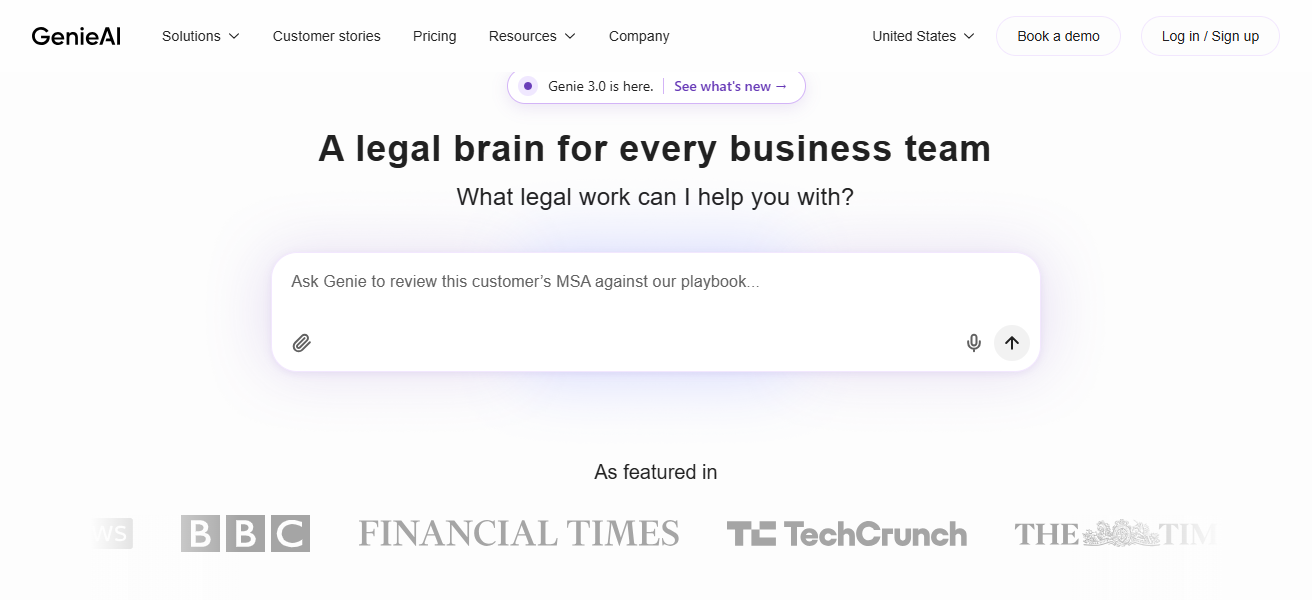
2026: Genie AI Year of the Enterprise. Expanded enterprise adoption with transparent AI systems, public API, and community-driven legal template.
More affordable automation tools make cutting-edge legal technology possible for growing companies, freelancers, and modern legal teams worldwide.
| Pros | Cons |
|---|---|
| Open-source legal platform offers affordable automation for startups and businesses globally. | Open-source structure may concern enterprises requiring proprietary security environments. |
| AI-powered clause suggestions accelerate legal drafting and document preparation tasks. | Limited enterprise-scale features compared with larger legal technology competitors currently. |
| Community-driven templates improve collaboration and legal document accessibility significantly. | Smaller ecosystem compared with established legal software platforms and marketplaces. |
| Transparent AI approach attracts businesses prioritizing ethical automation and compliance practices. | Some advanced functionalities still evolving compared with mature legal AI providers. |
7. Spellbook
Spellbook is already popular with transactional lawyers who spend their days drafting and reviewing contracts in Microsoft Word.
Spellbook uses generative AI to recommend clauses, notifies you of any missing provisions, and speeds up negotiations right inside ordinary workflows.
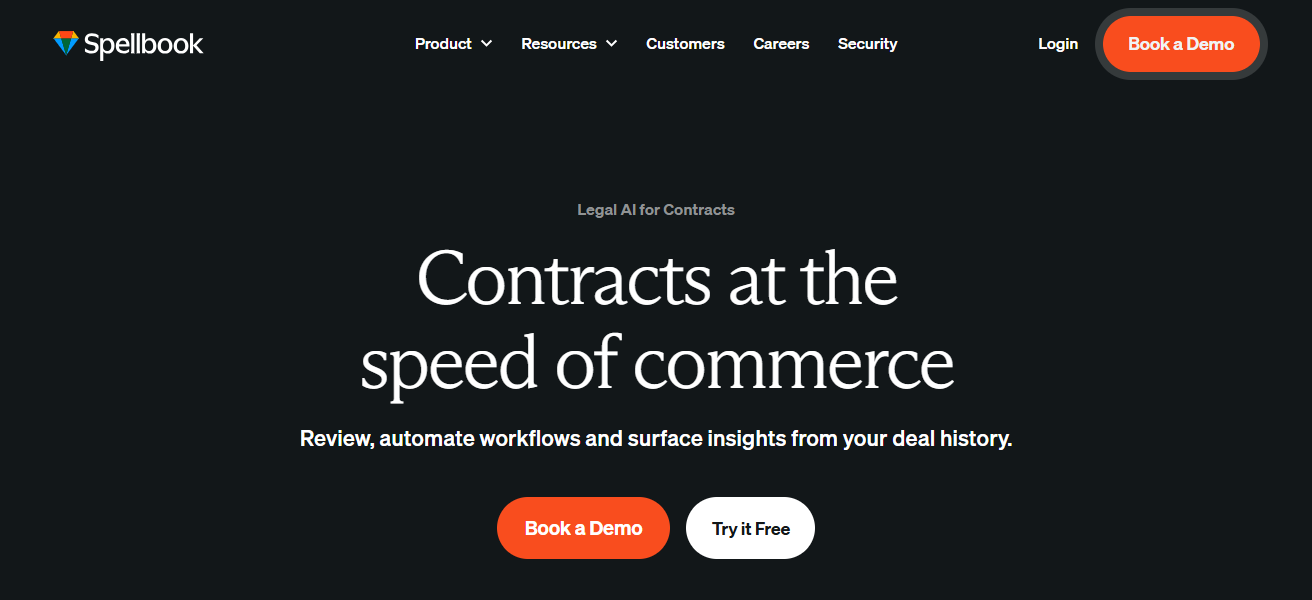
The platform, which improves consistency and compliance accuracy while reducing drafting time, is being increasingly adopted by legal professionals.
In 2026, Spellbook started to receive increasing market recognition when law firms began favoring embedded AI assistants instead of standalone legal software solutions.
| Pros | Cons |
|---|---|
| Seamless Microsoft Word integration simplifies legal drafting and contract reviews dramatically. | Limited outside Microsoft ecosystem for firms using alternative drafting environments. |
| AI clause recommendations improve drafting speed and legal consistency effectively. | Advanced enterprise integrations remain less extensive than those of larger competitors currently. |
| Reduces repetitive document editing tasks for transactional legal professionals significantly. | Advanced enterprise integrations remain less extensive than larger competitors currently. |
| User-friendly interface minimizes onboarding challenges for legal teams adopting AI tools. | Dependence on generative AI creates potential compliance and confidentiality concerns. |
8. Sirion
Global expansion for enterprise contract lifecycle management solutions for procurement and legal operations teams.
An AI-based platform that tracks obligations, supplier performance, exposure and contract compliance; live.
More and more, complex vendor agreements spanning multiple jurisdictions and industries have made Sirion the provider of choice for large enterprise customers.
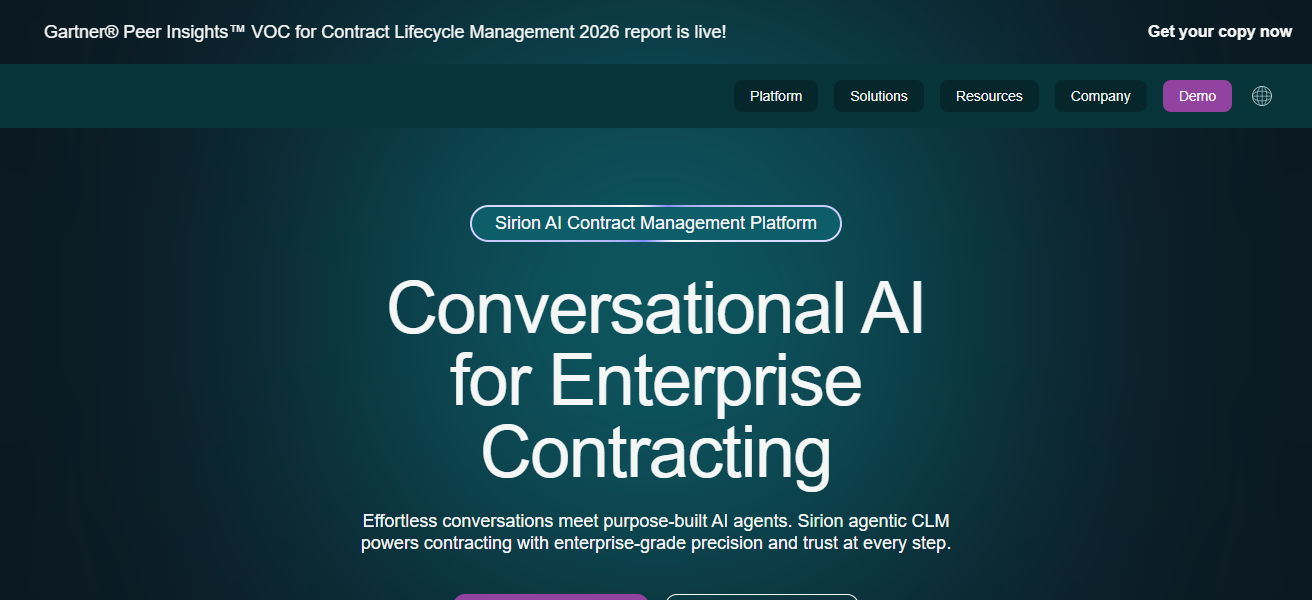
By 2026, the company had developed its stronghold by launching automation-centric governance tools that enable businesses to detect financial leakage and better operational accountability at scale.
| Pros | Cons |
|---|---|
| Strong contract governance tools improve supplier agreement management and compliance monitoring. | Enterprise-focused pricing may challenge smaller businesses with limited budgets significantly. |
| Real-time obligation tracking enhances operational transparency and accountability across organizations. | Implementation process may require extensive customization for enterprise-level operations. |
| AI-powered analytics reduce financial leakage and contract-related operational inefficiencies effectively. | Feature complexity may overwhelm teams lacking contract lifecycle management experience initially. |
| Supports global procurement and vendor management across multiple jurisdictions efficiently. | Smaller firms may underutilize many enterprise-oriented capabilities available within platform. |
9. Brightflag
Brightflag is accelerating rapid growth by reinventing how corporations manage outside counsel spend and operational efficiency in legal departments.
Its analytics platform utilizes AI to automatically review invoices, forecast legal expenses, and enhance budgeting visibility for enterprise legal departments.

More and more organizations are relying on Brightflag to eliminate overspend while maintaining deeper control of legal department spend worldwide.
Against a backdrop of increasing demand for data-driven legal operations tools and key accounting relationships, Brightflag significantly raised its profile with large multinationals and fast-scaling in-house legal teams in 2026.
| Pros | Cons |
|---|---|
| AI-driven invoice reviews improve legal spending transparency and budgeting accuracy significantly. | Focuses mainly on legal operations instead of full legal practice management. |
| Predictive analytics help corporations reduce unnecessary outside counsel expenses effectively. | Smaller organizations may not require advanced spend-management functionality extensively. |
| Enterprise reporting dashboards enhance financial oversight across global legal departments seamlessly. | Integration with legacy billing systems may require technical configuration support. |
| Strong automation tools reduce manual invoice processing and administrative workloads substantially. | Limited litigation or contract drafting capabilities compared with broader legal platforms. |
10. Robin AI
Robin AI is another one of those solutions that cuts down on the mundane legal work through its use of AI-driven contract reviews.
This continues to grow rapidly. Founded in 2012, the platform uses conversational AI tools to help companies automate racking redlining of agreements and approvals.

Robin AI enhanced multilingual review capabilities and workflow integrations for corporate legal teams in 2026 when it advanced enterprise adoption.
The main reason why organizations are increasingly adopting Robin AI is that it provides the efficiency of scalable automation with the expertise of a human lawyer and thus simultaneously improves output while maintaining contract quality or compliance standards.
| Pros | Cons |
|---|---|
| AI-powered contract review reduces repetitive legal workloads and review times dramatically. | AI-generated contract suggestions still require professional human legal oversight consistently. |
| Conversational AI tools simplify approvals and document analysis for legal teams. | Enterprise-level subscriptions may become costly for small independent legal firms. |
| Multilingual capabilities support global business operations and international contract management efficiently. | Limited broader legal practice management features outside contract-focused workflows currently. |
| Combines legal expertise with automation for scalable and efficient operations effectively. | Combines legal expertise with automation for scalable and efficient operations. |
Coclsuion
To conclude, while Fast-Growing Legal Software Brands are currently automating, adding contract intelligence and cloud-based legal solutions to replace the traditional way of working in the Law & Legal sectors.
Clio, Harvey, Ironclad, et al still stand at the cutting edge of innovation in ensuring increased productivity and compliance and reducing workflow friction.
These brands will play a big role in the future of modern legal operations and enterprise legal management because they are scaling globally as more law companies look to adopt technology.
FAQ
What are fast-growing legal software brands?
These are legal technology companies rapidly expanding through AI-powered legal automation and innovation.
Why are AI legal platforms becoming popular?
They reduce manual legal workloads, improve productivity, and accelerate contract review processes efficiently.
Which legal software brand is best for law firms?
Clio is widely preferred for legal practice management and client communication.
Which platform specializes in contract lifecycle management?
Ironcladand Sirionfocus heavily on contract lifecycle management solutions