I’ll go over the SaaS Tools Every Logistics Company Needs for Real-Time Tracking in this post, emphasizing how contemporary cloud-based systems are improving supply chain efficiency and visibility.
You will discover how real-time cargo monitoring, predictive analytics, and enhanced delivery performance are made possible by technologies like project44, FourKites, Shippeo, and others.
By utilizing cutting-edge AI and IoT technology for more intelligent global transportation management, these solutions assist logistics firms in decreasing delays, improving transparency, and streamlining operations.
Key Points & SaaS Tools Every Logistics Company Needs for Real-Time Tracking
- project44 Movement – Provides real-time transportation visibility and a predictive supply chain analytics platform solution
- FourKites – Offers a real-time tracking visibility platform for global supply chain shipments management
- Shippeo Platform – Provides multimodal real-time transport visibility and estimated arrival predictions platform solution
- Descartes MacroPoint – Delivers freight visibility tracking software, enabling a real-time shipment monitoring globally solution
- Transporeon Visibility Hub – European visibility platform connecting carriers and shippers with a real-time tracking system
- GoComet – AI-powered logistics visibility platform optimizing shipments tracking and procurement workflows solution
- Overhaul – Risk management and supply chain security platform with real-time monitoring capabilities
- Samsara – an IoT platform offering fleet tracking, safety analytics, and an operational efficiency tools suite
- Geotab – Fleet telematics platform providing GPS tracking, vehicle data, and analytics insights system
- Motive – Driver safety and fleet management platform with AI dashcam and tracking features
- Verizon Connect – Fleet management solution offering GPS tracking, routing, and asset monitoring tools suite
- Locus – an AI-driven logistics optimization platform enabling route planning and delivery tracking efficiency
- FarEye – Last mile delivery platform improving routing visibility and customer experience automation software
- Onfleet – Last mile delivery management software providing dispatch tracking and a route optimization system
- LogiNext Mile – AI-powered last-mile logistics platform enabling a real-time delivery optimization suite
15 SaaS Tools Every Logistics Company Needs for Real Time Tracking
1. Project44 Movement
Leading supply chain visibility SaaS platform project44 Movement provides end-to-end real-time tracking via air, sea, rail, and road. It interfaces with more than 1,000 carrier systems and makes use of AI-driven forecast ETAs.
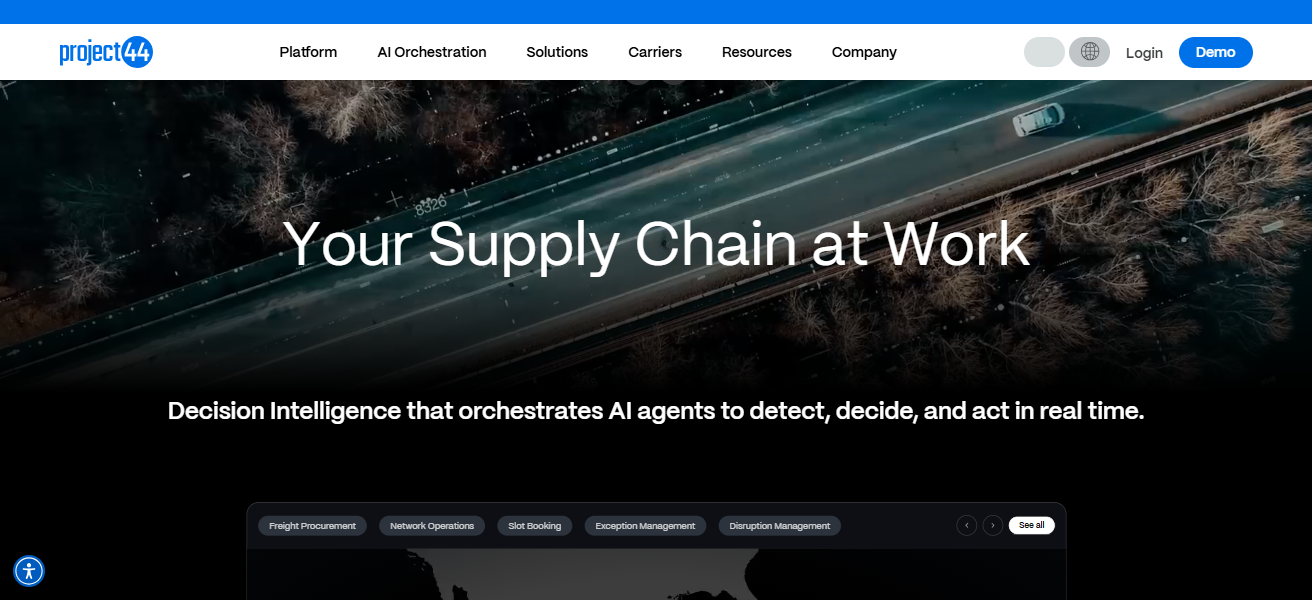
Companies receive analytics dashboards, automated exception warnings, and real-time shipment updates. Decision intelligence, which aids logistics teams in proactively resolving problems before they affect delivery performance or customer happiness globally, is its most recent strength.
| Pros | Cons |
|---|---|
| Advanced AI-driven real-time visibility | High implementation cost |
| Predictive ETAs improve delivery accuracy | Complex setup for small firms |
| Requires a strong integration effort | Requires strong integration effort |
| Strong carrier network coverage | Learning curve for new users |
2. FourKites
With millions of shipments every day, FourKites offers sophisticated real-time shipment tracking with robust predictive analytics and worldwide visibility.
It uses AI to streamline logistical procedures and predict delays. Its most recent innovation goes beyond in-transit tracking to encompass yard, warehouse, and store-level visibility.
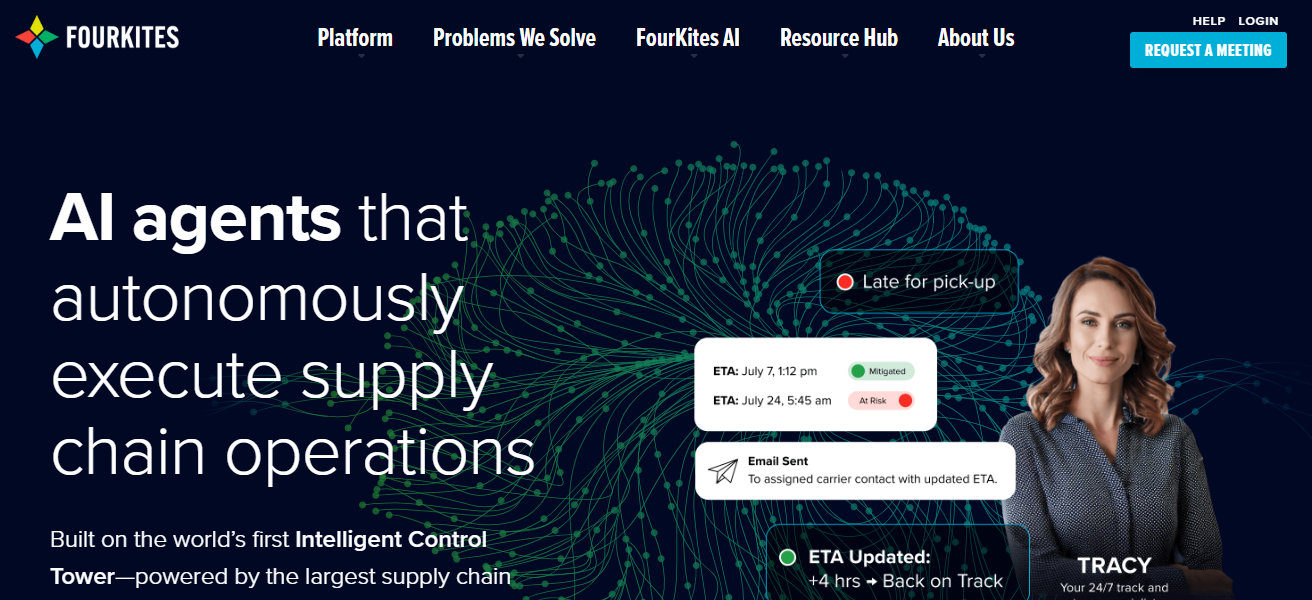
With automatic warnings and intelligent collaboration tools, businesses utilize it to control supply chain exceptions, lower detention costs, and increase delivery accuracy.
| Pros | Cons |
|---|---|
| Real-time global shipment tracking | Expensive for SMEs |
| Strong predictive analytics engine | Heavy data dependency |
| Yard + warehouse visibility | UI can feel complex |
| Large carrier ecosystem | Integration time is longer |
3. Shippeo Platform
Shippeo provides multimodal visibility for shipments via air, sea, rail, and road. It offers real-time GPS-based tracking and connects to more than 1,000 transportation systems.
Its AI-driven ETA engine lowers logistical planning uncertainty and increases delivery accuracy. Additionally, the platform tracks sustainability and assists businesses in measuring CO2 emissions.
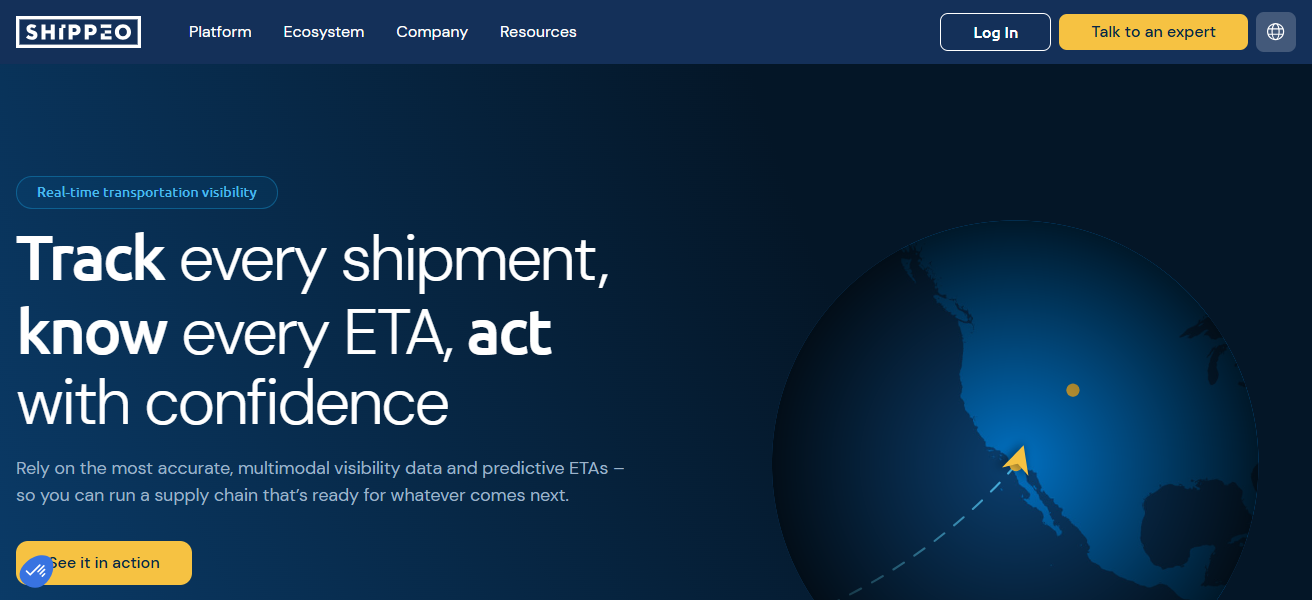
Strong European carrier network integration and predictive disruption management are Shippeo’s most recent advantages.
| Pros | Cons |
|---|---|
| Highly accurate real-time ETAs | Premium pricing model |
| Strong European carrier coverage | Limited SME focus |
| Multimodal tracking support | Complex onboarding |
| CO2 emission tracking feature | Fewer North American integrations |
4. Descartes MacroPoint
With robust carrier connectivity and GPS-based cargo visibility, Descartes MacroPoint offers real-time freight tracking. In a single dashboard, it facilitates the monitoring of air, sea, and truck freight.
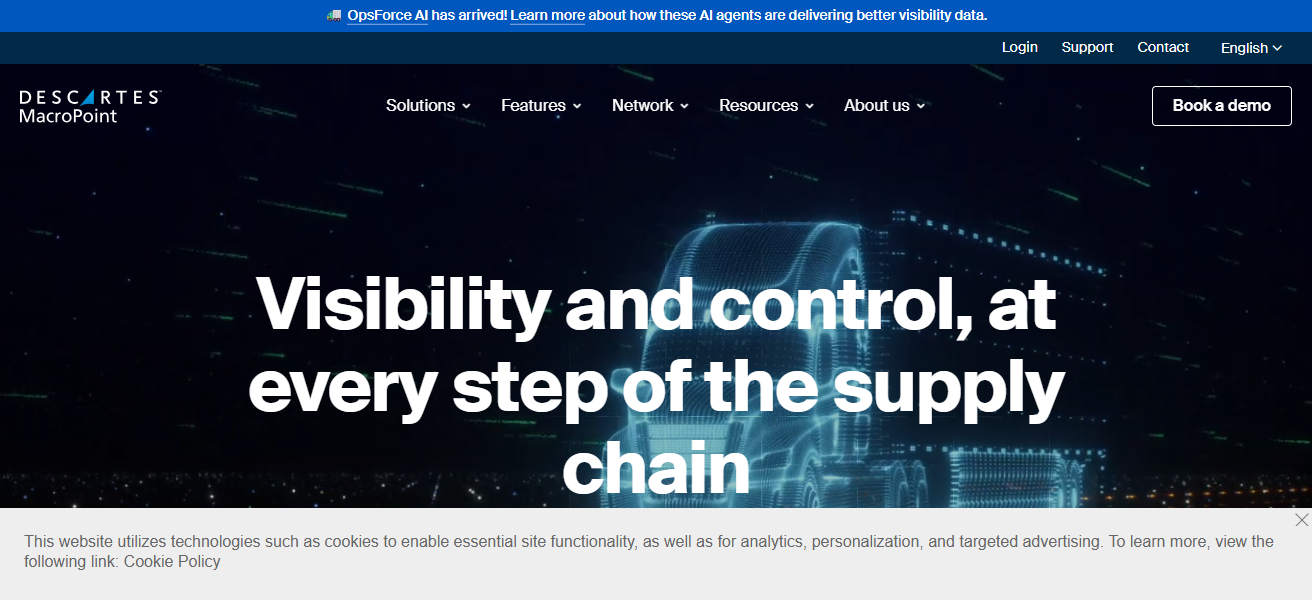
The platform’s predictive ETA technology enhances customer communication and lowers shipment uncertainty.
For freight brokers and 3PL firms overseeing extensive operations, its most recent feature—automated load tracking without driver input—makes it extremely effective.
| Pros | Cons |
|---|---|
| Massive carrier network connectivity | Limited AI decision intelligence |
| Easy GPS-based tracking setup | UI less modern |
| Automated load status updates | Customization constraints |
| Strong freight broker adoption | Not ideal for deep analytics |
5. Transporeon Visibility Hub
Real-time transport visibility and freight optimization technologies are provided by the European logistics SaaS platform Transporeon Visibility Hub.
For real-time cargo tracking, it combines carrier systems, telematics, and TMS. Delay prediction and capacity planning insights are provided by its AI-based analytics.
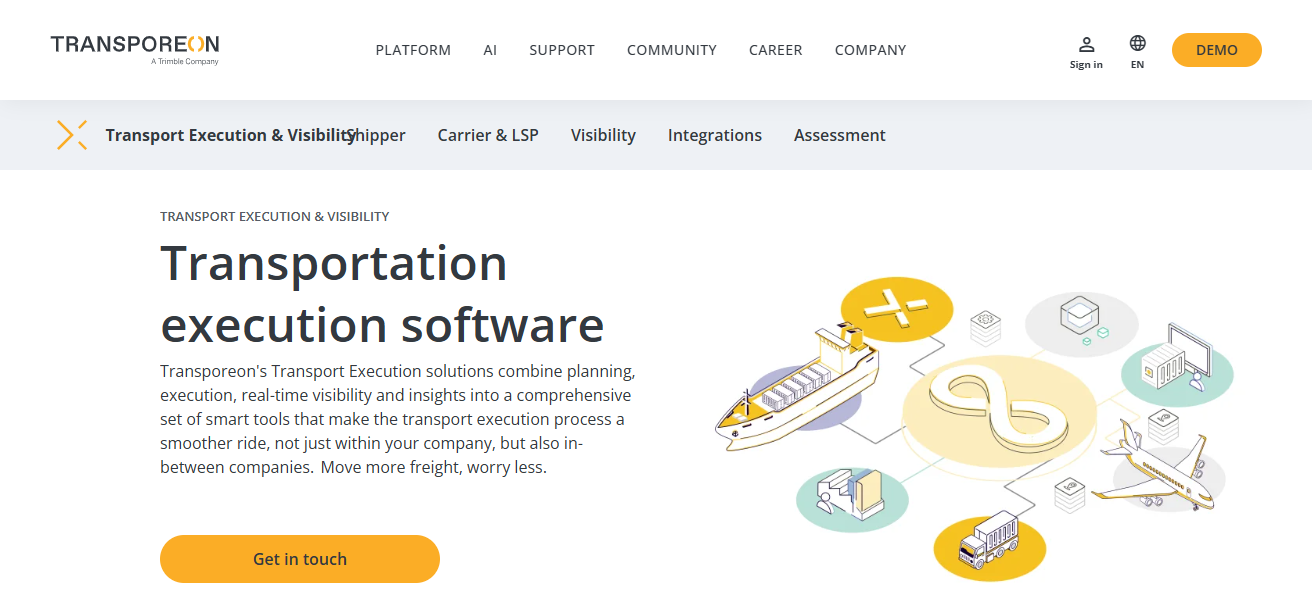
The most recent innovation is collaborative logistics workflows, which improve operational transparency and lower transportation inefficiencies throughout supply chains by facilitating real-time communication between shippers and carriers.
| Pros | Cons |
|---|---|
| Strong European logistics network | Less predictive intelligence |
| Real-time freight visibility | Interface complexity |
| AI-powered workflow automation | Integration limitations |
| Strong TMS integration ecosystem | Slower innovation updates |
6. GoComet
GoComet is a logistics SaaS platform driven by AI that specializes in freight visibility, rate comparison, and shipment tracking.
It offers real-time updates for shipments via road, air, and sea. Port congestion prediction, which helps businesses minimize delays and maximize routing choices, is its most notable feature.
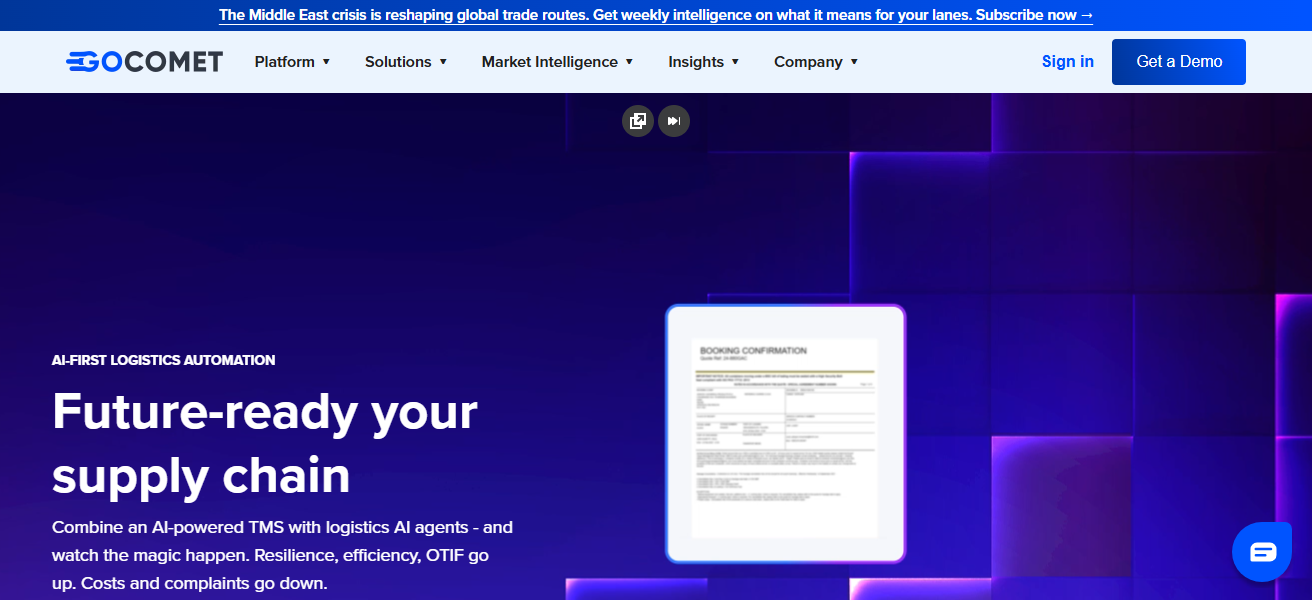
Additionally, the platform automates freight buying, which speeds up and lowers the cost of logistics operations for multinational corporations overseeing worldwide supply chains.
| Pros | Cons |
|---|---|
| AI-powered freight visibility platform | Limited brand recognition globally |
| Port congestion prediction tool | Smaller carrier network vs leaders |
| Cost optimization features | Enterprise scaling still evolving |
| Easy-to-use dashboard | Fewer deep analytics tools |
7. Overhaul
With real-time tracking and security monitoring, Overhaul specializes in supply chain risk management. By quickly identifying theft, delays, and route diversions, it guarantees shipment integrity.

High-value sectors like electronics and pharmaceuticals make extensive use of the platform. Active risk intelligence, which integrates IoT data and AI to anticipate interruptions and safeguard cargo before problems worsen during transit operations, is its most recent breakthrough.
| Pros | Cons |
|---|---|
| Strong shipment security monitoring | Focus mainly on high-value goods |
| Real-time theft prevention alerts | Not full logistics suite |
| Risk intelligence with AI | Higher operational cost |
| Excellent pharma & electronics use | Limited last-mile features |
8. Samsara
Samsara is an Internet of Things-based logistics technology that provides real-time vehicle diagnostics, fleet tracking, and GPS monitoring.
For complete operational visibility, it integrates sensors, dashcams, and cloud analytics. Businesses utilize it to optimize routes, lower fuel costs, and increase driver safety.
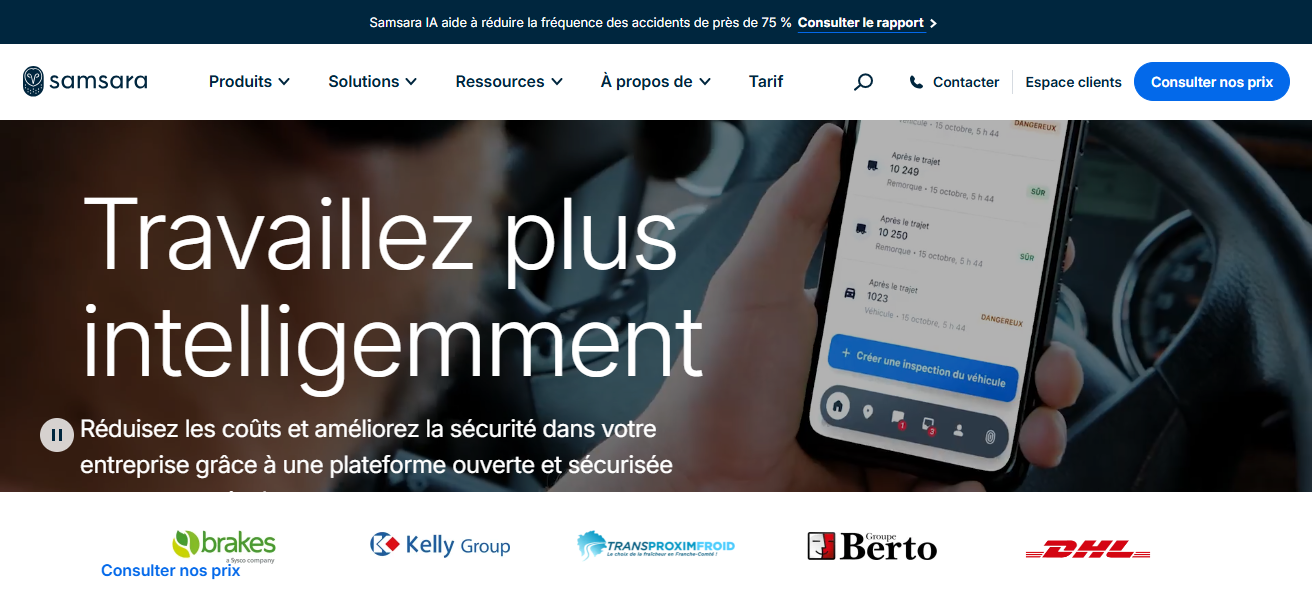
With its most recent version, logistics companies can monitor driving behavior and enhance compliance across big transportation fleets worldwide with the help of an AI-powered safety score.
| Pros | Cons |
|---|---|
| IoT-based fleet real-time tracking | Expensive hardware dependency |
| Strong driver safety tools | Requires device installation |
| AI-powered analytics dashboards | Setup complexity |
| Excellent mobile fleet control | Less supply chain focus |
9. Geotab
For logistics firms, Geotab offers real-time GPS tracking and sophisticated fleet telematics. For analytical purposes, it gathers vehicle data like location, speed, and fuel consumption.

The platform lowers operating expenses and increases route efficiency. EV fleet management solutions, which allow companies to monitor electric vehicle performance and maximize sustainable shipping operations, are among its most recent innovations.
| Pros | Cons |
|---|---|
| Deep telematics data insights | Interface can feel technical |
| Strong EV fleet management | Requires technical setup |
| Scalable for large fleets | Limited logistics visibility tools |
| Open API ecosystem | Slower onboarding |
10. Motive
Motive offers AI-powered fleet management with smart dashcams, real-time tracking, and driver safety monitoring. It improves safety compliance by identifying dangerous driving behavior through computer vision.
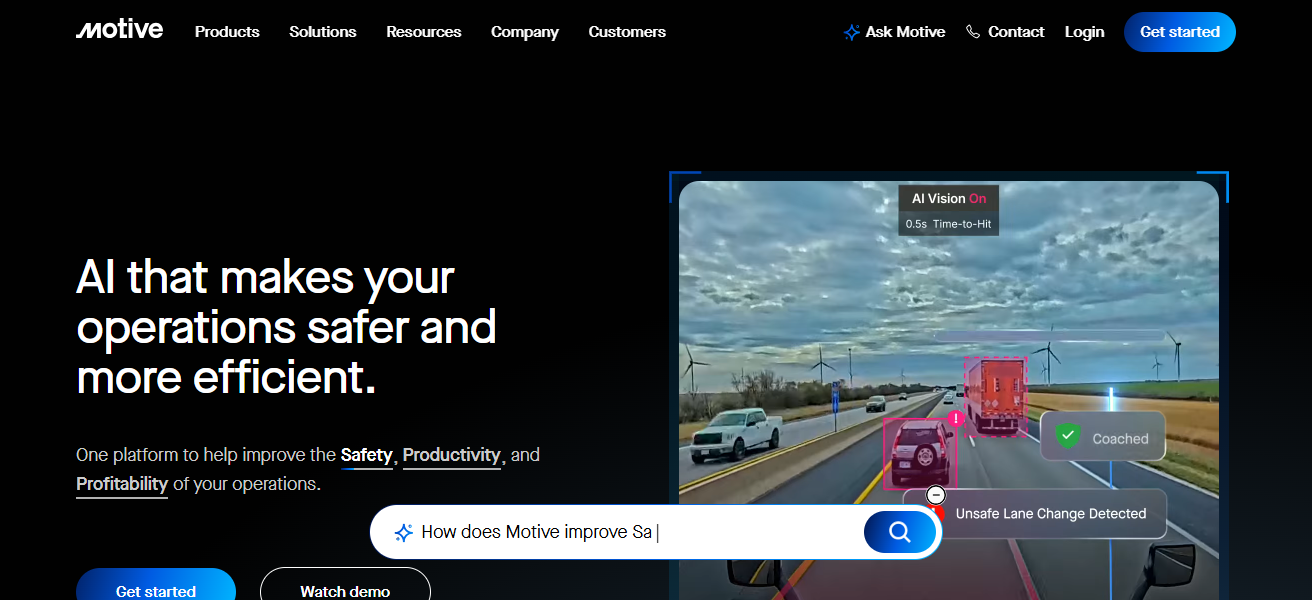
Additionally, the platform provides route optimization and automated logs. AI-based risk detection, which aids logistics firms in preventing mishaps and enhancing operational effectiveness across dispersed fleets, is its most recent feature.
| Pros | Cons |
|---|---|
| AI dashcam + tracking combo | Hardware cost required |
| Driver behavior analytics | Privacy concerns for drivers |
| Real-time risk detection | Subscription pricing can rise |
| Strong compliance tools | Limited global logistics focus |
11. Verizon Connect
Verizon Connect is a cloud-based software as a service (SaaS) fleet tracking technology that offers asset tracking, route optimization, and GPS monitoring.
It lowers fuel expenses and increases delivery efficiency for logistics firms. The software provides real-time driver behavior and vehicle utilization alerts.
Advanced reporting dashboards, which provide enterprises with better insights into fleet productivity and operational performance, are its most recent improvement.
| Pros | Cons |
|---|---|
| Reliable GPS fleet tracking | Higher enterprise pricing |
| Strong reporting dashboards | UI feels outdated |
| Route optimization tools | Limited AI forecasting |
| Large enterprise support | Setup complexity |
12. Locus
Route planning and delivery tracking are the areas of expertise for Locus, an AI-powered logistics optimization tool. It uses machine learning algorithms to increase last-mile delivery efficiency.
Real-time tracking dashboards, improved resource utilization, and shorter delivery times are all advantageous to businesses.
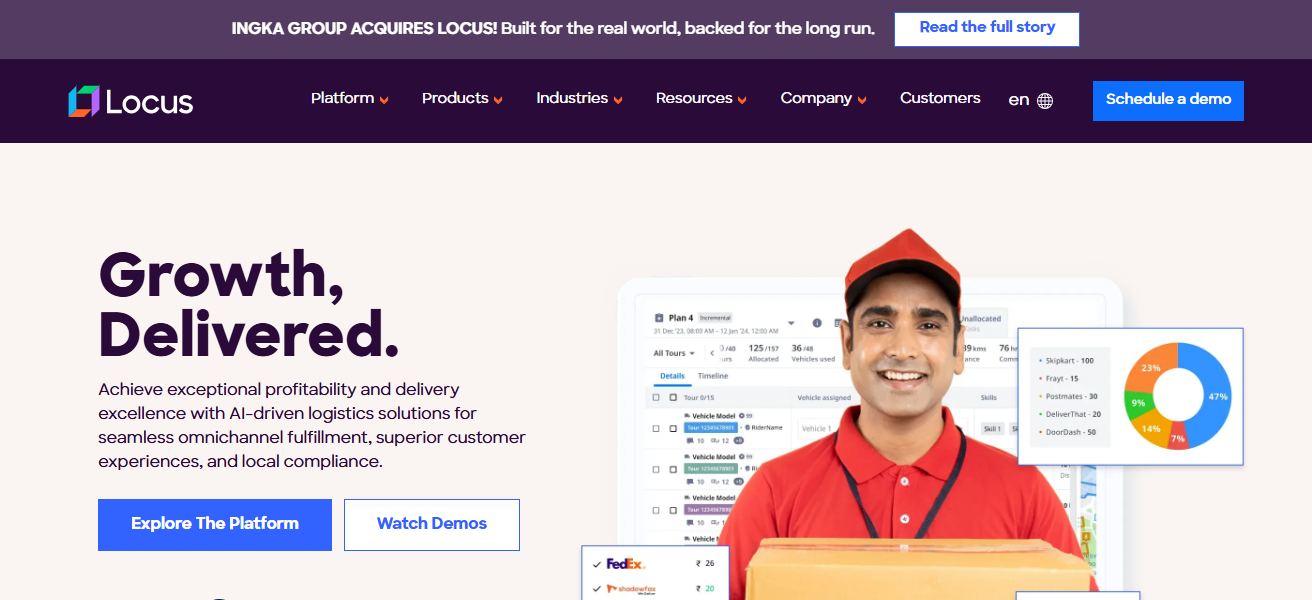
Dynamic route optimization, which rapidly modifies delivery routes based on traffic, demand, and operational restrictions, is one of its most recent innovations.
| Pros | Cons |
|---|---|
| AI-driven route optimization | Mainly last-mile focused |
| Real-time delivery tracking | Not strong in global freight |
| Cost reduction in logistics | Requires data maturity |
| Strong automation engine | Limited ocean/air support |
13. FarEye
FarEye is a SaaS platform for last-mile delivery that provides predictive analytics and real-time shipment visibility.
Businesses can use it to track orders, handle deliveries, and enhance customer satisfaction. Its automation engine enhances operating efficiency and lowers delays.
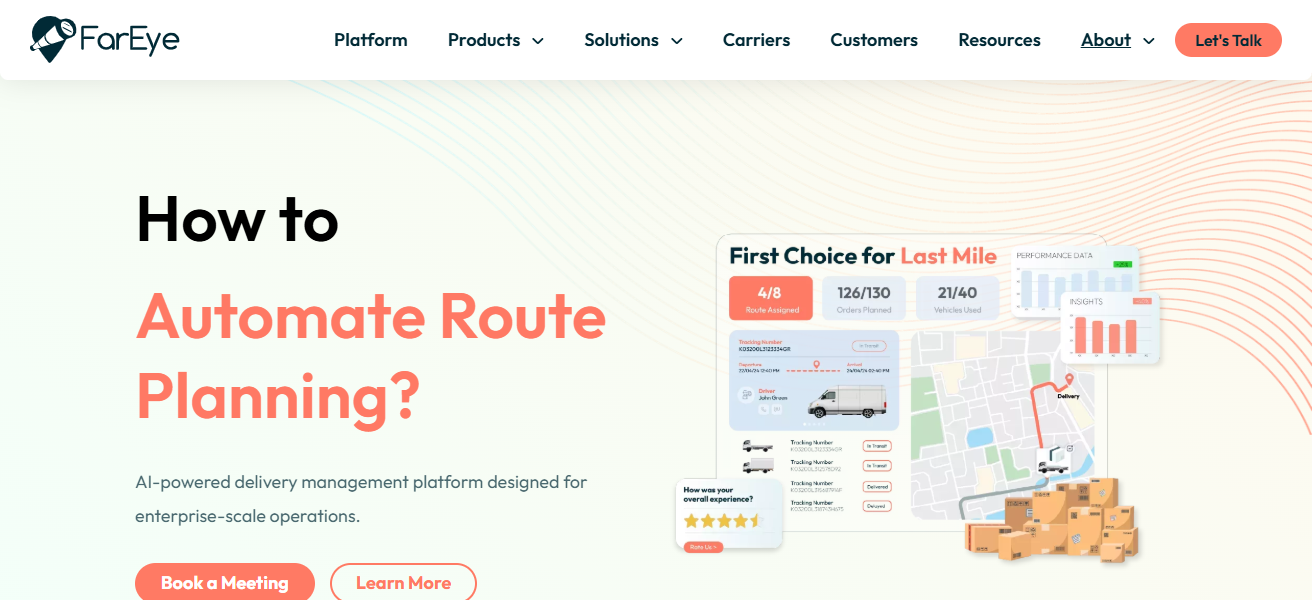
AI-driven customer communication tools that provide real-time delivery updates are part of the newest feature, which increases customer satisfaction and transparency.
| Pros | Cons |
|---|---|
| Strong last-mile visibility | Enterprise pricing model |
| Predictive delivery insights | Setup complexity |
| Customer communication tools | Limited global freight tracking |
| Automation of delivery workflows | Integration dependency |
14. Onfleet
Onfleet is a SaaS platform for delivery management with an emphasis on last-mile logistics optimization. It offers evidence of delivery, route planning, and real-time driver tracking.
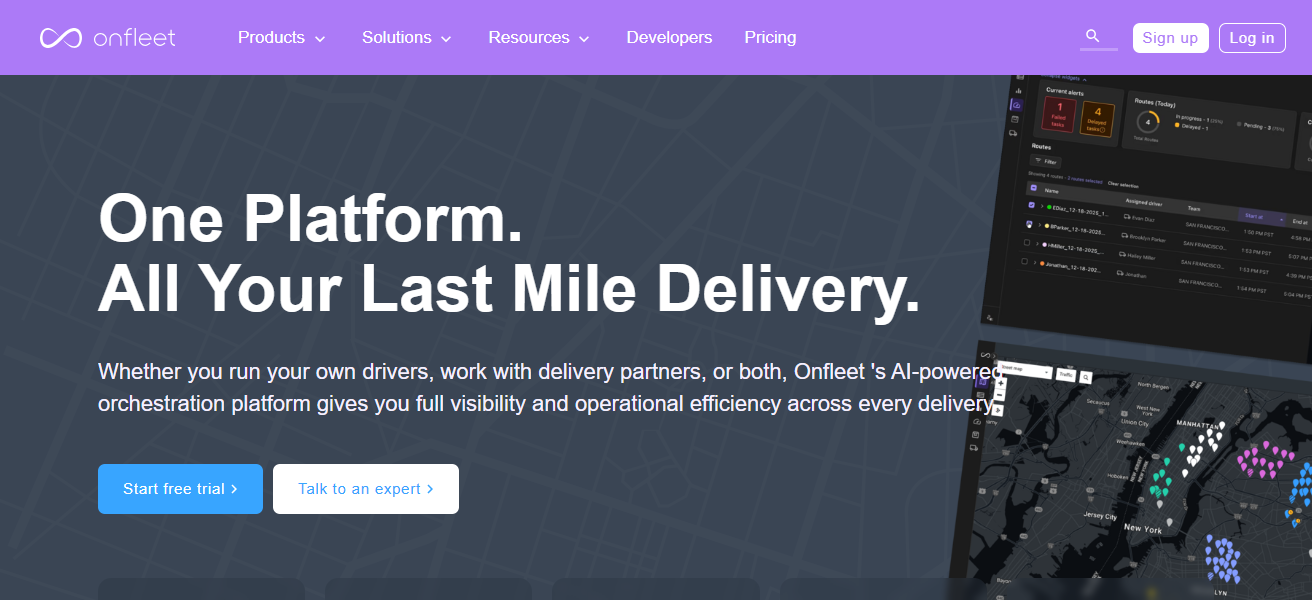
Companies utilize it to enhance customer communication and delivery speed. Its most recent innovation is sophisticated analytics dashboards that assist businesses in tracking performance indicators and real-time workforce efficiency optimization.
| Pros | Cons |
|---|---|
| Simple delivery tracking system | Limited advanced analytics |
| Real-time driver updates | Not suitable for global logistics |
| Easy route optimization | Small enterprise focus |
| Proof of delivery features | Limited AI capabilities |
15. LogiNext Mile
An AI-powered last-mile logistics technology called LogiNext Mile was created for route planning and real-time delivery tracking. It helps companies increase delivery accuracy and automate dispatching.
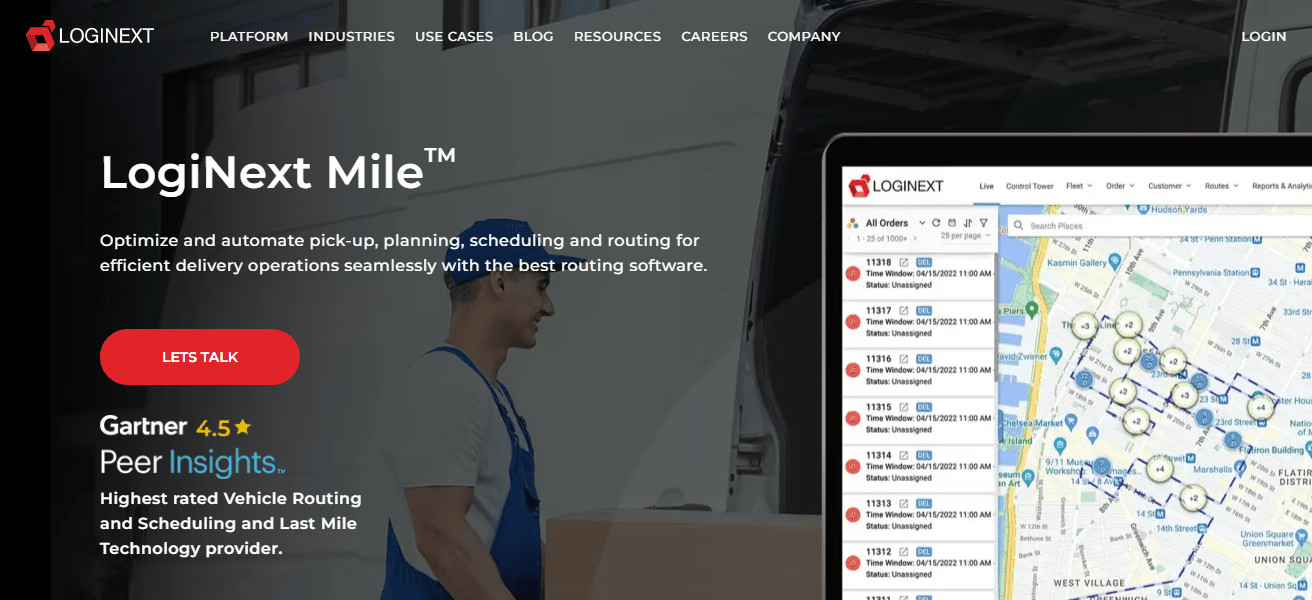
Predictive analytics is supported by the platform to improve operational planning. Hyperlocal tracking intelligence is its most recent improvement, allowing companies to boost customer happiness, cut expenses, and increase delivery speed throughout urban logistics networks.
| Pros | Cons |
|---|---|
| Strong AI-based delivery optimization | Complex configuration |
| Real-time tracking dashboards | Higher pricing for SMBs |
| Fast last-mile execution | Limited freight visibility |
| Scalable delivery automation | Integration effort required |
Conclusion
In conclusion, with AI-driven visibility, predictive analytics, and seamless fleet monitoring, SaaS solutions for real-time logistics tracking are transforming supply chain efficiency.
Project44, FourKites, and Locus are examples of platforms that assist businesses in minimizing delays, enhancing transparency, and optimizing deliveries.
In today’s fiercely competitive global logistics ecosystem, selecting the best option guarantees quicker operations, reduced costs, and improved customer satisfaction.
FAQ
What are SaaS tools in logistics?
SaaS tools in logistics are cloud-based platforms that provide real-time shipment tracking, fleet visibility, route optimization, and supply chain analytics to improve operational efficiency.
Why is real-time tracking important in logistics?
Real-time tracking improves delivery accuracy, reduces delays, enhances transparency, and allows businesses to respond quickly to disruptions in supply chains.
Which is the best SaaS tool for global shipment visibility?
Platforms like project44, FourKites, and Shippeo are widely used for global real-time shipment visibility and predictive analytics.
How does AI improve logistics tracking systems?
AI helps predict delays, optimize routes, automate alerts, and provide accurate estimated delivery times (ETAs) for better decision-making.