
This article will discuss the best investment platforms for accredited investors in USA. They give you access to are opportunities in private markets like real estate, startups, VC and alternative assets.
You’ll discover how platforms such as EquityMultiple, CrowdStreet and AngelList function, their primary features and why they have become popular with today’s high-net-worth investors.
Key Points & Best Investment Platforms For Accredited Investors In The USA
EquityMultiple Offers accredited investors curated commercial real estate deals with equity, debt, and preferred investment options.
CrowdStreet Marketplace connecting accredited investors to institutional-grade commercial real estate deals requiring high minimum investments.
RealtyMogul Provides REITs and private real estate investments offering diversification for accredited and non-accredited investors.
DLP Capital Focuses on private real estate funds targeting affordable housing and impact-driven investment strategies for accredited investors.
Fundrise Offers diversified real estate portfolios through eREITs, accessible to both accredited and non-accredited investors.
AngelList Startup investment platform enabling accredited investors to fund early-stage startups and venture capital opportunities.
SeedInvest Equity crowdfunding platform connecting accredited investors with vetted startups seeking early-stage capital investment opportunities.
Forge Global Secondary marketplace enabling accredited investors to buy and sell shares of pre-IPO private companies.
YieldStreet Alternative investment platform offering real estate debt, legal finance, and structured credit products to accredited investors.
MyFO Private wealth platform providing high-net-worth individuals customized alternative investments and personalized portfolio management services.
10 Best Investment Platforms For Accredited Investors In The USA
1. EquityMultiple
EquityMultiple is a real estate investing platform for accredited investors who want to invest in institutional-quality commercial properties.
It provides diversified investment opportunities such as equity, preferred equity, and senior debt investments. Investors can select deals based on requisite levels of risk, return expectations and holding period.

The platform emphasizes transparency, due diligence and curated offerings. EquityMultiple allows investors to create diversified, income-generating portfolios by giving them access
To meaningful investments in professionally managed real estate projects that were historically only accessible by large institutions.
| Pros | Cons |
|---|---|
| Access to institutional-quality commercial real estate investments. | Limited to accredited investors only. |
| Offers diversified options: equity, preferred equity, and debt. | Higher minimum investment requirements compared to some platforms. |
| Strong focus on transparency and due diligence. | Liquidity is limited; investments are long-term commitments. |
| Professionally managed projects traditionally reserved for large institutions. | Smaller deal flow compared to larger crowdfunding platforms. |
2. CrowdStreet
CrowdStreet is one of the top commercial real estate crowdfunding platforms that offers accredited investors direct access to individual property deals sponsored by experienced developers.
It specializes in large projects like office buildings, multifamily apartments and retail. Investors can directly choose from deals by geography, asset type and anticipated returns.

CrowdStreet offers thorough sponsor information and project analysis, so many investors use this platform when they want the control and transparency that private real estate investing can provide and are looking for potentially high long-term returns.
| Pros | Cons |
|---|---|
| Direct access to individual property deals with sponsor details. | Accredited investors only; excludes retail investors. |
| Large-scale projects like multifamily, office, and retail. | Higher risk due to single-property exposure. |
| Detailed project analysis and transparency. | Minimum investments can be relatively high. |
| Potentially high long-term returns. | Market downturns can heavily impact commercial properties. |
3. RealtyMogul
RealtyMogul is a real estate investing platform with REITs and private placement investment opportunities for accredited and non-accredited investors.

It gives access to a variety of commercial properties like apartments, office buildings and industrial assets.
The platform focuses on passive income generation via dividend-paying investments and long-term appreciation. RealtyMogul provides tax-advantaged investment structures and rigorous property screening as well.
| Pros | Cons |
|---|---|
| Available to both accredited and non-accredited investors. | REIT returns may be lower than direct deals. |
| Offers REITs and private placements for diversification. | Limited control over individual property selection. |
| Focus on passive income through dividends. | Fees can reduce net returns. |
| Rigorous property screening process. | Less exposure to large-scale institutional projects. |
4. DLP Capital
About DLP Capital DLP Capital is a private investment firm managing real estate funds that invest in affordable housing and impact-driven investment opportunities.
It caters mainly to accredited investors and institutions looking for stable income and long-term capital appreciation.
The company invests in residential communities, workforce housing and development projects nationwide.
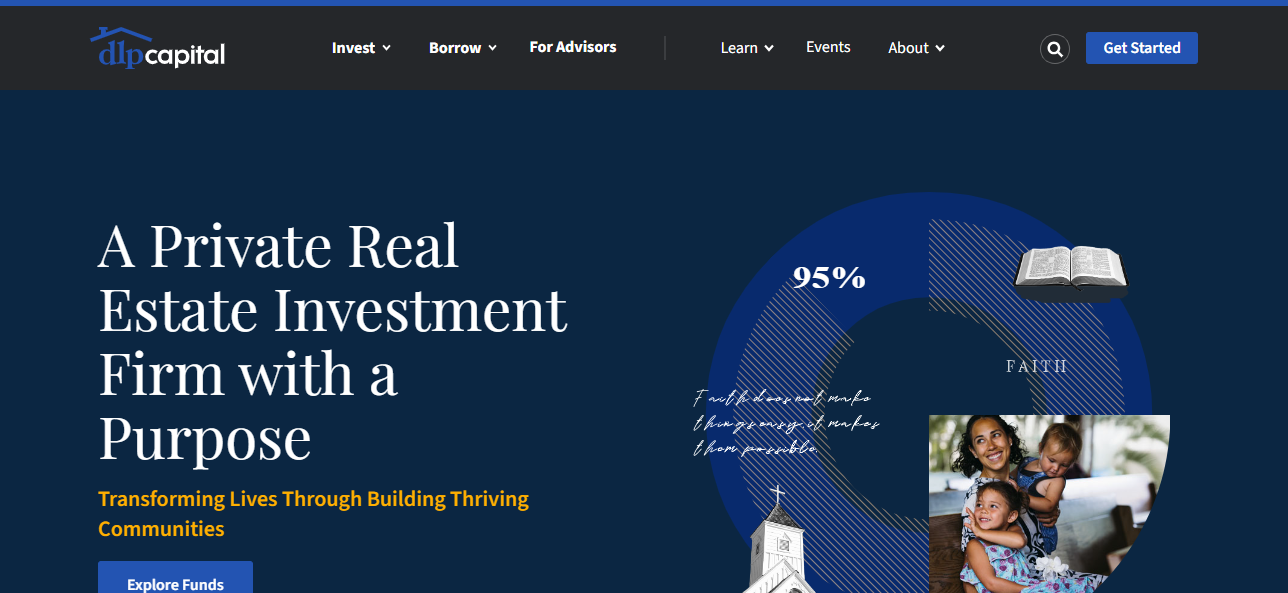
This train of thought was combined with a focus on risk-adjusted returns, capital preservation, and social impact
Which embody the ideals of the DLP Capital philosophy. Investors gain professionally managed portfolios that blend financial performance with housing solutions for underserved communities in expanding markets.
| Pros | Cons |
|---|---|
| Specializes in affordable housing and impact-driven investing. | Accredited investors only. |
| Focus on risk-adjusted returns and capital preservation. | Limited liquidity; long holding periods. |
| Professionally managed portfolios with social impact. | Smaller investor community compared to mainstream platforms. |
| Strong emphasis on housing solutions for underserved markets. | Narrower investment scope than diversified platforms. |
5. Fundrise
Fundrise is a well-known real estate investment platform that allows people to invest in eREITs and eFunds to build diversified property portfolios.
This can be used in the USA, and is open to accredited or non-accredited investors. Fundrise is oriented toward long-term appreciation via a portfolio of residential, commercial and mixed-use real estate.

It works on technology-based portfolio management for maximizing returns. This makes them a more affordable and easy-to-manage online option for real estate investing, as they pay quarterly dividends (as an investor) with lower minimum investment requirements.
| Pros | Cons |
|---|---|
| Accessible to both accredited and non-accredited investors. | Less control over specific property selection. |
| Low minimum investment requirements. | Returns may be lower than direct deals. |
| Diversified portfolios via eREITs and eFunds. | Limited liquidity; quarterly redemption windows. |
| Technology-driven portfolio management. | Focused mainly on U.S. properties. |
6. AngelList
AngelList is a premier investment platform for startups and early-stage technology companies with accredited investors and venture capital funds.
It lets investors put their money behind start-ups with high growth but more typically launching before they hit public markets.

The platform allows for syndicates and rolling funds run by experienced investors. AngelList allows for transparency into startup performance and deal structures.
Venture investing is pervasive, and provides the opportunity for high-risk, high-reward avenues into innovative sectors like fintech, AI and SaaS companies.
| Pros | Cons |
|---|---|
| Access to early-stage startups with high growth potential. | Accredited investors only. |
| Supports syndicates and rolling funds. | High risk; many startups fail. |
| Transparency into deal structures and performance. | Illiquid investments; long wait for exits. |
| Opportunities in innovative sectors like AI and fintech. | Requires strong risk tolerance. |
7. SeedInvest
SeedInvest: Historically an equity crowdfunding platform for accredited investors to fund highly vetted startups.
It targets early-stage businesses ranging from technology to health care to consumer goods. Startups are listed only after passing through an exhaustive screening process, so there’s less chance of sub-par investment on the platform.

These include in-depth compilations of company info, financials, and growth potential. It allows investors to diversify into private equity with lower minimum investments, and provides exposure to high-growth startups before they go public.
| Pros | Cons |
|---|---|
| Rigorous screening ensures higher-quality startups. | Accredited investors only for most deals. |
| Smaller minimum investments allow diversification. | High risk of startup failure. |
| Detailed company information and financials provided. | Limited liquidity; long-term horizon. |
| Exposure to high-growth startups before public markets. | Smaller deal flow compared to AngelList. |
8. Forge Global (or Forge Trust)
Forge Global is a secondary marketplace for accredited investors to trade shares of pre-IPO private companies.
It offers liquidity in an otherwise illiquid market, enabling employees and early investors to sell out of positions ahead of an IPO.

The platform includes pricing data, company valuations and trading opportunities for high-profile private firms.
Forge Global helps industry investors gain access to unicorn companies like many tech startups, providing a platform for participation in later round private equity investments.
| Pros | Cons |
|---|---|
| Provides liquidity in pre-IPO private companies. | Accredited investors only. |
| Access to unicorns and late-stage startups. | Pricing can be volatile and uncertain. |
| Offers valuation data and trading opportunities. | Limited availability of shares. |
| Enables early investors to exit before IPO. | High fees compared to traditional exchanges. |
9. YieldStreet
YieldStreet: An alternative investment platform that provides access to asset-backed investments like real estate debt, litigation finance, marine finance and structured credit.
And it acts almost exclusively as a passive, portfolio diversifier for accredited investors. Targeting non-correlated assets is that the platform with a potential return generation process without high risks.

YieldStreet says it rigorously vets each investment and offers fixed-income-type payouts in many cases.
It is popular among investors who seek to diversify beyond traditional stocks and bonds into alternative asset classes that can generate income.
| Pros | Cons |
|---|---|
| Access to alternative asset classes beyond stocks and bonds. | Accredited investors only. |
| Focus on steady, income-generating investments. | Higher risk in niche asset classes. |
| Fixed-income-style payouts in many cases. | Illiquidity in certain offerings. |
| Diversifies portfolios with non-correlated assets. | Fees can reduce net yields. |
10. MyFO
MyFO (My Family Office) is a digital solution for high-net-worth and accredited investors that specializes in wealth management.
It offers bespoke alternative investment strategies and portfolio management, as well as private market deal access.
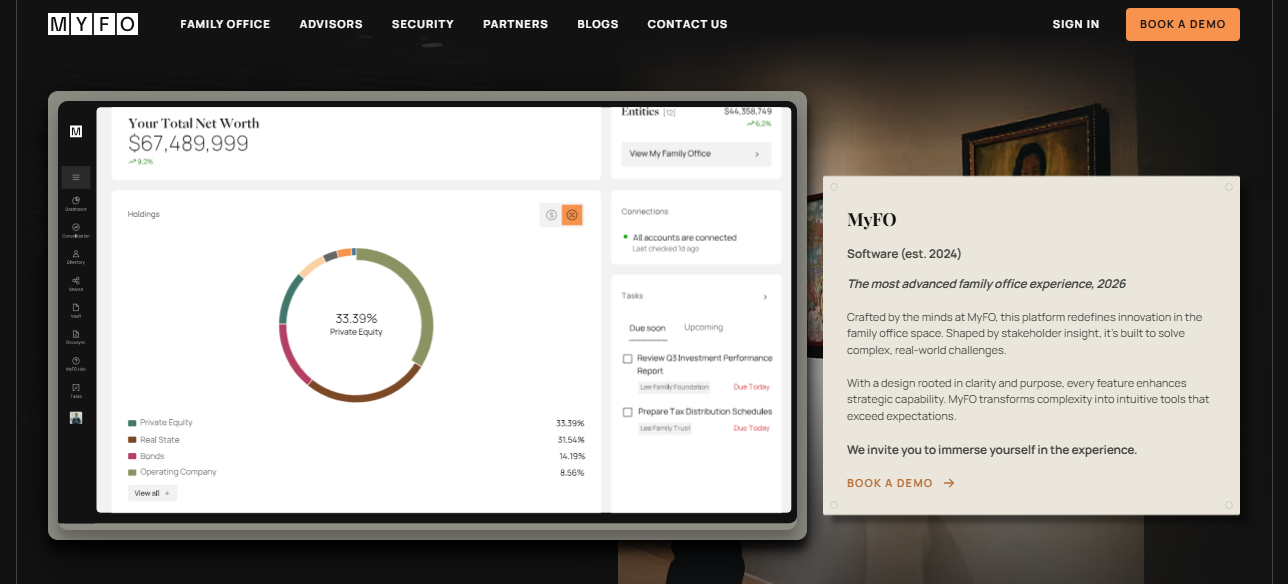
The platform merges financial planning tools with large institution quality investment opportunities over real estate, private equity and venture capital.
MyFO specializes in customizing, optimizing tax efficiency, and building long-term wealth. It serves as a modern family office solution that allows investors to manage and diversify complex portfolios within one holistic system.
| Pros | Cons |
|---|---|
| Personalized wealth management for high-net-worth investors. | Designed mainly for wealthy accredited investors. |
| Access to private market deals across asset classes. | Higher fees for customized services. |
| Focus on tax efficiency and long-term wealth building. | Limited accessibility for average investors. |
| Integrated system for managing complex portfolios. | Smaller platform compared to mainstream alternatives. |
How to Choose Best Investment Platforms for Accredited Investors in The USA
- Check platform regulation and SEC compliance for investor safety
- Review minimum investment requirements and affordability
- Evaluate asset types like real estate, startups, or private equity
- Analyze historical returns and performance track record
- Understand risk level and investment liquidity restrictions
- Compare platform fees, charges, and profit cuts
- Look for strong due diligence and deal screening process
- Prefer platforms with diversification options across multiple assets
- Check transparency in reporting and investment details
- Ensure platform reputation, reviews, and investor trust history
Final Verdict
Conclusion best investment platforms for accredited investors in the USA. Platforms like EquityMultiple, CrowdStreet, AngelList and YieldStreet add diversification and the potential for higher returns.
But such investments are not without risk, liquidity and entry barriers, so due diligence and a long-time strategy is crucial.
FAQ
What are accredited investor platforms in the USA?
Accredited investor platforms are investment marketplaces that offer access to private deals like real estate, startups, and alternative assets. They are restricted to high-income or high-net-worth individuals who meet SEC guidelines.
Which are the best investment platforms for accredited investors?
Top platforms include EquityMultiple, CrowdStreet, RealtyMogul, DLP Capital, Fundrise, AngelList, SeedInvest, Forge Global, YieldStreet, and MyFO.
What type of investments do these platforms offer?
They offer commercial real estate, startup equity, venture capital, private credit, pre-IPO shares, structured debt, and alternative assets for portfolio diversification.
Is EquityMultiple good for beginners?
No, EquityMultiple is designed for experienced accredited investors due to high minimum investments and complex real estate deal structures.