I will review the best systems for alpha signal decay analysis, which are tools that allow traders and investors to respond to fading alpha signals.
These systems integrate AI, real-time data, predictive analytics and visualization capabilities to monitor signal erosion in order to optimize strategies and maintain portfolio performance.
The fine line between data integration software and business intelligence software includes the right platform for timely insights, better decision-making, and a competitive market advantage.
Key Poinst & Best Systems for Alpha Signal Decay Analysis
Exabel – Exabel offers AI-driven analytics for financial data, identifying alpha signal decay efficiently and visually.
AlphaSense – AlphaSense uses NLP to scan financial documents, spotting early alpha decay in market signals.
Hebbia – Hebbia’s AI leverages knowledge graphs to detect patterns indicating diminishing alpha opportunities in assets.
Koyfin – Koyfin provides powerful market dashboards and analytics to monitor alpha decay across multiple securities.
Qlik – Qlik’s BI platform enables visualizing and tracking alpha signal decay through interactive dashboards.
Claude for Financial Services – Claude AI analyzes market trends, highlighting potential alpha signal deterioration for financial decision-making.
TradingView Alpha Confluence Systems – TradingView allows combining indicators to identify alpha decay trends using confluence analysis efficiently.
Custom Python/Jupyter Notebooks – Python notebooks provide flexible, programmable frameworks to model and monitor alpha signal decay quantitatively.
Sparkco.ai AI-Driven Analysis – Sparkco.ai applies AI to detect alpha decay in real-time trading and investment strategies.
AlphaAgent – AlphaAgent automates tracking alpha decay, offering alerts and analytics for portfolio optimization decisions.
10 Best Systems for Alpha Signal Decay Analysis
1. Exabel
Exabel combines AI and big data analytics to offer a new solution for analyzing alpha signal decay. Leveraging various data sources like financial statements, news and market trends, it models the persistence of signals over time.
Its visual dashboards let users track alpha opportunities that are waning, compare asset classes and make data-driven portfolio decisions.
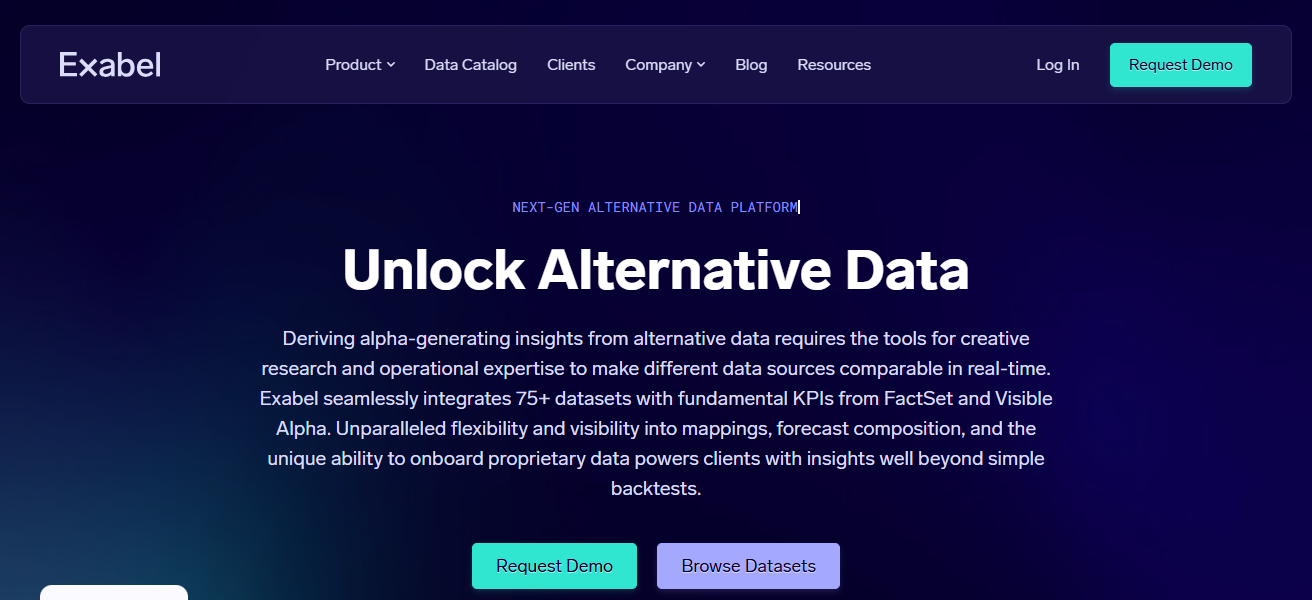
Exabel’s machine learning models dynamically adapt to ensure that they are able to detect these subtle decays before they impact performance, making it perfect for quantitative analysts.
| Pros | Cons |
|---|---|
| AI-driven analytics for alpha decay detection. | Can be complex for beginners. |
| Integrates multiple data sources including news and market trends. | Premium pricing may be high for small firms. |
| Visual dashboards allow easy monitoring of weakening alpha. | Requires good understanding of machine learning for advanced features. |
| Dynamically adapts machine learning models to detect subtle decays. | Limited offline functionality. |
| Ideal for quantitative analysts and portfolio managers. | May require integration with other platforms for full functionality. |
2. AlphaSense
AlphaSense uses cutting-edge NLP and AI to scan thousands of financial documents, filings, and transcripts in real-time.
Using nuances of language, it can identify warning signs of alpha signal decay at the market level, sector level or individual security level.

That makes it one of the few tools designed for proactive alpha management; analysts can be filtering and tracking key trends, earnings cues and regulatory updates through Ticker.
Its alerting system ensures that no faltering signal is overlooked, allowing investment teams to maximize portfolio returns.
| Pros | Cons |
|---|---|
| Advanced NLP scans thousands of documents in real time. | Can be overwhelming due to high volume of alerts. |
| Detects early alpha signal decay in markets and sectors. | Mostly focused on textual data; less for quantitative metrics. |
| Provides proactive alpha management with alert system. | Premium features may be expensive for small investors. |
| Allows filtering and tracking of trends, earnings cues, and regulations. | Learning curve for advanced filtering and query building. |
| Helps investment teams optimize portfolio returns efficiently. | Reliant on high-quality document data for accurate insights. |
3. Hebbia
Hebbia leverages knowledge graphs and AI reasoning to comprehend relationships among financial entities. It detects early signs of alpha signal degradation (overfitting, etc.)
Through mapping correlations and dependencies before classic metrics ever notice the effects. It’s system surfaced hidden patterns, unusual market moves and emerging risks that likely had less alpha available to them.

This allows analysts to indeed proactively adapt plans, providing Hebbia with a unique edge in predictive alpha decay analysis trained on data through. Its powerful ability to synthesize qualitative and quantitative data is behind innovation.
| Pros | Cons |
|---|---|
| Uses knowledge graphs to detect early alpha deterioration. | May require training for non-technical users. |
| Maps correlations and dependencies between financial entities. | Limited prebuilt integrations with mainstream platforms. |
| Highlights hidden patterns, unusual market moves, and risks. | Advanced features require understanding of AI reasoning. |
| Combines qualitative and quantitative data for predictive analysis. | Small user base may limit community support. |
| Enables proactive adjustment of trading strategies. | Focused on innovation, less on traditional reporting. |
4. Koyfin
Koyfin builds advanced market dashboards and analysis tools to track alpha signal decay. In terms of equities and ETFs, it offers real-time visualizations of performance, risk metrics, and factor exposures.
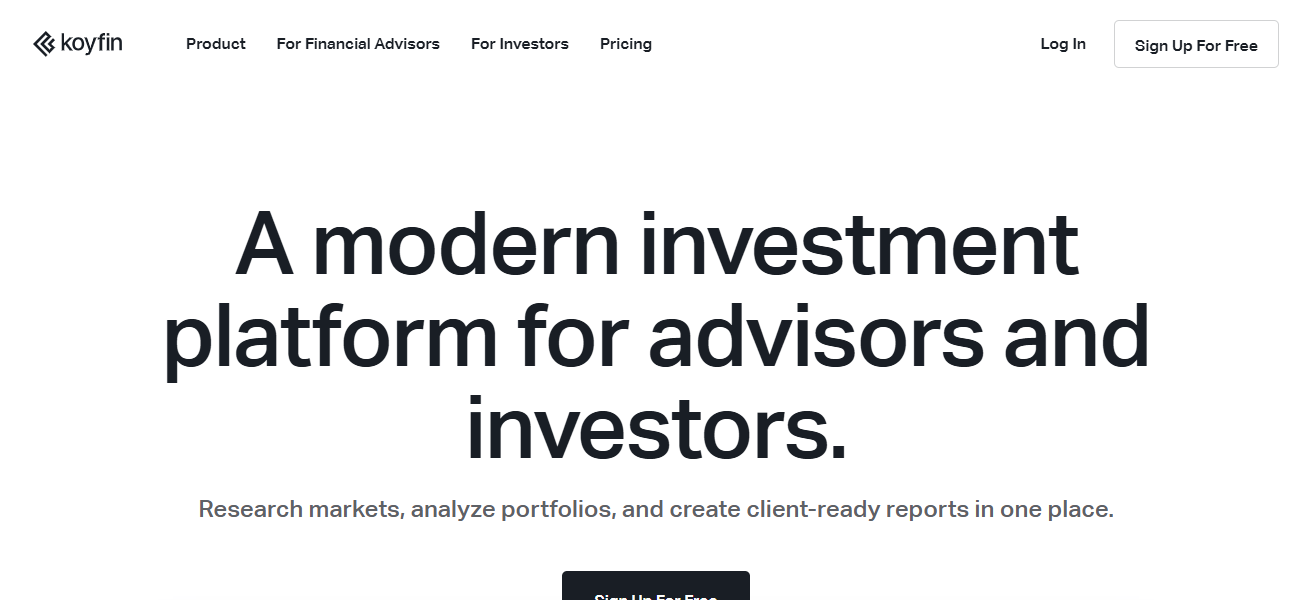
Track weakening alpha trends, compare sector performances, and assess macroeconomic impacts. Koyfin’s interface allows for the combination of metrics that could indicate signal decay in advance.
It uniquely caters both institutional and individual traders seeking alpha insights, owing its accessibility as well as small to large portfolio analytics.
| Pros | Cons |
|---|---|
| Real-time dashboards for monitoring alpha decay across assets. | Limited customization for alternative data sources. |
| Tracks performance, risk metrics, and factor exposures. | May not scale for extremely high-frequency trading. |
| Compares sector performances and macroeconomic impacts. | Free version has limited analytics features. |
| Combines multiple metrics to detect signal degradation early. | Less advanced AI compared to dedicated ML platforms. |
| Accessible for individual traders and institutional analysts. | Learning curve for multi-metric analysis. |
5. Qlik
A popular business intelligence tool, Qlik lets users visualize alpha signal decay patterns in sophisticated ways.
This enables users to model signal persistence and identify decaying alpha trends interactively by integrating both structured and unstructured financial data.
Qlik’s associative analytics engine enables the connection of disparate data sets for deeper insights, revealing previously hidden correlations and anomalies.
Suitable for both resource-constrained financial teams needing to track alpha decay in adherence with predictive analytics, but at the same time flexible for customizing internal proprietary metrics or bespoke portfolios.
| Pros | Cons |
|---|---|
| Advanced visualization of alpha decay trends. | High setup and implementation costs. |
| Combines structured and unstructured financial data. | Requires technical expertise for complex analytics. |
| Links disparate data sets for deeper insights. | Overkill for smaller portfolios. |
| Customizable dashboards and predictive analytics. | Can be slow with very large datasets. |
| Flexible for internal metrics and proprietary portfolio strategies. | Limited AI-driven automation for signal decay alerts. |
6. Claude for Financial Services
Claude AI harnesses large language models specifically within financial services to analyze market behavior.
It is particularly adept at identifying alpha signal decay through the processing of textual (e.g., earnings calls, news sentiment) and numerical data (e.g. market commentary).

Claude can even produce reports, offer trend projections, andsimulate possible worse case signal degradation. Combining AI reasoning techniques with sector-specific domain skills
It holds significant value for asset managers and traders needing actionable insights out of large-scale unstructured data.
| Pros | Cons |
|---|---|
| Large language model analyzes textual and numerical data. | May require fine-tuning for specific financial use cases. |
| Highlights alpha decay using earnings calls, news, sentiment. | Relatively new in financial services; limited adoption. |
| Generates trend forecasts and scenario simulations. | AI predictions may need human validation. |
| Combines AI reasoning with sector-specific intelligence. | Integration with other platforms can require effort. |
| Useful for asset managers and traders for actionable insights. | Performance may vary depending on data quality. |
7. TradingView Alpha Confluence Systems
Support for alpha confluence is built into support tools in TradingView to identify signal decay. Visual seeing weakening alpha trends by integrating multiple indicators
Chart patterns and algorithmic signals Its scripting language, Pine Script, allows you to build custom alerts and decay-tracking models.

This platform enables community-based strategies, providing access to exclusive signals that have been tested across markets.
Its mix of flexibility, real-time data and confluence analysis make it a unique concurrent environment to systematically monitor alpha deterioration.
| Pros | Cons |
|---|---|
| Detects alpha decay using multiple indicators and confluence strategies. | Requires scripting knowledge for custom alerts. |
| Visualizes weakening alpha trends in real time. | Community strategies may not always be reliable. |
| Pine Script allows creating custom decay-tracking models. | Limited quantitative AI analytics compared to specialized platforms. |
| Supports community-driven strategy sharing and testing. | Not fully automated for signal decay alerts. |
| Flexible for traders wanting systematic monitoring. | Best suited for traders familiar with technical analysis. |
8. Custom Python/Jupyter Notebooks
Using custom Python and Jupyter Notebooks allows for сеur modularization into a fully flexible environment where alpha signal decay can be tracked quantitatively.
Analysts can write machine learning models, backtest strategies and join alternative data sources. Using libraries such as Pandas, NumPy and TensorFlow it possible to model signal persistence, factor exposures and portfolio impacts.
This method is suited for teams who need highly-customizable, reproducible workflows. This exposes motivated parties to proprietary decay metrics, automated alerts, and precision monitoring for actionable alpha decay.
| Pros | Cons |
|---|---|
| Fully flexible for tracking alpha signal decay quantitatively. | Requires programming expertise. |
| Supports machine learning, backtesting, and custom metrics. | Setup and maintenance can be time-consuming. |
| Integrates alternative data sources and libraries like Pandas/TensorFlow. | Less user-friendly for non-technical analysts. |
| Highly reproducible workflows and automation capabilities. | No built-in visualization dashboards by default. |
| Ideal for proprietary alpha decay models. | Team collaboration requires version control setup. |
9. Sparkco.ai AI-Driven Analysis
Sparkco. ai ANOMALY DETECTION ai is a threshold-based alpha signal decay detection model that uses sophisticated Artificial Intelligence to detect alpha signal decay in real time across multiple asset classes.
Its platform integrates predictive analytics, sentiment analysis and alternative data to detect weakening signals early.
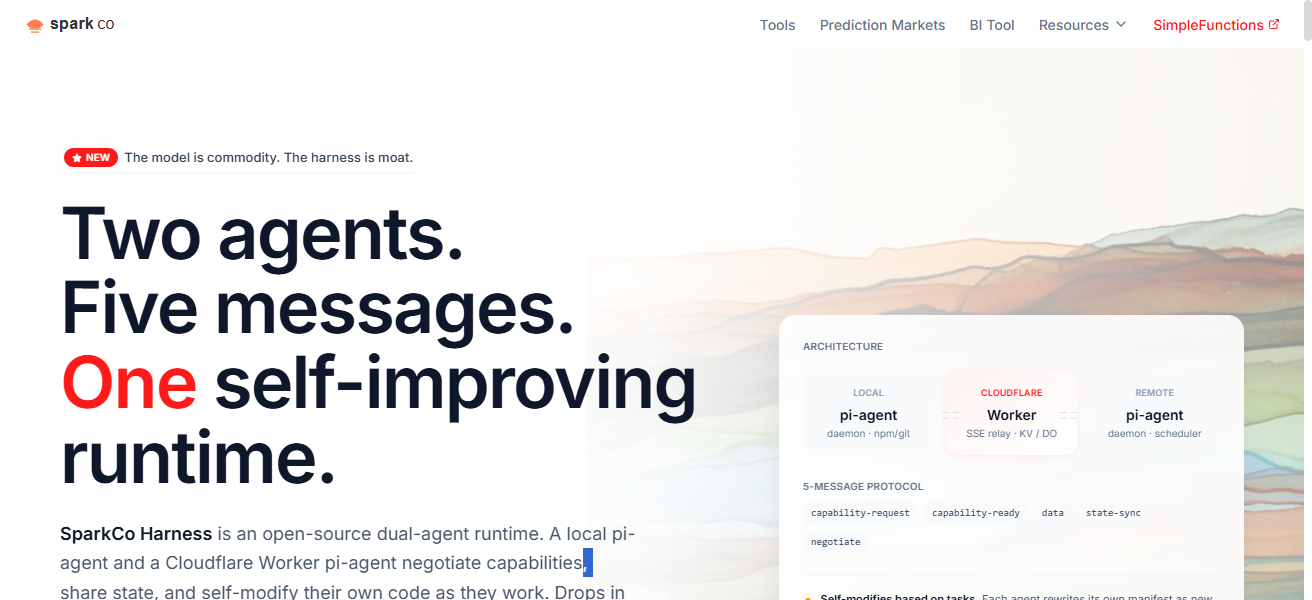
Sparkco. ai’s machine learning models are constantly modifying, so portfolio managers get alerts before performance sinks.
Cloud-based architecture enables scaling across international markets, well suited for high-frequency trading and long-term investing strategies. The insights powered by AI offer an edge in preserving alpha
| Pros | Cons |
|---|---|
| Detects alpha decay in real time across asset classes. | Cloud dependency may be a concern for some firms. |
| Combines predictive analytics, sentiment analysis, and alternative data. | May be expensive for small portfolios. |
| ML models adapt continuously to detect weakening signals. | Advanced features require training to interpret AI outputs. |
| Scalable across global markets for various strategies. | Limited offline functionality. |
| Provides competitive advantage in alpha preservation. | Smaller platform community compared to mainstream tools. |
10. AlphaAgent
AlphaAgent automates the tracking and monitoring of alpha signal decay in actionable terms for portfolio construction. Our AI engine reviews historical performance, exposes factors and identifies declining alphabets by analysing in-market correlation.
Users receive alerts regarding changes in real time, predictive reports and recommended modifications in order to balance their portfolio.
The unique offering of automation, predictive analytics, and customizable dashboards makes AlphaAgent a game changer for quantitative traders and asset managers looking to preserve and enhance alpha across varying market environments.
| Pros | Cons |
|---|---|
| Automates detection and monitoring of alpha decay trends. | Premium pricing may limit accessibility. |
| Provides predictive reports and real-time alerts. | Advanced dashboards require learning for effective use. |
| Suggests adjustments to maintain portfolio efficiency. | Limited customization outside predefined metrics. |
| Analyzes historical performance, factor exposures, and correlations. | Relatively newer platform with smaller user base. |
| Suitable for quantitative traders and asset managers. | Not ideal for non-quantitative retail investors. |
How To Choose Best Systems for Alpha Signal Decay Analysis
AI & Analytics Capabilities — Identify platforms that have AI/ML insights in spotting subtle trends of alpha decay.
Real-Time Monitoring — Opt for systems that offer alerts and real-time decay tracking of the signals.
Customizability — The opportunity to create tailored models, dashboards, or scripts for unique strategies.
Visualization Tools – Look for charts, dashboards and confluence analysis to visualize the patterns easily.
Historical & Predictive Analysis – Enables backtesting, trend forecasts and scenario simulations.
User Experience – Interface should be intuitive for quantitative analysts and portfolio managers.
Scalability — such a system must be robust to many classes of assets and large amounts of data.
Support & Documentation – Powerful customer support and learning materials are key.
Why is Monitoring Alpha Decay Important?
Preserve Returns — Identify softening signals early to protect portfolio returns.
Risk Management – Avoid losses from old or not working trading strategies
Strategy Optimization — Allows for timely adjustments to ensure alpha-generating strategies continue to be successful.
Resource Allocation – Assigns capital to more convincing strategies or assets.
Competitive Edge – Maximizing time and minimizing alpha decay enhances market intuition
Data-Driven Decisions – Ability to gain insights via real-time analysis and predictive modeling.
Performance Tracking – Assesses signal longevity and overall effectiveness of investment strategies in the long-term.
Conclsuion
Final Thoughts The Best Systems to Monitor Alpha Signal Decay The way that artificial intelligence, real-time information, predictive analytics and customizable dashboards give these platforms a competitive
Edge in helping traders and analysts anticipate important changes in the market. Selecting the best system means financial services will be efficient, precise and give an investor a significant advantage.
FAQ
What is alpha signal decay?
Alpha signal decay refers to the weakening effectiveness of a trading or investment signal over time, reducing expected returns.
Which systems are best for detecting alpha decay?
Top systems include Exabel, AlphaSense, Hebbia, Koyfin, Qlik, Claude AI, TradingView, Sparkco.ai, AlphaAgent, and custom Python/Jupyter notebooks.
How do AI-driven platforms help in alpha decay analysis?
AI platforms detect subtle patterns, process large datasets, and predict weakening signals faster than manual methods.
Can retail traders use these systems effectively?
Yes, platforms like Koyfin, TradingView, and custom Python notebooks are accessible for individual traders, while others suit institutional use.