In this article, I talk about Legal SaaS Platforms Quietly Growing Fast: Transforming law firms and corporate legal teams with AI-driven legal software.
In addition to revealing new emerging tools, you will see how they are entering the real world and what is driving their fast adoption in 2026.
This overview focuses on major platforms driving trends and innovations in different areas of legal automation, compliance, contract management, and litigation workflows around the world as of October 2023.
Key Poinst & Legal SaaS Platforms Quietly Growing Fast
Harvey — AI legal platform automating research drafting contracts, and improving lawyer productivity workflows significantly
Darrow — Darrow predictive litigation analytics platform helping lawyers assess case outcomes early, accurately
SpotDraft — SpotDraft contract lifecycle management platform streamlining drafting, approval and compliance workflows efficiently
Supio — Supio AI legal assistant extracting insights from documents for litigation teams quickly
Ironclad — Ironclad digital contract management system enabling enterprises to automate agreements at scale
EvenUp — EvenUp personal injury AI platform optimizing settlement valuations for attorneys, faster outcomes
Spellbook — Spellbook AI tool for lawyers, generating contract clauses inside Microsoft Word automatically
Caseflood.ai — Caseflood.ai legal automation platform managing high-volume case intake workflows efficiently, scaling
Leegality — Leegality digital documentation and e-sign platform enabling compliant paperless workflows in India
Thirdfort — Thirdfort identity verification and compliance platform, securing legal financial transactions, digitally safe
10 Legal SaaS Platforms Quietly Growing Fast
1. Harvey
Harvey is a cutting-edge data-driven legal AI used by large law firms and enterprise legal departments.
The tool is designed for high-scale legal research, drafting, and analysis of documents using OpenAI-backed models.

Harvey launched tools that automate multi-step legal tasks such as due diligence and regulatory review, expanding its “AI workflow agents” in 2026.
Today, it is heavily embedded in most major firms; highly tuned into corporate enterprise systems and document repositories, making it the nerve center for sophisticated global legal operations.
| Pros | Cons |
|---|---|
| Advanced AI legal research and drafting | High cost for small firms |
| Strong enterprise-level adoption | Requires onboarding training |
| Automates complex legal workflows | Limited customization for niche law |
| Backed by cutting-edge AI models | Dependent on enterprise data integration |
2. Darrow
Darrow — Predictive Legal Intelligence: How law firms use AI to discover hidden litigation opportunities.
The platform analyzes huge datasets such as public records and online signals to detect possible class actions and regulatory misdemeanors.
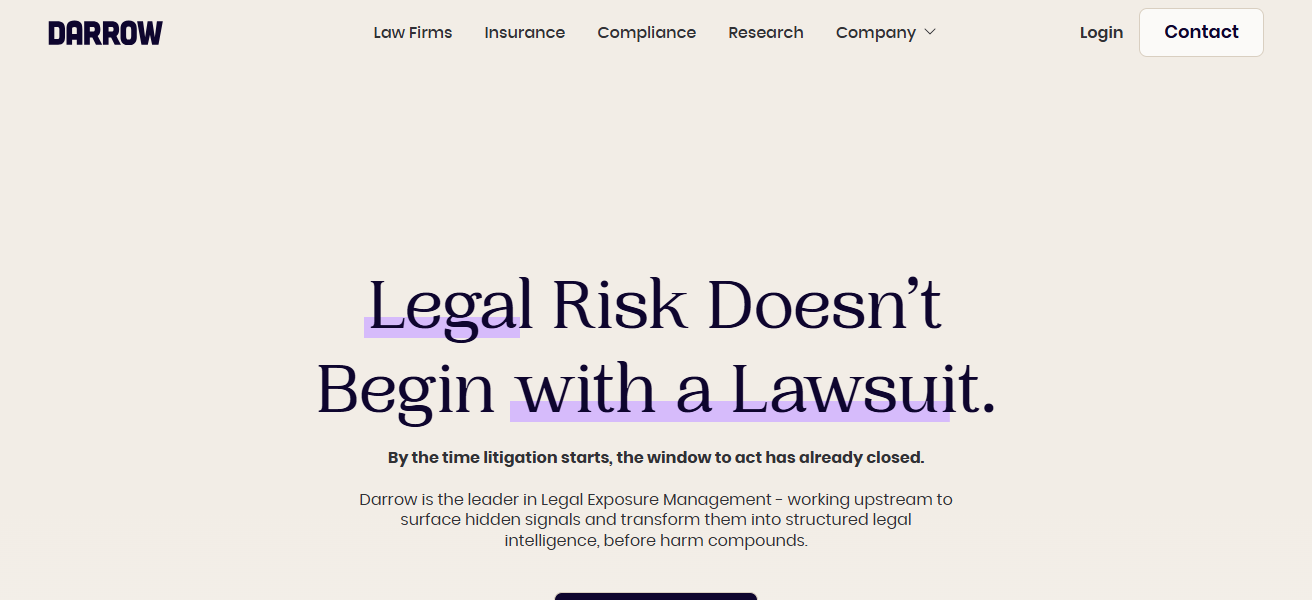
The most recent innovation is its case discovery engine, which finds high-value cases before they enter traditional legal channels.
This type of early identification of profitable litigation creates a strategic advantage for attorneys who can wield Darrow to develop data-driven legal strategies and risk detection at every level of modern practice.
| Pros | Cons |
|---|---|
| Predicts high-value litigation opportunities | Focused mainly on litigation firms |
| Strong data-driven legal intelligence | Limited use in corporate legal teams |
| Early case discovery advantage | Requires large datasets to perform best |
| Helps maximize litigation profitability | AI predictions may need human validation |
3. SpotDraft
SpotDraft is a decentralised contract lifecycle management platform with increasing popularity to make drafting, approval, and execution of agreements easy.
The key features include automation for limiting manual processes of contract execution and enhancing legal compliance.

SpotDraft recently launched AI-powered clause generation and on-time tracking dashboards. These allow legal teams to close deals faster while retaining governance.
The growing uptake in startups and mid-sized enterprises, denoting a strong demand for scalable, easy-to-use contract automation tools as part of modern legal operations, is evident.
| Pros | Cons |
|---|---|
| Easy contract lifecycle automation | Not ideal for very large enterprises |
| AI-powered clause generation | Limited advanced legal analytics |
| Fast deal closing workflow | UI customization options are moderate |
| Great for startups and SMBs | Dependency on structured contract data |
4. Supio
We at Supio focus on the Personal injury litigation intelligence, specifically collecting the unstructured legal data in existence (med records, police reports, case files, etc.)
It builds a “case graph,” enabling attorneys to quickly organize relationships between pieces of evidence. Recent improvements include AI-powered document summarization and expedited case triage tools.

This saves ample time that would otherwise have been spent on a manual review. Litigation-heavy firms seeking to fast-track representative and high-volume injury claims are using
Supio more often, as well as reducing the time spent on” stressful case evaluation and settlement preparation.
| Pros | Cons |
|---|---|
| Strong litigation data structuring | Narrow focus on personal injury cases |
| AI-powered case summarization | Not suitable for corporate law |
| Faster case analysis and review | Needs high-quality input data |
| Improves legal accuracy | Limited global adoption yet |
5. Ironclad
Ironclad an enterprise contract lifecycle management platform that enables enterprises to manage and automate workflows for the creation, negotiation, and compliance of contracts.
Global Corporations have widely adopted it for end-to-end contract visibility. Most notably, Ironclad recently ramped up its AI capabilities by partnering with legal AI systems that allow for smarter contract insights and automatic risk detection.
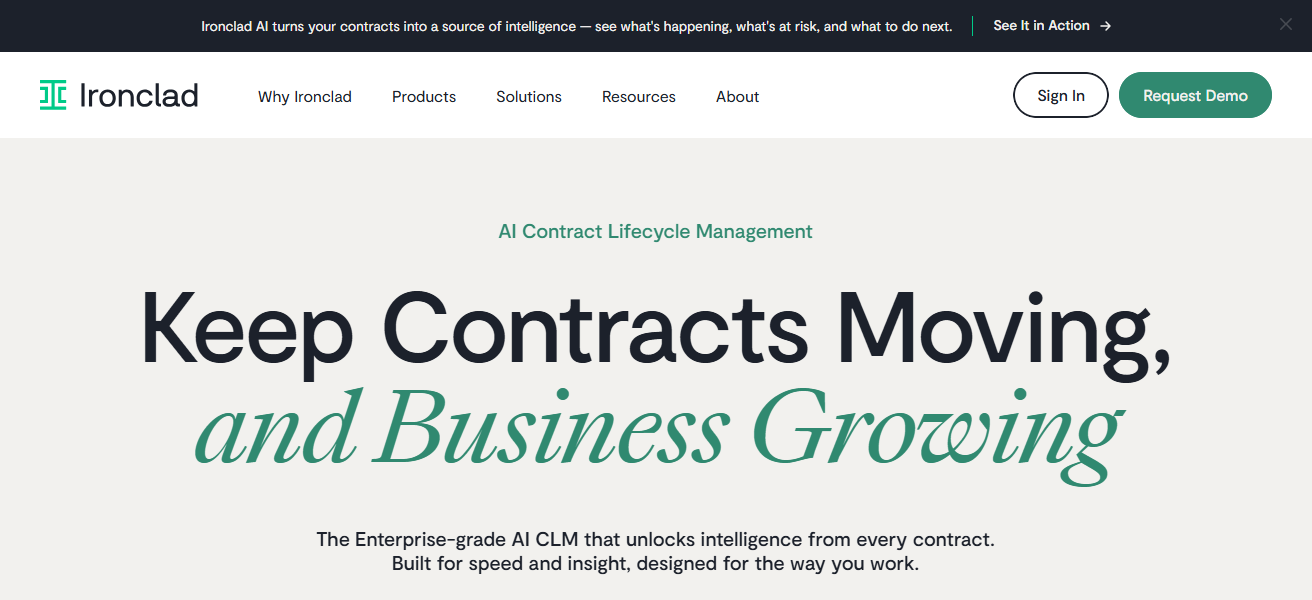
These tools have now become deeply embedded in business workflows, enabling legal teams to significantly improve speed to operationalise contracts and eliminate throughput bottlenecks across procurement and sales processes.
| Pros | Cons |
|---|---|
| Enterprise-grade contract management | Expensive for small firms |
| Deep workflow automation | Complex setup process |
| Strong compliance tracking | Requires technical onboarding |
| Integrates with business systems | Can be overwhelming for beginners |
6. EvenUp
EvenUp uses AI to mine medical records and estimate case values specifically for personal injury law. It standardizes your documentation of injuries, which helps attorneys create stronger demand packages for settlements.
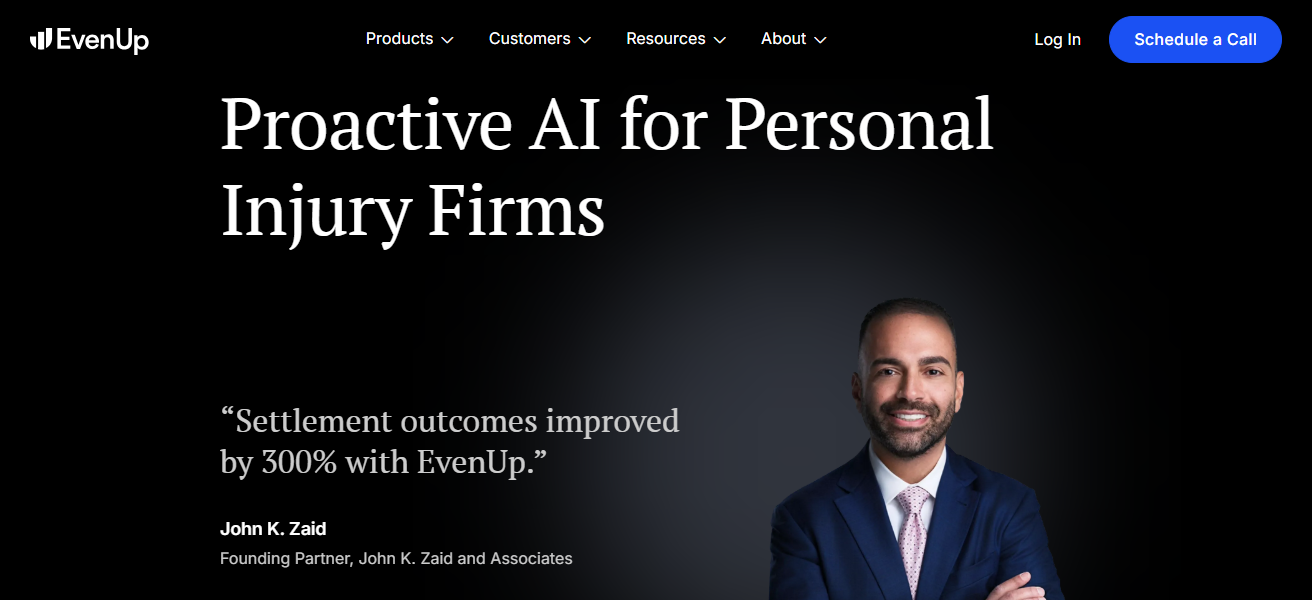
Latest Changes: This includes models for a better estimation of damage and faster medical chronology.
EvenUp is primarily used in plaintiff law firms working in high-volume injury litigation to improve settlement accuracy while reducing the time spent on tedious manual case preparation.
| Pros | Cons |
|---|---|
| AI-driven injury valuation | Limited to personal injury law |
| Faster settlement preparation | Not useful for corporate lawyers |
| Standardizes medical records | Heavy reliance on data accuracy |
| Improves settlement outcomes | Regional limitations in some markets |
7. Spellbook
Spellbook is an AI-assisted legal drafting assistant seamlessly integrated into Microsoft Word.
The software aids lawyers in producing contract clauses, performing redlining, and benchmarking agreements to the market.
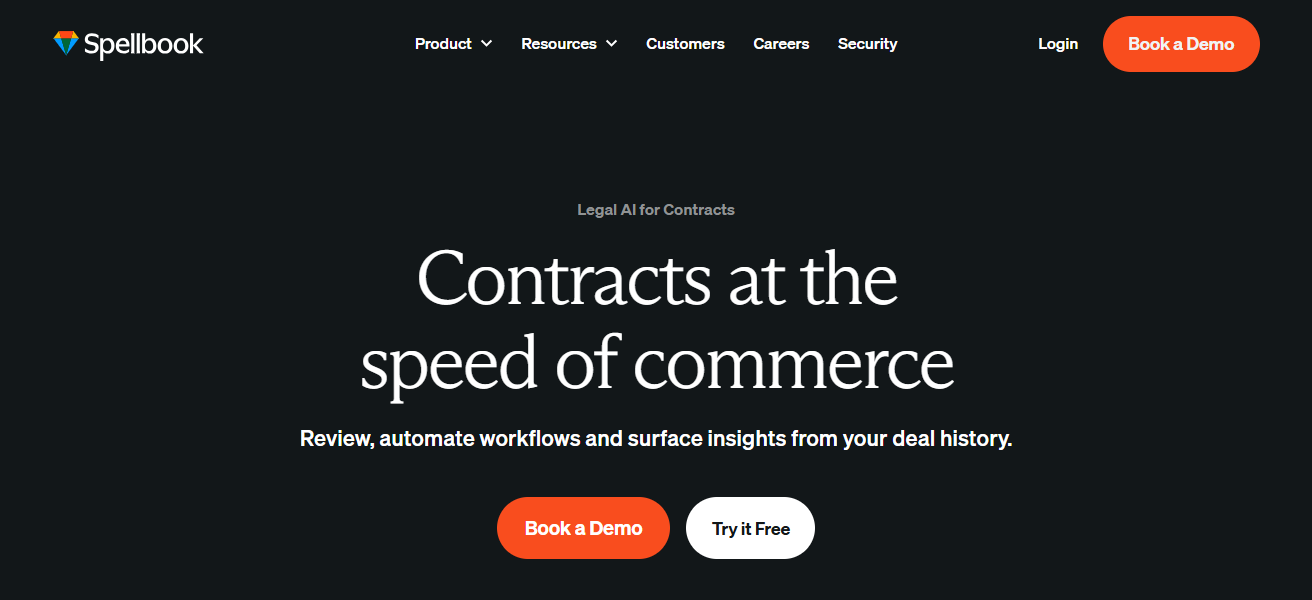
Updates include “AI playbooks” that replicate law firm negotiating style and real-time contract benchmarking capabilities.
Its main strength is simplicity in the workflow—lawyers need not leave Word. In other words, this results in Spellbook becoming one of the most rapidly adopted AI tools to date among transactional lawyers around the world.
| Pros | Cons |
|---|---|
| Works directly inside Microsoft Word | Limited standalone functionality |
| Fast contract drafting support | Depends on Word ecosystem |
| AI clause suggestions | Not ideal for large-scale automation |
| Easy for lawyers to adopt | Requires internet connectivity |
8. Caseflood.ai
Caseflood. ai is an AI-driven legal intake and client management system that automates phone calls, follow-ups, and communication with clients.
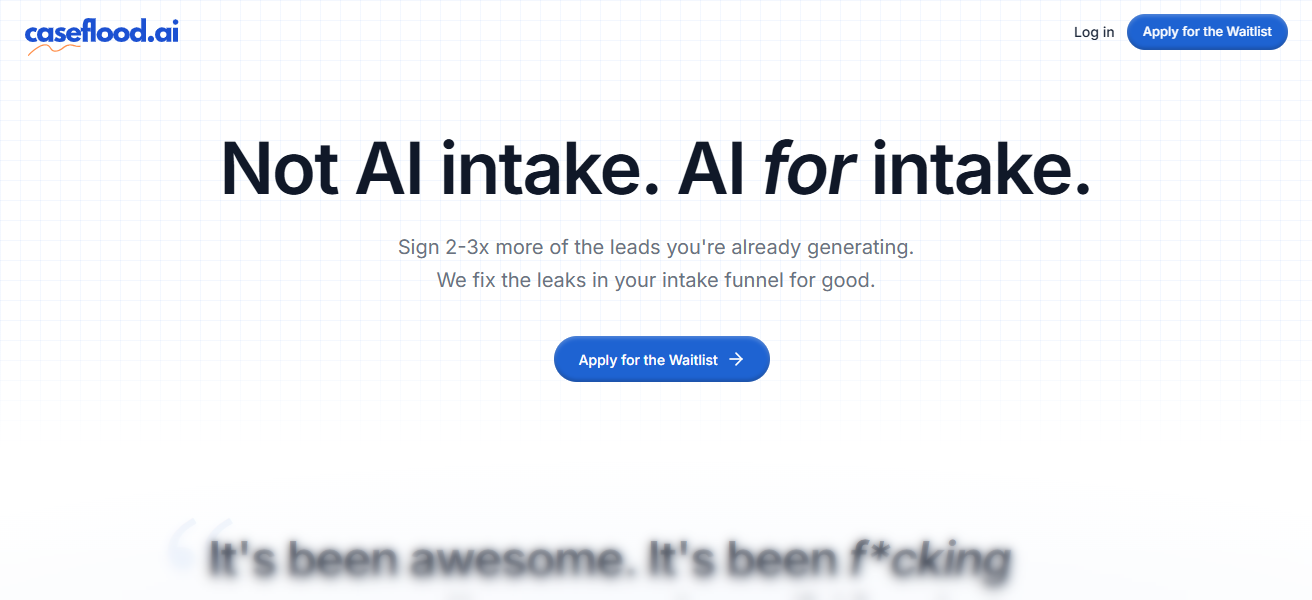
Powered by AI Agents, it automates the case intake conversation and scheduling consultations. Latest features: Multilingual AI intake and CRM integration for law firms.
It enables SMEs to grow their operations without needing large support teams, greatly improving client conversion rates and admin overheads.
| Pros | Cons |
|---|---|
| Automates client intake calls | Early-stage platform maturity |
| AI-powered lead conversion | Limited enterprise scalability |
| Reduces admin workload | Needs constant AI training |
| Multilingual support | Competition in legal CRM space |
9. Leegality
Leegality is a legal-tech platform that specializes in end-to-end digital documentation, e-signatures, and compliance workflows, primarily operating with clients in India.
It facilitates paperless legal processes, which include digitization of stamping, document execution, and verification.
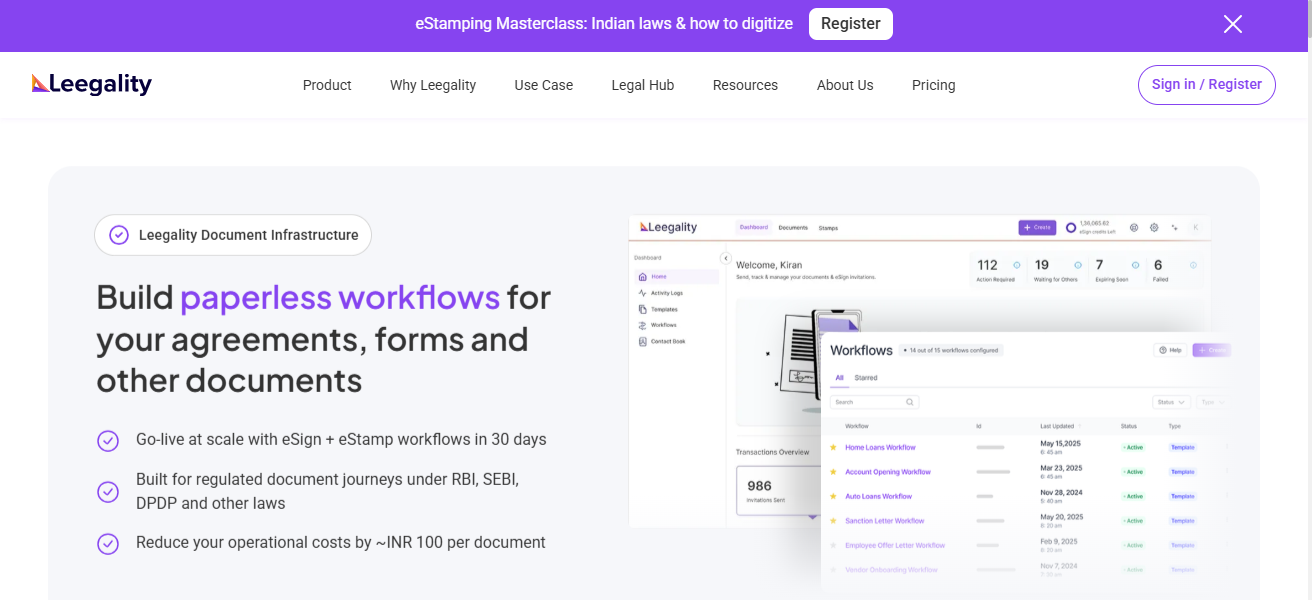
Recently, they have improved their compliance automation within regulated industries as well as integrations with more enterprise systems.
Leegality is trusted by banks, NBFCs, and legal teams to bring secure, legally valid digital transactions while eliminating paperwork & operational delays.
| Pros | Cons |
|---|---|
| Strong digital signature system | Mostly India-focused platform |
| Legal compliance automation | Limited global expansion |
| Paperless documentation | Integration depth varies |
| Widely used in banking sector | Less advanced AI features |
10. Thirdfort
Thirdfort — Identity verification, AML checks, and compliance automation for legal and financial firms. It helps law firms onboard and verify clients securely.
New features include faster biometric verification and even real-time fraud detection systems. In regulated legal environments that come close to a compliance regime, with high risk.

Thirdfort is increasingly important. It allows firms to efficiently onboard clients in a timely manner
while maintaining compliance with regulatory standards, which cuts down on exposure to potential fraud and unnecessary operational friction.
| Pros | Cons |
|---|---|
| Strong AML & identity verification | Primarily UK/EU focused |
| Fast onboarding process | Limited legal drafting tools |
| Fraud detection capabilities | Requires regulatory alignment |
| High compliance accuracy | Not suitable for general legal work |
Conclusion
Summary — Legal SaaS platforms are quickly redefining the legal industry through AI-based and data-focused workflows and automation.
They reduce costs and manual effort whilst enhancing efficiency in contracts, compliance, litigation, and client onboarding.
With adoption still advancing in 2026, these tools are fundamental for modern law firms, fueling quicker decisions, improved accuracy, and a completely digital legal ecosystem around the globe.
FAQ
What are Legal SaaS platforms?
Legal SaaS platforms are cloud-based software tools that help law firms manage contracts, litigation, compliance, and client onboarding using AI and automation.
Why are Legal SaaS platforms growing so fast?
They are growing due to rising demand for AI-driven legal automation, cost reduction, and faster document processing workflows.
What is Harvey used for?
Harvey is used for legal research, contract drafting, and complex document analysis using advanced AI models in enterprise law firms.
How does Darrow help lawyers?
Darrow helps lawyers identify hidden litigation opportunities by analyzing large datasets and predicting high-value legal cases.
What makes SpotDraft popular?
SpotDraft is popular for simplifying contract lifecycle management through automation, AI clause generation, and faster approvals.