
This article covers Next-Generation Legal Tech Brands To Watch, an innovative platform leveraging artificial intelligence and automation to disrupt the landscape of the legal industry.
These powerful new tools are transforming workflows such as legal research, contract management and compliance.
These legal tech brands, ranging from startups to enterprise solutions, are leveraging the advantages of efficiency, accuracy, and productivity in causing legal operations to run faster, smarter, and all-around more accessible in this digital age.
Key Poinst & 10 Next-Generation Legal Tech Brands To Watch
Legora improves legal workflows through AI-powered collaboration and document intelligence tools.
Darrow AI: identifies legal violations early using predictive analytics and data signals.
Harvey AI: supports lawyers with advanced AI legal research and drafting assistance.
Spellbook helps draft contracts efficiently using AI inside the Microsoft Word environment.
Luminance Technologies automates document review and enhances legal risk detection accuracy.
Everlaw streamlines litigation workflows with AI-driven e-discovery and evidence analysis tools.
Ironclad simplifies contract lifecycle management using AI automation and workflow optimization.
Genie AI enables fast contract creation for startups using intelligent legal templates.
Brightflag optimizes legal spend management and improves invoice tracking with AI insights.
CoCounsel accelerates legal research, document review, and case preparation using generative AI.
10 Next-Generation Legal Tech Brands To Watch
1. Legora
Legora is a fresh, AI-enabled workspace grappling with document collaboration and practical search in legal.
Allows lawyers to work on complex case files through structured AI environments that provide improved readability and faster workflow.

Latest Developments Legora has experienced quick growth in enterprise partnerships, establishing itself as a leading contender in next-generation legal productivity platforms.
The attention to visual data loop-in and AI-supported monitoring makes it a perfect candidate for large volume documentation handled by legal teams today.
| Pros | Cons |
|---|---|
| AI-powered legal document collaboration and workflow tools | Still developing global enterprise adoption |
| Strong focus on research-heavy legal tasks | Limited public integrations compared to older platforms |
| Faster legal document analysis for large datasets | May require training for new users |
2. Darrow AI
Darrow AI uses predictive legal intelligence to find potential lawsuits and compliance violations before they become known public cases.
The AI scans deep data sources, including news and regulatory signals, to find untapped legal opportunities.
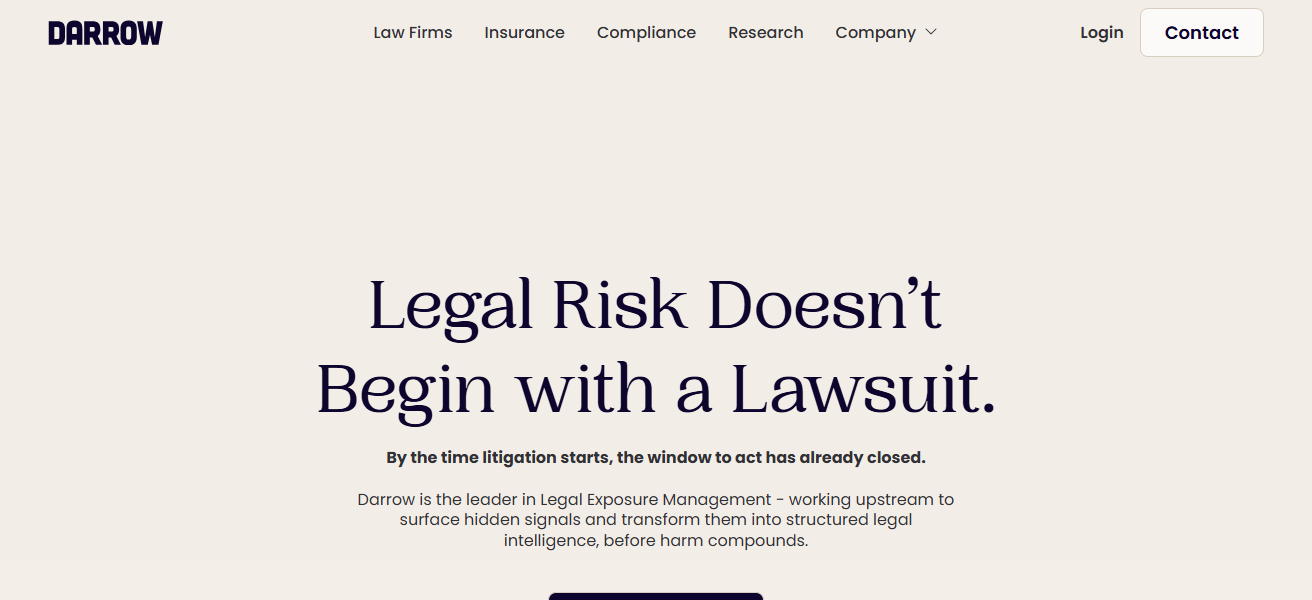
This creates dramatically high demand within plaintiff law firms and litigation funders looking for early-case intelligence.
Each is disrupting the traditional legal search with an AI-driven “legal discovery engine” and going beyond just how legal opportunities are sourced, helping to move the industry from a reactive to more proactive pitching.
| Pros | Cons |
|---|---|
| Predicts legal violations using AI intelligence | Narrow focus on litigation discovery use cases |
| Helps identify early-class action opportunities | Not designed for contract or workflow management |
| Strong data-driven legal risk detection | Depends heavily on large datasets availability |
3. Harvey AI
Harvey AI is widely recognized as a top-tier legal AI platform built for large law firms and enterprise legal teams.
It uses advanced language models optimized for legal reasoning, enabling professionals to draft contracts, conduct legal research, and analyze documents with high precision.
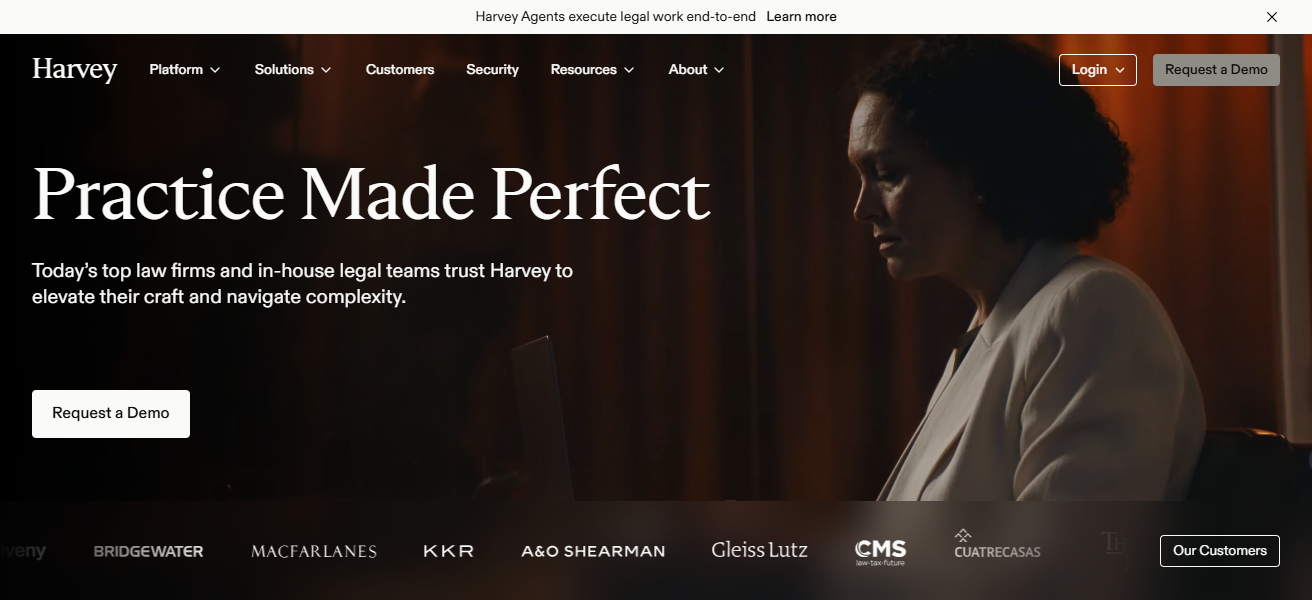
Recent industry adoption shows rapid integration into major global law firms, where it supports due diligence and compliance workflows.
Its strength lies in combining generative AI with trusted legal databases, making it a cornerstone in modern AI-powered legal transformation.
| Pros | Cons |
|---|---|
| Predicts legal violations using AI intelligence | Narrow focus on litigation discovery use cases |
| Helps identify early-class action opportunities | Not designed for contract or workflow management |
| Strong data-driven legal risk detection | Depends heavily on the availability of large datasets |
4. Spellbook
Spellbook uses advanced artificial intelligence directly in Microsoft Word to assist lawyers with generating clauses and reviewing agreements—real-time visual drafting feedback integrated into their climate.
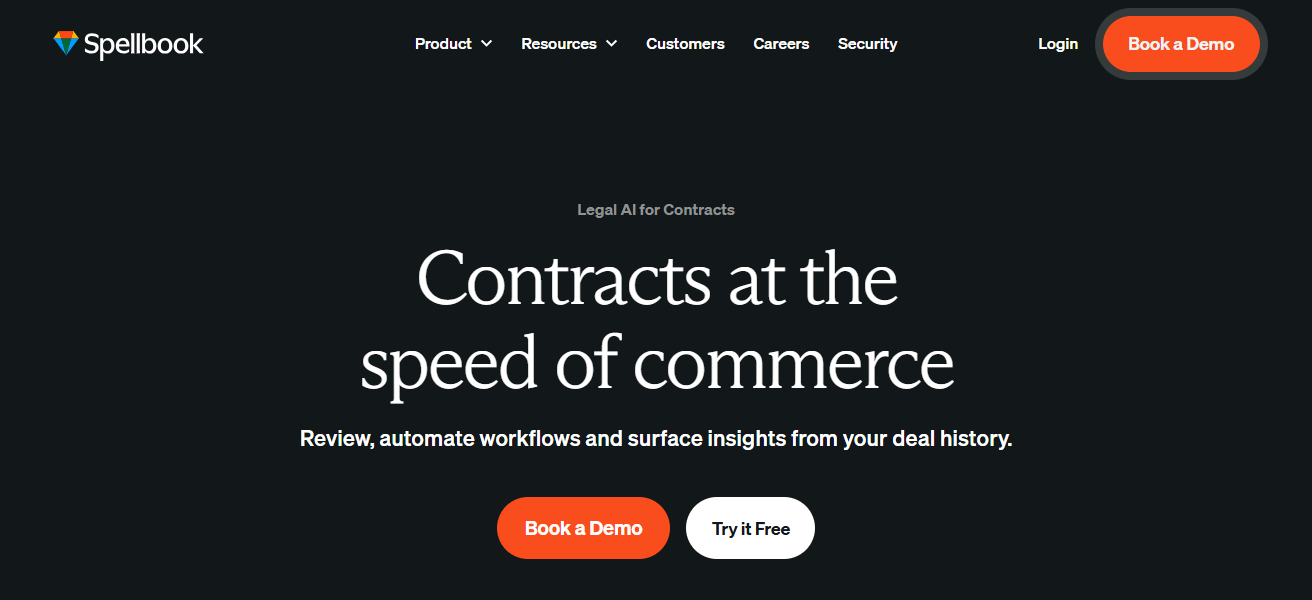
Through contextual AI suggestions, it enhances speed and reduces the legal risk of drafting. Updates have recently improved capabilities regarding complex legal language and compliance across multiple jurisdictions.
Spellbook is easy to learn, widely accessible, and well-integrated into lawyers’ natural workflow; thus, it has found a particular niche amongst transactional lawyers in small firms.
| Pros | Cons |
|---|---|
| Seamless Microsoft Word integration for drafting | Limited advanced research capabilities |
| Fast contract generation and clause suggestions | Not suitable for large-scale legal operations |
| Easy adoption for small law firms | Less powerful than enterprise AI platforms |
5. Luminance Technologies
Luminance Technologies specializes in AI-driven document review and compliance analysis for corporate legal teams.
It uses machine learning to detect anomalies, classify contracts, and highlight legal risks in large datasets. Its strength lies in managing complex mergers, acquisitions, and regulatory reviews.

Recent improvements include enhanced collaboration tools and faster automation for due diligence workflows.
Luminance is widely used by global law firms for reducing manual workload while increasing accuracy in high-stakes legal operations.
| Pros | Cons |
|---|---|
| Strong AI-based document review and due diligence | High enterprise pricing model |
| Excellent for M&A and compliance analysis | Limited customization for small teams |
| Handles large legal datasets efficiently | Requires structured onboarding |
6. Everlaw
Everlaw is a next-generation cloud-based litigation and e-discovery platform built for large amounts of legal data.
It enables legal teams to unlock valuable insights from thousands, if not millions, of documents through advanced AI-driven search and review tools.

The platform uses a “story-building” functionality that enables attorneys to build case stories quickly from data instead of manually entering information, like with traditional approaches.
We’ve recently added generative AI capabilities for summarization and legal drafting, which, combined with its speed, accuracy, and collaborative nature, have made it a go-to solution for litigation-heavy environments!
| Pros | Cons |
|---|---|
| Powerful e-discovery and litigation platform | Focused mainly on litigation use cases |
| AI-assisted case storytelling and evidence analysis | Not ideal for contract lifecycle management |
| Cloud-based collaboration for legal teams | Can be complex for beginners |
7. Ironclad
Ironclad — The first and only contract lifecycle management platform that automates the entire contract process, from creation to execution.
It streamlines approvals, monitors obligations, and enhances collaboration between legal and business teams. Key Updates: Convex’s New Developments on AI Clause Detection & Contract Intelligence Across the Enterprise.
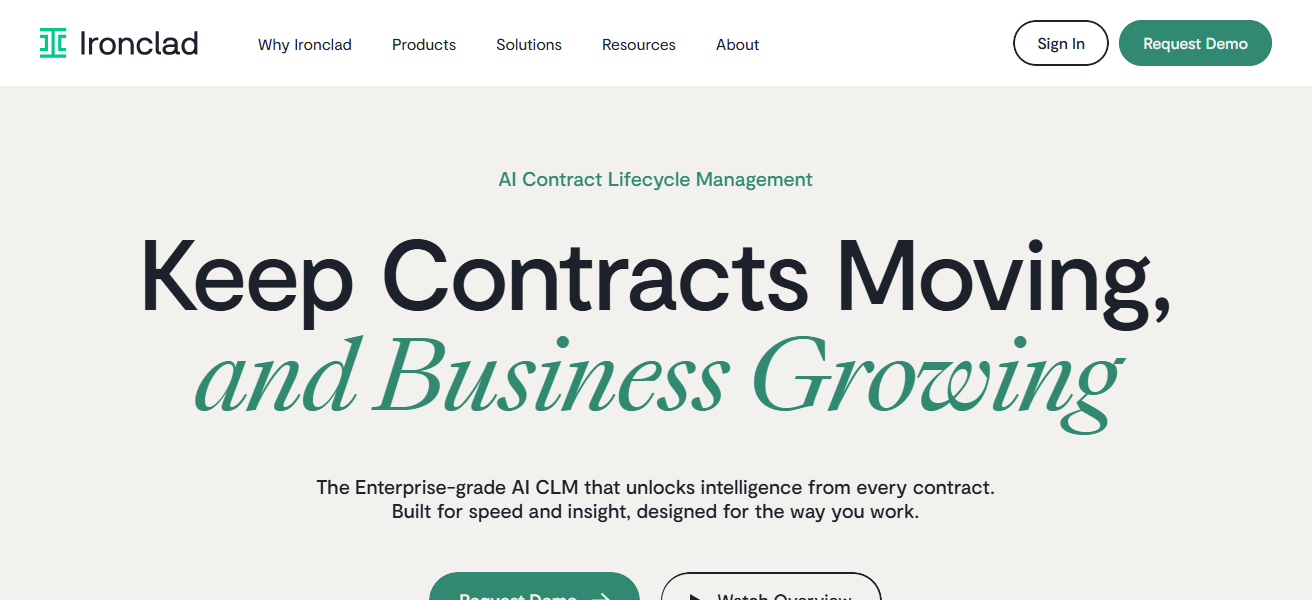
Ironclad serves clients of all shapes and sizes that are trying to make sense of their contract operations – its broad adoption has made it the leader for legal automation / digital contract transformation across many industries.
| Pros | Cons |
|---|---|
| End-to-end contract lifecycle management system | Primarily focused on contracts only |
| AI-powered workflow automation and approvals | Requires enterprise setup for full features |
| Strong integration with business operations | Can be costly for startups |
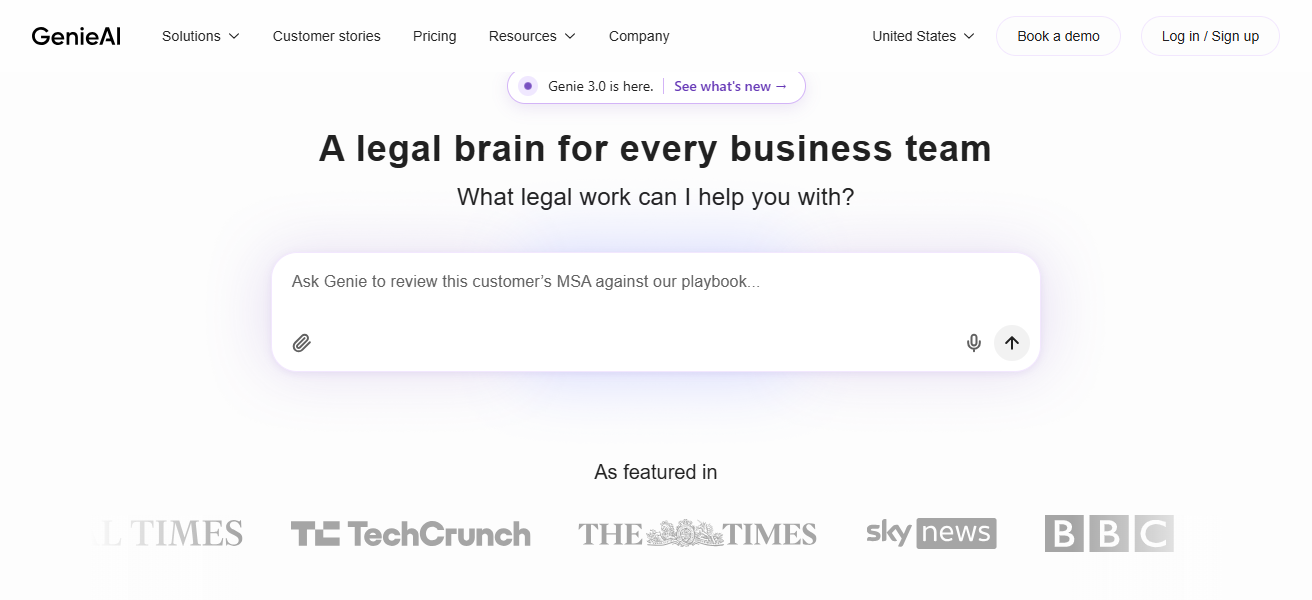
8. Genie AI
Genie AI is building a platform that can empower both startups and individuals to create legally valid contracts without legal assistance.
The software does not require extensive legal knowledge to use: instead, it uses AI-trained legal templates to simplify the drafting process.
We will address smarter risk detection and adaptive clause recommendations — improvements from previous years.
Startup and small to medium enterprises use Genie AI as a low-cost alternative while unlocking better access to legal drafting within their business ecosystem.
| Pros | Cons |
|---|---|
| Simple AI contract generation for startups | Limited advanced legal analytics |
| Reduces dependency on legal experts for basic contracts | Not suitable for complex enterprise cases |
| Fast and user-friendly interface | Smaller ecosystem compared to competitors |
9. Brightflag
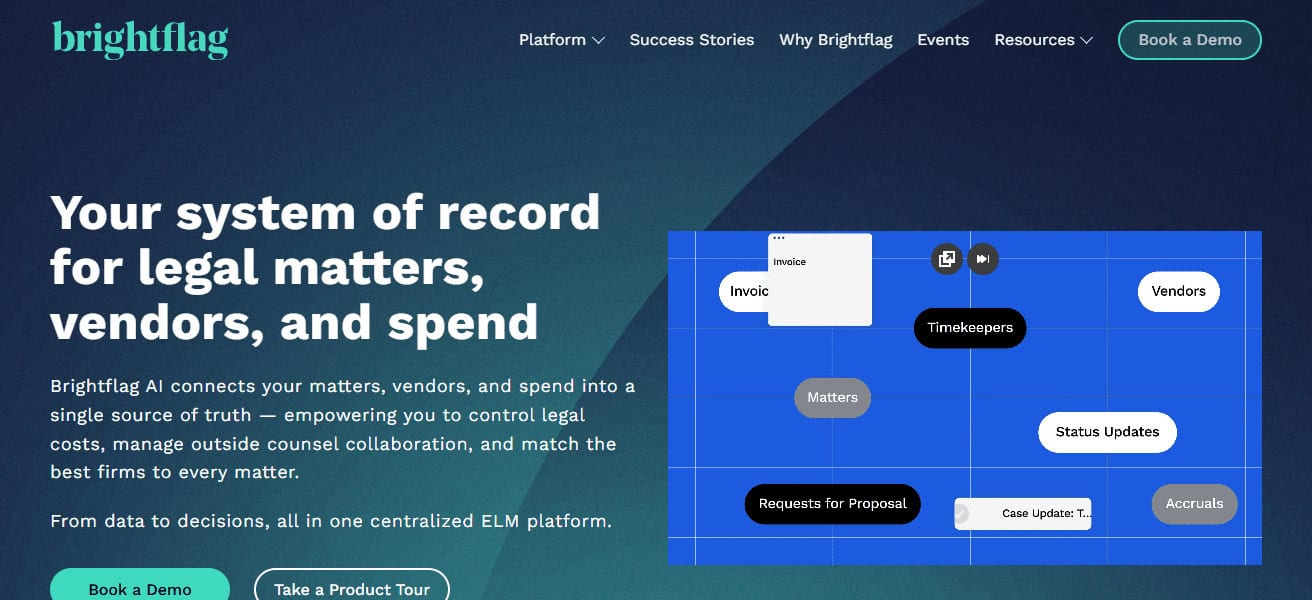
If you had an in-house legal team, you might want to check Brightflag, a platform built around spend management, invoice automation, and matter tracking for Legal Operations.
Brings AI insights into spending and increases transparency. Recent features include budgeting powered by predictive analytics and automated invoice review systems.
With its focus on reducing external legal costs, Brightflag has become a critical technology for corporate legal departments interested in not just cutting costs
but also increasing operational efficiency — an interesting and important trend that is exploding due to heightened fiscal scrutiny across all corporate functions.
| Pros | Cons |
|---|---|
| AI-powered legal spend and invoice management | Focused only on legal operations finance |
| Improves cost transparency for legal teams | Not a drafting or research tool |
| Strong analytics for budgeting optimization | Limited legal document processing features |
10. CoCounsel
CoCounsel is an AI-powered legal assistant developed by Thomson Reuters, designed to support research, contract analysis, and case preparation.
It integrates directly with established legal databases, providing reliable and citation-backed insights. Recent updates enhance generative AI capabilities for litigation support and document summarization.

CoCounsel is rapidly becoming a trusted tool for law firms looking to combine traditional legal intelligence with modern AI automation for faster and more accurate decision-making.
| Pros | Cons |
|---|---|
| Strong legal research with trusted database integration | Expensive subscription model |
| AI-assisted drafting and case preparation | Limited flexibility outside Thomson ecosystem |
| High reliability for litigation support | Requires training for best performance |
Conclusion
In conclusion, Next-Generation Legal Tech Brands To Watch are redefining how legal services operate through advanced AI, automation, and data-driven insights.
Platforms like Harvey AI, Ironclad, Everlaw, and CoCounsel are enhancing efficiency and decision-making, while emerging tools such as Legora and Darrow AI are driving innovation.
Together, these solutions are creating a smarter, faster, and more accessible legal ecosystem for firms, businesses, and legal professionals worldwide.
FAQ
What is Legora used for?
Legora is used for AI-powered legal document review and collaboration workflows.
How does Darrow AI work?
Darrow AI detects legal violations using predictive analytics and data intelligence systems.
What makes Harvey AI popular?
Harvey AI is popular for enterprise-grade legal research, drafting, and analysis automation.
What is Spellbook mainly used for?
Spellbook helps lawyers draft and review contracts directly inside Microsoft Word.