AI Tools That Can Draft Legal Documents In a Three-Step Process and Change the Modern-Day Workflows of Law.
It provides sophisticated AI tools to assist lawyers in writing contracts, generating summaries of legal files, performing compliance checks, and drafting accuracy that they can do in a matter of minutes.
While Spellbook and Harvey AI are helping law firms increase their productivity at unprecedented levels by automating processes which reduced manual tasks and save them time.
Key Points & AI Tools That Can Draft Legal Documents Instantly
- Spellbook drafts contracts inside Word using real-time market benchmarks for faster, smarter commercial negotiations.
- CoCounsel combines Westlaw research with AI drafting, delivering citation-backed legal workflows through advanced agentic automation.
- Harvey AI automates due diligence, legal drafting, and enterprise workflows using 500 advanced AI legal agents.
- Lexis+ AI generates research-backed legal drafts with authoritative citations, reducing hallucination risks for law firms.
- Gavel simplifies legal document automation using intelligent templates, client intake systems, and lawyer-trained AI workflows.
- Everlaw accelerates eDiscovery, litigation preparation, and evidence analysis through scalable AI-powered document review technology.
- Legalyze.ai summarizes complex legal files instantly, helping lawyers extract obligations, deadlines, and compliance risks efficiently.
- Clearbrief links legal drafting directly with verified evidence, improving citation transparency and litigation drafting accuracy
- SpotDraft VerifAI detects risky clauses, compliance gaps, and approval bottlenecks before contracts receive final authorization.
- VIDUR Ai streamlines legal drafting, research, and workflow management for modern firms handling high-volume documentation.
10 AI Tools That Can Draft Legal Documents Instantly
1. Spellbook
Spellbook is one of the most discussed current AI drafting assistants for transactional lawyers because it operates directly in Microsoft Word.
Legal teams can now generate clauses, contrast agreements, identify risky phrasing, and draft redlines in real-time instead of logging into different platforms.
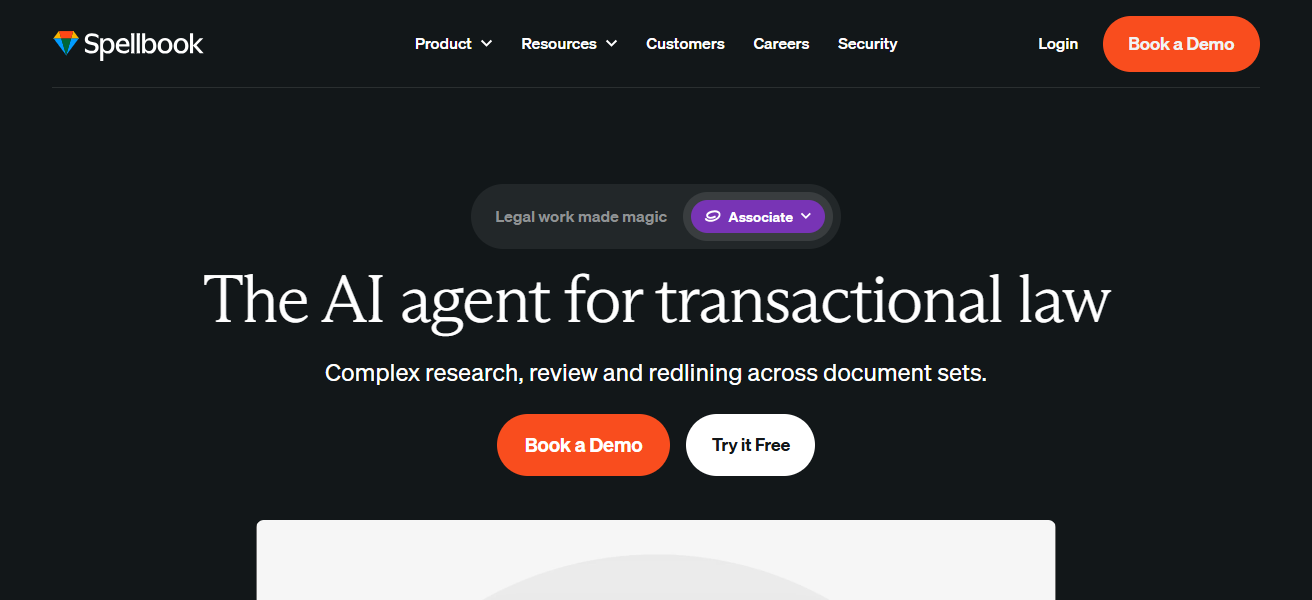
In 2026, Spellbook released enhanced comparison intelligence for clauses, compared to what contracts are really trending up and down, and faster to negotiate smarter agreements.
It is now widely used in the larger commercial law firms to help dramatically reduce drafting times while keeping legally consistent standards.
| Feature | Explanation |
|---|---|
| Microsoft Word Integration | Drafts and edits contracts directly inside Word without changing platforms. |
| Compare to Market AI | Benchmarks clauses using modern legal contract trends and negotiation standards. |
| Instant Redlining | Detects risky wording and generates redlines automatically for faster reviews. |
| Smart Clause Suggestions | Recommends stronger clauses based on contract context and industry requirements. |
| Faster Commercial Drafting | Helps transactional lawyers complete agreements significantly faster with improved consistency. |
2. CoCounsel
As of recently, CoCounsel has been garnering things because it marries AI drafting with respected legal research databases from Thomson Reuters and Westlaw.
Lawyers may wish to quickly write legal memos, summarize long documents, craft contracts, or even scrutinize regulations with citation-backed answers.

In 2026, updates were made to include planning multiparticipant and multistep workflows that carry out agentic tasks, including research, drafting, and review.
That makes CoCounsel a great fit for firms that perform litigation-heavy work in which explaining response accuracy (to some degree) is paramount to just producing text.
| Feature | Explanation |
|---|---|
| Westlaw Integration | Combines AI drafting with trusted legal databases and verified research. |
| Citation-Backed Responses | Provides explainable answers supported by authoritative legal references instantly. |
| Legal Memo Generation | Creates professional legal memos and summaries within minutes automatically. |
| Multi-Step Task Automation | Handles research, drafting, review, and compliance tasks through agentic workflows. |
| Litigation Support | Assists litigation-heavy firms with accurate document analysis and preparation. |
3. Harvey Ai
As a sort of advanced legal reasoning and enterprise-grade workflow automation, today, Harvey AI is widely adopted by huge global law firms.
Unlike simple chatbots, Harvey specializes in legal models that can analyze contracts and do due diligence, summarize case files, and automate repetitive legal operations.
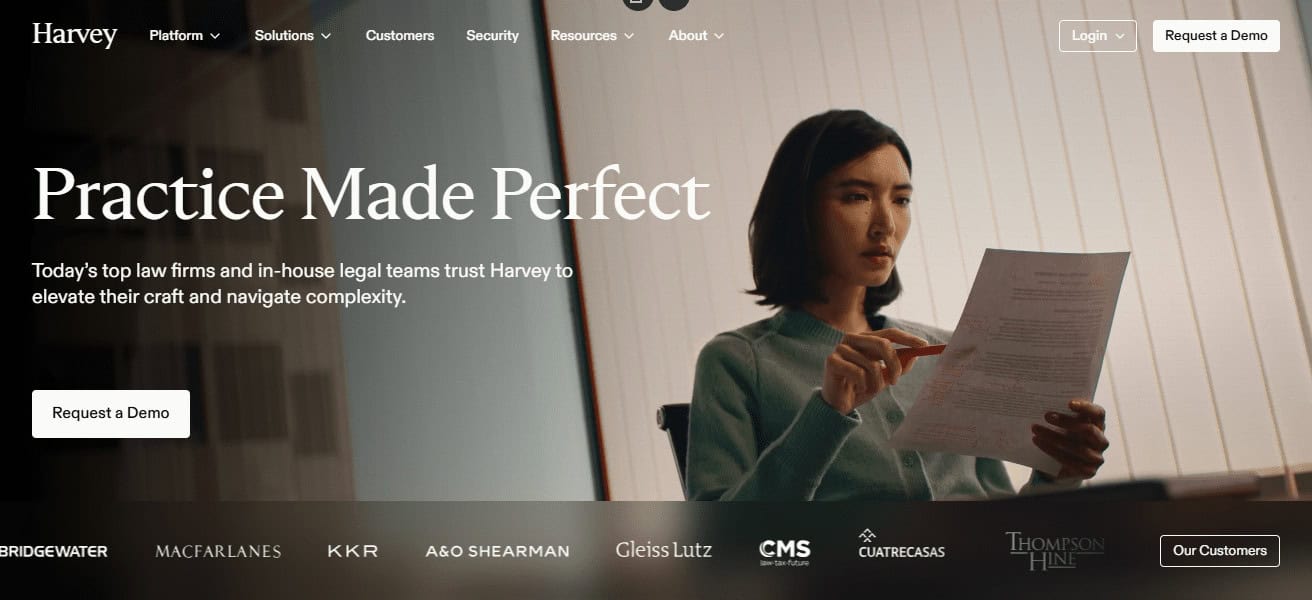
By 2026, it was melding more deeply with LexisNexis research systems, dramatically improving citation grounding and the reliability of research.
Harvey is particularly well-tailored for large-scale document review tasks and has gained traction with Am Law firms and Fortune 500 legal departments seeking to improve efficiencies.
| Feature | Explanation |
|---|---|
| Advanced Legal Reasoning | Uses specialized legal AI models for deeper legal analysis accuracy. |
| Due Diligence Automation | Reviews contracts and legal documents rapidly during corporate transactions. |
| Enterprise Workflow Support | Automates repetitive legal operations across large legal departments efficiently. |
| LexisNexis Integration | Improves research reliability with stronger citation grounding and references. |
| Large-Scale Document Review | Handles massive legal review projects faster than traditional manual workflows. |
4. Lexis+ AI
Combining legal drafting, research, and precedent analysis into one ecosystem engineered for the needs of professional legal teams.
Its strongest advantage is the blessed access to numerous verified legal databases, which assist lawyers in creating contracts, pleadings, and legally arguable content with access to references from established sources.

Improvements from the last few months include clause-aware drafting technology and more intelligent precedent retrieval in Microsoft Word.
Lexis+ AI: Many firms favor Lexis®+ AI because the platform connects drafting to legal research directly, which minimizes unsupported citations while accelerating the drafting process for litigation and advisory work.
| Feature | Explanation |
|---|---|
| Verified Legal Databases | Drafts legal documents using trusted legal research and authoritative references. |
| Clause-Aware Drafting | Understands contract context for smarter clause recommendations and edits. |
| Precedent Retrieval | Finds relevant legal precedents instantly during drafting and litigation preparation. |
| Microsoft Word Compatibility | Supports drafting workflows directly within familiar legal writing environments. |
| Reduced Hallucination Risks | Connects drafting with verified research to improve legal accuracy. |
5. Gavel
Gavel gets some love due to its focus on document automation and client intake workflows, rather than just AI chat features like a lot of the other tools we’ve been looking at these days, making it hot among small- to mid-sized law firms.
Using data to generate the legal template makes it easier for lawyers to build intelligent local templates capable of automatically creating personalized contracts, forms, and filings directly from the answers of a client.

Gavel also scaled its AI assistant module in 2026 to allow solo practitioners and boutique firms to draft faster and automate workflows.
It is simpler than the enterprise complexity that firms find useful for affordable legal automation solutions; it does well when covering repetitive legal paperwork.
| Feature | Explanation |
|---|---|
| Legal Document Automation | Automatically generates contracts, forms, and filings using smart templates. |
| Client Intake Workflows | Collects client information efficiently before document creation begins. |
| Boutique Firm Friendly | Designed for solo lawyers and smaller firms needing affordable automation. |
| AI Assistant Expansion | Added stronger drafting and workflow automation capabilities in 2026. |
| Repetitive Task Reduction | Minimizes manual paperwork and saves administrative legal drafting time. |
6. Everlaw
Everlaw is not your average legal AI player in the market — it focuses specifically on eDiscovery, litigation preparation, and large-scale document review projects.
Leveraging AI, the platform can now extract important evidence, structure litigation files, distill communications, and expedite trial prep.

More recently, Everlaw has been integrating AI capabilities directly into its core subscriptions, a trend we see with more companies signifying that AI is becoming a standard technology in legal tech.
Everlaw makes litigation teams scalable — by marrying the ability to process millions of documents with amazing speed on discovery tasks that used to be completed manually
While also enabling lawyers to uncover patterns concealed in those documents and identify critical evidence faster than ever before.
| Feature | Explanation |
|---|---|
| eDiscovery Technology | Processes and organizes massive litigation document collections efficiently. |
| AI Evidence Detection | Identifies critical evidence and hidden litigation patterns automatically. |
| Trial Preparation Support | Helps lawyers prepare cases with faster document summarization tools. |
| Communication Analysis | Summarizes emails, transcripts, and case communications using advanced AI. |
| Scalable Litigation Review | Reviews millions of documents much faster than manual legal teams. |
7. Legalyze.ai
Legalyze. AI is focusing heavily on AI-based document summary and case research, attracting legal professionals.
Breezy is a software that allows lawyers to extract key clauses, deadlines, obligations, and risk insights from lengthy legal files quickly.
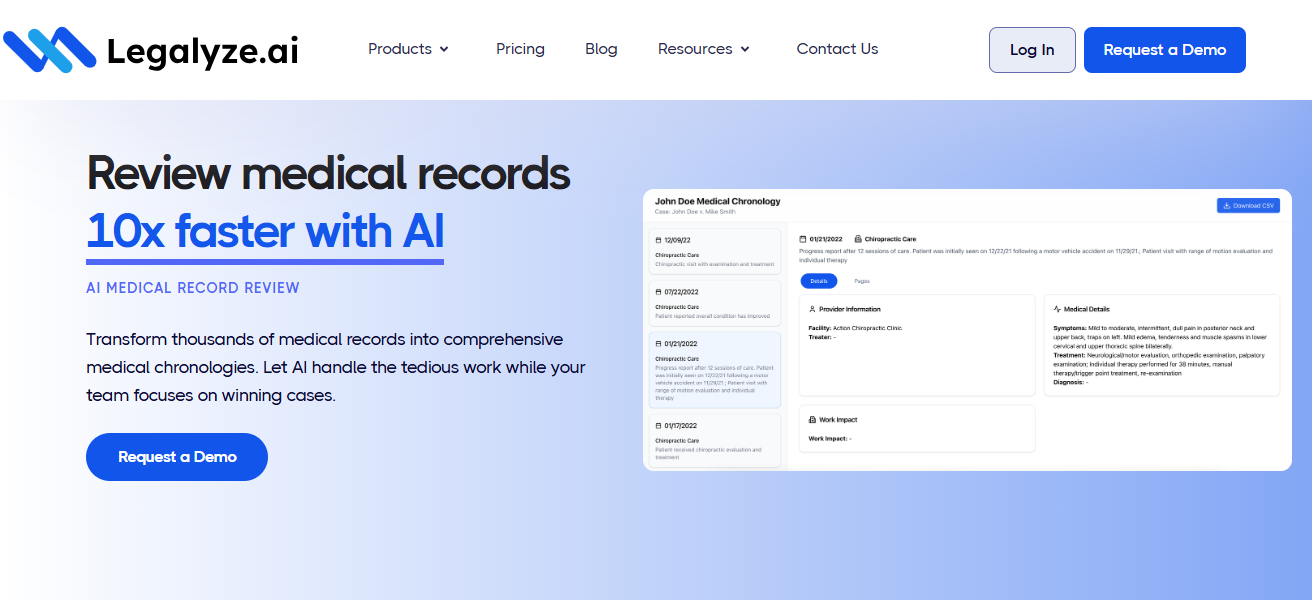
Recent enhancements in artificial intelligence let it understand the detailed verbiage of law better, while putting out short summaries that can save hours of legal and non-legal research.
That is, the smaller and independent legal analysts are more likely to be using tools such as Legalyze. ai easy to use because you do not have to pay for your enterprise subscription in a company that does not exist yet, or waste many hours on setup time.
| Feature | Explanation |
|---|---|
| AI Document Summaries | Converts lengthy legal files into concise, actionable summaries instantly. |
| Risk Insight Extraction | Detects obligations, deadlines, and compliance risks automatically. |
| Affordable Legal Automation | Offers cost-effective AI tools for smaller legal professionals and consultants. |
| Complex Language Processing | Understands advanced legal terminology with improved contextual analysis accuracy. |
| Faster Case Analysis | Saves hours of manual document reading and legal review work. |
8. Clear brief
That is why ClearBrief has gained a lot of value for litigation lawyers because it connects legal drafting to evidence and factual citations.
Lawyers no longer have to dig through documents by hand as they can instantly create briefs that are directly linked with evidence based on transcripts, exhibits, and court records.

ClearBrief has been known during its recent years on the market to mitigate citation errors made by attorneys and provide greater drafting transparency in litigation workflows.
Organisations like Clearbrief have a particular significance now, as courts are actively warning lawyers about AI hallucinations, devices that help ensure their evidence-based drafting is backed by traceable authority rather than pure AI legal claims.
| Feature | Explanation |
|---|---|
| Evidence-Linked Drafting | Connects legal arguments directly with verified evidence and citations. |
| Litigation Brief Automation | Generates litigation briefs supported by transcripts and exhibits instantly. |
| Citation Transparency | Reduces citation mistakes with traceable legal evidence references. |
| Court Record Integration | Pulls factual support directly from court-related legal documents. |
| Hallucination Prevention | Focuses on evidence-backed drafting instead of unsupported AI-generated claims. |
9. SpotDraft VerifAI
SpotDraft VerifAI is focused on enabling legal teams to review and validate contracts efficiently and consistently.
The platform scans agreements for missing clauses, compliance problems, risk features, and approval bottlenecks prior to contract finalisation.
SpotDraft is gaining popularity as a comprehensive contract lifecycle management solution with reduced human review burden.
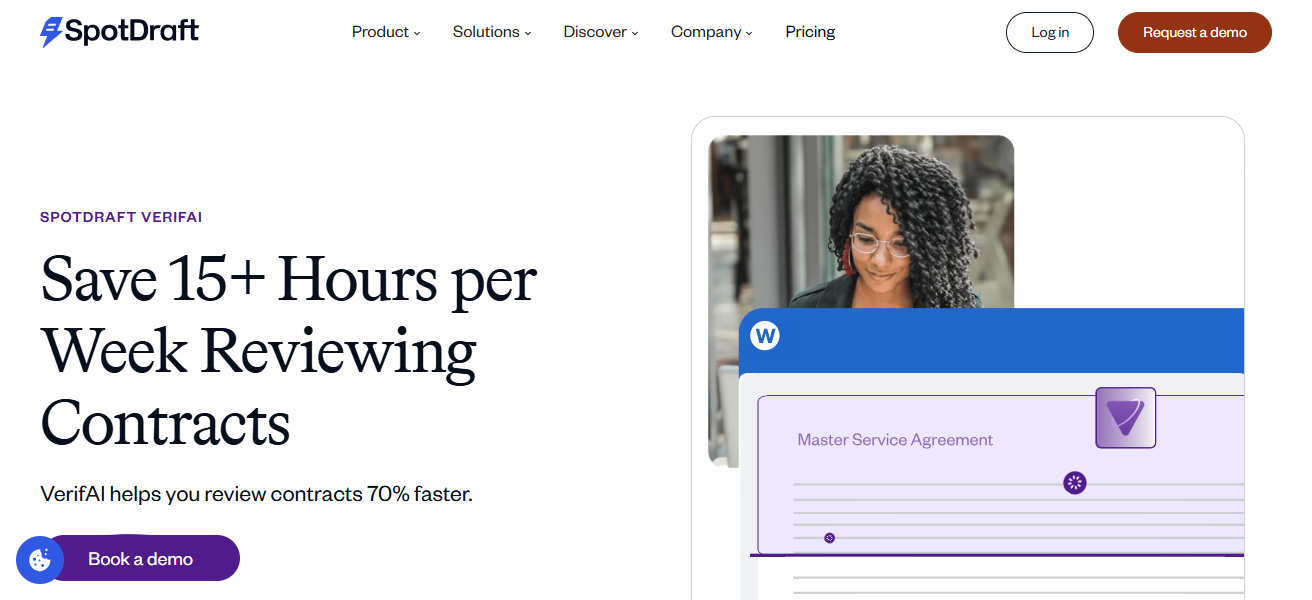
By 2026, the need for AI-driven verification systems rose, given business demands for quick turnaround timelines in commercial agreements without sacrificing the accuracy of legal content or compliance oversight.
| Feature | Explanation |
|---|---|
| Contract Verification AI | Reviews agreements for risks, errors, and missing clauses automatically. |
| Compliance Monitoring | Detects compliance gaps before contracts receive final approval. |
| Approval Workflow Tracking | Identifies bottlenecks slowing commercial contract approval processes. |
| Contract Lifecycle Management | Supports drafting, reviewing, and managing contracts within one system. |
| Faster Commercial Reviews | Improves turnaround speed without reducing legal compliance standards. |
10. VIDUR Ai
VIDUR Ai is a next-generation legal AI assistant that makes drafting, researching, and managing your legal workflows easier for law professionals working with massive amounts of documents.
Using some of the most advanced language models, it generates legal drafts, summarizes documents, and organizes your case information.

Interest in VIDUR Ai is increasing as many companies are looking for legal solutions tailored to enable faster operations without global enterprise software.
However, as the regional legal AI adoption progresses, it makes sense that advanced tools such as VIDUR AI are attractive for firms looking for scalable and localized AI-assisted legal productivity solutions.
| Feature | Explanation |
|---|---|
| AI Legal Drafting | Generates contracts, legal summaries, and professional legal documents efficiently. |
| Workflow Management | Organizes case files and legal operations through centralized AI systems. |
| Research Assistance | Supports lawyers with faster legal research and document analysis. |
| High-Volume Processing | Handles large legal documentation workloads with scalable AI automation. |
| Localized Legal Solutions | Appeals to firms seeking regional and scalable legal AI productivity tools. |
Final Verdict
To summarize, AI tools capable of generating immediate feedback documents are revolutionizing respect at glass, creating quicker, cleverer, and more correct workflow.
Using these platforms, aka Spellbook, Harvey AI, and CoCounsel, lawyers have already generated valuable fees by automating contracts and research, compliance checks, and document reviews, etc.
In 2026, firms that embrace evolving legal AI technology can work with these advanced tools to boost productivity and ease their manual burden in the most effective delivery of legal services.
FAQ
What are AI legal drafting tools?
AI legal drafting tools use artificial intelligence to create contracts, agreements, and legal documents automatically.
Which AI tool is best for contract drafting?
Spellbook, Harvey AI, and Lexis+ AI are popular for advanced contract drafting and review workflows.
Can AI tools replace lawyers completely?
No, AI assists lawyers with drafting and research but cannot replace professional legal judgment entirely.
Are AI-generated legal documents accurate?
Most modern legal AI tools improve accuracy using verified legal databases and citation-backed drafting systems.