This article I will talk about the best AI personal trainer apps that make personalized workout plans for you. Smart fitness apps that are well-equipped to analyze your goals, performance and progress through a complex algorithm of exercises.
AI-Powered Training Appsup to October 2023Whether exercising for the first time or you are an experienced athlete
These apps can help create high levels of consistency in your performance when exercising which will result in maximized results and help make fitness more personalized, efficient and accessible than ever.
Key Points & 10 AI Personal Trainer Apps That Build a Workout Plan Just for You
Fitbod uses advanced AI to create adaptive strength workouts based on recovery, performance, and available equipment.
Caliber combines AI-driven plans with human coaching, focusing on accountability, habits, and long-term fitness consistency improvement.
Alpha Progression specializes in hypertrophy training, using AI to adjust sets, reps, and intensity for optimal muscle growth.
Freeletics delivers AI-powered bodyweight workouts, adapting intensity through feedback while promoting flexibility, motivation, and habit-building features.
Peloton Strength offers instructor-led workouts with recommendations, focusing more on engagement than deep AI personalization features.
Nike Training Club provides expert-designed workouts with basic AI suggestions, ideal for beginners seeking structured fitness routines.
Hevy focuses on workout tracking, offering analytics and community features without true AI-generated training programs included.
Strong App is a simple workout tracker with progress logs, lacking AI-based recommendations or automated training adjustments.
Jefit offers extensive exercise database and analytics, supporting structured plans but limited AI-driven adaptive programming features.
TrainHeroic provides coach-led training programs with performance tracking, focusing more on athletes than AI automation.
10 AI Personal Trainer Apps That Build a Workout Plan Just for You
1. Fitbod
Fitbod employs one of the most sophisticated AI engines trained on mileux of actual workout datasets, allowing it to be extremely customizable.
It creates workouts according to muscle recovery, performance and what equipment is available while automatically adjusting weights, sets and reps.
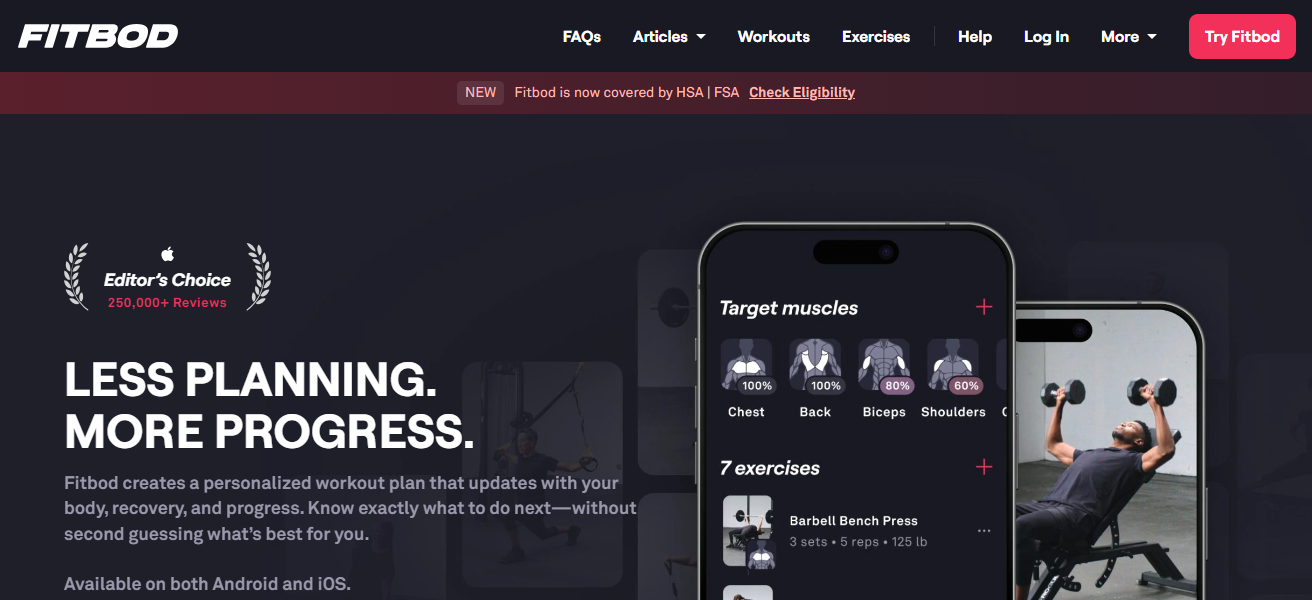
In addition, its “Strength Score,” which evaluates overall progress using billions of data points, is a standout 2026 feature.
Instead of static plans that wait for you to finish before you train again, Fitbod dynamically reshuffles workouts s it’s detected at the data in equivalent fatigue stage, allowing users to see theirs strengthening up on average 27–28% better, quicker.
| Pros | Cons |
|---|---|
| Advanced AI adapts workouts using recovery, fatigue, and performance data | Requires subscription for full access |
| “Strength Score” offers deep progress insights | Limited coaching or human interaction |
| Automatically adjusts sets, reps, and weights | Less suitable for complete beginners |
| Supports gym and home equipment customization | Can feel repetitive for long-term users |
| Data-driven progression improves strength efficiently | Not focused on cardio or holistic fitness |
2. Caliber
Caliber is a hybrid fitness system that fuses both AI generated workout programming with coaching from real live humans.
An AI that learns users’ goals, as well as workout history and metrics for their progress, then uses this data within its coaching plans, which experienced coaches further refine through ongoing feedback.
One of the trends for 2026 that is a little more unique is Caliber’s focus on accountability and behavioral coaching rather than simply exercise tracking.
Combining these two methods allows a significant improvement in adherence rates compared to pure apps, and is perfect for users who want both intelligent planning and expert human guidance on one platform.
| Pros | Cons |
|---|---|
| Combines AI with real human coaching support | Coaching plans can be expensive |
| Strong accountability and habit-building features | Less automation compared to pure AI apps |
| Personalized plans based on real progress tracking | Requires consistent user engagement |
| Focus on long-term behavioral fitness improvement | Interface may feel complex initially |
| Ideal for beginners needing guidance and structure | Limited advanced bodybuilding customization |
3. Alpha Progression
The AI used in Alpha Progression is built heavily around bodybuilding and hypertrophy training, using the performance from workouts along with RIR (Reps in Reserve) to create holistic changes within set/rep schemes and intensities.
The key difference is its structured progression logic, designed for building muscle rather than just general fitness.
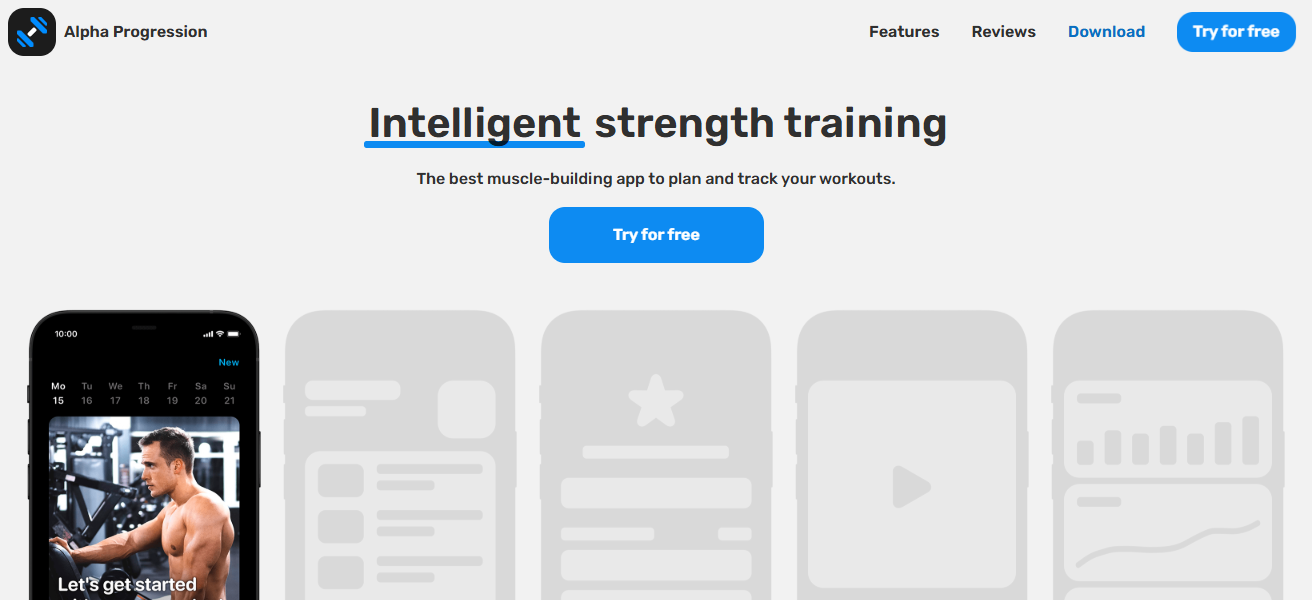
Although it is not limited to these years, in 2026, it’s still popular with intermediate and advanced lifters as all iron is the ability to control exercises being performed with detailed rules of progression.
It focuses on serious goals and hypertrophy models spreadsheets, where more general AI applications stray away.
| Pros | Cons |
|---|---|
| Highly optimized for hypertrophy and muscle growth | Not beginner-friendly |
| Uses RIR-based progression for scientific training | Limited focus on cardio or general fitness |
| Offers deep customization for workouts | Smaller exercise library compared to competitors |
| Excellent for intermediate and advanced lifters | Requires knowledge of lifting concepts |
| Precise control over sets, reps, and progression | UI less polished than mainstream apps |
4. Freeletics
Freeletics is an AI powered bodyweight training app, meaning you can use it without any gym equipment.
Its coaching algorithm adjusts workout intensity by learning from user feedback and performance following each session.
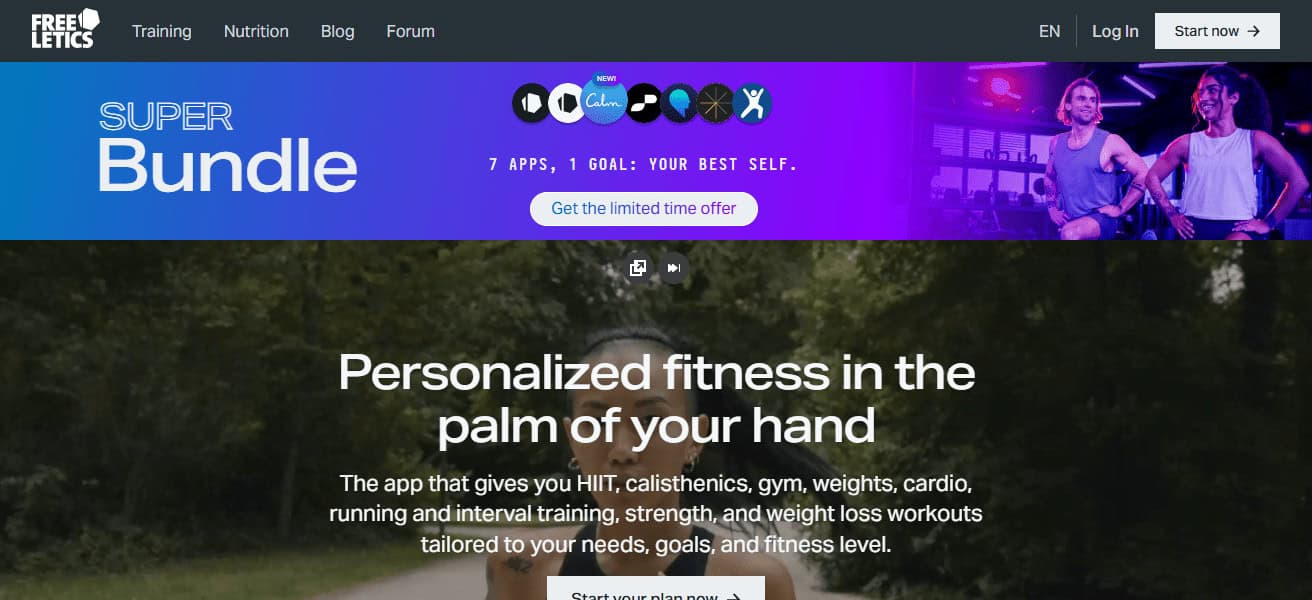
One of the key 2026 improvements is better and dynamic feedback loops in real time that refine difficulty for training. Not just a workout app, Freeletics also incorporates mindset coaching and habit building features.
It is especially beneficial for users who are looking for flexible, location-independent training coupled with AI guided progression and motivation systems.
| Pros | Cons |
|---|---|
| No equipment needed, ideal for home workouts | Limited strength training with weights |
| AI adapts intensity based on feedback | Subscription needed for full features |
| Includes mindset and habit coaching | Can feel repetitive over time |
| Flexible workouts for busy schedules | Less suitable for advanced lifters |
| Strong motivation and gamification elements | Limited exercise variety |
5. Peloton Strength
Structured progression plans and high-quality, certified instructor-led strength workouts by Peloton. It is not so AI driven but it has a recommendation which suggest workouts based on your past information and history.
One 2026 trend that sets it apart is its inclusion in a wider ecosystem of connected fitness such as live classes and social engagement.
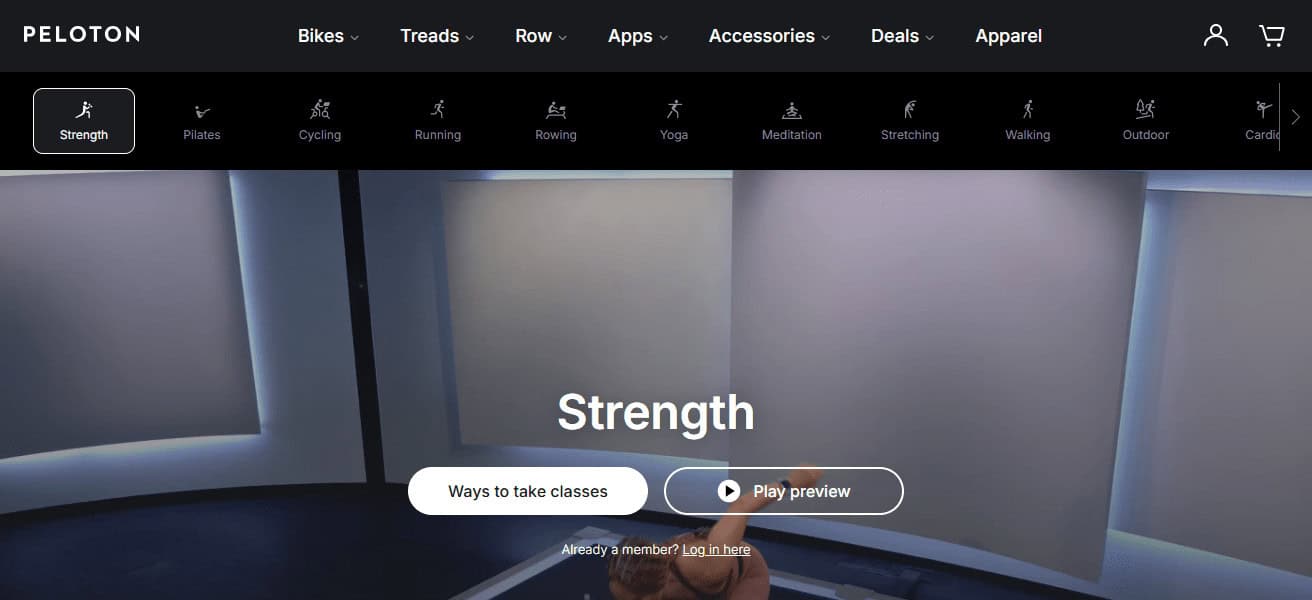
While Peloton certainly nails motivation with the presence of professional coaches and curated content, its algorithms don’t provide a lot of adaptive AI options for training
So they will likely appeal more to fans of guided workouts than those who prefer courses driven by advanced machine learning.
| Pros | Cons |
|---|---|
| High-quality instructor-led workouts | Expensive subscription model |
| Strong community and live class engagement | Limited AI personalization |
| Motivating and immersive training experience | Requires internet connectivity |
| Wide variety of structured programs | Not fully customizable workouts |
| Integrated ecosystem with other fitness content | Less data-driven progression |
6. Nike Training Club (NTC)
Nike Training Club gives you a huge library of free, expert-created workouts with strength, mobility and wellness activities.
You tell it what your goals are, how fit you currently are and the recommendation engine will suggest plans accordingly, although there is no in-depth AIdriven progression tracking functionality.
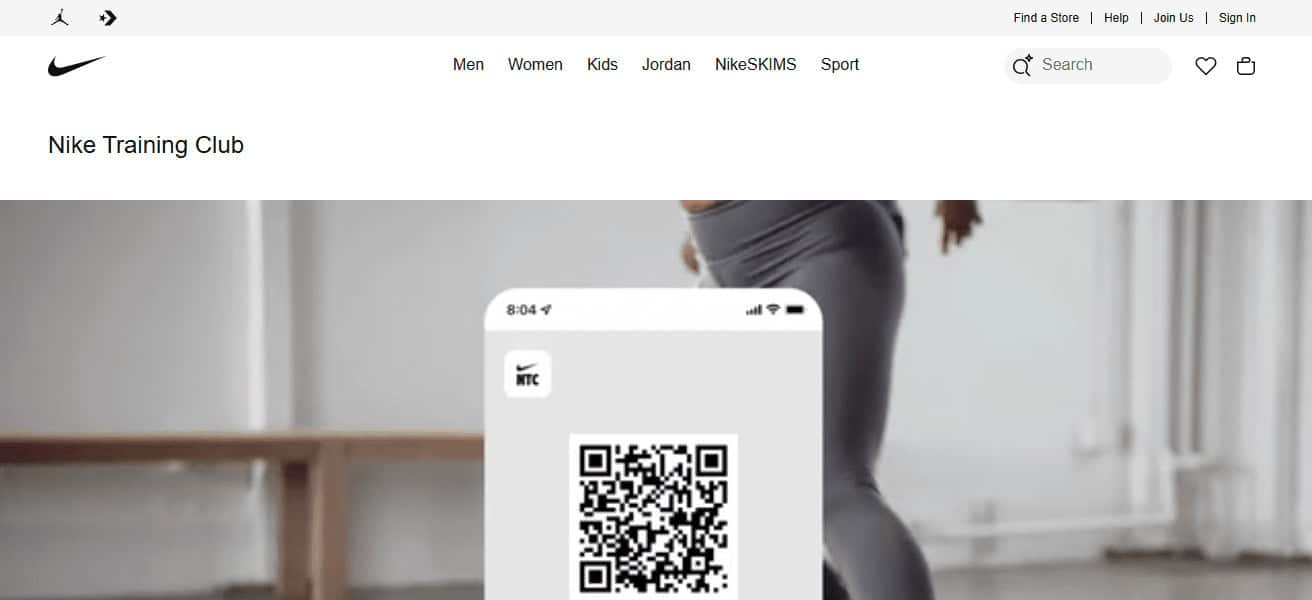
A unique advantage of 2026 is its ability to offer premium-quality content without charge. Best suited to new or non-serious users
Who want a little structure in their training without cost, but potentially not satisfactory for seasoned users wanting on-the-fly data-driven workout modifications.
| Pros | Cons |
|---|---|
| Completely free premium-quality workouts | Limited AI-driven personalization |
| Beginner-friendly structured programs | No advanced progression tracking |
| Covers strength, yoga, mobility, and wellness | Less suitable for serious lifters |
| Backed by professional trainers | Limited customization options |
| Great for general fitness and flexibility | No deep performance analytics |
7. Hevy
Hevy — an excellent workout tracker with great social and community components. The best at tracking workouts, displaying progress and motivating people with leaderboards and shared routines.
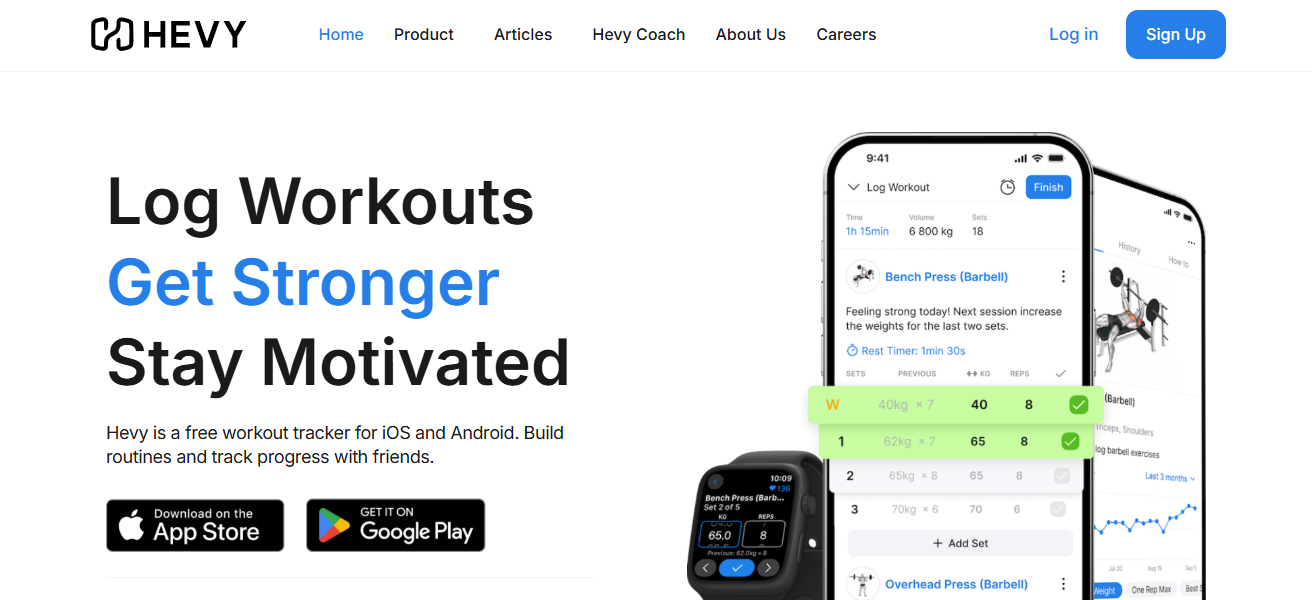
Set to launch in 2026, Hevy has excellent UI and affordable lifetime pricing. However, it does not have real AI-formulated workout programs and is merely a glorified tracker and home just like
The rest of these personal training devices. Ideal for users who already know their routines yet want advanced tracking and peer motivation.
| Pros | Cons |
|---|---|
| Excellent workout tracking and analytics | No AI-generated workout plans |
| Strong social and community features | Requires manual program creation |
| Clean and user-friendly interface | Limited coaching guidance |
| Affordable lifetime pricing option | Not ideal for beginners |
| Great for tracking progressive overload | No adaptive recommendations |
8. Strong App
Strong is a no-frills workout logging app that focuses on getting back to basics and keeping it simple. It features individualized logging for sets, reps and personal bests with simple-to-read growth graphs.
The offline feature and the distraction-free interface is another big 2026 draw for serious lifters. But the app offers no AI-powered programming or adaptive suggestions, so users will have to create their own programs.
Strong is perfect for those of you who are more experienced, want the manual controls only required to track their performance over time.
| Pros | Cons |
|---|---|
| Minimalist and distraction-free interface | No AI or smart recommendations |
| Works offline without internet | Users must create own routines |
| Tracks personal records effectively | Limited advanced features |
| Reliable for experienced lifters | No coaching or guidance |
| Simple and fast workout logging | Not suitable for beginners |
9. Jefit
Jefit (Free, in-app purchases) is all about its enormous exercise database and granular analytics with tracking tools for more than 1,400 exercises.
Of course, it offers structured plans and workouts shared by the community, so it’s highly customizable.
We’ll start with the newest tool in its toolbox—conducted in 2026 is its NSPI (Normalized Strength Performance Index) that allows gym-goers to measure their strength progress cumulatively across workouts.
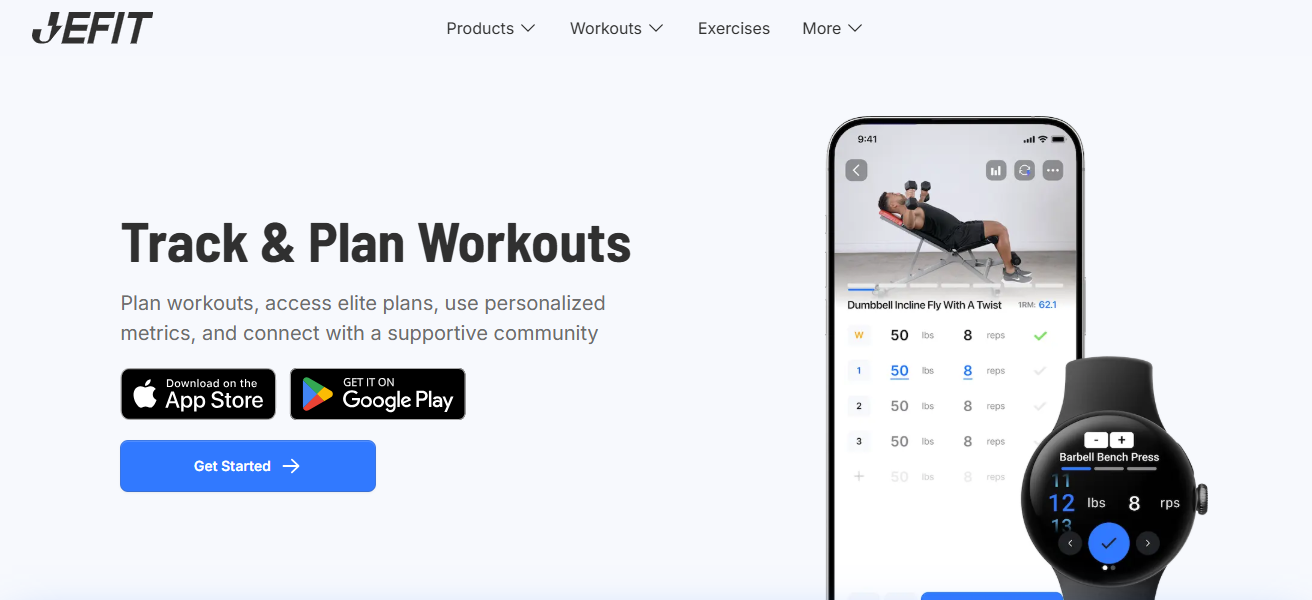
It continues to be an impressive product, though the artificial intelligence inherent in its name is not really present as anything that resembles true AI adaptability; it still requires a user and template. Best for seasoned lifters who want perfect tracking and long-term performance insights
| Pros | Cons |
|---|---|
| Massive exercise database with 1,400+ movements | Limited AI-based personalization |
| Advanced analytics like NSPI score | Interface can feel outdated |
| Community workout sharing feature | Overwhelming for beginners |
| Highly customizable training plans | Ads in free version |
| Great for long-term tracking | Requires manual adjustments |
10. TrainHeroic
TrainHeroic (Best For Athlete & Coach) The platform is focused on athletes and coaches with features for performance tracking as well as team-based programming.
The real power of it is the cooperation between coach and athlete, which allows training plans to be modified based on performance data alongside communication tools.
One major trend to watch out for in 2026 is its rising adoption by sports teams and elite trainers due to the structured data it provides with respect to training.
This is perhaps why, unlike more typical AI apps, it has a greater emphasis on coach-led programming over strict automation, and may be suited for serious committed athletes that are training under the watchful eye of their coach rather than purely relying on AI.
| Pros | Cons |
|---|---|
| Ideal for athletes and coach-led training | Not beginner-friendly |
| Strong coach-athlete communication tools | Limited AI automation |
| Advanced performance tracking metrics | Requires coach involvement for best use |
| Used by professional teams and trainers | Less focus on casual fitness users |
| Structured and disciplined programming | Complex setup for individuals |
How We Choose AI Personal Trainer Apps That Build a Workout Plan Just for You
- AI Personalization Quality – We prioritize apps like Fitbod that truly adapt workouts using performance, recovery, and goals.
- Ease of Use – Apps must have simple interfaces, smooth navigation, and beginner-friendly onboarding experience.
- Workout Effectiveness – We select apps that deliver proven results in strength, endurance, or overall fitness improvement.
- Customization Options – Preference for apps allowing control over exercises, intensity, schedule, and equipment availability.
- Tracking & Analytics – Apps like Jefit and Hevy must provide detailed progress tracking and insights.
- Coaching & Guidance – We value platforms offering expert coaching or structured programs, such as Caliber.
- Value for Money – We compare free vs paid features to ensure users get strong value at every price point.
- User Reviews & Ratings – Real user feedback and satisfaction levels play a key role in our selection process.
- Versatility – Apps should support different fitness levels, from beginners to advanced athletes.
- Latest Features (2025–2026) – We prioritize apps using modern AI, smart insights, and adaptive workout technologies.
Conclsuion
Conclusion AI personal trainer apps are revolutionizing fitness by providing custom, data-driven workout plans according to individual goals and progress.
Be it strength building or home workouts, these fitness apps offer a good deal of flexibility, convenience and smart tracking.
Even though they cannot completely replace real trainers, they are a highly effective and low-cost solution to help you maintain consistency and improve your performance into the long-term at any time of day, anywhere in the world!
FAQ
How do AI workout apps personalize plans?
They analyze data like performance, recovery, preferences, and goals to adjust workouts automatically over time.
Are AI fitness apps better than human trainers?
They’re convenient and affordable, but lack real-time human feedback, motivation, and personalized coaching experience.
Which app is best for beginners?
Apps like Nike Training Club and Caliber are great for beginners.
Are these apps free or paid?
Most offer free versions, but advanced features and personalization require paid subscriptions.