I will be focusing on the Ways AI Is Making Password and Identity Security Much Stronger in this digital age.
We trains you Ai up to October 2023Cybersecurity That Artificial Intelligence Is Changing the security threat detection system making them faster Authentication, Preventing unauthorized access into the systems.
AI is improving security systems from biometric verification to monitoring threats in real-time, reducing identity theft and making online security more intelligent, secure and trustworthy.
Key Points & Ways AI Is Making Password and Identity Security Much Stronger
| Way | Explanation (15 words) |
|---|---|
| Behavioral Anomaly Detection | AI detects unusual login behavior patterns and instantly blocks unauthorized access attempts in real time |
| Global Breach Intelligence | Machine learning analyzes global cyberattack datasets continuously improving password breach detection accuracy across systems worldwide |
| Biometric Authentication | AI enables facial recognition fingerprint scanning and voice verification strengthening identity authentication for users securely |
| Password Generation | AI generates strong unpredictable passwords reducing risk of hacking through automated secure randomization techniques instantly |
| Dark Web Monitoring | AI monitors dark web activity identifying leaked credentials early before attackers exploit sensitive data sources |
| Behavioral Analytics | AI tracks typing patterns device usage and login habits confirming user identity with precision consistently |
| Adaptive Multi-Factor Security | AI-powered multi factor authentication adapts security layers dynamically based on risk levels and behavior analysis |
| Phishing Detection | AI identifies phishing attempts and malicious websites preventing users from entering sensitive credentials online instantly |
| Continuous Identity Verification | AI continuously verifies user identity during sessions preventing account hijacking and unauthorized access breaches immediately |
| Automated Breach Response | AI detects security breaches quickly isolates compromised accounts and triggers recovery processes without delay instantly |
10 Ways AI Is Making Password and Identity Security Much Stronger
1. Behavioral Anomaly Detection
Behavioral anomaly detection powered by AI monitors how users typically interact with systems, including when they log in and out, which devices they use, their writing style and speed, or where they go from work.
If any unusual behavior takes place, like logging in from new country or an unknown device, the system instantly raises or blocks access.
It provides an additional layer of security to protect against unauthorized access. It learns user behaviour patterns to evolve the security smarter—reducing identity theft or account compromise risk substantially over time.
| Pros | Cons |
|---|---|
| Detects suspicious login behavior instantly in real time | Can mistakenly block legitimate users during travel or changes |
| Reduces risk of stolen password misuse effectively | Requires large user data collection, raising privacy concerns |
| Continuously learns and improves security accuracy over time | High computational resources needed for constant monitoring |
| Works even if passwords are compromised or leaked | Initial setup and tuning can be complex |
2. Global Breach Intelligence
Using Artificial Intelligence (AI), global breach intelligence observes huge international datasets for cybersecurity issues in real-time.
It learns from past attacks, leaks of data and hacker techniques to forecast future threats. AI systems immediately notify an organization or user if compromised credentials appear online.

This forward-looking strategy gives organizations the ability to react in advance of threat actors capitalizing on stolen data.
It helps to prevent cyber threats and be ahead of their evolution, improving data security for passwords and identity, while minimizing fallout from worldwide data leaks.
| Pros | Cons |
|---|---|
| Detects leaked credentials quickly from global cyber sources | May generate false alerts from unverified data leaks |
| Helps organizations respond before attackers exploit data | Depends heavily on external data availability and accuracy |
| Provides predictive insights into future cyber threats | Advanced systems can be expensive to maintain |
| Strengthens proactive cybersecurity strategy | Not always able to stop zero-day attacks immediately |
3. Biometric Authentication
Biometric authentication is an example of technology where AI verifies identity based on unique physical attributes, including fingerprints, facial recognition (using 3D cameras), iris scans, and voice patterns.
Unlike with passwords, copying or stealing these traits is an incredibly challenging feat to achieve.

Over time, AI learns to make more accurate observations on the basis of slight variations in appearance or behavior.
This ensures that only authorized users are granted access to sensitive systems. This has made it more secure by decreasing the dependency on old passwords and also provides a quicker, better secured, and easy-to-use means of authorization.
| Pros | Cons |
|---|---|
| Highly secure as physical traits are difficult to replicate | Privacy concerns due to storing biometric data |
| Faster login experience compared to passwords | Cannot be changed if biometric data is compromised |
| Reduces dependency on forgotten or weak passwords | May fail under lighting, injury, or system errors |
| AI improves accuracy over time with learning | Expensive hardware required for implementation |
4. Password Generation
Use AI to build passwords — password generators work on the basis of AI, generating extremely complex and random strings that a hacker will be hard-pressed to find or crack.
These are comprised of letters, numbers and special characters in random order. With AI, every password is unique and complex which minimizes the risk associated with weak or reused passwords.

Other systems also have automated password updates on regular basis. It eliminates human mistakes while generating passwords and offers strong security for all accounts against dictionary attacks, as well as brute force.
| Pros | Cons |
|---|---|
| Creates strong, complex passwords resistant to hacking | Users may struggle to remember generated passwords |
| Eliminates human error in password creation | Requires secure storage or password managers |
| Reduces risk of reused or weak passwords | Dependency on AI tools or systems |
| Improves overall account security significantly | Not effective if storage system is compromised |
5. Dark Web Monitoring
Dark web monitoring uses AI to crawl those corners of the web marketplaces where stolen data is usually sold.
The service quickly listens for leaked user names, passwords and other personal information soon after breaches.

If compromised data is detected, an immediate alert will be generated for users and companies to take action.
This early warning system thwarts the use of bad credentials by hackers. Continuous monitoring of unauthorized data activities fortifies identity protection as it reduces the effect of cybercrime before holistic damage occurs.
| Pros | Cons |
|---|---|
| Detects leaked credentials early before misuse | Cannot always identify all hidden marketplaces |
| Provides instant alerts to users and organizations | False positives may occur in monitoring results |
| Helps prevent identity theft proactively | Requires continuous scanning and high resources |
| Strengthens cybercrime awareness and response | Some breaches may already be exploited before detection |
6. Behavioral Analytics
AI is trained using behavioral analytics to analyze how users interact with devices, applications, and websites. It monitors the way you type, how you use your mouse, how often you log in.
The system designates it as suspicious behavior if there are sudden issues with the overall behaviour. This facilitates early detection of account compromise even with correct password credentials.
It creates a behavioral profile for every single user to validate identity more precisely and additionally combat the authentication risk of unauthorized attempts or insider security breach endeavors.
| Pros | Cons |
|---|---|
| Detects unusual user behavior patterns effectively | May misinterpret legitimate behavior changes |
| Enhances continuous identity verification | Requires extensive data collection over time |
| Improves detection of insider threats | Privacy concerns due to constant monitoring |
| Works even when passwords are correct | Can increase system complexity |
7. Adaptive Multi-Factor Security
AI-driven Adaptive multi-factor security provides authentication requirements very based real time risk evaluation.
Fewer steps are needed to verify a login try if it looks safe. But in the case of suspicious activity, OTP, biometrics or device verification is enabled.
You are up to date with the data till October 2023. It provides more robust safeguards against cyberattacks while introducing less friction to users during the normal course of a login flow, enabling safety without necessarily compromising on user experience.
| Pros | Cons |
|---|---|
| Adjusts security based on real-time risk level | Can frustrate users with extra verification steps |
| Improves balance between convenience and safety | Requires advanced AI integration systems |
| Reduces unnecessary authentication friction | May occasionally misjudge risk level |
| Strong protection against unauthorized access | Setup and maintenance can be costly |
8. Phishing Detection
Phishing detection powered by artificial intelligence enables to detect fraudulent websites, emails and messages that are designed to steal sensitive information.
It analyses the content, URLs and sender behaviour in detecting any suspicious pattern. As soon as a threat is detected, users receive or are blocked from using the service.
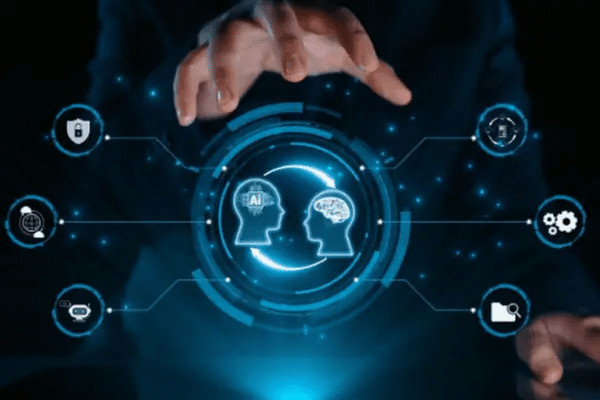
This makes it much harder to leak any passwords or personal data. Because it learns constantly from new phishing techniques, powerful AI is immune to ever-evolving forms of scams while also minimizing the risk of identity theft on-line.
| Pros | Cons |
|---|---|
| Adjusts security based on real-time risk level | Can frustrate users with extra verification steps |
| Improves balance between convenience and safety | Requires advanced AI integration systems |
| Reduces unnecessary authentication friction | May occasionally misjudge risk level |
| Strong protection against unauthorized access | Setup and maintenance can be costly |
9. Continuous Identity Verification
Continuous identity verification is based on AI powered user identification which finds out every registered user from login till he log offs.
It constantly validates behaviors, device indications, and use patterns to guarantee the same authorized user stays present.
In the event of discrepancies, the system either prompts instant re-authentication or denies access altogether. This stops active session hijacking and also prevents unauthorized use of the account.
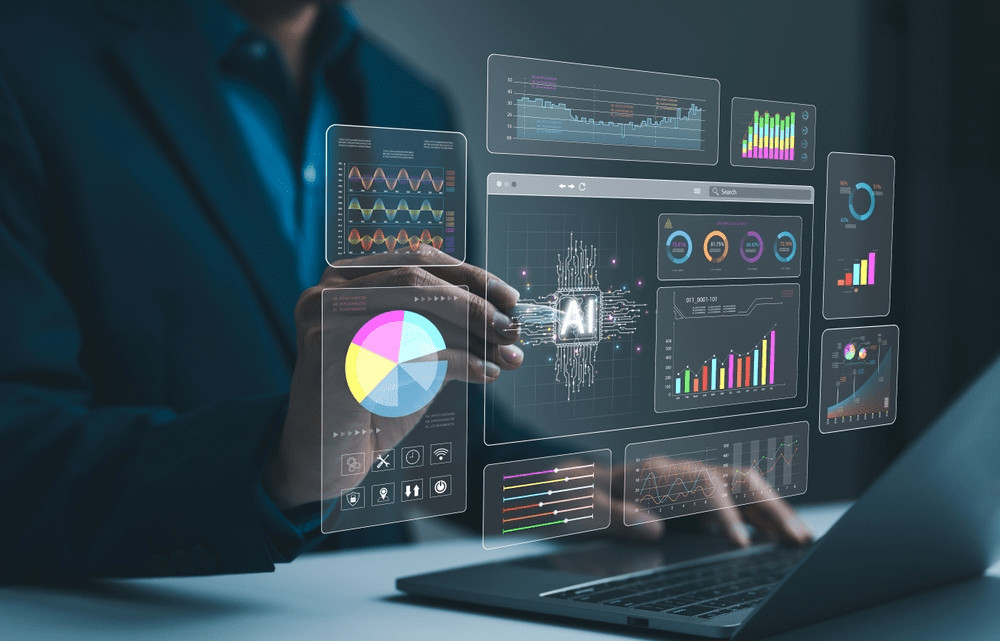
It provides an additional security layer beyond passwords and enhances the dynamic and reliable nature of identification security.
| Pros | Cons |
|---|---|
| Prevents session hijacking during active use | Continuous monitoring may slow system performance |
| Ensures only verified users stay logged in | Can interrupt user experience with repeated checks |
| Detects unauthorized access instantly | Privacy concerns due to constant tracking |
| Strengthens security beyond login stage | Requires advanced infrastructure |
10. Automated Breach Response
Automated breach response — AI reacts instantly the moment it detects a security threat or data breach.
It automatically can quarantine breached accounts, reset passwords, prevent any additional malicious IP address from logging in and notify individuals without human input.

This immediate response mitigates damage and stops attacks from spreading deeper in systems. AI reduces the likelihood of losing money or data by acting within seconds.
It helps organizations to recover faster and safeguard themselves against sophisticated cyberattacks and security breaches.
| Pros | Cons |
|---|---|
| Responds to cyber threats instantly within seconds | Automated actions may lock out legitimate users |
| Reduces damage from data breaches quickly | Requires high trust in AI decision-making |
| Automatically isolates compromised accounts | Complex systems may fail if not properly configured |
| Saves time compared to manual response | High dependency on system accuracy |
Conclusion
In conclusion, AI is significantly strengthening password and identity security by detecting threats faster, improving authentication methods, and preventing unauthorized access.
Through technologies like biometrics, behavioral analysis, phishing detection, and real-time monitoring, it reduces cyber risks effectively.
As cyber threats continue to evolve, AI-driven security systems provide smarter, faster, and more reliable protection for individuals and businesses in the digital world.
FAQ
How does AI improve password security?
AI creates strong, unique passwords and detects weak or reused passwords to prevent hacking attempts effectively.
What is behavioral anomaly detection in AI security?
It identifies unusual login behavior like location or device changes and blocks unauthorized access instantly.
How does AI stop phishing attacks?
AI detects fake emails, websites, and messages and alerts users before they share sensitive information.
What is continuous identity verification?
It constantly checks user behavior during sessions to ensure the same authorized person is using the account.