
In this article, I will go over current VPN trends, including AR demonstrations and voice command integration, and their impact on online privacy and digital security.
You’ll discover how innovative ideas like AI routing, voice control, quantum encryption, and decentralized VPN systems are enhancing the protections available with VPNs.
These developments are making VPNs more user-friendly, faster, smarter, and highly effective for everyday users around the world.
Key Poinst & Rising VPN Trends: From AR Demos To Voice Commands
| VPN Trend | Explanation |
|---|---|
| AR Demos | VPN providers use augmented reality demos improving user onboarding and understanding experience |
| Voice Commands | VPN apps support voice commands, enabling hands-free server switching instantly functionality |
| AI Routing | AI-driven VPN routing optimizes speed, latency, and server selection automatically and intelligently |
| Quantum Encryption | Quantum-resistant encryption strengthens VPN security against future computing threats globally risks |
| IoT VPN | VPN integration expands into IoT devices, securing smart home ecosystems and networks efficiently |
| Smart TV VPN | Smart TV VPN apps optimize ultra HD streaming performance for users globally |
| Edge Computing VPN | Edge computing VPN solutions reduce latency using local processing nodes efficiently globally |
| Zero Trust VPN | Smart TV VPN apps optimize Ultra HD streaming performance for users globally |
| Browser Embedded VPN | dVPN decentralized VPN networks powered by blockchain secure routing, privacy layer system |
| Decentralized VPN | Browser-embedded VPN services provide instant privacy without a separate app installation required |
10 Rising VPN Trends: From AR Demos To Voice Commands
1. AR Demos
Companies are creating augmented reality (AR) experiences instead of using traditional written tutorials around VPNs.
New immersive AR experiences enable companies to create tutorials showing how encrypted tunnels work or how and when servers need to be switched and the implications of data loss.

Because of the upward trend around transparency of company processes, this type of tutorial helps users make the most of the features while traffic is routed through tunnels.
Security features can result in user skepticism, but AR experiences shift security features to a more accessible, interactive, and simple way of gaining user trust in the current frame of digital strategies.
2. Voice Commands
Recent trends show hands-free and keyboard-free features for products that enable control over which server is used for the VPN (virtual private network) connection, which is the system that provides the gateway for connectivity.

Most AI (artificial intelligence) assistants and smart speakers allow control through oral instructions, and accessibility and user-friendliness are taken to a new level.
With an upward trend in the integration of AI assistants and smart speakers, VPNs will adjust their frameworks to a voice-first controlled environment.
This trend supports the privacy of users while controlling processes without a requirement to navigate through the app, which can be time-consuming.
3. AI Routing
The new age of VPN (Virtual Private Network) systems sees a more modern and user-friendly approach through AI (artificial intelligence) routing.
This is the ability for AI to select a route that guarantees connectivity to endpoints in the least amount of time, unavailable through control or commands issued by the user.

AI (artificial intelligence) will control which services to consider to ensure that users are able to connect to unrestricted, safe, and private systems of the service provider.
AI routing will allow users to browse the Internet without interruptions from smart routing through the service provider’s global network of AI-controlled endpoints.
4. Quantum Encryption
Quantum encryption holds out great promise for protecting the future of flexible and responsive communications.
The inherent instability of quantum computing means that once the computing power to implement quantum computers is available, breaking current security measures will be virtually instantaneous.

The future of quantum computing requires the implementation of post-quantum cryptographic algorithms, securing the communications of an organization and protecting its data against the quantum cyber threats of the future.
As a foundational layer to the advanced VPN infrastructure that most organizations will need to implement,
5. IoT VPN
The integration of IoT VPNs is rapidly growing due to the predominance of connected devices and smart homes. VPNs now secure an entire IoT ecosystem to prevent cyber intrusions.

This ensures that communications between devices remain encrypted, protecting against unauthorized access. IoT devices increasingly rely on low-power VPNs.
Furthermore, device-level encryption is enhanced, which helps protect against modern threats in a connected home and improves privacy.
6. Smart TV VPN
Smart TV VPNs are improving access to video streaming services. There are now VPN applications developed for optimal use on Android TV

Fire TV, and Apple TV devices, allowing access to unblocked streaming services across multiple countries. Smart TV VPNs provide even greater enhancements in streaming services.
The convergence of streaming services and entertainment technologies that provide access to an unrestricted digital world is driving this rapid development.
7. Edge Computing VPN
Edge computing VPN technology enhances computing network speeds through lesser latency via routing information through servers that are in closer proximity to the user.
For time-sensitive applications such as gaming and video conferencing, this technology has improved speed and reliability.

Computing power is distributed within edge nodes by VPN providers, optimizing performance while adhering to standards of encryption.
This trend encourages the development of decentralization of infrastructure and provides faster, more effective, secure connectivity, especially where there is network congestion, and where broadband infrastructure is currently lacking.
8. Zero Trust VPN
A Zero Trust VPN architecture never assumes a user or device is safe. It deals with the inherent cyber threats of a user inside of the perimeter.
Continuous verification of identity and access ensures that requests for data are authentic and legitimate.
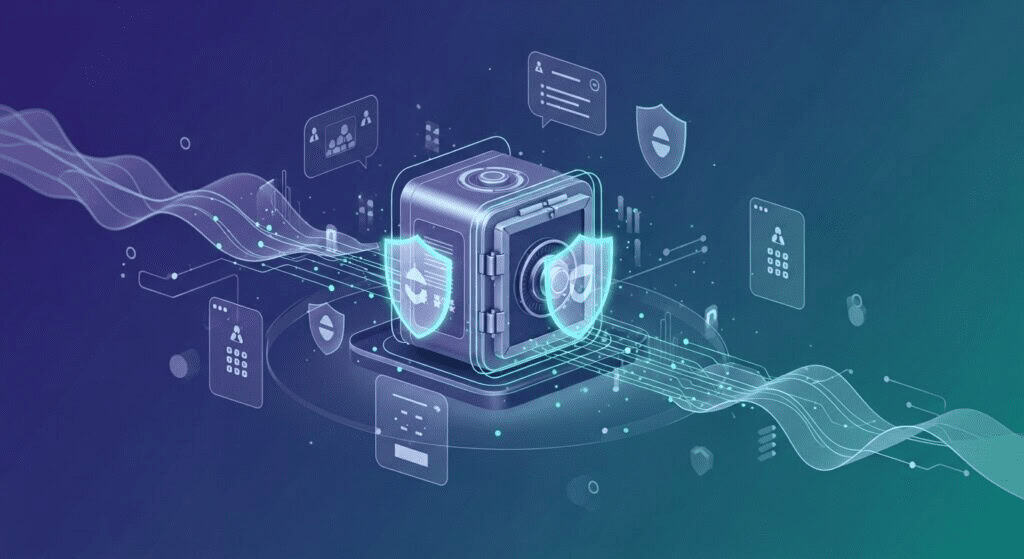
For data protection and for the protection of the remote work environment, the VPN provides a safe and secure protection of the data.
This architecture is designed to enhance security even further, ensuring that access to the network is granted under strict control, continuous verification, and that it is done in a monitored fashion.
9. Browser Embedded VPN
The latest advancement in built-in VPN technology is that now Integrated Browser VPNs have the ability to procure privacy without having to download a separate VPN Application.
For the average consumer who may be a little more privacy-conscious and is looking for more straightforward and easier-to-use technology, this improvement has been colossal.

Browser VPNs allow the user to activate a secure and encrypted session for the time that it is needed. This technology allows for a very user-friendly approach to online security.
The integrated VPNs are now standard in the leading browsers to procure security and privacy as a more straightforward user experience.
10. Decentralized VPN
dVPNs, or Decentralized Virtual Private Networks, are reliant on nodes, or devices, that form part of the network.
In this structure, blockchain is also used to decentralize the system from a central server to independent nodes.
Users of this kind of VPN become part of the network by contributing their bandwidth, along with earning incentivized rewards.
dVPN technology offers better protection of users’ anonymity compared to traditional VPNs. Better yet, dVPNs operate under a structure that increases
dVPNs resilience and transparency, which aligns with the infrastructure of Internet 3.0. Because of that, decentralized Virtual Private Networks have become popular.
Conclusion
To conclude, Rising VPN Trends: From AR Demos To Voice Commands highlights how smarter, faster, and easier technology is impacting digital privacy.
With innovations like AI routing, quantum encryption, IoT protection, and decentralized VPNs, technology is becoming more sophisticated, and security is more robust and easier to access.
These trends signal a transformation and an evolution of VPN services from traditional tools to intelligent and sophisticated systems that enhance the privacy and user experience of the modern digital world.
FAQ
What are the latest rising VPN trends today?
Latest VPN trends include AR demos, AI routing, voice commands, and decentralized VPN systems.
How are AR demos used in VPN services?
AR demos visually explain VPN features, helping users understand security and server functions easily.
Why are voice commands becoming popular in VPN apps?
Voice commands allow users to switch servers and control VPNs hands-free for convenience.
What is AI routing in VPN technology?
AI routing automatically selects the fastest and most stable VPN server in real time.