
This paper talks about the top stablecoin companies building the future of digital finance in 2026. These organizations create stable, safe, blockchain-based digital currencies useful for payment and trading activities and for DeFi.
Their characteristics and the stablecoins they support will likely depict their significance in the market. We will discuss how they reshape the flow of money in the world by providing new digital financial tools.
What Are Stablecoin Companies?
Stablecoin companies create and manage digital currencies tethered to traditional fiat currencies, such as the U.S. dollar, that are designed to maintain equilibrium. Traditionally, stablecoins are one-to-one fiat equivalent digital currencies (and one-to-one digital currency equivalents to foreign fiat currencies).
Stablecoin companies leverage blockchain technology to create solutions to facilitate safe and quick payment transfers, trades, and infrastructure to support DeFi and cryptocurrency mediated transactions and transfers across borders. Stablecoin companies provide solutions that integrate traditional finance with digital resources.
Why Are Stablecoin Companies Important In 2026?
- Rapid advancement of digital payments and blockchain technology:Improved financial and payment services based on blockchain technology and digital currencies have made stablecoins an excellent choice for international markets.
- Embraced by enterprises, organizations, and end-users alike:Numerous stablecoin options provide businesses, organizations, and consumers with digital payment alternatives.
- Impact of stablecoins on transaction costs and settlement finality:The use of stablecoin entails a lower cost of transaction and provides faster and easier finality of settlement.
- Increased presence of stablecoins in global financial markets:Stablecoins enable wider cross-border integration of traditional digital finance and economies.
Key Points & Top Stablecoin Companies
| Company | Coin | Explanation (12 Words) |
|---|---|---|
| Tether Operations Limited | USDT | Largest stablecoin issuer dominating global trading volume with strong market presence worldwide. |
| Circle Internet Financial | USDC, EURC | U.S. regulated issuer providing compliant stablecoins backed by transparent reserves globally. |
| Sky Protocol (formerly MakerDAO) | USDS, DAI | Decentralized protocol maintaining value through digital collateral and smart contracts. |
| Ethena Labs | USDe | Synthetic dollar using hedging strategies instead of traditional cash reserves. |
| Paxos Trust Company | USDP, PYUSD | Regulated financial company issuing stablecoins with PayPal partnership support. |
| Agora | AUSD | Growing stablecoin issuer offering global liquidity and digital cash settlements. |
| Ripple | RLUSD | Cross-border payment company launching fiat-backed stablecoin for financial transactions. |
| First Digital Group | FDUSD | Asian issuer providing popular stablecoin on major global cryptocurrency exchanges. |
| Mountain Protocol | USDM | Yield-bearing stablecoin offering daily interest rewards to token holders. |
| Frax Finance | FRAX | Hybrid stablecoin using fractional reserves and algorithms for price stability. |
10 Top Stablecoin Companies
1. Tether Operations Limited
Tether Operations Limited is the largest of the stablecoin companies, creators of USDT, which is the largest digital dollar. Tether has USDT pegged to dollar value by backing it with reserves that include cash and treasury assets.
USDT is essential to global crypto trading by providing liquidity to tens of thousands of crypto exchanges and networks.
Tether has the largest trading volume of the stablecoins. USDT provides the largest connectivity to the world of digital assets. Tether backs the continuous transparency of their reserves with efforts to expand to other Blockchains.
Tether Operations Limited – USDT
- Most Extensive Stablecoin Network: Tether has the widest acceptance and provides global liquidity to cryptocurrencies.
- Assets-Based Stability: Tether is stable due to the liquidity of cash equivalents, treasury securities, and settlement reserves.
- Multi-Chain Availability: Tether is available on Ethereum, Tron, Solana, and other blockchains.
- Frequent High Volume Trading: Supports global trading and provides liquidity to all cryptocurrencies.
- Reserve Transparency: Publishes reports on holdings and regular asset disclosures.
2. Circle Internet Financial
Circle Internet Financial is an issuer of regulated stablecoins and their USDC and EURC stablecoins are examples of safe and transparent digital currencies. USDC is a stablecoin that is fully backed and supported by premium reserve assets of cash and very short-term government securities.
First and foremost, Circle believes in regulation and safety of finance, and in supporting innovations and improvements to global payments. Circle has extended the ecosystem of USDC across numerous blockchains to allow quicker transaction times and to foster Decentralized Finance.
Circle has created a trusting and secure digital currency ecosystem that is vital in supporting large-scale, institutional adoption of cryptocurrency in conjunction with global Web3 innovations and improvements in digital finance.
Circle Internet Financial – USDC, EURC
- Regulatory Compliance in Stablecoins: Active compliance to financial regulations and global standards.
- Asset Backed Transparency: USDC is backed by cash and short-term U.S. government securities.
- Enterprise Grade Digital Payments: Provides enterprises secure digital payment infrastructure.
- Cross-Chain Availability: Supports transactions on different blockchains.
- Institutional Confidence: Used by many companies, developers, and worldwide financial institutions.
3. Sky Protocol (Formerly MakerDAO)
Sky Protocol (formerly MakerDAO) built its platform around DAI and now offers USDS. It is an example of a collateralized stablecoin system. Unlike ‘traditional’ stablecoins that keep a bank reserve to back the stablecoin, Sky Protocol locks collateral into a smart contract to keep stability.
Users have the ability to mint stablecoins by depositing other digital assets such as Ethereum, along with many other forms of collateral. The system is governed by smart contracts with Sky Protocol’s risk parameters and other update governance controlled by the community.
Sky Protocol has built stablecoins in a different way, in a combination of DeFi, automation, and DLT to keep the price stable without a reliance on the traditional banking system.
Sky Protocol (Formerly MakerDAO) – USDS, DAI
- Decentralized Stablecoin Design: Employs governance by blockchain and eliminates reliance on financial systems.
- Collateralized by Crypto: The system is stable by blockchain-locked digital assets.
- Contract Automation: Operations are stable through automated systems.
- Decentralized Governance: Allows members to participate in the upgrade and decision process of the protocol.
- Decentralized Finance (DeFi): Supports lending and borrowing activities.
4. Ethena Labs
USDe, created by Ethena Labs, is a synthetic dollar that attempts to establish stability without dependence on conventional cash reserves. USDe trades stability for dollar backing, and unlike other stablecoins, maintains value with collateralized crypto, derivatives, and hedging frameworks.
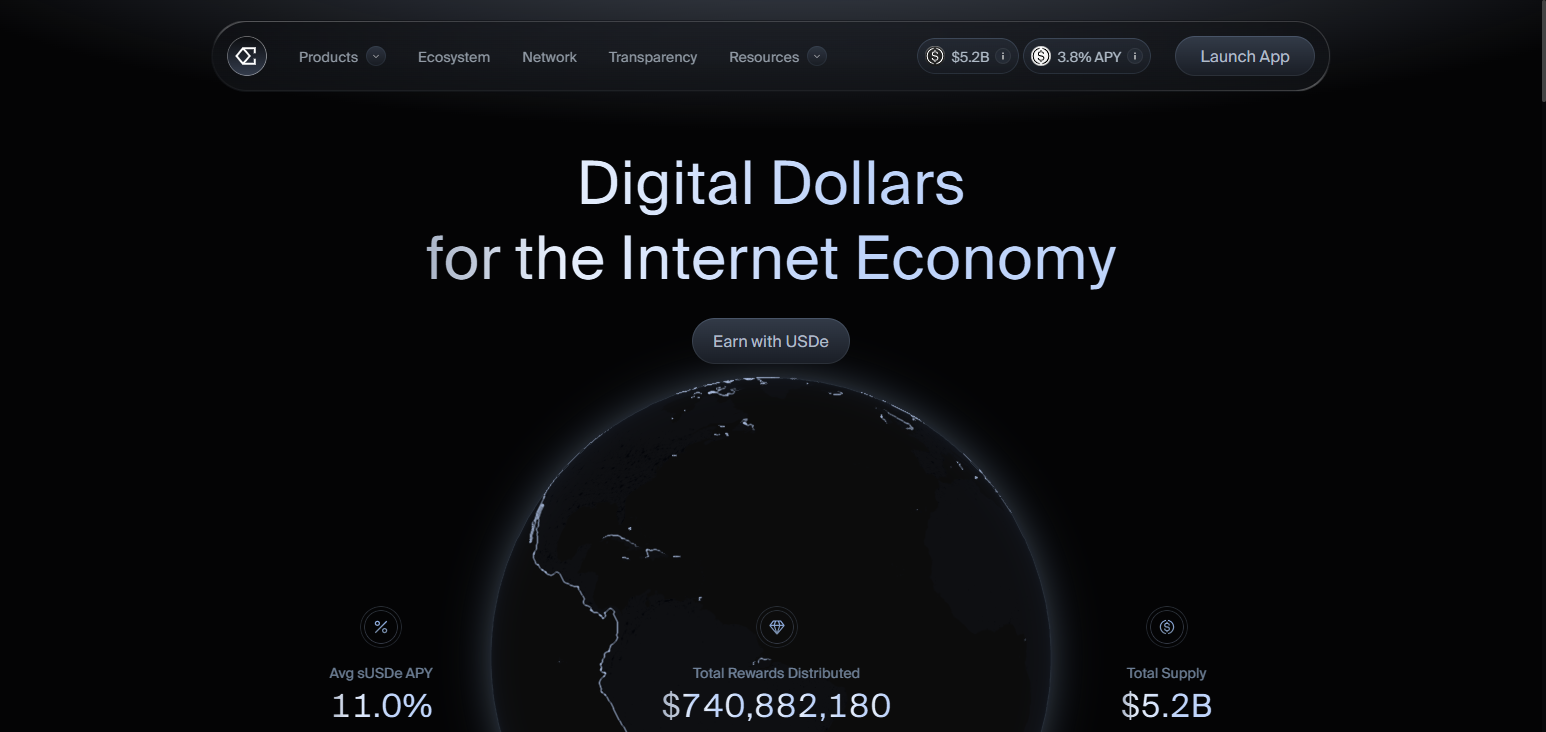
Ethena Labs creates an alternative for the DeFi user in that USDe seeks to establish yield, in that a user is likely to earn yield on USDe, a stable asset.
While Ethena Labs has developed a hedging framework integrated with synthetic digital dollars, stablecoin models of this cohort have proliferated with the popularity of other alternative digital currencies.
Ethena Labs – USDe
- Synthetic Digital Dollars: Enables digital dollar issuance not reliant on traditional banking reserves.
- Novel Hedging: Employs derivatives to successfully impact the stability of the asset.
- Yield Generation: Users of USDe may receive rewards just for holding.
- DeFi Compatibility: Made for decentralized finance.
- Financial Design Progression: Merges crypto assets with market strategies.
5. Paxos Trust Company
Paxos Trust Company – a regulated blockchain stablecoin issuer with facilitated compliance, proprietary, and infrastructural mechanisms and control – issues USDP and powers PYUSD, a stablecoin launched via a partnership with PayPal.
Paxos, retaining value and confidence from its customers, maintains regulated reserves. Their value and focus on transparency, along with frequent audits and security controls of the highest order, bring business from payment firms and other institutions.
By integrating a proprietary compliance and oversight mechanisms with the blockchain, Paxos achieves and provides the means to accelerate the adoption of digital assets for mainstream customers, merchants, and concerned financial institutions.
Paxos Trust Company – USDP, PYUSD Features
- Heavily Regulated Activity: Financial compliance requires strict regulations.
- PayPal Partnership Empowerment: Collaborating with PayPal grants access to PYUSD.
- Clear Reserves: Confidence in a stablecoin with verified reserves.
- Security for Institutions: Enterprise-level infrastructure for blockchain is provided.
- Interbank Digital Asset Linkage: Integrates digital assets with banking and business.
6. Agora
Agora is a new stablecoin issuer with the objective to reliable digital cash infrastructure for the global market. AUSD provides the ability to conveniently and swiftly carry out high volume financial transactions and transfer rich liquidity in/through financial networks and systems based on blockchain technology.
Agora focuses on combining the disrupted decentralized applications with traditional financial systems by providing a trusted flexible stable digital financial solution.
Agora’s technology is an enabler for businesses and developers in the use of digitally programmable money for settlement and exchange within the context of the financially enabled webs of interaction (Web3).
Agora distinguishes itself in a growing competition of stablecoins that are readily available and compliant with the highest standards, liquidity, and diverse financial innovation tools necessary to meet the dynamically growing digital economy.
Agora – AUSD Features
- Digital Cash for Stability Globally: Infrastructure exists for stable payments in any market.
- Rapid Settlement: Transfers of digital money via blockchain can be done quickly.
- Improved Liquidity: Access to digital financial markets is enhanced.
- Web3 Application Support: Decentralized apps and blockchains can be utilized.
- Innovative Financial Tech for Stablecoins Expansion: Flexible financial solutions to improve stablecoin use.
7. Ripple
Ripple is one of the most recognized companies globally for its role in blockchain-based payments, along with the creation of RLUSD, a digitally transacted, fiat-backed stablecoin. Through the use of its payment network, XRP, Ripple seeks to facilitate the cross-border payment
of RLUSD, and also target the payment gaps of institutional settlements and liquidity shortages. The stablecoin is designed to have its value maintained in a tethered fiat currency, and provides the settlement speed and transparency afforded by the blockchain.
Leveraging its expertise of cross-border payment solutions, RLUSD can be positioned for greater enterprise adoption. With the merger of advanced stablecoin technology, and the completion of Ripple’s payment network, Ripple can engage with financial customers who are seeking enhanced settlement solutions.
Ripple – RLUSD Features
- International Payment Solutions: Optimized for fast financial transfers.
- Fiat Backed Reserves: Value is kept with currency-backed reserves.
- Enterprise Payment Solutions: Global payment needs are fulfilled via institutional grade blockchain.
- Ripple Network Compatibility: Integrated into Ripple’s wide financial network.
- Transparent Payment Solutions: Payments are processed in a clear, efficient way.
8. First Digital Group
First Digital Group is an Asia-based stablecoin issuer, with FDUSD intended for the global digital crypto markets. FDUSD has established a market leading presence and is highly rated for its integrated and cross-ecosystem liquidity.
FDUSD was designed to bring an advanced digital U.S. dollar to the crypto market which is highly characterized by real-time transactional demand and the burgeoning of decentralized services.
First Digital was built on the tenets of transparency, diligent management of reserves to a high standard, and a regulatory framework designed to engender confidence to users.
FDUSD leads the competitive stablecoin market in Asia and beyond in transactional demand for highly integrated services and decentralized finance.
First Digital Group – FDUSD Features
- Stablecoin Solutions Issued in Asia: Digital dollar solutions for global markets.
- Exchange Traded: Available for trading on all major exchanges.
- Blockchain Versatility: Compatible with various networks.
- Reserve Management System: Balances stablecoin remains.
- Increasing Market Adoption: More customers, traders, and investors engage.
9. Mountain Protocol
Mountain Protocol’s USDM is an innovative yield-bearing stablecoin. Using USDM enables users to earn yield while holding a digital dollar. Compared to stablecoins that only focus on holding value, USDM is able to provide users with a yield as a result of the underlying financial assets.
The protocol aims to combine stability, transparency, and the ability to generate income for both users of cryptocurrency and participants of decentralized finance.
USDM gives cryptocurrency users an additional innovative feature, as users of the stablecoin are able to earn rewards passively, as there is no requirement to trade or stake the stablecoin.
With Mountain Protocol’s stablecoin model, there is a clear focus on yield, and as demand for digital assets that yield increases, the yield centric stablecoin model is an example of the trends that will occur in blockchain financial products.
Mountain Protocol – USDM Features
- Yield-Bearing Stablecoin: Users holding USDM have something to gain.
- Passive Income Opportunity: Makes rewards without the hassle of trading.
- Digital Dollar Stability: Stays stable while still providing the opportunity to earn.
- Financial Asset Backing: Supports yield creation through backing.
- DeFi Investment Utility: Meant to be used and interacted with for DeFi.
10. Frax Finance
Frax Finance is one of the first decentralized stablecoin projects, utilizing a hybrid fractional-algorithmic mechanism. FRAX is designed as a partially collateralized and stable coin with efficiency in capital placement and partial reliance on algorithms.
In contrast to fully collateralized stablecoins, Frax employs a combination of smart contracts and system-based market activities to dynamically balance its supply while exercising a dollar peg.
Frax has gone beyond its vision of stablecoins and has now developed a series of decentralized finance-based products and services such as lending, governance, and a variety of liquidity offerings.
Frax boasts innovative stablecoin design, and within the burgeoning cryptocurrency market, it strikes a balance of highly scalable and stable design with a decentralized approach.
Frax Finance – FRAX Features
- Hybrid Stablecoin Model: Uses collateral reserves and an algorithmic model.
- Decentralized Architecture: Governance is built directly on the blockchain.
- Capital Efficient Design: Requires less collateral compared to traditional models.
- DeFi Ecosystem Integration: Supports a variety of financial activities.
- Adaptive Stability Mechanism: Smart contracts modify supply.
Key Factors To Evaluate Stablecoin Companies
- Reserve Transparency and Asset Management: Companies should disclose reserve reports and maintain reliable systems of asset management.
- Regulatory Compliance and Licensing: Strong compliance shows the tendency of stablecoin companies to follow the law in the financial domain.
- Support of Multiple Blockchains and Transaction Efficiency: Companies supporting multiple blockchains will transact faster and heighten the experience of users.
- Widespread Adoption, Liquidity, and Trading Volume: More adoption and more liquidity shows more stable and reliable stablecoins.
- Security and Risk Management: Strong security and risk management systems taken by companies will protect users from financial and technical risks.
Conclsuion
In Conclusion Leading Stablecoin Businesses The leading stablecoin businesses are paving the way for the future of digital payments with safe, clear, and easy forms of payments. Tether, Circle, Sky Protocol, Paxos, and Ripple, among others, are using cross-border and other blockchain technologies to enhance the use of digital payment systems.
The demand for digital payments, Decentralized Finance (DeFi) services, and global settlements will continue to grow and use stablecoins to bridge the traditional financial world with the rapidly evolving crypto world. Flexible companies like these will thrive for the foreseeable future.
FAQ
Which stablecoin companies are best for institutional use?
Companies like Circle, Paxos, Ripple, and Tether are widely used by institutions because they offer regulatory compliance, transparency, security features, and infrastructure designed for large-scale financial transactions.
What makes USDT and USDC the most popular stablecoins?
USDT and USDC are popular because they provide high liquidity, strong market acceptance, fast transactions, and support across multiple blockchain networks. They are commonly used for crypto trading, payments, and decentralized finance activities.
Are stablecoin companies regulated?
Many stablecoin companies are becoming increasingly regulated. Companies such as Circle and Paxos follow financial compliance standards, maintain reserve transparency, and work with regulatory authorities to improve trust and security.
What are the benefits of using stablecoins from leading companies?
Leading stablecoin companies provide faster international payments, lower transaction fees, reduced crypto volatility exposure, easy access to digital finance, and improved liquidity for global users and businesses.
What are the risks associated with stablecoin companies?
Stablecoin risks include regulatory changes, reserve management issues, security vulnerabilities, market confidence problems, and potential failures in maintaining price stability. Users should evaluate transparency and reliability before choosing a stablecoin provider.