This article covers Y Combinator-backed crypto startups disrupting the blockchain and Web3 sectors. These companies are constructing new methods for crypto trading, DeFi, digital identity, NFTs, and blockchain tech.
We will analyze these companies and the features, advantages, and issues that they incorporate and the role that they may play in the rapidly changing crypto world.
Introduction to Crypto Startups Backed by Y Combinator
Y Combinator’s funded crypto startups are at the forefront of innovation in building the intersection of blockchain, Web3, and the future of digital finance. These startups are utilizing various innovative tools such as crypto exchanges, decentralized apps, digital identity, NFTs, and blockchain to develop real solutions to real problems.
These startups have incredible mentorship and funding, plus the global exposure that Y Combinator gives. These companies will help develop the digital economy and grow the solutions to complex problems.
What Makes Y Combinator Crypto Startups Unique?
- Experienced Advisors + Investors: The most important resource available to founding members of Y Combinator is proximity to experienced advisors and the most important investors.
- Capitalizing on Viable Market Opportunities: Relatively new crypto Y Combinators are primarily focused on creating solutions for existing economic and technological challenges and issues.
- Excellent Infrastructure for Scalable and Large Blockchains: Y Combinator is exceptional for developing future-focused markets.
- Excellent Use of Tech with Scalable and Secure Infrastructure: The innovative quality of tech with strong assurance infrastructure and user extremities is the major focus.
Why Invest Attention in Y Combinator-Backed Crypto Startups?
- Challenging Conventional Finance: These projects build tech solutions that push against the boundaries of the current banking/financing solutions.
- Web3 Advancements: These are enhancements on payments, digital identities, NFTs, dApps and other innovations.
- Intercontinental Interest: A lot of projects have the capability to attract stakeholders, developers, and tech communities around the world.
- Enhancement and Growth of DeFi: These are essentially financial solutions based on blockchain technologies with the scalability to enable the progress of DeFi.
| Crypto Startup | Explanation |
|---|---|
| Coinbase | Leading crypto platform enabling users to buy, sell, and securely store digital currencies. |
| OpenSea | Premier peer-to-peer marketplace for trading NFTs and digital collectible assets globally. |
| Worldcoin | Global identity protocol promoting economic inclusion through blockchain-based verification systems. |
| Matter Labs | Develops Ethereum scaling solutions making blockchain transactions faster, cheaper, and efficient. |
| Rainbow Wallet | User-friendly mobile wallet enabling Ethereum users to access Web3 applications easily. |
| Blaze | Peer-to-peer payments app using stablecoins for affordable global money transfers. |
| Polar | Helps freelancers manage global USD earnings and invest in digital assets. |
| BlindPay | API platform allowing businesses to send and receive worldwide stablecoin payments. |
| Theya | Self-custody Bitcoin application giving users complete control over their assets. |
| Mintbase | Platform enabling users to mint NFTs and create personalized digital stores. |
Top Crypto Startups Backed by Y Combinator
1. Coinbase
Coinbase is one of the most popular platforms in cryptocurrency. It gives its users a safe way to buy, sell, store, and manage their digital assets. With the mission of developing an open financial system,
Coinbase has widened their crypto services by incorporating institutional solutions, blockchain infrastructure, and both custodial and non-custodial crypto wallets and staking services.
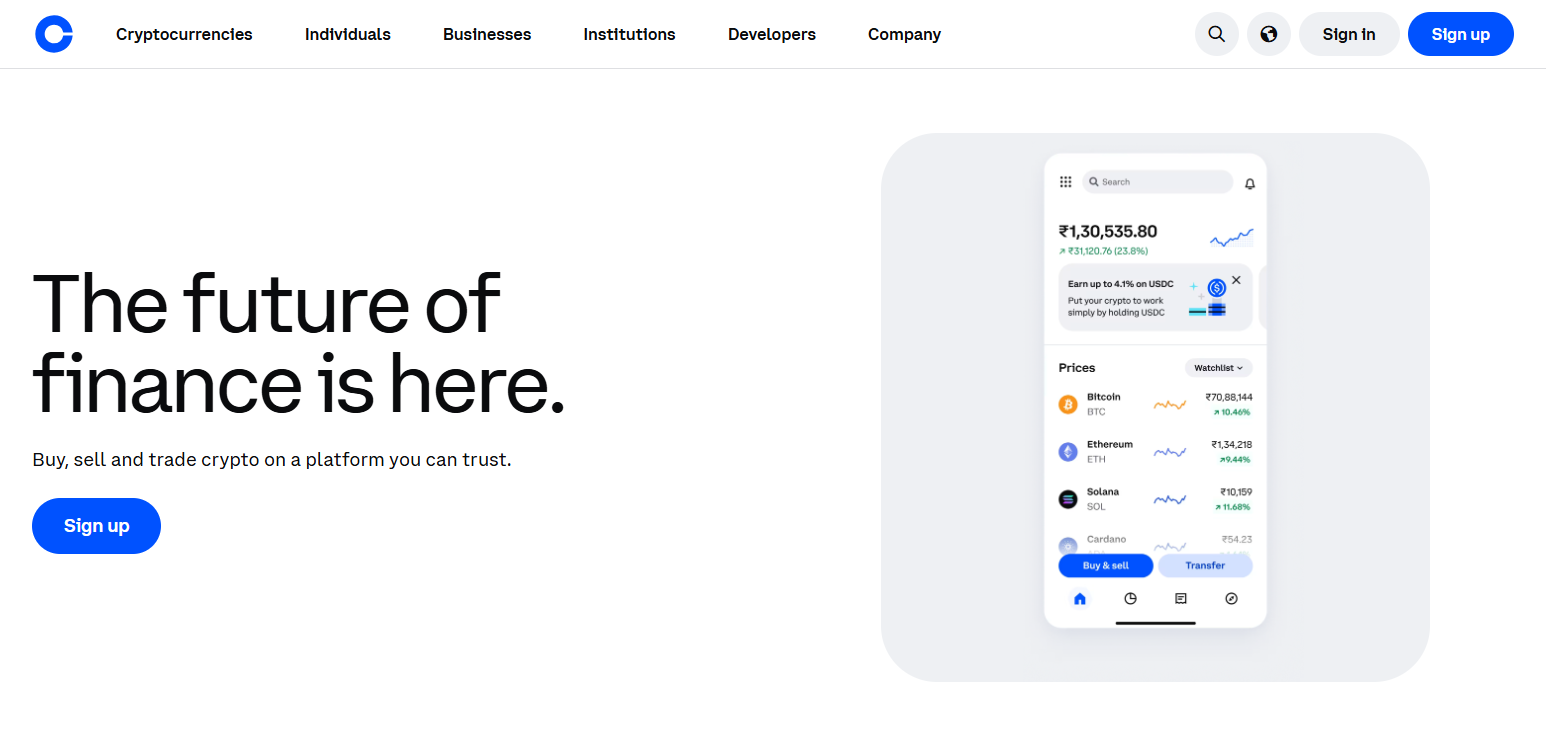
The platform focuses on the accessibility of cryptocurrency to the public, while implementing strong security and staying compliant to rules and regulations.
Through the adoption of blockchain, Coinbase has integrated the growing Web3 ecosystem to digital currencies, and simplified the process for millions of users around the globe.
Coinbase Features
- User-Friendly Trading Interface: Coinbase provides an easy and safe method to buy, sell, and store digital assets.
- Secure Digital Storage: Advanced features to cover security and compliance with protected digital wallets.
- Earn While You Stake: Rewards are earned while users are staked on blockchain networks.
- Crypto Services for Businesses: Institutional trading and custody services with blockchain infrastructure.
| Pros | Cons |
|---|---|
| Strong security features and regulatory compliance build user trust. | Higher trading fees compared with many competing crypto exchanges. |
| Supports multiple cryptocurrencies, wallets, staking, and institutional services. | Account restrictions and verification processes can frustrate users. |
| Beginner-friendly interface makes cryptocurrency adoption easier globally. | Centralized platform reduces complete user control over assets. |
| Provides advanced infrastructure for businesses and developers. | Regulatory challenges may impact future operations and services. |
| Large user base improves liquidity and market accessibility. | Security breaches could affect customer confidence despite protections. |
2. OpenSea
OpenSea is a prominent cross-blockchain NFT marketplace that allows its users to create, buy, sell, and trade digital collectibles. OpenSea’s popularity is the result of a simple, peer-to-peer marketplace designed for digital creators, artists, and collectors to participate in the growing digital economy of ownership.
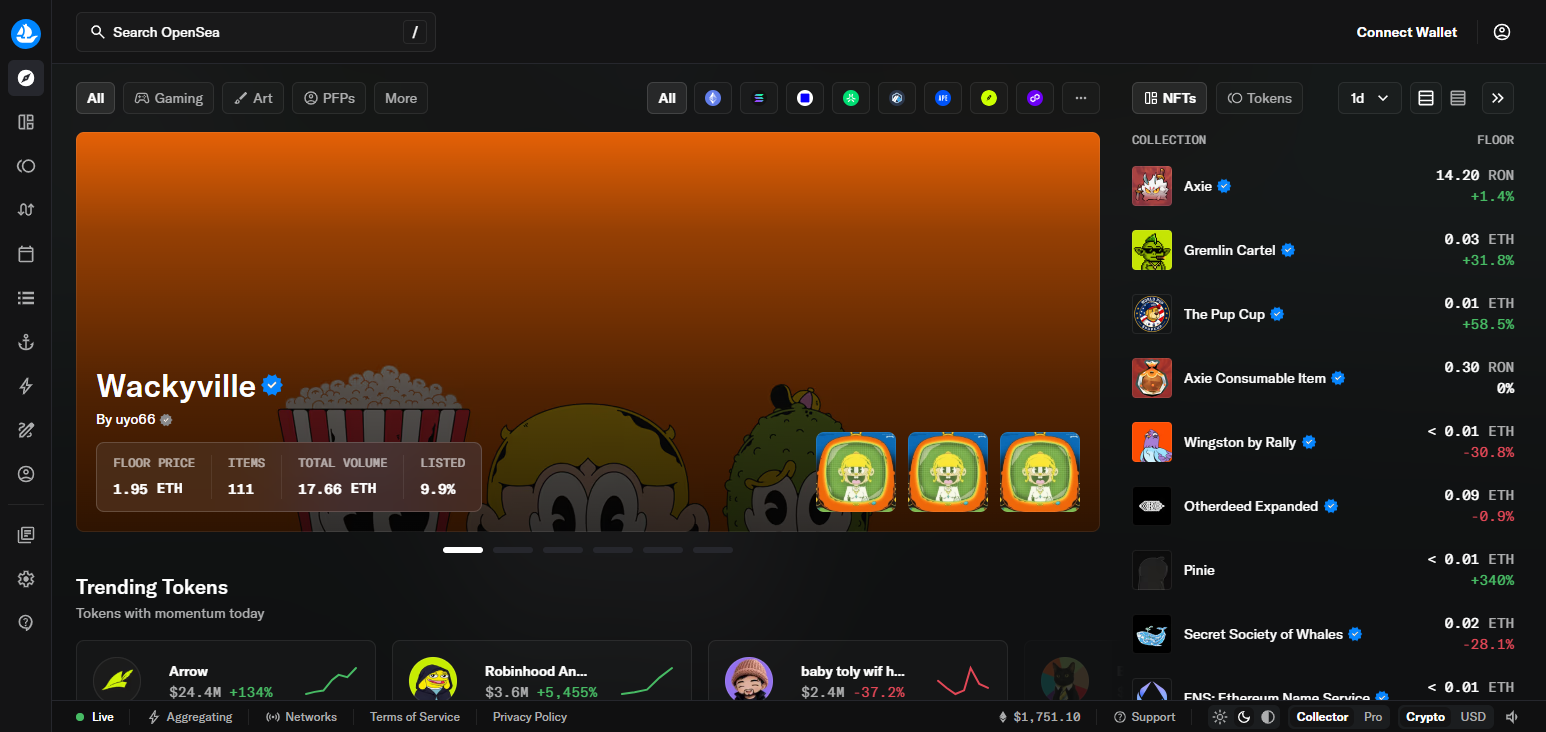
OpenSea has NFTs from many different categories. These include, but are not limited to, game NFTs, digital art NFTs, and even NFTs that claim membership to certain communities.
The platform focuses on improving marketplace efficiency, creator tools and overall user experience. OpenSea is a foundational platform in the NFT marketplace and digital ownership space of the Web3 economy.
OpenSea Features
- Digital Collectibles Trading: Users can build, buy, sell and trade NFTs.
- Flexible NFT Transactions: Transactions of NFTs on differing blockchain networks.
- Trading Tool for Creation: Artists can create and manage their NFTs with a trading tool.
- Global Trading: Transactions can be done directly and globally by NFT creators and collectors.
| Pros | Cons |
|---|---|
| One of the largest NFT marketplaces with global recognition. | NFT market volatility can reduce trading activity significantly. |
| Supports multiple blockchain networks and digital asset categories. | Faces strong competition from emerging NFT platforms. |
| Easy-to-use tools help creators launch NFT collections. | Platform fees may impact creators and traders. |
| Provides access to a large community of collectors. | NFT scams and fake collections remain ongoing concerns. |
| Encourages digital ownership and creator economy growth. | Changing NFT trends can affect long-term demand. |
3. Worldcoin
Worldcoin wants to change the way we think about digital identity and cryptocurrencies by integrating both systems with a blockchain framework of easy digital ID and inclusion of digital authentication.
With Worldcoin, it’s easier for users to be included in the digital economy, and more difficult for bots to infiltrate. Worldcoin has great aspirations of creating a digital economy of verified humans and intends to fill the void in futuristic blockchain economies. Worldcoin aims to foster opportunities and create a digital identity network of trust.
Worldcoin Features
- Human Users of Blockchain: Solutions based on verified identity of actual users with the use of blockchain.
- Access to Digital Economy: Opportunities for users to gain access to the digital economy with reduced bots.
- Identity Verification: Advanced methods of identity verification and reduced bots.
- Future of Blockchain: Financial networks of blockchain based on reduced virtualization.
| Pros | Cons |
|---|---|
| Creates innovative digital identity solutions for online verification. | Privacy concerns exist around biometric data collection methods. |
| Focuses on increasing global financial inclusion. | Adoption depends on user trust and regulatory acceptance. |
| Combines blockchain technology with identity infrastructure. | Some regions may restrict or investigate its operations. |
| Provides opportunities for future digital economic systems. | Identity technology remains technically and socially challenging. |
| Addresses the growing need for human verification online. | Public understanding of the project is still limited. |
4. Matter Labs
Matter Labs is the brain behind zkSync, a way to increase the transaction throughput of an already overburdened network by reducing the costs of executing transactions on the Ethereum blockchain.
Through the implementation of zero-knowledge rollups, zkSync is able to maintain the security of Ethereum while allowing users to transact at an unbeatable speed and price. Matter Labs is determined to create the infrastructure the blockchain economy of the future needs in order
To build feasible decentralized applications, digital finance, and an advanced Web3 ecosystem. Layer 2 solutions are the answer to Ethereum’s problems of scale, and Matter Labs is the leader.
Matter Labs Features
- Facilitate Blockchain Operations: Innovative Layer 2 technology for both speed of operations and reduced costs.
- Enhanced Performance: Cryptography based on Zero-Knowledge for increased transactional efficiency with enhanced security.
- Accelerated Payments: Finance and trade on the Ethereum blockchain made faster.
- Infrastructure for dApps: Support of decentralized applications (dApps), DeFi, and Web3.
| Pros | Cons |
|---|---|
| zkSync improves Ethereum scalability through Layer 2 technology. | Competition among Ethereum scaling solutions is increasing. |
| Reduces transaction costs and improves blockchain efficiency. | Complex technology may create adoption challenges. |
| Maintains Ethereum security while improving performance. | Network dependence on Ethereum creates limitations. |
| Supports decentralized applications and Web3 development. | Technical upgrades require continuous maintenance and improvement. |
| Helps solve major blockchain scalability problems. | Security risks remain possible in emerging technologies. |
5. Rainbow Wallet
Rainbow Wallet is one of the best mobile wallets available. Many people enjoy using the app because it makes interacting with the Ethereum platform and the many Web3 apps available simple and fun.
Users can view their Ethereum balances, manage and trade their NFTs, and of course, connect with dApps. Rainbow Wallet makes interacting with Ethereum fun and simple. One major advantage of using Rainbow Wallet compared
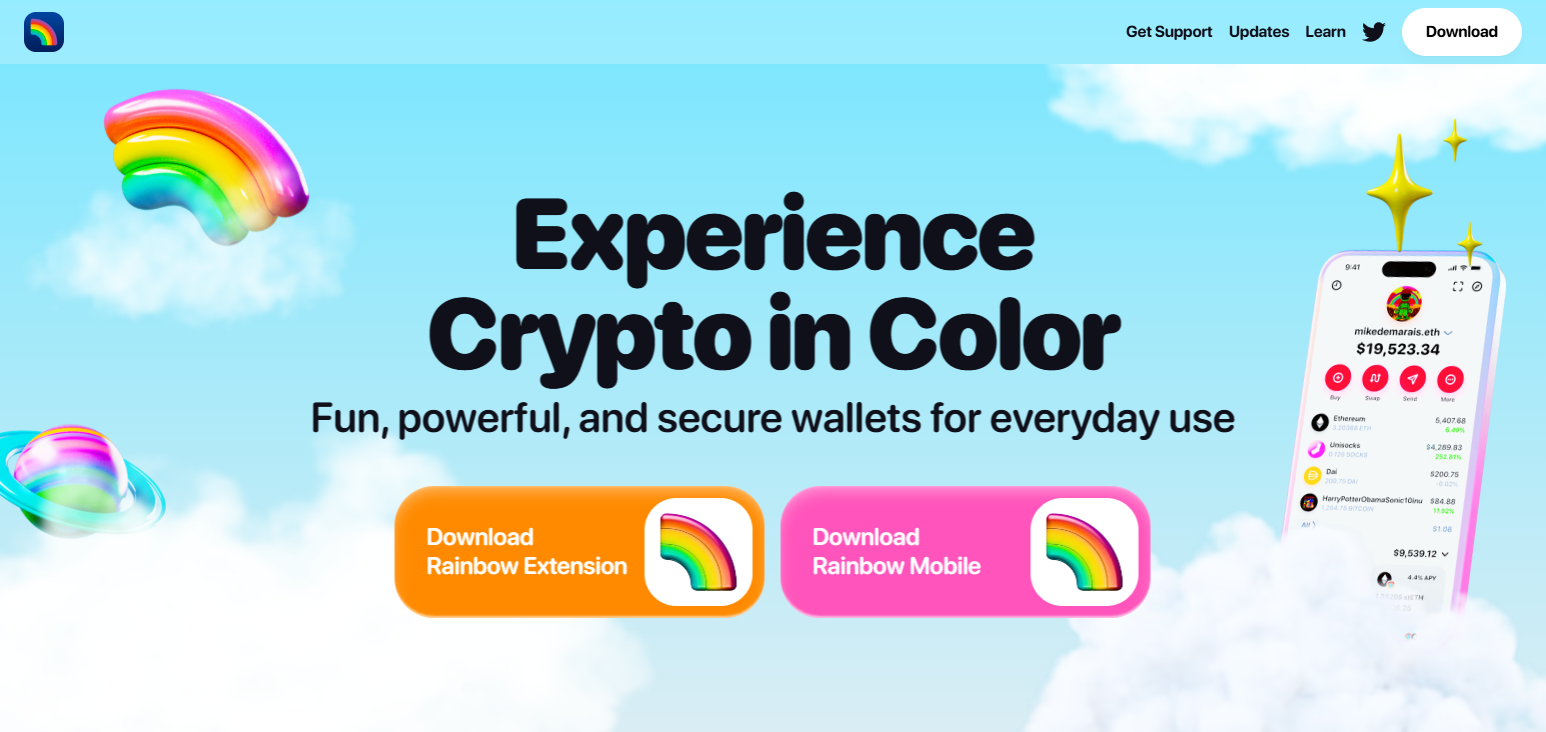
To many other finance apps is that users can directly manage their digital assets by managing their private keys. The wallet keeps improving to keep pace with the evolving world of dApps and decentralized finance.
Rainbow Wallet Features
- Crypto Wallet: Control your Ethereum.
- Web3 App Connectivity: Links to dApps and blockchain services.
- NFT Interaction: Allows for viewing and managing NFTs.
- Self-Custody: Stakeholders maintain ownership and control of NFTs through private keys.
| Pros | Cons |
|---|---|
| Simple interface makes Web3 accessible for beginners. | Mainly focused on Ethereum ecosystem limitations. |
| Provides users complete control over private keys. | Users are responsible for securing wallet access. |
| Supports NFTs and decentralized applications easily. | Recovery options may be difficult for new users. |
| Attractive design improves overall user experience. | Limited support compared with multi-chain wallets. |
| Encourages self-custody and decentralized finance participation. | Loss of private keys can permanently lose assets. |
6. Blaze
Blaze is a decentralized peer-to-peer payment network that uses Stablecoins to cut out banks and make international payments easier. There are many payment solutions for sending and receiving payments that use blockchain technology, but very few make implementing Stablecoins so simple.
Unlike other payment systems that rely on banks, Blaze is designed to make cross-border transactions simple, fast, and affordable.
The payment system solves many of the issues of bank payments such as lengthy payment times, high payment fees, and limited access to financial services. Thanks to the growing adoption of Stablecoins, Blaze is one of many payment systems that are easy to use.
Blaze Features
- Stablecoin: Offers low-cost, rapid payments via blockchain for international money transfers.
- Decentralized Transactions: Participants can transact directly without banks.
- Global Payment Transfers: Payments become faster and less costly for participants.
- Decentralized Finance: Users can access modern finance via blockchain technology.
| Pros | Cons |
|---|---|
| Enables faster international payments using stablecoins. | Stablecoin regulations may affect future availability. |
| Reduces costs compared with traditional payment systems. | Depends on blockchain network reliability. |
| Helps users access global financial services. | Limited awareness compared with traditional payment providers. |
| Provides efficient cross-border transaction solutions. | Stablecoin risks may impact user confidence. |
| Supports the growth of digital payment ecosystems. | Adoption requires merchant and user acceptance. |
7. Polar
Polar is a digital banking app targeted at remote, freelance, and global professionals that helps with earnings in both digital currency and USD currency bank accounts. The startup solves the problems of distributed workers with international payments and currency exchange, as well as the lack of modern financial services.

Polar integrates FinTech and digital assets, so users can better manage their earnings and investments. The increase in the global freelance and remote work market means that financial apps like Polar are focused on the borderless financial experience. The app is a response to the demand for a modern digital workforce and flexible payroll systems.
Polar Features
- Global Payments: Facilitates payment management for freelance work internationally.
- USD Payment Solutions: Offers services that bridge the digital and USD payment solutions.
- Remote Workforce: Tailored to the needs of global workers.
- Digital Finance and Crypto: Financial technology and crypto investment services bundled.
| Pros | Cons |
|---|---|
| Helps freelancers manage international earnings efficiently. | New platform may have limited market recognition. |
| Supports borderless payments for global workers. | Digital asset exposure involves financial risks. |
| Combines traditional finance with blockchain opportunities. | Availability may vary across different regions. |
| Simplifies currency management for remote professionals. | Competes with established global payment providers. |
| Supports the growing remote work economy. | Users may require crypto knowledge to maximize benefits. |
8. BlindPay
Aiming for a stable exchange, BlindPay offers businesses an API-based framework for sending and receiving stablecoin payments in global markets. Their platform aids businesses in adopting a blockchain payment solution, without the need of establishing a complex internal crypto system.

BlindPay makes stablecoin transactions easier, resulting in quicker payment settlement and reduced operational costs. Many organizations are interested in controlled use of digital currencies in payment and treasury systems.
BlindPay offers businesses the capability to create new financial tools while utilizing the blockchain and closing the gap between crypto and traditional payment systems.
BlindPay Features
- Stablecoin Payment Solutions: Offers a blockchain payment option for companies.
- Fast International Transfers: The system allows for quick global transactions.
- Decentralized Payment Solutions: Eases the transition to crypto payments for corporate clients.
- Finance & Blockchain Merge: Links traditional finance with blockchain.
| Pros | Cons |
|---|---|
| Simplifies stablecoin integration for businesses worldwide. | Businesses must understand blockchain infrastructure requirements. |
| Reduces complexity of building crypto payment systems. | Regulatory uncertainty can impact payment services. |
| Enables faster international payment settlements. | Depends on stablecoin ecosystem stability. |
| Helps companies adopt blockchain-based financial solutions. | API security risks require strong protection measures. |
| Supports modern digital payment infrastructure development. | Limited adoption compared with traditional payment APIs. |
9. Theya
Theya is a Bitcoin self-custody app allowing users to manage their digital assets privately and securely without the reliance on third party software. The startup, with privacy and security in mind, provides users with the ability to manage their own personal Bitcoin self-custody.
Theya is aimed to protect Bitcoin self-custody for the average user, for everyday ease by simplifying the management of Bitcoin wallets, and improving protective measures for Bitcoin users.
As the security of digital assets and centralized exchanges gain a public concern, self-custody will gain more importance. Theya is the beginning of the availability of financial freedom and self-custody of Bitcoin.
Theya Features
- Self-Custody Bitcoin: Users maintain full control of their Bitcoin.
- Risk Management Tools: Solutions for safeguarding crypto assets.
- Custody Solutions: Offers private control on a centralized platform.
- Self-Custody Bitcoin Made Easy: Eases self-custody for cryptocurrency users.
| Pros | Cons |
|---|---|
| Gives users complete ownership of Bitcoin assets. | Users must manage security responsibilities themselves. |
| Reduces dependency on centralized exchanges. | Lost credentials may result in permanent asset loss. |
| Focuses on privacy and financial independence. | Self-custody can be complicated for beginners. |
| Improves Bitcoin security management tools. | Limited functionality compared with full financial platforms. |
| Supports decentralized ownership principles. | Bitcoin price volatility affects user holdings. |
10. Mintbase
Mintbase is a self-service Web3 NFT store that allows anyone to create their own NFT Store. Mintbase empowers creators to mint digital assets and create their own NFT marketplaces. Their platform supports a multitude of applications including Art, Gaming, Memberships, and more.

With the large audience of creators Mintbase hopes to provide the tools necessary to create a user friendly self-service NFT Marketplace. As Mintbase continues to provide a service to creators, it allows them to further embrace blockchain technology.
Mintbase Features
- Minting NFTs: Users can easily mint and sell their NFTs.
- NFT Store Building: Lets creators set up tailored crypto market spaces.
- Marketplace Development: Offers Web3 tools to creators, brands, and businesses.
- Digital Ownership Framework: Aids the extension of NFT uses in gaming, art, and memberships.
| Pros | Cons |
|---|---|
| Makes NFT creation easier for creators and businesses. | NFT demand fluctuations impact platform activity. |
| Supports customized digital marketplaces and stores. | Requires blockchain knowledge for advanced features. |
| Helps expand digital ownership applications. | Faces competition from larger NFT platforms. |
| Reduces technical barriers for Web3 participation. | Creator success depends on market interest. |
| Supports various industries including art and gaming. | NFT regulations may affect future growth. |
How To Choose Promising Crypto Startups?
- Upgrading Technology: Better, more innovative solutions on the blockchain that integrate newer technology and are more scalable.
- Quality People: Fewer technical or experienced founders that actually have the skills as well as a knowledge of the industry and the future.
- Assurance: How secure are your investments? How are these start-ups thinking about the possible consequences and assuring compliance?
- Diverse Application: What are customers actually going to use these for? Where will they be adopted?
- Future Possibilities: The sustainability and future prospects of these projects and markets overall as well as the possible trends.
Future Trends of Y Combinator Crypto Startups in 2026
- Smart Blockchain Apps: Startups will use AI to develop smarter automated solutions with Blockchain.
- Better, Faster Payments with Stablecoins: The wider use of Stablecoins will enable quicker and cheaper financial transactions worldwide.
- More Flexible Privacy: More startups will work on Decentralized Apps with Blockchain-based systems for private digital verification.
- NFTs with Real World Applications: Non-fungible Tokens will start to have real use outside the collectibles space.
- More Cross Over Between Traditional Banking and Crypto: Companies will connect traditional banking systems with Blockchain to create hybrid financial systems.
Conclusion
In cocnlsuion, Crypto startups supported by Y Combinator are leading disruption in crypto, Blockchain, Web3, digital identity, payments, decentralized finance, and more. Startup companies such as Concord (coinbase), Open Sea, World Coin, and ZK Sync provide real world solutions to digital economy use cases.
Provided funding, expert advice, and scaled solutions, these startups are positioned to impact the future of digital economies.
For the year of 2026, as cryptocurrency and adopted solutions are predicted to grow, the status of these companies and their solutions are expected to impact finances on a global level.
FAQ
Which are the top crypto startups backed by Y Combinator?
Popular startups include Coinbase, OpenSea, Worldcoin, Matter Labs, Rainbow Wallet, Theya, and Mintbase.
How does Y Combinator support crypto startups?
Y Combinator provides investment, expert guidance, networking opportunities, and startup development resources.
What industries do these crypto startups focus on?
They focus on payments, NFTs, digital identity, wallets, DeFi, and blockchain scalability.
Are Y Combinator crypto startups safe to use?
Safety depends on each platform’s security practices, technology, regulations, and user protection measures.