In this article, I will identify the Best Forex Brokers Offering API Trading and describe their features with an emphasis on API, cost of trading, speed of execution, safety and support for developers.
I will explain how to select the best API broker to suit your needs for automated trading, algorithmic trading and integration of your own trading application.
What is API Trading In Forex?
Traders can automate Forex trading by linking trading accounts with custom software via APIs. Traders will no longer need to make trades manually by writing code that executes trades based on rules and conditions that the code specifies.
API trading gives access to actual market data, previous prices and other risk management controls that are automated.
It is frequently used by analytic traders, quantitative analysts, and companies looking for quicker, more accurate trading and reduced emotional decision making. API trading is the most efficient way to run a business that trades 24/7.
Essential Factors For Choosing an API Forex Broker
- Regulation and Security – Look for fully regulated brokers with API infrastructures that cover the protection of client funds and allow for the secure and transparent operation of API trading.
- Type of API and Documentation – Choose APIs that include different forms of documentation, SDKs and examples, and that provide ease of developer integration.
- Execution Speed and Latency – With the API Broker of choice, look for low latency execution and less slippage that will maximize the effectiveness of automated trading during times of high market volatility.
- Programming Language Support – Ensure that there is support for the preferred programming language (e.g. Python, Java, C++, C#, etc).
- Trading Costs and Spreads – Evaluate the cost of trading including spreads, commissions, swap fees, and execution costs that will impact the profitability of algorithmic trading.
- Market Data – Look for APIs that provide real-time and accurate pricing and reliable market data.
- Compatibility Across Platforms – Check for flexible integrations with MetaTrader, TradingView or any custom and third party trading applications.
- Developer Support – Before selecting a Forex Trading API Broker, review the availability of prompt support, API troubleshooting assistance and an engaged developer community.
Key Points & Best Forex Brokers Offering API Trading
| Forex Broker | Explanation |
|---|---|
| Interactive Brokers | Provides institutional-grade API access with extensive markets and advanced automation capabilities seamlessly. |
| OANDA | Offers REST API supporting automated forex strategies with reliable market data integration efficiently. |
| FXCM | Delivers powerful API solutions enabling algorithmic trading across diverse financial instruments globally. |
| IG | Features robust trading APIs with comprehensive documentation for custom trading application development. |
| Saxo Bank | Supports OpenAPI connectivity delivering professional trading tools for sophisticated automated strategies worldwide. |
| Pepperstone | Enables API trading with low-latency execution for algorithmic forex trading performance consistently. |
| CMC Markets | Provides API connectivity supporting custom platforms with competitive pricing and fast execution speeds. |
| Swissquote | Offers secure API infrastructure combining banking security with automated forex trading flexibility effectively. |
| XTB | Includes xAPI technology allowing developers build personalized automated forex trading solutions easily. |
| TradeStation | Delivers advanced API ecosystem supporting quantitative traders with customizable automated execution features. |
10 Best Forex Brokers Offering API Trading
1. Interactive Brokers
Interactive Brokers is known for having one of the most sophisticated API trading environments in forex. Their API integrates several programming languages, such as Python, Java, C++, and C#. This allows developers to automate trading to a high level of sophistication.

With Interactive Brokers, traders have access to real-time market data, instant order placement, and more sophisticated portfolio and risk analyses—all through a single interface. The broker provides access to a large number of global markets, making this broker a favorite among institutional clients and professional traders that rely on algorithms.
Interactive Brokers has tight spreads and liquidity, a considerable amount of regulatory oversight, and comprehensive developer documentation. All of this makes Interactive Brokers a great API-driven forex broker for traders.
Interactive Brokers – Key Features
- Python, Java, C++, and C# are supported for API integration.
- Real-time data with instant execution.
- Trades forex, stocks, futures, options, and bonds.
- Cost of trades with institutional-grade liquidity.
- API documentation and support for developers.
| Pros | Cons |
|---|---|
| Supports multiple programming languages for flexible API development. | Platform complexity may overwhelm beginner algorithmic traders. |
| Access to global forex and multi-asset markets. | Some advanced features require technical expertise. |
| Institutional-grade execution and deep liquidity. | Market data subscriptions may involve additional costs. |
| Comprehensive API documentation and developer resources. | Initial account setup can be time-consuming. |
2. OANDA
OANDA has earned a very good reputation among algo traders thanks to a solid REST API and FIX API for automated forex trading. With OANDA’s API, users are able to access live exchange rates, historical prices and account information, and to submit orders—all of which can be done programmatically and with very low latency.

OANDA’s excellent developer documentation, sandbox testing, and streamlined authentication benefits both novice and expert programmers alike with a very low barrier to entry.
OANDA is well regulated and has robust pricing, excellent market data, and very good flexibility in position size—which makes OANDA a very good broker to automate trading strategies.
OANDA – Key Features
- Automated trading with REST API and FIX API.
- Strategy testing in a free sandbox.
- Real-time and historical data for forex.
- Position sizing with a clear pricing model.
- Strong global regulations.
| Pros | Cons |
|---|---|
| Beginner-friendly REST API with clear documentation. | Product selection is smaller than some competitors. |
| Free sandbox environment for strategy testing. | Advanced FIX API may have eligibility requirements. |
| Reliable historical and real-time market data. | Limited institutional-level trading tools. |
| Strong regulatory oversight across multiple regions. | Premium features vary by jurisdiction. |
3. FXCM
The FXCM API ecosystem is built with algorithmic traders, quantitative analysts, and fintech developers in mind. FXCM’s REST API, FIX API, and ForexConnect API, let traders automate the placement and modification of trades, market surveillance, and trading tool development.
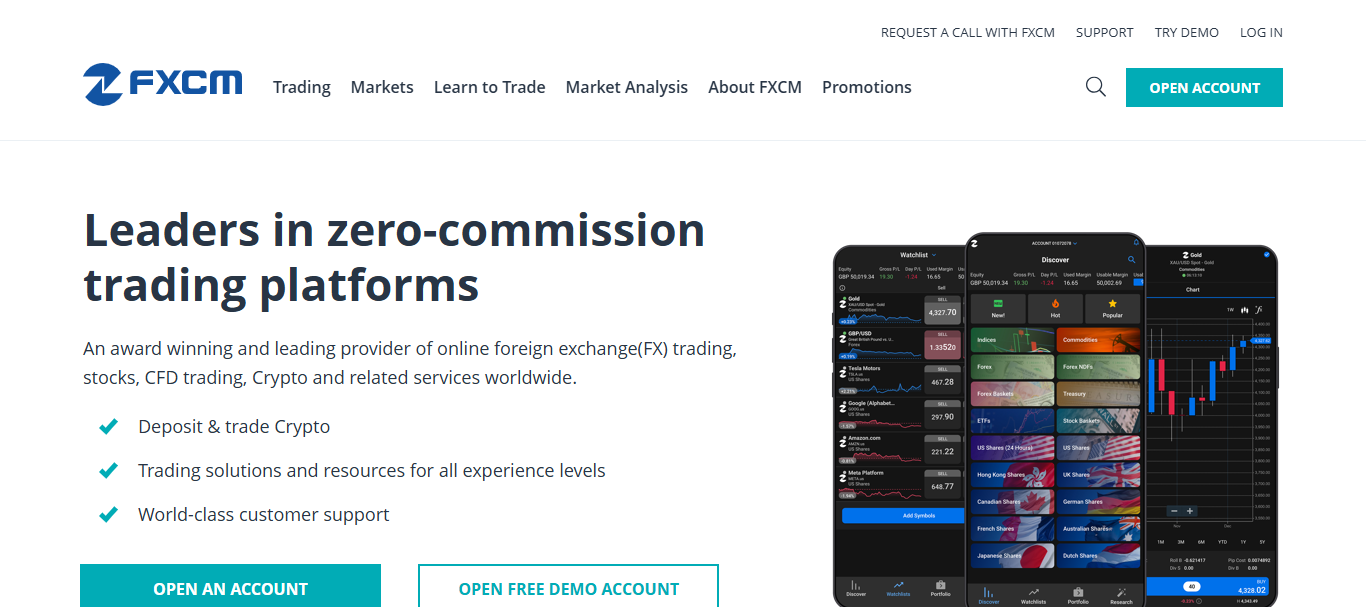
FXCM prefers integration with major programming languages and trading software. FXCM’s low latency API connectivity infrastructure is built for high-frequency and algorithmic trading, and for systematic trading. FXCM supports developers and traders with extensive documentation, historical market data, and advanced trading charts.
FXCM – Key Features
- REST, FIX, and ForexConnect APIs.
- Low latency and faster execution with the right infrastructure.
- Designed for high-frequency algorithmic trading.
- Historical data is available for others to use.
| Pros | Cons |
|---|---|
| Multiple APIs including REST, FIX, and ForexConnect. | Services and products differ by country. |
| Excellent for automated and quantitative trading. | Some API features require technical configuration. |
| Stable infrastructure with fast order execution. | Advanced functionality has a learning curve. |
| Supports third-party platform integrations. | Certain markets may have limited availability. |
4. IG
IG is capable of offering professional API trading using REST and streaming API technology. This lets traders develop bespoke automated forex trading platforms and systems. With IG’s API, developers can source live prices, historical information, manage their accounts, and send orders instantaneously all from their applications.

IG’s API incorporates clean and concise documentation which, along with their extensive developer portal, facilitates and encourages coding for less experienced as well as professional programmers.
The broker is known for exceptional regulatory compliance, high quality of trade execution, and an extensive global offering. IG’s trading API infrastructure is remarkably efficient when documenting and streaming data in real time, making IG a preferred broker for traders who demand automated trading solutions.
IG – Key Features
- REST and streaming APIs with live pricing.
- Fast order execution through automated systems.
- Extensive developer portal with API documentation.
- Broad access to the financial markets.
- Reliability and safety due to high regulations.
| Pros | Cons |
|---|---|
| REST and streaming APIs with live market data. | API rate limits apply to certain requests. |
| Extensive global market coverage. | Advanced automation requires programming knowledge. |
| Well-organized developer documentation. | Premium market data may require subscriptions. |
| Highly regulated with strong reputation. | Not all services are available worldwide. |
5. Saxo Bank
Saxo Bank provides a high-level OpenAPI advanced forex automation solution for professional traders, institutions, and fintech companies. With Saxo, a user can securely access advanced financial markets, sophisticated order management, real-time prices, and portfolio analytics through Saxo’s cloud API.
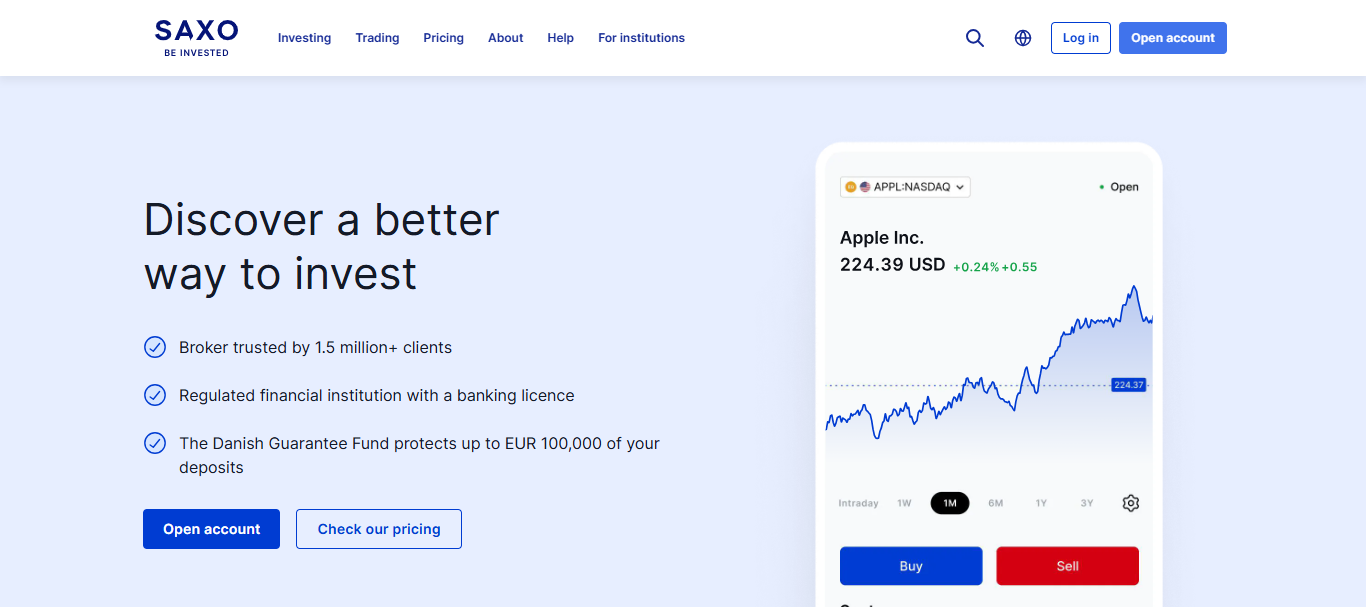
Saxo’s advanced API provides developers with a variety of options for integration, virtualization, and SDKs. Saxo combines banking security with a high-performance infrastructure system and API reliability.
Saxo adds multi-asset capabilities, enabling traders to automate forex, stocks, commodities, bonds, and CFDs, and combines all of these into a single, powerful API trading solution.
Saxo Bank – Key Features
- OpenAPI is an enterprise-grade API.
- Multi-asset trading with one API.
- Risk and portfolio management tools are cloud-based.
- Banking level security with advanced encryption.
- Seamless integration with SDKs and other developer resources.
| Pros | Cons |
|---|---|
| Enterprise-grade OpenAPI for professionals. | Higher minimum funding than many competitors. |
| Access to numerous global asset classes. | Better suited for experienced traders. |
| Banking-level security and client protection. | Premium services may involve higher costs. |
| Comprehensive SDKs and developer support. | Interface can appear complex for beginners. |
6. Pepperstone
Pepperstone has earned an excellent reputation for providing API traders the best service with ultra-low latency infrastructure and institutional-grade execution. Traders can connect via the FIX API for high-speed execution and automate their delay-free forex strategies.
Pepperstone supports algorithmic trading with Expert Advisors and custom trading algorithms and professional trading applications.
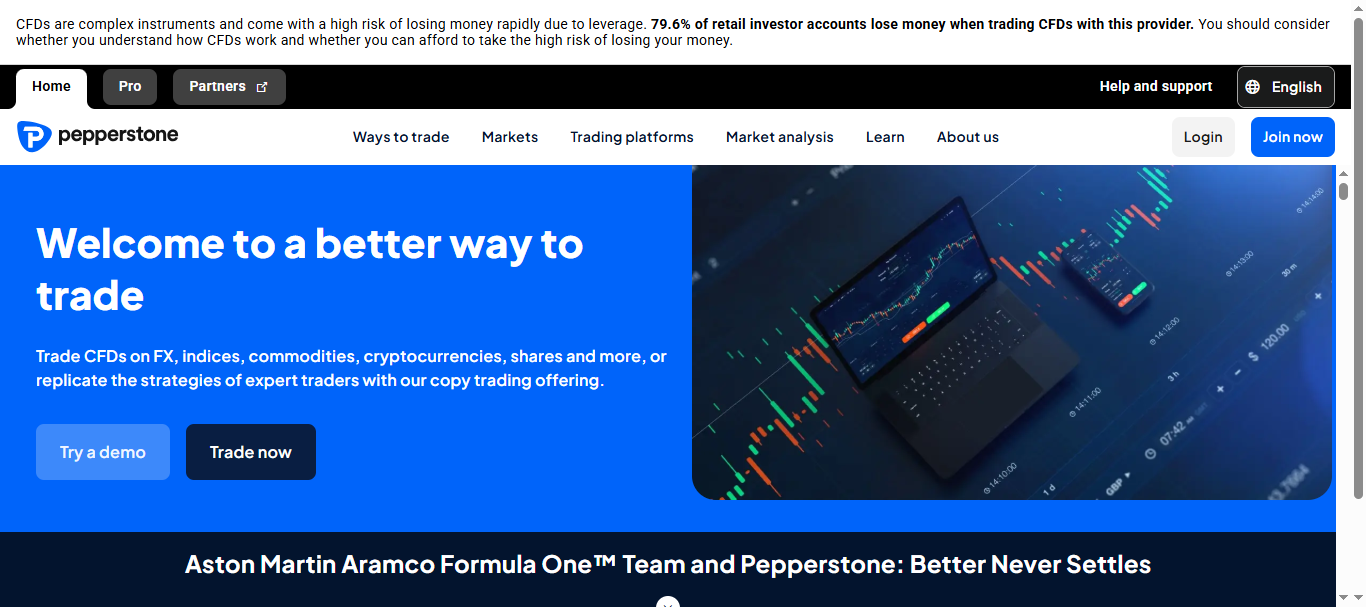
Pepperstone’s powerful trading infrastructure maintains competitive tight spreads from a reliable base of multiple liquidity providers, and very low latency target execution
Which minimizes slippage and adverse effects also during fast moving markets. With strong regulation, a solid and reliable customer support base, and compatibility with leading trading applications, Pepperstone earns the title for being a serious API trading broker for serious forex traders.
Pepperstone – Key Features
- FIX API with ultra low latency worldwide.
- Institutional grade trade execution.
- Large liquidity from multiple leading providers.
- Expert Advisors and custom algorithms supported.
- Spreads optimized for automated trading.
| Pros | Cons |
|---|---|
| Ultra-low latency ideal for algorithmic trading. | FIX API access may require eligibility criteria. |
| Competitive spreads and fast execution. | Fewer proprietary research tools available. |
| Strong support for Expert Advisors and automation. | Advanced API setup requires technical knowledge. |
| Reliable liquidity from multiple providers. | Educational API resources are relatively limited. |
7. CMC Markets
CMC Markets has an API built for automated forex trading. Developers can use the API to get live prices, manage their rates, see their account status, and build applications to make trades. Their infrastructure helps customers maintain a stable connection and get their trades through to the market.
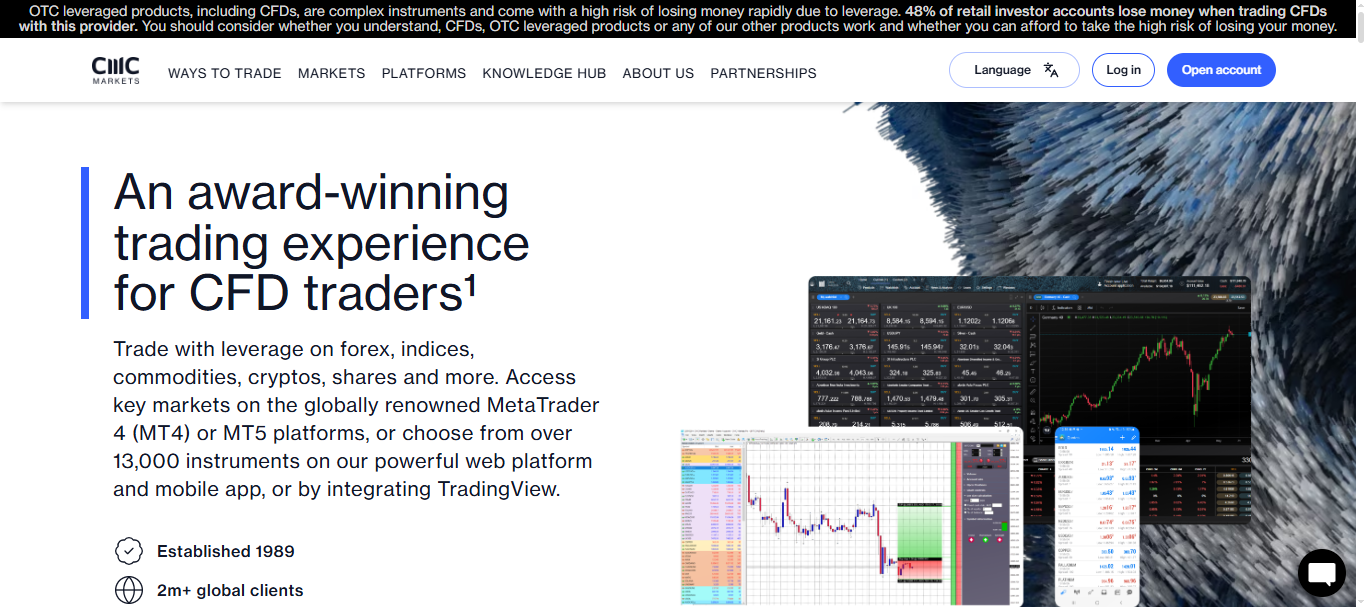
Together with their proprietary advanced charting tools, a plethora of educational materials, and low trading costs, their services benefit all customers. They have a lot of regulatory backing too. With all this, their API is a great option for customers to build and trade automated forex systems and strategies.
CMC Markets – Key Features
- API with real-time market data.
- Robust infrastructure for assured order execution.
- Professional grade charting with market analytics.
- Fair spreads encourage trader engagement.
- Strong regulations dominate all major markets.
| Pros | Cons |
|---|---|
| Reliable API with real-time pricing access. | API functionality varies across regions. |
| Competitive trading costs for active traders. | Fewer third-party automation integrations. |
| Strong charting and market analysis tools. | Some advanced features require experience. |
| Well-regulated with dependable infrastructure. | API usage limits may apply. |
8. Swissquote
Swissquote is an excellent option for professional forex traders. They combine security with modern API trading by providing the flexibility of automation and premium banking. Developers can easily integrate their system to trade and manage their portfolio.

As a regulated Swiss Banking entity, Swissquote is also client-oriented and provides a transparent system with the safety and stability.
Since their clients have a single account with them, they have the ability to trade all asset classes. Their API, combined with their banking services, makes them a premium choice for automated trading.
Swissquote – Key Features
- Secure Swiss banking standards backed API.
- Automated portfolio management and trade automation.
- All in one integrated multi-asset account.
- Strong financial standing and client fund protection.
- Infrastructure caters for professional traders.
| Pros | Cons |
|---|---|
| Swiss banking security and client fund protection. | Trading costs can exceed discount brokers. |
| Secure API for automated trading. | Higher minimum deposit for certain accounts. |
| Multi-asset trading from one account. | Best suited for experienced investors. |
| Strong financial stability and transparency. | API ecosystem is smaller than competitors. |
9. XTB
With xAPI technology, XTB gives developers advanced tools for APIs and automated systems for forex traders. Traders can develop custom applications that help them access market pricing, historical data, and their account to make trades.

XTB takes a performance-centric approach to their business, designing APIs that document everything, and drastically simplifying the coding process. XTB’s architecture worldwide enables stable executions and competitive pricing across a range of financial markets.
Best of all, XTB is regulatory compliant and is continuously adding educational resources to their platforms. Because of all these different aspects of XTB, traders who want to develop algorithmic strategies have the freedom to trade and the quality of execution that they desire.
XTB – Key Features
- xAPI allows trading application customization.
- Access to current and past market data.
- APIs with good documentation for fast implementation.
- Fair execution across financial markets.
- Constant enhancements to the platform with ample education.
| Pros | Cons |
|---|---|
| Easy-to-use xAPI for developers. | API features may evolve over time. |
| Competitive spreads and stable execution. | Limited programming language examples. |
| Well-documented integration resources. | Fewer advanced institutional tools available. |
| Strong educational support for traders. | Some markets have regional restrictions. |
10. TradeStation
TradeStation is considered one of the best brokers for quant traders because of the impressive API and automation framework they have. Their APIs allow customers to custom design trading applications, algorithms, and even manage their own portfolios.
TradeStation’s infrastructure enables the high-speed trading of all the financial markets. The sophisticated systems trade custom developed systems and are supported by a large trove of SDKs and development documentation.
TradeStation also offers professional grade design tools and a plethora of advanced trader analytics that help optimize strategies. With all of this in mind, it is easy to see why TradeStation is one of the top brokers that allow advanced API requests and trading automation.
TradeStation – Key Features
- APIs with great trading tech capabilities.
- Sophisticated market analytics and research.
- High-speed automated order execution.
- Extensive SDKs with developer documentation.
- Complete flexibility for trade apps and algorithms.
| Pros | Cons |
|---|---|
| Powerful API for quantitative trading strategies. | Better suited for experienced traders. |
| Excellent historical market data access. | Platform features can be overwhelming initially. |
| Advanced analytics and automation tools. | Availability differs across countries. |
| Highly customizable trading applications. | Some premium services involve additional fees. |
Why People Trust the Best Forex Brokers Offering API Trading
- Stronger Regulation – Licensed and regulated by trusted authorities enabling safe trading.
- Dependable API – Stable APIs offer strong connectivity for seamless automated trading.
- Efficient Trade Execution – Low-latency helps fulfill trade requests promptly with little slippage.
- Improved Security – Protecting client funds and utilizing secure authentication and encryption strengthens trust among traders.
- Reduced API Integration Issues – Simplified API User Guides ease development.
- Attractive Trading Costs – Narrowing spreads and reasonably low commissions increase the probability of trading profitability.
- Superior Market Data – Reliable real-time and historical data strengthen algorithmic trading.
- Dedicated Developer Support – Prompt resolution of API concerns is highly valued.
- Established Global Trust – Trust is built based on years of positive trading experiences.
- Innovative Trading Systems – Automation in trading systems backed by reliable and robust technologies.
Conclusion
To summarize, the best forex brokers with API trading solutions will depend on your individual needs and level of automation. Well known brokers such as Interactive Brokers, OANDA, Pepperstone, and Saxo Bank offer great APIs with fast executions and great security and developer support.
Assessing regulation, trading costs, API offerings, and platform support will drive a better decision. A good and trusted API broker will improve your trading efficiency and accuracy and support your algorithmic trading in the longer term.
FAQ
Which forex broker offers the best API?
Interactive Brokers, OANDA, and Saxo Bank are among the leading API trading brokers.
What programming languages are commonly supported?
Most brokers support Python, Java, C++, C#, JavaScript, and REST API integrations.
Is API trading suitable for beginners?
Yes, beginners can start using simple APIs with proper documentation and demo accounts.
What is the difference between REST API and FIX API?
REST API is easier to implement, while FIX API offers faster institutional-grade execution.