
This article covers the year’s essential financial literacy and investing books. I will provide books that inform the psychology of money and help transform your lifestyle to attract wealth and prosperity.
Here you will find literature to shape your habits for wealth creation and accumulation. You will also find resources that aid in the comprehension of money and the financial markets.
Key Points
| Book | Explanation |
|---|---|
| Rich Dad Poor Dad — Robert Kiyosaki | Shifts your mindset from earning money toward building assets that generate income. |
| The Intelligent Investor — Benjamin Graham | Teaches defensive value investing, disciplined analysis, patience, and emotional control during markets. |
| The Psychology of Money — Morgan Housel | Explains how behavior, emotions, personal experiences, and luck influence financial outcomes significantly. |
| The Little Book of Common Sense Investing — John C. Bogle | Advocates low-cost index funds, broad diversification, simplicity, and long-term investing discipline. |
| Think and Grow Rich — Napoleon Hill | Encourages ambitious thinking, persistence, goal-setting, and a success-oriented financial mindset. |
| The Millionaire Next Door — Thomas J. Stanley & William D. Danko | Reveals how frugality, disciplined spending, saving, and consistent investing build everyday wealth. |
| The Richest Man in Babylon — George S. Clason | Uses memorable parables to teach saving, budgeting, investing, and protecting accumulated wealth. |
| Money: Master the Game — Tony Robbins | Provides practical financial strategies gathered from experienced investors and leading financial experts. |
| The Millionaire Fastlane — M.J. DeMarco | Promotes scalable businesses and systems instead of relying solely on traditional slow wealth-building. |
| A Random Walk Down Wall Street — Burton G. Malkiel | Explores market history, asset allocation, diversification, and modern investment products for investors. |
Books Every Aspiring Millionaire and Investor Needs to Read This Year
1. Rich Dad Poor Dad — Robert Kiyosaki
Kiyosaki’s ‘Rich Dad Poor Dad’ teaches the importance of moving money-making activities to the front of your financial life, and reducing your dependence on working for money. It’s based on the author’s experience and lessons learned from his ‘Rich Dad’ and ‘Poor Dad’. ‘
Asset’ and ‘Liability’ are the main concepts of the book. Focus is on cash flow and how to achieve financial independence. It’s an eye opener for the readers to be financially literate and take control of their cash flow and wealth.

It advocates for holding income-producing assets and cutting off expenses that do not increase our chances of improving our standard of living. Entrepreneurs are taught cash flow and financial discipline. However, the book is a 30-year old investment philosophy and may appear outdated to some.
| Detail | Information |
|---|---|
| Book & Author | Rich Dad Poor Dad — Robert Kiyosaki |
| Publication Date | 1997 |
| Core Focus | Building assets and developing financial independence |
| Main Concept | Understanding the difference between assets and liabilities |
| Key Lesson | Make income-producing assets work instead of relying only on salary |
| Target Reader | Beginners, aspiring entrepreneurs, and personal-finance learners |
2. The Intelligent Investor — Benjamin Graham
Benjamin Graham’s The Intelligent Investor provides one of the clearest explanations of value investing and the idea of a margin of safety. The book promotes fundamental analysis and advocates for emotional control in investing and stock selection.
Graham believes that, over time, stock market prices will reflect a business’s worth, and that, in the short term, prices can deviate significantly from worth. Graham’s writing demonstrates emotional control, and that deviation from the mean can be rational.

The Intelligent Investor was written in the 1940s, and the principles outlined by Graham have aged remarkably well. It’s possible to find opportunities to implement some of Graham’s principles in the market, but many of his ideas are inherently restrictive.
These concepts may not allow investors to capitalize on potentially lucrative, but risky, growth opportunities.
| Detail | Information |
|---|---|
| Book & Author | The Intelligent Investor — Benjamin Graham |
| Publication Date | 1949 |
| Core Focus | Value investing and disciplined decision-making |
| Main Concept | Intrinsic value and margin of safety |
| Key Lesson | Analyze investments carefully instead of following market emotions |
| Target Reader | Intermediate and long-term investors |
3. The Psychology of Money — Morgan Housel
Morgan Housel’s book The Psychology of Money explores the emotional side of money. He goes beyond typical financial literature by not focusing on balance sheets or other financial statements. Instead, Housel takes a more behavioral science approach by demonstrating the illogical nature of money decisions.
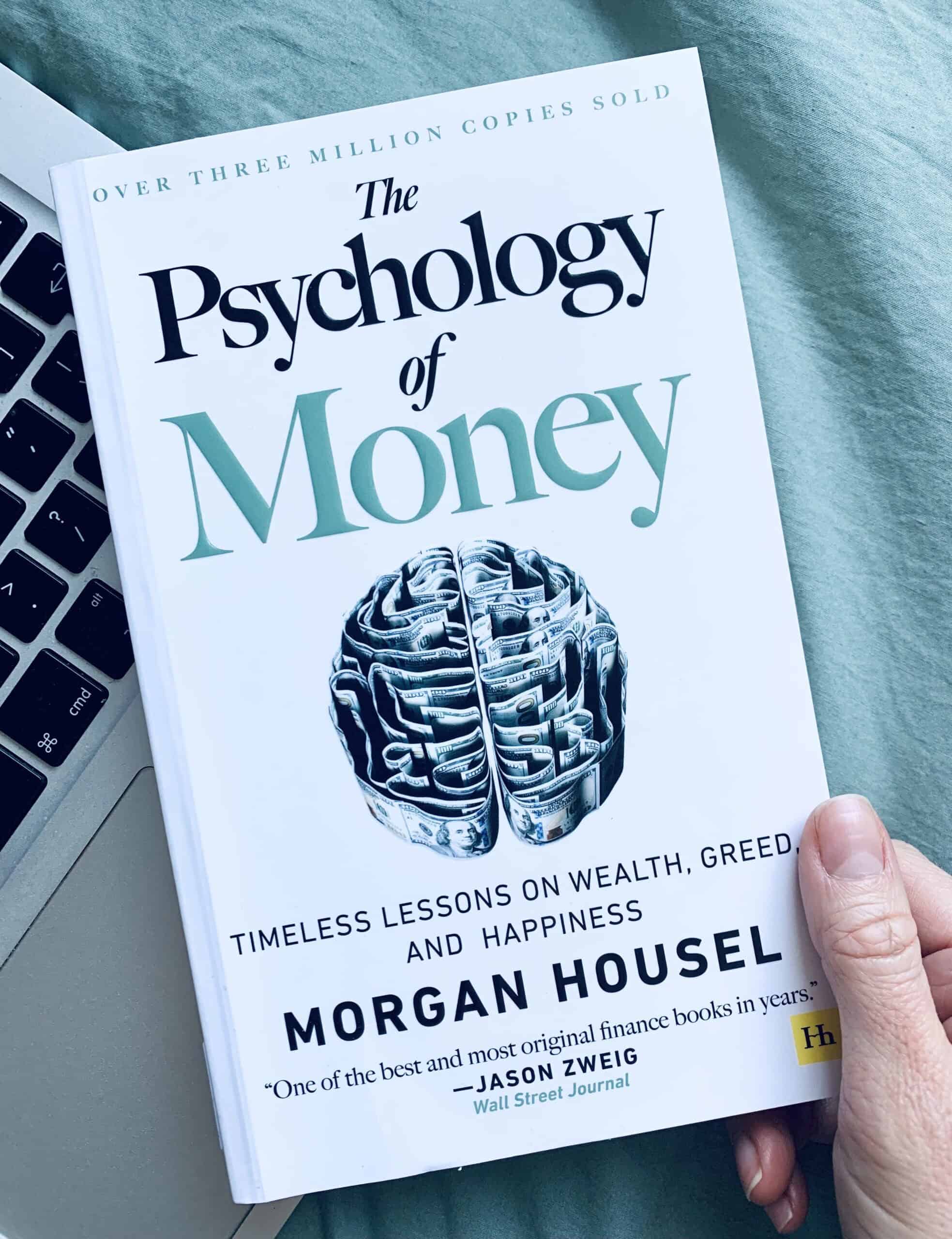
With examples of historical figures as well as himself, Housel provides numerous illustrations on topics from dealing with investment losses to inflation to how to think about money over time. The book provides investors with a framework by which they can keep emotions and uncertainty about the future in check.
Ultimately, it is more beneficial for investors to consider behavior than to accumulate knowledge. It is a fast read and provides insightful, actionable information for investors at any level.
| Detail | Information |
|---|---|
| Book & Author | The Psychology of Money — Morgan Housel |
| Publication Date | 2020 |
| Core Focus | Behavioral finance and financial decision-making |
| Main Concept | Money decisions are strongly influenced by behavior and emotions |
| Key Lesson | Patience, consistency, and emotional discipline influence financial outcomes |
| Target Reader | Beginners and experienced investors |
4. The Little Book of Common Sense Investing — John C. Bogle
John Bogle, in his book The Little Book of Common Sense Investing, gives a simple way to build wealth over long periods of time, using index funds. Bogle covers the challenges of picking the right stocks, the importance of diversification, and the costs of investing.
He argues for using index funds over actively managed funds and for purchasing and holding investments over frequent buying and selling. The book is aimed at people that do not have the time or knowledge to be active investors.

The key idea of the book is to own the market as opposed to trying to pick individual winners. There are several examples of the benefits of index investing over time including their outperformance of actively managed funds.
Flexibility in passive investing strategies will likely continue to improve, giving investors even more reasons to choose passive over active investing.
| Detail | Information |
|---|---|
| Book & Author | The Little Book of Common Sense Investing — John C. Bogle |
| Publication Date | 2007 |
| Core Focus | Low-cost index fund investing |
| Main Concept | Broad diversification and minimizing investment costs |
| Key Lesson | Simple, diversified investing can support long-term portfolio growth |
| Target Reader | Beginners and passive investors |
5. Think and Grow Rich — Napoleon Hill
The book Think and Grow Rich outlines the crucial elements to achieving financial success including the power of the subconscious mind, willpower, and perseverance. It draws from Hill’s analysis of successful people of his time, and therefore provides examples of successful people, goals, planning, and decision making.
Overall, the book promotes positive thinking and addresses unfavorable traits such as lack of confidence, fear and doubt, and procrastination.

It provides practices and techniques to instill a sense of wellness and strength in order to lead a more successful, productive life. It promotes discipline and self-control in a way that aids in the achieving of long-term goals.
The book promotes the idea that success in finance is largely determined by an individual’s will power and state of mind. While it is primarily a motivational book, the lessons are timeless and relevant for years to come.
| Detail | Information |
|---|---|
| Book & Author | Think and Grow Rich — Napoleon Hill |
| Publication Date | 1937 |
| Core Focus | Financial mindset, ambition, and goal-setting |
| Main Concept | Desire, persistence, planning, and purposeful action |
| Key Lesson | Clear goals and consistent effort can strengthen financial motivation |
| Target Reader | Entrepreneurs, beginners, and goal-oriented readers |
6. The Millionaire Next Door — Thomas J. Stanley & William D. Danko
The book shows how most millionaires don’t live the “high-roller” lifestyle. Many people think that millionaires spend money on fancy cars and extravagant clothing. In reality, millionaires tend to be frugal and patient.
The book shows that wealth can be built by everyday people through patience and discipline. The author examined thousands of millionaires and showed that those people lived below their means. The book endorses saving money and investing it over speculating and living beyond one’s means.

The book recommends people buy used, less expensive cars and discourages people from taking on vehicle and other debts. With inflation expected to continue through 2026, the book encourages people to cut costs and build wealth through investing to help ensure their future financial security.
| Detail | Information |
|---|---|
| Book & Author | The Millionaire Next Door — Thomas J. Stanley & William D. Danko |
| Publication Date | 1996 |
| Core Focus | Wealth-building habits and financial discipline |
| Main Concept | Frugality, saving, spending control, and consistent investing |
| Key Lesson | Wealth accumulation often involves disciplined spending and long-term saving |
| Target Reader | Savers, families, and aspiring wealth builders |
7. The Richest Man in Babylon — George S. Clason
This book uses parables to teach investing. These lessons apply to investors of all experience levels and have been cherished by the investment community for years. 100 words: The book uses the word “law” to refer to the means to accumulate wealth.
Clason states that paying yourself first is a wealth law, and so is keeping expenses in check and building your wealth to work for you.
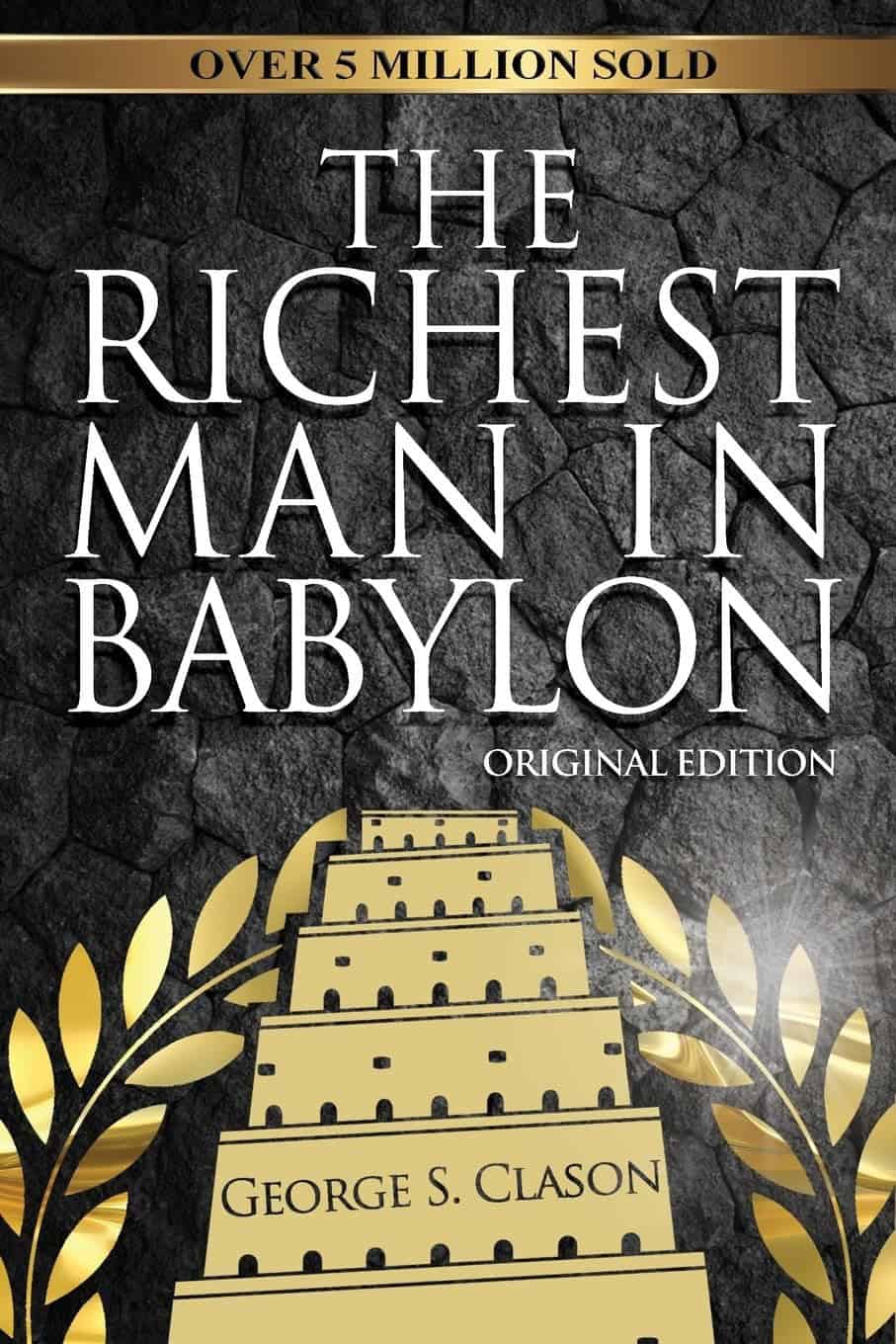
The book is a testimony in support of saving and investing your money. Clason advises against taking undue risks with your money, and recommends seeking out professionals to help you with your investments.
The book also endorses the need to develop several sources of income. The precepts in this book will help its readers achieve financial stability and discipline during the various periods of excess and distractions in the financial markets.
| Detail | Information |
|---|---|
| Book & Author | The Richest Man in Babylon — George S. Clason |
| Publication Date | 1926 |
| Core Focus | Basic principles of saving and wealth management |
| Main Concept | Saving regularly, controlling expenses, and putting money to work |
| Key Lesson | Consistent saving and responsible money management support wealth accumulation |
| Target Reader | Beginners learning personal finance fundamentals |
8. Money: Master the Game — Tony Robbins
Tony Robbins uses expertise of successful investors to create strategies for individual investors. The book is 100 words or less. Robbins outlines the concepts of financial planning, investing, and risk management in an easy to understand manner.

He offers ways to reduce fees and increase the safety and growth of your investment. The author illustrates the concept of achieving financial independence.
Because of increased market volatility, Robbins’ focus on protecting your downside in combination with discipline and a long-term focus gives the average investor comfort in an otherwise uneasy market. The book makes advanced investment strategies simple and direct for the average investor.
| Detail | Information |
|---|---|
| Book & Author | Money: Master the Game — Tony Robbins |
| Publication Date | 2014 |
| Core Focus | Personal finance, investing, and financial planning |
| Main Concept | Diversification, investment costs, asset allocation, and long-term planning |
| Key Lesson | Understanding financial strategies can help investors make informed decisions |
| Target Reader | Beginners and developing investors |
9. The Millionaire Fastlane — M.J. DeMarco
DeMarco encourages leaving the traditional methods of wealth generation and and opening scalable businesses. He thinks that people who rely on jobs or unemployment to save up to retire slowly accumulate wealth.
Instead, DeMarco thinks that people should create businesses that automate and scale wealth generation. DeMarco utilizes his examples to describe that by employing leverage in business,

customer value could lead to high and exponential income. He describes that focusing on wealth generation and growth in a business helps people become millionaires quickly.
He hopes to shift his reader’s thinking to believe that time need not limit wealth generation and growth. With the growth of digital businesses in the future, DeMarco proposes that in the future people should be able to use Fastlane methods to create and make money quickly online.
| Detail | Information |
|---|---|
| Book & Author | The Millionaire Fastlane — M.J. DeMarco |
| Publication Date | 2011 |
| Core Focus | Entrepreneurship and scalable wealth creation |
| Main Concept | Building businesses and systems capable of generating scalable income |
| Key Lesson | Entrepreneurship can provide an alternative path to traditional wealth accumulation |
| Target Reader | Entrepreneurs and aspiring business owners |
10. A Random Walk Down Wall Street — Burton G. Malkiel
Burton Malkiel’s writing examines why unpredictability in markets exists and why trying to outperform markets has seduced and ultimately frustrated the vast majority of investors.
According to Malkiel, the nature of stock prices makes it impossible to predict them and, thereby, speculate with any real degree of confidence. From his analysis of the historical data,

Malkiel has concluded that the prudent, long-term investor should focus on reducing the costs associated with investing, become diversified and avoid the speculation trap. Through Malkiel’s analysis of the markets, the reader becomes sensitive to the behavioral psychology of investors.
In the markets of 2026, Malkiel’s analysis remains highly-relevant. With millions of dollars of investable assets, compounding can ultimately make one a millionaire; all one needs to do is ignore the noise of the market and speculate as little as possible.
| Detail | Information |
|---|---|
| Book & Author | A Random Walk Down Wall Street — Burton G. Malkiel |
| Publication Date | 1973 |
| Core Focus | Market behavior, diversification, and portfolio strategy |
| Main Concept | Efficient markets, asset allocation, and long-term investing |
| Key Lesson | Diversification and disciplined investing can reduce dependence on market predictions |
| Target Reader | Beginners, long-term investors, and portfolio builders |
Conclusion
These books cover personal finance in a way that will appeal to the average investor. Topics as varied as money psychology and entrepreneurship are covered. So, too, are other investment related topics like value investing and diversification.
More advanced investors can read these books for investment ideas and Strategies, and can also gain a better understanding of investment related psychology.
These books will likely have value for the individual looking to become financially independent, as well as the investor wishing to improve his or her financial holdings.
FAQ
What books should aspiring millionaires read first?
Start with books covering financial literacy, money psychology, saving, investing, and wealth-building fundamentals.
Which book is best for beginner investors?
Begin with accessible books explaining investing basics, diversification, risk, and long-term financial planning.
Which book teaches value investing principles?
The Intelligent Investor explains value investing, intrinsic value, discipline, and margin-of-safety principles.
Which book focuses on money psychology?
The Psychology of Money explores behavior, emotions, risk, luck, and financial decision-making.