
The article, Choosing the Best Cross-Chain Bridges for Safely Moving Liquidity Across Networks, concludes that blockchains can be more connected using their service.
Wormhole, LayerZero, Stargate Finance, and Axelar all have safe services, and cross-blockchain users may have a seamless experience if users check the security, networks, and costs of a bridge.
Key Points & Best Cross-Chain Bridges for Safely Moving Liquidity Across Networks
| Cross-Chain Bridge | Explanation |
|---|---|
| Wormhole | Enables secure asset transfers between multiple blockchains using decentralized messaging infrastructure. |
| LayerZero | Provides omnichain communication protocols enabling seamless cross-chain liquidity movement securely. |
| Across Protocol | Offers fast bridging solutions with optimized liquidity transfers across networks efficiently. |
| Stargate Finance | Delivers native asset swaps across chains through unified liquidity pools. |
| Synapse Protocol | Supports cross-chain token transfers using liquidity pools and smart contracts. |
| Hop Protocol | Enables quick Layer-2 and Ethereum asset transfers with minimal fees. |
| Multichain | Facilitates blockchain interoperability through broad network support and liquidity routing. |
| Axelar Network | Provides secure cross-chain communication using decentralized validator networks globally. |
| Celer cBridge | Allows fast token transfers across blockchains with strong security measures. |
| Connext | Enables trust-minimized cross-chain transactions using modular interoperability infrastructure. |
10 Best Cross-Chain Bridges for Safely Moving Liquidity Across Networks
1. Wormhole
Wormhole is an easily adaptable interoperability protocol that strengthens the trust and asset transfer communication of a number of blockchain networks. Using guardian infrastructure, it links systems such as Ethereum, Solana, and BNB Chain.

Best Cross-Chain Bridges for Safely Moving Liquidity Across Networks considers Wormhole for many reasons. Cross-chain token transfer, messaging, and apps are all supported and enhanced with blockchain connections. Users increase cross-chain liquidity with Wormhole’s security model and don’t need to use a central mediator to get the job done.
Wormhole – Features
- Multi-Chain Capability – Integrates Ethereum, Solana, BNB Chain, and other blockchain ecosystems for fluid transfers.
- Decentralized Guardian Network – Implements independent guardians to securely validate cross-chain messages.
- Token Transfer – Users can transfer digital assets across various blockchain networks.
- Cross-Chain Messaging – Enables communication of decentralized applications across multiple blockchain infrastructures.
- Advanced Scalability – Offers service infrastructure for developers to build scalable multichain applications.
| Pros | Cons |
|---|---|
| Supports multiple blockchain networks including Ethereum, Solana, and BNB Chain. | Has experienced security concerns due to bridge vulnerabilities in the past. |
| Enables fast cross-chain messaging and token transfers. | Transaction costs may vary depending on connected networks. |
| Uses decentralized guardian infrastructure for verification. | Users must trust guardian network security for validation. |
| Provides developer tools for building multichain applications. | Complex architecture can be difficult for beginners to understand. |
| Improves blockchain interoperability across different ecosystems. | Limited support for some smaller blockchain networks. |
2. LayerZero
LayerZero has created an omnichain communication model for dApps. With LayerZero, dApps built on different blockchains can communicate with each other, and it is now possible to transfer liquidity easily and securely between LayerZero supported networks.
Best Cross-Chain Bridges for Safely Moving Liquidity Across Networks are proud to showcase LayerZero because of all the possibilities it creates for developers to construct multichain systems, especially with its flexible communication, and for blockchain networks, LayerZero greatly assists in reducing the fragmentation.
LayerZero – Features
- Omnichain Communication – Direct communication of decentralized applications across chain networks is enabled.
- Flexible Messaging – Offers developers a framework of customizable cross-chain messaging.
- Reliable Transfer – Facilitates the movement of assets across networks supported with improved reliability.
- Low Fragmentation – Unified interoperability infrastructure connects isolated ecosystems with minimal fragmentation.
- dApp Development – Simplifies the creation of advanced multichain applications.
| Pros | Cons |
|---|---|
| Provides efficient omnichain communication between blockchain networks. | Requires careful configuration for secure application deployment. |
| Supports flexible messaging solutions for developers. | Protocol complexity may create challenges for new users. |
| Enables secure cross-chain asset transfers. | Depends on external verification mechanisms for security. |
| Helps developers build scalable multichain applications. | Some advanced features require technical knowledge. |
| Reduces blockchain ecosystem fragmentation effectively. | Network support may vary depending on integrations. |
3. Across Protocol
Across Protocol is a bridge for fast cross-chain liquidity transfer networks that utilize a relayer and liquidity pool. Best Cross-Chain Bridges for Safely Moving Liquidity Across Networks have declared that Across Protocol deserves a placement for two main reasons: time and cost.

Across Protocol’s bridging system is optimized to reduce capital costs. Verification and security systems of Across Protocol safeguard transfers and ensure secure and rapid transfers across Ethereum and Layer-2 Networks.
Across Protocol – Features
- Fast Transfers – Rapid cross-chain transfers are accomplished through optimized bridging.
- Low Fees – Efficient liquidity and relayer systems drive down the cost of transacting.
- Liquidity Pools – Asset movement is supported through liquidity.
- Layer-2 Enablement – Transfers are facilitated between Ethereum and prominent Layer-2 networks.
- Protection Mechanisms – Security and validation of transactions are achieved through protective measures.
| Pros | Cons |
|---|---|
| Provides fast cross-chain asset transfers with low delays. | Mainly focused on specific supported blockchain networks. |
| Offers lower transaction fees through efficient liquidity management. | Liquidity availability can affect transfer efficiency. |
| Uses relayers for optimized transaction processing. | Users depend on relayer infrastructure performance. |
| Supports Ethereum Layer-2 networks effectively. | Not suitable for every blockchain ecosystem. |
| Improves capital efficiency through liquidity pools. | Bridge risks remain due to smart contract dependency. |
4. Stargate Finance
Stargate Finance has built unified liquidity pools to enable native asset swaps across various blockchains. In contrast to conventional bridging solutions, there is no need to wrap tokens to redirect native assets.
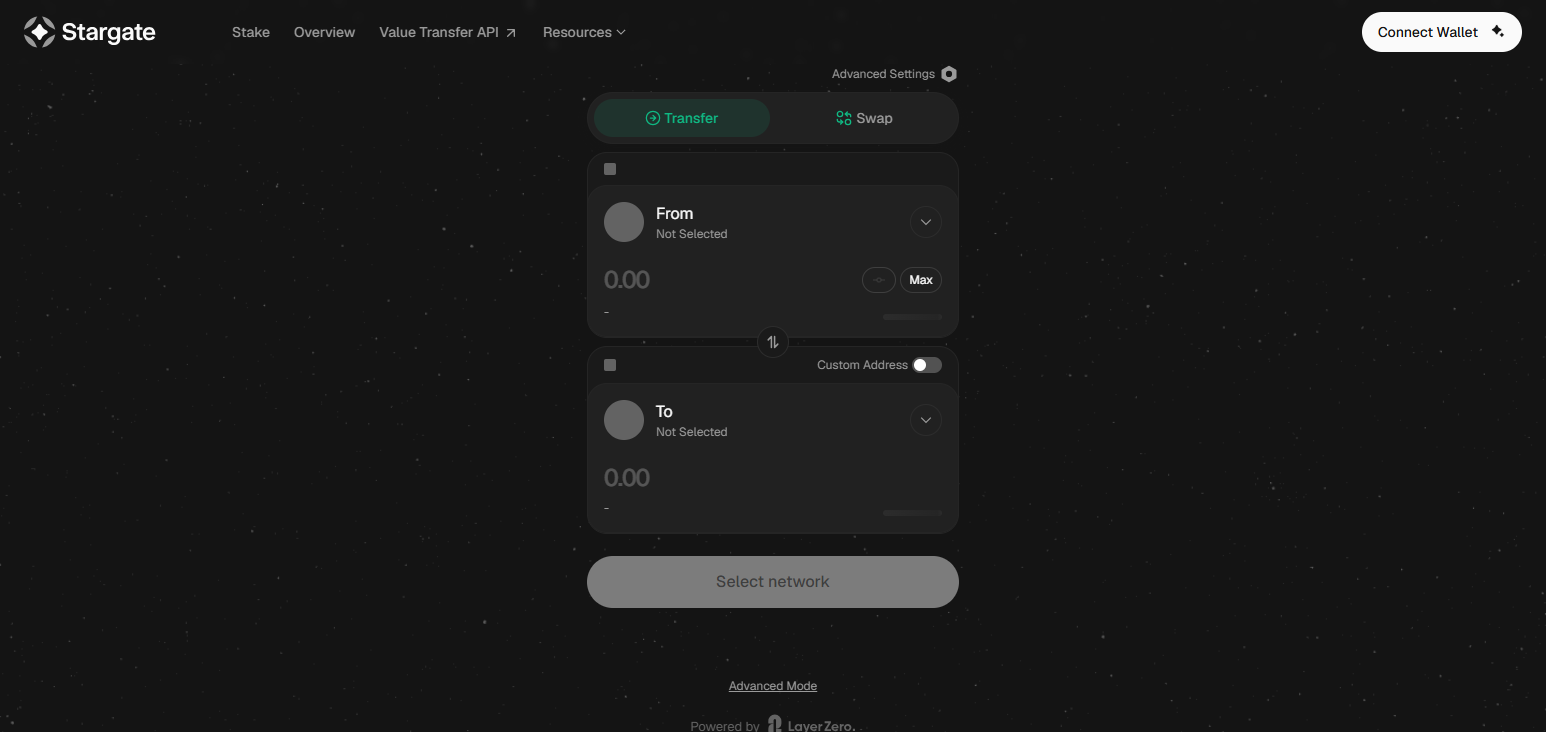
For moving liquidity across blockchains, Stargate Finance is significantly highlighted in Cross-Chain Bridges for The Safest Liquidity Transfers. Thanks to its unified pool structure, Stargate Finance provides a much better experience for users, presenting the simplest and most efficient way to move liquidity across multiple blockchains.
Stargate Finance – Features
- Harmonized Liquidity – Unified liquidity across various blockchains is achieved.
- Asset Transfer – Eliminates the need for wrapped tokens to carry transfers.
- Omnichain Transfer Support – means assets can be transferred across different blockchain networks.
- Better Capital Efficiency – uses a shared pool system, improving liquidity.
- Easier UX – makes cross-chain transfers easier.
| Pros | Cons |
|---|---|
| Enables native asset transfers without wrapped tokens. | Liquidity pools may face temporary imbalance issues. |
| Provides unified liquidity pools across multiple chains. | Users may experience variable transaction fees. |
| Simplifies cross-chain asset movement for users. | Limited functionality compared with advanced interoperability protocols. |
| Improves liquidity efficiency through shared pools. | Smart contract risks remain possible. |
| Supports multiple blockchain ecosystems. | Requires understanding of liquidity mechanisms for advanced usage. |
5. Synapse Protocol
With the use of automated market making pools and liquidity pools, Synapse Protocol provides cross-chain bridging, asset swapping, and liquidity transfers. It operates on a myriad of blockchains and offers users vast bridge options.

Synapse Protocol is highlighted in Cross-Chain Bridges for The Safest Liquidity Transfers because it merges both a decentralized liquidity model and interoperability. This allows users to transact on various blockchains while ensuring a high level of safety transfer.
Synapse Protocol – Features
- Cross-Chain Token Transfers – means tokens can be transferred to different networks securely.
- Automated Market Maker Pools – technology helps transfer liquidity.
- Multi-Network Support – can connect many blockchain networks.
- Decentralized Liquidity Model – offers infrastructure that allows members to control liquidity.
- Safe Smart Contracts – means transactions can be trusted.
| Pros | Cons |
|---|---|
| Supports cross-chain swaps and token transfers efficiently. | Bridge security depends on smart contract reliability. |
| Uses automated market maker pools for liquidity management. | Some transactions may have higher slippage. |
| Provides compatibility with various blockchain networks. | Smaller networks may have limited liquidity. |
| Offers decentralized liquidity solutions. | Interface may appear complex for beginners. |
| Enables flexible interoperability between ecosystems. | Users face risks associated with decentralized finance protocols. |
6. Hop Protocol
For bridges between Ethereum and its Layer-2 scaling solutions including Arbitrum, Optimism, and Polygon, as well as fast transfers between them, Hop Protocol is the go-to. Efficiency is achieved through liquidity bridge contracts and automated market makers.
Hop Protocol is featured in Cross-Chain Bridges for the Safest Liquidity Transfers because it emphasizes reducing the time it takes to make a transfer and minimizing transfer costs. This protocol is great for scalability and fast transfer of Layer-2 assets.
Hop Protocol – Features
- Layer-2 Bridging – transfers can be made from Ethereum to layer-2 networks, Arbitrum and Polygon.
- Quick Transaction Times – means assets can be transferred quicker than normal bridges.
- Affordable Transfers – makes cross-chain transfers cheaper.
- Liquidity Providers – transfers are made more efficient responsibility of liquidity providers.
- Better Scaling – helps enhance performance on growing blockchain networks.
| Pros | Cons |
|---|---|
| Provides fast transfers between Ethereum and Layer-2 networks. | Primarily focuses on Ethereum-based ecosystems. |
| Reduces transaction fees through optimized bridging. | Limited blockchain coverage compared with broader bridges. |
| Supports popular networks like Arbitrum and Polygon. | Liquidity availability affects transfer speed. |
| Uses liquidity providers for efficient transactions. | Advanced features require technical understanding. |
| Improves Layer-2 scalability solutions. | Smart contract risks cannot be completely eliminated. |
7. Multichain
Multichain is a cross-chain routing infrastructure built for supporting transfers across multiple blockchains. It offers liquidity routing and other interoperability features to connect a multitude of ecosystems.

Best Cross-Chain Bridges for Safely Moving Liquidity Across Networks used to include Multichain, as it had extensive network support and flexible bridging. Users should check for the current availability and security of bridging services.
Multichain – Features
- Multiple Blockchains – can connect many blockchains to transfer assets.
- Liquidity Routing – finds the best paths for cross-chain transactions.
- Interoperability Infrastructure – allows blockchains to communicate.
- Many Assets Supported – means many cryptocurrencies can be transferred.
- Adaptive Bridging – offers many options for connecting blockchains.
| Pros | Cons |
|---|---|
| Supports a wide range of blockchain networks. | Experienced security issues affecting user confidence. |
| Provides flexible liquidity routing solutions. | Current availability and reliability should be verified. |
| Enables transfers across multiple ecosystems. | Past incidents created concerns about platform security. |
| Supports various cryptocurrency assets. | Complex infrastructure requires careful usage. |
| Improves blockchain interoperability capabilities. | Users should evaluate risks before transferring funds. |
8. Axelar Network
Axelar Network provides secure cross-chain communication through a decentralized network of validators. It enables developers to build apps that span multiple blockchains. Best Cross-Chain Bridges for Safely Moving Liquidity Across Networks include
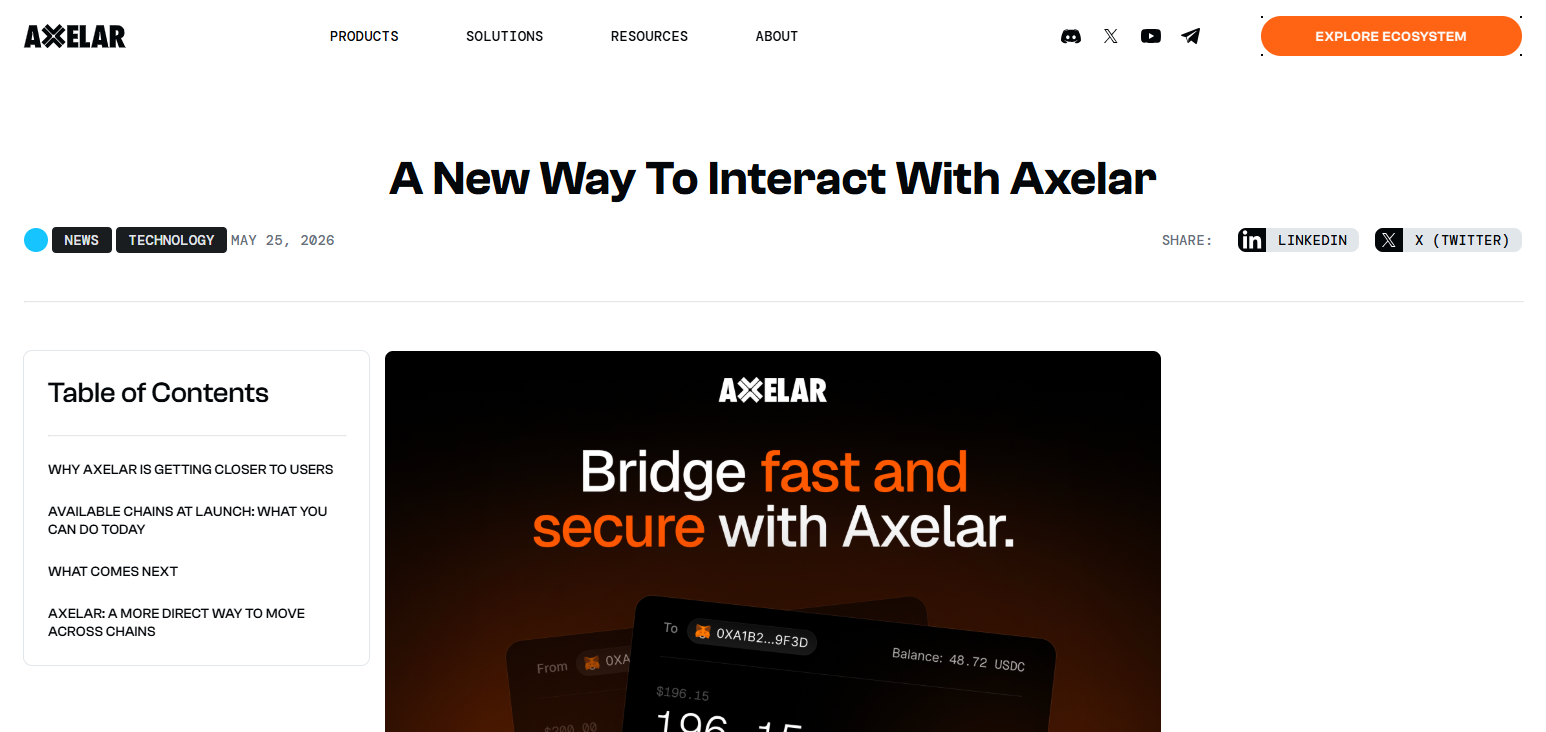
Axelar due to its secure messaging and asset transfer focus along with blockchain interoperability. Its infrastructure helps connect multiple networks while upholding the standards of decentralized verification and security.
Axelar Network – Features
- Validator Based Decentralization: Uses a decentralized validator network for security of cross-chain operations.
- Cross-Chain Messaging: Secure transfer of data and assets across blockchains.
- Developer Tools: Supply APIs and frameworks for multichain applications.
- Enhanced Blockchain Security: Upkeeps decentralized verification for transactions.
- Broad Ecosystem Integration: Efficiently connects multiple blockchain platforms.
| Pros | Cons |
|---|---|
| Uses decentralized validators for secure communication. | Validator network complexity may increase operational challenges. |
| Provides reliable cross-chain messaging infrastructure. | Transaction fees depend on connected networks. |
| Supports developers with multichain application tools. | Requires technical knowledge for advanced features. |
| Connects multiple blockchain ecosystems efficiently. | Adoption depends on ecosystem growth. |
| Focuses on decentralized interoperability solutions. | Security depends on validator participation and performance. |
9. Celer cBridge
Celer cBridge is a fast cross-chain liquidity transfer network that covers multiple blockchain networks. It allows users to quickly transfer tokens and utilize decentralized liquidity pools.

Best Cross-Chain Bridges for Safely Moving Liquidity Across Networks mentions Celer cBridge for its efficient transfers, low fees, and wide chain coverage. The platform assists users and developers in need of cross-chain liquidity solutions that are scalable.
Celer cBridge – Features
- Fast Cross-Chain Transfers: Rapidly transfer tokens across all supported networks.
- Low-Cost Transactions: Cost-effective bridging solutions.
- Multi-Chain Compatibility: Many blockchain networks and digital assets supported.
- Decentralized Liquidity Pools: Facilitated transfers by liquidity providers.
- Scalable Bridge Infrastructure: Increased demand for cross-chain applications is supported.
| Pros | Cons |
|---|---|
| Enables fast token transfers across supported blockchains. | Security depends on bridge infrastructure protection. |
| Offers low-cost cross-chain transaction solutions. | Liquidity may vary across supported networks. |
| Supports multiple blockchain ecosystems and assets. | Some features may be complex for beginners. |
| Uses decentralized liquidity pools for transfers. | Smart contract vulnerabilities remain possible. |
| Provides scalable interoperability solutions. | Network congestion can impact transaction performance. |
10. Connext
Using modular infrastructure and secure communication methods, Connext builds trust minimized cross chain transactions. They aim to connect blockchain apps, without having users rely on centralized bridge operators.
Connext is one of the Best Cross-Chain Bridges for Safely Moving Liquidity Across Networks since it ensures safe liquidity flow and provides flexible interoperability tools. The protocol is especially helpful to developers who want to build scalable multichain apps and optimize blockchain connectivity.
Connext – Features
- Trust-Minimized Transactions: Secured transfers without reliance on centralized services.
- Modular Interoperability: Infrastructure flexibility for blockchain communication.
- Secure Liquidity Movement: User asset transfers across networks.
- Developer-Focused Tools: Development of scalable multichain applications.
- Enhanced Blockchain Connectivity: Strengthened inter-blockchain communication.
| Pros | Cons |
|---|---|
| Provides trust-minimized cross-chain transaction solutions. | Requires technical understanding for full utilization. |
| Avoids dependence on centralized bridge operators. | Limited support compared with larger bridge networks. |
| Offers modular interoperability infrastructure. | Adoption is still growing across ecosystems. |
| Supports developers building scalable multichain applications. | Liquidity availability can impact transaction execution. |
| Improves blockchain connectivity and communication. | Users must evaluate security risks before transactions. |
Conclsuion
To sum up, The Best Cross-Chain Bridges for Safely Moving Liquidity Across Networks transform transfer methods between varying blockchain networks. Designed to accommodate more than one network, Cross-Chain Bridges, such as Wormhole, LayerZero, Stargate Finance, and Connext, streamline access to liquidity and enhance the overall transaction experience.
While using bridges, pay attention to the security concerned, the networks that the bridge caters to, the fees, and the reliability of the bridge to ensure safe cross-chain activities and a more enjoyable experience of Web3.
FAQ
Why use Cross-Chain Bridges for liquidity transfers?
Cross-chain bridges help users move assets across multiple blockchain networks, access different DeFi platforms, reduce network limitations, and improve liquidity efficiency without depending on a single blockchain.
Which are the Best Cross-Chain Bridges for Safely Moving Liquidity Across Networks?
Some popular options include Wormhole, LayerZero, Across Protocol, Stargate Finance, Synapse Protocol, Hop Protocol, Axelar Network, Celer cBridge, and Connext. Each bridge offers different security features and network support.
Is Wormhole a secure Cross-Chain Bridge?
Wormhole provides cross-chain transfers through a decentralized guardian network that verifies transactions. However, users should always review security audits and risks before transferring large amounts of assets.
What makes Stargate Finance different from traditional bridges?
Stargate Finance uses unified liquidity pools and supports native asset transfers without requiring wrapped tokens. This improves liquidity efficiency and simplifies cross-chain transactions.