This article covers the Best Online Stock Trading Platforms with a global perspective, focusing on features, costs, trade tools, and available investments. Your investing experience may be short and therefore justifying the need for a simpler app, or,
You may have the investing experience requiring an app with complex analytics and a global market. Regardless of your experience, this article will highlight the trading platform that best meets your requirements.
What are Online stock trading Platforms?
The internet brokerages get used by the investors to buy and sell the stocks, ETFs, mutual funds, and other investments in the financial markets.
These service brokers offer apps and websites to manage your investments. The trading platforms offer you tools to keep track of the financial markets and your investments.
The platforms also have features that allow you to manage your portfolio and conduct research. The online platforms with brokerages make investing easier. The online platforms have low cost and/or free trading. These platforms use an easy account opening process.
The platforms are for the novice and professional traders. Online trading is used all over the world by investors to access the financial markets from anywhere with an internet connection.
key Points & Best Online Stock Trading Platforms Worldwide
| Platform | Explanation |
|---|---|
| Interactive Brokers | Offers global markets, low fees, and advanced trading tools. |
| eToro | Provides social trading features and easy copy trading options. |
| Charles Schwab | Delivers commission-free trading with excellent research and education resources. |
| Fidelity Investments | Combines powerful research tools with low-cost stock investing services. |
| TD Ameritrade | Features advanced charting tools and extensive educational trading content. |
| Webull | Offers commission-free trading with advanced mobile analytical features worldwide. |
| Saxo Bank | Provides access to international markets and professional trading platforms. |
| Plus500 | Specializes in CFDs with intuitive interface and global market access. |
| Trading 212 | Enables commission-free investing and fractional share trading opportunities globally. |
| Robinhood | Simplifies stock investing through an easy-to-use mobile application interface. |
10 Best Online Stock Trading Platforms Worldwide
1. Interactive Brokers
Interactive Brokers might rank as one of the best online stock trading platforms in the world because brokers have access to over 150 world markets. Their users can feature stocks, ETFs, options, futures, bonds, and forex.

Active and professional traders love the low commission rates, research tools, and the institutional-grade advanced Trader Workstation platform. Investors can trade in multiple currencies from one account and can use sophisticated analytics to view their portfolio
as well as their risk profile. Interactive Brokers offers automated investing and fractional shares. This helps both long term global investors as well as seasoned financially savvy traders.
Interactive Brokers – Pros & Cons
| Pros | Cons |
|---|---|
| Access to 150+ global markets and multiple asset classes. | Platform can feel complex for complete beginners. |
| Extremely low trading commissions and competitive margin rates. | Advanced tools require a learning curve. |
| Supports multi-currency accounts and international investing. | Some research features are overwhelming for casual investors. |
| Institutional-grade trading and portfolio analytics tools. | Customer support response times can vary. |
| Fractional shares and automated investing options available. | Mobile app has numerous features that may confuse beginners. |
2. eToro
eToro shook the world of online investing with its unique features of social and copy trading where one can automatically copy and mimic the successful investing strategies. eToro trades in stocks, ETFs, commodities, crypto, and CFDs. Those are options for the diversified investor.
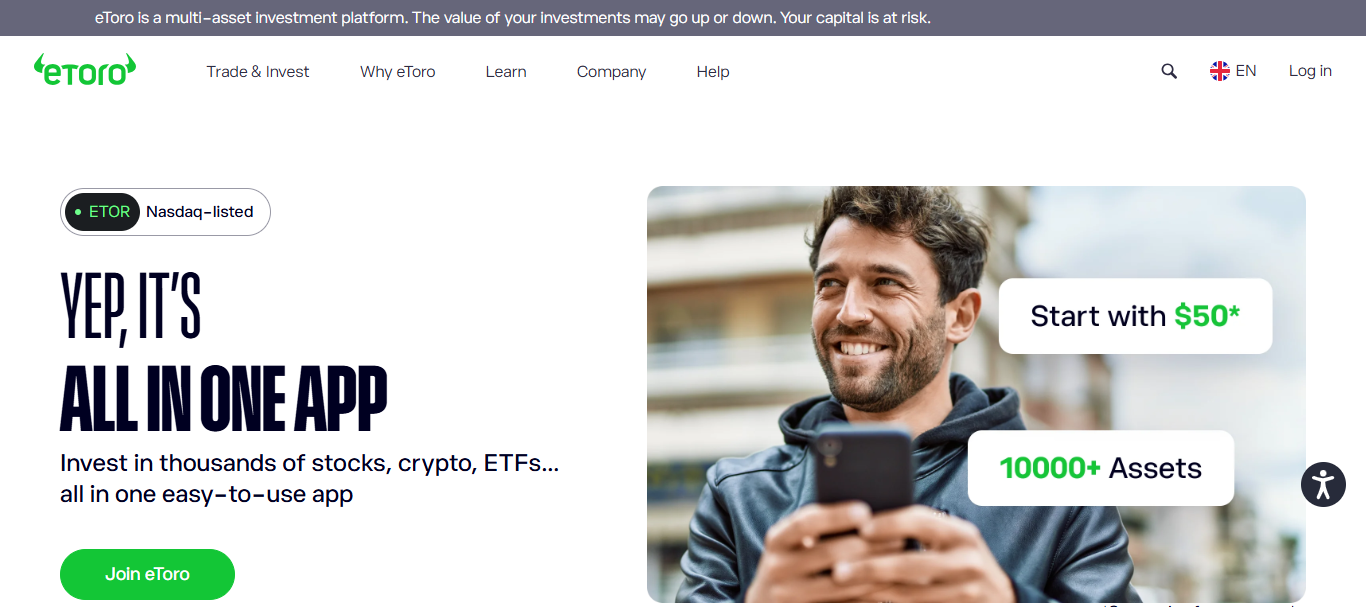
With its easy to navigate platform, iIt is also a great platform for new investors to watch and learn. eToro provides educational information, market analysis as well as a community discussion board in order to promote active investing.
eToro was wildly successful, easy to use, and a great platform for collaboration. Its popularity stems from its innovative design and simplicity.
eToro – Pros & Cons
| Pros | Cons |
|---|---|
| Industry-leading copy trading and social investing features. | Withdrawal fees apply in certain regions. |
| Beginner-friendly and easy-to-use interface. | Limited advanced charting tools for professional traders. |
| Supports stocks, crypto, ETFs, and commodities. | CFD trading is restricted in some countries. |
| Large investing community with market discussions. | Currency conversion fees may increase costs. |
| Demo account available for practice trading. | Research tools are less comprehensive than competitors. |
3. Charles Schwab
Charles Schwab is one of the best brokerage apps with users able to buy stocks and trade ETFs without fees. They have lots of tools and resources and make learning about trading easy and accessible. Schwab has features that let users make educated trades based on their research.
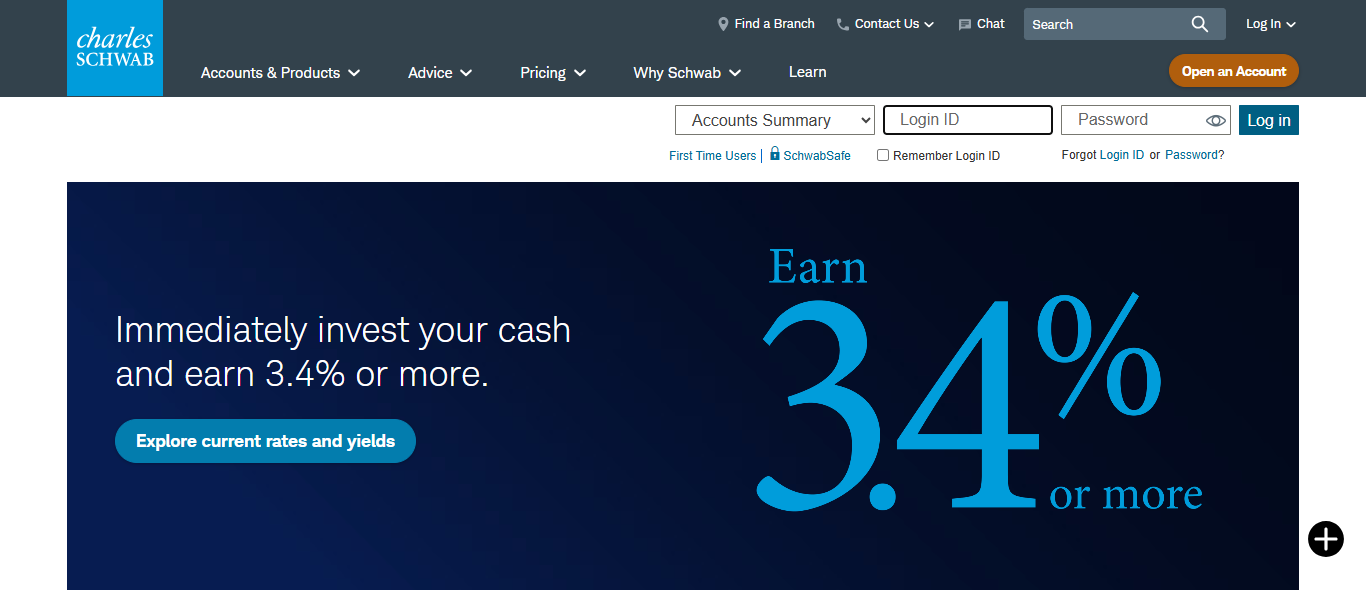
They also have many trading options and offer managed portfolios. Schwab is the best option for newer traders that want education and research resources in one place.
Charles Schwab – Pros & Cons
| Pros | Cons |
|---|---|
| Commission-free stock and ETF trading. | Limited direct access to some international exchanges. |
| Exceptional customer service and educational content. | Platform features can be overwhelming initially. |
| Strong retirement and wealth management services. | Certain advanced trading tools require experience. |
| Comprehensive third-party research and market insights. | Some international account requirements are restrictive. |
| Powerful stock screening and portfolio analysis tools. | Margin rates are higher than some competitors. |
4. Fidelity Investments
Fidelity Investments is another great option because it is affordable with lots of research resources and great customer service. Fidelity has free trading for stocks and ETFs and has other investment options like mutual funds and withdrawals for retirement.
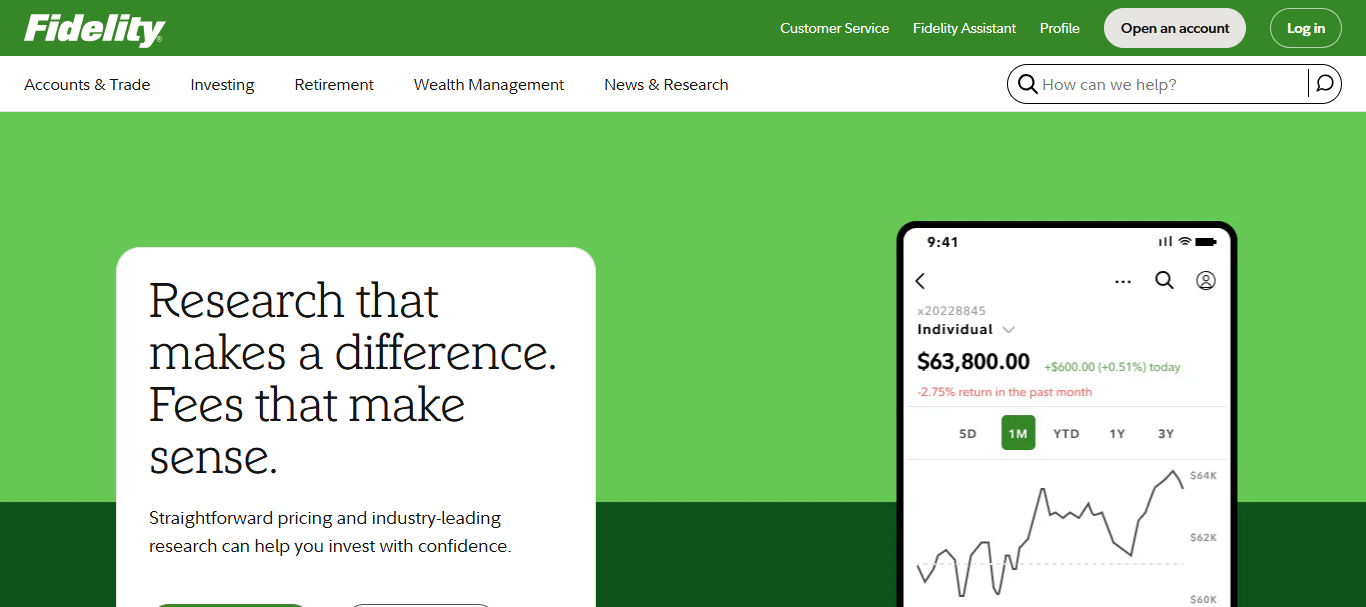
Fidelity has great research features with analysis tools to help formulate a plan for your investments. They also have fractional shares so users can make smaller investments in expensive stocks. Fidelity is one of the best investing platforms with their great focus on retirement and long term investing.
Fidelity Investments – Pros & Cons
| Pros | Cons |
|---|---|
| Excellent research reports and investment education. | International trading options are somewhat limited. |
| Commission-free trading for U.S. stocks and ETFs. | Website navigation can feel cluttered. |
| Fractional share investing available. | Fewer advanced trading tools than specialized platforms. |
| Strong retirement planning and wealth management services. | Non-U.S. investors may face account restrictions. |
| Highly rated customer support and reliability. | Active traders may prefer more sophisticated charting features. |
5. TD Ameritrade
One reason TD Ameritrade is held in high esteem is because of their trading technology and the educational offerings they have.

The thinkorswim trading system is by and large one of the best systems of all the advanced trading systems, because of all the tools that are available to the user from advanced analysis/controls/and drawings to the ability for the user to set up their own system and even use the system in a practice format.
Users can look at their trading options in stocks, ETFs, options, and futures, and also have access to a wealth of market analysis and educational webinars.
The system caters to the novice trader all the way to the professional trader. The flexibility and the educational offerings (that are really top notch) have made TD Ameritrade the trading system of choice for traders and investors abroad.
TD Ameritrade – Pros & Cons
| Pros | Cons |
|---|---|
| Powerful thinkorswim trading platform. | Advanced tools can intimidate beginners. |
| Extensive educational resources and webinars. | International account availability is limited. |
| Excellent options and futures trading capabilities. | Interface contains numerous complex features. |
| Robust charting and technical analysis tools. | Some premium data services may involve fees. |
| Paper trading for strategy testing. | Platform transition changes may affect users. |
6. Webull
Webull is one of the new favorites of investors thanks to a modern app that is as easy to use as it is feature rich, and a commission free trading system. Active traders benefit from tools for drawing analysis, real-time data, and even full control over their application with customizable watchlists.
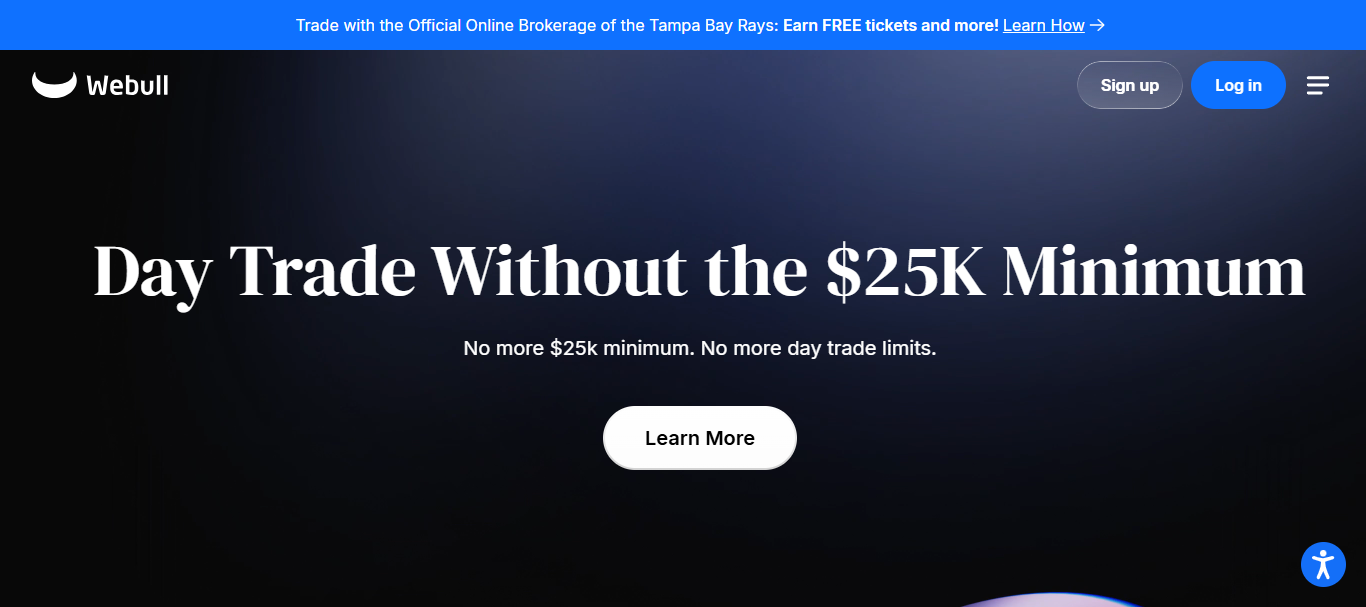
The trading options do not stop there, as users can trade options in stocks, ETFs, and even crypto (currency). Webull even has community features and extends the trading hours of its users.
The system prides itself on being modern and easy to use, and tips the scale to being one of the most feature complete systems, and for that reason Webull is one of the fastest growing systems of online trading.
Webull – Pros & Cons
| Pros | Cons |
|---|---|
| Commission-free trading with advanced charts. | Limited mutual fund and bond investment choices. |
| Extended pre-market and after-hours trading sessions. | Customer service options are relatively limited. |
| Modern and highly responsive mobile app. | Research resources are less extensive than traditional brokers. |
| Real-time market data and technical indicators. | Primarily designed for self-directed investors. |
| Supports stock, ETF, options, and crypto trading. | Fewer retirement account options in certain regions. |
7. Saxo Bank
Saxo Bank creates a high-quality online trading service for dedicated clients. Investors can trade the global financial markets on Saxo across stocks, bonds, ETFs, options, FX and commodities.

Saxo Bank creates a professional trading environment that includes sophisticated charts, flexible orders and rich market analysis. Saxo Bank also provides management tools and insights for professional investors oriented towards international diversification.
Saxo Bank – Pros & Cons
| Pros | Cons |
|---|---|
| Access to a vast range of global markets. | Higher fees than many discount brokers. |
| Professional-grade trading platforms and tools. | Minimum funding requirements may be significant. |
| Extensive market research and expert insights. | Not ideal for beginners due to complexity. |
| Supports stocks, forex, commodities, and bonds. | Some advanced features require premium account tiers. |
| Strong international diversification opportunities. | Customer support availability varies by region. |
8. Plus500
Plus500 is a CFD trading platform that integrates a user-friendly design with a plethora of tradeable instruments. Contracts for difference allow traders to speculate on price movements without the necessity of holding the underlying asset.
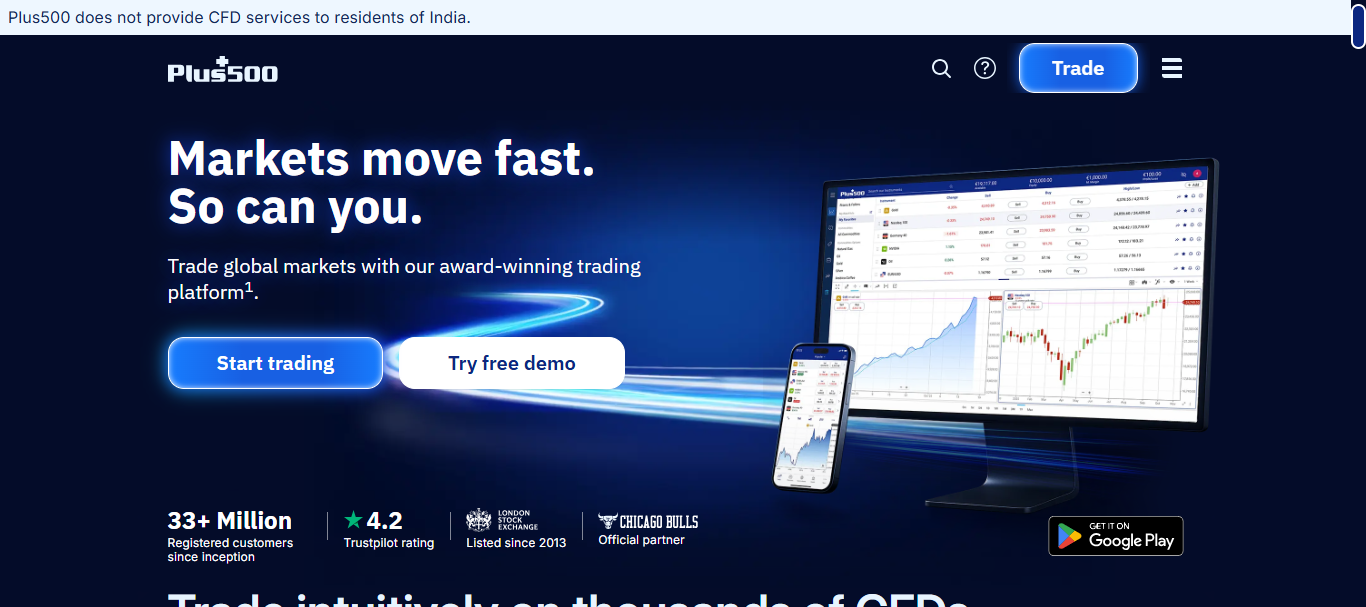
Offers include stocks, indices, commodities, FX and crypto. Plus500 includes several risk-management tools and its mobile and web-based applications design facilitate trading in an intuitive manner.
The global nature of the platform, its simplicity and easy design help Plus500 maintain one of the leading positions in popularity across CFD traders.
Plus500 – Pros & Cons
| Pros | Cons |
|---|---|
| Simple and intuitive trading interface. | Primarily focused on CFD trading only. |
| Wide range of tradable global markets. | Investors do not own underlying assets. |
| Provides risk management and stop-loss tools. | Limited educational and research materials. |
| Mobile app is easy for beginners. | Long-term investors may prefer traditional brokers. |
| Negative balance protection in certain jurisdictions. | Limited advanced analytical capabilities. |
9. Trading 212
Another platform offering commission-free investments with fractional shares is Trading 212. Thousands of global stocks and ETF’s can be traded on the app. With the platform’s “Pies” tool, unique strategies and automated distribution can help users build and diversify their Pies.

The platform’s low-cost model, in combination with its automation and excellent user experience, has helped Trading 212 become an investing leader worldwide.
Trading 212 – Pros & Cons
| Pros | Cons |
|---|---|
| Commission-free investing and fractional shares. | Limited advanced trading tools for professionals. |
| Innovative automated portfolio “Pies” feature. | Customer support can experience delays. |
| User-friendly mobile and web platforms. | Product availability varies by country. |
| Low minimum investment requirements. | Research and analytics tools are basic. |
| Access to thousands of global stocks and ETFs. | Fewer asset classes than full-service brokers. |
10. Robinhood
Trading went commission-free and standardized for the retail market with Robinhood. Trading, at a barrier-free level, can be done with a mobile device for Stocks, ETF’s, Options and Crypto. A simple interface with a streamlined account procedure built a user-base of millions in a short period of time.

In addition to the features mentioned, Robinhood has pioneered fractional shares, reoccurring investments, and cash management.
While Robinhood’s primary market is the beginner investor, the platform consistently adds features to its design and its educational resources as an effort to make investing more global and more accessible.
Robinhood – Pros & Cons
| Pros | Cons |
|---|---|
| Extremely simple and beginner-friendly interface. | Research tools remain relatively basic. |
| Commission-free trading and fractional investing. | Limited access to international markets. |
| Fast account opening and mobile-first experience. | Customer support options are comparatively limited. |
| Supports stocks, ETFs, options, and crypto. | Not ideal for advanced professional traders. |
How We Chose the Best Web-Based Stock Trading Services
Trading Aids and Services: Compared the services of charts, screeners, automation, and professional trading aids and services.
Costs of Trading: Compared the commission of brokerage, the spread, and the hidden costs that affect the return of the client.
Market Access and Available Instruments: Compared the access to stocks, ETFs, Forex, crypto, and access to international exchanges.
Ease of Use and Mobile Trading: Compared the ease of use, how fast you can use the platform, and the quality of trading on the mobile platform.
Analytical and Educational Support: Compared the services of market analysis, tutorials, and webinars, and the learning services of investments.
Safety and Compliance: Compared the licenses, protections, and the infrastructure of cyber-security, and safety.
Quality of Support Services: Compared the satisfaction, the waiting time, and the support services.
Conclsuion
To wrap things up, the best online stock trading platforms accommodate all investing styles, from beginner apps to expert trading terminals. Fees, tools, security, and education impact your choice.
Different platforms (like Interactive Brokers, eToro, Fidelity, and Robinhood) offer unique advantages and disadvantages. In the end, your long-term financial success relies on your choice of brokerage, which is affected by your investing style and goals.
FAQ
Which is the best online stock trading platform worldwide?
Interactive Brokers is often considered the best for global market access and professional trading tools.
Which stock trading platform is best for beginners?
Robinhood and eToro are excellent choices due to their simple interfaces and easy account setup.
Which platform offers the lowest trading fees?
Interactive Brokers, Trading 212, and Webull provide highly competitive low-cost trading options.
Which platform is best for international investing?
Interactive Brokers and Saxo Bank offer access to numerous international stock exchanges.
Which platform is best for copy trading?
eToro is the leading platform for social investing and copy trading features.