In This Post I Will Talk about Regulatory Reporting Automation is a crucial aspect that streamlines compliance processes for enterprises, improves data accuracy, eliminates human errors, and saves time.
In the landscape of 2026, where regulations will continue to evolve and data will be more complex than ever, these automated platforms would help organizations with real-time insights, scalability and drive compliance in a fraction of cost with much needed speed.
Key Points & Best Platforms For Regulatory Reporting Automation
Workiva Cloud-based platform streamlining financial and regulatory reporting with automation, collaboration, real-time data accuracy, and compliance.
Regnology Provides advanced regulatory reporting solutions helping financial institutions ensure compliance, data accuracy, and timely submissions globally.
OneTrust (GRC) Comprehensive GRC platform automating compliance, risk management, and regulatory reporting with integrated privacy and governance tools.
Nasdaq AxiomSL Offers scalable regulatory reporting and risk management solutions enabling financial institutions to meet evolving compliance requirements efficiently.
EY India ART (Automated Reporting Tool) Automates complex regulatory reporting processes, improving efficiency, accuracy, and compliance for financial institutions and enterprises.
IBM OpenPages with Watson AI-powered GRC platform enhancing regulatory reporting, risk management, and compliance through automation, analytics, and cognitive insights.
MetricStream Delivers integrated GRC solutions automating regulatory reporting, improving risk visibility, and ensuring compliance across enterprise operations.
Drata Automates compliance monitoring and regulatory reporting, helping companies maintain audit readiness and continuous security compliance effortlessly.
Fenergo Specializes in client lifecycle management and regulatory compliance, automating reporting processes and ensuring adherence to global regulations.
Wolters Kluwer OneSumX Provides integrated regulatory compliance, risk management, and reporting automation with strong financial industry specialization globally.
10 Best Platforms For Regulatory Reporting Automation
1. Workiva
For context, Workiva is a dominant cloud-based platform used extensively for regulatory, financial and ESG reporting automation.
It allows organizations to link data directly from numerous systems, assuring accuracy and consistency in real-time through reports.
Additionally, the platform can be used for XBRL, iXBRL, and SEC filings which makes it an excellent choice for global compliance requirements.
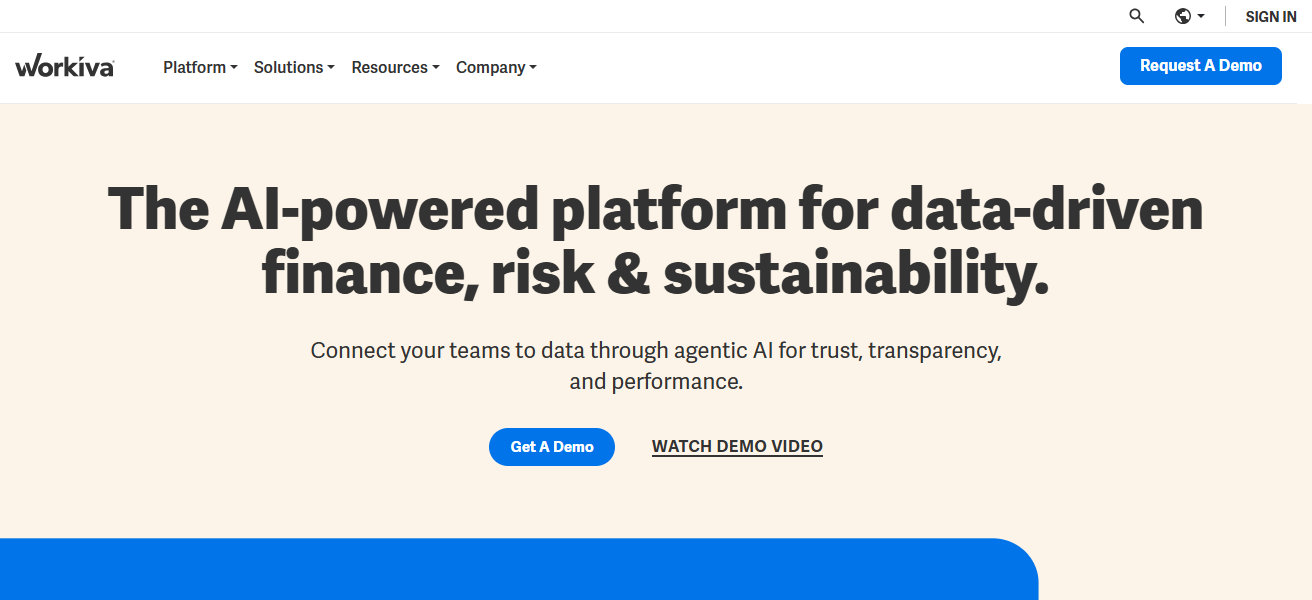
Its collaborative environment enables multiple users to work on a project at the same time and maintain audit trails with versioning.
Workiva integration of AI-powered insights and automation helps minimize manual effort and reporting errors.
Companies are usually torn between using best of breed or package tools and CRMs, but Sellsy meets them in the middle.
| Pros | Cons |
|---|---|
| Real-time collaboration across teams | Can be costly for smaller organizations |
| Strong integration with financial & ESG reporting | Learning curve for new users |
| Cloud-based, accessible anywhere | Heavy reliance on internet connectivity |
| Automates workflows and reduces manual errors | Advanced customization may require IT support |
2. Regnology
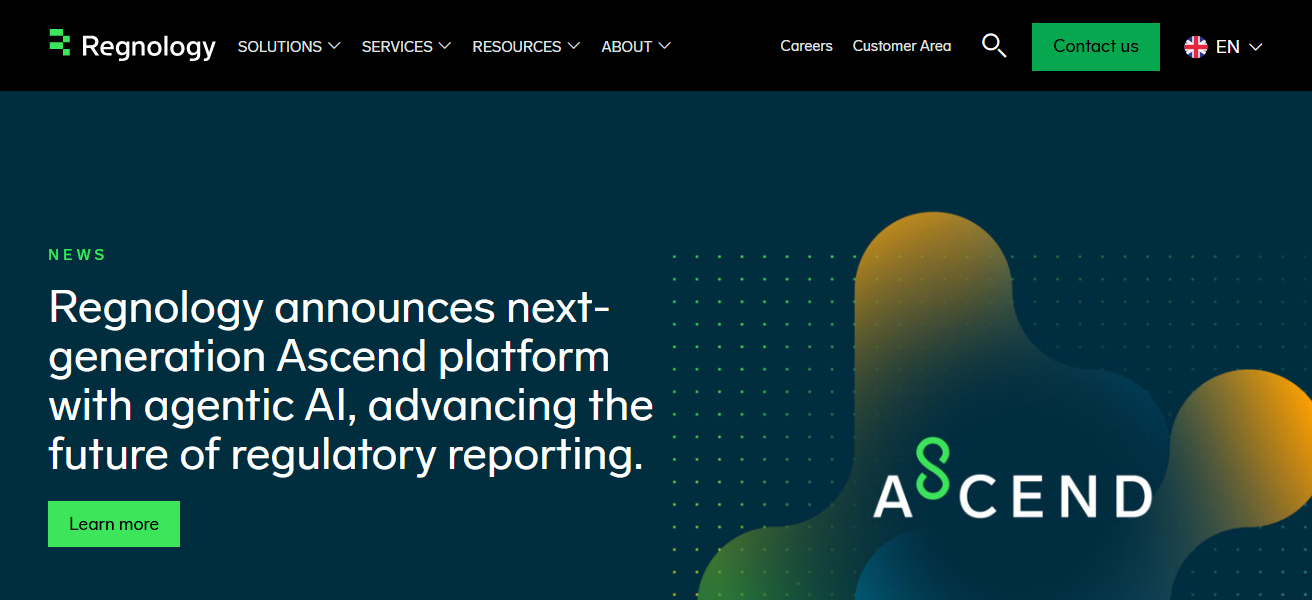
Regnology is a leading RegTech worldwide when it comes to regulatory reporting solutions for financial institutions and regulators.
Its platforms, including Reporting Hub and Risk Hub enabled automated data collection, validation, and submission processes.
The company has standardized data models and scalable architectures to address complex regulatory requirements across jurisdictions.
As for 2026, Regnology points out that integrated and resilient data frameworks will be increasingly critical to ensuring transparency and efficiency when it comes to reporting.
Its solutions help lower operational costs and keep up with fast-changing global regulations, making it a preferred partner for banks, insurers, and regulatory agencies.
| Pros | Cons |
|---|---|
| Specialized in regulatory reporting for banks | Narrow focus—less useful outside financial sector |
| Strong supervisory technology for regulators | Implementation can be complex |
| Cloud-based scalability | Limited flexibility compared to broader GRC tools |
| Trusted by major financial institutions | May require significant training for staff |
3. OneTrust GRC
OneTrust GRC is an integrated governance, risk and compliance solution that unifies regulatory reporting with privacy and risk management automation. It offers central dashboards for monitoring compliance requirements and policies and real-time updates on regulations.
The platform connects to enterprise systems to automate data collection and reporting processes. This feature makes OneTrust highly powerful in terms of privacy regulations like the GDPR, making it a strong candidate for companies around the globe that are handling sensitive data.

Its automation features eliminate the need for manual compliance, streamlining your audit-readiness process.
Servicing over 9,000 customers and providing continuously-updated legal, data protection, trustworthy advertising enterprise standards through intelligence AI functionality enables organizations to remain at the forefront of rapidly changing regulatory environments.
| Pros | Cons |
|---|---|
| Comprehensive GRC coverage (privacy, risk, compliance) | Can be overwhelming due to breadth of features |
| Strong privacy management (GDPR, CCPA) | Pricing can be high for mid-sized firms |
| Vendor/third-party risk management | Customization may require consulting support |
| AI-driven automation | Some modules feel more mature than others |
4. Nasdaq AxiomSL
AxiomSL by Nasdaq — A leading regulatory reporting and risk analytics solution that enables financial institutions to capture, aggregate, analyze, and visualize transactions data.
It offers end-to-end automation, covering the entire workflow from data sourcing and validation to calculation and submission of regulatory reports.
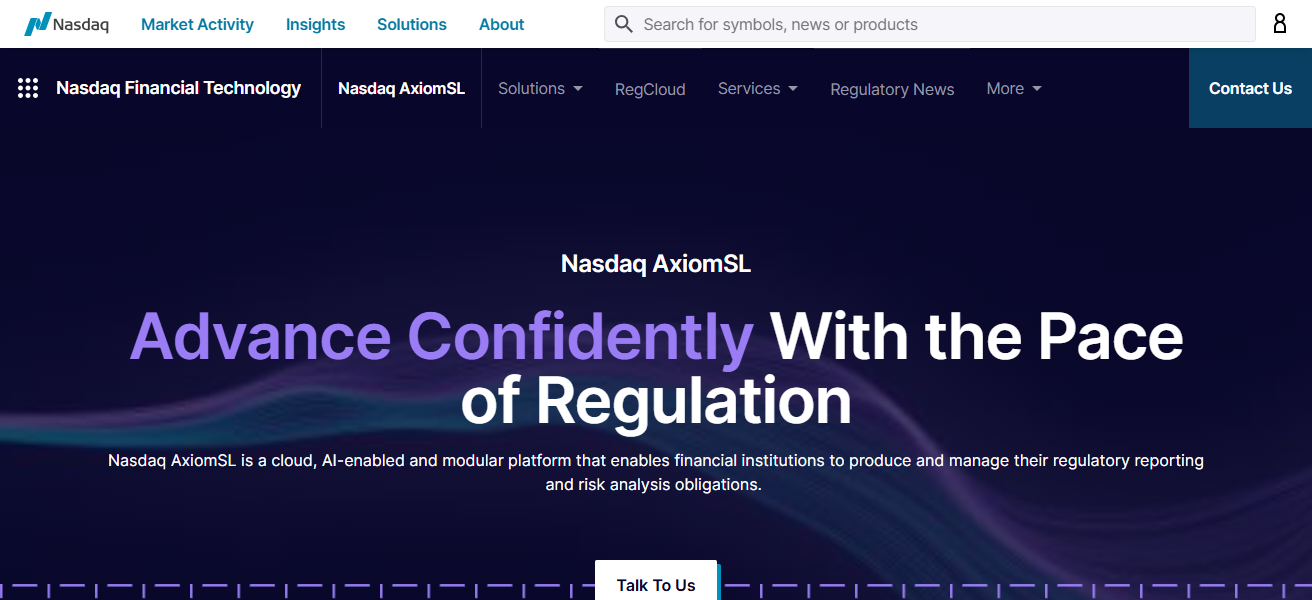
Some of the global rules supported by the platform include Basel III, MiFID, and Dodd-Frank. Its unified data model ensures consistency within the reporting and risk functions leading to reduced duplication and errors.
AxiomSL say that their analytics and audit capabilities allow firms to quickly adapt to regulatory change. After Nasdaq bought AxiomSL, it took the platform to a new level with increased scalability and cloud capabilities that make it an excellent option for larger banks.
| Pros | Cons |
|---|---|
| Handles large-scale financial data securely | Primarily suited for large institutions |
| Supports global regulatory frameworks | High implementation costs |
| Strong auditability and transparency | Complex setup and maintenance |
| Scalable architecture | Less flexibility for non-financial use cases |
5. EY India ART (Automated Reporting Tool)
EY India ART (Automated Reporting Tool) is an offering to ensure seamless processing for complex regulatory reporting for enterprise and financial institutions.
This involves automation of data aggregation, validation, and report generation with a minimum amount of manual intervention and errors. The Compliance platform also addresses Indian regulatory frameworks like RBI and SEBI regulations.
And it’s improving reporting efficiency through standardized workflows and accuracy in data for different reporting formats.
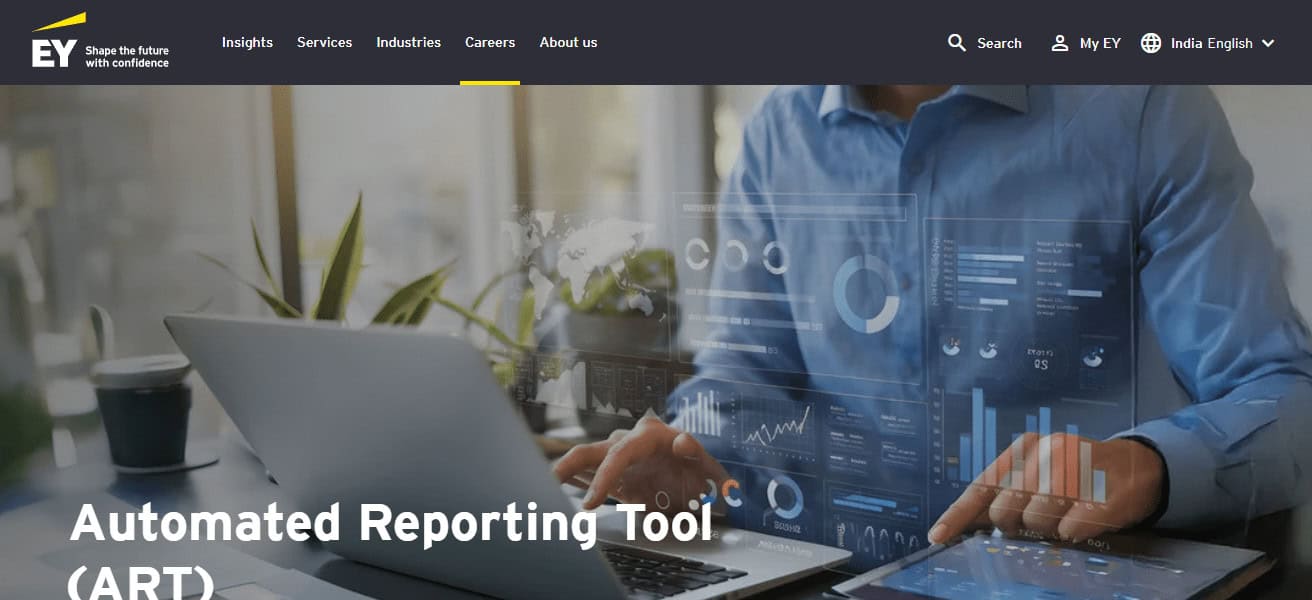
EY has considerable strength in advisory and compliance, which allows organizations to swiftly adapt to evolving regulatory environments.
ART enables India to achieve better compliance standards – it is widely adopted as it simplifies reporting and sets high compliance standards.
| Pros | Cons |
|---|---|
| Tailored for Indian tax & regulatory compliance | Limited global applicability |
| Automates reporting, reducing manual work | May not integrate with all ERP systems |
| Regular updates for local regulations | Focused mainly on compliance, less on risk |
| Improves accuracy and efficiency | Smaller firms may find it too specialized |
6. IBM OpenPages with Watson
This blogging is based on the description of site IBM OpenPages with Watson a GRC solution software powered by AI and designed to improve regulatory reporting using automation, advanced analytics.
It restructures a system to create a consistent framework for risk management, compliance and internal audit. By using IBM Watson AI, the platform provides predictive insights into what it can find and risks early in the decision-making process.
With real-time monitoring and automated workflows at its core, OpenPages helps organizations track and adhere to changing regulations.
That makes it scalable, flexible, and great for large enterprises in every industry. IBM OpenPages streamlines regulatory reporting processes and reduces compliance costs through automation combined with cognitive capabilities that allows for greater accuracy and transparency.
| Pros | Cons |
|---|---|
| AI-powered insights via Watson | Can be complex to configure |
| Strong enterprise risk management | Higher cost compared to competitors |
| Customizable dashboards | Requires skilled staff for full utilization |
| Global compliance support | May feel heavy for smaller organizations |
7. MetricStream
With MetricStream we can manage our ongoing compliance and risk management activities within a single cloud-based platform that helps automate regulatory reporting.
Centralized view into regulatory requirements and allowing organizations to manage compliance across multiple jurisdictions.
With features such as policy management, audit management and real-time reporting dashboards. Metrics even, it solutions help to reduce manual effort and better the reporting accuracy.
It is prevalent among large companies in highly regulated sectors like banking, healthcare and energy.
MetricStream’s activities, coupled with its constant updates and integration capabilities help ensure organizations maintain compliance, improve operational efficiency measure while minimizing regulatory risks.
| Pros | Cons |
|---|---|
| Comprehensive enterprise GRC platform | Implementation can be time-consuming |
| Strong audit and risk management | Pricing may be prohibitive for SMEs |
| Centralized policy repository | Interface can feel complex |
| Widely adopted across industries | Customization requires expertise |
8. Drata
Drata is a compliance automation platform designed for modernization through automatic monitoring and reporting across regulatory agencies.
It connects with cloud infrastructure and business tools to automatically gather evidence and follow compliance in real time.
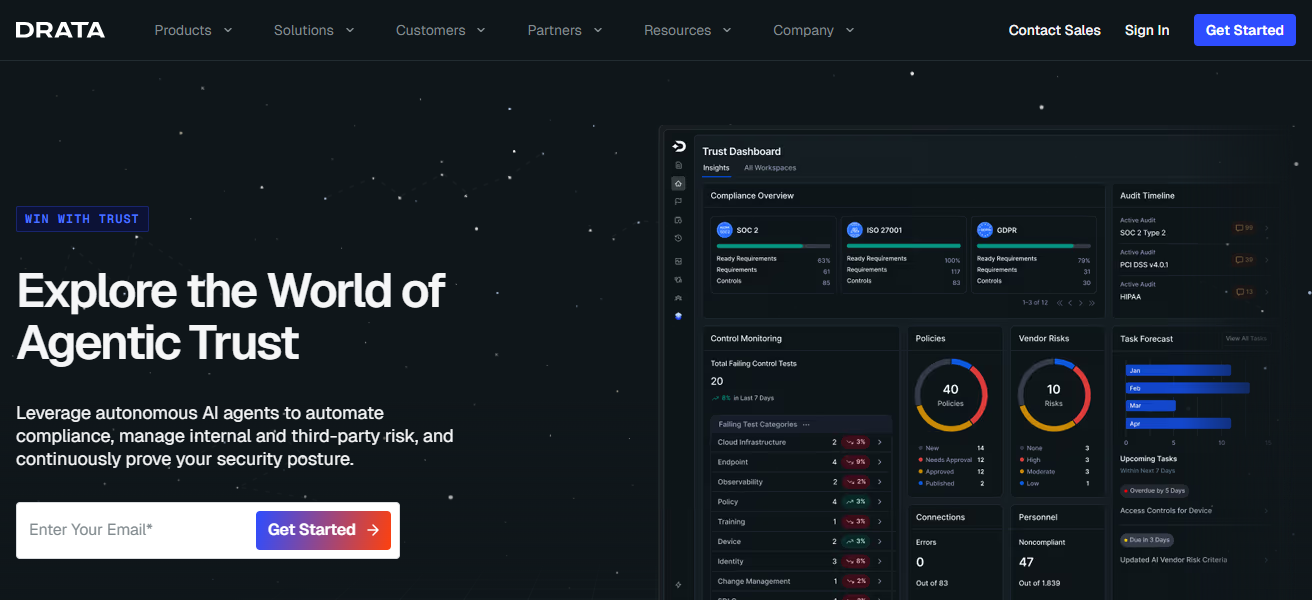
Drata is especially favored by SaaS and technology firms for frameworks like SOC 2, ISO 27001 and GDPR. Its automated workflows alleviate the need for manual audits and guarantee organizations are audit-ready at all times.
The platform deploys real-time alerts and reporting dashboards that enable businesses to address compliance gaps quickly. Drata is designed for fast-growing companies who need an easy, automated way to manage compliance.
| Pros | Cons |
|---|---|
| Continuous compliance automation | Focused mainly on security/compliance certifications |
| Integrates with cloud & security tools | Less suited for broader GRC needs |
| Real-time monitoring | May require technical expertise for setup |
| Simplifies evidence collection for audits | Limited customization compared to enterprise GRC |
9. Fenergo
Fenergo is known for client lifecycle management (CLM) and regulatory compliance solutions built specifically for financial institutions.
Its platform automates onboarding, KYC, AML and regulatory reporting processes to ensure compliance with worldwide regulations.

Fenergo helps organizations automate complex regulatory requirements as well as enhance client experience. With centralized data management, automated workflows and real-time reporting capabilities.
Banks and financial institutions widely use the platform to decrease compliance costs and operational risk.
For organizations operating in dynamic regulatory environments, such as these industries, Fenergo’s advanced automation capabilities coupled with deep seeking regulatory expertise streamlines reporting processes and ensures compliance.
| Pros | Cons |
|---|---|
| Strong client lifecycle management (KYC, AML) | Primarily financial industry-focused |
| Automates onboarding with digital workflows | Implementation can be resource-intensive |
| Supports global regulations (MiFID II, FATCA) | High cost for smaller firms |
| Centralized risk & data management | Complexity may slow adoption |
10. Wolters Kluwer OneSumX
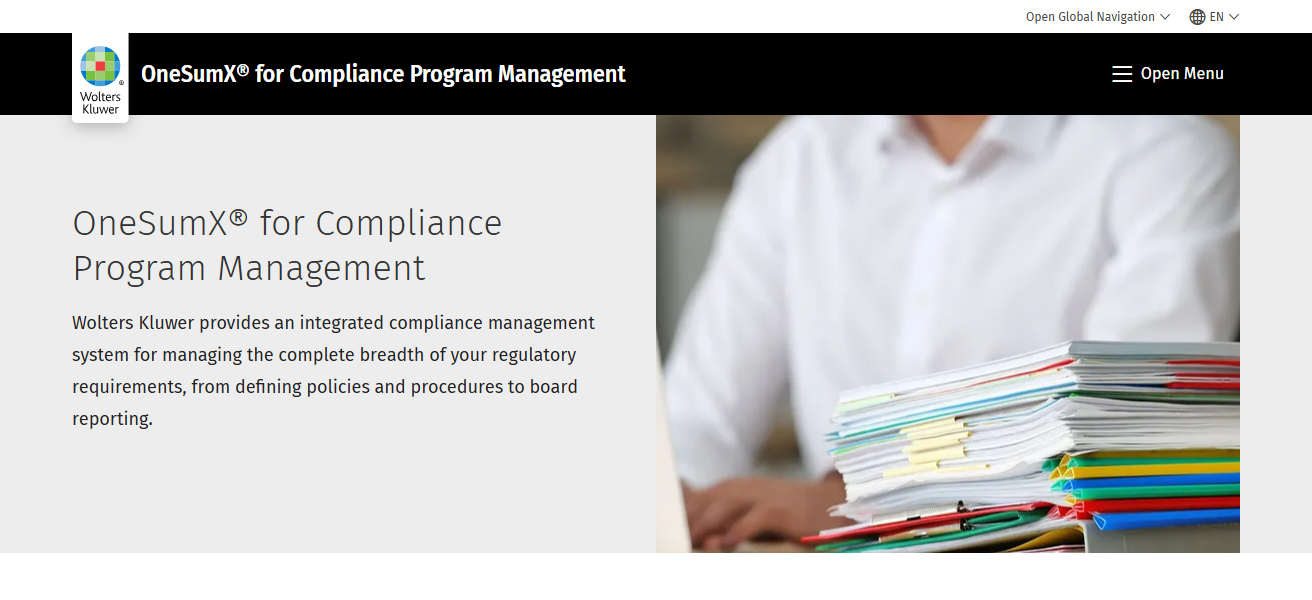
Wolters Kluwer OneSumX for regulatory reporting automation is also one of the best platforms. It provides the financial industry globally with integrated compliance, risk management and reporting solutions.
OneSumX streamlines this manual process into an automated solution that collects the data, centralizes it, and automates workflows through gatekeeping for actionable reviews with compliance checks on documents ensuring they are up to date before submission.
Similarly, its global specialization enables institutions to customize their framework, from Basel to IFRS.
On the other hand, financial firms enjoy greater transparency, scalability, and auditability with OneSumX that is a trusted solution for complex compliance environments.
| Pros | Cons |
|---|---|
| Integrated compliance, risk, and reporting automation in one platform | High implementation and licensing costs for smaller firms |
| Strong specialization in financial industry regulations worldwide | Primarily focused on financial institutions, less useful for other sectors |
| Scalable architecture supporting global frameworks like Basel and IFRS | Complex setup and requires significant training for effective use |
| Enhances transparency, auditability, and operational efficiency | Customization can be time-consuming and resource-intensive |
Why is Real-time data integration critical for modern compliance reporting?
Increase Accuracy – Validates that reports are based on current data, leading to fewer errors and discrepancies.
Quicker Reporting – Provides one-click access to data, accelerating regulatory filings and decisions.
Regulatory Compliance – Fuels strict deadlines and evolving compliance requirements in no time.
Risk Reduction – Identify abnormalities and compliance risks in real-time, enabling you to avoid potential fines.
Better Decision-making – Offers real time insights for pro-active compliance and strategic moves.
Automation Support – Enable automated processes to decrease manual interactions and associated operational costs.
Audit Readiness — Sustains continuous data tracking, thereby facilitating more seamless and transparent audits.
Scalability – Effectively adheres to large, complex datasets crossing multiple jurisdictions and regulations.
What Challenges do Companies face When implementing Regulatory Reporting Platforms?
Data Integration Challenges – The challenge of integrating data across several different legacy systems and file formats.
High Implementation Costs – Major initial expenditure on software, infrastructure and training.
Regulations are complex – The dynamic nature of regulations locally and globally makes them difficult to configure, and keep updating.
Data Quality Challenges – Error in data or incomplete data can cause compliance risk and reporting issues.
Lack of Skilled Talent – Shortage of experts in RegTech, compliance and data management Endnote
System compatibility – Might require integration with existing IT infrastructure and third-party tools.
Change Management – Employees reluctant to embrace new automated systems and workflows.
Security & Privacy Risks – HighCybersecurity concerns by dealing with sensitive regulatory data.
Cocnsluion
Ultimately, the ideal regulatory reporting automation platforms allow organizations to become more efficient with compliance, enhance data accuracy and minimize manual work steps.
Workiva, Regnology, and OneTrust are examples of solutions that provide scalability, real-time insights, and powerful integration options.
Selecting their platform carefully leads to better reporting efficiency, improved risk management and preparedness for the changing international regulations in today’s multifaceted business landscape.
FAQ
What is regulatory reporting automation?
It is the use of software to automate data collection, validation, and submission of compliance reports, reducing manual effort and improving accuracy.
Why is automation important in regulatory reporting?
Automation reduces manual errors, saves time, and ensures timely compliance, especially as regulations and data complexity continue increasing globally.
Which platform is best for large enterprises?
Workiva and Nasdaq AxiomSL are ideal due to scalability, real-time collaboration, and enterprise-grade compliance features.
Which tool is best for continuous compliance monitoring?
Drata is highly effective for continuous monitoring, offering real-time evidence collection and automated compliance tracking.