
In this article, I will discuss E-Discovery Tools Every Legal Team Should Know and how they are transforming modern legal workflows.
These advanced platforms help lawyers collect, process, and review massive digital data with speed and accuracy.
From AI-powered document review to cloud-based investigation systems, these tools are becoming essential for improving efficiency, compliance, and decision-making in complex legal cases today.
Key Point & E-Discovery Tools Every Legal Team Should Know
RelativityOne — Cloud-based platform for managing, reviewing, and analyzing large-scale e-discovery data efficiently and securely
Everlaw — Modern cloud e-discovery tool enabling fast document review and collaboration, seamlessly and securely
DISCO — AI-powered e-discovery platform for litigation support and rapid document analysis processing insights
Logikcull — Automated e-discovery software simplifying legal data collection, processing, and review workflow efficiency
Exterro — Integrated e-discovery platform offering legal hold, data governance, and investigation tools management
Reveal (Brainspace) — AI-driven e-discovery platform with advanced analytics, visualization, and machine learning capabilities, insights
Casepoint — Secure cloud e-discovery platform designed for compliance, litigation, and investigations workflow management
Nuix — Powerful data processing software enabling e-discovery, cyber investigation, and analytics automation insights
OpenText — Enterprise information management platform supporting e-discovery, governance, and compliance solutions integration, security
Nextpoint — Cloud-based e-discovery solution simplifying litigation data hosting, review, and production workflow speed
10 E-Discovery Tools Every Legal Team Should Know
1. RelativityOne
RelativityOne is a top cloud-based e-discovery solution that has been adopted by many of the largest law firms and corporations in the world.
The product now includes powerful Generative AI capabilities such as aiR for Review and aiR for Privilege, enabling legal teams to swiftly surface relevant documents while minimizing the need for manual review.
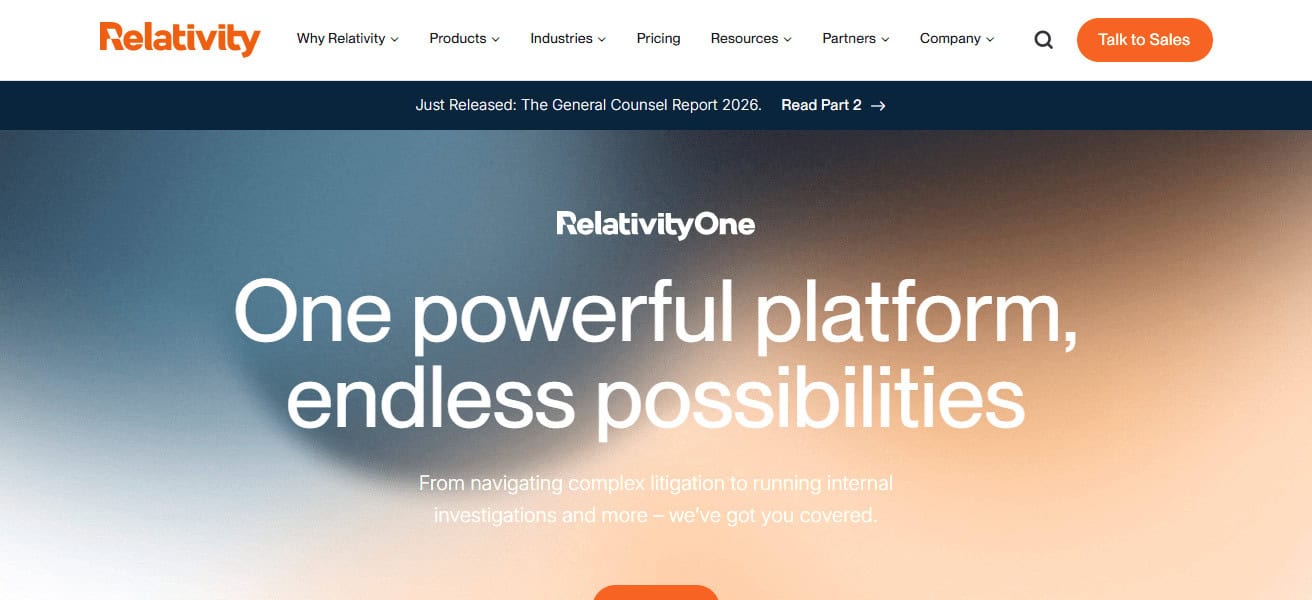
Its newest updates include early case intelligence, high-throughput processing of devastatingly large datasets, and, most importantly, enhanced data security.
It provides deep analytics with a scalable architecture and supports complex litigation, regulatory investigations, and cross-border legal matters effortlessly.
| Pros | Cons |
|---|---|
| Advanced Generative AI (aiR for Review & Privilege) improves accuracy and speed | High cost for small firms |
| Excellent scalability for massive datasets | Requires training for advanced features |
| Strong security for enterprise legal data | Complex setup for beginners |
| Ideal for cross-border litigation and compliance cases | Heavy resource usage in large deployments |
2. Everlaw
Everlaw is a cloud-based e-discovery platform specifically designed for organizational efficiency, and its intuitive design makes it fast for document review.
Now it utilizes AI-based narrative construction utilities that support lawyers in linking facts across extensive data collections.

Drastic improvements that have been seen are improved collaboration tools, live case timelines, and advanced predictive coding features.
Everlaw has extensive positive reviews for cutting training time to legal teams. And improves accuracy. It has become favored among firms handling complex litigation and internal investigations due to its emphasis on usability and visual analytics.
| Pros | Cons |
|---|---|
| Very intuitive and user-friendly interface | Limited offline capabilities |
| AI-powered narrative building improves case storytelling | Premium pricing for advanced features |
| Fast document review and collaboration tools | Less customization than enterprise tools |
| Real-time timelines enhance case visibility | Not ideal for extremely large datasets |
3. DISCO
DISCO is an AI-first e-discovery platform built for speed and automation in litigation workflows. It uses machine learning to speed up the document categorization, review ranking, and relevance detection.

The latest emphasis on cloud to scale and better run terabyte-scale datasets. DISCO provides a fantastic user experience with integrated dashboards and automated workflows to reduce manual work.
Its laser-like drive for efficiency is perfect for high-stakes litigation that demands fast-paced legal discovery.
| Pros | Cons |
|---|---|
| Extremely fast processing and document review | Pricing can be high for long-term use |
| Strong AI-based classification and relevance detection | Limited third-party integrations |
| Built for high-volume litigation cases | Requires internet dependency |
| Simplified dashboards improve workflow efficiency | Less flexible for niche legal workflows |
4. Logikcull
Logikcull is a cost-effective, online e-discovery tool that focuses on automated, ad-hoc discovery for the rest of the organization.
Has a simple interface that enables legal teams to upload, process, and review documents all in one place without any complicated setup or need for tech skills.
The new features comprise improved AI tagging, comparative searching speed, and tighter integrations with cloud storage services.
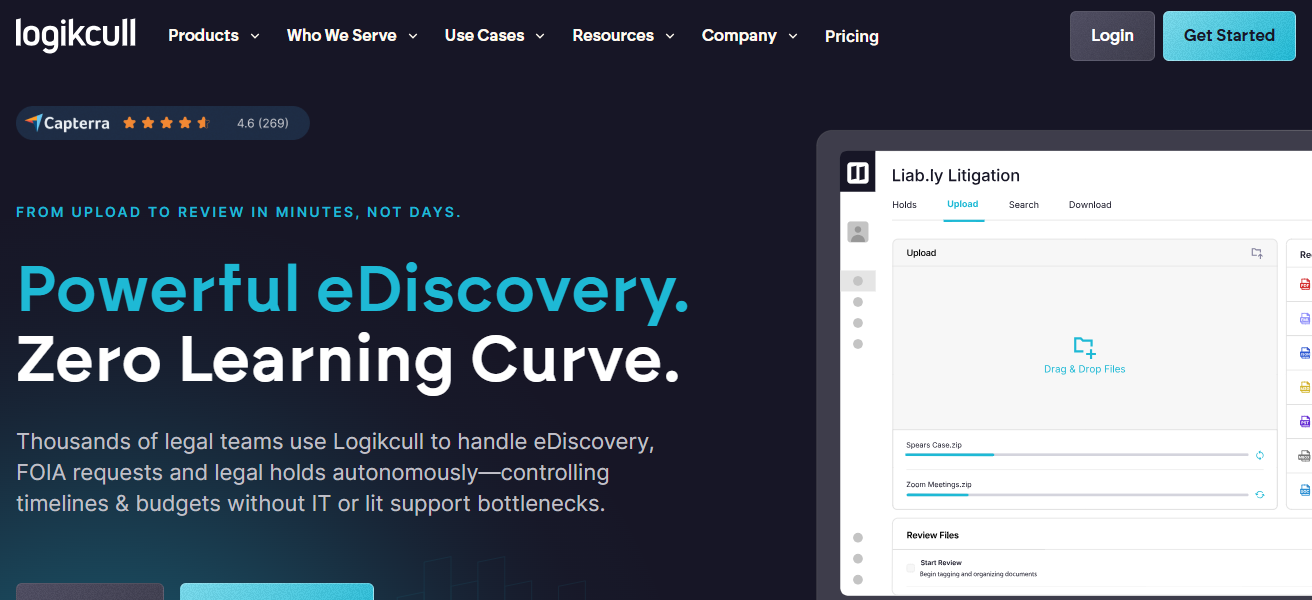
Popular among small law firms and corporate legal departments that need to quickly provide discovery. Overall, it is very affordable and simple to use, providing a far more convincing entry-level e-discovery solution.
| Pros | Cons |
|---|---|
| Very easy self-service setup | Limited advanced analytics features |
| Affordable for small firms | Not suitable for enterprise-scale litigation |
| Fast search and AI tagging improvements | Basic customization options |
| Strong cloud integrations (Google Drive, Dropbox) | Limited deep AI insights |
5. Exterro
With Exterro, you get an integrated legal governance and e-discovery platform for data privacy compliance and investigation tools.
We have a much more recent set of advances focused on the integration of legal hold, forensic data collection, and case management into a single, aligned system.
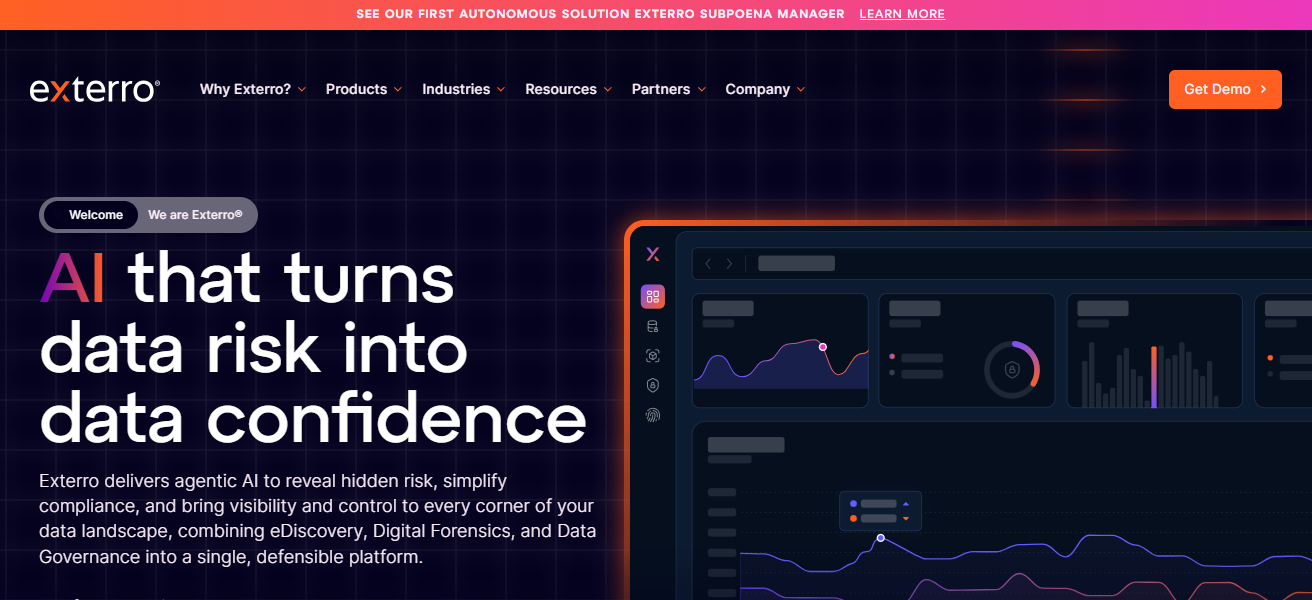
AI-powered workflows enable legal teams to mitigate risk and ensure compliance with regulations.
Exterro is stronger in enterprise-style environments where data governance and privacy regulations are key. Ideal for structured legal operations across large organizations with complicated compliance needs.
| Pros | Cons |
|---|---|
| Strong legal hold and compliance tools | Interface can feel complex |
| Integrated e-discovery + governance platform | Higher learning curve |
| Excellent for enterprise data privacy needs | Expensive for smaller teams |
| Supports forensic investigations | Slower updates compared to AI-first tools |
6. Reveal (Brainspace)
Reveal is an AI-focused analytics and visualization e-discovery platform powered by Brainspace technology.
It assists legal teams in identifying trends, communication clusters, and undiscovered relationships hidden in large volumes of data.
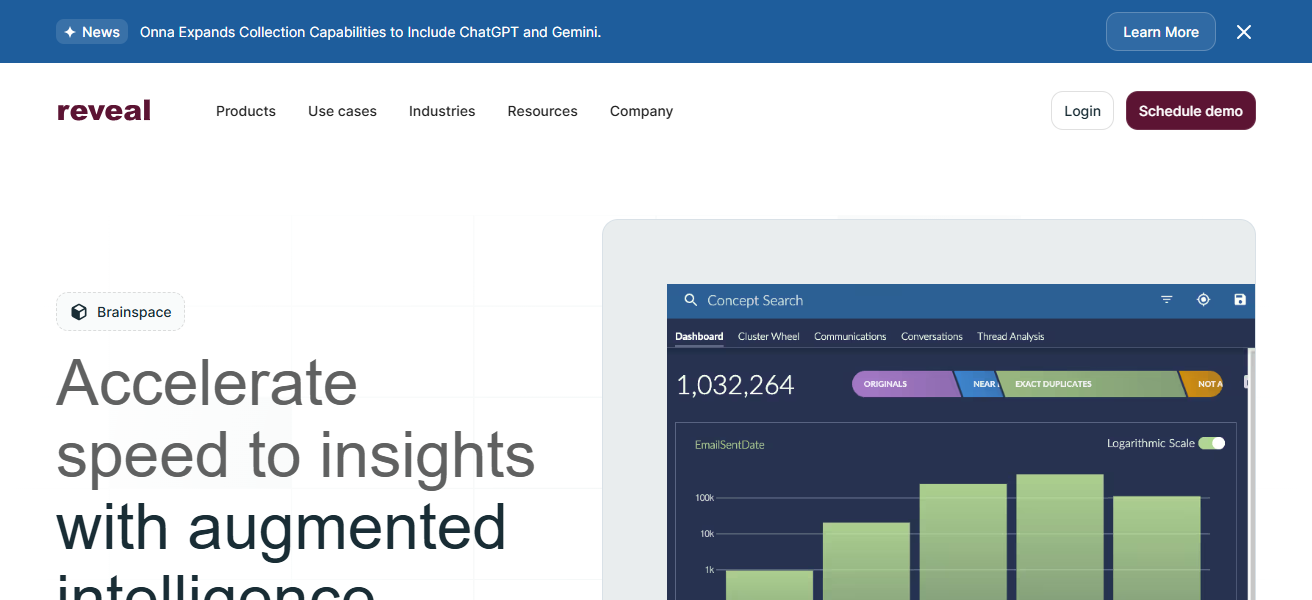
The newest improvements consist of advanced machine studying fashions and interactive visual analytics dashboards.
If you are investigating suspected fraud, a compliance violation, or the potential presence of an insider threat, Reveal is especially helpful. Since it can turn raw data into data-driven insights in a few minutes in a visual way.
| Pros | Cons |
|---|---|
| Powerful AI-driven analytics and visualization | Requires training to use advanced features |
| Excellent pattern and cluster detection | Not beginner-friendly |
| Ideal for fraud and compliance investigations | Heavy system requirements |
| Converts raw data into visual insights quickly | Licensing cost is high |
7. Casepoint
Casepoint is an eDiscovery platform for government and enterprise clients that allows its users to upload, analyze, report, and manage electronic data in a secure cloud environment. It is focused on compliance, security, and scalability for sensitive legal matters.
New features include AI-based review tools and faster data ingestion speed. Designed for regulated industries, it also supports multi-jurisdictional data handling.
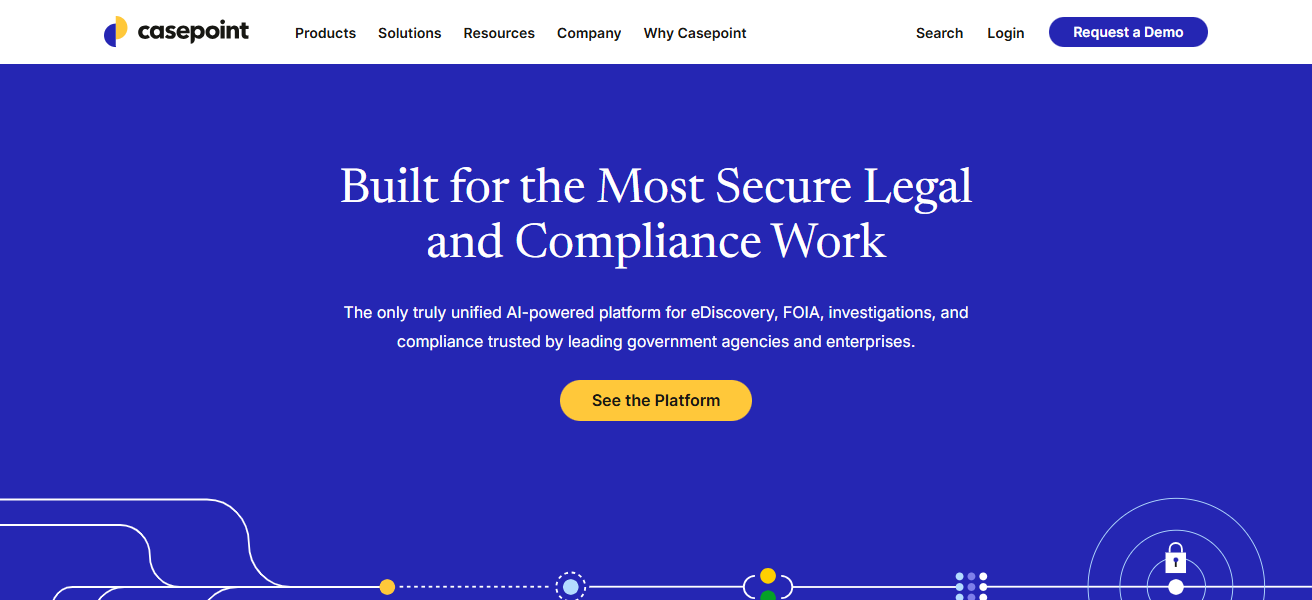
Its collaborative platform brings together litigation support, data governance, and case management into one seamless workflow for legal professionals.
| Pros | Cons |
|---|---|
| Highly secure and compliance-focused platform | User interface feels traditional |
| Strong support for government and regulated sectors | Limited modern UI flexibility |
| AI-powered document review tools | Complex onboarding process |
| Scalable cloud infrastructure | Slower innovation compared to competitors |
8. Nuix
Nuix is a data processing and analytics platform used for e-discovery, cyber investigations, electronic discovery, and forensic analysis.
Specializes in unstructured data from complicated sources like emails and servers, as well as systems within a cloud environment.

Latest updates improve AI-based investigative features to streamline and multiplex big data indexing speed. Nuix is generally utilized in high-security environments that need deep visibility into the data.
The real power of it is uncovering of various hidden patterns and then assisting in large-scale, digital investigations.
| Pros | Cons |
|---|---|
| Excellent for unstructured data processing | Expensive enterprise licensing |
| Strong forensic investigation capabilities | Complex learning curve |
| High-speed indexing of large datasets | Requires technical expertise |
| Trusted in cybersecurity and legal investigations | UI is less modern |
9. OpenText
OpenText provides enterprise information management and e-discovery solutions that have built-in governance and compliance capabilities.
The company’s newest uses of its technology center on AI-based classification, data lifecycle management, and automated legal workflows.
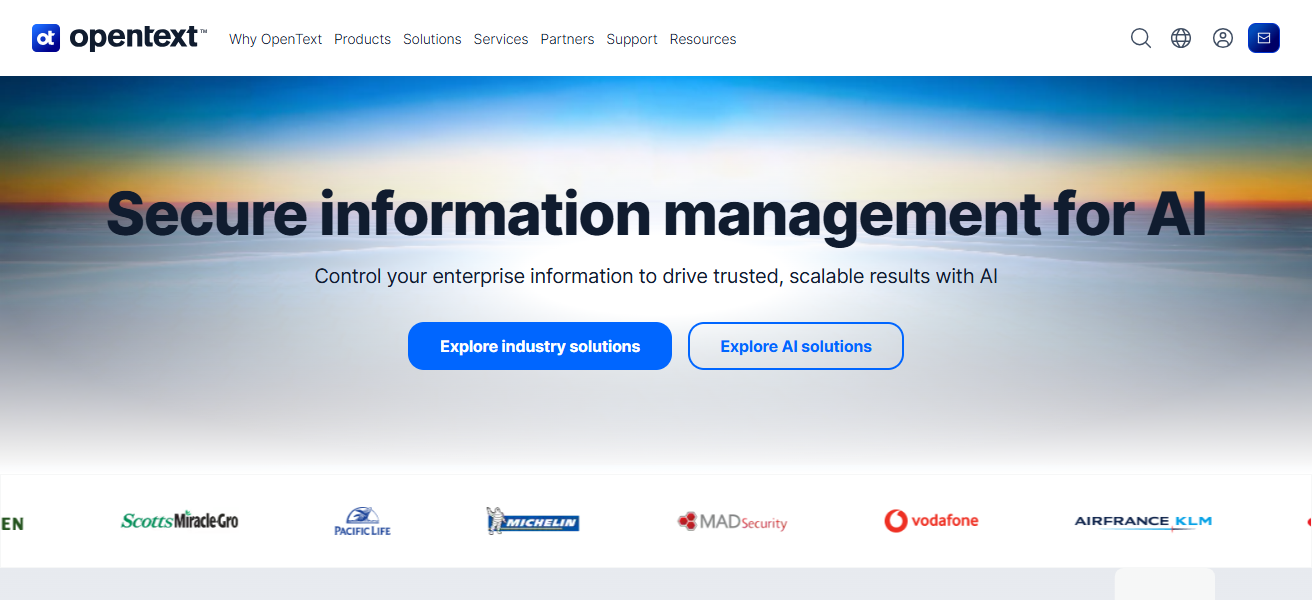
OpenText is an integrated network design e-discovery alongside broader enterprise content management systems, which makes it well-suited for larger corporations.
Highly helpful for organizations with multi-country operations that require longer retention, regulatory compliance, and secure document management.
| Pros | Cons |
|---|---|
| Strong enterprise-grade compliance and governance | Very complex system architecture |
| Integrates with enterprise content systems | High implementation cost |
| AI-powered classification and automation | Requires IT support for setup |
| Ideal for long-term data retention | Slower user experience |
10. Nextpoint
Nextpoint Cloud technology is made for fast, affordable e-discovery. This drives all legal teams to manage litigation data from collection through to production in a single system.
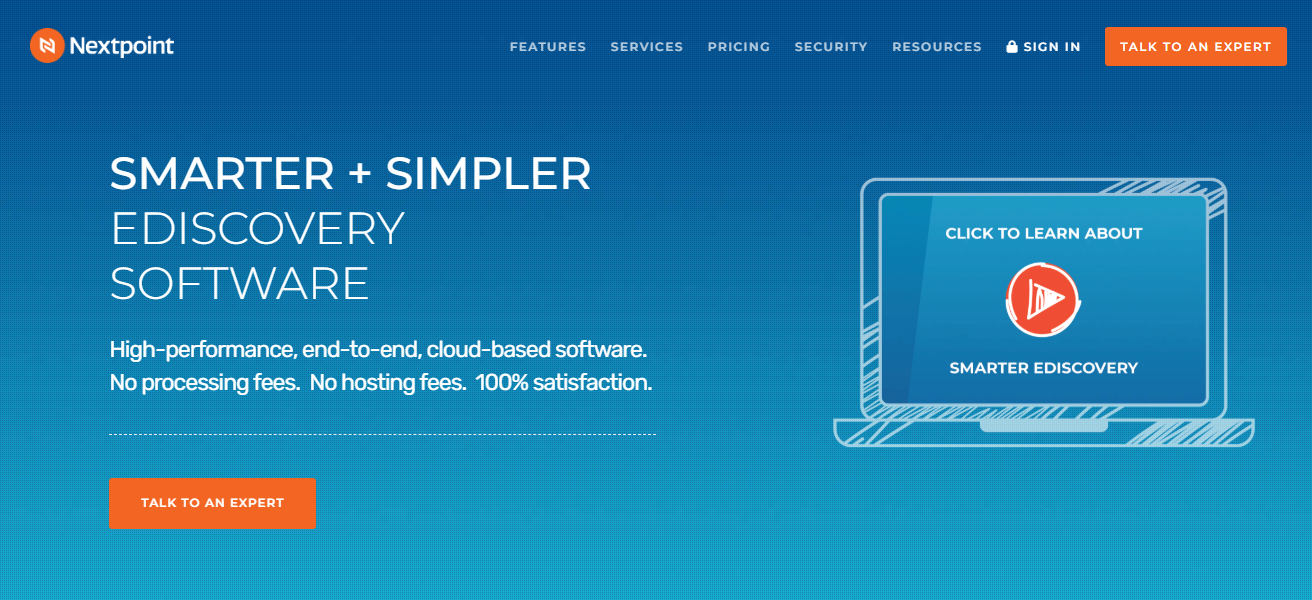
New upgrades with regard to the end of January 2023 include quicker stack handling, much better searching alternatives, and a great deal much less slack in cloud web hosting functionality.
This makes Nextpoint a popular choice for small to mid-sized law firms that like predictable pricing and low usage friction. It cuts down complexity, but retains important e-discovery capability.
| Pros | Cons |
|---|---|
| Simple and fast cloud-based e-discovery | Limited advanced AI features |
| Predictable pricing model | Not suitable for complex enterprise cases |
| Easy for small and mid-sized firms | Basic analytics compared to competitors |
| End-to-end litigation workflow support | Limited customization options |
Conclusion
E-discovery tools have become an important piece of the puzzle for modern legal teams looking to gather, review, and analyze evidence.
Tools such as RelativityOne, Everlaw, and DISCO harness the power of AI to deliver speed, accuracy, and scalability for complex matters.
These tools minimize manual labour, enhance compliance, and aid decision-making. The rapid growth of legal data now means that these solutions have transitioned from optional tools to crucial enablers of efficient, safe, and successful litigation outcomes.
FAQ
What are e-discovery tools in legal practice?
E-discovery tools are software platforms that help legal teams collect, process, review, and manage electronic data. They simplify handling emails, documents, chat logs, and cloud files during litigation or investigations.
Why are e-discovery tools important for legal teams?
They reduce manual document review, save time, improve accuracy, and help lawyers quickly find relevant evidence in large digital datasets.
Which is the most advanced e-discovery platform today?
RelativityOne is considered one of the most advanced platforms due to its AI features, scalability, and strong security for complex legal cases.
What makes AI important in modern e-discovery tools?
AI helps automate document classification, detect relevance, identify privileged documents, and speed up large-scale legal review processes.