In this Blog post are going to cover Privacy & Data Protection Tools for Modern Business in-depth, showing how these tools can help organizations protect sensitive data, prevent cyber intrusions, and be compliant with various regulatory requirements.
This introduces you to some of the most important tools, their characteristics, and why they are necessary in the era of digital business, where protection for data security and privacy has become a top priority.
Key Poinst & Legal Tech Startups Investors Are Watching Closely
- Clio Cloud-based legal practice management platform streamlining workflows for small firms globally
- Ironclad contract lifecycle management platform helping enterprises automate legal agreements efficiently globally
- Relativity e-discovery software enables large-scale legal data review and investigation workflows globally
- Everlaw cloud litigation platform simplifying discovery collaboration for modern law firms efficiently
- Luminance AI contract analysis tool detecting risks and automating legal review processes
- Spellbook AI drafting assistant for lawyers, generating contracts inside Microsoft Word seamlessly
- EvenUp AI platform for personal injury claims, optimizing settlements using data insights
- Harvey AI legal assistant helping law firms accelerate research and drafting tasks
- LegalZoom online legal services platform offering affordable documents and compliance tools globally
- Casetext AI legal research platform is now part of the Thomson Reuters ecosystem suite, integrated
10 Legal Tech Startups Investors Are Watching Closely
1. Clio
Clio is one of the most popular cloud-based legal practice management firms used by small and medium-sized law firms.
It also recently announced Clio Duo, which is a new AI capabilities that allow for automated billing, document drafting, and client communication.
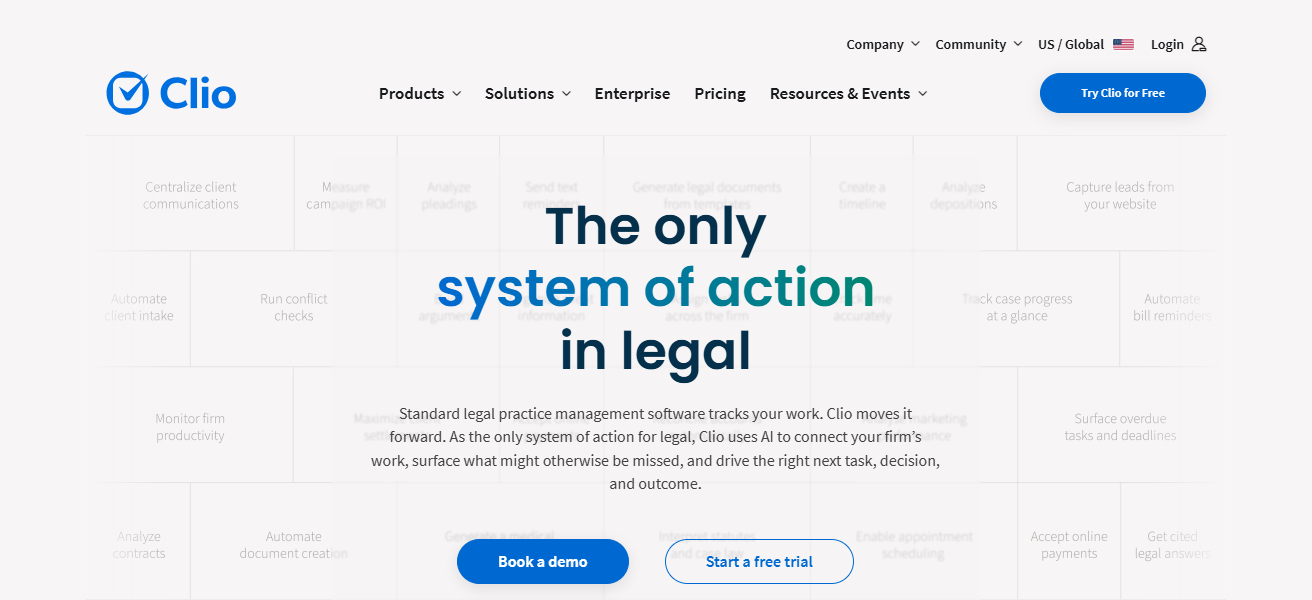
In 2026, Clio solidifies its place as the operating system for law firms with integrations spanning over 250+ apps within its ecosystem.
Its focus on simplifying business processes surrounding case management, payments, and workflow automation means that it is incredibly attractive to a growing number of investors who are hoping for scalable global legal SaaS solutions.
| Pros | Cons |
|---|---|
| Strong cloud-based ecosystem for law firms | Limited presence in large enterprise legal markets |
| Easy integrations with 250+ tools | Heavy dependence on subscription pricing model |
| Strong AI expansion with Clio Duo | Competition increasing from newer AI-native platforms |
| Popular among small and mid-size firms | Customization limits for complex legal workflows |
2. Ironclad
Ironclad is the leader in contract lifecycle management (CLM) that helps enterprise companies automate contract generation, negotiation, and approval workflows.
The most recent updates see Ironclad expand its AI-based contract intelligence capabilities to identify risks and improve compliance.
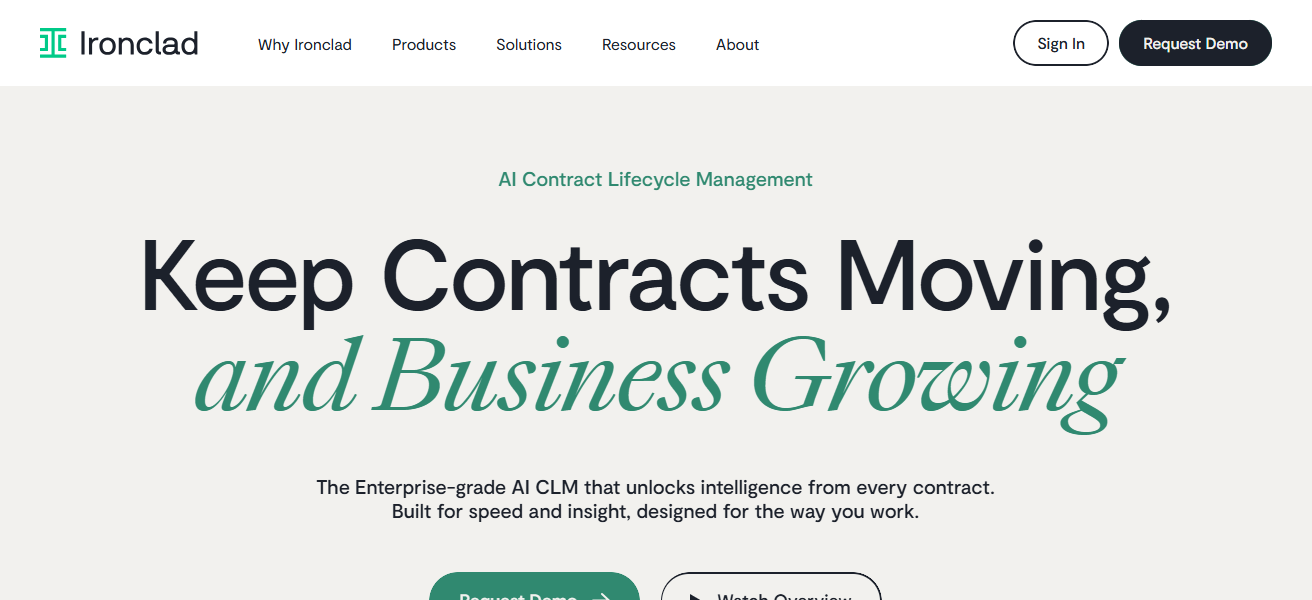
This is commonly utilized by Fortune 500 companies that are looking to cut down on legal turnaround times.
This has put it in pole position for growth in the digital transformation area of enterprise legal automation, which investors are closely watching as it expands into deeper AI contract analytics.
| Pros | Cons |
|---|---|
| Advanced contract lifecycle automation | High cost for smaller companies |
| Strong adoption among Fortune 500 firms | Implementation complexity in legacy systems |
| Powerful AI contract risk detection | Requires significant onboarding time |
| Improves legal turnaround speed | Market competition from DocuSign and others |
3. Relativity
Relativity Dominating the e-discovery and litigation data space, Relativity helps legal teams manage their ever-increasing datasets for investigations and compliance.
In recent times, it has pivoted to “legal data intelligence” with an AI-powered predictive document review and case insights.
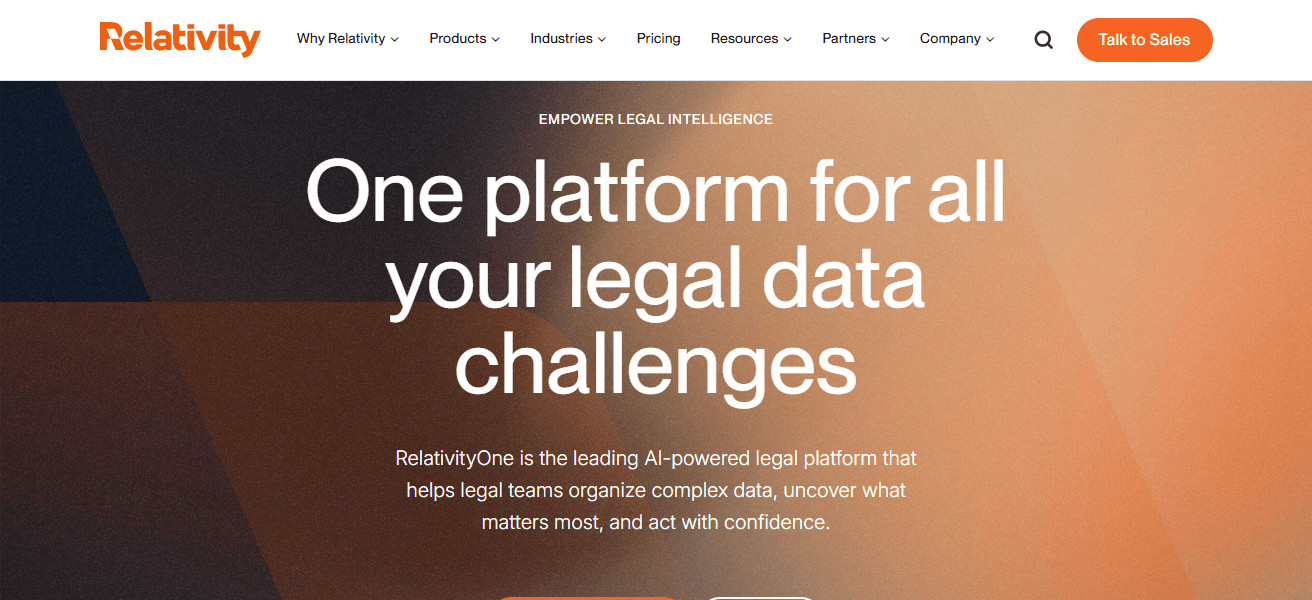
Relativity recently secured a whopping $720M in funding in 2026, which shows deep investor confidence.
Itviend is used by large law firms for complex litigation, government investigations, corporate audits, and other use cases, which generally position it as a backbone infrastructure player in legal tech ecosystems.
| Pros | Cons |
|---|---|
| Industry leader in e-discovery | Complex UI for new users |
| Handles massive legal datasets efficiently | Expensive for small firms |
| Strong AI-powered document review | Heavy infrastructure requirements |
| Trusted in government & corporate investigations | Slower innovation compared to AI-native startups |
4. Everlaw
Everlaw a cloud-based litigation and e-discovery solution aimed at streamlining document review and collaboration on cases.
Recently, integrated with advanced AI tools for predictive coding and narrative building in legal cases. Business enterprises and law firms employ it to hasten discovery workflows without sacrificing precision in comprehending evidence.

Its close competition with Relativity positions it as a prime player in legal data processing. Its scalable SaaS model, along with its growing utilization in high-stakes litigation environments, has caught the fancy of investors.
| Pros | Cons |
|---|---|
| Intuitive cloud-based litigation platform | Smaller market share than Relativity |
| Strong AI predictive coding tools | Limited use outside litigation segment |
| Enhances collaboration in legal teams | High reliance on document-heavy cases |
| Fast-growing SaaS adoption | Premium pricing model |
5. Luminance
Luminance is an AI legal technology company focused on contract review and negotiation automation. It evaluates complex agreements with 95% accuracy using proprietary, legally trained AI models.
Recent updates have included “Panel of Judges” AI systems that validate their interpretive outcome by using multiple model verifications over the contract.

Its trusted, legal-grade AI approach is attracting global enterprises in 70+ countries, including clients. Investors view it as a fully defensible and AI-native legal platform with European, if not global, top potential expansion.
| Pros | Cons |
|---|---|
| Advanced legal-trained AI models | Less brand recognition in US market |
| Strong contract analysis accuracy | Limited functionality outside contracts |
| Innovative “AI panel” validation system | Enterprise-focused pricing limits SMEs |
| Global client base across 70+ countries | Niche specialization reduces versatility |
6. Spellbook
Enter: Spellbook, one of the very few AI drafting assistants built right into Microsoft Word for lawyers.
It generates, edits, and reviews contracts in real time, leveraging generative AI. Recent Improvements are concentrated on contextual clause suggestions and risk detection while drafting.
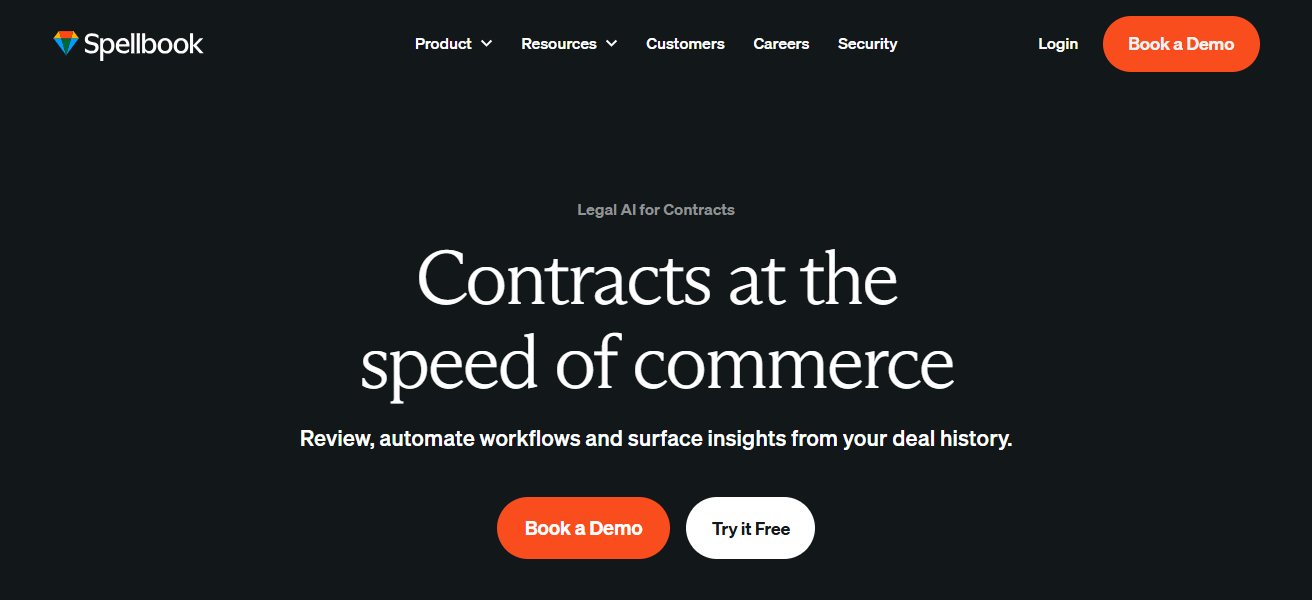
Being integrated into the workflow seamlessly is one of the major reasons why corporate lawyers and small firms are such diehard fans.
Investors are keeping an eye on growth with increasing demand for embedded AI tools that require minimal manual drafting work and leave current legal workflows intact.
| Pros | Cons |
|---|---|
| Seamless integration with Microsoft Word | Dependent on Word ecosystem |
| Real-time AI drafting support | Limited standalone platform capabilities |
| Speeds up contract creation | Early-stage feature maturity |
| Strong adoption among lawyers | Competition from broader AI writing tools |
7. EvenUp
EvenUp leverages AI to optimize case valuation and settlement strategies for personal injury claims.
It looks at medical records, injury data, and case law to create evidence-based demand packages. In recent times, it has been used to calculate predictive settlement predictions based on large legal datasets.

Put simply, law firms leverage it to improve compensation outcomes and reduce time spent on case preparation.
Investors are excited by the company’s strong niche focus in litigation analytics — predominantly around a clear ROI and automation-identity critical to one of the most complex use cases, where high-volume personal injury distribution brings historical measurability into play.
| Pros | Cons |
|---|---|
| High accuracy in personal injury valuation | Narrow focus on injury law only |
| Improves settlement outcomes significantly | Limited applicability in other legal fields |
| Uses real legal and medical data | Data dependency risk |
| Strong niche investor interest | Scaling challenges beyond US market |
8. Harvey
Harvey AI–Fast-growing Legal AI Platform, backed by major VCs. Mayple.ai: A suite of AI agents for legal research, contract drafting, and due diligence.
By 2026, Harvey had developed its “Agent Builder,” which enabled law firms to create their own AI workflows without having to write any code. It now handles hundreds of thousands of legal tasks daily around the world.
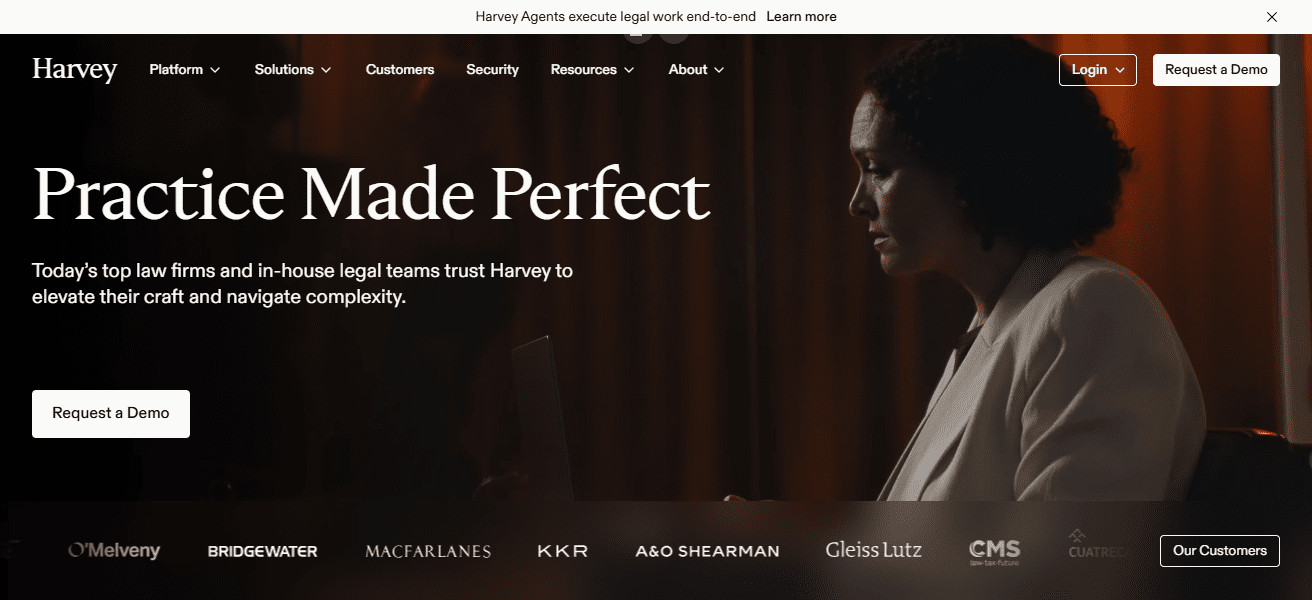
Recent funding and its expanded franchise make a strong case for it to be the principal AI OS for high-end legal firms.
| Pros | Cons |
|---|---|
| Backed by top-tier venture capital | High valuation expectations pressure |
| AI agents for multiple legal tasks | Still evolving enterprise stability |
| Custom workflow automation (Agent Builder) | Integration complexity for firms |
| Rapid global adoption in elite law firms | Strong competition from OpenAI-based tools |
9. LegalZoom
LegalZoom —It is one of the most widely used online legal services platforms that specializes in business formation, compliance, and document automation.
It is gradually growing beyond just simple legal templates into AI-supported Legal Advice for individuals and SMEs.
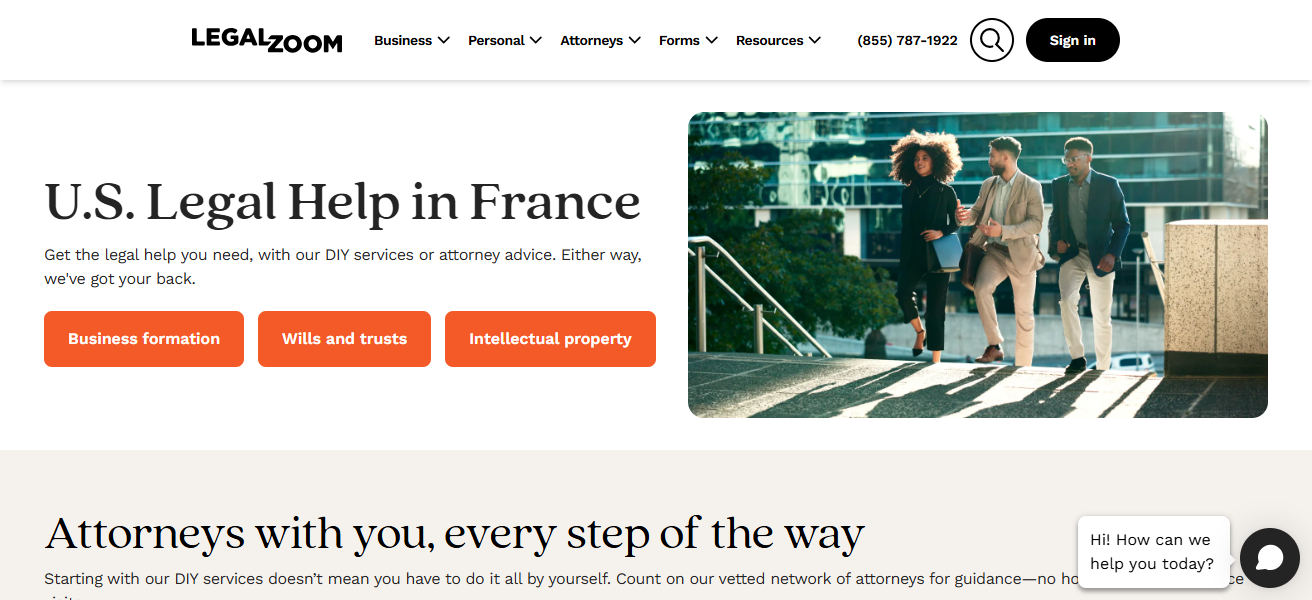
Latest upgrades include subscription legal advice and artificial intelligence-powered document personalization.
The fairly vast number of consumers it has is a strong point for its recurring revenue business. Investors see value in its hybrid model straddling legal tech and consumer services
Placing it somewhere between a stable but dull company and the wilder-spirited entrepreneurs of the legal ecosystem.
| Pros | Cons |
|---|---|
| Large consumer legal services base | Limited advanced enterprise legal tools |
| Affordable legal document solutions | Less innovation in deep legal AI |
| Subscription-based revenue model | High competition from free legal tools |
| Strong brand trust in US market | Slower global expansion |
10. Casetext AI
The CoCounsel AI legal assistant, for research, deposition prep, and contract analysis, is powered by Casetext (newly acquired part of Thomson Reuters).
AI capabilities are integrated into the Westlaw workflows and, therefore a must-have for law firms. Newer approaches are aiming to improve citation accuracy and reduce hallucination in the context of legal research.

With that acquisition, it broadened its enterprise footprint and became a foundational AI layer in legacy legal research ecosystems worldwide.
| Pros | Cons |
|---|---|
| Deep integration with Thomson Reuters | Less independent brand identity post-acquisition |
| High-quality legal research AI | Expensive enterprise licensing |
| Strong citation accuracy improvements | Limited flexibility outside ecosystem |
| Trusted by large law firms | Competition from newer AI legal assistants |
Conclusion
To sum it up, it is undeniable that privacy and data protection tools are imperative for handling sensitive information in modern businesses to keep the company secure.
They are helpful in protecting against cyber threats, ensuring compliance with regulations, and improving data governance.
With the rise of digital risks, it is increasingly crucial to proactively look for advanced encryption, monitoring, and access control solutions.
When businesses use these tools, they can ensure robust security, credibility, and long-term operational resilience in a data-centric economy.
FAQ
What are privacy and data protection tools?
They are software solutions that help businesses secure sensitive data, manage compliance, and prevent unauthorized access or leaks.
Why are these tools important for businesses?
They protect customer data, reduce cyber risks, and ensure compliance with laws like GDPR and other privacy regulations.
What is data encryption in these tools?
Encryption converts data into unreadable code, ensuring only authorized users can access it securely.
Do these tools help with compliance?
Yes, they assist businesses in meeting legal requirements like GDPR, HIPAA, and data protection standards.