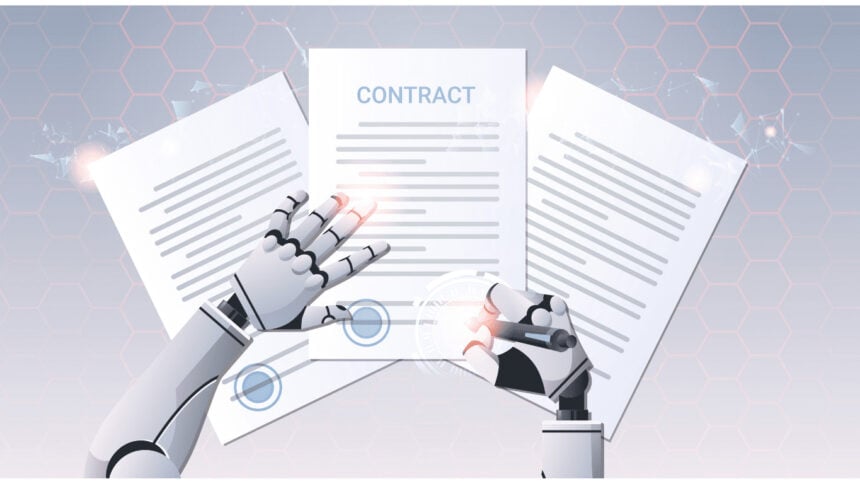
This article on New Legal AI Brands Disrupting The Industry discusses some new legal AI brands that are disrupting traditional legal services.
Such new platforms simplify the research, automate documentation, and improve predictive analytics.
Current alternatives also lower expenses and increase efficiency, challenging tradition, forcing legal firms to evolve into more technology-based and client-centered approaches that will change the landscape of service providers in the future.
Key Poinst & New Legal AI Brands Disrupting The Industry
Harvey AI automates legal research and contract analysis, improving law firm productivity globally.
Luminance uses machine learning to detect contract risks, accelerating legal document review processes efficiently.
Spellbook assists lawyers in drafting contracts faster using advanced generative artificial intelligence technology capabilities.
Lawgeex reviews contracts automatically, reducing compliance errors and manual legal workload significantly today.
Evisort streamlines contract lifecycle management through intelligent document tracking and analytics systems.
Kira Systems extracts critical contract data accurately during mergers, acquisitions, and compliance reviews efficiently.
Lex Machina provides litigation analytics helping attorneys predict case outcomes using legal data insights.
Ironclad modernizes digital contracting processes, improving collaboration between legal and business departments seamlessly.
Robin AI combines AI contract review with legal expertise for enterprise clients worldwide effectively.
Paxton AI helps lawyers conduct research, summarize documents, and draft legal content rapidly.
10 New Legal AI Brands Disrupting The Industry
1. Harvey AI
Harvey AI is quite possibly one of the fastest-changing impacts on enterprise legal operations as it automates drafting through highly advanced AI agents to assist with due diligence and regulatory research.
Harvey also launched the ability for lawyers to build agents — customized, workflow-specific AI assistants running on top of Harvey’s underlying tech in 2026, without having to know how to code (what they call “Agent Builder”).

Harvey is being utilized widely by major global law firms, providing sophisticated legal reasoning and support for contract analysis and litigation.
Rated at over 90% accuracy, along with integrations with top-tier Legal databases and enterprise-grade security systems, Harvey is among the most impactful modern legal AI platforms changing our world
| Pros | Cons |
|---|---|
| Advanced AI agents automate legal drafting and complex research efficiently. | Premium pricing unsuitable for smaller independent law firms globally. |
| Strong enterprise-grade security supports confidential legal workflows safely. | Requires training before teams fully utilize advanced workflow customization features. |
| Integrates with major legal databases improving productivity and legal accuracy. | Heavy enterprise focus may overwhelm small legal departments initially. |
| Agent Builder enables customized AI assistants without coding knowledge requirements. | Integrates with major legal databases, improving productivity and legal accuracy. |
2. Luminance
Luminance distinguishes itself with autonomous contract negotiation, multilingual legal analysis) using its proprietary Legal-Grade AI tech.
The product interprets thousands of contracts in a matter of minutes, enabling enterprises to stay on top of compliance and manage M&A due diligence responsibilities with ease.

In 2026, Luminance introduced its “Institutional Memory” capability, automatically enabling organizations to store knowledge regarding historical legal decisions and the logic behind negotiations.
Luminance is the number one AI platform for cross-border legal work, with its technology supporting more than eighty languages and increasing accuracy, consistency, and collaboration among global legal departments.
| Pros | Cons |
|---|---|
| Supports multilingual contract analysis across international legal operations seamlessly. | Advanced features may increase implementation costs for growing businesses. |
| Autonomous negotiation tools reduce manual contract review workloads significantly. | Smaller firms may not require enterprise-level multilingual capabilities regularly. |
| Institutional Memory preserves legal decisions improving long-term organizational consistency. | Institutional Memory preserves legal decisions, improving long-term organizational consistency. |
| Fast AI analysis accelerates mergers and acquisitions due diligence tasks. | Custom workflow configuration sometimes requires additional technical support assistance. |
3. Spellbook
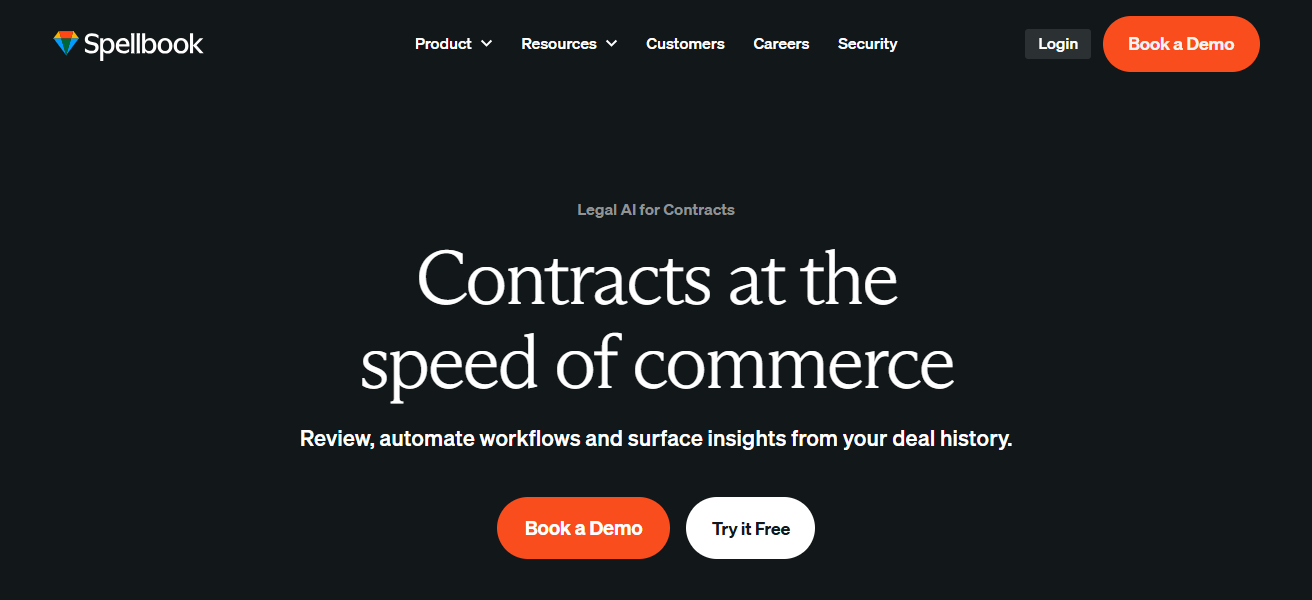
Spellbook is incredibly popular with independent lawyers and small legal teams since it integrates directly within Microsoft Word environments.
The drafting platform leverages GPT-powered by suggesting clauses, detect fraud risk, and significantly speed up contract negotiations.
Spellbook 2026 added more contextual contract understanding, which allowed lawyers to review contracts faster while maintaining existing workflows.
Several firms have liked that Spellbook has a less expensive-to-run subscription structure than more enterprise-focused competitors.
The seamless integration and intuitive interface are what drive modern lawyers to play around with worldwide AI-powered drafting solutions of their own.
| Pros | Cons |
|---|---|
| Advanced enterprise automation features remain less comprehensive than those of competitors. | Works directly inside Microsoft Word, improving drafting convenience significantly. |
| Affordable pricing attractive for solo lawyers and smaller firms globally. | Accuracy occasionally depends heavily on the uploaded contract structure quality. |
| AI clause suggestions accelerate contract drafting and negotiation processes efficiently. | Accuracy occasionally depends heavily on uploaded contract structure quality. |
| User-friendly interface minimizes learning curve for legal professionals adopting AI. | Requires internet connectivity for optimal AI-powered drafting performance consistently. |
4. Lawgeex
Lawgeex, meanwhile, focuses on automated contract review and reducing negotiation turnaround time and compliance risk with artificial intelligence.
It compares contracts against approved legal policies and finds problematic clauses that need further review against your legal policy.
Over the past couple of years, and simultaneously to their focus on this independent pain point, Lawgeex has also expanded AI capabilities supporting procurement, finance, and HR contract workflows.

Curating partnerships, companies are increasingly adopting Lawgeex, as it takes away repetitive legal workload as well as ensures better consistency across teams on document reviews.
Its automation-driven approach enables in-house legal teams to set their strategic decisions aside and avoid spending time on manual document analysis tasks on a day-to-day basis.
| Pros | Cons |
|---|---|
| Compares agreements against company policies ensuring compliance and consistency efficiently. | Primarily focused on contracts rather than broader legal operations management. |
| Compares agreements against company policies, ensuring compliance and consistency efficiently. | Complex custom policies may require extensive platform configuration initially. |
| Supports procurement, finance, and HR legal workflow management simultaneously. | Smaller organizations may find advanced automation capabilities unnecessary sometimes. |
| Human lawyers are still necessary for highly sensitive legal negotiations. | Human lawyers still necessary for highly sensitive legal negotiations. |
5. Evisort
Enter Evisort, which uses AI-powered document intelligence and workflow automation solutions to disrupt the traditional contract lifecycle management process.
It features an AI-powered machine learning system that automatically extracts clauses, obligations, and deadlines from enterprise-wide legal agreements.

As of 2026, Evisort combined data analytics functionality with predictive analytics features to enable organisations to proactively manage contract renewals, compliance issues, and financial risks.
Evisort is gaining traction in legal departments increasingly looking to consolidate contract visibility with a seamless integration into enterprise software ecosystems.
Its intelligent search functionality enhances the efficiency of corporate legal and procurement teams globally.
| Pros | Cons |
|---|---|
| AI-powered search identifies clauses and obligations within seconds efficiently. | Enterprise-focused pricing may challenge startups and smaller businesses financially. |
| Predictive analytics help organizations manage renewals and compliance proactively. | Initial integrations with legacy software systems may require technical expertise. |
| Centralized contract visibility improves collaboration across legal departments globally. | Learning advanced analytics features may take additional onboarding time. |
| Strong automation reduces manual tracking of contract deadlines consistently. | Some customization options may require enterprise-level implementation assistance. |
6. Kira Systems
Kira Systems continues to be a top AI solution for due diligence and contract data extraction in global mergers & acquisitions markets.
Kira (2013) – Kira acquired Litera, which allowed for expansion of enterprise integrations, while continuing to do the best job possible matching legal provisions with accuracy across millions of documents.
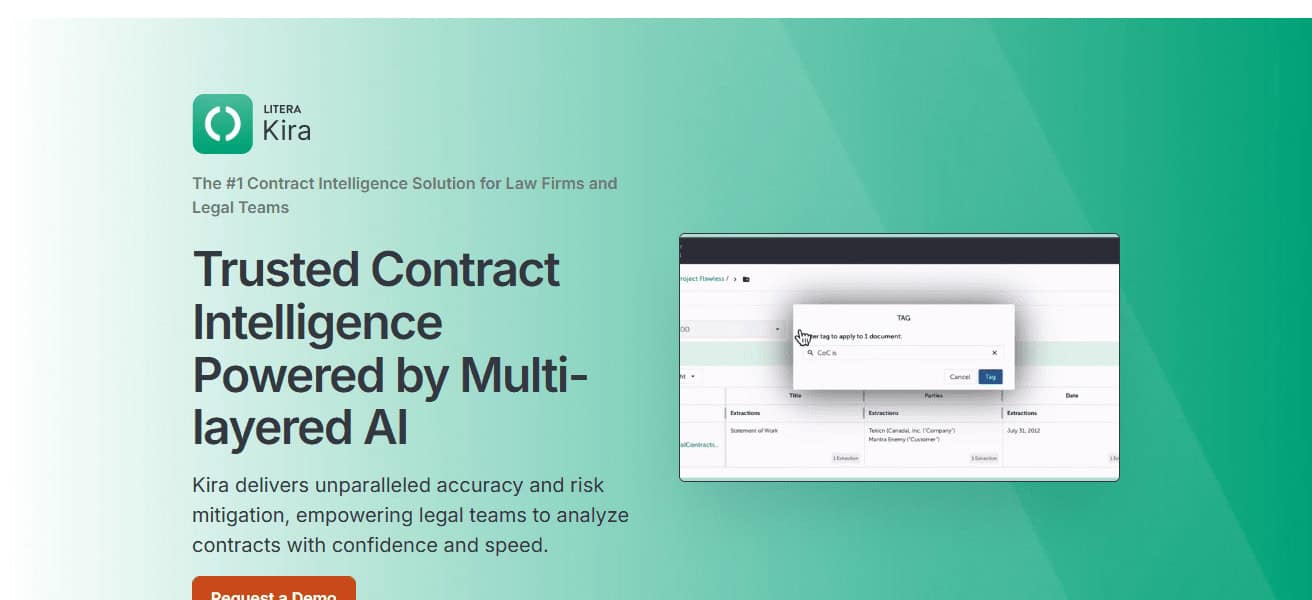
Kira received favorable press in 2026 due to its development on improving AI -assisted clause recognition workflows, thus strengthening collaboration between supporting transactional lawyers more efficiently.
Because its machine learning models eliminate up to 90% of the manual review time for high-volume legal projects, like compliance audits and acquisitions, many firms still return to Kira.
| Pros | Cons |
|---|---|
| Excellent due diligence capabilities support mergers and acquisitions efficiently worldwide. | Best performance mainly focused on transactional legal review processes. |
| AI clause extraction reduces manual document analysis time significantly. | Smaller firms may consider enterprise pricing structure relatively expensive. |
| Strong machine learning models improve contract review accuracy consistently. | Requires quality document formatting for optimal extraction accuracy results. |
| Collaborative review workflows enhance team productivity during large projects. | Limited general legal drafting tools compared with AI-first competitors. |
7. Lex Machina
Lex Machina pioneered the field of litigation analytics by taking court data and turning it into useful legal intelligence for lawyers and companies.
Using big data from courts across the country, its AI-powered platform forecasts judicial behavior, litigation patterns and probable case outcomes.
Lex Machina launched advanced predictive analytics capabilities in 2026 that helped firms build more effective case strategies even before trial.
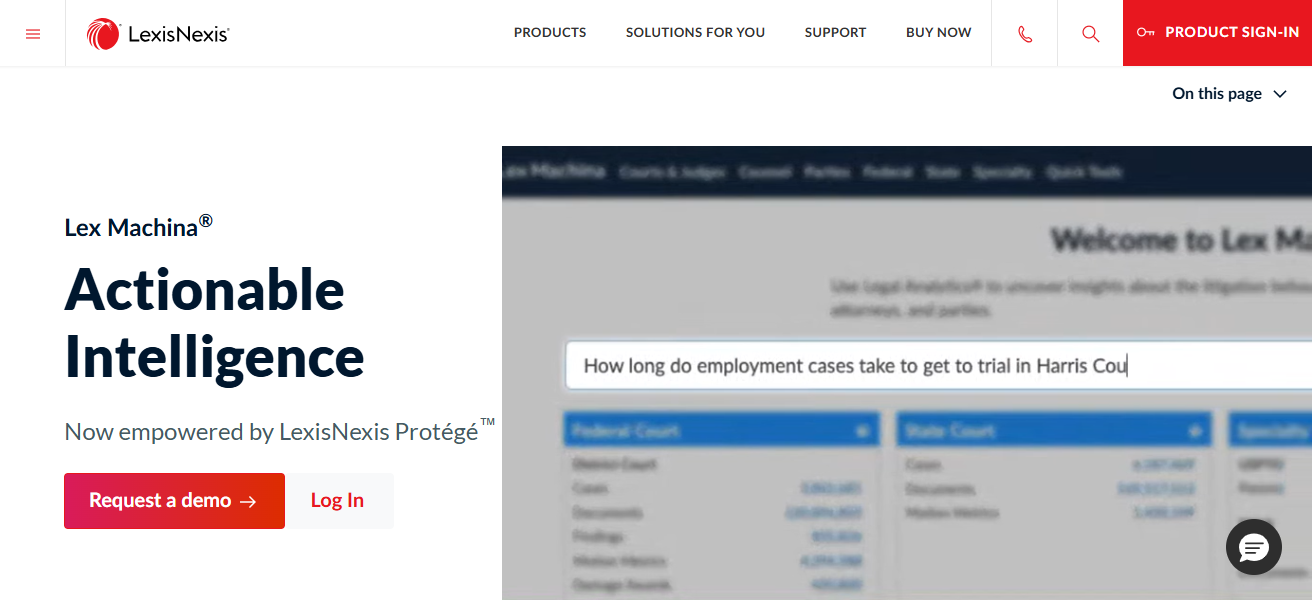
The platform is increasingly being used by corporate legal teams to assess opposing counsel performance and lawsuit settlement risk more accurately.
Its strength in analytics is still altering the ways in which litigation professionals prepare for courtroom competition all across the globe.
| Pros | Cons |
|---|---|
| Litigation analytics help attorneys predict case outcomes strategically accurately. | Primarily valuable for litigation-focused firms rather than transactional practices. |
| Tracks opposing counsel’s performance improving courtroom preparation strategies effectively. | Subscription pricing may challenge smaller independent legal professionals financially. |
| Tracks opposing counsel’s performance, improving courtroom preparation strategies effectively. | Predictive analytics cannot guarantee exact legal case outcomes reliably. |
| Supports data-driven settlement and risk assessment decisions confidently. | Requires understanding litigation analytics for maximum platform effectiveness overall. |
8. Ironclad
Ironclad — AI-assisted contract lifecycle management for Enterprise legal departments. Its AI Assist pulls together a set of agreements, predicts the negotiation outcome, and alerts to any unusual clauses that may arise in contract reviews automatically.
Ironclad is a powerful workflow automation tool that has strong integrations between legal, procurement, and the sales process to help businesses accelerate approvals from 2026.
Ironclad is the combination of scalable automation and secure cloud infrastructure that has made Ironclad a go-to for many global enterprises.
Providing a simple, easy-to-navigate interface, the platform has continued driving legal operations across industries globally faster, smarter, and more data-driven.
9. Robin AI
Robin AI merges generative AI and human legal expertise to provide faster contract review and enterprise document analysis services.
Through AI-powered clause analysis, the company was able to cut turnaround times of contracts, allowing for high traction across Europe and international markets.
Robin A I went on to develop managed services supporting mergers, acquisitions, and high-volume compliance operations from multinational organizations in 2026.
The now-more-elastic teams at Robin AI — making it the industry standard as a highly customized legal template generator, fast document search engine, and scalable contract intelligence.
Its hybrid human-AI approach allows a balance of improved efficiency while retaining professional legal oversight all the time.
| Pros | Cons |
|---|---|
| AI Assist automates drafting and unusual clause detection efficiently. | Advanced enterprise setup may require significant implementation planning initially. |
| Strong workflow automation accelerates contract approval processes significantly today. | Smaller legal teams may not need full enterprise functionality features. |
| Secure cloud infrastructure supports scalable enterprise legal operations globally. | Premium subscription costs may exceed limited departmental technology budgets. |
| User-friendly interface improves collaboration between business departments seamlessly. | Integration customization may require additional technical support resources occasionally. |
10. Paxton AI
Paxton AI, Sayfullozoda- a novel legal research assistant helping lawyers summarize their documents, do case analysis and generate drafts of fields in seconds.
The platform quickly gained traction with modern companies looking for low-cost AI-based productivity solutions that did not require complex enterprise installations.
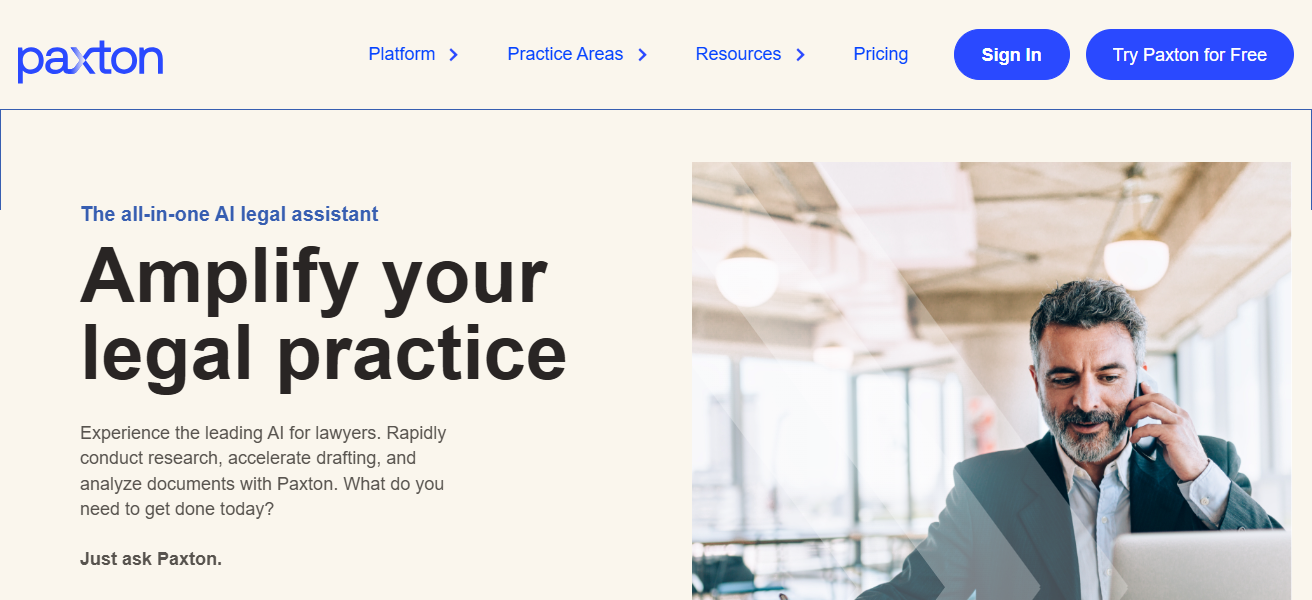
Paxton AI 2.0 improves contextual, citation accuracy and generative capabilities that allow lawyers to carry out research tasks more efficiently in different jurisdictions.
With a user interface that simplifies complex legal workflows, Paxton AI is being adopted by many smaller legal practices as it enables busy professionals dealing with daily client issues to cut administrative load significantly.
| Pros | Cons |
|---|---|
| Affordable AI research assistant suitable for smaller legal practices globally. | Fewer enterprise integrations compared with larger legal AI competitors currently. |
| Simplifies legal drafting and document summarization tasks efficiently daily. | Advanced litigation analytics capabilities remain relatively limited currently overall. |
| Improved citation accuracy enhances research reliability across jurisdictions effectively. | The growing platform is still developing broader enterprise workflow automation features. |
| The growing platform still developing broader enterprise workflow automation features. | Complex legal matters still require experienced professional legal supervision. |
Cocnlsuion
Conclusion: New legal AI brands invade the market to transform and improve the industry by speeding up research, automating the document review process, and boosting predictive analytics capabilities.
Their disruptive technology decreases costs, increases knowledge work accessibility and makes legal services more accurate.
Traditional practices are pressured to evolve as firms implement such innovations. Agility and technology integration will define the future of law, which shall be powered by AI-based platforms to deliver immediate client-centered modern solutions.
FAQ
What is Harvey AI used for in legal work?
Harvey AI is used for advanced legal drafting, due diligence, and regulatory research automation. It helps large law firms handle complex reasoning tasks, contract review, and litigation support using enterprise-grade AI agents with secure data integration and customizable workflows, improving efficiency in modern legal operations globally.
How does Luminance differ from other legal AI tools?
Luminance focuses on autonomous contract analysis and multilingual legal review. It uses legal-grade AI to process thousands of documents quickly while maintaining accuracy. Its “Institutional Memory” feature helps organizations store negotiation history, making it highly useful for global corporations handling cross-border contracts and compliance workflows efficiently.
Why is Spellbook popular among lawyers?
Spellbook is popular because it works directly inside Microsoft Word, making contract drafting seamless. It suggests legal clauses, identifies risks, and speeds up negotiation without changing existing workflows. Smaller law firms prefer it due to affordability, simplicity, and strong GPT-powered drafting assistance for everyday legal tasks.