This article discusses the best crypto APIs for NFT marketplaces and digital assets with the aim of informing developers and businesses on how to create safe and robust Web3 applications.
In this article you will find the leading NFT APIs and the features, benefits, blockchains, and costs associated with them to help you determine the best API to use for your NFT marketplace or digital asset application.
What Are Crypto APIs for NFT Marketplaces and Digital Assets?
APIs that connect to the NFT marketplace and digital assets include software protocols that allow developers to connect applications to blockchain networks and fetch data pertaining to NFTs.
They allow retrieval of NFT metadata, verification of ownership, transaction history, integration of wallets, transfer of tokens, and analytics of marketplaces.
These APIs allow developers to access a lot of NFT data without having to run a blockchain node. They provide faster development and an easier method of obtaining digital assets and collectibles combined with analytics, and real-time data for digital marketplaces.
Key Points & Best Crypto APIs for NFT Marketplaces and Digital Assets
| Crypto API | Explanation |
|---|---|
| Alchemy NFT API | Provides fast NFT metadata, ownership, transfers, and marketplace data across multiple blockchain networks efficiently. |
| Moralis NFT API | Simplifies NFT development with metadata, balances, transfers, and cross-chain blockchain support seamlessly. |
| QuickNode NFT API | Delivers scalable blockchain infrastructure with reliable NFT indexing and real-time data access globally. |
| Covalent API | Aggregates NFT ownership, transaction history, metadata, and blockchain analytics through unified endpoints efficiently. |
| Tatum API | Enables NFT minting, wallet integration, metadata management, and blockchain transaction automation effortlessly securely. |
| Chainbase API | Offers indexed NFT datasets, wallet tracking, metadata access, and multi-chain analytics for developers. |
| Blockdaemon API | Provides enterprise-grade blockchain infrastructure supporting NFT applications with secure, scalable API services globally. |
| Infura API | Delivers dependable Ethereum and IPFS connectivity for NFT marketplaces and decentralized digital assets applications. |
| SimpleHash API | Indexes NFT collections, metadata, pricing, rarity, and ownership across numerous blockchain ecosystems accurately. |
| Reservoir API | Powers NFT marketplaces with liquidity aggregation, trading, collection data, and real-time market insights. |
10 Best Crypto APIs for NFT Marketplaces and Digital Assets
1. Alchemy NFT API
One of the best solutions for modern NFT marketplaces and Web3 app development is the Alchemy NFT API. Developers can quickly access on-chain NFT metadata, NFT ownership, NFT transfers, NFT floor prices, and collection data from Alchemy without the burden of building and maintaining a complex Ethereum index.
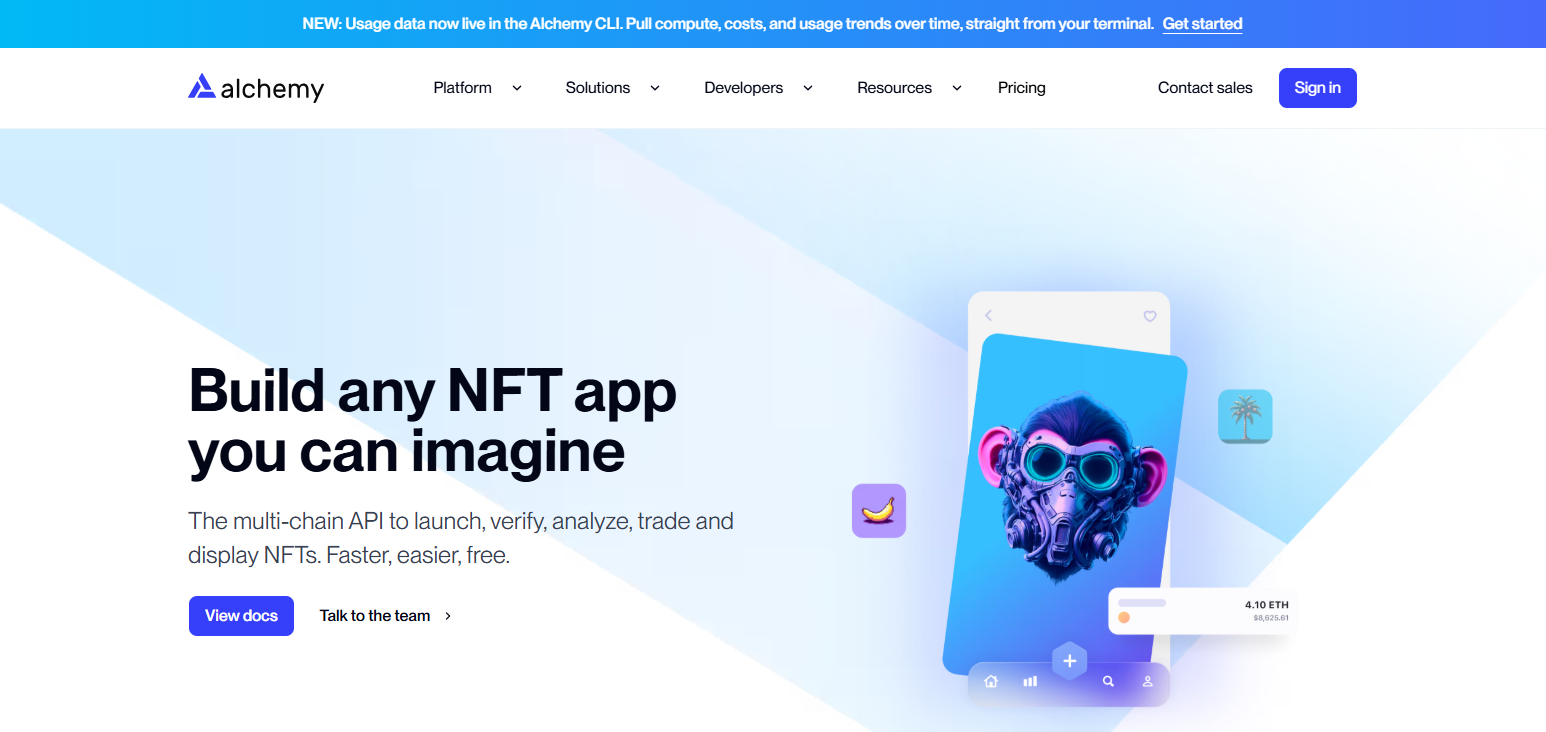
Alchemy’s NFT API is cross-chain compatible, taking away the headache of NFT marketplaces and apps that span multiple blockchains. With additional features like real-time webhooks, enhanced API calls, and a reliable framework
Alchemy’s API helps applications avoid outdated data. Alchemy provides the documentation and the analytics along with a highly scalable, reliable framework, making it a perfect solution for both Startups and Enterprises.
Alchemy NFT API – Features
- NFT metadata retrieval from supported blockchains occurs at high speeds with predictable, reliable performance.
- Automatic application updates with instant webhook notifications for changes to ownership and activities in the marketplace.
- Multi-chain NFT functionality promotes efficient development across the Ethereum and Polygon blockchain ecosystems.
- Developer documentation is clear and comprehensive, making integration, testing, deployment, and maintenance of applications easier.
- Scalability, reliability, security, and consistent response times of the API infrastructure are built to enterprise standards.
| Pros | Cons |
|---|---|
| High-performance NFT APIs with excellent uptime and reliability. | Advanced features require higher-priced subscription plans. |
| Supports multiple blockchain networks for cross-chain development. | Free tier has usage limitations for large applications. |
| Real-time webhooks enable instant NFT event notifications. | Some APIs primarily focus on EVM-compatible blockchains. |
| Comprehensive documentation and developer resources available. | Enterprise pricing may be expensive for small startups. |
| Scalable infrastructure handles millions of API requests efficiently. | Advanced analytics features have a learning curve. |
2. Moralis NFT API
The Moralis NFT API makes NFT development a whole lot easier by providing APIs for fetching all the NFT data, NFT ownership by wallet, NFT transfers, and NFT marketplace data. Developers can add NFTs to their projects without maintaining any Ethereum nodes or custom services.
Moralis’s API is cross-chain and includes a bundle of additional features such as authentication, wallet connectivity, event streaming, and real-time updates for rich Web3 applications.
The quality of Moralis’s SDKs, documentation, and pricing add to the advantages of using Moralis for NFT marketplaces, games, collectibles, and the metaverse.
Moralis NFT API – Features
- Unified API endpoints allow for easy retrieval of NFT metadata, ownership, balances, and transfer histories.
- Cross-chain compatibility of the API supports multiple blockchains and is developer-friendly across applications.
- Web3 user management and onboarding of authenticated wallets is a streamlined secure process for developers.
- Real-time event streaming provides instant updates from blockchain without the need for complex infrastructure.
- Integration is easy and quick with a variety of languages due to the flexible SDK.
| Pros | Cons |
|---|---|
| Easy integration using developer-friendly SDKs and APIs. | Premium features require paid subscription plans. |
| Built-in authentication and wallet connectivity simplify development. | API rate limits apply on lower-tier plans. |
| Supports multiple blockchain ecosystems through unified APIs. | Limited customization for highly specialized blockchain workflows. |
| Real-time blockchain synchronization improves application responsiveness. | Some advanced features require additional configuration efforts. |
| Excellent documentation accelerates Web3 project deployment. | Heavy usage increases monthly operational costs. |
3. QuickNode NFT API
The QuickNode NFT API gives NFT developers a fast and scalable blockchain solution. With low latency, the API provides indexed NFT metadata and information on owners, collections, histories and transactions, and blockchain events.
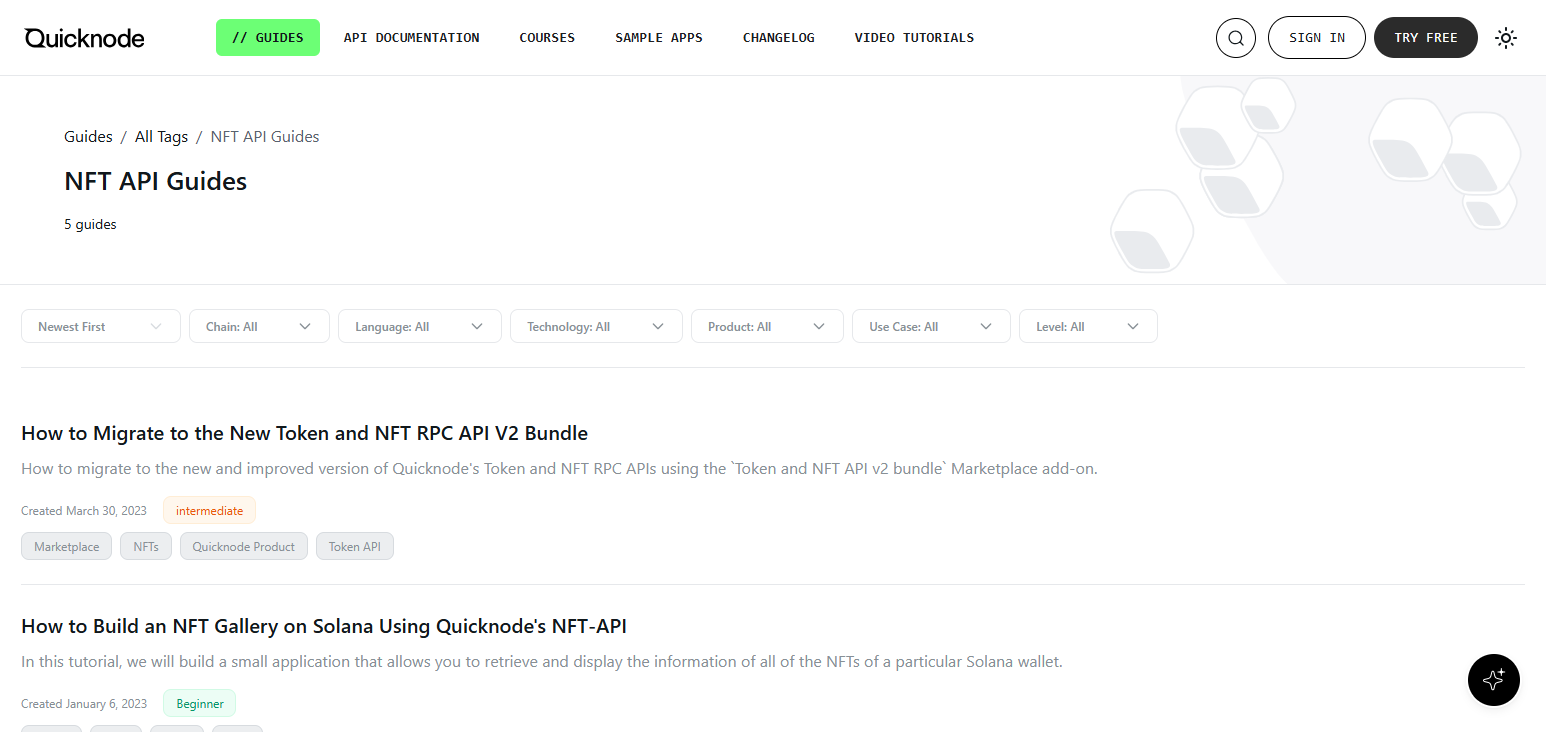
QuickNode infrastructure is built with performance in mind, even during heavy loading on the blockchain. QuickNode supports WebSocket connections, advanced RPC services, and multiple blockchains on a single interface. Its enterprise-grade infrastructure, security, and monitoring solution is ideal for professional NFT marketplaces, game ecosystems, and large scale digital assets.
QuickNode NFT API – Features
- Low-latency access to NFT data around the world improves responsiveness of the marketplace and user experience.
- Global node infrastructure provides reliable access to blockchain with minimal disruptions.
- WebSockets are used to monitor NFT-related blockchain events in marketplaces.
- Advanced RPC services simplify interaction with the blockchain while addressing performance and scalability concerns.
- Enterprise security protects the blockchain infrastructure, API endpoints, and application workloads.
| Pros | Cons |
|---|---|
| Extremely low latency blockchain infrastructure worldwide. | Enterprise plans can become costly for scaling businesses. |
| Reliable WebSocket support for live blockchain events. | Advanced configuration may challenge beginner developers. |
| Supports numerous blockchain networks through one platform. | Free plan includes limited monthly API requests. |
| Enterprise-grade uptime and infrastructure monitoring tools. | Premium add-ons increase overall development expenses. |
| Optimized RPC services improve blockchain application performance. | Requires technical blockchain knowledge for advanced usage. |
4. Covalent API
The Covalent API is a game changer for NFT developers. The API aggregates NFT ownership metadata, transfer histories, and analytics in standardized API endpoints. This means developers no longer need to interact with multiple blockchain nodes.
They can do it through a single interface. Covalent supports many blockchains, and thus simplifies building and maintaining a multi-chain NFT marketplace. Its advanced analytics and historical and traceable data make it indispensable.
With its outstanding documentation, infrastructure, and scalability, Covalent is the go-to API for building NFT dashboards, portfolios, explorers, and analytics.
Covalent API – Features
- Consolidated blockchain endpoints allow efficient NFT data access from supported networks.
- Historical blockchain data provides NFT ownership and transaction analysis for developers.
- Portfolio tracking APIs maintain accurate digital assets across multiple blockchain wallets.
- Consistent response formats greatly simplify the integration of NFT applications and analytics.
- Multi-chain capability supports efficient NFT marketplace design and simplifies data management.
| Pros | Cons |
|---|---|
| Unified API simplifies blockchain data retrieval dramatically. | Certain blockchain updates may experience indexing delays. |
| Historical blockchain analytics provide valuable NFT insights. | Large datasets may require premium subscription access. |
| Standardized responses reduce development complexity significantly. | Limited support for some newly launched blockchains. |
| Multi-chain compatibility improves NFT marketplace scalability. | Advanced analytics may require technical expertise. |
| Excellent portfolio and wallet tracking capabilities. | Higher usage increases monthly API costs. |
5. Tatum API
With Tatum API, developers can build extensive NFT solutions. This API supports NFT minting, manipulation of the metadata, wallet creation, and transfers of tokens. It also builds automation for transactional requests for the blockchain.
Generally, Tatum API simplifies NFT solutions for developers looking to launch NFT products for their businesses. This API provides an interface to multiple blockchain networks. It has a built-in scalable infrastructure on the cloud, and built-in security. SDKs for other programming languages are also available.
This API can be used for NFT based projects like NFT marketplaces, Gaming projects, NFT based Digital Certificates, NFT based Loyalty programs, and many more.
Tatum API – Features
- Flexible APIs simplify NFT minting across multiple blockchain networks.
- Secure wallet management enables safe storage and transaction of digital assets anywhere.
- NFT collection management allows efficient updating and consistent retrieval of metadata.
- Unified management of multiple blockchains greatly simplifies development for business.
- A variety of programming SDKs enable quick API application across multiple programming ecosystems.
| Pros | Cons |
|---|---|
| Simplifies NFT minting and blockchain integration processes. | Advanced features require commercial subscription plans. |
| Supports multiple blockchain networks through unified APIs. | Learning curve exists for first-time blockchain developers. |
| Built-in wallet management reduces development workload. | Transaction fees still depend on blockchain networks. |
| Multiple SDKs accelerate cross-platform application development. | Limited customization for niche blockchain implementations. |
| Strong security features protect blockchain applications. | Enterprise support available only on premium plans. |
6. Chainbase API
The Chainbase API has indexed blockchain data compiled for developers in NFT Applications, digital asset platforms, and Web3 analytics. The API delivers NFT metadata, balances, ownership histories, smart contract events, and collection statistics across various blockchain networks.
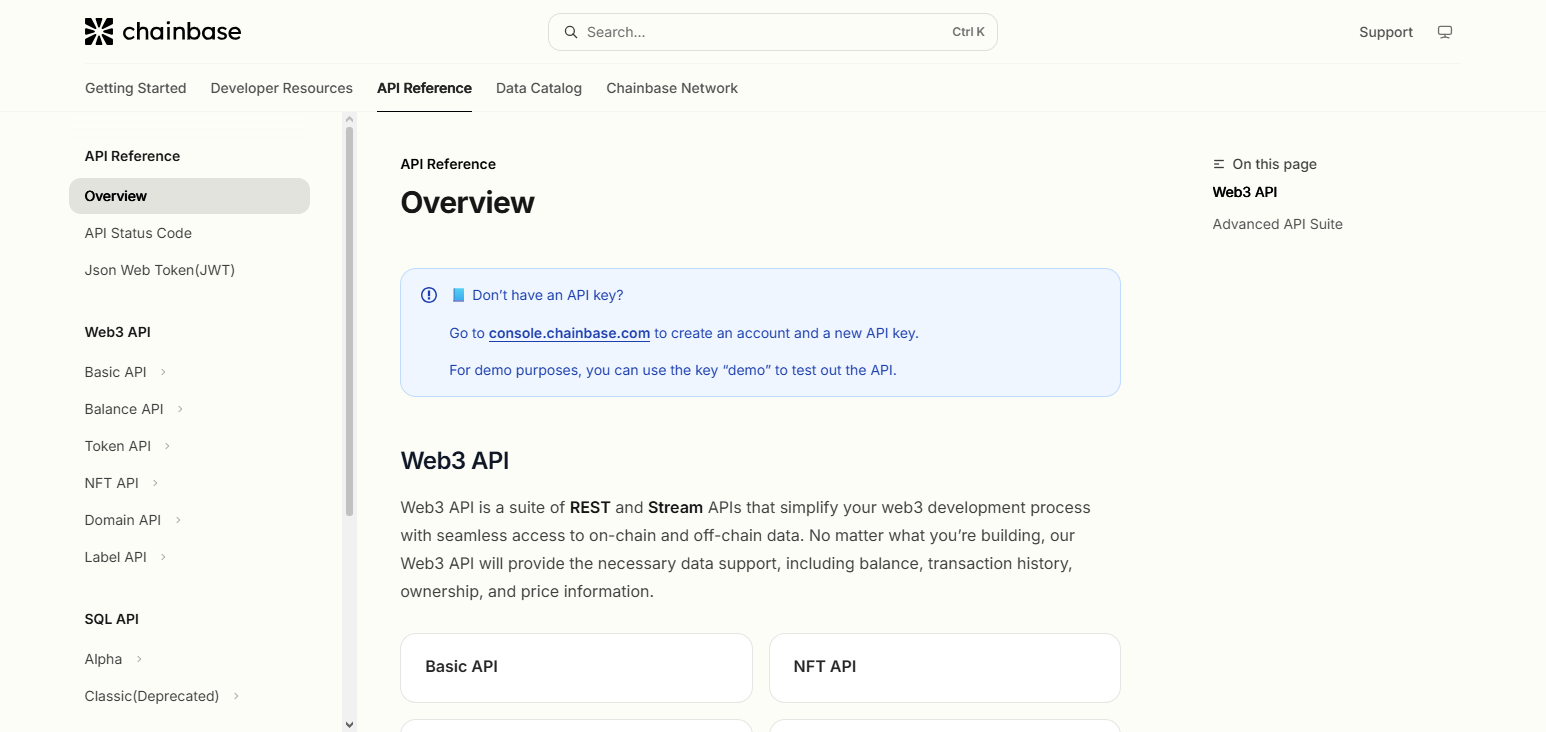
Since data is indexed by Chainbase, developers no longer have to waste time scanning the blockchain, and the performance of the applications is significantly improved. Chainbase also has a lot of very useful advanced queries.
These, paired with a powerful infrastructure and real time, multi-chain updates, significantly shorten the operational complexity of NFT marketplaces and blockchain projects.
Chainbase API – Features
- Indexed blockchain data enables rapid retrieval of NFT metadata and consistently improves application performance.
- Enhanced querying allows efficient development of NFT projects using tailored blockchain information.
- Multi-chain capability offers seamless analytics for multiple blockchains using unified APIs.
- Real-time blockchain updates greatly improve marketplace accuracy and user engagement through reliable sync.
- Monitoring smart contract events improves blockchain oversight and rapidly automated workflows of NFT applications.
| Pros | Cons |
|---|---|
| Indexed blockchain data improves application performance significantly. | New blockchain integrations may take additional time. |
| Advanced query capabilities simplify blockchain analytics. | Premium datasets require paid subscription access. |
| Supports multiple blockchain ecosystems efficiently. | Documentation for advanced queries could improve further. |
| Real-time updates enhance NFT marketplace accuracy. | Smaller developer community than established competitors. |
| Eliminates manual blockchain indexing requirements completely. | High-volume usage increases operational expenses. |
7. Blockdaemon API
Enterprise-grade blockchain infrastructure is provided by the Blockdaemon API helping organizations build NFT marketplaces, institutional digital asset platforms, and Web3 services. With managed blockchain nodes
APIs, and staking and blockchain data services, the infrastructure has strong uptime commitments. Developers can leverage the cloud infrastructure to access NFT transactional data and digital asset management services, as well as wallet management and blockchain event data.
Blockdaemon focuses on security and compliance. With an emphasis on operational reliability, Blockdaemon’s services are ideal for financial institutions and enterprises.
With managed nodes, Blockdaemon’s services can be utilized globally across enhancing NFT ecosystems. Professional infrastructure operational support ensures data and system uptime.
Blockdaemon API – Features
- Deploying NFT applications requiring highly reliable infrastructure and enterprise level security and scalability in addition to blockchain can be done adequately worldwide.
- Managed blockchain nodes take care of the infrastructure and help development teams and businesses focus on the product.
- Advanced security protects blockchain applications from operational and infrastructure risks.
- Enterprise NFT platforms and their clients are supported by institutional level services and compliance assured blockchain infrastructure.
| Pros | Cons |
|---|---|
| Enterprise-grade infrastructure offers exceptional reliability globally. | Primarily designed for enterprise-level customers. |
| Strong security and compliance standards for institutions. | Pricing may exceed small business budgets. |
| Managed blockchain nodes reduce operational complexity. | Advanced setup requires blockchain infrastructure knowledge. |
| Excellent uptime with global cloud infrastructure. | Some services require custom enterprise agreements. |
| Professional technical support for enterprise deployments. | Less suitable for hobby or experimental projects. |
8. Infura API
Thanks to reliable infrastructure, the Infura API is an infrastructure provider that many Ethereum-based NFT applications and services rely on. Infura provides access to the Ethereum network and the IPFS. Developers are able to efficiently perform and process blockchain transactions, smart contract interactions, and the metadata for NFTs.
Having a scalable cloud infrastructure, Infura is able to support millions of API requests. Infura eliminates the necessity of running a blockchain node and has a reliable global network that integrates seamlessly with Web3 development frameworks.
Because of the infrastructure and services offered, Infura is a leading API for NFT marketplaces, dApps, and blockchain-based applications.
Infura API – Features
- Consistent and reliable connectivity to Ethereum enables NFT marketplaces and the expandable blockchain infrastructure globally.
- IPFS promotes fast decentralized storage and content delivery of NFT media among developers.
- High throughput and reliable API infrastructure enables daily millions of blockchain requests.
- Optimized services for communication to blockchains facilitate fast and easy transactional fulfillment of NFT smart contracts among developers.
- Global cloud infrastructure lowers latency and boosts the speed of blockchains and applications globally.
| Pros | Cons |
|---|---|
| Trusted Ethereum infrastructure with outstanding reliability. | Heavy dependence on Ethereum ecosystem services. |
| IPFS integration supports decentralized NFT storage. | API rate limits affect free-tier developers. |
| Eliminates blockchain node management completely. | Service outages may impact connected applications. |
| Highly scalable cloud infrastructure worldwide. | Premium plans required for higher request volumes. |
| Easy integration with popular Web3 frameworks. | Limited native support for non-EVM blockchains. |
9. SimpleHash API
Focusing on NFT indexing, SimpleHash API provides a multitude of features, including NFT metadata, rarity, ownership and price data, media, stats, and transactions across various blockchains.
Developers can create NFT discovery tools without the burden of custom index solutions. Because the API regularly refreshes data, NFT marketplaces can reflect accurate ownership and price data.
Unified search and portfolio tracking for NFTs across blockchains is possible due to support for various networks. For NFT datasets, SimpleHash API is beneficial for aggregators, wallet apps, analytics tools, and discovery apps.
SimpleHash API – Features
- Consistent and global NFT indexing provides complete ownership listings, metadata, pricing, and rarity.
- Seamless support for unified NFT discovery across multi-chain environments for developers.
- Continuous updates of metadata and listings for Digital Assets and NFT marketplaces are automated.
- Improved editing NFT applications and marketplaces are enhanced by media asset indexing of NFT browsing.
- Simplified infrastructure for tracking NFT collections across multiple wallets for developers.
| Pros | Cons |
|---|---|
| Comprehensive NFT metadata and rarity information available. | Advanced datasets require premium API access. |
| Supports numerous blockchain ecosystems seamlessly. | Free usage limits may restrict larger projects. |
| Accurate ownership and pricing updates continuously. | Specialized focus mainly targets NFT applications. |
| Excellent portfolio tracking and NFT discovery features. | Limited non-NFT blockchain data capabilities. |
| Rich media indexing enhances marketplace experiences. | Enterprise features increase subscription costs. |
10. Reservoir API
Reservoir API is focused on NFT marketplaces, aggregators, and trading platforms requiring good liquidity and order books. Reservoir gathers all the required data, such as listings, bids, sales, floor prices, stats, and all activity across NFT marketplaces, and makes it available to developers in a single interface.
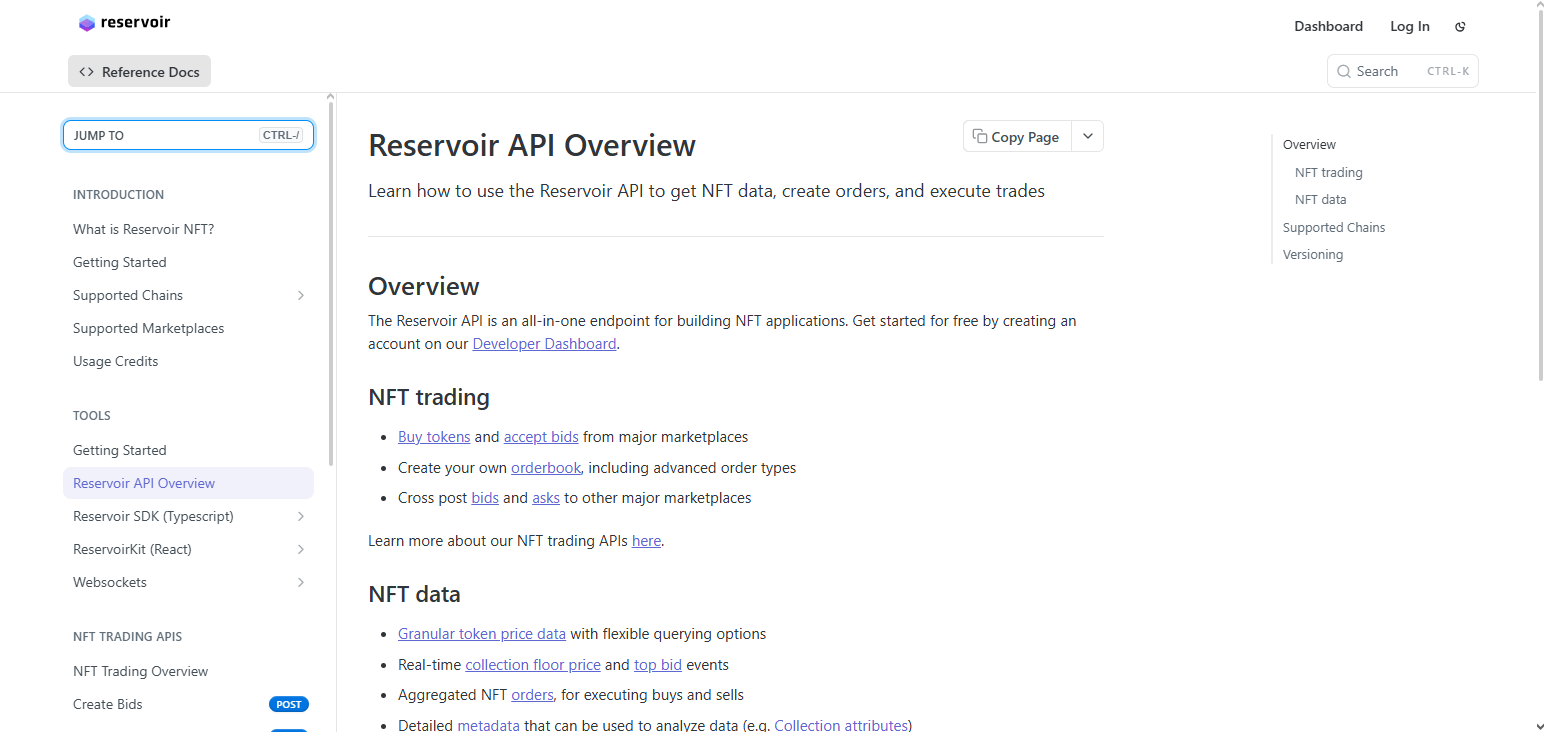
Developers can create advanced trading tools with the API instead of the tedious process of integrating each NFT marketplace.
Reservoir supports real-time event updates, an API for trading and market analytics, and streams that enhance user experience. Reservoir’s infrastructure and data caters to all NFT trading needs, and subsequently serves all NFT platforms.
Reservoir API – Features
- Efficiently combines NFT listings from numerous marketplaces into consolidated trading interfaces thanks to liquidity aggregation.
- Consistently helps users make more informed trading decisions with real-time market analytics.
- Enhanced efficiency of execution across the integrated marketplace ecosystems is achieved through order routing.
- Gives developers and global marketplace operators extensive insights into NFT performance.
- Allows seamless integration with the user’s own NFT marketplaces and trading platforms.
| Pros | Cons |
|---|---|
| Aggregates liquidity from multiple NFT marketplaces efficiently. | Focused primarily on NFT trading ecosystems. |
| Real-time trading data improves marketplace performance. | Advanced trading features require technical integration. |
| Simplifies order routing across NFT platforms. | Premium usage may involve higher operational costs. |
| Comprehensive market analytics support informed decisions. | Limited usefulness outside NFT marketplace development. |
| Open architecture enables flexible marketplace integrations. | Learning advanced trading APIs requires developer experience. |
How To Choose Best Crypto APIs for NFT Marketplaces and Digital Assets
- Supported Blockchains: Make sure the API supports the blockchains you intended to work with. The more reliable multi-chain APIs will benefit your project the most.
- API Response Speed: Fast APIs will benefit your NFT project by improving the user experience and the overall performance of your NFT marketplace.
- Data Accuracy: Make sure the API provides real-time NFT metadata along with ownership and consistent updates with accurate information on the blockchain.
- Pricing Model: Select the API that is the best fit financially by comparing free options, pay-per-use models, and enterprise plans.
- Scalability: The API should support future growth of your marketplace by handling increased demand without negatively impacting the performance of the API.
- Security Features: Assess the API for secure authentication and encrypted API connections. Assess the API provider for security of their infrastructure.
- Documentation Quality: APIs with excellent documentation should have a plethora of resources available regarding the setup and integration of the API including API design, tutorials, and code examples.
Conclsuion
To sum up, Selecting the Best Crypto APIs for NFT Marketplaces and Digital Assets mainly relies on how adaptable your project is, which blockchains your project will support, how well it will perform, and the cost constraints.
Top APIs such as Alchemy, Moralis, and QuickNode provide excellent and secure connectivity to blockchains, and provide NFT data and updates in real time.
The appropriate API selection lets developers create NFT marketplaces quicker, more efficient, and scalable, while ensuring an optimal user experience across various blockchains.
FAQ
Which is the best Crypto API for NFT development?
Alchemy, Moralis, QuickNode, Covalent, and Tatum are among the top choices for NFT development.
Do NFT Crypto APIs support multiple blockchains?
Yes. Most leading APIs support Ethereum, Polygon, BNB Chain, Arbitrum, Base, and other blockchain networks.
Can Crypto APIs retrieve NFT ownership information?
Yes. They provide real-time NFT ownership, wallet balances, transfer history, and collection details.
Are Crypto APIs suitable for NFT marketplaces?
Yes. They simplify marketplace development by providing fast, scalable, and secure blockchain data access.