This article reviews the Best AML APIs that assist companies in the automation of compliance, financial crime detection, and enhanced customer verification. Several of these APIs utilize advanced technologies that include, but are not limited to, sanctions screening
PEP checking, identity verification, transaction analysis, and risk assessments. Covering the range from fintech to banking, and large enterprises, the AML APIs of 2026 will make compliance with regulations more rapid and more intelligent and more secure.
Why Your Business Should Invest in AML APIs by 2026
- Global Regulation Compliance: To optimize and automate compliance to new laws, AML APIs are necessary.
- Refining Crime Prevention: The most advanced AML APIs are coupled with screening mechanisms to discourage fraud, theft, and other crimes.
- Active Monitoring: Instantaneous assessments of customers and transactions, as well as screening of sanctions, are all achievable with AML APIs.
- Process Compliance Automation: AML APIs facilitate the automation of compliance to reduce the need for actively checking veracity.
- Refining the Process: AML APIs improve the detection of financial crimes and greatly reduce the incidence of false reporting.
- Compliance and Business Expansion: AML APIs allow you to verify customers in other nations while ensuring compliance in that particular jurisdiction.
- Increased Confidence in Your Services: Protecting customers through AML processes enhances the perceived value of your services and the confidence of your customers.
- Reducing Internal Costs: Active compliance automates a great portion of your processes and eliminates extensive and thorough investigations.
Key Points & Best AML APIs
| Platform | Best For | Key Features |
|---|---|---|
| ComplyAdvantage | AI-driven, real-time risk intelligence | Uses AI analytics for sanctions screening, PEP checks, and proactive adverse media monitoring. |
| Sumsub | Unified KYC/KYB and AML workflows for fintechs | Provides document verification, global identity coverage, and continuous AML compliance monitoring solutions. |
| Trulioo | Global identity and business verification | Connects authoritative government and data sources across 195+ countries worldwide securely. |
| LexisNexis Risk Solutions | Enterprise-level risk management and global datasets | Offers WorldCompliance data, entity resolution, and contextual risk scoring capabilities. |
| AU10TIX | Rapid integration and forensic identity checks | Detects deepfakes, document fraud, and automates compliance through single API integration. |
| SEON | Fraud prevention integrated with AML checks | Provides device fingerprinting, profiling, and customizable fraud risk management rules. |
| Alloy | Multiple compliance vendors through one orchestration layer | Builds workflows combining KYC, AML screening, and compliance processes efficiently. |
| Sanction Scanner | Cost-effective, pay-as-you-go name screening | Automates sanctions tracking, PEP monitoring, and localized watchlist screening globally. |
| ComplyCube | Identity proofing and continuous AML monitoring | Offers biometric verification, AI workflows, and multi-channel identity verification solutions. |
| NICE Actimize | Large financial institutions and Tier-1 banks | Delivers deep learning, transaction surveillance, and advanced suspicious activity reporting. |
10 Best AML APIs
1. ComplyAdvantage
ComplyAdvantage is a leading AML API for businesses that need real-time prevention of financial crime and risk intelligence. With its AI-based platform, ComplyAdvantage offers businesses accurate sanction screenings, PEP checks, and adverse media monitoring.

The API uses global risk data and performs adverse media analysis to prevent compliance issues. The company’s machine learning function improves the quality of compliance investigations and effectively reduces the number of false positives.
ComplyAdvantage is extremely useful to different kinds of businesses like Fintechs, banks, and other financial services.
ComplyAdvantage – Features
- AI-Driven Risk Detection: Machine Learning models for the detection of financial crimes and suspicious behavior.
- Sanctions Screening: Automated, real-time searches of global sanctions lists preventing regulatory breaches.
- Enhanced PEP Verification: Supports the identification of PEPs and aids businesses in the management of higher-risk clients.
- Adverse Media Risk Monitoring: Reputation risk assessment through customer adverse media monitoring.
- Reduced False Positives: Enhanced algorithms for investigations with automatic compliance alerts for non-critical cases.
| Pros | Cons |
|---|---|
| Advanced AI models improve risk detection accuracy. | Premium pricing may not suit small businesses. |
| Real-time sanctions and PEP screening capabilities. | Requires technical expertise for advanced integrations. |
| Reduces false positives through machine learning. | Large data volume can require optimization. |
| Strong adverse media monitoring features. | Some features may need enterprise plans. |
| Suitable for fintech, banking, and crypto businesses. | Initial setup may require compliance guidance. |
2. Sumsub
Sumsub is an excellent AML API for Fintechs, marketplaces, and other digital businesses that need unified solutions for service fulfillment and regulatory compliance.
The API is a combination of KYC, KYB, AML screening, and transaction monitoring, and provides businesses the ability to perform document verification and biometric compliance in real time.
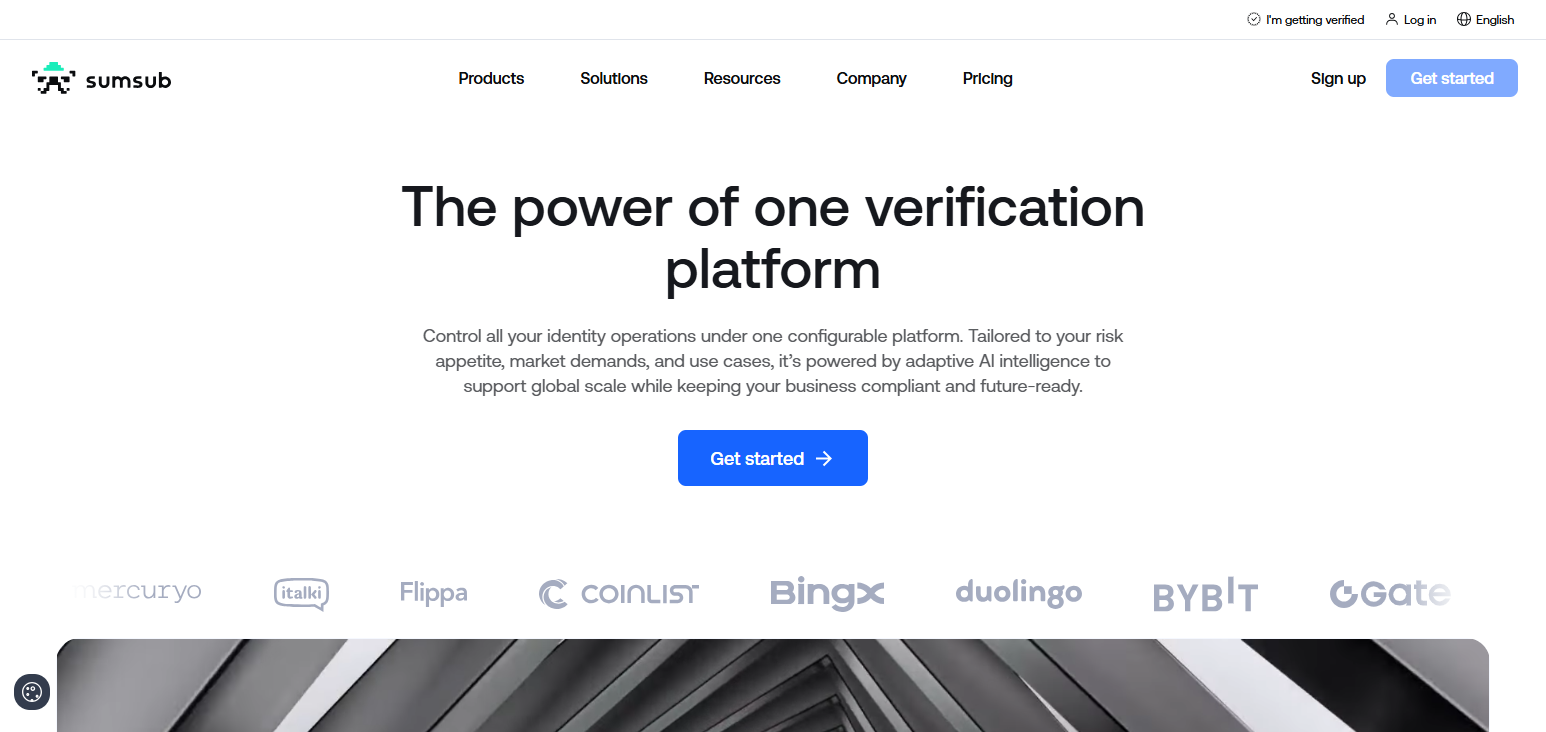
Sumsub improves the onboarding experience of a business’s new customers through its advanced automation and helps customers avoid financial risks.
Sumsub – Features
- All-in-One Compliance Solution: Integration of KYC, KYB, AML screening, and transaction monitoring.
- Worldwide Document Verification: Advanced Document Verification provides remote identity verification globally.
- Biometric Fraud Detection: Identity verification through facial recognition and liveness detection mitigates identity fraud.
- Post-Compliance Monitoring: Continuous assessment of risk customers after initial onboarding.
- Automated Compliance Verification: Customized automation of compliance verification reduces the need for manual review.
| Pros | Cons |
|---|---|
| Combines KYC, KYB, and AML in one platform. | Pricing increases with verification volume. |
| Supports global identity verification coverage. | Advanced customization may require technical support. |
| Provides automated compliance workflows. | Some regions may have limited data availability. |
| Strong biometric authentication capabilities. | Complex features may overwhelm beginners. |
| Improves customer onboarding speed significantly. | Requires integration effort for large systems. |
3. Trulioo
As a recognized leader in global identity verification, the Trulioo API allows businesses to build the detection of fraud and the verification of Anti-Money Laundering (AML) compliance directly into their systems.
This API connects businesses directly with government databases, credit agencies, and other verified data sources in over 195 countries.

The AML functionality enables the easy verification of customers, businesses, and the more difficult task of beneficial owner identification. Financial institutions, marketplaces, and online platforms that require a scalable solution for identity intelligence frequently use Trulioo.
The combination of its data coverage and accurate data makes Trulioo an excellent choice for companies who need to ensure compliance operations on a global scale.
Trulioo Features
- Global Identity and AML Coverage: More than 195 Country Reach for identity verification.
- Verified Customer Government Data: Trusted government database and accurate customer verifications.
- Verified Business Customers: Verification of corporate beneficial owners and business information is supported.
- Customer Due Diligence: Identity fraud and suspicious customer information detection during the onboarding process.
- Scalable API Infrastructure: Designed for businesses with a need for high-volume verification across multiple regions.
| Pros | Cons |
|---|---|
| Provides identity verification across 195+ countries. | Costs can become high for large-scale usage. |
| Accesses reliable government and business databases. | Data quality may vary by region. |
| Supports global customer onboarding requirements. | Advanced AML features may require additional services. |
| Scalable infrastructure for international businesses. | Integration requires developer resources. |
| Helps reduce identity fraud risks effectively. | Limited customization compared with some competitors. |
4. LexisNexis Risk Solutions
LexisNexis Risk Solutions offers large scale enterprise APIs to manage complex financial crime AML risk. These APIs include comprehensive global data, WorldCompliance data, entity resolution, and risk scoring.
Businesses can use its APIs to identify customers posing a higher risk, comply with sanction lists, and enhance customer due diligence.
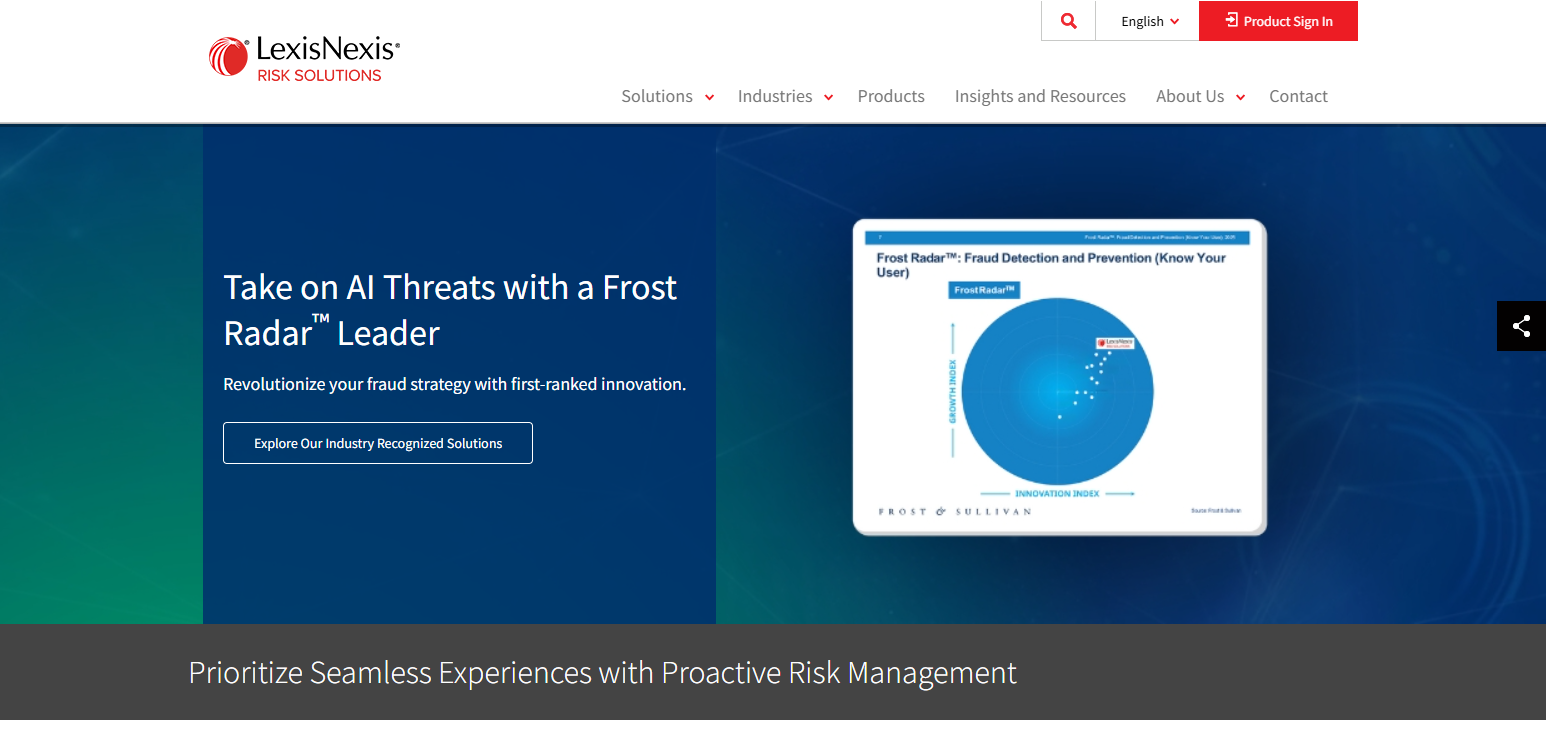
Designed for banks, insurance companies, and large enterprises; LexisNexis offers compliance teams the ability to make more informed decisions with powerful analytics related to the detection of suspicious activity.
LexisNexis Risk Solutions Features
- WorldCompliance Database Access: Delivers enormous international risk data for AML Screening.
- Complex Relationship Mapping: Links disparate identity records to map relationships and identify risk.
- Behavioral Risk Scoring: Assesses customers based on a range of risk factors and behaviors.
- Global Watchlist Check: Mandatory checks against sanctions, PEP, and other lists for compliance.
- Data-Driven Financial Crime Investigations: Enhances the quality of financial crime investigations.
| Pros | Cons |
|---|---|
| Provides extensive global risk intelligence databases. | Mainly designed for enterprise-level organizations. |
| Advanced entity resolution improves investigation accuracy. | Higher implementation costs compared with startups solutions. |
| Strong compliance support for financial institutions. | Requires specialized compliance knowledge. |
| Offers powerful risk scoring capabilities. | Platform complexity may increase learning time. |
| Trusted by banks and regulated industries. | Less suitable for small businesses. |
5. AU10TIX
The AU10TIX API for AML and identity verification provides an automated, secure solution that helps companies to detect and analyze fraudulent documentation.Thanks to its AI, AU10TIX helps to identify Document Forgery, Synthetic Identity and Deepfakes.
AU10TIX can be easily integrated and automated into a company’s onboarding process to run identity checks and be compliant with relevant regulations.

Whoever needs accurate verification of their clients, especially FinTech companies, Financial Institutions and other Digital Platforms, will find AU10TIX especially useful.
With its Forensic Technology, AU10TIX helps companies to manage the risks of fraudulent activity and creates the confidence of the clients in the services that the companies provide.
AU10TIX Features
- Document Verification and Forensics: Identifies both genuine and fraudulent identity documents.
- Protection from Synthetic Identity Fraud: Shields businesses from both AI and identity fraud.
- Swift Automated Verification: Enhances the speed of customer verification through API automation.
- Unified Compliance API: Offers a single endpoint for multiple compliance integrations.
- Instant Identity Check: Facilitates a seamless customer verification process.
| Pros | Cons |
|---|---|
| Excellent document fraud detection technology. | Enterprise pricing may be expensive. |
| Uses AI to detect deepfake identity fraud. | Focuses more on identity than transaction monitoring. |
| Provides fast automated verification processes. | Integration may require technical assistance. |
| Strong security for digital onboarding. | Smaller companies may not need all features. |
| Helps prevent synthetic identity attacks. | Limited flexibility compared with open platforms. |
6. SEON
The SEON API provides companies a way to manage fraud and AML activities by allowing them to monitor “suspicious” users and/or transactions.
Some of the main features fraud detection and prevention mechanisms of the SEON API offer are Device Fingerprinting, Digital Footprinting, Email and Phone Profiling, and the establishment of personalized risk thresholds.
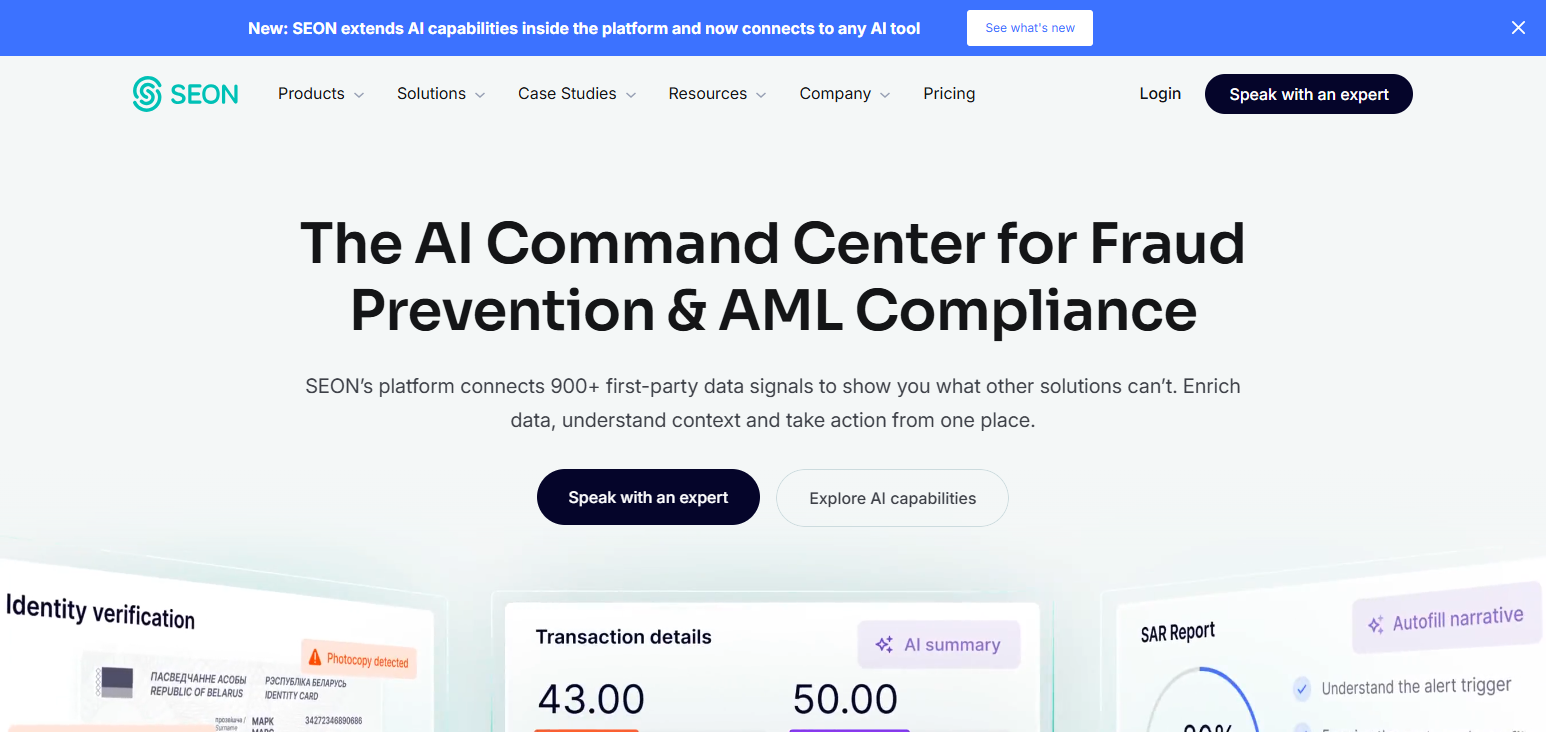
SEON is especially popular among FinTech companies, online companies, and payment service providers, due to the fact that the SEON API allows companies
To gain valuable real-time data and information in regards to fraud controls and financial security, while minimizing the labor-intensive process of regulatory compliance and improving the financial security of the company.
SEON Features
- Fraudulent Behavior Detection: Assess behavior and identify the risk of online fraud.
- Fraudulent Device Identification: Detection of fraudulent devices and prevention of repeated fraud.
- Risk Assessment via Contact Verification: Assess and verify contact details.
- Custom Risk Management: Flexible fraud policies.
- Instant Fraud Detection: Immediate awareness of fraudulent activities and transactions.
| Pros | Cons |
|---|---|
| Combines fraud prevention with AML monitoring. | Less focused on traditional banking compliance. |
| Provides detailed digital footprint analysis. | Advanced features require higher pricing plans. |
| Real-time risk scoring improves fraud detection. | Requires quality user data for accuracy. |
| Flexible rules allow customized fraud prevention. | Initial configuration can take time. |
| Useful for fintech and online businesses. | Limited enterprise AML reporting capabilities. |
7. Alloy
Alloy has built an advanced API infrastructure for AML. They have built a way for enterprises to manage a number of different compliance solutions combined in one place. Their system is highly customizable and allows users to combine various KYC, KYB, fraud, and AML providers.
Their system offers the users of the platform the ability to automate customer validation and risk assessment, as well as make compliance decisions.

Alloy is a popular choice among fintech, as well as lots of other traditional financial firms whose compliance operations are constantly growing. They take an API-centric approach to make their tools easy to integrate in environments filled with a high degree of regulatory complexity.
Alloy Features
- Flexibility in creating and tailoring your own workflows for trainings such as KYC KYB and AML.
- Ven-Dash lets you link many compliance vendors into one platform.
- An automated decision engine to ease the approval process for the customer.
- Seamless integration to your current FinTech tools.
- The ability to optimize compliance monitoring and risk management for your customers.
| Pros | Cons |
|---|---|
| Simplifies compliance workflow management. | Better suited for technology-focused companies. |
| Connects multiple KYC and AML providers. | Requires technical expertise for setup. |
| Provides flexible automation capabilities. | Pricing may be high for small startups. |
| Improves operational efficiency for fintechs. | Dependent on connected third-party providers. |
| Supports scalable compliance operations. | Not a complete standalone AML database. |
8. Sanction Scanner
Sanction Scanner created a budget friendly option for an AML API. This option is aimed at enterprises looking to automate their sanctions and watchlist screening. They provide a way for clients to keep pace with sanctions and other compliance regulatory lists.

Their pay-as-you-go model is ideal for developing organizations, especially startups and fintech. Sanction Scanner moves compliance screens along more quickly and allows firms to focus more resources on accomplishing other screening tasks. They offer simple integrations for an affordable price in an international compliance system.
Sanction Scanner – Features
- An automated sanctions screening tool that checks global compliance lists to recognize restricted individuals and/or entities.
- PEP and Watchlist Monitoring.
- The ability to optimize compliance monitoring and risk management for your customers.
- A flexible pricing model that offers very affordable and simple pay-as-you-go solutions for growing businesses.
- API integration that is simple and offers a very quick deployment with no complex technical requirements
| Pros | Cons |
|---|---|
| Affordable pricing model for growing businesses. | Fewer enterprise features than premium solutions. |
| Provides automated sanctions and PEP screening. | Advanced analytics capabilities are limited. |
| Easy API integration process. | Database coverage may vary by location. |
| Supports real-time compliance monitoring. | May require additional tools for complete AML. |
| Suitable for startups and fintech companies. | Less suitable for complex banking operations. |
9. ComplyCube
All aspects of identity verification, biometric authentication, and active compliance monitoring are included in the ComplyCube AML API. Their AI technology assists organizations in customer verification, suspicious activity detection, and compliance.
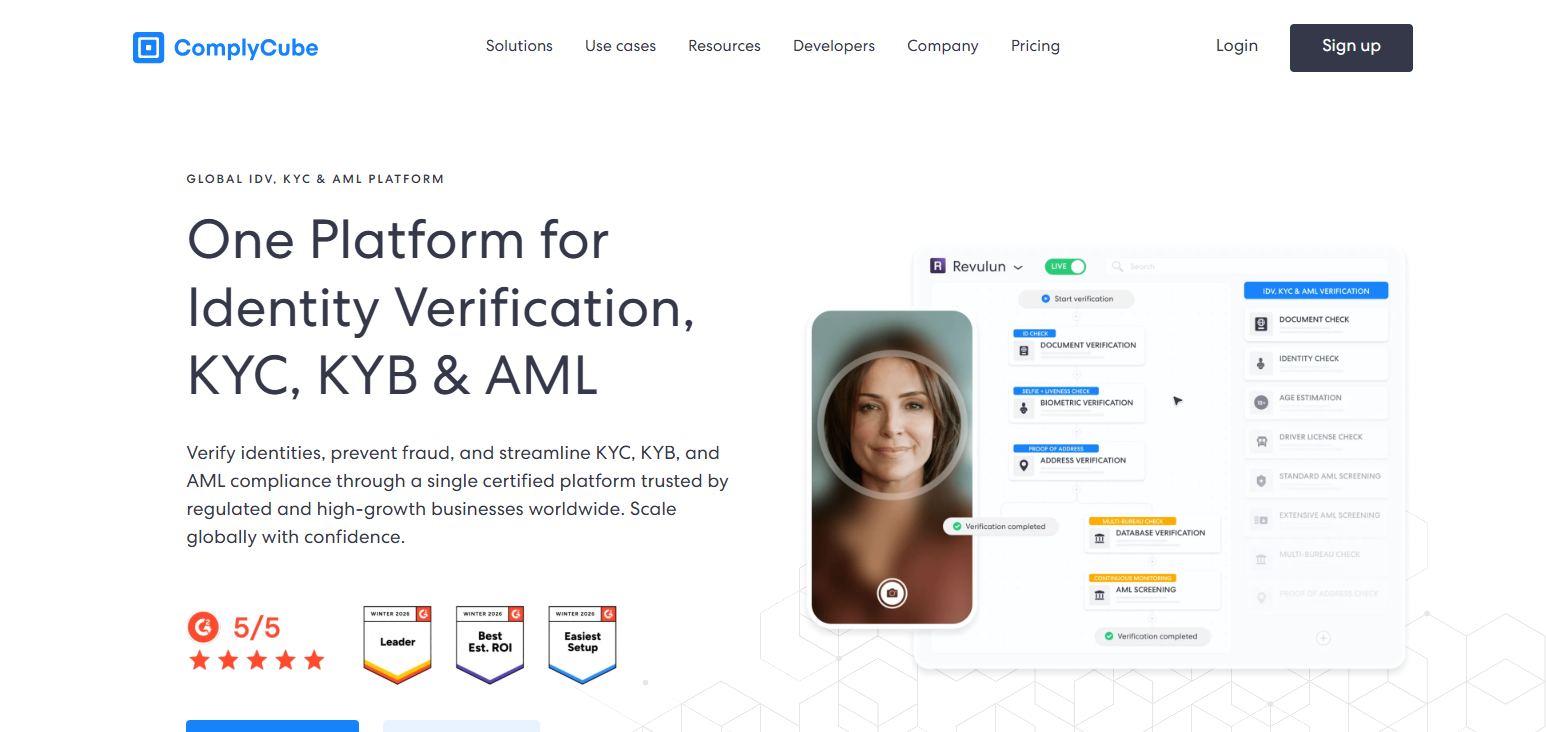
This API enables document, facial, and database verification. This is a great solution for fintech, crypto, and online companies that facilitate customer interactions. This API is simple and allows companies to implement sophisticated AML solutions.
ComplyCube Features
- Customer verification via facial recognition technology.
- Biometric identity verification.
- An artificial intelligence engine that conducts verification and compliance checks for the automation of the AML process.
- An automated decision engine to ease the approval process for the customer.
- Verification via documents, and also biometric and database methods.
| Pros | Cons |
|---|---|
| Combines identity verification and AML monitoring. | Limited advanced enterprise compliance features. |
| Supports biometric and document verification. | Pricing depends on verification requirements. |
| Developer-friendly API integration. | Smaller global database compared with larger providers. |
| Uses AI automation for faster compliance checks. | May need additional fraud tools for enterprises. |
| Suitable for fintech and crypto businesses. | Some advanced options require premium plans. |
10. NICE Actimize
NICE Actimize is appropriately named for this market. It stands alone as a sophisticated, large scale AML API targeting IT support personnel and compliance managers at an enterprise level. The combination of AI technologies and analytics creates an environment capable of monitoring transactions and differentiating between normal and suspicious activity.

This platform is also highly automated, boasting features for SAR, fraud detection, customer risk assessments, and overall compliance. The enterprise level sophistication and scale of this AML API clubbed with the platform’s inbuilt features makes it a preferred solution for the bulk of financial institutions across the globe.
NICE Actimize Features
- Deep Learning Models: Uses advanced algorithms to detect sophisticated patterns of financial crimes.
- Enterprise Risk Management: Assists larger banks due to their rapidly growing number of compliance cases.
- Fraud and AML Integration: Merges counter-fraud and financial crime detection systems.
| Pros | Cons |
|---|---|
| Powerful AI-driven transaction monitoring system. | High implementation and maintenance costs. |
| Designed for large financial institutions. | Not suitable for small businesses. |
| Supports advanced SAR reporting automation. | Requires trained compliance professionals. |
| Handles large-scale financial transaction volumes. | Complex deployment process. |
| Provides strong fraud and AML capabilities. | Longer setup time compared with lightweight APIs. |
How To Choose The Right AML API for Your Business
- Consider Your Business’s Compliance Needs: To choose an API, ensure you know your business’s regulatory needs and your business’s screening and AML obligations.
- Consider Coverage across Global Databases: When selecting AML APIs, choose an API with an extensive database of identities, sanctions, PEP, and watchlists and that covers international data.
- Assess the Quality of the API Documentation: Choose the providers that have clear documentation and provide developer support and testing and easy integration tools.
- Consider Pricing, Flexibility, and Scalability: When selecting APIs, evaluate the providers’ pricing, limits, and flexibility, to be sure the API will meet your business needs as it grows.
- Assess Security Standards: Confirm the provider meets your business’s needs for encryption, compliance with data protection, and industry security standards.
- Consider Compliance Needs for Your Industry: When selecting AML APIs, choose the API that addresses your industry needs (e.g. banking, fintech, crypto, payment services).
Conclsuion
In Conclsuion Ultimately, AML APIs Automating areas of financial crime risk helps businesses avoid financial crime and improve compliance.
In the market, AML APIs help with real-time screening of sanctions lists and KYC, aid in modeling transactions, and provide analytical support based on AI.
In 2026, AML APIs will help to ensure that financial operations are compliant with regulatory institutions and that risks of financial crimes are more securely defendable.
FAQ
What features should the best AML APIs have?
The best AML APIs should include sanctions screening, PEP checks, adverse media monitoring, KYC verification, transaction monitoring, and AI-powered risk analysis.
Which industries use AML APIs?
AML APIs are widely used by banks, fintech companies, cryptocurrency platforms, payment providers, insurance companies, and online marketplaces
How do AML APIs help prevent financial crimes?
AML APIs analyze customer data, monitor transactions, identify suspicious activities, and detect high-risk individuals or entities before financial damage occurs.
Are AML APIs suitable for small businesses and startups?
Yes, many AML APIs offer scalable pricing models and flexible integrations designed for startups, fintech companies, and growing businesses.